💥Join UPSC 2027,2028 Mentorship (July Batch) + XFactor Notes & Microthemes PDF

GS Paper: GS3-21.Role of External State and Non-state Actors in creating challenges to Internal Security.

  • India Expands Heron Mk II UAV Fleet

    Why in the news? 

    In the aftermath of Operation Sindoor, the Indian Army, Air Force, and Navy have initiated emergency procurement of satellite-linked Heron Mk II Unmanned Aerial Vehicles (UAVs) from Israel. This marks the first induction of Heron Mk II by the Indian Navy.

    What is Emergency Procurement?

    • Covered under Defence Acquisition Procedure (DAP).
    • Allows armed forces to procure weapons/systems worth up to ₹300 crore per case.
    • Meant for urgent operational requirements.
    • Fast-tracked contracting and delivery timelines.

    About Heron Mk II (MALE UAV)

    Category: MALE – Medium Altitude Long Endurance.
    Manufacturer: Israel Aerospace Industries (IAI).

    Key Features (Prelims Points):

    • Endurance: > 24 hours continuous flight.
    • Payload Capacity: ~ half a tonne.
    • Sensors:
      • Synthetic Aperture Radar (SAR)
      • Electro-Optical/Infrared (EO/IR)
      • SIGINT (Signals Intelligence)
    • SATCOM-enabled:
      • Encrypted satellite communication
      • Enables Beyond Line-of-Sight (BLOS) operations.
    • Fully automated Take-off & Landing (ATOL).
    • All-weather ISR platform (Intelligence, Surveillance, Reconnaissance).

    Current Indian Operators:

    • Indian Army (deployed in northern sector).
    • Indian Air Force.
    • Indian Navy (first time induction now).
    With reference to Agni-IV Missile, which of the following statements is/are correct? (2014)

    1. It is surface-to surface missile. 

    2. It is fuelled by liquid propellant only. 

    3. It can deliver one-tonne nuclear warheads about 7500km away. 

    Select the correct answer using the code given below: 

    (a) 1 only 

    (b) 2 and 3 only 

    (c) 1 and 3 only 

    (d) 1, 2 and 3 only

  • Bastar Olympics

    Why in the news? 

    • The Bastar Olympics is a government-led sporting initiative in Chhattisgarh’s Bastar region, an area historically affected by Left-Wing Extremism (LWE).
    • It has become a symbol of normalisation, trust-building, and socio-cultural revival as Maoist influence recedes.

    What are the Bastar Olympics?

    • A regional multi-sport event launched by the Chhattisgarh government.
    • Conducted across all 7 districts of the Bastar region:
      • Bastar, Dantewada, Kanker, Kondagaon, Narayanpur, Sukma, Bijapur.
    • Includes 11 sports:
      Archery, Kabaddi, Athletics, Badminton, Football, Hockey, Karate, Weightlifting, Kho-Kho, Volleyball, Tug-of-war.
    Prelims-Relevant Themes Emerging

    • Internal Security: Platform for reducing alienation in LWE regions.
    • Social Issues: Women’s participation & empowerment.
    • Tribal Affairs: Inclusion of PVTGs, revival of cultural identity.
    • Governance: Last-mile delivery and state presence in remote areas.
    • Sports & Youth: Identification of rural sporting talent.
    Consider the following statements about Particularly Vulnerable Tribal Groups (PVTGs) in India: 

    1. PVTGs reside in 18 States and one Union Territory. 

    2. A stagnant or declining population is one of the criteria for determining PVTG status. 

    3. There are 95 PVTGs officially notified in the country so far. 

    4. Irular and Konda Reddi tribes are included in the list of PVTGs. 

    Which of the statements given above are correct? 

    (a) 1, 2 and 3 

    (b) 2, 3 and 4 

    (c) 1, 2 and 4 

    (d) 1, 3 and 4

  • The threat of digital tradecraft in terrorism

    Introduction

    The blast near Delhi’s Red Fort on November 10, killing 15 and injuring over 30, exposed the operational use of encrypted digital platforms, dead-drop communication, and modular terror cells. The investigation demonstrates a transition from traditional networks to digitally shielded ecosystems, reducing visibility for intelligence agencies and constraining surveillance outcomes.

    The new face of terror: What has the investigation revealed?

    1. Encrypted Communication: Enables concealed coordination, protects identity layers, and reduces interception by routing messages through shielded platforms.
    2. Digital Dead-Drops: Facilitates asynchronous message exchange without direct contact, ensuring operational secrecy and reducing surveillance exposure.
    3. Compartmentalised Cells: Strengthens deniability by separating roles across modules led by three individuals linked to medical and academic institutions.
    4. Behavioural Masking: Utilises familiar vehicles and repetitive low-risk movement patterns to support covert reconnaissance without triggering alerts.
    5. Enhanced IED Architecture: Ensures higher lethality through layered mechanisms and precise triggering processes.

    Distinctive Features of This Incident

    1. Multi-Layer Encryption: Reduces actionable intelligence, constrains lawful interception, and delays early detection of operational chatter.
    2. Surveillance-Resistant Tools: Utilises VPNs, spoofed identifiers, and encrypted messaging apps, enabling secure command dissemination.
    3. Hybrid Planning: Integrates digital coordination with physical site visits, ensuring real-time situational assessment without exposing handlers.
    4. Decentralised Decision Structures: Prevents traceability by shifting from hierarchical control to remote guidance via anonymised digital nodes.

    Why are modern counterterrorism frameworks struggling?

    Constraints on Counterterrorism Architecture

    1. Limited Penetration of Encrypted Platforms: Restricts information extraction, narrows visibility over operational trails, and weakens evidence chains.
    2. Diminished HUMINT Opportunities: Reduces physical touchpoints and complicates informant-based intelligence generation.
    3. Fragmented Global Cooperation: Slows data sharing when platforms are hosted outside domestic jurisdiction, weakening investigation pace.
    4. Technological Mismatch: Creates capability gaps as terror networks adopt advanced masking, encryption, and anonymisation faster than security upgrades.

    Operational Impact of Digital Tradecraft

    1. End-to-end encryption (E2EE) Platforms: Shields logistics, finances, and movement plans, enabling uninterrupted operational execution.
    2. Remote Radicalisation and Supervision: Facilitates cross-border ideological influence and guidance without physical linkages.
    3. Metadata Evasion: Minimises digital footprints by exploiting layered encryption and controlled online presence.
    4. Coordination Efficiency: Enhances planning speed and reduces command exposure by relying on decentralised digital frameworks.

    Required Strategic Adaptations

    1. Digital Forensics Expansion: Strengthens cryptographic analysis, behavioural modelling, and dark-web investigation capacity.
    2. Lawful Interception Reform: Establishes judicially supervised mechanisms enabling secure access to encrypted communication when mandated.
    3. Inter-Agency Data Fusion: Integrates intelligence, cyber cells, and police units on unified platforms to improve threat detection and response.
    4. Cyber Infrastructure Modernisation: Enhances surveillance technologies, metadata analytics, and predictive systems to match digital threat evolution.
    5. International Data Cooperation: Accelerates cross-border evidence sharing and improves alignment with global counterterrorism frameworks.

    Conclusion

    The Red Fort blast demonstrates a shift toward encrypted, decentralised, and digitally concealed terror ecosystems. The emerging landscape requires specialised digital forensics, integrated intelligence systems, and balanced legal frameworks to strengthen operational readiness. Counterterrorism capacities must evolve to address threats emerging from opaque digital environments rather than visible physical terrains alone.

    PYQ Relevance

    [UPSC 2016] Use of Internet and social media by non-state actors for subversive activities is a major concern. How have these been misused in the recent past? Suggest effective guidelines to curb the above threat.

    Linkage: The misuse of Internet and social media by non-state actors remains a recurring internal security theme. The encrypted digital activity with respect to the recent The recent Red Fort blast make the issue current and significant. The topic continues to appear because communication networks are now central to modern security threats.

  • More than two decades later, there is light at the end of the Red Corridor

    INTRODUCTION

    Left-Wing Extremism (LWE) has historically affected large tribal hinterlands across central India. Recent field reports indicate a visible decline in Maoist hold, accompanied by expanding state presence, renewed market activity, and local confidence in security forces. The transformation represents a significant shift from earlier decades marked by fear, isolation, and violence.

    Why in the news?

    A major setback to Maoists occurred recently when top Andhra-Odisha border commander Madvi Hidma was killed in a security operation, followed by the elimination of seven more Maoists, including an explosives expert. These back-to-back encounters highlight the rapid weakening of LWE networks across the Red Corridor.

    Why is the region witnessing a visible shift in confidence?

    1. Reduced Fear: The article notes that locals now openly interact with security forces, signalling erosion of Maoist coercion.
    2. Increased Presence: Security deployment strengthened continuous area domination, reducing the probability of Maoist reprisals.
    3. Civilian Mobility: Market activity in evening hours increased, contrasting earlier periods when movement after dusk was restricted due to threats.
    4. Symbolic Change: Locals offering security personnel chai and sitting freely with them indicates behavioural trust, not forced compliance.

    What structural changes weakened Maoist dominance?

    1. Road Connectivity: New roads and bridges reduced forest isolation, weakening Maoist geographical advantage and enabling faster troop mobility.
    2. Communication Facilities: Mobile networks expanded surveillance, reduced Maoist anonymity, and enabled quicker civilian distress calls.
    3. Administrative Outreach: Frequent visits by district officials ensured service delivery and reduced ideological appeal.
    4. Disruption of Recruitment: Youth engagement in local markets, transport, and small businesses reduced Maoist manpower pipelines.

    How did security operations evolve on the ground?

    1. Stronghold Penetration: Forces entered areas earlier considered “liberated zones”, indicating territorial rollback.
    2. Integrated Command: Inter-state coordination between Chhattisgarh, Maharashtra, Telangana improved operational continuity.
    3. Sanitisation Efforts: Regular area domination patrols lowered the possibility of ambushes.
    4. Intelligence Support: Human intelligence from locals increased due to declining fear, enabling targeted strikes.

    What has changed in the population’s everyday life?

    1. Economic Activity: Markets extending late into evening reflect safety and disposable income circulation.
    2. Transport Revival: Locals travelling without escorts marks reduced threat perception.
    3. Women’s Movement: Increased participation by women in markets shows greater autonomy and reduced intimidation.
    4. Community Interaction: Openness to engage with forces signals normalisation of state-citizen interaction.

    Why has the Maoist strategy weakened?

    1. Loss of Terrain Control: Eroded forest sanctuaries limit guerrilla advantage.
    2. Depleted Cadres: Surrenders and casualties reduced leadership continuity.
    3. Ideological Attrition: Reduced resonance of Maoist messaging as development outreach substitutes grievances.
    4. Operational Fatigue: Continuous pressure limited long-duration planning, reducing capability for large-scale attacks.

    CONCLUSION

    The article highlights a decisive shift in the Red Corridor, where expanded state presence and growing public confidence have significantly reduced Maoist influence. The transition reflects a combination of operational consistency, improved connectivity, and changing local behaviour, collectively signalling a new phase in India’s long battle against Left-Wing Extremism.

    PYQ Relevance

    [UPSC 2022] Naxalism is a social, economic and developmental issue manifesting as a violent internal security threat. Discuss the emerging issues and suggest a multilayered strategy to tackle the menace of Naxalism.

    Linkage: The PYQ matches the article’s focus on LWE decline driven by security consolidation and development outreach. It directly links to how improved roads, markets, and public confidence are weakening Naxalism.

  • Army sets up three new garrisons near the Siliguri Corridor

    Why in the News?

    India has set up three new Army garrisons at Dhubri, Kishanganj, and Chopra to secure the vulnerable eastern frontier and protect the Siliguri Corridor amid instability in Bangladesh and rising Chinese activity.

    Army sets up three new garrisons near the Siliguri Corridor

    About Siliguri Corridor:

    • Overview: A narrow land strip connecting mainland India to the Northeast, popularly called the Chicken Neck due to its thin, vulnerable shape.
    • Dimensions: Roughly 60 km long and 17–22 km wide, making it one of India’s most strategically sensitive corridors.
    • Location: Lies in northern West Bengal, bordered by Nepal (west), Bangladesh (south), Bhutan (north), with China’s Chumbi Valley close to the tri-junction.
    • Link to Northeast: The only land route for supplying all eight northeastern states, carrying road, rail, fuel, food and military logistics (except limited Bangladesh transit routes).
    • Strategic Sensitivity: Its narrowness and proximity to the India–China–Bhutan tri-junction make it a potential chokepoint in conflict scenarios.
    • Military Importance: Acts as the primary logistical artery for moving Indian Army troops and equipment toward Sikkim and Arunachal Pradesh, especially during LAC tensions.
    • Security Challenges: Surrounded by multiple international borders, making it prone to illegal immigration, smuggling, cross-border crime, and potential external military pressure.
    • Economic Significance: Key route for trade with Nepal and Bhutan, and supports tourism to Darjeeling, Sikkim and Bhutan.

    About the New Eastern Garrison Deployments:

    • Purpose: Developed to address rising security risks due to political changes in Bangladesh, demographic pressures along the border, and China’s increasing activity near the tri-junction.
    • Locations:
      1. Lachit Borphukan Military Station, Dhubri (Assam)
      2. Forward base, Kishanganj (Bihar)
      3. Forward base, Chopra (West Bengal)
    • Operational Role: Enables continuous surveillance, rapid troop movement, and strengthens defence preparedness across the India–Bangladesh frontier.
    • Local Support: Assam facilitated quick setup of the Dhubri station, named after Ahom general Lachit Borphukan, symbolising regional identity and military determination.

    Drivers Behind the Reinforcement:

    • Regime Change in Bangladesh: Expected shifts in border behaviour, cross-border movement, and potential security spillovers.
    • Illegal Immigration Concerns: Union Home Ministry has flagged demographic changes in border districts linked to cross-border inflow.
    • China’s Expanding Influence:
      • Accelerated LAC military build-up in Arunachal Pradesh.
      • Growing ties with Pakistan and Bangladesh, including a trilateral meet in Kunming, raising regional security concerns.
    • Regional Military Activity: India has conducted major exercises like Poorvi Prachand Prahar and IAF flying displays in Assam to signal operational readiness.
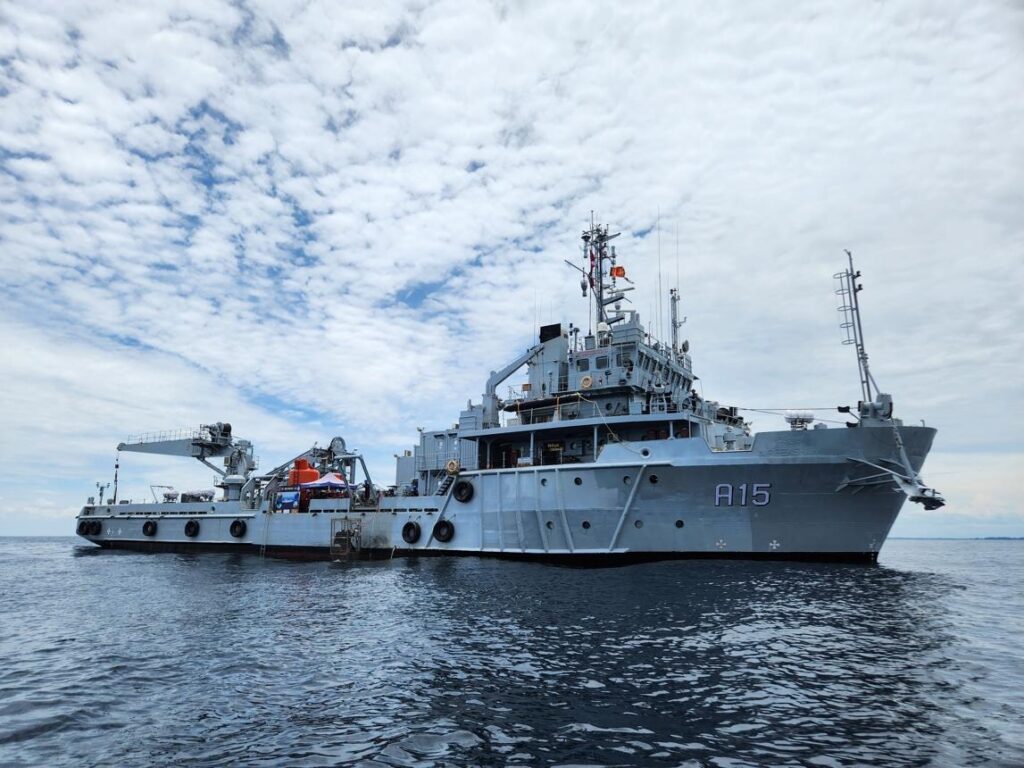
    • Pakistan–Bangladesh Engagements: Recent visit of a Pakistan Navy ship to Chattogram (first since 1971) has added a fresh strategic dimension to India’s eastern security planning.
  • A red sunset? Why Maoist movement is on the decline

    Introduction

    For nearly six decades, the Maoist insurgency has tested India’s state capacity, governance, and security architecture. Born from socio-economic inequalities and agrarian distress, it once posed a threat spanning the “Red Corridor” from Andhra Pradesh to Bihar. However, in 2025, India seems to be witnessing what could be a historical inflection point, a near end of the movement. The combination of relentless security operations, developmental outreach, and ideological erosion has pushed the insurgency to its lowest ebb in history, limited now to just 38 districts.

    Why is this in the news?

    For the first time in six decades, the Maoist movement has reached the brink of extinction. This sharp decline is a historic reversal from the early 2000s, when the insurgency had spread across nearly 180 districts, posing an existential challenge to internal peace.

    The Union Home Ministry’s data for 2025 reveals:

    1. 270 Maoists killed, 680 arrested, and 1,225 surrendered.
    2. The insurgency is now confined to 38 districts, a dramatic fall from its 2005 peak.
    3. Top Maoist leaders, including Mallojula Venugopal Rao, have called for the “cessation of armed struggle”, signaling an ideological collapse within.
    4. This represents a turning point in India’s counter-insurgency history, where military, governance, and psychological strategies appear to have converged successfully.

    What led to the decline of the Maoist movement?

    • Relentless Security Operations
      1. Persistent operations by security forces under the Union Ministry of Home Affairs and state police coordination have dismantled Maoist strongholds.
      2. Leaders such as Katta Ramachandra Reddy and Kalayari Reddy have been neutralized, causing organizational paralysis.
    • Curtailment of Resources: Maoists face acute shortages of arms, ammunition, and funding, with security blockades choking supply lines across Bastar-Dandakaranya region.
    • Collapse of Ideological Unity: 
      1. Internal ideological fractures deepened after the deaths of key leaders like Kishenji and Charu Majumdar.
      2. Letters by surviving leaders calling for surrender reflect a moral fatigue within the movement.
    • Tribal Alienation: Once rooted in tribal grievances, the Maoist narrative lost resonance as tribal communities began benefiting from welfare schemes, education, and employment programs.

    Has this happened before? Understanding the cyclical pattern

    • Historical Fluctuations: The Maoist movement, born in Naxalbari (West Bengal, 1967), has seen cycles of rise and suppression.
      1. 1970s: Spread into Andhra Pradesh, Chhattisgarh, Jharkhand, and Odisha.
      2. 1990s: Revival through the People’s War Group (PWG).
      3. 2000s: Peak insurgency affecting nearly 180 districts.
    • Distinctiveness of 2025 Phase: Unlike previous lulls, this decline is structural, not temporary—rooted in the erosion of ideology and grassroots support rather than mere state force.

    Is the movement really over?

    1. Residual Threats Persist:
      1. Maoist influence lingers in border areas of Chhattisgarh, Jharkhand, and Odisha.
      2. Their transition to smaller, mobile guerrilla units may prolong low-intensity violence.
    2. Surrender vs. Rehabilitation:
      1. While many cadres have surrendered, effective reintegration policies—jobs, skill-building, and psychological counseling—remain key to ensuring they don’t relapse into militancy.
    3. Need for Vigilance: Experts warn against complacency. Maoism thrives in governance vacuums—where corruption, displacement, or inequality persist, new movements could emerge.

    What lessons does this offer for internal security and governance?

    1. Integrated Strategy Works: A mix of security action, development, and psychological outreach has proven effective—embodying the “Samadhan Doctrine” (Solution through Smart Leadership, Aggressive Strategy, Motivation, and Action).
    2. Development as Deterrence: Expanding roads, schools, and welfare programs in tribal areas helped dismantle Maoist influence.
    3. Institutional Coordination: Joint efforts by the Centre and States, under continuous review of MHA, have created sustained momentum.

    Conclusion

    The “Red Sunset” of the Maoist insurgency is not just a victory of arms but a triumph of governance and persistence. India’s approach, combining security precision with socio-economic inclusion, offers a replicable model for countering internal conflicts.

    However, sustaining peace will depend on addressing root causes, land alienation, forest rights, and local governance deficits, lest another insurgency rises from the same soil.

    PYQ Relevance

    [UPSC 2022] Naxalism is a social, economic and development issues manifesting as a violent internal security threat. In this context, discuss the emerging issues and suggest a multilayered strategy to tackle the menace of Naxalism.

    Linkage: The 2025 developments highlighted in “A Red Sunset” perfectly exemplify how the government’s multi-dimensional approach, combining security operations, socio-economic welfare, and ideological disengagement, has yielded tangible results. It reinforces the UPSC 2022 theme that Naxalism is not merely a law-and-order issue but a socio-economic one demanding a holistic, multilayered strategy.

  • Sir Creek Border Dispute

    Why in the News?

    Union Defence Minister recently warned Pakistan against misadventure in the Sir Creek region, stressing India’s resolve to defend its territorial integrity.

    Sir Creek Border Dispute

    About Sir Creek:

    • Location & Geography: Sir Creek is a 96-km-long tidal estuary in the Rann of Kutch, forming part of the border between Gujarat (India) and Sindh (Pakistan).
    • Physical Features: It flows into the Arabian Sea, with marshy, saline mudflats that provide vital habitat for migratory birds.
    • Historical Name: Originally known as Ban Ganga, renamed Sir Creek after a British surveyor, Sir Richard Burton (commonly credited).
    • Economic & Strategic Importance: The area hosts rich fishing grounds and potential oil and gas deposits, while being crucial for maritime boundary delimitation and coastal security.

    Historical Background of the Dispute:

    • 1908 Conflict: Disagreement between the Kutch ruler (British India) and Sindh government over fishing rights and territorial limits.
    • 1914 Bombay Government Resolution: Placed the boundary along the eastern bank (favouring Sindh/Pakistan), but also referred to the Thalweg Principle, supporting India’s claim.
      • This principle defines the border along the line of greatest depth of a river’s main navigable channel
    • 1924–25 Developments: Boundary pillars were erected and Survey of India maps marked the mid-channel as the boundary, strengthening India’s case.
    • Post-Partition Period: Dispute intensified; following the 1965 India–Pakistan war, the Rann of Kutch issue went to a UN-sponsored Tribunal.
    • 1968 Tribunal Award: Allocated 90% of the Rann to India but excluded Sir Creek, leaving it unresolved.
    • Post-1982 UNCLOS Impact: With the introduction of Exclusive Economic Zones (EEZs), control over Sir Creek gained renewed importance for maritime claims and resource access.

    India’s Position:

    • Navigability Claim: India asserts that Sir Creek is navigable at high tide, making the Thalweg Principle applicable.
    • Legal & Historical Basis:
      • 1925 Resolution and Survey of India maps.
      • Boundary pillars of 1924 marking mid-channel.
      • 1819 Treaty between East India Company and Kutch rulers, showing continued Indian jurisdiction.
    • Geographical Argument: India maintains the Rann is land, not water, invalidating Pakistan’s demand for median-line division.
    • Strategic Implication: Acceptance of India’s position ensures larger EEZ access, security leverage, and greater control in the Arabian Sea.
    [UPSC 2022] Consider the following countries:

    1. Azerbaijan 2. Kyrgyzstan 3. Tajikistan 4. Turkmenistan 5. Uzbekistan

    Which of the above have borders with Afghanistan ?

    Options: (a) 1, 2 and 5 only (b) 1, 2, 3 and 4 only (c) 3, 4 and 5 only* (d) 1, 2, 3, 4 and 5


  • An anti-terror role that defies logic

    Introduction

    The global fight against terrorism is rooted in credibility, trust, and collective responsibility. Yet, the United Nations’ recent decision to entrust Pakistan with leadership positions in the Taliban Sanctions Committee and as Vice-Chair of the UNSC Counter-Terrorism Committee has sparked disbelief. For a country long accused of sheltering terrorists, from Osama bin Laden to Lashkar-e-Taiba and Jaish-e-Mohammad, this appointment is not just ironic but deeply unsettling. Coupled with financial support such as the IMF’s billion-dollar loan to Pakistan despite concerns of terror financing, these developments expose critical vulnerabilities in the UN system. For India, which continues to suffer from cross-border terrorism, this represents a significant diplomatic and security challenge.

    Why is this in the news?

    Pakistan, accused for decades of harbouring terrorists and backing attacks on Indian soil, has been elevated to leadership in global counter-terrorism mechanisms. The timing is striking: the move came just weeks after the April 2025 Pahalgam attack where terrorists killed Indian tourists, followed by India’s Operation Sindoor against terror launchpads. To add to the irony, Pakistan also assumed the UNSC Presidency in July 2025. This is not the first time the UN has made such questionable appointments (Libya on Human Rights, Saudi Arabia on Women’s Rights), but Pakistan’s case is especially alarming given its record of state-sponsored terror. The decision casts doubt on the UN’s integrity, raises questions about its vetting process, and undermines India’s global campaign to expose Pakistan as a terror sponsor.

    How has Pakistan’s role in terrorism been established?

    1. Osama bin Laden Shelter: Found in Abbottabad, near Pakistan’s military academy.
    2. Cross-border attacks: From the 2008 Mumbai attacks to the 2019 Pulwama bombing and the 2025 Pahalgam attack, evidence points to Pakistan-backed groups.
    3. Terror groups supported: Lashkar-e-Taiba (LeT), Jaish-e-Mohammad (JeM), and networks across Afghanistan and Balochistan.
    4. Public protection of terrorists: Hafiz Saeed, despite being a UN-designated terrorist, continues to appear at PoK launchpads and public events under the watch of Pakistan’s security forces.

    Why is Pakistan’s UN role a paradox?

    1. Contradiction with objectives: Pakistan’s terror links directly undermine the goals of the Counter-Terrorism Committee.
    2. FATF leniency: Removal from the FATF grey list in 2022 despite unresolved financing concerns highlights weak vetting.
    3. Geopolitical trade-offs: Powerful nations enable Pakistan’s elevation to secure their own strategic and economic interests.
    4. Dangerous precedent: It signals that state-sponsored terror can be diplomatically whitewashed.

    What loopholes in the UN system does this expose?

    1. Selection flaws: No stringent vetting for compliance with counter-terrorism standards.
    2. Inconsistent moral compass: Earlier cases include Libya chairing the UNHRC and Saudi Arabia heading UN Women’s Rights Commission.
    3. Financial contradictions: IMF’s $1 billion loan in May 2025, just after the Pahalgam attack, raises ethical red flags.
    4. Rewarding duplicity: Pakistan even announced ₹14 crore compensation to families of terrorists, including kin of JeM chief Masood Azhar.

    How does this affect India’s security and diplomacy?

    1. Narrative war: Pakistan may use its position to shift blame for regional instability onto India.
    2. UNSC power play: As vice-chair, Pakistan can obstruct India’s efforts to sanction Pakistan-based terrorists.
    3. Taliban equation: Pakistan could derail India’s outreach to the Taliban regime.
    4. Increased threats: Likely escalation of infiltration, asymmetric warfare, and cyber-attacks on India.

    What counter-measures can India adopt?

    1. Diplomatic alliances: Leverage partnerships with UNSC members to balance Pakistan’s influence.
    2. Narrative building: Intensify global campaigns via media, academia, and diaspora to expose Pakistan’s duplicity.
    3. Engage Taliban directly: Humanitarian missions in Kabul to weaken Pakistan’s monopoly.
    4. Security strengthening: Bolster intelligence and counter-infiltration mechanisms.
    5. Push for accountability: Advocate for periodic reviews and performance audits of UN counter-terrorism bodies.

    Conclusion

    The UN’s decision to entrust Pakistan with counter-terrorism roles is more than a diplomatic anomaly, it is a strategic failure with global repercussions. For India, it signifies a heightened threat environment, a greater diplomatic challenge, and a call for proactive global engagement. What begins as “a seat at the table” could soon translate into control over the agenda. The real danger is not Pakistan’s presence in UN committees but the global community pretending it does not matter.

    UPSC Relevance

    [UPSC 2015] Terrorist activities and mutual distrust have clouded India-Pakistan relations. To what extent the use of soft power like sports and cultural exchanges could help generate goodwill between the two countries? Discuss with suitable examples.

    Linkage: Pakistan’s elevation to UN counter-terrorism roles despite its proven terror links deepens mutual distrust with India, underscoring why soft power avenues like sports and cultural exchanges remain fragile yet essential tools to rebuild limited goodwill.

  • National Security Act of 1980

    Why in the News?

    Climate activist Sonam Wangchuk, leading the demand for statehood and Sixth Schedule protections for Ladakh, was detained under the National Security Act (NSA) in Leh.

    About the National Security Act, 1980:

    • Enactment: Passed on 23 September 1980; applicable across India (earlier not in Jammu & Kashmir).
    • Constitutional Basis: Rooted in Article 22(3)(b) (preventive detention permitted) and Article 22(4) (limit of 3 months unless Board approves).
    • Objective: Provides for preventive detention to safeguard defence, national security, public order, foreign relations, and essential supplies/services.
    • Grounds for Detention: Acts prejudicial to India’s defence or security, harming foreign relations, disturbing public order, endangering essential supplies, or regulating foreigners’ presence/expulsion.
    • Authorities Empowered: Centre, States, District Magistrates, and Police Commissioners (if authorised).
    • Duration: Detention up to 12 months; must communicate grounds within 5 days (extendable to 15). A person can be held 10 days without disclosure of charges.
    • Advisory Board: Composed of three persons qualified to be High Court judges. Orders reviewed within 3 weeks; if no sufficient cause exists, release is mandatory.
    • Background: Builds on colonial-era Bengal Regulation III (1818), Rowlatt Acts (1919), post-independence Preventive Detention Act (1950), and MISA (1971, repealed 1977). Reintroduced by Indira Gandhi in 1980.

    Legal Options after Arrest under NSA:

    • Representation to Government: Detainee can file a written representation challenging detention.
    • Advisory Board Review: Must be reviewed within 3 weeks; release ordered if detention unjustified.
    • Judicial Remedies: Writ petition in High Court (Art. 226) or Supreme Court (Art. 32).
    • Revocation: Centre or State may revoke detention anytime.
    • Limitations: No right to lawyer before Advisory Board; grounds may be withheld in “public interest.”
    [UPSC 2023] Consider the following statements:

    1. According to the Constitution of India, the Central Government has a duty to protect States from internal disturbances.

    2. The Constitution of India exempts the States from providing legal counsel to a person being held for preventive detention.

    3. According to the Prevention of Terrorism Act, 2002, the confession of the accused before the police cannot be used as evidence.

    How many of the above statements are correct?

    (a) Only one* (b) Only two (c) All three (d) None


  • [26th September 2025] The Hindu Op-ed: Eight North-Eastern states with International borders, 0.13% of exports

    PYQ Relevance

    [UPSC 2024] India has a long and troubled border with China and Pakistan, fraught with contentious issues. Examine the conflicting issues and security challenges along the border. Also give out the development being undertaken in these areas under the Border Area Development Programme (BADP) and Border Infrastructure and Management (BIM) Scheme.

    Linkage: This PYQ on BADP/BIM links with the article’s focus on the Northeast, where 5,400 km of borders yield only 0.13% exports. Both stress that borders must be treated as developmental, not just security, frontiers — a recurring UPSC theme.

    Mentor’s Comment

    India’s trade story is dominated by coastal powerhouses, while the Northeast, despite its 5,400 km of international borders and strategic location, contributes a meagre 0.13% of exports. The recent 25% U.S. tariff on Indian goods has exposed not just external vulnerabilities but also deep structural and spatial imbalances in India’s trade economy. This article dissects the marginalisation of the Northeast in India’s export architecture, the missed opportunities in border trade, and the urgent need to diversify resilience across regions.

    Introduction

    When the United States imposed an additional 25% tariff on imports from India in August 2025, New Delhi responded with restraint, continuing its familiar strategy of quiet diplomacy. But beneath this diplomatic choreography lies a deeper crisis: India’s export economy is dangerously centralised. While four States, Gujarat, Maharashtra, Tamil Nadu, and Karnataka, account for more than 70% of exports, the entire Northeast contributes only 0.13%, despite sharing long borders with multiple countries and lying at the crossroads of South and Southeast Asia. This exclusion is not incidental but structural, reflecting decades of neglect in infrastructure, policy, and representation.

    Why is this in the news?

    The U.S. tariff hike of 25% against India is significant not just for its external trade implications but for the internal fault lines it exposes. For the first time, the spotlight has shifted from India-U.S. friction to India’s own spatial imbalance in trade. Striking numbers illustrate the scale of the problem: Gujarat alone contributes 33% of exports, while eight northeastern States together contribute only 0.13%. This stark contrast shows that India negotiates global trade deals while leaving its eastern frontier out of the economic map. It highlights a major failure in policy design, where infrastructure and incentives remain clustered in a few industrial enclaves, leaving large swathes of the country economically orphaned.

    Why is India’s export economy so centralised?

    1. Export concentration: Gujarat, Maharashtra, Tamil Nadu, and Karnataka together account for over 70% of exports, with Gujarat alone contributing 33%.
    2. Policy alignment: Infrastructure, political continuity, and incentives have been systematically channelled to these States.
    3. Peripheral neglect: Uttar Pradesh, Bihar, and Madhya Pradesh together contribute barely 5%, showing how populous regions remain trade lightweights.

    Why does the Northeast remain marginalised in trade?

    1. Minuscule share: Eight northeastern States, despite 5,400 km of international borders, contribute only 0.13% of exports.
    2. Security apparatus over trade: Borders are securitised for counterinsurgency, not for commerce. Goods do not move, but surveillance forces do.
    3. Policy exclusion: No representation from the Northeast in the PM’s Economic Advisory Council or the Board of Trade.
    4. Ignored in planning: The DGFT’s 2024 export strategy ran into 87 pages without a single mention of Northeast corridors.

    What are the ground-level impacts of neglect?

    1. Tea economy in crisis: Assam produces over half of India’s tea output, but branding and packaging are almost absent. A 25% tariff hike threatens viability, with planters in Dibrugarh warning of job losses.
    2. Oil vulnerability: Numaligarh Refinery’s expansion requires imports, increasingly relying on discounted Russian crude. U.S. sanctions risk choking supplies, with Golaghat bearing the brunt, not Mumbai.

    How has border trade with Myanmar collapsed?

    1. Vanishing corridors: Zokhawthar (Mizoram) and Moreh (Manipur) have withered into skeletal outposts.
    2. Free Movement Regime scrapped (2024): Severed kinship ties, daily trade, and hill economies.
    3. Performative infrastructure: Roads and customs offices exist on paper, cold-chain facilities are missing.
    4. Security logic over market demand: Borders function more as containment grids than trade hubs.

    How does global context deepen India’s challenge?

    1. China’s influence: Consolidating control in northern Myanmar through infrastructure investments and militia alliances.
    2. India’s inertia: The India-Myanmar-Thailand Highway remains unfinished, symbolic of missed opportunities.
    3. Global supply chains shifting: Southeast Asia builds new corridors, but India clings to colonial-era coastal routes.

    What does this reveal about India’s trade resilience?

    1. Dependence on few corridors: A flood in Gujarat or strike in Tamil Nadu can paralyse exports.
    2. Northeast excluded by design: Not just oversight, but structural neglect in infrastructure, logistics, and institutions.
    3. Strategic hollowness: India claims Indo-Pacific leadership but leaves its eastern flank brittle and disconnected.

    Conclusion

    India cannot aspire to regional leadership while its Northeast remains economically orphaned. The 25% U.S. tariffs are not just a foreign policy irritant but a reminder that trade resilience must mean dispersion, not dependence. The Northeast needs roads, warehouses, and representation, not rhetoric. Integrating this frontier into the export map is essential for both economic equity and strategic credibility. Without it, India risks negotiating global trade while ignoring the geographies that could anchor its cohesion.