Since President Lai Ching-te took office in Taiwan, China has reacted strongly to his pro-independence remarks by using sophisticated tactics against his Democratic Progressive Party.
Background of the China-Taiwan issue
The conflict has its roots in the Chinese Civil War (1927-1950) between the Nationalist Party (Kuomintang) and the Communist Party of China. After the Communist victory in 1949, the Nationalist government retreated to Taiwan, establishing the Republic of China (ROC) there, while the Communist Party proclaimed the People’s Republic of China (PRC) on the mainland.
China claims Taiwan as a breakaway province that must eventually be reunified with the mainland, while Taiwan sees itself as a distinct, democratic entity. This dispute over Taiwan’s political status is at the heart of the ongoing tensions between China and Taiwan.
The strategic importance of Taiwan lies in its location in the “first island chain” in the western Pacific, as well as its dominance in the global semiconductor industry. Control over Taiwan would enhance China’s ability to project power in the region and potentially threaten US interests, while Taiwan’s independence is seen as crucial by the US and its allies
What Are the Coercive Measures China Has Imposed on Taiwan?
Military Pressure: China’s People’s Liberation Army Eastern Theater Command (PLA ETC) conducts regular training drills and simulated invasion scenarios to demonstrate its military capability. These include 3D animation videos depicting missile attacks on Taiwan, aiming to intimidate and exert psychological pressure.
Grey-Zone Warfare: Continuous sorties by PLA fighter jets, UAVs, and strategic fighters over and around Taiwan. These operations are designed to wear down Taiwan’s defence forces through sustained pressure and intelligence gathering.
Economic Coercion: China suspended preferential tax rates for 134 chemical imports from Taiwan, which were previously granted under the Economic Cooperation Framework Agreement (ECFA). This move was a retaliation against pro-independence statements by Taiwan’s new president, Lai Ching-te, and Taipei’s restrictions on over 2,000 Chinese imports.
China’s Ideology and Political Tactics
Cognitive Warfare: Deployment of ideological narratives within Taiwan to influence public opinion. For instance, Chinese citizens dropped fliers via drones on Kinmen Island, promoting messages against Taiwan’s independence and framing it as a dead end.
Propaganda: These cognitive warfare tactics aim to initiate public discussions and garner attention for the Chinese cause, leveraging social media to propagate Beijing’s ideological stance.
Carrots and Sticks Approach(Political Tactics)
Carrots: Favorable treatment towards Taiwan’s opposition party, the Kuomintang (KMT), which holds relatively pro-mainland views. The KMT engages with Communist Party of China (CPC) officials, maintaining communication and collaboration that the DPP lacks. The KMT’s interactions with CPC officials have sometimes led to investigations under Taiwan’s ‘anti-infiltration law’.
Sticks: Coercive economic measures targeting Taiwan’s Democratic Progressive Party (DPP) to seek political concessions. The suspension of preferential tax rates for Taiwanese chemical imports is one such tactic.
Conclusion: Taiwan must navigate China’s multifaceted ‘grey-zone’ tactics through resilience in defense, strategic alliances, and international advocacy to safeguard its sovereignty and democratic identity amid escalating pressures.
Mains PYQ:
Q South China Sea has assumed great geopolitical significance in the present context. Comment. (UPSC IAS/2016)
A weak performance by green and left-wing parties, coupled with gains by the far-right, could lead the EU to adopt a more protectionist stance and a less environmentally focused foreign policy.
What happens in the EU parliament?
Legislative Role and Trade Agreements: The European Parliament must approve all EU free trade agreements. For instance, it is currently involved in negotiations with Southeast Asian countries such as Indonesia, Thailand, and the Philippines. This approval process ensures that any trade agreement aligns with EU standards and regulations.
Policy Shifts Due to Election Results: The recent gains by far-right factions in the European Parliament could shift legislative priorities. For example, a more nationalist Parliament may prioritize protectionist policies over liberal trade agreements, potentially imposing tariffs or restrictions on imports from Southeast Asia, as seen with past tariffs on Cambodian and Myanmar rice.
Influence on Environmental and Human Rights Policies: With the Greens and Liberals losing seats, the European Parliament may place less emphasis on environmental sustainability and human rights. This shift could affect initiatives like the Just Energy Transition schemes with countries like Vietnam and Indonesia, which rely on EU support for their green agendas. Reduced focus on these areas could hinder such cooperative efforts.
Changes in the Commission
Commission Presidency and Coalition Dynamics: Ursula von der Leyen, the incumbent European Commission President from the centre-right European People’s Party (EPP), faces a challenging re-election. She needs to secure 361 votes from Members of the European Parliament (MEPs).
Shift in Policy Focus: The composition of the new Commission will significantly influence EU policy directions. If von der Leyen allies with the Greens, there could be an intensification of green policies and environmental initiatives, such as the European Green Deal.
Leadership and Foreign Policy Changes: The departure of EU foreign policy chief Josep Borrell opens the field for new candidates vying to lead the European External Action Service (EEAS). The new leadership could reshape the EU’s foreign policy approach, with potential changes in emphasis on development cooperation and international relations, including those with Southeast Asia. This could affect ongoing initiatives like the Just Energy Transition partnerships with countries like Vietnam and Indonesia.
Pivot to South Asia
Strategic Partnership and Economic Interests: Southeast Asia is an increasingly important economic partner for the EU. The region’s growing markets and economic dynamism offer significant trade opportunities. For instance, the EU is negotiating free trade agreements with countries like Indonesia, Thailand, and the Philippines, which could enhance trade flows and economic cooperation. Strengthening ties with Southeast Asia helps the EU diversify its trade partners and reduce reliance on traditional markets.
Environmental and Green Transition Initiatives: Southeast Asia is a crucial region for the EU’s global environmental goals. The EU has invested in green transition initiatives, such as the Just Energy Transition schemes in Vietnam and Indonesia, providing over €20 billion in concessional loans and investments. These initiatives support Southeast Asian countries in adopting sustainable energy practices and combating climate change.
Geopolitical and Security Considerations: Southeast Asia’s strategic location and geopolitical significance make it a vital region for the EU’s foreign policy. By engaging more deeply with Southeast Asia, the EU can strengthen its influence in a region where other major powers, such as China and the United States, are also vying for influence.
Conclusion: The EU’s evolving policies and leadership will shape its economic, environmental, and geopolitical engagement with Southeast Asia, highlighting the region’s strategic importance and potential for cooperation.
Mains PYQ:
Q Africa was chopped into states artificially created by the accident of European competition. Analyse. (UPSC IAS/2013)
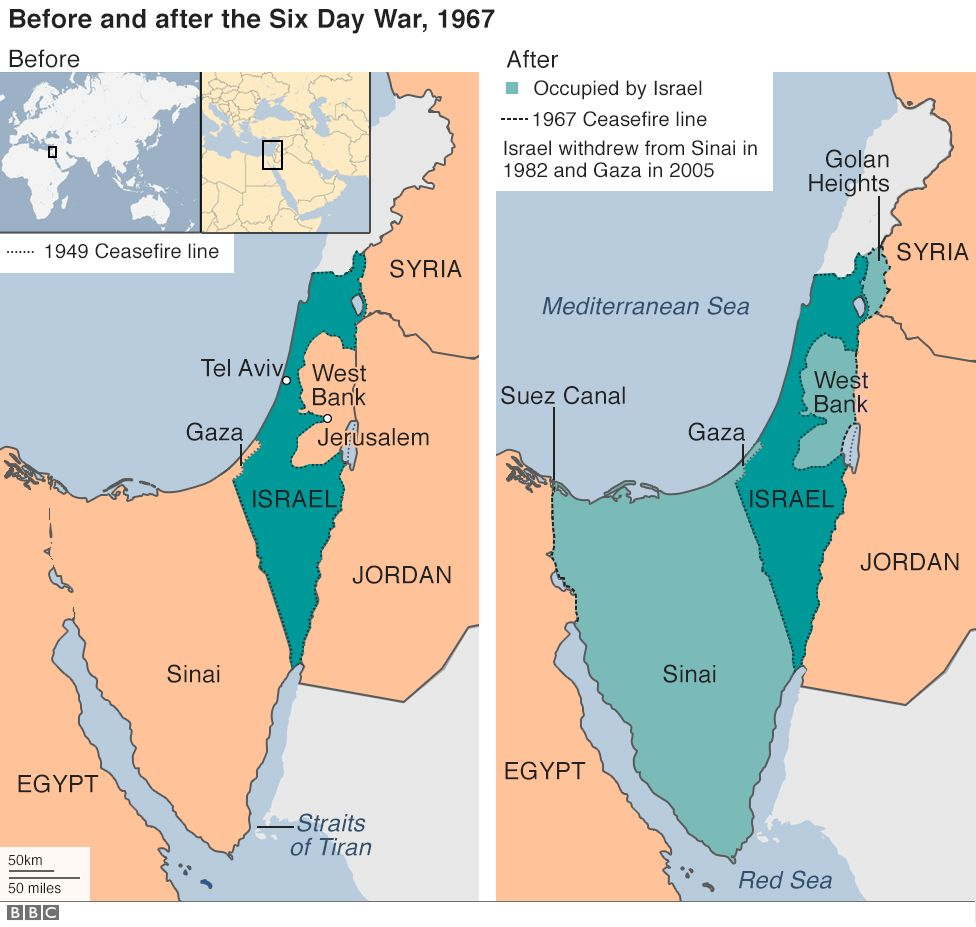
Fifty-seven years have elapsed since the Six-Day War ( June 5 to June 10, 1967) fought between Israel and its Arab neighbors.
Causes of the War
Historical Tensions: Rooted in the establishment of Israel in 1948, which resulted in the displacement and death of thousands of Palestinian Arabs, creating a massive refugee crisis.
Egypt-Israel Relations: Particularly hostile due to territorial and water disputes, exacerbated by Egyptian President Gamal Abdel Nasser’s aggressive stance against Israel.
Cold War Influences: Military build-up in Israel and Arab states along Cold War lines, with Israel supported by the US and Arab states by the Soviet Union.
Provocations: Egypt’s naval blockade of the Straits of Tiran in May 1967, cutting off Israel’s maritime access to the Red Sea and mobilizing forces in the Sinai Peninsula.
Outbreak of the War
On June 5, 1967, Israel launched a pre-emptive airstrike on Egyptian airfields, swiftly gaining air superiority and neutralising the Egyptian Air Force.
Israel’s ground forces advanced into the Sinai Peninsula and Gaza Strip, territories occupied by Egypt.
Jordan and Syria entered the war, attacking Israel from the east and north, but were quickly repelled.
Impacts of the War
Territorial Gains for Israel: In less than a week, Israel captured the Sinai Peninsula and Gaza from Egypt, the Golan Heights from Syria, and the West Bank and East Jerusalem from Jordan.
Geopolitical Shift: The defeat was a major blow to Arab nations, establishing Israel’s military and geopolitical dominance in the region.
Emergence of Palestinian Nationalism: The war spurred the rise of Palestinian nationalism and the Palestine Liberation Organization (PLO) emerged as a significant political entity.
Continued Conflict: Ongoing tensions and conflicts in the region, including the 1973 Yom Kippur War, are direct results of the 1967 war and subsequent Israeli occupation of key territories.
Unresolved Refugee Crisis: The plight of Palestinian refugees displaced during and after the war remains unresolved, continuing to fuel regional instability.
Conclusion: The Six-Day War was thus a pivotal event that not only redefined territorial boundaries but also reshaped political dynamics and set the stage for ongoing conflicts in the Middle East.
Mains PYQ:
Q “India’s relations with Israel have, of late, acquired a depth and diversity, which cannot be rolled back.” Discuss. (UPSC IAS/2018)
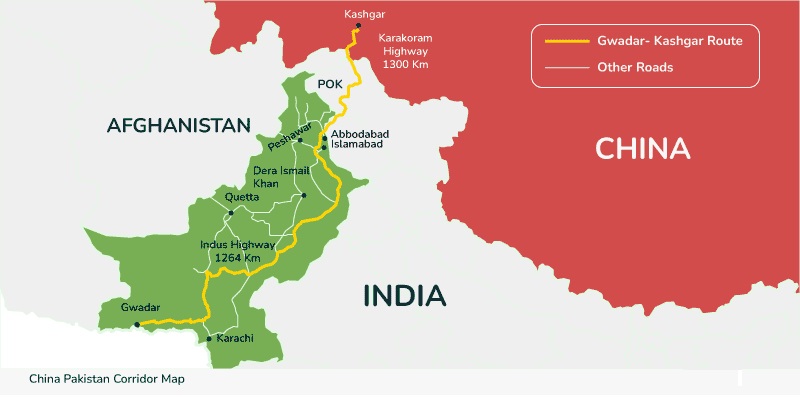
Pakistani PM is on a formal visit to China to attend the formal announcement of the second phase of the China-Pakistan Economic Corridor (CPEC-II).
About CPEC-II
CPEC’s next phase shifts focus from infrastructure and energy to sectors like agriculture, Pakistan Railways’ Main Line-I (ML-1) upgrade, and realignment of the Karakorum Highway.
CPEC was initiated in 2015 as part of President Xi Jinping’s Belt and Road Initiative (BRI).
Why CPEC-II?
It will provide Pakistan with a strategic advantage in terms of trade and commerce
CPEC-II includes significant investments in the energy sector, which will help overcome Pakistan’s chronic power shortages and ensure a stable supply of electricity
Provides a shortcut for China’s access to the Persian Gulf to secure oil imports, and
Stimulate industrial and economic activity in Pakistan.
Belt and Road Initiative (BRI)
The Belt and Road Initiative, formerly known as One Belt One Road, is a global infrastructure development strategy adopted by the Chinese government in 2013.
It will invest in nearly 70 countries and international organizations.
Infrastructure projects include ports, railways, highways, power stations, aviation and telecommunications.
“Belt” refers to the overland routes for road and rail transportation, called “the Silk Road Economic Belt”; whereas “road” refers to the sea routes or the 21st Century Maritime Silk Road.
The project has a target completion date of 2049 which coincides with the 100th anniversary of the People’s Republic of China.
India’s Concerns
Sovereignty Concerns: India expresses reservations as CPEC traverses through Pakistan-occupied Kashmir (PoK), challenging territorial sovereignty and potentially bolstering Pakistan’s claim over the region.
Geostrategic Implications: The expansion of Gwadar port under CPEC extends China’s “String of Pearls” around India, prompting concerns over regional power dynamics.
CPEC’s Progress so Far
Mixed Outcomes: The initial phase of CPEC primarily addressed infrastructure, energy, and port development projects, with progress showing variations.
Project Status: While several power projects have been completed, significant delays and challenges persist in transport-related projects and Special Economic Zones (SEZs).
Challenges and Roadblocks
Slow pace: Gwadar, despite being the epicentre of multibillion-dollar projects, lacks basic necessities like reliable access to water and electricity, let alone other facilities.
Baloch freedom movement: This is another impediment to the stalled project where Chinese officials are targeted and killed.
Consistent security threat: China is also seeking to deploy its Army in the CPEC projects, to which Pakistan has contested.
PYQ:
[2018] The China-Pakistan Economic Corridor (CPEC) is viewed as a cardinal subset of China’s larger ‘One Belt One Road’ initiative. Give a brief description of CPEC and enumerate the reasons why India has distanced itself from the same. (150 Words, 10 Marks)
[2016] ‘Belt and Road Initiative’ is sometimes mentioned in the news in the context of the affairs of
In 2023, India became the world’s most populous country, contrasting China’s declining birth rate. This prompts a comparison of their consumption patterns and geopolitical implications.
Consumer size of India and China
Private Final Consumption Expenditure (PFCE):
India’s PFCE as a percentage of GDP is significantly higher than China’s, with India spending over 58% of its GDP on consumption compared to China’s 38%.
Final consumption, including government expenditure, constitutes 68% of India’s GDP and 53% of China’s GDP.
Despite China’s larger economy, its PFCE is only about 3.5 times that of India’s, indicating a higher contribution of consumption to India’s GDP.
Expenditure by Categories:
India’s consumption expenditure is characterized by higher spending on food, clothing, footwear, and transport, typical of a developing market.
In contrast, China’s consumption basket represents a relatively developed market, with higher spending on housing, white goods, recreation, education, and healthcare.
India spends approximately half of what China spends on food, transport, and clothing and footwear, despite being a fifth of China’s economy.
Real growth rates of individual consumption categories in India often outperform nominal growth rates observed in China.
Conclusion: India’s higher PFCE as a percentage of GDP reflects a greater reliance on consumption-driven growth compared to China.The composition of consumption expenditure in India and China highlights differences in market maturity and consumer behavior.Despite China’s larger economy, India’s consumption expenditure is relatively significant, indicating the potential for continued growth and economic development.
Mains PYQ
Q The time has come for India and Japan to build a strong contemporary relationship, one involving global and strategic partnership that will have a great significance for Asia and the world as a whole. Comment. (UPSC IAS/2019)
SRI Lanka’s Cabinet has approved a new economic law to stabilize its debt-to-GDP ratio that will cover key targets set by the International Monetary Fund (IMF).
The debt-to-GDP ratio measures the proportion of a country’s national debt to its gross domestic product.
According to the World Bank, the countries whose debt-to-GDP ratios exceed 77% for prolonged periods experience significant slowdowns in economic growth.
What are the IMF Targets?
The IMF has various targets and initiatives aimed at achieving sustainable economic growth and prosperity for its member countries.
It includes promoting financial stability, monetary cooperation, and transparency in economic policies to enhance productivity, job creation, and economic well-being.
Indian Scenario:
India has not taken any financial assistance from the IMF since 1993.
India’s current quota in the IMF is SDR (Special Drawing Rights) 5,821.5 million, making it the 13th largest quota-holding country at IMF and giving it shareholdings of 2.44%.
For Sri Lanka:
The IMF targets Sri Lanka to reduce its debt to gross domestic product (GDP) ratio to 95% by 2030.
Another target set by the IMF is to reduce debt servicing costs to 4.5% of GDP. It means Sri Lanka needs to focus on managing the costs associated with servicing it’s debt obligations, aiming to make it more sustainable and manageable in the long term.
How will the debt-to-GDP ratio be reduced?
Fiscal Discipline: Sri Lanka may need to implement measures to improve fiscal discipline, such as reducing government Expenditure, increasing Tax revenue, and narrowing Budget Deficits.
Debt Restructuring: Sri Lanka can explore negotiating with creditors to extend debt maturities, reduce interest rates, or reprofile debt payments.
Revenue Enhancement: The government could focus on enhancing revenue generation through tax reforms, improved tax administration, and efforts to broaden the tax base.
Economic Growth: Promoting economic growth is essential for reducing the debt-to-GDP ratio over the long term. Sri Lanka could implement policies to stimulate investment, boost productivity, and enhance competitiveness, leading to higher GDP growth rates and a more sustainable debt trajectory.
What does India do presently to reduce its debt-to-GDP ratio?
Targeted Reduction: According to a research paper by the Reserve Bank of India (RBI), the government aims to lower the general government debt-GDP ratio to 73.4% by 2030-31. This target is approximately 5% points lower than the trajectory projected by the IMF, indicating ambitious yet achievable goals.
Promotes Fiscal Space: The Indian Central Bank – RBI emphasized reducing debt burdens to free up fiscal space for new investments, particularly in critical areas like the green transition. This suggests a strategic focus on investing in sustainable and environmentally friendly initiatives.
Aligning with IMF: The IMF projects a positive trend in India’s debt reduction efforts, forecasting a decline in government debt from 81% of GDP in 2022 to 80.5% in 2028. This indicates that India’s debt reduction measures are consistent with international expectations and standards.
Conclusion: Focus on enhancing revenue generation through Comprehensive Tax reforms, improved tax compliance, and efforts to broaden the tax base is needed. Secondly, rationalizing Tax revenues can provide additional resources to finance government expenditures without relying heavily on borrowing, thus reducing the debt-to-GDP ratio.
Mains PYQ:
Q The World Bank and the IMF, collectively known as the Bretton Woods Institutions, are the two inter-governmental pillars supporting the structure of the world’s economic and financial order. Superficially, the World Bank and the IMF exhibit many common characteristics, yet their role, functions and mandates are distinctly different. Elucidate. (UPSC IAS/2013)
PYQ Relevance: Mains: Q How far are India’s internal security challenges linked with border management particularly in view of the long porous borders with most countries of South Asia and Myanmar? (UPSC IAS/2013) Q Border management is a complex task due to difficult terrain and hostile relations with some countries. Elucidate the challenges and strategies for effective border management. (UPSC IAS/2016)
Prelims:
Consider the following statements: (UPSC IAS/2020) 1) The value of Indo-Sri Lanka trade has consistently increased in the last decade. 2) “Textile and textile articles” constitute an important item of trade between India and Bangladesh. 3) In the last five years, Nepal has been the largest trading partner of India in South Asia. Which of the statements given above is/are correct? (a) 1 and 2 only (b) 2 only (c) 3 only (d) 1, 2 and 3
Note4Students:
Prelims: Political Theories; Secularism
Mains: Society; Secularism;
Mentor comment: Despite frequent changes in government and the emergence of leaders perceived as anti-India or pro-China, India has maintained a non-partisan approach focused on supporting inclusive economic development, interdependence, communication links, and people-to-people contacts with Nepal. India’s deep historical, cultural, and economic ties with Nepal, as well as its ability to manage security concerns, have allowed it to navigate these challenges. There is the need for fresh thinking on a range of issues, including economic recovery, bilateral and regional cooperation, supply chain restructuring, energy cooperation, and development.
Let’s learn.
–
Why in the News?
Being a neighboring country of both – India and China, Nepal grapples with restlessness and uncertainty amid political and economic challenges.
Questions arise on its rushed transition to democracy, identity, and governance amidst regional geopolitics.
About India-Nepal Bilateral Relations:
Strategic Relations: Geopolitical Dynamics: India is actively countering China’s influence in Nepal through economic diplomacy and expanding cooperation in various sectors. Energy Cooperation: Both countries have signed agreements to boost cooperation in the energy sector, with India involved in developing several hydropower projects for long-term power trade agreements. For example, the Pancheshwar Multipurpose Project (PMP) is a bi-national Multi-Purpose Project, primarily aimed at energy production and augmenting irrigation.
Infrastructure Projects: Efforts are underway to work on infrastructure projects to improve connectivity, such as the unveiling of railway line sections and the inauguration of Integrated Checkposts. India is also undertaking three High Impact Community Development Projects (HICDPs) in Nepal.
Soft Relations:
Cultural and Religious Ties: Steps have been taken to strengthen cultural and religious ties between India and Nepal, including discussions on projects related to the Ramayana circuit, reflecting their shared cultural heritage. Improvement in Relations: After a period of strain, relations between India and Nepal have been improving, especially with several high-level visits, indicating efforts to enhance cooperation and resolve contentious issues.
Border Disputes:
Recent Developments in Nepal under China’s Influence
Political Shifts: Recent coalition changes in Nepal have seen a shift towards leaders perceived as pro-China and anti-India, notably with K.P. Sharma Oli’s return to power. China has actively supported the left alliance in Nepal, pushing for closer ties and cooperation, including on the Belt and Road Initiative (BRI).
Military Cooperation: High-level military visits and agreements indicate China’s intent to expand its influence in Nepal, potentially at India’s expense.
Nationalistic Trends: Rising ultra-nationalistic sentiments in Nepal, from far left to far right, pose challenges to India-Nepal relations.
Security Concerns: Historical instances of political instability in Nepal leading to security threats for India highlight the importance of stable relations between the two countries.
Geopolitical Dynamics: China’s increasing involvement in Nepal raises concerns for India, necessitating a strategic approach to counter potential challenges and maintain regional stability.
Regional and International Dynamics: While India has alliances like the QUAD (Australia, India, Japan, the United States) and other Indo-Pacific groupings, relying on them in case of a major crisis in Nepal would be risky.
The situation in Nepal could potentially lead to a new “Great Game” involving major regional and global powers.
What is India’s present stand?
Non-Interference policy: India has been keeping a low profile and avoiding involvement in Nepal’s internal affairs to prevent controversy.
Lending hand for development: India tries to always offer a new, holistic development roadmap aimed at improving the quality of lifestyle for Nepalese. This agenda includes transformative and sustainable development initiatives in sectors such as health, education, food and nutrition, child development, gender equality, and job creation.
High-Level Attention: Byhigh-level attention and promoting cross-party political consensus on major projects India tries to ensure continuity and achieve its time-bound results despite political instability.
Fostering Inter-linkages and Equality: Developing new inter-linkages between industries of both countries, India addresses the demographic dividend and fosters a sense of equality and sovereign space in Nepal.
Bone of Contention: Border Disputes
Way Forward:
Engage in Quiet Diplomacy: India can engage in quiet diplomacy, fostering dialogue with Nepal’s political stakeholders across the spectrum. This approach can help India understand Nepal’s internal dynamics better while also conveying India’s concerns and interests subtly.
India should be mindful of the “big brother-small brother” syndrome, understanding that the onus lies on India to overcome this dynamic.
India and Iran signed a 10-year agreement for the operation of the Chabahar port, marking a significant milestone in their cooperation.
Back2Basics: Chabahar Port
The port is located in southeastern Iran in the Sistan-Baluchistan province, on the Gulf of Oman and at the mouth of the Strait of Hormuz.
It is called the “Golden Gate” to Central Asian land-locked countries of Afghanistan, Turkmenistan and Uzbekistan.
It serves as Iran’s only oceanic port and consists of two separate ports named Shahid Kalantari and Shahid Beheshti.
It is only about 170 km west of the Gwadar port if Pakistan.
The development of Chabahar port was initiated by India with a MoU in 2015 and executed in 2016 during PM Narendra Modi’s visit to Iran.
About the Agreement
The contract, signed between Indian Ports Global Ltd. (IPGL) and Port and Maritime Organisation (PMO) of Iran, involves substantial investment and development initiatives.
IPGL will invest approximately $120 million in equipping the Shahid-Behesti terminal, enhancing the port’s efficiency and capacity.
India has extended a credit window of $250 million for mutually identified projects aimed at improving Chabahar-related infrastructure, emphasizing its commitment to regional development.
Strategic Importance of Chabahar Port to India
Chabahar port will boost India’s access to Iran, the key gateway to the International North-South Transport Corridor that has sea, rail and road routes between India, Russia, Iran, Europe and Central Asia.
Chabahar port will be beneficial to India in countering Chinese presence in the Arabian Sea which China is trying to ensure by helping Pakistan develop the Gwadar port.
India can bypass Pakistan in transporting goods to Afghanistan.
Economic Significance
Chabahar Port is at an important point on the Arabian Sea, with easy access from India’s west coast.
Kandla port in Gujarat is the closest port at 550 nautical miles, while the distance between Chabahar and Mumbai is 786 nautical miles.
Since 2019, the port has handled more than 80,000 twenty-foot equivalent units (TEUs) of container traffic and more than 8 million tonnes of bulk and general cargo.
The port also offers an alternative route from the Strait of Hormuz for cargo traffic between Central Asian countries and Afghanistan.
PYQ:
[2017] What is the importance of developing Chabahar Port by India?
(a) India’s trade with African countries will enormously increase.
(b) India’s relations with oil-producing Arab countries will be strengthened.
(c) India will not depend on Pakistan to access Afghanistan and Central Asia.
(d) Pakistan will facilitate and protect the gas pipeline installation between Iraq and India.
The inability of successive governments to articulate a shared vision has resulted in the unfair distribution of wealth and resources in Sudan.
ANKARA, TURKIYE – NOVEMBER 3: An infographic titled ”Sudanese civil war intensifies in the western cities” is created in Ankara, Turkiye on November 3, 2023. Since mid-April, the intensity of the conflicts between the army and the Rapid Support Forces (RSF) in Sudan, which have resulted in nearly 10,000 casualties, shifted from the capital Khartoum and its surroundings to the western cities. (Photo by Yasin Demirci/Anadolu via Getty Images)
Historical background of Conflict:
In 1956: The government that came to power in 1956 emphasized an Arab and Islamic identity based on Mahdist principles. It was not representative of diverse communities and demanded compliance, leading to widespread resistance.
In 1989: In 1989, a new government seized control under the National Islamic Front, an alliance between army officers and the Muslim Brotherhood. Omar al-Bashir came to power, supported by Islamist leader Hassan al-Turabi, aiming to establish an Islamic state.
In 1991: The government set up an internal security apparatus, arresting and torturing dissenters. It introduced a new penal code in 1991 to impose an Islamization agenda.
In 2003: The al-Bashir (in 2003) regime enlisted Janjaweed militias to quell an insurgency in Darfur. These militias were later designated as the Rapid Support Forces in 2013.
In 2018-19: After protests in 2018 and al-Bashir’s removal in 2019, a transitional military government was established. Despite challenges and a failed coup attempt, a power-sharing agreement was reached, but another coup led by Abdel Fattah al-Burhan derailed the democratic transition.
Causes of the present conflict in Sudan:
Deep-rooted Crisis in Governance: The conflict reflects a longstanding crisis within Sudan’s governing structure since gaining independence in 1956, characterized by power struggles and frequent coups.
Identity Crisis and Rebellion: Sudan has experienced numerous rebellions fueled by an identity crisis, with marginalized populations seeking autonomy and fair representation within the state.
Ethnic and Regional Disparities: Sudan comprises of 19 major ethnic groups and about 597 ethnic sub-groups. Since independence, the Sudanese have experienced 35 coups and attempted coups, more than any other African country.
Religious and Political Ideologies: Shifts in government ideologies, such as the establishment of an Islamic state in 1989, have exacerbated tensions and led to further marginalization of certain groups.
Role of Militias: The emergence of paramilitary forces, such as the Rapid Support Forces, has complicated the conflict dynamics, with militias vying for power and control over resources.
Other country’s involvement: External influences, including support from foreign entities like Russia, have played a role in shaping the conflict landscape, particularly in resource-rich regions like Darfur.
Economic Interests: Economic factors, such as control over lucrative industries like gold mining, have contributed to the entrenchment of certain groups in power and fueled conflict dynamics.
Way Forward:
Establish a Civilian-Led Government: Sudan needs to prioritize the establishment of a transparent, civilian-led government that represents the diverse Sudanese populace. This government should ensure inclusivity and participation in decision-making processes.
Disarm and Demobilize Militias: Urgent action is needed to disarm and demobilize militias like the Rapid Support Forces. This will prevent militia dominance over the state and reduce the risk of armed confrontations and conflicts.
International Support for Reconstruction: Sudan requires collaborative efforts from the international community to aid in post-conflict reconstruction. This support can include financial assistance, capacity-building programs, and technical expertise to rebuild infrastructure, institutions, and communities affected by conflict.
Mains PYQ
Q Africa was chopped into states artificially created by accident of European competition. Analyse. (UPSC IAS/2013)
Q Evaluate the economic and strategic dimensions of India’s Look East Policy in the context of the post-Cold War international scenario..(UPSC IAS/2016)
Q India needs to strengthen measures to promote the pink revolution in food industry for ensuring better nutrition and health. Critically elucidate the statement.(UPSC IAS/2013)
Note4Students:
Prelims: NA
Mains: Challenges facing by India in south Asia,Factors contributing to India’s regional decline,
Mentor comments:India’s paradoxical foreign policy sees a rising global stature fueled by economic growth, military strength, and multilateral engagements like the Quad and BRICS. Yet, regionally, it faces weakning influence due to relative power shifts vis-à-vis China, loss of primacy in South Asia, and evolving geopolitics in the region.
Why in the news?
In contemporary Indian foreign policy, a perplexing paradox emerges as India rises on the global stage while concurrently experiencing a decline in regional influence.
Factors contributing to India’s Regional decline:
American withdrawal and China’s influence: The withdrawal of the United States from the region has created a power vacuum, allowing China to expand its influence. This has been disadvantageous to India’s regional influence but has also led to increased interest from the United States and its allies in accommodating India’s global interests to counterbalance China.
Indo-Pacific focus: While India’s focus on the Indo-Pacific has garnered global attention, it may have stretched India’s resources too thin in its continental neighborhood. This shift in focus towards the great power balance in the Indo-Pacific has potentially contributed to India’s declining influence in South Asia.
Dynamic of comparative power: India’s regional decline is a result of the dynamics of comparative power, where the rise of China and the geopolitical choices made by the region’s smaller powers have shifted the balance of influence. Overlooking the balancing acts of smaller regional powers in favor of solely focusing on great power dynamics could be counterproductive for understanding the complexities of India’s regional decline.
Challenges faced by India in South Asia:
Rise of China: China’s ascent poses a significant challenge to India’s regional influence, with its growing power shifting the balance in South Asia.
Shift in regional dynamics: The arrival of China in South Asia, coupled with the withdrawal of the U.S. from the region, has altered the regional balance of power, creating geopolitical competition for influence.
Strategies of smaller South Asian nations: India’s smaller neighbors are adopting various strategies, such as balancing, bargaining, hedging, and bandwagoning, in response to the changing power dynamics, often viewing China as a useful hedge against India.
Obsolescence of South Asia as a geopolitical construct: The traditional concept of South Asia as a geopolitical entity is becoming obsolete, further challenging India’s hold on the region.
What needs to be done?
Revisiting traditional conceptions: India must reassess its traditional conceptions of the region and modernize its approach to maintain primacy in South Asia.
Accepting changing realities: Acknowledging the fundamental changes in the region’s geopolitics is crucial for India to effectively address the challenges it faces.
Focus on strengths: India should leverage its strengths rather than attempting to match China’s might in every aspect. Reclaiming its traditional strengths, such as its Buddhist heritage, can be beneficial.
Leveraging maritime advantages: Given the challenges in its continental strategy, India should capitalize on its maritime advantages in the Indo-Pacific to enhance trade, form minilaterals, and build issue-based coalitions.
Engaging with smaller South Asian neighbors: India should include its smaller South Asian neighbors in Indo-Pacific strategic conversations to wean them away from China’s regional grand strategy and strengthen partnerships with key players like Sri Lanka, the Maldives, and Bangladesh.
Adopting a non-India centric approach: India’s willingness to view the region through a non-India centric lens signals openness to collaborating with external friendly partners in addressing common challenges in the Indian Ocean and South Asia.
Way Forward
Diversify Engagement: India should diversify its engagement strategies to encompass both global and regional interests effectively. This could involve maintaining robust relationships with global powers while simultaneously strengthening ties with regional neighbors.
Enhance Regional Cooperation: India should prioritize enhancing cooperation and collaboration within South Asia. This could involve revitalizing initiatives like SAARC (South Asian Association for Regional Cooperation) and promoting bilateral partnerships with individual South Asian countries.