💥Join UPSC 2027,2028 Mentorship (July Batch) + XFactor Notes & Microthemes PDF

GS Paper: Indian Economy

  • Navigating cross-border insolvency

    Why in the News?

    It is essential to incorporate the significance of insolvency laws into global trade discussions through both multilateral and bilateral channels.

    What are the key challenges in managing cross-border insolvency cases?

    • Jurisdictional Conflicts: Difficulty in determining which country’s courts have jurisdiction over insolvency proceedings, especially when a company has assets and creditors in multiple countries.
    • Recognition of Foreign Proceedings: Some countries may not recognize foreign insolvency proceedings, leading to inconsistent outcomes.
    • Coordination Issues: Lack of cooperation between courts and administrators in different countries can complicate the resolution of cross-border insolvency cases.
    • Legal and Cultural Differences: Variations in legal systems, insolvency laws, and business practices across countries make harmonization challenging.
    • Enforcement of Judgments: Difficulty in enforcing insolvency-related judgments or agreements across different jurisdictions.

    How does the Insolvency and Bankruptcy Code (IBC) address cross-border insolvency in India?

    • Limited Provisions: The IBC, 2016, has provisions for handling cross-border insolvency on a case-by-case basis through bilateral agreements, but it lacks a comprehensive framework.
    • Bilateral Arrangements: India’s approach currently relies on ad hoc bilateral agreements to manage cross-border insolvency cases, making the process fragmented and less efficient.
    • No Adoption of the UNCITRAL Model Law: Despite several recommendations by committees, India has yet to adopt the UNCITRAL Model Law on Cross-Border Insolvency, which would provide a more standardized and efficient resolution mechanism.

    What international frameworks exist to facilitate cross-border insolvency resolutions?

    • UNCITRAL Model Law on Cross-Border Insolvency (1997): A widely recognized framework designed to facilitate cooperation between courts and administrators in different countries.
      • It operates on four pillars: access, recognition, cooperation, and coordination. It has been adopted by over 60 countries.
    • EU Insolvency Regulation: Provides a framework for handling insolvency within EU member states, facilitating the recognition of insolvency proceedings across borders within the EU.
    • NAFTA/US-Mexico-Canada Agreement (USMCA): Includes provisions for resolving insolvencies with cross-border implications between member countries.
    • Bilateral and Multilateral Trade Agreements: Some international agreements include limited provisions on cross-border insolvency, though most focus on general trade and dispute resolution, leaving a gap in addressing insolvency directly.

    Way forward: 

    • Adopt the UNCITRAL Model Law: India should expedite the adoption of the UNCITRAL Model Law on Cross-Border Insolvency to establish a standardized framework, improving cooperation, recognition, and legal certainty in international insolvency cases.
    • Integrate Cross-Border Insolvency in Trade Agreements: India should incorporate cross-border insolvency provisions in Free Trade Agreements (FTAs) and Comprehensive Economic Partnership Agreements (CEPAs) to ensure seamless insolvency resolution in international trade.
  • NBFC sector resilient under scale-based regulations framework: RBI bulletin

    Why in the News?

    During the transition to the Scale-Based Regulation (SBR) framework, the NBFC sector experienced double-digit credit growth, maintained adequate capital levels, and saw a reduction in delinquency ratios.

    What is Scale-Based Regulation (SBR)?

    • The SBR framework was first outlined in October 2021 and became effective on October 1, 2022.
    • It aims to categorize NBFCs based on their size, activities, and perceived riskiness rather than merely distinguishing between systemically important and non-systemically important entities.

    What are the key points presented by RBI on the resilience of the NBFC sector?

    • Improvement in Asset Quality: Since the introduction of the Scale-Based Regulation (SBR) framework in October 2022, the asset quality of NBFCs has improved, with lower gross non-performing asset (GNPA) ratios.
      • By December 2023, GNPA ratios had decreased to 2.4% for government-owned NBFCs and 6.3% for non-government NBFCs, reflecting enhanced risk management.
    • Double-Digit Credit Growth: The NBFC sector maintained strong credit growth throughout 2023, driven by a diversified funding base, including retail credit (gold loans, vehicle loans, and housing loans) and expanding into industrial and service sectors.
    • Improved Profitability: The sector witnessed a rise in profitability, as evidenced by better returns on assets (RoA) and equity (RoE).
    • Net NPA (NNPA) Performance: Upper layer NBFCs had lower GNPA ratios than middle layer NBFCs, but the latter maintained sufficient provisions for riskier portfolios, ensuring that their NNPA ratios were also controlled.
    • Compliance with SBR: Major NBFCs in the “Upper Layer” identified by the RBI under the SBR framework, such as LIC Housing Finance, Bajaj Finance, and L&T Finance, have complied or initiated steps to comply with listing requirements.

    Regulatory measures  taken up by the NBFC sector 

    • Scale-Based Regulation (SBR) Framework: Introduced in October 2022, the SBR framework categorizes NBFCs into different layers based on their size, systemic importance, and risk profile. For instance, strengthen asset quality, capital requirements, and risk management.
    • Prompt Corrective Action (PCA) Norms: Effective from October 2024, PCA norms will apply to government-owned NBFCs. These measures aim to enhance financial discipline, focusing on capital adequacy and asset quality.
    • Diversification of Funding Sources: Due to rising risk weights on bank lending, NBFCs have diversified their funding base by reducing dependence on bank borrowings and expanding into secured retail credit.
    • Listing Compliance: Many NBFCs in the upper layer have complied or are in the process of complying with listing requirements as part of regulatory mandates.

    What are the emerging risks that NBFCs need to cater? (Way forward) 

    • Cybersecurity Risks: With the increasing use of digital platforms, NBFCs need to enhance cybersecurity measures to safeguard against evolving cyber threats.
    • Climate Risk: The financial impact of climate change poses a new risk. NBFCs must integrate climate-related risks into their risk management frameworks to mitigate potential disruptions.
    • Financial Assurance Functions: The RBI emphasizes that assurance functions like risk management, compliance, and internal audit are critical in maintaining resilience in the face of rapid changes in the financial landscape.
    • Evolving Regulatory Environment: As the financial sector continues to evolve, NBFCs must stay ahead of regulatory changes and ensure that their risk management practices are aligned with emerging threats and new regulations.
  • Why US Fed cut interest rates, how India could be impacted? 

    Why in the News?

    The United States Federal Reserve, responsible for the country’s monetary policy, announced on Wednesday that it will lower its key interest rate, called the Federal Funds Rate, by 0.5%, or 50 basis points.

    Why did the Fed cut interest rates?

    • The Federal Reserve cut the benchmark interest rate by 50 basis points to address rising unemployment concerns while inflation was stabilizing.
    • After a series of aggressive rate hikes to counter inflation that surged due to post-COVID recovery and the Russia-Ukraine war, inflation began to moderate, nearing the Fed’s target of 2%.
    • Rising unemployment data signaled that the restrictive monetary policy might harm the labor market, prompting the Fed to act.

    Will the US economy achieve a soft landing?

    • Optimistic Projections: Despite earlier predictions that high inflation would lead to a recession, the Fed’s strategy may succeed in achieving a soft landing, reducing inflation without crashing the economy.
    • GDP Growth: The Summary of Economic Projections (SEP) estimates GDP growth to remain around 2% for the next few years, indicating a stable economy.
    • Unemployment: While the unemployment rate has risen slightly to 4.4%, it remains manageable, with expectations of improvement.
    • Risks: Potential policy shifts, especially related to the upcoming presidential election, could disrupt the economic outlook, particularly if trade tariffs are imposed.

    How will India be affected?

    • Increased Foreign Investments: Lower US interest rates could encourage foreign investors to borrow in the US and invest in India through stocks, bonds, or foreign direct investment (FDI), benefiting capital inflow.
    • Rupee Strengthening: With falling US interest rates, the US dollar may weaken against the Indian rupee, potentially strengthening the rupee. This would negatively affect Indian exporters but benefit importers.
    • RBI’s Interest Rate Decisions: While the Fed’s rate cuts influence global markets, India’s central bank, the RBI, may not directly follow suit due to differing inflation targets and mandates. The RBI prioritizes inflation control and GDP growth over unemployment figures.

    Way forward: 

    • Encourage Capital Inflows: India should take advantage of lower US interest rates by attracting foreign investments through improved ease of doing business, fostering growth in key sectors like infrastructure, technology, and manufacturing.
    • Maintain Monetary Stability: The RBI should carefully assess global trends but prioritize domestic conditions when adjusting interest rates, focusing on inflation control, financial stability, and sustained GDP growth.

    Mains PYQ:

    Q Do you agree with the view that steady GDP growth and low inflation have left the Indian economy in good shape? Give reasons in support of your arguments. (UPSC IAS/2016)

  • INCOIS Launches Integrated Ocean Energy Atlas  

    Why in the News?

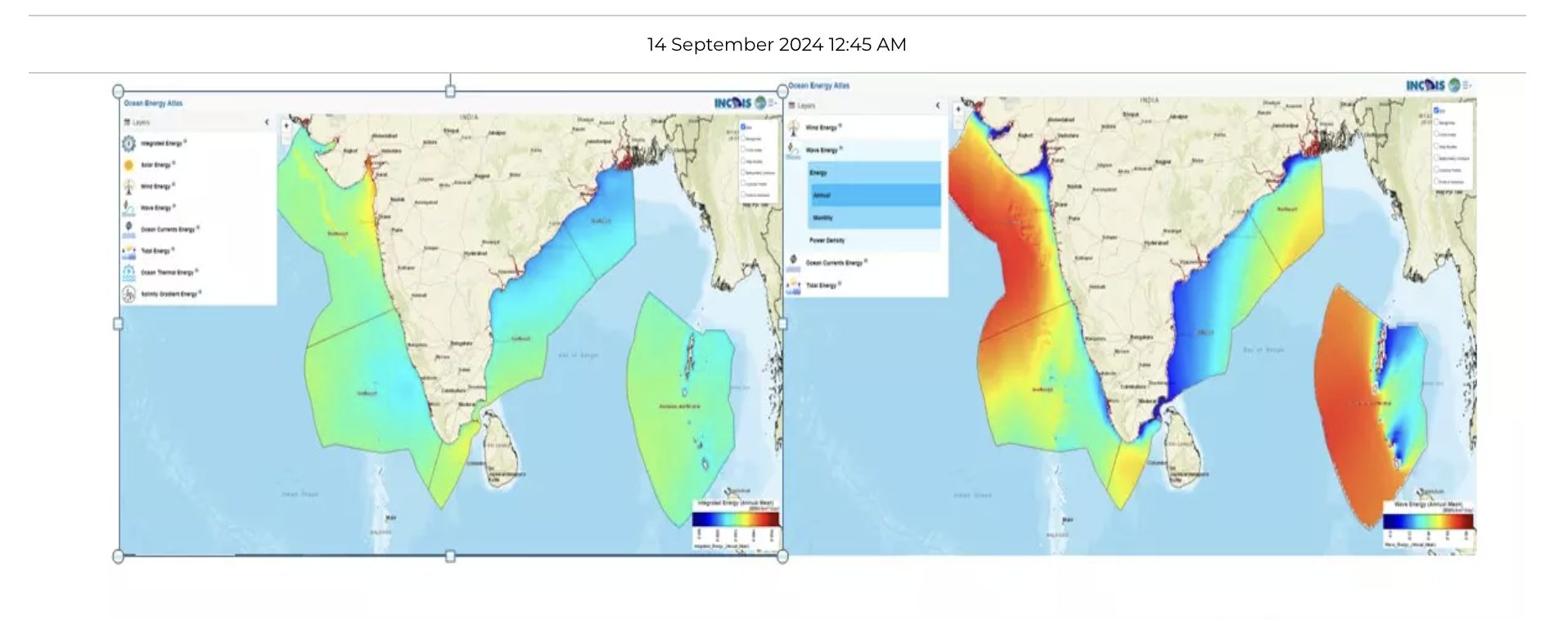
    INCOIS unveiled an ‘Integrated Ocean Energy Atlas’ for India’s EEZ, highlighting vast marine energy potential from solar, wind, waves, tides, currents, and thermal resources.

    About INCOIS:

    • The Indian National Centre for Ocean Information Services (INCOIS) is an autonomous body established in 1999 under the Ministry of Earth Sciences (MoES) in India.
    • Its primary mission is to provide ocean data, information, and advisory services to various stakeholders, including society, industry, government, and the scientific community through sustained ocean observations.

    Key Features of the Integrated Ocean Energy Atlas

    • The Atlas encompasses marine meteorological energy sources like solar and wind, and hydrological energy forms such as waves, tides, currents, ocean thermal, and salinity gradients within India’s EEZ.
    • It identifies areas with high potential for energy generation and will serve as a reference for policymakers, industry and researchers for harnessing these rich energy resources.
    • INCOIS prepared the annual, monthly, and daily energy estimates of ocean energy components that can be visualised through a WebGIS interface at 5 km grid resolution.

    Significant potential of the Indian Exclusive Economic Zone (EEZ)

    • INCOIS has estimated integrated ocean energy of approximately 9.2 lakh TWh per annum within the EEZ of India.
    • The vast coastline of over 7,000 km and the EEZ covering up to 220 km from the coast offers ample scope for generating energy from blue renewable sources like tidal waves, currents, solar and wind.

    What India can learn from this Report? (Way forward)

    • The Atlas provides a blueprint for India to tap into its vast untapped ocean energy resources to meet its growing energy demands in a sustainable manner.
    • It offers estimated values of renewable energy that can be generated from individual or integrated blue renewable sources at potential sites along the coast
    • The detailed mapping of energy potential at a granular 5 km grid level can help industries plan and make informed decisions for developing offshore renewable energy projects.
    • Collaborating with industrial partners and public sector companies to harness energy at high-potential zones identified in the Atlas can accelerate the adoption of marine energy technologies.
    • The Atlas can serve as a model for other countries in the Indian Ocean region to assess their blue energy reserves and promote regional cooperation in harnessing ocean energy resources.

    Mains PYQ:

    Q Describe the benefits of deriving electric energy from sunlight in contrast to the conventional energy generation. What are the initiatives offered by our government for this purpose? (UPSC IAS/2020)

  • [18th September 2024] The Hindu Op-ed: Demographic advantage, Indian economy’s sweet spot

    [18th September 2024] The Hindu Op-ed: Demographic advantage, Indian economy’s sweet spot

    PYQ Relevance:

    [2022] Economic growth in the recent past has been led by an increase in labour productivity.” Explain this statement. Suggest the growth pattern that will lead to the creation of more jobs without compromising labour productivity.
    [2014] While we flaunt India’s demographic dividend, we ignore the dropping rates of employability.” What are we missing while doing so? Where will the jobs that India desperately needs come from? Explain.

    Prelims:

    [2013]  Economic growth in country X will necessarily have to occur if:
    (a) there is technical progress in the world economy
    (b) there is population growth in X
    (c) there is capital formation in X
    (d) the volume of trade grows in the world economy 

    Mentor’s Comment:  India has become a global economic powerhouse, now ranking as the fifth-largest economy and holding the title of the fastest-growing major economy. A significant factor in this growth is its demographic advantage, with a median age of 28 and 63% of the population being of working age. However, the labour force participation rate in 2022 stood at 55.2%, according to the International Labour Organization (ILO). The report also notes that much of this growth is led by the services sector, which is less labour-intensive, underscoring the importance of fully leveraging the demographic dividend.

    _

    Let’s learn!

    Why in the News?

    India is not fully capitalizing on its demographic dividend, former RBI governor Raghuram Rajan stated on April 16, highlighting the need to prioritize the development of human capital and the improvement of skill sets.

    Factors behind Service-pushed Growth

    • Capital and Labour Ratios: The Economic Survey 2023-24 highlighted a declining capital-to-output ratio and an increasing capital-to-labour ratio.
    • Labour Abundance: Arvind Panagariya, Chairman of the 16th Finance Commission, noted that capital-led economic growth is not ideal for India, which has an abundance of labour.
    • MSMEs and Labour Laws: Micro, Small, and Medium Enterprises (MSMEs) are hesitant to scale up due to outdated labour laws and compliance burdens.
    • Labour Codes: The impasse over new labour codes, approved by Parliament but yet to be implemented, sends a negative signal to investors.

    Employment in Labour-Intensive Sectors

    • Agriculture Employment: 45% of the workforce is employed in agriculture, which contributes only 18% of GDP, making it essential to boost manufacturing.
    • Unorganised Sector: The unorganised and non-agricultural sectors employ 19% of the workforce and need focused attention.
    • High-Growth Sectors: High-growth sectors such as toys, apparel, tourism, and logistics can provide labour-intensive employment opportunities.
    • Skilling for Growth: Upgrading skills in these sectors will help workers move up the value chain and access better-paying jobs.

    The Importance of Skilling

    • Workforce Productivity: Skilling is vital for making the workforce productive, with only 4.4% of the workforce aged 15-29 being formally skilled, according to the Economic Survey.
    • Public-Private Partnerships: Public-private partnerships are crucial for creating a relevant curriculum and offering on-the-job training.
    • Lifelong Learning: Skilling should be a lifelong process with flexible learning systems, not just a one-time intervention.
    • New Education Policy (NEP) 2020: The NEP 2020 focuses on foundational and cognitive skills but needs regular review to stay updated.

    Impact of AI and Machine Learning

    • Job Threats and Opportunities: AI and machine learning (ML) pose a threat to low-skill, repetitive jobs but will still require human oversight.
    • Regulatory Framework: Creating appropriate regulations to govern AI/ML while leveraging its potential is key.
    • Market Growth: The AI/ML market is expected to grow nearly nine times by 2030, reaching $826.73 billion globally.
    • Talent Pool: India has the second-largest talent pool in AI/ML, but with a current demand-supply gap of 51%, it presents a significant opportunity for growth.

    Way Forward

    • Sustaining Growth: Reforms are essential to sustain India’s growth trajectory and create new opportunities.
    • Policy Focus: Finance Minister Nirmala Sitharaman emphasized the need for improving productivity and making markets more efficient in her 2023 Budget speech.
    • State-Level Reforms: While the central government has improved the ease of doing business, state-level reforms are crucial as states are where most economic activities occur.
    • Collaboration: Both the Centre and States must collaborate to broaden and deepen reforms for sustained economic growth.

    Conclusion:

    India’s large, young, and aspirational population presents a unique opportunity. Managing this demographic advantage is more favorable than dealing with the challenges of an aging population.

    https://www.thehindu.com/opinion/op-ed/demographic-advantage-indian-economys-sweet-spot/article68652703.ece

  • Government scraps Windfall Tax on Crude Oil

    Why in the News?

    The Government of India has scrapped the windfall tax on crude oil, which was previously set at ₹1,850 per tonne.

    What is Windfall Tax?

    Details
    Definition A higher tax levied on companies that earn unexpected and extraordinary profits due to external factors.
    Purpose To capture a portion of excess profits from industries benefiting from global price surges, such as oil.
    Imposition in India Imposed as a Special Additional Excise Duty (SAED) on crude oil production and exports of diesel, petrol, and aviation turbine fuel (ATF).
    Dynamic Tax Rate Revised every 15 days based on international oil prices in the preceding fortnight.
    First Imposed July 1, 2022, during the Russia-Ukraine conflict and post-COVID recovery.
    Application Applies to domestically produced crude oil and exports of diesel, petrol, and ATF.
    Reasons for Imposing
    • Sharp rise in global oil prices due to external factors like the Russia-Ukraine war.
    • Capture supernormal profits of energy companies for public welfare.
    Benefits
    • Generates revenue for public welfare schemes.
    • Ensures fair distribution of profits from market volatility.
    • Stabilizes fuel prices during inflation or supply chain disruptions.


    India’s Crude Oil Trade:

    • India is the 3rd largest oil consumer globally, following the US and China.
    • The country relies on imports for 85% of its oil needs, with this dependence expected to increase due to declining domestic production.
    • Russia has become India’s top oil supplier, with imports surging to 1.53 million barrels per day (bpd) in January 2024.
    • Russia (1st) > Iraq (2nd) > Saudi Arabia (3rd)> UAE (4th) – Crude oil export to India 


    PYQ:

    [2020] The term ‘West Texas Intermediate’, sometimes found in news, refers to a grade of:

    (a) Crude oil

    (b) Bullion

    (c) Rare earth elements

    (d) Uranium

    [2017] Petroleum refineries are not necessarily located nearer to crude oil producing areas, particularly in many of the developing countries. Explain its implications. (250 words)

  • Is it time for India to introduce a Universal Basic Income?

    Why in the News?

    The rise in jobless growth, driven by automation and AI, has led to growing inequality, prompting discussions on implementing Universal Basic Income (UBI) in many countries.

    What does the ILO say on Inflation and unemployment in India? 

    • The ILO reports that 83% of the unemployed population in India are youth, due to the rapidly changing economy influenced by automation and AI.
      • This trend has exacerbated income inequality, with a 1.6% drop in global labour income share between 2004 and 2024, significantly affecting developing nations like India.
    • The report indicates that persistent inflation and geopolitical tensions have led to aggressive monetary policies, which could further strain the labor market.
      • The ILO anticipates a slight increase in global unemployment in 2024, reflecting ongoing structural issues in labor markets.

    What will be its implications on Indian growth and development? 

    • Social Implications: Falling living standards and weak productivity due to automation could lead to greater inequality, undermining social justice efforts in India.
      • The ILO suggests that increasing unemployment and inflation could result in social unrest and political instability without effective social safety nets.
    • Political Implications: It makes it difficult for the decision making and governance due to the drop in global labour income, prompting India to increase budget allocations for welfare programs.
    • Economic Implications: The emphasis on generating employment in labor-intensive sectors is crucial. The government policies should prioritize job creation to counteract the effects of automation and ensure that growth benefits a broader segment of the population.

    What are the safety nets for India? 

    • Cash Transfer Schemes: Programs targeting farmers and women, as well as cash transfers for unemployed youth, represent existing safety nets that provide some level of income support.
    • Employment Guarantee Schemes: Initiatives like the Mahatma Gandhi National Rural Employment Guarantee Act (MGNREGA) aim to provide employment and income security to rural households, although funding and implementation have faced challenges.
    • Universal Basic Social Safety Nets: Experts suggest that rather than a full UBI, India should focus on enhancing existing social safety nets to ensure they are more universal and effective in addressing the needs of the unemployed and underemployed populations.
  • [pib] Recommendations during 54th meeting of GST Council

    Why in the News?

    The 54th GST Council meeting, chaired by Union Finance Minister was held recently.

    Recommendations from the 54th GST Council Meeting:

    GST Rate Changes for Goods

    Namkeens and Savory Products GST on extruded/expanded savoury products reduced from 18% to 12%; 5% GST on un-fried or uncooked snack pellets continues.
    Cancer Drugs GST on cancer drugs like Trastuzumab Deruxtecan, Osimertinib, and Durvalumab reduced from 12% to 5%.
    Metal Scrap Reverse Charge Mechanism (RCM) introduced for metal scrap supplies by unregistered persons; 2% TDS applied on B2B metal scrap supplies by registered persons.
    RMPU Air Conditioning Machines RMPU air conditioning machines for railways classified under HSN 8415, attracting a 28% GST rate.
    Car and Motorcycle Seats GST on car seats (HSN 9401) increased from 18% to 28%, aligning with the rate for motorcycle seats.

    GST Rate Changes for Services

    Life and Health Insurance Group of Ministers (GoM) to be constituted to study GST issues related to life and health insurance. Report expected by October 2024.
    Transport by Helicopters GST on passenger transport by helicopters (seat share basis) set at 5%; 18% GST continues for charter helicopter services.
    Flying Training Courses DGCA-approved flying training courses conducted by Flying Training Organizations (FTOs) will be exempt from GST.
    Preferential Location Charges Preferential Location Charges (PLC) in construction services to be taxed as composite supply.
    Affiliation Services Affiliation services provided by boards like CBSE taxable; services provided to government schools by state/central boards will be exempt.
    Import of Services by Branches Import of services by foreign airlines’ branch offices from related persons will be exempt from GST if made without consideration.

    Compliance Measures

    B2C E-invoicing Pilot project for B2C e-invoicing introduced to improve business efficiency and environmental sustainability.
    Invoice Management System (IMS) Invoice Management System to allow taxpayers to accept, reject, or keep invoices pending for claiming Input Tax Credit (ITC).
    Waiver of Interest/Penalty Special procedure to waive interest/penalty for tax demands from FY 2017-18, 2018-19, and 2019-20 under section 73 of CGST Act.
    Clarifications via Circulars Clarifications on place of supply for advertising services, ITC on demo vehicles, and place of supply for data hosting services to be issued.


    PYQ:

    [2018] Consider the following items:

    1. Cereal grains hulled

    2. Chicken eggs cooked

    3. Fish processed and canned

    4. Newspapers containing advertising material

    Which of the above items is/are exempted under GST (Goods and Services Tax)?

    (a) 1 only

    (b) 2 and 3 only

    (c) 1, 2 and 4 only

    (d) 1, 2, 3 and 4

  • [7th September 2024] The Hindu Op-ed: Stick to fiscal deficit as the norm for fiscal prudence

    [7th September 2024] The Hindu Op-ed: Stick to fiscal deficit as the norm for fiscal prudence

    PYQ Relevance:

    Q What were the reasons for the introduction of Fiscal Responsibility and Budget Management (FRBM) Act, 2013? Discuss critically its salient features and their effectiveness. (UPSC IAS/2018)

    Q The public expenditure management is a challenge to the Government of India in the context of budget making during the post-liberalization period. Clarify it. (UPSC IAS/2019)

    Q How have the recommendations of the 14th Finance Commission of India enabled the States to improve their fiscal position? (UPSC IAS/2021)

    Mentor comment: Fiscal deficit is considered a problem in India because it leads to increased government borrowing, which can raise public debt to unsustainable levels. This borrowing often crowds out private investment by driving up interest rates, making it more expensive for businesses to borrow. Additionally, financing the deficit by printing money can lead to inflation, eroding consumers’ purchasing power. It also places a burden on future generations, who will have to pay off the debt. In today’s editorial, we will be having a look on how the high fiscal deficits can undermine investor confidence, potentially resulting in credit downgrades and higher borrowing costs.

    _

    Let’s learn!

    Why in the News?

    The FM in the Union Budget of 2024-25 stated that, from 2026-27 onwards, Indian govt will focus to reduce the fiscal deficit each year to ensure that the debt declines as a percentage of GDP.

    • The speech also says that the Centre’s fiscal deficit would be reduced to 4.5% of GDP in 2025-26 from its budgeted level of 4.9% in 2024-25.
    About the Fiscal Deficit:
    Fiscal Deficit is excess of total budget expenditure over total budget receipts excluding borrowings during a fiscal year.
    Fiscal Deficit = Total Expenditure – (Revenue Receipts + Non-Debt Creating Capital Receipts).

    What is the National Debt?
    The national debt is the total amount of money that the government owes to its lenders at a particular point in time. It is different from the fiscal deficit. 
    In simple, it is the amount of debt that has accumulated by the government over many years of running fiscal deficits and borrowing to bridge the deficits. 

    What are the implications of the Fiscal deficit?

    Negative Implications:

    • Inflationary Pressure: When a country’s government runs a persistently high fiscal deficit, this can eventually lead to higher inflation as the government will be forced to use fresh money issued by the central bank to fund its fiscal deficit.
      • It also eventually leads to a higher ratio of interest payments to revenue receipts. Hence there will be lower shares for financing non-interest expenditures.
    • Crowding Out effect: When the government borrows a large portion of available funds from financial markets to finance its deficit, it crowds out private investment with reduced access to credit for businesses and individuals.
      • This can hinder economic growth and productivity.
    • Reduced Fiscal Space: A high fiscal deficit limits the government’s ability to respond to economic shocks or crises.
      • With limited fiscal space, the government may be unable to implement countercyclical fiscal policies such as increased spending or tax cuts to stimulate economic growth during downturns.
    • Difficulty in borrowing: As a government’s finances worsen, demand for the government’s bonds begins to drop, forcing the government to offer to pay a higher interest rate to lenders. 

    Positive Implications of Lower Fiscal Deficit:

    • Improve Credit Ratings: Higher credit ratings make it cheaper for India to borrow in global markets, reducing the cost of external debt.
    • Enhance the space for development: Less money is diverted to debt servicing while the fiscal deficit is lower,  which leaves more funds for development projects like infrastructure, education, and healthcare.
      • This can enhance investor confidence, leading to increased foreign and domestic investment.
    • Improve the Balance of Payment: Lower deficits will be reducing the reliance on foreign borrowing. It will help in stabilizing the exchange rate and the overall current account.

    What are the reforms needed?

    • Infrastructure Finance Reforms: Improving mechanisms for financing infrastructure projects by involving the private sector through public-private partnerships (PPP), infrastructure bonds, and development of finance institutions.
    • Recommendations: The NK Singh committee in 2017 proposed a draft Debt Management and Fiscal Responsibility Bill, 2017 which need to be implemented comprehensively.
    • Incentivizing Financial Savings: Promoting higher household financial savings through tax incentives on financial products, improving returns on long-term savings schemes, and enhancing financial literacy.

    https://www.thehindu.com/opinion/lead/stick-to-fiscal-deficit-as-the-norm-for-fiscal-prudence/article68614653.ece

  • [pib] VisioNxt Fashion Forecasting Initiative

    Why in the News?

    The Union Ministry of Textiles has launched India’s first fashion forecasting initiative ‘VisioNxt’.

    About VisioNxt Initiative

    Details
    Launched By National Institute of Fashion Technology (NIFT) in collaboration with the Ministry of Textiles, Government of India.
    Objective To provide India-specific fashion trend insights and reduce dependence on global forecasting agencies.
    Significance India’s first initiative to integrate Artificial Intelligence (AI) and Emotional Intelligence (EI) to forecast fashion trends.
    Key Features
    • Delivers localized fashion trend insights tailored for Indian designers, manufacturers, and retailers.
    • Provides forecasts reflecting India’s cultural diversity and socio-economic nuances.
    • Designed to support the Indian fashion and retail market with consumer-focused trend data.
    AI Model Used “DeepVision” – AI-based model that decodes Indian fashion patterns, analyzing attributes like style, color, and regional influences.
    Accessibility Bilingual resources (Hindi and English) through a web portal, making the insights accessible to a broader range of stakeholders in the Indian fashion industry.
    Goal To empower Indian fashion professionals with India-specific data, reducing reliance on international forecasting systems.


    PYQ:

    [2019] What makes the Indian society unique in sustaining its culture? Discuss.