Mains Ready By December. Smash Mains & Smash PYQ Admissions Open

GS Paper: GS3

  • How countries play the tariff game

     Context

    It is important to have a stable tariff policy which would help to link effectively to global value chains.

    Why countries levy tariff?

    • The tariff is a tax levied on an imported good at the border.
    • Countries use tariffs to-
      • Provide easy market access or restrict them to protect domestic industry.
      • It also serves the purpose of revenue collection and-
      • To achieve some strategic objectives by giving/denying tariff concessions to countries.

    Harmonised System in international trade

    • What is it? Goods are classified at 2, 4, 6, 8 digits and some countries have even up to 10 digits, depending upon the level of trade potential of a country.
    • WCO’s system of codes: The classification of these codes is streamlined under an international coding system called ‘Harmonized System’ (HS) under World Customs Organization (WCO) to which 138 countries are contracting parties and about 200 customs authorities are signatories.
    • India’s national tariff lines are about 11,000 at HS 8-digit.

    Historic background of the tariffs

    • Colonial-era: During the colonial era tariffs were heavily used to protect the domestic industry, enjoy unbridled access to the colonized markets and raise tariffs against competitors.
    • Adam Smith’s advocacy of free trade: Adam Smith in 18th Century challenged this idea of regimented trade with his advocacy of free trade that was convincingly brought out in his seminal work ‘Wealth of Nations’.
    • Theory of comparative advantage: Further, in the 19th Century, David Ricardo, building on this concept, propagated the ‘theory of comparative advantage’.
      • The theory proposes that nations should remain focused on their specific areas of competence and allowed to trade freely with other countries.
      • This theory is against import substitution and considers raising tariffs as a drag on economic growth.
    • What proponents of high tariff said? Proponents of high tariffs assert that-
      • Developed countries dominated global markets for decades with high tariffs, developing countries should continue to enjoy differential tariff treatment until they catch up with the rest.

    How countries calibrate tariffs?

    • Each country calibrates its tariffs taking into account its-
      • Domestic production.
      • Demand and
      • Sensitivities.
    • Typically, tariff structures of a manufacturing country reveal a pattern:
      • Low tariffs on raw materials and intermediate goods in the range of 0-5%.
      • Slightly higher tariffs for finished goods in the range of 7-10%.
      • Higher tariffs for agriculture products at above 15%, sometimes up to bound rates as allowed under WTO.
      • As agriculture lines are politically sensitive, most countries zealously guard them with high tariffs.

    Export-import linkage and effects of high tariffs

    • How tariffs could harm export competitiveness: Availability of cheaper raw materials and intermediate products support making of competitively priced finished goods for export markets.
      • The challenge for an entrepreneur is to find these cheaper inputs.
      • If these inputs are not available domestically at competitive rates, they look to source them from outside.
      • But as high tariffs act as barriers to sourcing cheaper inputs, they undermine export competitiveness of a product.
    • Implications for MSMEs
      • For MSMEs (micro, small and medium enterprises), this dependency linkage is even more critical, without which they might close down their operations under threat of persistent losses or low returns.
      • Impact on jobs and economy: This would have consequential impact on jobs, income and consumer choices in an economy.
    • Inefficiency and corruption at entry points: High tariffs could breed inefficiency and corruption at the entry points as it leaves much scope for discretion at the hands of officials, circumvention through under/over-invoicing and violation of rules of origin.
    • Impairing demand: Overtime, high tariffs run the risks of impairing demand and paralyzing domestic manufacturing.
    • Maintaining judicious balance: Leveraging tariffs for benchmarking domestic prices is not an uncommon practice in any country.
      • But maintaining a judicious balance between the interests of primary producers and user industries is imperative, given that there exists an intimate link between imports and exports.

    India and Global Value Chain (GVC)

    • 80% trade through More than 80% of the global trade runs through Global Value Chains (GVCs) which have evolved extensively in various regions of the world.
      • Low tariffs help GVCs to thrive, essentially for the purpose of sourcing and accessing foreign markets.
    • Why stable tariff policy is important for India?
      • For India to emerge as a global hub for “networked products” and make every district an ‘export hub’ for a specific item, as envisaged in this year’s Budget, it is important to have a stable and predictable tariff policy which would help to link effectively to GVCs.
      • For investors: From an investor’s point of view a stable tariff policy is a huge motivation.

    Free-trade agreements and hope of getting market access

    • Market access: The assumption that tariff concessions under bilateral free trade agreements (FTAs) would help get market access is misplaced.
      • Why the assumption is misplaced? In reality, this may not happen as same concessions can be offered by a country to other trading partners in a trade arrangement or throw open to all countries on an MFN (most favoured nation) basis.
      • Inverted duties situation: Gradual tariff liberalization is a natural progression and failing to do so could result in a situation of inverted duties where finished products end up being cheaper than raw materials and intermediate goods
      • Thus, calling for tariff correction in course of time.

    Revenue Generation through tariffs

    • Why it is not a good idea? The domestic consumers ultimately end up absorbing import duties as they get passed onto products they consume.
    • Taxing own people: This is akin to taxing one’s own people in an indirect way by making them pay more for a product than in other markets.
    • Revenue generation from enhanced activities: For these reasons, the idea of revenue collection from import duties is losing steam, and instead, revenue generation from enhanced economic activity is gaining wider acceptance as a dynamic process.

    Conclusion

    Increasing tariffs on the import can end up hurting the economy than benefitting it in the long run, so the government must reconsider the policy of tariff increase.
     

  • Fine-tuning GST

    Context

    Even as the 31-month-old GST evolves, the debate on its success rages on. Many have argued that GST is losing its sheen and needs a complete overhaul while others contend that the new tax system is on course and the trials and tribulations were not unexpected.

    Analysis of GST collection

    • 39% increase over the average of the base year 2015-16: The average monthly GST collection for the period August 2017 to January 2020 stands at Rs 97,188 crore which is an impressive 39 per cent increase over the average monthly collection of subsumed taxes in the base year 2015-16, at around Rs 70,000 crore.
    • The average growth rate of 9.7% per year: This is an average growth rate of 9.7 per cent over the almost 4-year period post-2015-16 and a compounded growth rate of 8.55 per cent.
      • Though less than 14% but not insignificant: This compounded growth rate is not insignificant even though it is just about 0.61 times the very ambitious 14 per cent rate of growth promised to the states before GST rollout.
    • Perception of infectiveness due to ambitious 14% promise: The average growth rate of the collection in 18 non-special category states (accounting for the bulk of the revenue) during the 3-year period immediately preceding GST stood at around 8.9 per cent.
      • Thus, if the perception about the effectiveness of GST has not been very encouraging, it is only in the context of the very ambitious 14 per cent compounded annual growth rate promised to the states.

    Reasons for tepid growth in GST collections

    • The overall economic situation in the country: The revenue performance of GST during the current fiscal year is not out of sync with the overall economic situation in the country.
      • The growth rate in tax yield at 4.69 %: Accordingly, during the 10-month period ending January 2020, the growth rate in tax yield was 4.69 per cent.
      • The relatively tepid growth was primarily due to a negative growth of 4.03 per cent in September-October 2019.
      • After the dip in September-October 2019, GST collections rebounded and this is a reminder that one need not write GST off in a hurry.
    • Complacency in the states due to 14% promise: Complacency in the states on account of assured 14 per cent growth cannot be ruled out.
      • States were jolted with the delay in compensation for August-September 2019 and resorted to vigorous monitoring of compliance and action against toxic and unverified credits, circular trading and tax evasion which had resulted in unmatched credit claims of around Rs 50,000 crore.

    Two suggestions as corrective measures

    • The GST Council deliberated on the recent trends in revenue collection and was cognizant of the need for corrective measures. Two options were suggested. One was the “big bang” approach-
    • Big Bang approach: It involves an overhaul of-
      • The legal framework.
      • Processes and systems and-
      • Re-writing GST almost de novo.
    • A steady-state approach: A “steady-state” approach involved-
      • Incremental reforms.
      • Solving problems as they arise.
      • Plugging loopholes.
      • Improving the compliance environment through increased monitoring with better tools.
    • The Council chose the second approach and the signs are already showing.

    The steps taken-

    • Red flag reports: The GSTN has developed red flag reports based on GSTR-1, auto-generated GSTR-2A, GSTR-3B and the national e-way bill system.
      • These reports identify non-filers so that action can be taken against active taxpayers who defaulted in filing returns.
      • Till November 2019, around 6 lakh dealers had defaulted in furnishing one or more returns from July 2017 involving estimated tax liabilities of around Rs 25,000 crore.
      • Increase in the filing: An SOP has been developed for proceeding against such return defaulters and this has helped increase the percentage of filing which has contributed to revenue.
    • Making Aadhaar mandatory: To further the ease of doing business, it was decided to grant registration without physical verification and a system of deemed registration was put in place.
      • Spot verification has unearthed non-existent dealers and led to the cancellation of around 1 million entities.
      • It has now been decided to mandate Aadhaar authentication for taking new registration and thereafter the existing registered taxpayer population would have to undergo Aadhaar authentication in a phased manner.
    • Use of analytical tools: Advanced analytic tools are being used to unravel complex networks of firms created just for generating credit and these analyses are being strengthened through machine learning and AI.
      • An all-India offence/enforcement database is being built.
    • System of data exchange with other agencies: In order to identify dealers posing a “hazard” to revenue and do a 360-degree profile of risky taxpayers, a system of regular data exchange with banks, CBDT, ED, RoC and other agencies is being put in place.
      • Fraudsters will find it almost impossible to game the system.
      • The new return system set to roll from April 1 is expected to curb incidences of unmatched turnovers and utilisation of un-validated.
    • System of e-invoicing: In order to validate and improve the quality and fidelity of invoice reporting and return filing, a system of e-invoicing is proposed to be implemented in a phased manner beginning April 1.
      • This will begin with taxpayers with turnovers exceeding Rs 500 crore and will auto-populate e-way bill generation and filing of Anx-1 in the new return system apart from validating credit flow from taxpayers.

    Conclusion

    These measures will effect qualitative improvement to the compliance eco-system which will not only lead to an improvement in the collection but will also make life easier for taxpayers and tax authorities alike.

  • Adjusted Gross Revenue (AGR)

    The Supreme Court came down heavily on the Department of Telecommunications (DoT) for issuing a notification that asked for no coercive action against telecom companies even though they had not paid the adjusted gross revenue (AGR) dues by the stipulated deadline.

    What is AGR?

    • Adjusted Gross Revenue (AGR) is the usage and licensing fee that telecom operators are charged by the Department of Telecommunications (DoT).
    • It is divided into spectrum usage charges and licensing fees.

    What does SC order on AGR mean?

    • The order by the top court means that the telecom companies will have to immediately clear the pending AGR dues, which amount to nearly Rs 1.47 lakh crore.
    • Vodafone Idea, which has to pay up nearly Rs 53,000 crore, faces the prospect of shutting down business.
    • Bharti Airtel, which faces a payout of more than Rs 21,000 crore, could also be in trouble for not paying the AGR dues on time.
    • Other than the telcos, non-telecom companies could also be facing huge payouts individually, which amount to total of Rs 3 lakh crore.

    What exactly did the government notification say?

    • The Licensing Finance Policy Wing of the DoT last month directed all government departments to not take any action against telecom operators if they failed to clear AGR-related dues as per the Supreme Court’s order.
    • The order came as a huge relief for operators — mainly Bharti Airtel and Vodafone Idea — that would have otherwise faced possible contempt action for not paying dues by the deadline that ran out on that same day.

    No more relief to telecoms

    • Bharti Airtel and Vodafone Idea together owe the telecom department Rs 88,624 crore.
    • Prior to the DoT order restraining coercive action, the companies had told the government that they would wait for the outcome of the Supreme Court hearing.
    • Reliance Jio paid up its dues of Rs 195 crore on January 23.
    • As things have turned out, however, the companies have got no relief from the Supreme Court.

    What is the background of SC’s AGR order?

    • On October 24, 2019, the court had agreed with DoT’s definition of AGR, and said the companies must pay all dues along with interest and penalty.
    • Bharti Airtel and Vodafone Idea had tried to persuade DoT to relax the deadline and, after failing, moved the court seeking a review of its judgment.
    • The court dismissed the review petition in mid-January, and also did not extend the deadline for paying AGR dues.
    • It had, however, agreed to hear the companies’ modification plea.

    Where does the government stand in this situation?

    • The payout by telecom and non-telecom companies is likely to lead to windfall gains for the central government, which could help it close some of the fiscal deficit gap for the current financial.
    • At the same time, however, the government will be under pressure to ensure that the telecom market does not turn into a duopoly if Vodafone Idea does indeed decide to shut shop.
    • It will also have to manage the payouts to be done by non-telecom companies as most of them, such as Oil India, Power Grid, Gail, and Delhi Metro Rail Corporation are public sector units.

    What does this situation mean for customers and lenders?

    • If Vodafone Idea does exit, an Airtel-Jio duopoly will be created, which could lead to bigger bills, considering it was the cutthroat competition in the sector that made mobile telephony and Internet almost universally affordable.
    • The AGR issue has triggered panic in the banking industry, given that the telecom sector is highly leveraged.
    • Vodafone Idea alone has a debt of Rs 2.2 lakh crore that it has used to expand infrastructure and fund spectrum payments over the years.
    • The mutual fund industry has an exposure of around Rs 4,000 crore to Vodafone Idea.

    Assist this newscard with:

    https://www.civilsdaily.com/news/explained-adjusted-gross-revenue-agr-in-telecom-sector/

  • India’s Scientific Expedition to the Southern Ocean


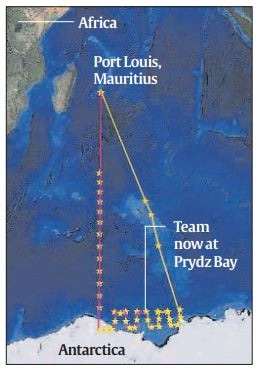
    A South African oceanographic research vessel SA Agulhas set off from Port Louise in Mauritius, on a two-month Indian Scientific Expedition to the Southern Ocean 2020. Recently the vessel was at Prydz Bay, in the coastal waters of “Bharati”, India’s third station in Antarctica.

    India’s polar mission

    • This is the 11th expedition of an Indian mission to the Southern Ocean, or Antarctic Ocean.
    • The first mission took place between January and March 2004.

    About the Southern Ocean expedition

    • The researchers from IITM Pune are collecting air and water samples from around 60 stations along the cruise track.
    • These will give valuable information on the state of the ocean and atmosphere in this remote environment and will help to understand its impacts on the climate.
    • A key objective of the mission is to quantify changes that are occurring and the impact of these changes on large-scale weather phenomenon, like the Indian monsoon, through tele-connection.

    Why study Southern Ocean?

    • We know that carbon dioxide is getting emitted into the atmosphere, and through atmospheric circulation goes to the Antarctic and Polar Regions.
    • Since the temperature is very low there, these gases are getting absorbed and converted into dissolved inorganic carbon or organic carbon, and through water masses and circulation it is coming back to tropical regions.
    • All oceans around the world are connected through the Southern Ocean, which acts as a transport agent for things like heat across all these oceans.
    • The conveyor belt that circulates heat around the world is connected through the Southern Ocean and can have a large impact on how climate is going to change due to anthropogenic forces.

    Core projects of the expedition

    • Study hydrodynamics and biogeochemistry of the Indian Ocean sector of the Southern Ocean; involves sampling seawater at different depths. This will help understand the formation of Antarctic bottom water.
    • Observations of trace gases in the atmosphere, such as halogens and dimethyl sulphur from the ocean to the atmosphere. This will help improve parameterizations that are used in global models.
    • Study of organisms called coccolithophores that have existed in the oceans for several million years; their concentrations in sediments will create a picture of past climate
    • Investigate atmospheric aerosols and their optical and radiative properties. Continuous measurements will quantify the impact on Earth’s climate.
    • Study the Southern Ocean’s impact on Indian monsoons. Look for signs in a sediment core taken from the bottom of the ocean
    • Dynamics of the food web in the Southern Ocean; important for safeguarding catch and planning sustainable fishing
  • Discovery Program investigations by NASA

    NASA announced it has selected four Discovery Program investigations to develop concept studies for possible new missions.

    What are the new missions?

    • Two proposals are for trips to Venus, and one each is for Jupiter’s moon Io and Neptune’s moon Triton.
    • After the concept studies are completed in nine months, some missions ultimately may not be chosen to move forward.

    DAVINCI+

    • DAVINCI+ stands for Deep Atmosphere Venus Investigation of Noble gases, Chemistry, and Imaging Plus.
    • This will analyse Venus’s atmosphere to understand how it was formed and evolved, and if it ever had an ocean.
    • This will advance understanding of the formation of terrestrial planets.

    IVO

    • Io Volcano Observer is a proposal to explore Jupiter’s moon Io, which is extremely volcanically active.
    • This will try to find out how tidal forces shape planetary bodies.
    • The findings could further knowledge about the formation and evolution of rocky, terrestrial bodies and icy ocean worlds in the Solar System.

    TRIDENT

    This aims to explore Neptune’s icy moon, Triton, so that scientists can understand the development of habitable worlds in the Solar System.

    VERITAS

    Venus Emissivity, Radio Science, InSAR, Topography, and Spectroscopy will aim to map Venus’s surface to find out why Venus developed so differently from Earth.

  • Species in news: Indian Pangolin


    The Madhya Pradesh forest department has radio-tagged an Indian Pangolin (Manis crassicaudata) for the first time.

    Pangolins

    IUCN status: Endangered

    • India is home to two species of pangolin.
    • While the Chinese Pangolin (Manis pentadactyla) is found in northeastern India, the Indian Pangolin is distributed in other parts of the country as well as Sri Lanka, Bangladesh and Pakistan.
    • Both these species are protected and are listed under the Schedule I Part I of the Wild Life (Protection) Act, 1972 and under Appendix I of the Convention on International Trade in Endangered Species (CITES).
    • Commonly known as ‘scaly anteaters’, the toothless animals are unique, a result of millions of years of evolution.
    • Pangolins evolved scales as a means of protection. When threatened by big carnivores like lions or tigers they usually curl into a ball.
    • The scales defend them against dental attacks from the predators.

    Why this radio-tagging?

    • The radio-tagging aims to know its ecology and develop an effective conservation plan for it.
    • The radio-tagging is part of a joint project by the department and non-profit, the Wildlife Conservation Trust (WCT) that also involves the species’ monitoring apart from other activities.

    Why protect Pangolins?

    • Pangolins are currently the most trafficked wildlife species in the world.
    • These Scales has now become the main cause of the pangolin’s disappearance.
    • The scales are in high demand in China, where they are used in traditional Chinese medicine.
    • Pangolin meat is also in high demand in China and Southeast Asia.
    • Consequently, pangolins have seen a rapid reduction in population globally. The projected population declines range from 50 per cent to 80 per cent across the genus.
  • The ‘Pale Blue Dot’


    The Jet Propulsion Laboratory of the NASA published a new version of the image of Pale Blue Dot.

    Pale Blue Dot

    • The ‘Pale Blue Dot’ is one of the most iconic images in the history of astronomy.
    • It shows Earth as a single bright blue pixel in empty space within a strand of sun rays, some of which are scattering from and enlightening the planet.
    • The original image was taken by the Voyager 1 mission spacecraft on February 14, 1990 when it was just beyond Saturn.
    • At the behest of astronomer Carl Sagan, the cameras were turned towards Earth one final time to capture the image.
    • After this, the cameras and other instruments on the craft were turned off to ensure its longevity.

    About Voyager 1

    • Voyager 1 is a space probe launched by NASA on September 5, 1977.
    • Having operated for more than 42 years, the spacecraft still communicates with the Deep Space Network to receive routine commands and to transmit data to Earth.
    • At a distance of 148.67 AU (22.2 billion km) from Earth as of January 19, 2020 it is the most distant man-made object from Earth.
    • The probe’s objectives included flybys of Jupiter, Saturn, and Saturn’s largest moon, Titan.

    The Family Portrait of the Solar System

    • The Pale blue dot image was a part of series of 60 images designed to produce what the mission called the ‘Family Portrait of the Solar System’.
    • This sequence of camera-pointing commands returned images of six of the solar system’s planets, as well as the Sun.
  • [pib] Nagpur Orange


    The first consignment of Nagpur oranges was flagged off to Dubai from Vashi, Navi Mumbai.

    Nagpur Orange

    • Nagpur orange is rustic and pockmarked exterior which is sweet and has juicy pulp.
    • It gives the city of Nagpur its pseudonym Orange City.
    • It oranges blossom during the Monsoon season and are ready to be harvested from the month of December.
    • The Geographical Indication was accorded to the Nagpur Orange by the registrar of GIs in India and is effective as of April 2014.

    The best breed

    • Nagpur mandarin in one of the best mandarins in the world. Production of this fruit crop in the central and western part of India is increasing every year.
    • Mrig crop (monsoon blossom), which matures in February – March, has great potential for export since arrivals of mandarin fruit in international market are less during this period.
    • In the whole region only one variety of Nagpur Mandarin is grown.
  • Towards a new world order

    Context

    Social inequalities and the grim problems of stark and continuing poverty are at the epicentre of the new world.

    The ugly face of capitalism and growing inequalities

    • The concentration of the health: The latest Oxfam Report presented at Davos points out that 2,153 billionaires have more wealth than 4.6 billion people.
    • Rising poverty: The emergence of billionaires and oligarchs in different parts of the world coincides with increased poverty among the already poor people, especially children.
    • Concept of stakeholder’s capitalism: These realities make observers question the tenability of stakeholder capitalism as a concept.
    • Faults in the capitalism on display in 2008: The ugliest face of this capitalism was visible during the 2007-2008 economic crisis, first in the U.S. and thereafter across the European Union.
      • At that time, it appeared as if the global economy was on the verge of collapse.

    Intensification of energy use and sustainability

    • The relation between growth and energy: One of the chief characteristics of economic development is the intensification of energy use.
      • There is an unprecedented concentration of high energy density in all economic development strategies.
    • Use of non-renewable sources: The bulk of the energy continues to be generated from non-renewable sources.
    • Developing world capturing energy-generating sources: The developed world’s, and China’s, central objective is to capture energy-generating resources from across continents and put them to use to push GDP growth to greater heights.
      • In the process, sustainability is becoming a casualty.
    • Higher waste generation: The higher the use of energy, the larger the amount of waste generated. Entropy, like time, is always unidirectional, it only goes forward.

    Disposal of e-waste

    • High energy consumption and disposal of waste: Egregious consumption of energy by the developed world has been accompanied by the disposal of residual products (‘e-waste’) on the shores of many African and Asian countries.
    • Impact on the developing world: As a result of the disposal, the poor in the developing world are, unwittingly, drawn and exposed to toxic, hazardous materials like lead, cadmium and arsenic.
      • Hence, the ‘globalisation’ phenomenon has turned out to be nothing other than the exploitation of the developing world, with most countries being treated as a source of cheap labour and critical raw material.

    Unfairness involved in the Globalisation

    • Increasing consumption in the developing world: Countries in the developed world, and China, are ferociously using up finite raw materials without care or concern for the welfare of present and future generations.
    • Bright and the dark side of the development: Certainly, there has been significant technological progress which has brought about a revolution in the fields of healthcare and communications, but there is also a dark side to this.
    • System loaded in the favour of the rich: High expenses and Intellectual Property Rights load the system further in favour of the rich.
      • Pernicious system of carbon credit: To demonstrate how unfair the system is, one can look at the pernicious plan to set up a carbon credit system.
      • Under this, countries with high energy consumption trends can simply offset their consumption patterns by purchasing carbon credits, the unutilised carbon footprint, from poor developing countries.

    Understanding the Nordic Economic Model

    • ‘Nordic Economic Model’: It pertains to the remarkable achievements of the Scandinavian countries comprising Denmark, Finland, Iceland, Sweden, Norway, and allied territories. They also have-
      • Large public sector enterprises.
      • Extensive and generous universal welfare systems.
      • High levels of taxation.
      • And considerable state involvement in promoting and upholding welfare states.
      • Among the happiest countries: UN reports also indicate that the Nordic countries are the happiest countries in the world. The U.S., in contrast, is in 19th place.
      • The total population of the Nordic countries is estimated at almost 27 million people.
      • Among the richest countries: These nations are among the richest in the world when measured in terms of GDP per capita.

    Enlightened Global Order

    • Taking the Nordic model as a template, there are some ingredients that could be part of a new ‘enlightened global order’.
    • What does the Global Order include? These should include-
      • Effective welfare safety nets for all.
      • Corruption-free governance.
      • A fundamental right to tuition-free education including higher education.
      • And a fundamental right to good medical care.
      • Shutting of tax havens.
      • Tax structure: In Nordic countries, personal and corporate income tax rates are very high, especially on the very rich. If a just, new world order is to arise, taxes everywhere should go up.
    • Holding companies responsible: When it comes to the corporate sector, there are some new perspectives.
      • Changing the parameters of profit: In traditional business accounting, ‘bottom line’ refers to the financial year’s profit or loss earned or incurred by the company on pure financial parameters.
      • The four ‘Ps’: Following vigorous debates, a new format has emerged under which a company’s performance is measured through four ‘Ps’.
      • The first is ‘P’ for ‘profit’.
      • The second ‘P’ is for people — how the company’s actions impact not only employees but society as a whole.
      • The third ‘P’ is for the planet — are the company’s actions and plans sensitive to the environment?
      • The fourth ‘P’ is for purpose, which means the companies and individuals must develop a larger purpose than ‘business as usual’. They must ask: what is the larger purpose of the company, apart from generating profits?
      • Using performance in terms of four ‘P’s: Using big data and text analytics, a company’s performance can be measured in terms of all the four ‘P’s and a corporate entity can be thus held accountable. Market capitalisation need not be the only way to measure the value of a company.

    Conclusion

    Much work is yet to be done to uplift the global economic order, but the important point is that new tools are now emerging. What is required is a global consensus and the will to make the planet more sustainable, so that all individuals can live with justice and equality, ensuring that not a single child is hungry or seriously unwell because of poverty or lack of affordable medical help.


  • To help her work

    Context

    When it came to allocating funds, the budget relegates women’s economic participation to secondary importance.

    The current status of women in India

    • Lack of Equality: India continues to struggle to provide its women with equal opportunity.
    • A low score on international measures: On international measures of gender equality.
      • India scores low on women’s overall health and survival and ability to access economic opportunities.
    • Why it matters? Since the woman’s economic engagement is related to her own and her family’s well-being, the continuing decline in rural women’s labour force participation is a cause for concern, and both affects and reflects these worrying gender gaps.

    Why female labour force participation matters beyond social cause?

    • Source of economic growth: Ignoring India’s declining female labour force participation at a time of economic distress is a mistake.
      • Not just a social cause: Involving women in the economy is not a social cause — it is a source of efficiency gains and economic growth.
    • Missing out on many things: In a country where young women’s education is now at par with men’s, ignoring that half of the population isn’t participating equally in the economy means we are missing out on many things, like-
      • Innovation.
      • Entrepreneurship.
      • And productivity gains.
    • Large potential to increase in GDP: The large potential increases in GDP that could accrue to India and countries around the world, if they could only close their labour force gender gaps, are often cited.
      • 60% increase in GDP: A report by McKinsey Global Institute suggests that if women participated in the Indian economy at the level men do, annual GDP could be increased by 60 per cent above its projected GDP by 2025.
      • Underlying conclusion: The underlying conclusion is that women’s potential to contribute to GDP is huge.
      • Gain larger than any other region: The same analysis also suggested that India’s potential GDP gains through achieving economic gender parity were larger than gains in any of the other regions they studied.

    How can the state be responsive to women? 

    It can be ensured in the following two ways-

    • 1.MGNREGA-Important focus: An important focus could be a smarter policy and gender-intentional implementation.
      • A key example comes from MGNREGA, a programme whose official policy has long been to pay individual workers in their own bank accounts.
      • It is observed that this policy was typically not implemented and that women’s wages were usually being paid into the bank account of the woman’s husband.
    • Why paying wages in women’s account matters?
      • Giving women digital control of her wage:
      • This seemingly small change — giving a woman digital control of her wages — had a big impact.
      • Working women more outside their home: Women who received digital accounts plus training worked more outside their homes, not only for MGNREGA but also in private employment.
    • Higher economic engagement and lessening patriarchy
      • Importantly, women from especially conservative households reported higher economic engagement and an improved ability to move about their communities unaccompanied.
      • Lessening of patriarchal norms: Surveys conducted showed that the payment in account also began to influence restrictive patriarchal norms.
    • 2.Need to move beyond MGNREGA
      • Ease of doing business and reform in labour market reforms: Continuing to improve ease of doing business and addressing rigid labour market regulations can also draw more women into high-potential sectors.
      • Such as those supported under Assemble in India.
      • Potential in manufacturing: Rural women’s relative participation in manufacturing has grown compared to men’s, and manufacturing stands out as a promising means to pull young women, in particular, into the economy.
      • Potential in SMEs: Ensuring better support to small and medium-sized enterprises can help new businesses.

    Conclusion

    • Attune schemes to the aspiration of women: Ensuring that these programmes are attuned to the needs and aspirations of women is not expensive. But it makes a much difference.
      • Review of policy and programme: It requires a review of individual policies and programme implementation.
    • Increase the funding: The government needs to increase funding to programmes targeting women. Until then, the policy can build on the fact that pulling women into the economy isn’t just a function of budget allocations or social sector programmes. It’s also a matter of thoughtful policy design and political will.