💥Join UPSC 2027,2028 Mentorship (August Batch) + XFactor Notes & Microthemes PDF

GS Paper: Representation Of People’s Act

  • Candidates have a Right to Privacy from Voters: SC

    Why in the news?

    • The Supreme Court affirmed a candidate’s right to privacy from voters, stating that candidates need not divulge every aspect of their personal lives and possessions to the electorate.
    • It held that Voters Right to Know about the electors is NOT ABSOLUTE.

    Right to Privacy in India:

    • The Right to Privacy under Article 21 of the Indian Constitution is interpreted as an intrinsic part of the fundamental right to life and personal liberty.
    • Article 21 states that “No person shall be deprived of his life or personal liberty except according to procedure established by law.”
    • In the landmark judgment of Justice K.S. Puttaswamy (Retd.) v. Union of India (2017), the Supreme Court explicitly recognized the Right to Privacy as a fundamental right under Article 21.
    • The court held that privacy is an essential aspect of personal liberty and dignity, encompassing informational privacy, decisional autonomy, bodily integrity, and spatial privacy.
    • This right protects individuals against unwarranted intrusions into their private lives by the state or any other entity.
    • It includes the right to keep personal information confidential, to make decisions about one’s life and body without interference, and to maintain physical and spatial autonomy.


    A candidate doesn’t need to declare every item of movable property, such as clothing, shoes, crockery, stationery, and furniture, unless these items are of such value as to constitute a sizeable asset in itself or reflect upon the candidate’s candidature in terms of their lifestyle – Supreme Court. 

    What are Corrupt Practices under the RPA?

    • Section 123 of the Representation of People Act, 1951 defines “corrupt practices” to include bribery, undue influence, false information, and promotion of enmity among citizens based on religion, race, caste, etc.
    • Section 123(2) deals with “undue influence,” involving interference with electoral rights through threats or promises.
    • Undue influence can manifest in various forms, including threats of physical harm, coercion, intimidation, promises of reward or benefit, or exploitation of vulnerabilities.

    Supreme Court’s Verdict

    1. Emphasis on Candidate’s Right to Privacy:
    • Upholding the appeal, the Supreme Court emphasized the candidate’s right to privacy, stating that not every non-disclosure automatically constitutes a defect.
    • The court highlighted that a candidate is not required to disclose every item of movable property unless it reflects upon their candidature or lifestyle.
    1. Case-specific Evaluation:
    • The court emphasized that each case must be judged on its own merits, without applying a blanket rule.
    • The Court emphasized that non-disclosure of certain personal possessions does not amount to a “defect of a substantial nature” under Section 36(4) of the 1951 Act.
    1. Example of “High-value” Assets:
    • Suppression of high-priced assets, indicating a lavish lifestyle, would constitute undue influence.
    • However, ownership of simple, low-value items may not be considered a defect.

    PYQ:

    [2017] For election to the Lok Sabha, a nomination paper can be filed by-

    (a) Anyone residing in India.

    (b) A resident of the constituency from which the election is to be contested.

    (c) Any citizen of India whose name appears in the electoral roll of a constituency.

    (d) Any citizen of India.

  • On Campaigning in the name of Religion | Explained

    Why in the news? 

    Recently, the Bharatiya Janata Party (BJP) lodged a complaint with the Election Commission of India (ECI) against Rahul Gandhi for hurting the sentiments of Hindus through his remark on ‘Shakti’.

    What does the law say?

    • Section 123(3): Representation of the People Act, 1951 (RP Act) provides that appeals by a candidate, or any other person with the consent of a candidate, to vote or refrain from voting on the grounds of his religion, race, caste, community or language is a corrupt electoral practice.
    • Section 123(3A): It denounces any attempt by a candidate to promote feelings of enmity or hatred among citizens on these grounds during elections.
    • Punishment: The RP Act further provides that anyone found guilty of corrupt electoral practice can be debarred from contesting elections for a maximum period of up to six years.

    What does the MCC provide?

    • The Model Code of Conduct (MCC) is a set of guidelines issued by the Election Commission of India to regulate the conduct of political parties and their candidates in the run-up to elections. They have consented to abide by the principles embodied in the said code.
      • Candidates cannot promote hatred or difference: It provides that no party or candidate shall indulge in any activity that may aggravate existing differences create mutual hatred or cause tension between different castes, religious or linguistic communities. It also provides that there shall be no appeal to caste or communal feelings for securing votes
      • Candidate cannot use worship place: Mosques, churches, temples, or other places of worship shall not be used as a forum for election propaganda. Though the MCC does not have any statutory backing, it has come to acquire strength in the past three decades because of its strict enforcement by the ECI.

    Historical Background:

    • Amendment in 1961: Section 123(3) of the Representation of the People Act (RP Act) was amended to remove the term “systemic” regarding appeals based on religion, race, caste, or community. This broadened the scope of what constitutes corrupt electoral practice.
    • Purpose of the Amendment: The amendment aimed to curb communal, fissiparous, and separatist tendencies in electoral politics by disfavoring even isolated appeals based on religion or narrow communal affiliations.
    • Instances of Appeals Based on Religion: Despite legal provisions, there have been numerous instances where political parties and leaders have openly appealed for votes in the name of religion.Bal Thackeray of Shiv Sena was the only notable leader convicted by the Supreme Court for this corrupt electoral practice in 1995.
    • Election Commission’s Response: The Election Commission of India (ECI) typically imposes short bans on campaigning for leaders found in violation of the Model Code of Conduct (MCC), usually lasting two to three days.

    What has the Supreme Court ruled?

    • Abhiram Singh versus C. D. Commachen (2017): A seven-judge Bench by a majority of 4:3 held that candidates shall not appeal for votes on the basis of not just his/her religion but also that of the voters.
    • Purposive interpretation’ to Section 123(3): The majority view provided a ‘purposive interpretation’ to Section 123(3) rather than just a literal one thereby rendering any appeal in the name of religion of even the voters as a corrupt electoral practice.
    • Elections are secular exercise: The elections to Parliament or State legislatures are a secular exercise; constitutional ethos forbids the mixing of religious considerations with the secular functions of the State. Religion should remain a matter of personal faith.

    Measures Needed:

    • Raise legitimate concerns: Political parties and candidates are likely to raise legitimate concerns of citizens faced by them based on traits having origin in religion, caste, community or language in a democratic election process.
    • Addressing Grievances: These concerns should be addressed through appropriate policies without compromising the secular fabric and fraternity of the country.
    • Use of Places of Worship: Places of worship have always been used overtly and covertly as a forum for canvass. Religious leaders have thrown their weight behind candidates of various parties. These practices should ideally be avoided to ensure that politics and religion are not mixed up
    • Responsibility of Political Leaders: The primary responsibility for avoiding appeals based on religion lies with political party leaders and candidates because campaigning based on religion not only disrupts the secular nature of Indian politics but also constitutes a clear violation of the law.
    • Role of Election Commission and Courts: Mechanisms should be devised by the Election Commission of India (ECI) and courts for swift action against those who violate laws regarding appeals based on religion in electoral campaigns.

    Conclusion: The legal framework prohibits appeals based on religion in electoral campaigns to maintain the secular nature of elections. The Election Commission enforces the Model Code of Conduct, with penalties for violators, ensuring fair and unbiased electoral practices.

  • What is the District Election Management Plan? | Explained

    Why in the news?

    The conduct of elections has become increasingly complex and multifaceted, requiring meticulous planning and execution to ensure a free, fair, and inclusive electoral process

    • A cornerstone of this planning process is the District Election Management Plan (DEMP), a comprehensive document that uses statistics and analysis to ensure the smooth conduct of elections.

    Context:

    • What goes into a smooth and efficient electoral process?
    • How are electoral booths prepared before polling?

    When is the DEMP prepared?

    • Preparation of DEMP: As per the Election Commission of India, the DEMP is to be prepared at least six months before the tentative poll day. However, many things become clearer as the election is notified, so it becomes necessary to revise/update the plan occasionally.
    • Execution of DEMP: Executing the DEMP requires a collaborative effort involving election officials, administrative authorities, law enforcement agencies etc. Regular interactions with political parties and media are also planned to brief them on electoral rules.

    What are the elements of DEMP?

    • The foundation of the electoral strategy: The plan starts with a district profile that serves as the foundation of the electoral strategy which includes a political map outlining constituencies, key demographic and infrastructure statistics, and a brief on the district’s administrative setup and socio-economic features.
    • Accessibility of polling stations: The plan encompasses detailed strategies for improving the availability and accessibility of polling stations, ensuring that all stations have essential facilities like ramps, electricity, lighting, drinking water, toilets, and internet connectivity.
    • Voting for essential service personnel: Special attention is given to voters with disabilities (PwD) and senior citizens through help desks, 24/7 control rooms, home voting options, and advanced postal ballot voting for essential service personnel.

    Systematic Voters’ Education and Electoral Participation (SVEEP) plan:

    • The Systematic Voters’ Education and Electoral Participation (SVEEP) plan, focuses on increasing electoral participation which involves analyzing voter turnout data to identify polling stations with below-average or significantly low turnout and tailoring activities to address these issues.
      • It includes the use of social media, engagement with various community and youth organizations, and organizing events leading up to the poll day to increase awareness and participation.
    • Comprehensive Strategy: DEMP outlines a comprehensive strategy for planning, training, welfare, and deployment of election personnel.
    • Poll Personnel Database: Emphasizes the importance of creating a database of poll personnel, categorizing them by cadre and group, and assessing their requirements.
    • Addressing Personnel Gaps: Strategies are devised to address gaps in personnel needs across various election roles.
    • Force Deployment Plan: Detailed planning for force deployment involves coordination with district police. This includes vulnerability mapping of polling stations based on past disturbances and voter turnout.
    • Training Programs: Training programs are provided for district-level teams to enforce the Model Code of Conduct (MCC) and for all election personnel to ensure they possess necessary skills and knowledge.

    What about EVMs?

    Material management in the Detailed Election Management Plan (DEMP):

    • Crucial Component: Material management is identified as a critical aspect of DEMP. It involves procuring 61 essential items, including indelible ink, seals, stamps, stationary, and statutory forms.
    • Categorization: Items are categorized based on the level at which they are to be procured, either at the State/U.T. level or the district level.
    • Procurement Timelines: Timelines for procurement vary, ranging from two-to-three weeks to four months before the election.Emphasizes the importance of timely acquisition to ensure preparedness for the electoral process.

    Electronic Voting Machines (EVMs) management in the Detailed Election Management Plan (DEMP)

    • Electronic Voting Machines (EVMs) management is crucial for maintaining the integrity of the electoral process, with plans necessary for secure storage and availability of EVMs and Voter Verifiable Paper Audit Trails (VVPATs), including plans for their transportation and maintenance.

    Significance of the Detailed Election Management Plan (DEMP):

    • Enhanced Voting Experience: DEMP enhances the voting experience by ensuring that the electoral process is organized, accessible, and efficient for all voters, promoting democratic participation and inclusivity.
    • Data-Driven Decisions: Using statistics and analysis, the DEMP enables data-driven decisions, highlighting the significance of evidence-based policymaking and strategic planning in effectively addressing challenges.
    • Stakeholder Collaboration: The collaborative effort involved in executing the DEMP underscores the importance of engaging stakeholders from various sectors, fostering cooperation and synergy to achieve common goals.
    • Transparency and Accountability: The emphasis on transparency in the DEMP promotes accountability in electoral processes, setting a precedent for openness and integrity in governance practices.
    • Adaptability and Resilience: The DEMP’s adaptability to changing circumstances and occasional revisions underscores the importance of resilience and flexibility in governance frameworks to address evolving needs and circumstances.

    Conclusion: The District Election Management Plan (DEMP) ensures organized, inclusive elections. Challenges include timely preparation, accurate electoral strategy foundation, polling station accessibility, and effective voter education. Overcoming these ensures transparent and efficient electoral processes.

  • Postal Ballot Voting: Eligibility and Process for Lok Sabha elections 2024

    Why in the news?

    The Election Commission of India (ECI) announced that media persons covering “polling day activities” are now eligible to vote in the upcoming Lok Sabha elections 2024 and state Assembly polls through postal ballots.

    What are Postal Ballots?

    • Postal ballots, also known as mail-in ballots, allow registered voters to cast their votes by mail instead of physically going to a polling station.
    • It is governed by the Conduct of Elections Rules, 1961.
    • This system serves as a convenient alternative for individuals unable to vote in person due to various circumstances, such as being away from their home constituency, facing a disability, or performing essential services on Election Day.

    Electronically Transmitted Postal Ballot System (ETPBS)


    • The Conduct of Election Rules, 1961 was amended in 2016 to allow service voters to use the ETPBS. Under this system, postal ballots are sent electronically to registered service voters.
    • The service voter can then download the ETPB (along with a declaration form and covers), register their mandate on the ballot and send it to the returning officer of the constituency via ordinary mail.
    • The post will include an attested declaration form (after being signed by the voter in the presence of an appointed senior officer who will attest it).

    Who is eligible to cast their vote through postal ballots?

    Eligible electors who can opt to vote through postal ballots include:

    • Special voters: It includes President of India, Vice President, Governors, and Union Cabinet ministers, Speaker of the House and government officers on poll duty.
    • Service voters: Members of the armed forces, paramilitary forces, and government employees deployed on election duty far from their home constituencies.
    • Absentee voters: Individuals unable to vote in person due to reasons like work commitments, illness, or disability. Senior citizens above 80 years are also included.
    • Electors on election duty: Government officials and polling staff assigned duties at polling stations other than their own.
    • Electors under preventive detention: Individuals detained under preventive custody orders during the election period.
    • Divyangjans: In October 2019, the Ministry of Law and Justice amended the Conduct of Election Rules, 1961, lowered the age from 85 to 80 and allowed Persons with Disabilities (PwDs) to cast votes through postal ballots in the 2020 Delhi Assembly polls.
    • Essential services covering polling day activities: Media persons with authorisation letters from the EC and those involved in essential services such as metros, railways, and healthcare have the option to vote using postal ballots in Lok Sabha and four state Assembly polls.

    Applying for a postal ballot

    • To apply for a postal ballot, eligible voters must apply, Form 12 D, to the returning officer (RO) of their respective constituency.
    • The application typically requires personal details, voter identification information, and the reason for seeking a postal ballot.
    • For service voters, the RO sends the postal ballot paper through the record office, directly or through the Ministry of External Affairs for service voters serving outside India.
    • For senior citizens, a team of two polling officials, a videographer, and security personnel will visit the residence of the elector to facilitate this process.

    What is the process of postal voting?

    • Receiving the postal ballot: Once approved, the RO sends the postal ballot to the voter’s registered address, including the ballot paper, declaration form, secrecy sleeve, and pre-paid return envelope.
    • Marking the ballot: Voters mark their preferred candidate(s) on the ballot paper in the secrecy sleeve to ensure confidentiality.
    • Completing the declaration form: Voters fill out the declaration form, providing their signature and other relevant details.
    • Sealing the envelope: Voters seal the marked ballot paper and declaration form inside the secrecy sleeve and place it into the pre-paid return envelope.
    • Returning the postal ballot: Voters affix the postage stamp and mail the return envelope to the designated address within the specified time.

    Counting of postal ballots

    • Postal ballots are counted separately from votes cast at polling stations.
    • On the designated counting day, postal ballots are collected by postal authorities and brought to the counting centre.
    • The RO and election officials scrutinise postal ballots for validity and integrity, adding valid ballots to the respective candidate’s vote count.


    PYQ:

    Q.For election to the Lok Sabha, a nomination paper can be filed by-

    1. Anyone residing in India.
    2. A resident of the constituency from which the election is to be contested.
    3. Any citizen of India whose name appears in the electoral roll of a constituency.
    4. Any citizen of India.


    Practice MCQ:

    Q.Consider the following statements:

    1. The right to cast vote is not a fundamental right
    2. NRI settled in foreign land can become an elector in the electoral roll in India
    3. Individuals in lawful custody of the police and those serving a sentence of imprisonment after conviction cannot vote

    Which of the statements given above is/are correct?

    1. 1 only
    2. 2 and 3
    3. 1 and 3
    4. 1,2 and 3
  • How House terms and poll schedules are decided

    Why in the news? 

    • The date of counting for Assembly elections in Arunachal and Sikkim has been advanced by two days to make sure that the terms of their existing Houses don’t end before the election process is complete.

    Context-

    • The Election Commission of India (ECI) holds a crucial responsibility in coordinating and supervising electoral procedures nationwide.
    • This encompasses setting timetables for elections to legislative bodies like state assemblies and the Lok Sabha (House of the People).

    What was the original schedule for the election and counting in these two states? (2024)

    • Schedule Announcement: The schedule for Assembly elections in Arunachal Pradesh and Sikkim, as well as the Lok Sabha elections, was announced on March 16. The Assembly elections in Arunachal Pradesh and Sikkim were set to be notified on March 20.
    • Nomination Period: Candidates could file their nominations for the elections until March 27.
    • Withdrawal Period: The deadline for withdrawing nominations was set for March 30.
    • Date of Polling: Both Assembly and Lok Sabha elections were scheduled to take place on April 19, marking the first phase of polling.
    • Seven-Phase Lok Sabha Elections: The Lok Sabha elections were planned to be held in seven phases on the following dates: April 19, April 26, May 7, May 13, May 20, May 26, and June 1.
    • One-Day Elections: Twenty-two states and Union Territories, including Arunachal Pradesh and Sikkim, were scheduled to conduct one-day elections.
    • Counting Date: Counting for all seats in the Lok Sabha and the four Assemblies would occur on June 4, according to the Chief Election Commissioner (CEC) Rajiv Kumar.

    So what has changed now?

    • Change in Counting Date: The Election Commission of India (ECI) announced a change in the counting date for Assembly seats in Arunachal Pradesh and Sikkim from June 4 to June 2.
    • Reason for Change: ECI officials stated that the decision to change the counting date was made after realizing that the terms of the Assemblies in Arunachal Pradesh and Sikkim were ending on June 2.
    • Completion of Election Process: The decision to bring forward the counting date was based on the constitutional mandate that the election process must be completed before the term of an Assembly ends.
    • Ensuring Constitutional Compliance: By adjusting the counting date to align with the end of the Assembly terms, the ECI ensures that the electoral process remains per constitutional requirements.

    What exactly does the Constitution say about the terms of state Assemblies and Lok Sabha?

    • Lok Sabha Term: Article 83(2) outlines that the Lok Sabha unless sooner dissolved, continues for five years from the date appointed for its first meeting. Similar to state Assemblies, the expiration of the five years leads to the dissolution of the House.
    • State Assembly Term: Article 172(1) of the Constitution specifies that every Legislative Assembly of every State shall continue for five years from the date appointed for its first meeting unless sooner dissolved. The expiration of the five years results in the dissolution of the Assembly.
    • Extension of Assembly Term: During a Proclamation of Emergency, Parliament has the authority to extend the term of the Assembly by up to one year at a time, not exceeding six months after the Proclamation ceases to operate.

    How does this apply to the Assemblies of Arunachal Pradesh and Sikkim?

    • Constitutional Mandate: The Constitution mandates that the term of Legislative Assemblies lasts for five years from the date of their first meeting unless dissolved earlier.
    • Completion of Electoral Process: With the term of the Assemblies ending on June 2, 2024, the electoral process, including voting and counting, must be completed before this date to ensure a smooth transition to the new Assemblies.

    What are the things that the ECI looks at while fixing the election schedule?

    • Factors Considered by ECI: The Election Commission of India (ECI) considers various factors while fixing the election schedule, including weather conditions, festivals, important examinations, availability of school buildings for polling stations, and mobilization of teachers for election duty.
    • Logistical Considerations: The ECI takes into account the country’s historical and geographic situation, as well as logistical requirements such as moving security forces to ensure free and fair elections.
    • Term of the Legislature: The date of expiration of the term of the legislature is the primary consideration for fixing the election schedule. This date is known five years in advance, calculated from the date of the first sitting of the existing House.
    • Completion of Election Process: The ECI aims to complete the election process at least one day before the end of the term of the House. Results are declared a few days prior, allowing time for documentation and other formalities.

    Has something similar occurred earlier too? 

    • Change in Counting Date in Andhra Pradesh (2004): In 2004, the Election Commission of India (ECI) scheduled the counting of votes for the Assembly election in Andhra Pradesh on May 11, two days earlier than the scheduled counting for Lok Sabha and other states. This adjustment was made because the tenure of the Assembly in Andhra Pradesh was set to end on May 13.
    • Changes for Festivals or Locally Relevant Events: The ECI has made changes to the announced election schedule to accommodate festivals or locally relevant events. For example, in Mizoram in the previous year, the date of counting for the Assembly election was changed from December 3 to December 4 to avoid a clash with Sunday, which holds special significance for the Christian-majority population.
    • Delinking Counting in Specific States: The ECI has previously drawn up schedules that delink the counting in a particular state from the counting in the rest of the country or from the counting of other elections held simultaneously. This strategy allows for the smooth conduct of elections while respecting the constitutional timeline for the end of the term of the House.

    Conclusion:

    The Election Commission adjusts the counting date for Arunachal Pradesh and Sikkim Assemblies to align with the constitutional mandate. Factors like legislative terms, logistical considerations, and past precedents guide the ECI in fixing election schedules.

    Mains PYQ-

    Q- Discuss the role of the Election Commission of India in light of the evolution of the Model Code of Conduct. (UPSC IAS/2022)

  • Model Code of Conduct: Everything you need to know

    Why in the news-

    • As the Election Commission of India (EC) announced the dates for the upcoming Lok Sabha elections, the Model Code of Conduct (MCC) came into force immediately and will be in place till election results are announced.

    Understanding the Model Code of Conduct (MCC):

    • The MCC is a set of guidelines published by the Election Commission of India (ECI) for conduct during the election campaign and polling.
    • It is applicable to political parties and candidates.
    • It also explains how parties can lodge complaints to the EC observers in case of dispute and instructs how the Ministers of the parties in power must conduct themselves when the MCC is in force.
    • In 2019, a *new addition regarding election manifestos was added, instructing parties to not issue promises which were ‘repugnant to the ideals of the Constitution’.

    When was it introduced?

    • The EC traces its introduction to the 1960 Assembly elections in Kerala.
    • During simultaneous polls to the Lok Sabha and Assemblies in several States in 1962, the EC circulated the code to all recognized parties, which followed it “by and large”.
    • In October 1979, the EC came up with a comprehensive code that saw further changes after consultations with parties.

    Is the MCC a law?

    • The MCC is NOT a statutory document – NOT enforceable by any laws passed by the Parliament.
    • Violating many of its guidelines may not attract punitive action.
    • Exceptions: Several actions such as causing tension between castes, religious or linguistic communities, appealing to caste or communal feeling for securing votes, etc., are listed as ‘electoral offenses’ and ‘corrupt practices’ under the Indian Penal Code and the Representation of the People Act, 1951.

    Enforcement and Applicability:

    • The MCC comes into force immediately when the election schedule is announced by the Election Commission and remains in operation till the election process is complete, i.e. results are announced.

    [A] All Elections

    1. The MCC is applicable to all elections to the Lok Sabha, State Assemblies.
    2. It is also applicable for State Legislative Council elections from Local Bodies, and Graduates’ and Teachers’ Constituencies.

    [B] Obligations put on

    1. Listed Political Parties and Candidates: While listed political parties and candidates are bound to follow the MCC
    2. Non-Political Organizations Supporting Political Entities: Non-political organizations which hold campaigns favouring a political party or candidate are bound to follow specific guidelines mentioned by the EC.
    3. Government-Funded Entities: All organizations, committees, corporations, commissions funded wholly or partially by the Centre or State are bound by the MCC.

    How is the MCC enforced?

    • All officers including Police: Before holding polls for the General or State Assembly elections, the Election Commission issues guidelines to the government to shift out all officers including police who are posted in their home district, and who have completed/completing three out of four years in that district to ensure no interference.
    • Specially appointed EC officers: The MCC is then implemented by the newly appointed officials and nodal EC officers monitor compliance.

    Guidelines Issued during MCC

    [A] For Parties and Candidates:

    • Campaigning Bar: No election campaigning is allowed within the constituency 48 hours before the close of polls.
    • Restrictions on Speech: Political parties and candidates are advised to refrain from commenting on all aspects of private life of the leaders, workers of other parties, limiting criticisms to only their policies, programmes, past records and works.
    • Maintaining Social Harmony: They must also not indulge in activities aggravating existing differences or create mutual hatred between different castes, religious and linguistic communities. Appeals to caste or communal feelings for securing votes are also prohibited.
    • Others: Specific guidelines cover election campaigning, procession, canvassing, use of funds, and behavior during public meetings.

    [B] For Governments:

    • Prior approval on Policies: The Union Ministries will need prior approval of the Election Commission on any policy announcements, fiscal measures, taxation issues, financial reliefs when the MCC is in force.
    • Screening in State: Similar guidelines apply to State governments where proposals must be referred to a screening committee which will then forward it to the Chief Electoral Officers who will not forward it to the EC unless the instructions applicable to the case are not clear.
    • Level-playing field: State/ Union governments must keep public places like maidans and helipads available impartially for all parties and candidates to ensure a level-playing field.

    Guidelines for Poll Manifestos (wef 2019)

    • Manifestos must not contain anything repugnant to the ideals enshrined in the Constitution.
    • They must reflect the rationale for welfare scheme promises and indicate ways to meet the financial requirements for it.
    • The manifesto documents must not be released during the prohibitory period (when MCC kicks in).

    How are violations dealt with?

    • Any complaint regarding elections should be brought to EC observers, Returning Officer, local magistrate, Chief Electoral Officer or the Election Commission itself.
    • In response, any directions issued by the EC, Returning officer, District Election Officer shall be strictly complied with.

    PYQ:

    Consider the following statements:​

    1. In India, there is no law restricting the candidates from contesting in one Lok Sabha election from three constituencies.​
    2. In 1991 Lok Sabha Election, Shri Devi Lal contested from three Lok Sabha constituencies.​
    3. As per the existing rules, if a candidate contests in one Lok Sabha election from many constituencies, his/her party should bear the cost of bye-elections to the constituencies vacated by him/her in the event of him/her winning in all the constituencies.​

    Which of the statements given above is/are correct?​ (2021)

    1. 1 only
    2. 2 only​
    3. 1 and 3
    4. 2 and 3​


    Practice MCQ:

    The Model Code of Conduct (MCC) has come into effect in India ahead of general elections. In this regard, consider the following statements:

    1. MCC comes into effect immediately after announcement of election dates and sustains till the last vote is cast.
    2. Apart from Political Parties and Candidates, it is applicable to non-political organizations supporting political entities.
    3. No election campaigning is allowed within the constituency 24 hours before the close of polls.

    How many of the given statements is/are correct?

    1. One
    2. Two
    3. Three
    4. None
  • Election Symbols Issue in Maharashtra

    Introduction

    • A faction within a political party led by the Maharashtra Deputy CM has been officially recognized as the legitimate group by the Election Commission of India retaining its election symbol.

    Also read:

    How are Symbols allotted to Political Parties in India?

    Election Symbol and its Significance

    • Electoral Impact: Election symbols play a crucial role in shaping the electoral fortunes of political parties, influencing voter perception and identification.
    • Transparency Concerns: The current system of symbol allotment warrants review to ensure transparency and fairness in the electoral process.

    EC’s Powers in Symbol Disputes

    • Legal Framework: Para 15 of the Symbols Order, 1968, empowers the ECI to adjudicate disputes arising from splits within political parties.
    • Test of Majority: The ECI conducts a test of majority, considering all available facts and circumstances, to determine the legitimate faction.
    • Binding Decision: The decision of the ECI is binding on all rival sections or groups emerged after the split, applicable to recognized national and state parties.

    Historical Precedents

    • Pre-1968 Era: Before the Symbols Order, 1968, the ECI addressed disputes through notifications and executive orders under the Conduct of Election Rules, 1961.
    • High-profile Cases: Notable cases include the split of the Communist Party of India (CPI) in 1964 and the first split in the Indian National Congress in 1969.

    Options for Resolution

    • Symbol Freeze: The ECI may freeze the symbol to prevent either faction from using it until a final decision is reached, a process that typically involves lengthy hearings.
    • Legal Proceedings: Parties may resort to legal recourse if internal resolution or EC intervention fails to resolve the dispute.

    Alternate Resolution Mechanisms

    • Majority Test: EC primarily relies on testing the support within the party organization, particularly among elected MPs and MLAs, to determine faction legitimacy.
    • Registration as Separate Party: Splinter groups not recognized by the parent party may register themselves as separate entities and seek national or state party status based on electoral performance post-registration.

    Conclusion

    • The recognition of political factions by the Election Commission underscores the complexities of symbol allotment and intra-party disputes.
    • As the EC navigates these challenges, ensuring procedural fairness and upholding democratic principles remain paramount in fostering trust and integrity in the electoral process.
  • How Political Parties are created in India?

    political parties

    Introduction

    • Tamil superstar Thalapathy Vijay’s announcement of his political party has sparked interest in the process of registering political entities in India.

    Creating a Political Party

    • Legal Framework: Article 324 of the Indian Constitution and Section 29A of the Representation of the People Act, 1951 empower the Election Commission to lay down guidelines for party registration.
    • Application: A party seeking registration must apply to the Election Commission within 30 days of its formation.
    • Public Notice: The applicant must publish the proposed party name in two national and two local daily newspapers. The notice is also posted on the Election Commission’s website.
    • Documentation: The application, in a prescribed format, must be sent to the Election Commission Secretary within 30 days of party formation. It should include a demand draft of Rs. 10,000, a printed copy of the party’s memorandum, rules, or constitution, and the latest electoral rolls for at least 100 party members.
    • Affidavits: An affidavit, duly signed by the President or General Secretary and sworn before a Magistrate/Notary Public, is required. Additionally, individual affidavits from 100 members confirming non-membership in any other registered political party are essential.

    Need for Registration

    • Not Mandatory: Registration with the Election Commission is not mandatory but comes with advantages under the Representation of the People Act, 1951.
    • Symbol Allotment: Registered party candidates receive priority in the allotment of free symbols over independent candidates.
    • State or National Recognition: Parties can achieve recognition as ‘state parties’ or ‘national parties,’ subject to fulfilling conditions laid out in the Election Symbols (Reservation and Allotment) Order, 1968.

    Recognition Criteria

    • State Party: To be recognized as a state party, a registered party must meet any of these five conditions:
      1. Secure at least 6% of valid votes and win at least 2 seats in an Assembly General Election.
      2. Secure at least 6% of valid votes and win at least 1 seat in a Lok Sabha General Election.
      3. Win at least 3% of the seats or at least 3 seats, whichever is more, in an Assembly General Election.
      4. Win at least 1 out of every 25 seats from a state in a Lok Sabha General Election.
      5. Secure at least 8% of the total valid vote in an Assembly or Lok Sabha General Election.
    • National Party: To attain national party status, a registered party must meet any of these three conditions:
      1. Secure at least 6% of valid votes in an Assembly or Lok Sabha General Election in four or more states and win at least 4 seats in a Lok Sabha General Election from any state.
      2. Win at least 2% of total Lok Sabha seats in a Lok Sabha General Election, spanning at least 3 states.
      3. The party is recognized as a State Party in at least four states.

    Benefits of Recognition

    • Reserved Symbol: State parties receive a reserved symbol within the state, while national parties can use the reserved symbol across the country.
    • Nomination Ease: Such parties require only one proposer for filing nominations.
    • Free Electoral Rolls: They are entitled to two sets of electoral rolls free of cost.
    • Media Access: Recognized parties can use state-owned Akashvani/Doordarshan facilities for broadcasting/telecasting during general elections.
    • Additional Perks: Recognized parties can avail of other advantages such as subsidized land for party offices, among others.
  • The idea of one nation, one election is against federalism

    One Nation, One Election': Panel gets thousands of responses on  simultaneous polls | India News - The Indian Express

    Central Idea:

    The article discusses the formation and potential implications of the ‘High Level Committee on One Nation, One Election’ set up by the Union Government in September 2023. It delves into the reasons for and against the concept, focusing on the financial aspects and governance downtime. The author raises legal concerns, particularly regarding the constitutional autonomy of states, linguistic bias in consultations, and the role of the Election Commission. The looming possibility of a constitutional showdown in the Supreme Court is emphasized, drawing parallels with the U.S. case of Baker v. Carr.

    Key Highlights:

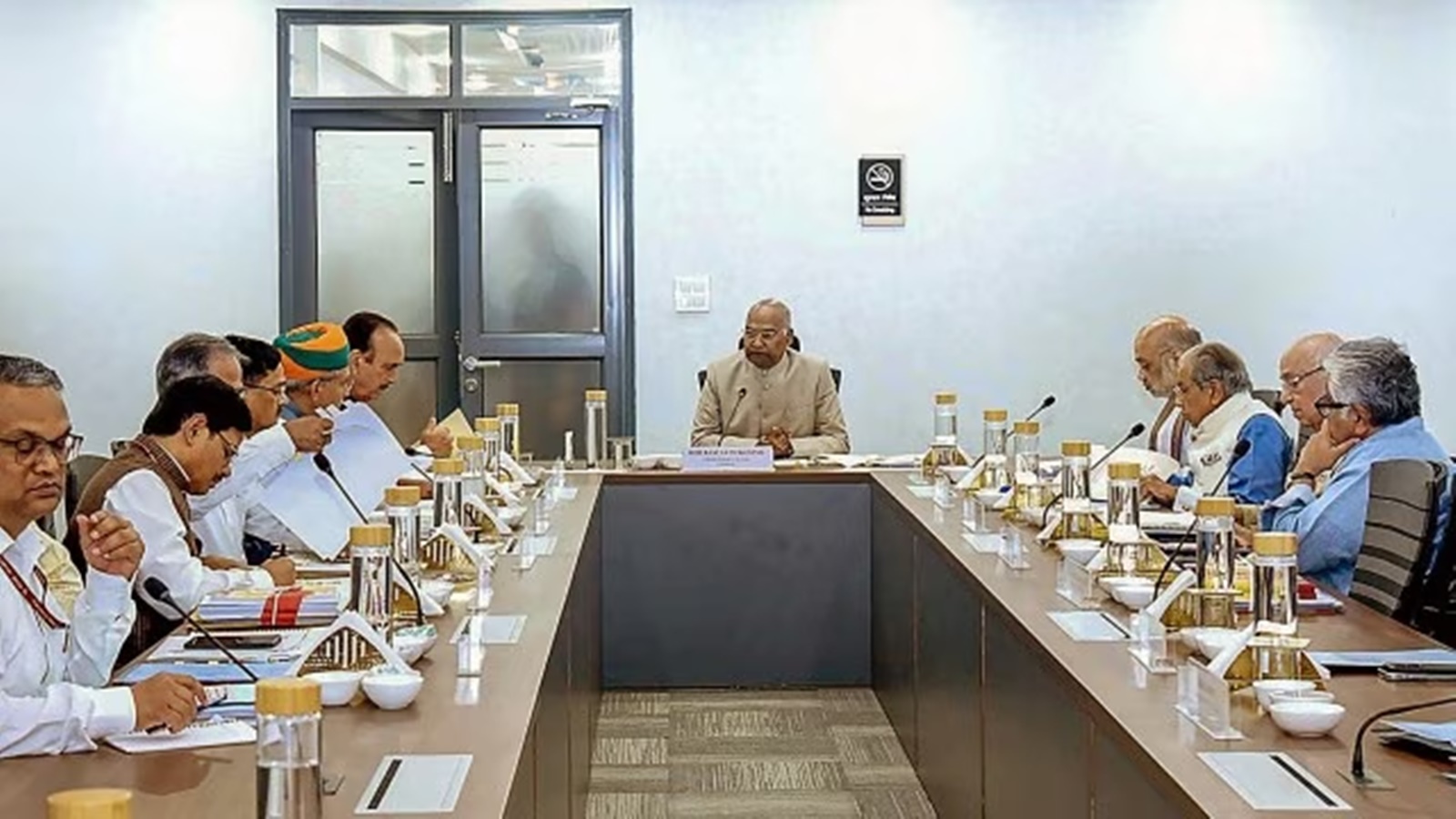
    • Formation of the ‘High Level Committee on One Nation, One Election’ chaired by former President Ramnath Kovind.
    • Reasons supporting the concept include reducing election expenses and minimizing governance downtime caused by the Model Code of Conduct.
    • Opposition argues that democratic processes, including elections and the Model Code of Conduct, are essential for a functioning democracy.
    • Legal concerns raised, citing potential violation of state autonomy and constitutional provisions, particularly as stated in the S.R. Bommai case.
    • The linguistic bias in consultations, with the committee’s website available only in English and Hindi, is highlighted.
    • The Election Commission’s seemingly passive role and lack of involvement in the process are questioned.

    Key Challenges:

    • Constitutional and legal concerns regarding the potential alteration of the duration of State Legislative Assemblies.
    • Linguistic bias in consultations, limiting the inclusivity of the decision-making process.
    • Potential compromise of the Election Commission’s independence and autonomy.
    • Balancing financial considerations with the fundamental principles of democracy.
    • The challenge of ensuring a fair and unbiased decision-making process amid political interests.

    Key Terms and Phrases:

    • One Nation, One Election
    • High Level Committee
    • Model Code of Conduct
    • S.R. Bommai case
    • Constitutional autonomy
    • Governance downtime
    • Baker v. Carr moment
    • Linguistic bias
    • Election Commission
    • Constitutional showdown

    Key Quotes:

    • “The cost of holding free and fair elections… is a price that can never be high.”
    • “The introduction of a common election process would necessarily require alteration of the existing duration of a number of State Legislatures.”
    • “Similar to demonetisation, when the Reserve Bank of India was kept in the dark, the Election Commission seems to be a silent spectator.”

    Key Statements:

    • “The Supreme Court would be called upon to determine the ultimate fate of Indian democracy.”
    • “The potential alteration of the duration of State Legislatures would be anti-federal and unconstitutional.”
    • “The stage is set for a constitutional showdown in the not-too-distant future.”

    Key Examples and References:

    • Baker v. Carr case in the U.S. as a reference for the potential role of the Supreme Court in a constitutional showdown.
    • Comparison with demonetization to highlight concerns about the Election Commission’s apparent lack of involvement.

    Key Facts and Data:

    • The estimated cost of the 2014 general elections was ₹3,870 crore.
    • The High Level Committee’s website is available only in English and Hindi.

    Critical Analysis:

    The article critically examines the potential consequences of One Nation, One Election, questioning its feasibility and highlighting legal and constitutional concerns. It underscores the importance of democratic processes and the need for the Supreme Court to play a pivotal role in preserving India’s constitutional architecture.

    Way Forward:

    • Ensure comprehensive and inclusive consultations in multiple languages to address linguistic bias.
    • Strengthen the autonomy of the Election Commission and ensure its active participation in decision-making processes.
    • Balance financial considerations with the preservation of democratic principles.
    • Address legal concerns, particularly those related to state autonomy and constitutional provisions.
    • Encourage public discourse to raise awareness and engage citizens in the decision-making process.
  • Debate on VVPAT Verification in Indian Elections

    vvpat

    Introduction

    • Recent Developments: A political alliance, has requested a meeting with the Election Commission of India (ECI) to discuss and suggest changes regarding the use of Voter Verifiable Paper Audit Trail (VVPAT) machines.
    • Proposal: The alliance proposes that VVPAT slips be handed to voters to place in a separate ballot box, with 100% counting of these slips, to enhance trust in the electoral process.

    What are VVPATs?

    • Function and Purpose: VVPAT machines, attached to EVMs, print a slip showing the voter’s choice, allowing voters to verify their vote for seven seconds before the slip drops into a secured box.
    • Development History: The concept emerged in 2010, leading to the creation of prototypes by Bharat Electronics Limited (BEL) and Electronics Corporation of India (ECIL). After trials and feedback, the design was approved in February 2013.
    • Implementation: The Conduct of Elections Rules, 1961, were amended to incorporate VVPATs. They were first used in Nagaland’s Noksen Assembly constituency in 2013 and were implemented in all polling stations by the 2019 Lok Sabha elections.

    Current VVPAT Slip Counting Protocol

    • EC’s Decision Process: In 2018, the ECI consulted the Indian Statistical Institute (ISI) to determine a statistically robust sample size for VVPAT slip verification.
    • Existing Protocol: Initially, VVPAT slips of one randomly selected polling station per Assembly constituency were counted. This was increased to five polling stations per Assembly seat after a Supreme Court judgment in 2019.
    • ISI Recommendation: The ISI suggested counting VVPAT slips from 479 EVMs to ensure a high confidence level that the proportion of defective EVMs is less than 2%.

    Election Commission’s Stance

    • Current Verification Adequacy: The EC argues that the current practice of verifying VVPATs from five polling stations per Assembly seat exceeds the ISI’s recommendation.
    • Reliability Record: The EC highlights that in past elections, no cases of vote misattribution were detected in VVPAT checks, attributing discrepancies to human errors.
    • Concerns over Full Verification: The EC views 100% VVPAT verification as regressive, time-consuming, and prone to human error, akin to manual ballot voting.

    Conclusion

    • Debate on Electoral Integrity: The discussion around VVPAT verification reflects ongoing concerns about ensuring electoral integrity and public trust in the voting process.
    • Challenges Ahead: Balancing the need for efficient electoral processes with the imperative of maintaining voter confidence remains a critical challenge for the ECI and political parties in India.