Why in the News
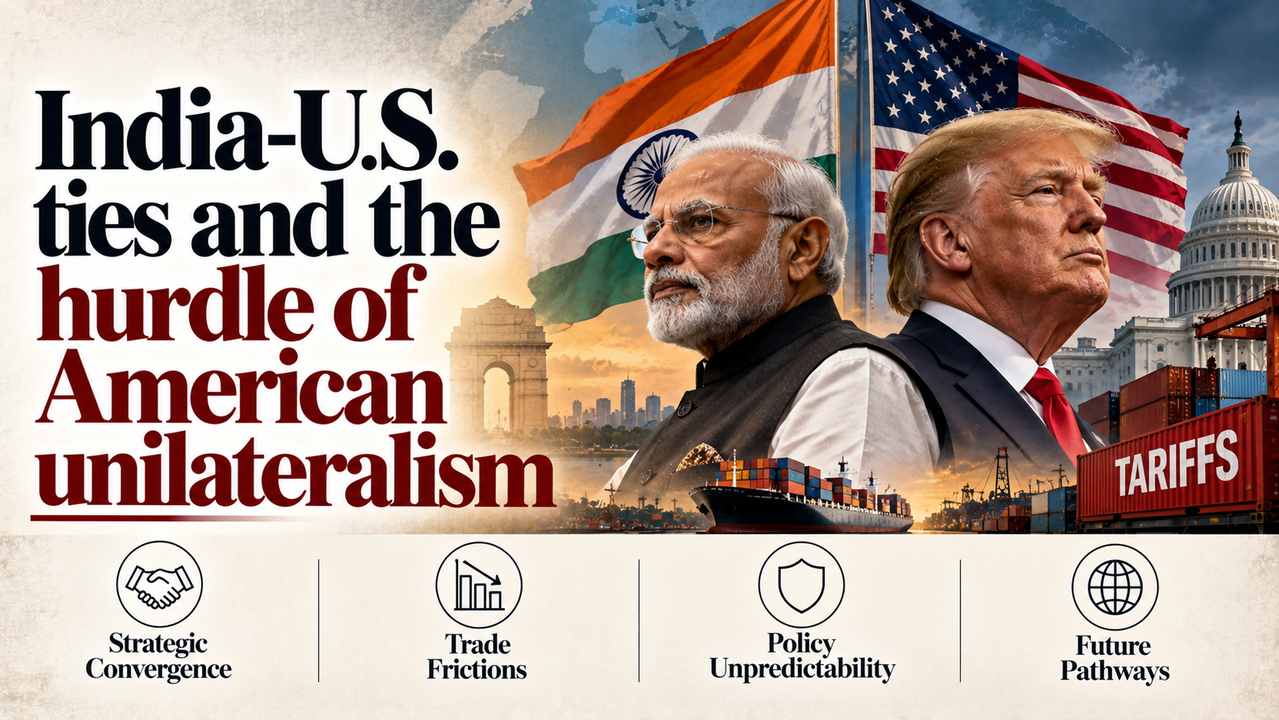
The United States has suspended the Permanent Labour Certification (PERM) programme for eight global IT companies, including Indian ones, accusing them of misusing immigration and labour certification systems. It is one of a series of unilateral US actions now straining India-US ties.
What is the PERM programme, and why does its suspension hurt India?
- What it is: PERM lets US companies hire non-US professionals. It is a step in an employer sponsored green card (US permanent residence) application, like an employer vouching for a foreign worker.
- Firms named: They include Infosys, Tata Consultancy Services, Wipro, Cognizant and HCL.
- Scale of use: The US says the eight firms received over 2,30,000 H-1B approvals (temporary skilled work visas) and over 1,00,000 labour certifications.
- Indian stake: Indians account for over 70% of approved H-1B petitions each year.
- The takeaway: The suspension follows ill treatment of and racist attacks on Indians, so India sees a pattern of US action, not an isolated incident.
Why has trade become a visible source of discord?
- Trade surplus: India sold $33.8 billion more to the US than it bought, on bilateral trade above $140 billion last financial year.
- Farm and dairy access: The US wants access to India’s dairy and agriculture sectors, which India cannot concede.
- Russian oil: India has refused to halt Russian oil imports even after additional US tariffs and sanctions.
- Stalled interim deal: An interim trade framework announced in February 2026 has stalled, and the Finance Minister says talks have “plateaued”.
Why has the defence partnership not delivered co-production?
- Purchases without transfer: India has acquired over $22 billion of US military hardware since 2002, but co-production and technology transfer, the US sharing how to build the equipment, remain elusive.
- Commitments made: In February 2025 the US agreed to co-produce Javelin anti tank missiles and Stryker combat vehicles in India.
- Ten year framework: The two countries signed a Framework for the US-India Major Defence Partnership in October 2025.
- Engine delays: Delayed GE F404 engines for the Tejas fighter show the cost of relying on foreign suppliers.
- INDUS-X: The India-US Defence Acceleration Ecosystem (INDUS-X), launched in 2023, has yet to deliver co-development.
Why do Pakistan and technology deepen the distrust?
- Mediation claims: The US President’s repeated claims that he ended the India-Pakistan conflict after Operation Sindoor (May 2025) have irked India.
- Courting Pakistan’s military: Washington’s courting of Pakistan’s Chief of Defence Forces is a major irritant.
- Mecca Pact: This pact of Saudi Arabia, Pakistan and Türkiye, reportedly blessed by Washington, worries India.
- Nuclear promise unmet: The 2008 India-US civil nuclear agreement promised US designed reactors in India, a promise still largely unrealised.
- Technology on paper: The Initiative on Critical and Emerging Technology (iCET) of 2023 and the Transforming the Relationship Utilizing Strategic Technology (TRUST) initiative of February 2025 remain largely declarations.
Is this a difficult phase or a structural problem?
- Restraint met with pressure: India’s strategic restraint increasingly meets US pressure and disregard for Indian interests.
- A lonelier power: The External Affairs Minister has observed that the US is “deliberately becoming a lonelier power”.
Challenges
- Visa restrictions: Tighter US immigration rules erode Indian IT firms’ competitiveness. Eg. A $100,000 H-1B visa fee.
- Autonomy against convergence: India’s ties with Russia and Iran clash with US expectations. Eg. US sanction threats over India’s S-400 purchase.
- Sanctions on connectivity: US sanctions on Iran hamper Indian projects such as Chabahar Port.
Way Forward
- Full trade agreement: Convert the interim framework into a comprehensive trade agreement that shields farm and dairy lines.
- Security of supply pacts: Insulate technology transfer from political shifts through long term Security of Supply Arrangements, pacts for priority defence supplies.
- Totalisation agreement: Sign a social security pact so Indian professionals in the US do not pay into a system they cannot draw from.
Conclusion
The India-US partnership has widened on paper, but each unilateral US step weakens Indian confidence in what is signed. Delivery of the stalled trade deal and the defence co-production commitments will show if the relationship can rest on equality rather than imposition.
Bilateral Initiatives in India-US Relations
- Foundational agreements: Four defence pacts let the two militaries protect shared information, use each other’s logistics, communicate securely and share geospatial data.
- STA-1 status: Since 2018, Strategic Trade Authorisation Tier 1 eases Indian access to US high technology items.
- COMPACT: The 2025 Catalyzing Opportunities for Military Partnership, Accelerated Commerce and Technology initiative launched Mission 500, targeting $500 billion in trade by 2030.
Matching Previous Year Question
“[2020, GS2, 15 marks] What is the significance of Indo-US defence deals over Indo-Russian defence deals? Discuss with reference to stability in the Indo-Pacific region.”
