💥Join UPSC 2027,2028 Mentorship (July Batch) + XFactor Notes & Microthemes PDF

Subject: Bilateral Relations

1. Major World Events
2. India’s Interests in neighbourhood
3. Effects of our Policies

  • What Is the India-Australia Uranium Supplies Agreement

    Why in the News?

    During the Indian Prime Minister’s visit to Australia, India and Australia finalised “administrative arrangements”, enabling private Australian mining entities to sign uranium supply contracts with private Indian companies under the 2015 Nuclear Cooperation Agreement. The announcement exposes a gap between India’s decade-old nuclear cooperation status with Australia and the still-limited commercial scale of actual uranium trade.

    What Does the Finalisation of the Administrative Arrangements Actually Change?

    1. Private Contract Access: Australian private mining entities involved in uranium extraction can now conclude commercial contracts directly with Indian private sector companies and joint ventures.
    2. Existing Legal Framework Unchanged: Exports remain governed by the Australia-India Nuclear Cooperation Agreement, 2015. All uranium supplied must be used exclusively for peaceful purposes under International Atomic Energy Agency (IAEA) watch.
    3. Domestic Trigger: The SHANTI Act, passed in December 2025, opened India’s nuclear sector to private players. This created the domestic legal space for Indian private companies to enter uranium contracts.
    4. Nature of the Change: The arrangement is administrative, not diplomatic. It operationalises an existing treaty rather than creating new cooperation.

    Why Was India Able to Access Australian Uranium Despite Not Signing the NPT?

    1. NPT Non-Signatory Status: India has not signed the Nuclear Non-Proliferation Treaty (NPT). This places it among a small group of non-signatory states.
    2. 2008 IAEA Safeguards Agreement: India signed a safeguards agreement with the IAEA in 2008. This followed the India-U.S. civil nuclear deal negotiated under Prime Minister Manmohan Singh and President George W. Bush.
    3. NSG Waiver: The 48-member Nuclear Suppliers Group (NSG) subsequently exempted India from the list of countries barred from nuclear-energy-related trade. This opened the legal route for supplier countries to export uranium to India.
    4. Foundation for Later Agreements: This NSG exemption became the basis for the civil nuclear agreements India signed with multiple partner countries, including Australia in 2015.
    5. Mutual Non-Proliferation Commitment: A 2009 joint statement between India and Australia recorded a mutual commitment to oppose nuclear weapons. This non-proliferation commitment was carried forward into the Nuclear Cooperation Agreement.
    6. Track Record as Enabler: India’s unblemished nuclear supply chain record and its nuclear energy programme supported Australia’s decision to treat India as an exception to its NPT-linked export policy.

    Where Does India Stand Among Australia’s Uranium Export Partners?

    1. Global Reserve Share: Australia holds more than a quarter of global uranium reserves. This gives weight to its choice of export partners.
    2. Existing Export List: Australia has exported uranium to the United States, Japan, South Korea, France, Sweden, Belgium, Finland, the United Kingdom, and Germany. All of these countries are NPT signatories.
    3. Common Mechanism: Each of these countries holds a bilateral safeguards agreement with Australia. This is the general mechanism through which Australia permits uranium exports.
    4. India’s Exceptional Position: India is the only country on this export list that has not signed the NPT. Its inclusion is an exception grounded in the NSG waiver, not in NPT membership.
    5. Limits of the Comparison: The source material lists destination countries without detailing the specific safeguard terms negotiated with each. The extent to which India’s arrangement mirrors or diverges from these bilateral agreements cannot be assessed from this article alone.

    What Explains the Timing of an Arrangement Under Negotiation for Two Decades?

    1. Long Negotiation History: Bilateral discussions on nuclear and energy cooperation between India and Australia have continued for nearly two decades. The two issues were addressed as early as November 12, 2009, during Prime Minister Kevin Rudd’s visit to India.
    2. Domestic Liberalisation Push: The SHANTI Act, passed in December 2025, created the private-sector opening on the Indian side that made commercial contracts under the arrangement meaningful.
    3. Energy Security Stress: India’s energy sector faces stress from the U.S.-Israel attack on Iran. This has forced India to diversify short-term hydrocarbon sourcing from Russia, the United States, and Venezuela.
    4. Long-Term Versus Short-Term Response: The Australia arrangement is positioned as a long-term energy planning measure. It is distinct from the short-term hydrocarbon diversification driven by the Iran-related disruption.
    5. Diplomatic Occasion: Prime Minister Modi’s visit to Australia provided the occasion for finalising the arrangement. The underlying treaty framework predates the visit by over a decade.

    Does the Arrangement Mark a New Opening or Formalise an Existing Trade?

    1. Trade Already Underway: At least 300 tonnes of uranium have been exported to India since 2018, under the 2015 agreement, before the current announcement.
    2. “Test Drive” Characterisation: The scale of exports since 2018 is understood as a “test drive.” This indicates that full-scale commercial trade had not begun despite the agreement being in force since 2015.
    3. Concerns About Indian Entities: Lingering concerns about Indian entities receiving Australian uranium contributed to the cautious, limited scale of exports before the current arrangement.
    4. What Is Actually New: The finalisation of administrative arrangements addresses the private-sector contracting gap. It does not change the underlying non-proliferation or safeguards architecture, which has been settled since 2008-2015.
    5. Unresolved Question: Whether private Australian and Indian entities will conclude contracts at commercial scale remains untested. The arrangement enables contracting; it does not guarantee it.

    Conclusion

    The finalisation of administrative arrangements does not create new nuclear cooperation between India and Australia. It unlocks private-sector participation within the government-to-government framework signed in 2015. Two structural preconditions made this possible: the 2008 NSG waiver that exempted India despite its non-NPT status, and the 2025 SHANTI Act that opened India’s nuclear sector to private companies. Exports since 2018 remained a limited “test drive”; the scale of future commercial deliveries now depends on Indian and Australian private entities actually concluding contracts, not on any further diplomatic breakthrough.

    PYQ Relevance

    [UPSC 2013] With growing scarcity of fossil fuels, atomic energy is gaining more and more significance in India. Discuss the availability of raw material required for the generation of atomic energy in India and in the world.

    Linkage: The PYQ directly addresses India’s nuclear energy expansion debate.The Australia uranium supply directly feeds the raw material question underlying this expansion debate.

  • [10th July 2026] The Hindu OpED: Building a durable India-Australia partnership

    PYQ Relevance[UPSC 2024] The West is fostering India as an alternative to reduce dependence on China’s supply chain and as a strategic ally to counter China’s political and economic dominance. Explain this statement with examples
    Linkage: The article shows India and Australia strengthening cooperation in critical technologies, resilient supply chains and maritime security to reduce dependence on China and manage its strategic influence in the Indo-Pacific.

    Mentor’s Comment

    Prime Minister Narendra Modi’s visit to Australia produced a cluster of institutional deliverables, a defence MoU, a maritime security roadmap, an operationalised uranium supply deal, and a new critical-technology partnership. The visit has sharpened the question of whether India and Australia have moved from independently arriving at similar strategic conclusions (convergence) to building genuinely interlocked capabilities and institutions (alignment).

    Why Is Strategic Convergence Between India and Australia Deepening?

    1. Shared hedging instinct: Both countries face structural risk from single-point dependence, Australia economically on China and militarily on the United States, India across its energy suppliers, defence platforms and critical minerals sourcing.
    2. Eroding trust in Washington: This year’s Lowy Institute Poll recorded Australian trust in the United States at a record low of 31%, with a narrow majority of Australians favouring distance from Washington under President Trump.
    3. Conflict-driven lesson on dependency: The Iran and Ukraine conflicts demonstrated that long-standing single-point dependencies, however historically stable, have become strategic liabilities.
    4. India’s parallel diversification: New Delhi is diversifying energy suppliers, defence platforms and critical minerals processing for the same underlying reason as Australia.
    5. Limits of unilateral hedging: No single country can balance China or hedge against American unpredictability alone, which makes partners such as India, Australia and Japan mutually reinforcing.

    What Institutional Steps Toward Alignment Did This Visit Deliver?

    1. Defence and security MoU: A Joint Declaration on Defence and Security Cooperation created a memorandum of understanding between Australia’s Maritime Border Command and the Indian Coast Guard.
    2. Maritime Security Collaboration Roadmap: Both countries adopted a roadmap to address shared threat perceptions across maritime domains.
    3. Uranium deal operationalised: The SHANTI Act, enacted last December, reformed the nuclear liability regime that had deterred foreign suppliers since the 2014 bilateral civil nuclear agreement. 
    4. Technology partnership launched: The summit launched the Australia-India Partnership on Cyber, Critical Technologies and Supply Chains (PACTS), positioned to build resilient technology partnerships through flexible minilateral arrangements. 
    5. Complementary minilateral framing: PACTS was framed as complementary to the Australia-Canada-India Technology and Innovation Partnership, both structured as flexible minilateral arrangements rather than formal alliances.

    Why Does Convergence Still Fall Short of Durable Alignment? 

    1. Indian Ocean overlap is real: India’s Information Fusion Centre-Indian Ocean Region and Australia’s closer attention to its western seaboard show converging maritime domain awareness.
      1. Information Fusion Centre-Indian Ocean Region: India’s hub for monitoring regional shipping movements and maritime threats.
    2. Shared threat assessments: Both navies have converged on assessments of shadow fleets, threats to undersea cables, and coercive activity below the threshold of conflict.
    3. Australia’s force posture points elsewhere: Australia’s most consequential defence decisions, including AUKUS, remain oriented toward the Western Pacific rather than the Indian Ocean.
    4. India’s strategic attention remains divided: India’s planners continue to split focus between continental threats and maritime challenges, limiting dedicated Indian Ocean bandwidth.
    5. Operational overlap is narrower than political rhetoric: The shared strategic ground between the two countries is real but narrower than the convergence visible at the political level.

    Why Has Economic Convergence Not Translated into Broad-Based Alignment?

    1. Trade growth is concentrated: Trade has grown sharply since the Economic Cooperation and Trade Agreement came into force, but gains sit disproportionately with large firms.
    2. SME awareness gap: Smaller exporters on both sides remain unaware of how to use the trade agreement’s provisions.
    3. Operationalisation gap flagged by experts: Track 1.5 dialogues have identified this awareness gap as a structural obstacle to broad-based trade alignment.
      1. Track 1.5 dialogue: a hybrid diplomatic format combining government officials and non-official experts.

    Why Does Australian Public Perception Lag Behind Elite Convergence?

    1. Wide perception gap with China: This year’s Lowy Poll found only 5% of Australians expect India to be the world’s most important power a decade from now, against 54% for China.
    2. High trust, low strategic recognition: Trust in India remains comparatively high among Australians, but this has not translated into recognition of India’s strategic weight.
    3. Elite-public disconnect: Convergence at the political and institutional level has not yet trickled down into wider Australian public awareness of India’s strategic heft.

    Can the Diaspora Bridge the Convergence-Alignment Gap?

    1. Diaspora scale: Indian-origin Australians are now the country’s largest immigrant-born community, surpassing the U.K.-born population for the first time.
    2. Existing recognition is narrow: A Centre for Australia-India Relations study finds Australians broadly recognise the diaspora as skilled migrants, students and workers, but only in that limited sense.
    3. Cultural asset is not alignment: Recognising the diaspora as a cultural or electoral asset differs from using it to build a public economic case for India.
    4. Institutionalisation is missing: Alignment requires institutionalising the diaspora’s role in helping Australian SMEs navigate Indian regulatory and business culture, and vice versa, rather than relying on individual champions.
    5. Migration politics complicate mobility: The mobility of Indian professionals remains entangled with Australia’s increasingly contested migration politics.
    6. Visit as fresh ballast: PM Modi’s remarks on Australian pension funds investing in India, framed as a marker of strategic trust rather than pure capital, provided renewed momentum for these conversations.

    Conclusion

    The India-Australia relationship rests on strong convergence: both countries are independently hedging against overdependence on China and an unpredictable Washington. Alignment, however, remains narrower than the political rhetoric suggests. Defence cooperation stays bounded by Australia’s Western Pacific-oriented force posture, trade gains remain concentrated among large firms, and Australian public perception of India continues to lag behind elite consensus. The partnership will deepen only if institutional steps, the Coast Guard MoU, the uranium deal, and diaspora-linked economic outreach, are sustained incrementally, since convergence alone does not guarantee durable alignment.

  • India-Australia Civil Nuclear & Strategic Partnership

    Why in News?

    India and Australia signed 18 agreements, including a landmark Civil Nuclear Energy Agreement enabling commercial uranium exports from Australia to India, along with pacts on defence, maritime security, critical minerals, and trade.

    Civil Nuclear Cooperation

    • Australia will commercially supply uranium for India’s civilian nuclear power plants.
    • Builds on the India-Australia Civil Nuclear Cooperation Agreement (2014).
    • Supports India’s clean energy and non-fossil fuel targets.

    Defence & Maritime Cooperation

    • Signed a Joint Declaration on Defence and Security Cooperation.
    • Launched the India-Australia Maritime Security Collaboration Roadmap.
    • Cooperation in Maritime law enforcement, Maritime domain awareness, Shipbuilding, repair and maintenance, Defence industrial collaboration, Interoperability and information sharing

    Critical Minerals & Technology

    • Launched the Australia-India Partnership on Cyber, Critical Technologies and Supply Chains.
    • Agreed to establish a Critical Minerals Corridor to strengthen resilient supply chains.

    Trade & Investment

    • Decided to expedite negotiations on the Comprehensive Economic Cooperation Agreement (CECA).
    • Agreed to move forward on a Bilateral Investment Treaty (BIT).

    Energy Security

    • Joint framework to ensure reliable supplies of Coal, Natural gas, Diesel and other liquid fuels

    Education

    • Approval granted for Victoria University to establish a campus in Gurugram.
    • Flinders University received a Letter of Intent to open a campus in Bengaluru.

    [2020] In India, why are some nuclear reactors kept under “IAEA safeguards” while others are not ?

    a) Some use uranium and others use thorium
    b) Some use imported uranium and others use domestic supplies
    c) Some are operated by foreign enterprises and others are operated by domestic enterprises
    d) Some are State-owned and others are privately-owned

  • The significance of Astra missiles which Indonesia will purchase

    Why in the News?

    India and Indonesia signed a deal on July 8 for the export of Astra Mk1 beyond-visual-range air-to-air missiles (BVRAAM), marking India’s first-ever export of the indigenous Astra missile system. The deal signals India’s transition from a long-standing importer of air-to-air missile technology to a credible exporter of a combat-validated strategic weapons system. The export comes months after Operation Sindoor demonstrated the missile category’s operational relevance against Pakistan.

    What does the Astra export deal reveal about the maturity of India’s indigenous BVRAAM programme?

    1. First export milestone: The deal for Astra Mk1 to Indonesia is India’s first export of an indigenous beyond-visual-range air-to-air missile. It will arm Indonesia’s Su-30 fleet.
    2. Astra Mk1 specifications: Astra Mk1 has a range of 80 to 110 km. Its altitude reach is up to 20 km. Its speed is Mach 4.5.
    3. Platform integration: Astra Mk1 is integrated with the Sukhoi-30 MKI. It is planned for future integration with the Tejas Mk1A and the Rafale.
    4. Astra Mk2 progress: Astra Mk2 has an enhanced range of 200 km, up from a previously stated 160 km. It received Acceptance of Necessity from the Defence Acquisition Council in December.
    5. Astra Mk3 development: Astra Mk3, named Gandiva, is under development. It uses a Solid Fuel Ducted Ramjet engine that sustains thrust mid-flight instead of burning out like conventional rocket motors. Its underlying SFDR technology was flight tested this year, with a potential range beyond 350 km.

    Why does the Astra export mark a shift from import dependence to strategic self-reliance in India’s air combat capability?

    1. Combat validation: Operation Sindoor, India’s operation against Pakistan last year, demonstrated the operational criticality of longer-range BVRAAM missiles.
    2. Threat benchmark: Astra is positioned as India’s answer to the PL-15, a long-range, active radar-guided BVRAAM used by both China and Pakistan.
    3. Import substitution: The Astra programme reduces India’s dependence on imported BVRAAM systems such as the Meteor and the R-77.
    4. Procurement priority: Procuring more batches of modern BVRAAM missiles is now a stated focus area for the Indian Air Force.
    5. Export as validation: Exporting Astra to Indonesia signals external confidence in an Indian-origin weapons system. Domestic deployment alone would not carry this signal.

    What do the named foreign missile systems and export destinations show about India’s position in the global BVRAAM market?

    1. China’s PL-15: An active radar-guided, long-range BVRAAM in service with both the Chinese and Pakistani air forces. It forms the primary threat benchmark for Astra.
    2. European Meteor: A BVRAAM currently operated by the IAF as an imported system. It illustrates India’s prior reliance on foreign suppliers.
    3. Russian R-77: Another imported BVRAAM in IAF service. Astra is intended to substitute this system over time.
    4. BrahMos to Southeast Asia: India is separately set to supply the BrahMos supersonic cruise missile to Indonesia, Vietnam, and the Philippines. This indicates a broader pattern of missile exports to Southeast Asian states.

    How does the Astra-BrahMos export pattern position India in the Indo-Pacific strategic order?

    1. Common export destinations: Indonesia, Vietnam, and the Philippines are recipients or prospective recipients of Indian missile systems. All three have unresolved maritime disputes with China.
    2. Countering PL-15 proliferation: Supplying Astra to a PL-15-exposed region extends India’s indigenous missile technology as a counterweight to Chinese-origin systems in the neighbourhood.
    3. Defence diplomacy tool: Missile exports function as an instrument of strategic partnership-building beyond conventional trade or diplomatic engagement.
    4. Manufacturer credibility: Sustained export interest from multiple Indo-Pacific states strengthens India’s credibility as a defence manufacturing hub. This supports the Atmanirbhar Bharat objective in the defence sector.

    Conclusion

    The Astra Mk1 export to Indonesia marks India’s transition from importing BVRAAM technology to supplying a combat-validated indigenous system abroad. Operation Sindoor supplied the operational proof. The PL-15 threat supplied the strategic rationale. What remains unresolved is whether India’s fighter fleet can secure adequate quantities of the higher-range Mk2 and Mk3 variants quickly enough to keep pace with the systems they are designed to counter.

  • India and Indonesia Launch Joint Restoration Project at Prambanan Temple

    Why in News?

    India and Indonesia have launched a joint conservation and restoration project at the Prambanan Temple Complex, a UNESCO World Heritage Site in Yogyakarta, Indonesia, during Prime Minister Narendra Modi’s visit to Indonesia.

    Key Highlights

    • Prime Minister Narendra Modi and Indonesian President Prabowo Subianto jointly inaugurated the restoration project.
    • The project aims to conserve and restore the historic Prambanan Temple Complex.
    • The Archaeological Survey of India (ASI) is the lead agency from the Indian side.
    • The initiative reflects the deep civilisational, cultural, and historical ties between India and Indonesia.
    • It also strengthens bilateral cooperation in heritage conservation and cultural diplomacy.

    About Prambanan Temple

    • Located in Yogyakarta, Indonesia.
    • Built in the 9th century CE during the Mataram Kingdom.
    • It is the largest Hindu temple complex in Indonesia and one of the largest in Southeast Asia.
    • Dedicated to the Trimurti: Brahma (Creator), Vishnu (Preserver), and Shiva (Destroyer)
    • The tallest temple is dedicated to Lord Shiva, standing about 47 metres high.
    • The temple walls depict episodes from the Ramayana and Bhagavata Purana.
    • Designated as a UNESCO World Heritage Site in 1991.

    Architectural Features

    • Built in the classical Hindu temple architecture style.
    • Constructed mainly using andesite stone.
    • Characterised by tall, pointed towers and intricate stone carvings.
    • The temple complex originally consisted of 240 temples, though many are now in ruins.

    Archaeological Survey of India (ASI)

    • Established in 1861 by Alexander Cunningham.
    • Functions under the Ministry of Culture.
    • Responsible for:
      • Conservation of protected monuments and archaeological sites.
      • Archaeological excavations.
      • Preservation of cultural heritage.
      • Maintenance of ancient monuments under the Ancient Monuments and Archaeological Sites and Remains Act, 1958.

    Significance of the Project

    • Reinforces India’s cultural diplomacy under the Act East Policy.
    • Highlights the spread of Indian civilisation, Hinduism, Buddhism, and Sanskrit culture in Southeast Asia.
    • Promotes cooperation in heritage conservation, tourism, and archaeological research.
    • Strengthens the India-Indonesia Comprehensive Strategic Partnership.

    [2025] Who among the following led a successful military campaign against the kingdom of Srivijaya, the powerful maritime State, which ruled the Malay Peninsula, Sumatra, Java and the neighbouring islands?

    [A] Amoghavarsha (Rashtrakuta)

    [B] Prataparudra (Kakatiya)

    [C] Rajendra 1 (Chola)

    [D] Vishnuvardhana (Hoysala)

  • [8th July 2026] The Hindu OpED: Beyond three C’s, the new lexicon of India-Australia ties

    PYQ Relevance[UPSC 2024] Discuss the geopolitical and geostrategic importance of Maldives for India with a focus on global trade and energy flows. Further also discuss how this relationship affects India’s maritime security and regional stability amidst international competition.
    Linkage: The PYQ tests India’s strategic maritime partnerships in the Indo-Pacific, focusing on trade routes, energy security, maritime security and regional geopolitics. The article similarly examines how India-Australia cooperation strengthens Indo-Pacific stability through maritime security, critical minerals, resilient supply chains and defence collaboration amid growing geopolitical competition.

    Mentor’s Comment

    The Prime Minister of India undertook his third visit to Australia this week, three years after the India-Australia relationship was elevated to a Comprehensive Strategic Partnership. The visit brings into focus whether the relationship’s description as having entered “T20 mode” is matched by delivered outcomes across trade, defence, energy and education, or whether institutional follow-through still trails the rhetoric of an expanding partnership.

    Why has trade and investment become the anchor of the India-Australia relationship?

    1. Duty-free market access: All Indian exports to Australia now have duty-free access under the Economic Cooperation and Trade Agreement (ECTA), benefiting textiles, pharmaceuticals, chemicals, engineering goods, gems and jewellery.
    2. Reciprocal preferential access: Preferential access to 90% of Australia’s trade value has facilitated Australian exports of critical minerals, resources, wool, avocados and macadamia to India.
    3. Trade growth target: Both countries share the ambition to raise bilateral trade from $33 billion in 2025 towards $100 billion by 2030.
    4. Rising cumulative investment: Two-way cumulative investment is approaching $50 billion.
    5. Australian capital inflow into India: Australia’s AirTrunk has announced plans to invest $30 billion by 2030 to develop digital infrastructure and AI-ready data centres in India.
    6. Indian capital inflow into Australia: Perdaman Chemicals & Fertilizers, founded by an Indian entrepreneur, is building Australia’s largest urea plant in western Australia at a cost of $4.5 billion, with over 98% of the plant’s modules manufactured in India.

    Why is defence now the fastest-growing pillar of India-Australia cooperation?

    1. Reliability signal through visits: Australia’s Deputy Prime Minister and Defence Minister Richard Marles chose India for his first foreign tour in both terms of the Albanese government.
    2. First Indian Defence Minister visit in 12 years: Defence Minister Rajnath Singh visited Australia last year, the first visit by an Indian Defence Minister to the country in 12 years.
    3. Institutionalised senior-level exchange: Regular leadership and senior-level exchanges now involve all three Services of both countries.
    4. Joint military exercises: Participation in bilateral and multilateral exercises such as AUSINDEX, Malabar and Talisman Sabre builds operational understanding, particularly in the maritime domain.
    5. Emerging defence-industry cooperation: Growing opportunities exist for defence-industry cooperation in cyber, AI and drone technologies, linked to India’s expanding ship-building capabilities.

    How is the energy partnership positioning India-Australia ties for the clean transition and India’s civil nuclear ambitions?

    1. Institutional architecture for renewables: The India-Australia Renewable Energy Partnership is implemented through a Solar Taskforce and a Green Hydrogen Task Force, guided at the ministerial level.
    2. Scope of clean-energy cooperation: India’s renewable energy targets create potential for cooperation across critical minerals and materials, manufacturing, laboratory research, commercial-scale deployment, industrial use and solar rooftops.
    3. Uranium exports still pending: Australian media reports suggest arrangements for future Australian uranium exports to India might be finalised shortly; this outcome is reported as prospective, not concluded.
    4. Conditional boost to civil nuclear programme: If uranium export arrangements are finalised, India’s civil nuclear programme would receive a significant boost, as would Australia’s uranium export sector.

    How is the education and skills partnership building human capital linkages between India and Australia?

    1. Scale of student mobility: More than one lakh Indian students are currently enrolled in Australia.
    2. Reverse flow of education access: World-class and affordable Australian education is now available within India itself through campuses of a growing number of Australian universities.
    3. Joint research priority areas: Collaboration spans advanced computing, energy, health care, and space and defence research, building both intellectual assets and researcher networks.
    4. Visa-linked employment pathways: Specific visa programmes have created new avenues for educated Indian youth seeking employment in Australia, though many await better utilisation.
    5. Vocational skill transfer: Australia’s leadership in vocational skills is being tapped in areas such as solar rooftop installation and mining, including in Gujarat, Uttar Pradesh and Odisha, to help meet Australia’s workforce shortfall through temporary Indian worker assignments.

    What role are sport and the diaspora beginning to play in India-Australia ties?

    1. Sport as a new priority pillar: A focused, broad-based sport strategy can extend cooperation into education, training, medicine, goods, infrastructure and event organisation.
    2. Anchor events on the calendar: Commonwealth Games 2030 and the Brisbane Olympics 2032 provide near-term platforms for this cooperation.
    3. Diaspora as a living bridge: The Indian diaspora in Australia now exceeds ten lakh and is described as a “living bridge” between the two countries.
    4. Traditional sport as soft power: Indian traditional sports such as kabaddi and kho kho are gaining popularity in Australia beyond the diaspora community itself.

    How does India-Australia cooperation use minilateral groupings to counter concentrated global supply chains?

    1. India-Indonesia-Australia trilateral: Named as one format through which shared Indo-Pacific values are being extended into a three-country cooperative arrangement.
    2. India-France-Australia trilateral: A second trilateral format extending India-Australia convergence to a European Indo-Pacific stakeholder.
    3. Australia-Canada-India Technology and Innovation Partnership: Launched in November 2025, this is the newest mechanism, explicitly framed around technology and innovation cooperation.
    4. India-Japan-Australia Supply Chain Resilience Initiative: A grouping specifically designed to build resilience in supply chains among the three partners.
    5. Possible India-Australia-UAE triad: Flagged as a prospective, not yet finalised, arrangement.
    6. Stated purpose across groupings: These mechanisms are positioned to counter supply-chain disruptions and market dominance and distortions in critical minerals, rare earths, semiconductors and new technologies, an implicit reference to concentrated Chinese supply in these sectors.
    7. Broader multilateral fora: The shared vision of a free, open, safe, peaceful and prosperous Indo-Pacific is also pursued through the Quad and the Indian Ocean Rim Association (IORA), alongside outreach to Pacific Island Countries on education, health, technology, fintech, capacity building and disaster relief.

    Does the expanding lexicon of cooperation reflect delivered outcomes, or does institutional follow-through still lag the rhetoric?

    1. Framing has outpaced institutionalisation before verification: The relationship’s description has moved from three Cs (Commonwealth, Cricket, Curry) to three Ds (Democracy, Diaspora, Dosti) to now Development, Defence and two Es (Energy, Education), a rapid expansion of vocabulary describing the partnership.
    2. Conditional commitments remain unresolved: The uranium export arrangement is reported only as something that “might be finalised shortly,” not as a concluded outcome.
    3. The newest mechanisms are barely operational: The Australia-Canada-India Technology and Innovation Partnership was launched only in November 2025, meaning its delivery record does not yet exist.
    4. Visa pathways await utilisation: Employment-linked visa programmes are explicitly described as awaiting “better utilisation,” indicating a gap between design and uptake.
    5. Personal chemistry substitutes for institutional depth: The article closes by crediting individual leader chemistry and Australian PM Albanese’s personal India connection for progressing ties, suggesting personality-driven momentum rather than fully institutionalised delivery mechanisms.

    Conclusion

    The India-Australia partnership has evolved from a civilisational shorthand of three Cs and three Ds into a substantive, multi-domain strategic partnership spanning trade, defence, energy, education and sport. This expansion is driven significantly by shared concern over China’s dominance in critical mineral and technology supply chains, and is expressed through an expanding lattice of minilateral groupings such as the Australia-Canada-India Technology and Innovation Partnership and the India-Japan-Australia Supply Chain Resilience Initiative. Several headline commitments, however, remain conditional or newly launched, uranium exports are still only expected to be finalised, and the newest technology partnership has no delivery track record yet. Sustaining momentum requires converting these in-principle understandings into binding, delivered outcomes across each of the identified pillars, rather than relying on leader-level chemistry to carry the relationship forward.

  • India and Costa Rica Hold First JETCO Meeting

    Why in News?

    India and Costa Rica held the first Joint Economic and Trade Committee (JETCO) meeting virtually on 6 to 7 July 2026 to deepen bilateral trade and investment ties.

    Key Highlights

    • Bilateral merchandise trade reached USD 391 million in 2025-26.
    • Both sides reviewed trade, investment, and regulatory frameworks.
    • Cooperation areas include:
      • Standards and certification
      • Food safety
      • Pharmaceutical regulation
      • Export certification
    • India highlighted opportunities in pharmaceuticals, digital technologies, manufacturing, and innovation.
    • Costa Rica shared its experience in Central American regional trade integration.

    What is JETCO?

    • A bilateral mechanism established under the MoU on Economic Cooperation.
    • It reviews trade and investment, resolves trade issues, and promotes business, regulatory, and institutional cooperation.

    Significance

    • Strengthens India’s engagement with Latin America.
    • Facilitates trade by reducing non-tariff barriers.
    • Expands opportunities in high-value sectors and innovation.

    Prelims Facts

    • Capital: San José
    • Currency: Costa Rican Colón
    • Region: Central America
    • No standing army since 1948.

    [2023] Which one of the following countries has been suffering from decades of civil strife and food shortages and was in news in the recent past for its very severe famine?

    [A] Angola

    [B] Costa Rica

    [C] Ecuador

    [D] Somalia

  • Sanae Takaichi’s visit: What India and Japan can do to boost their business ties 

    Why in the News?

    Japanese Prime Minister Sanae Takaichi’s visit has renewed attention on India-Japan business ties. The visit exposes a gap between the two countries’ strong strategic partnership and a narrow, underperforming business relationship. Only 1,500 Japanese companies operate in India against 6,000 in Thailand; 1% of them generate over half the business.

    Why does India-Japan’s business relationship underperform despite a flourishing strategic partnership?

    1. Company presence gap: India hosts about 1,500 Japanese companies. Thailand hosts 6,000.
    2. Business concentration: Just 1% of Japan’s firms in India generate over half of all India-Japan business.
    3. Sectoral narrowness: Most of this business comes from one sector, automobiles. Suzuki Motor Corporation’s early entry in the 1980s built this base.
    4. Partnership-business mismatch: The bilateral strategic partnership is strong. The business relationship remains narrow and concentrated.

    What does the contrast between Japanese and Western MNC practices in India reveal about the real barrier to attracting Indian talent?

    1. Leadership exclusion: Indians almost never head the India operations of Japanese multinationals. Global leadership roles remain closed to them.
    2. Western contrast: Western multinationals have recruited top Indian talent for decades. They offer the same career opportunities as any other employee.
    3. Merit-based promotion: Western firms promote Indian staff using globally-benchmarked merit. They deploy this talent worldwide.
    4. Compliance over capability: Japanese firms base local hiring decisions on a compliant attitude. They prioritise this over the capability needed to win in a competitive market.
    5. Talent attraction failure: This practice causes Japanese companies to rarely attract quality Indian talent. Reform within Japanese corporations is the stated solution.

    Why is Japanese corporate engagement with India changing now?

    1. Rising commitment volume: More Japanese companies than ever are now working to do business in India.
    2. Stability driver: Indian economic growth remains steady amid global challenges. India offers relative stability in an uncertain world.
    3. Staff quality shift: A small number of top Japanese corporations now send their most capable staff to explore Indian opportunities. This marks a shift from earlier practice.
    4. Sectoral diversification: New investment has moved into real estate, technology startups and steelmaking, beyond the traditional automobile base.
    5. Political momentum: Prime Minister Sanae Takaichi has brought support to Indo-Japanese clean energy partnerships. Results from these efforts will show in the coming years.

    What must Japanese firms do differently to succeed in India?

    1. Localise offerings: Success in India requires products and services suited to Indian conditions, priced competitively and produced at scale. Maruti Suzuki and Reliance’s Jio telecom service illustrate this approach.
    2. Avoid rigid transplantation: Firms that insist on traditional Japanese methods for product design or customer response speed lose out to more nimble competitors, including Indian ones.
    3. Build Indo-Japanese teams: Perseverance and resilience remain necessary but insufficient. Firms need adaptability and strong joint Indo-Japanese teams.
    4. Move beyond the China playbook: Many Japanese corporations expect India to ‘package’ inputs the way China does, ready industrial plots, contractors, trained workers, vendor bases and seamless logistics. India does not yet offer this readiness.
    5. Reform local hiring: Local hiring decisions should target the capability needed to win in a competitive market, not a compliant attitude.
    6. Empower local management: Success requires challenging entrenched cost structures, fixing inefficient business processes, and pushing Tokyo-based mid-level managers outside their comfort zone.

    What must Indian companies and institutions do to deepen ties with Japan?

    1. Deepen investor support: Governments and industry bodies already market India to Japan. Deeper, more active support for first-time Japanese investors in select sectors is needed.
    2. Build support structures: Partnerships using all available capabilities, not government agencies alone, should create structures that deliver results on the ground.
    3. Establish Japan presence: Corporate India rarely maintains an office or even a part-time local advisor in Tokyo, even among its biggest firms.
    4. Close the understanding gap: This absence creates a lack of understanding of the Japanese mindset and of how business can be developed in Japan.
    5. Move beyond old models: Indian companies still seek old-fashioned collaborations or technology transfers in exchange for market access through bureaucratic navigation.
    6. Reframe India’s value: This transactional approach undersells India’s image, achievements and potential.

    What ultimately earns Japanese trust and investment beyond profit calculations?

    1. Behaviour over profit: Japanese firms weigh the people they will work with more heavily than the prospect of high profit or growth.
    2. Trust markers: Listening, developing shared understanding, honouring commitments, and letting achievements speak are the behaviours Japanese firms respect.
    3. Reciprocal opportunity: Indian corporations can bring their products and services to Japan, or jointly to third countries.
    4. R&D partnership potential: Partnerships with Japanese firms can strengthen Indian firms’ research and development and other capabilities.
    5. R&D spend gap: Japanese firms spend over 4% of revenue on research and development on average. Indian firms spend under 1%.
    6. Structural implication: This gap explains why Japan remains a top global economy despite a smaller population and fewer natural resources than India.

    Conclusion

    India-Japan business ties remain shallow relative to a strong strategic partnership. Japanese corporations rarely give Indian staff global leadership roles. Indian firms still seek market access through old-style technology transfers rather than sustained engagement. Closing this gap needs talent reform inside Japanese corporations and trust-based strategic engagement from Indian firms in Japan.

    PYQ Relevance

    [UPSC 2019] The time has come for India and Japan to build a strong contemporary relationship, one involving global and strategic partnership that will have a great significance for Asia and the world as a whole.’ Comment.

    Linkage: The PYQ tests India’s bilateral relations with Japan, focusing on the strategic, economic and Indo-Pacific dimensions of the partnership. The article argues that the next phase of the India-Japan partnership should be driven by stronger business, investment, technology and private-sector collaboration, complementing the existing strategic relationship.

  • [27th June 2026] The Hindu OpED: India-New Zealand FTA, a modern trade partnership

    Mentor’s Comment

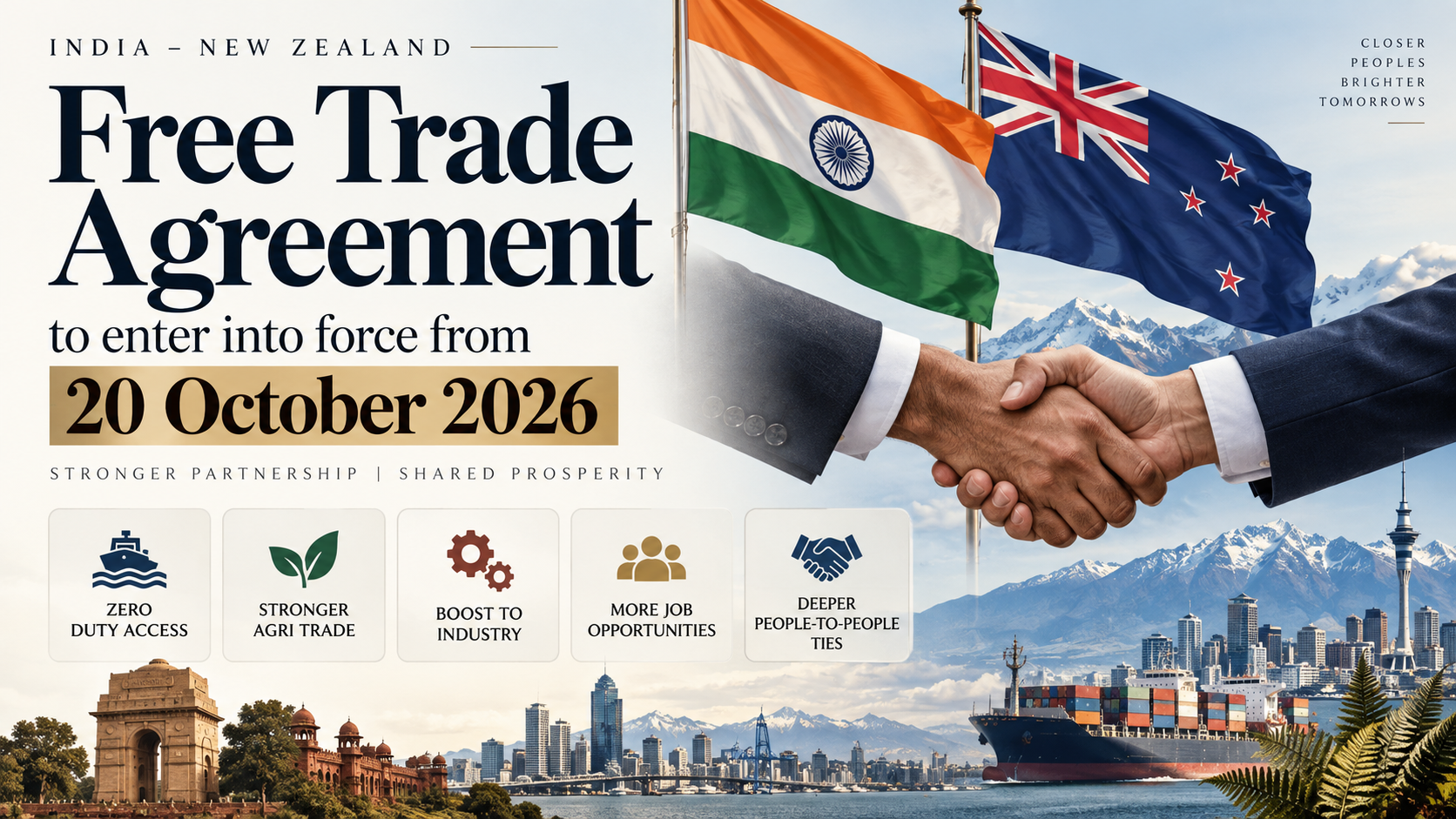
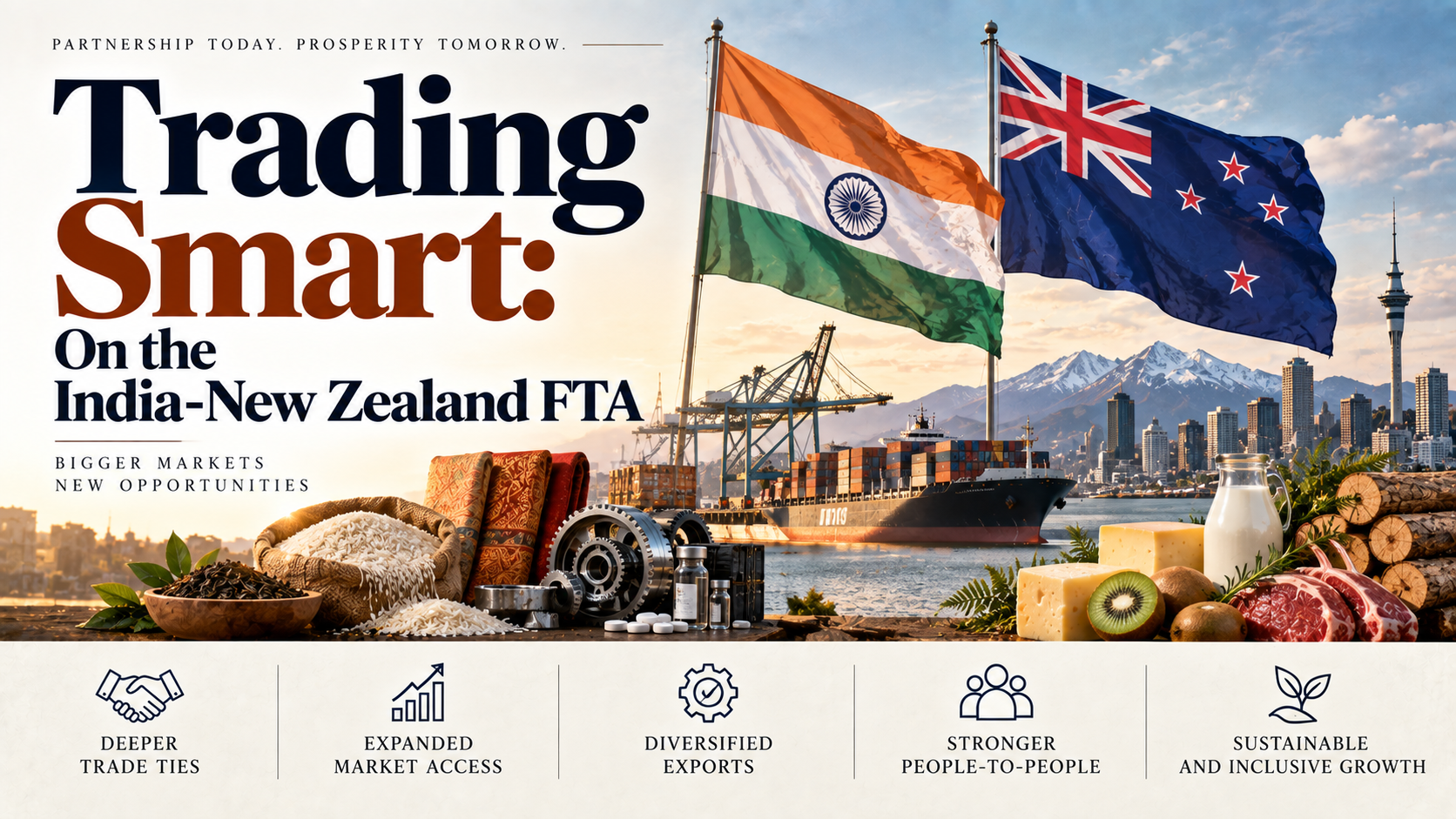
    India and New Zealand have concluded a Free Trade Agreement offering zero-duty access across 100% of New Zealand’s tariff lines, broader services market access, and a proposed $20 billion investment commitment over 15 years. The FTA signals India’s transition from a tariff-centric to a facilitation-led trade policy. The real test is whether Indian businesses can convert preferential access into realised gains, a conversion that depends not on the agreement’s text but on internal operational readiness.

    Key Features of the India-New Zealand FTA

    FeatureKey Provision
    Comprehensive Market AccessEliminates customs duty on 100% of Indian exports to New Zealand.
    Investment CommitmentIncludes a US$20 billion investment commitment over the next 15 years to deepen economic cooperation.
    Agricultural PartnershipLaunches an Agricultural Productivity Partnership to improve farm productivity and integrate Indian farmers into Global Value Chains (GVCs).
    Boost to MSMEs & EmploymentProvides zero-duty access for labour-intensive sectors such as textiles, apparel, leather, footwear, gems & jewellery, engineering goods, and processed food, enhancing export competitiveness and job creation.
    Balanced Tariff LiberalisationIndia offers market access on 70.03% tariff lines, while 29.97% remain excluded, protecting nearly 95% of New Zealand’s exports to India.
    Protection for Sensitive SectorsSensitive sectors such as dairy, sugar, key agricultural products, animal fats & oils, arms & ammunition, gems & jewellery, copper and aluminium products remain outside tariff concessions.
    Immediate Tariff Elimination30% of tariff lines become duty-free immediately, including wood, wool, sheep meat, and raw hides.
    Phased Tariff Reduction35.6% of tariff lines will see duty elimination over 3, 5, 7, and 10 years, covering petroleum products, vegetable oils, machinery, and selected chemicals.
    Partial Tariff Reduction4.37% of tariff lines receive tariff reductions, including wine, pharmaceuticals, polymers, aluminium, and iron & steel products.
    Tariff Rate Quotas (TRQs)0.06% of tariff lines fall under TRQs, covering products such as Mānuka honey, apples, kiwifruit, and milk albumin.

    Why does the India-New Zealand FTA matter despite the bilateral trade relationship remaining small?

    1. Baseline trade is modest but growing: Bilateral merchandise trade stood at $1.3 billion in FY 2024-25. India’s exports to New Zealand were approximately $711 million, registering 32% year-on-year growth.
    2. FTA as a corrective mechanism: Commercial engagement has consistently underperformed the diplomatic relationship. The FTA attempts to structurally correct this by creating enforceable market access commitments.
    3. Competitive displacement risk: New Zealand’s market is already accessed by exporters from countries with existing FTAs. Without this agreement, Indian exporters face a pricing disadvantage even where they are otherwise competitive.
    4. Single-digit tariff advantage as a real commercial lever: In markets where competing exporters already enjoy preferential access, even a marginal tariff difference influences purchasing decisions by buyers.
    5. Investment signal: The $20 billion investment commitment over 15 years, if realised, exceeds the current annual trade volume many times over. This signals a qualitative shift in the relationship’s ambition.

    Why is the India-New Zealand FTA described as a “modern” trade agreement, and what does that mean in practice?

    1. Modern FTAs are no longer purely about tariff reduction: Businesses are equally concerned with port clearance speed, certification recognition, regulatory predictability, and the compliance burden of accessing preferential treatment.
    2. 100% tariff-line coverage for Indian goods: New Zealand has extended duty-free access across all tariff lines. For labour-intensive sectors, textiles, apparel, leather, handicrafts, this eliminates duties that had reached 10%.
    3. Services as a primary beneficiary: Indian businesses hold strong positions in technology, consulting, engineering, healthcare, and education. Greater market access and clearer mobility provisions for professionals and students can expand India’s services footprint in New Zealand.
    4. Non-tariff barriers (NTBs) addressed: The agreement targets regulatory approvals in sectors such as pharmaceuticals, food processing, chemicals, and agriculture, where NTBs often matter more than tariff rates.
    5. Trade facilitation provisions included: Faster customs clearances, digital certification systems, and simplified procedures reduce inventory costs, improve cash flow, and create supply-chain certainty.

    Why does India’s protective stance on sensitive sectors not contradict its ambitions under the FTA?

    1. Selective liberalisation as a stated policy preference: The dairy sector’s exclusion from the FTA follows the same logic applied to dairy in the RCEP negotiations.
    2. Asymmetric vulnerability in agriculture: India’s dairy sector involves a large base of small producers with limited capacity to absorb competitive pressure from New Zealand, which is among the world’s most cost-efficient dairy exporters.
    3. Policy objective is dual: India seeks to open new markets for sectors with revealed competitive advantage while simultaneously insulating sectors where domestic producers are structurally vulnerable.
    4. The tension this creates: Defensive exclusions constrain the scope of agreements and can limit what trading partners are willing to concede in other areas. Every protected sector reduces the negotiating currency India brings to the table.
    5. Strategic calibration, not protectionism by default: The FTA demonstrates that India is willing to liberalise across 100% of goods categories on the receiving end. This suggests the protection of specific sectors is a calibrated choice rather than a systemic reluctance to open.

    What makes preferential access under the FTA conditional rather than automatic, and why does this matter for Indian exporters?

    1. Rules of Origin (RoO) framework: Preferential tariff access is not automatic. Exporters must demonstrate that products meet prescribed origin requirements before claiming lower duties.
      1. Rules of Origin (RoO): Criteria that determine the national source of a product, used to prevent third-country goods from accessing FTA benefits through transshipment.
    2. Product-specific rules and documentation requirements: The agreement incorporates detailed product-level origin criteria, documentation standards, and traceability measures to prevent misuse.
    3. Transshipment prevention: Traceability measures exist specifically to ensure that goods from non-FTA countries do not enter through India or New Zealand to claim preferential rates fraudulently.
    4. Supply-chain visibility becomes a compliance requirement: Businesses must map and document their supply chains in sufficient detail to satisfy RoO criteria at the point of export, a significant operational demand.
    5. Harmonised System (HS) classification accuracy is critical: Exporters must correctly classify goods under the Harmonised System (HS).
      1. HS is an internationally standardized nomenclature for classifying traded products, used by customs authorities globally. Misclassification leads to ineligibility for preferential rates even where the product qualifies substantively.
    6. Landed-cost reassessment is necessary: The duty saving must be weighed against the compliance cost of meeting RoO and documentation requirements. If compliance costs exceed the tariff benefit, the preferential access has no commercial value.

    What does the FTA reveal about the shift in India’s trade policy approach, and what does this demand of Indian businesses?

    1. Transition to facilitation-led trade policy: The agreement marks a shift in India’s framework, from tariff-reduction as the primary lever of competitiveness to reducing transaction costs, improving market access speed, and increasing supply-chain certainty.
    2. Multidimensional Competitiveness: Under this framework, a business gains competitive advantage not only by paying lower duties but by moving goods faster, clearing regulatory approvals more predictably, and demonstrating compliance discipline.
    3. Preferential access depending on demonstrable compliance: Businesses that cannot demonstrate traceability and process discipline cannot access the preferential rates the agreement provides, regardless of the tariff concession on paper.
    4. Four operational demands on businesses:
      1. Review HS classifications to ensure correct product categorisation
      2. Evaluate RoO eligibility across their product portfolios
      3. Strengthen supply-chain documentation to satisfy origin and traceability requirements
      4. Reassess landed-cost models to identify where FTA benefits are commercially meaningful
    5. Integration of compliance into strategy: Treating FTA compliance as a back-office function rather than a strategic one results in foregone market access. Compliance, sourcing, and operational functions must be aligned with the FTA framework from the outset.

    Conclusion

    The India-New Zealand FTA is correctly described as a modern trade agreement because its gains are not released by signing, they are released by preparation. The central tension is that preferential access, zero-duty lines, and services mobility provisions all exist on paper. But their conversion into commercial benefit depends entirely on whether Indian businesses build the compliance infrastructure, supply-chain discipline, and operational integration the agreement demands. India’s broader transition to a facilitation-led trade policy shifts the burden of competitiveness from the negotiating table to the factory floor and the compliance function. The agreement’s long-term value will be determined not by its text but by the readiness of Indian exporters to use it.

  • [25th June 2026] The Hindu OpED: PACOM, the deeper meaning behind a dropped prefix 

    Mentor’s Comment

    The United States military renamed its Indo-Pacific Command from “US INDOPACOM” to “US PACOM,” reverting to the pre-2018 designation. The rename signals a deliberate U.S. retreat from the Indo-Pacific strategic framework that has anchored India’s external and maritime policy since 2018. The significance lies not in the name but in the concurrent withdrawal of Indo-Pacific language from the U.S. Secretary of War Pete Hegseth’s Shangri-La Dialogue speech in May 2026.

    What Does the PACOM Rename Actually Signal?

    1. Reversal of 2018 doctrine: The 2018 renaming recognised the strategic importance of the Indian Ocean, the Indian subcontinent and India. The reversal withdraws that recognition.
    2. Disappearance of Indo-Pacific language: Hegseth’s 2025 Shangri-La speech referred to the Indo-Pacific over 30 times. His 2026 speech omitted it entirely.
    3. Unchanged area of responsibility: PACOM’s jurisdiction remains unchanged, extending from the U.S. West Coast to India’s western border. The change is strategic framing, not geography.
    4. Signal of U.S.-China accommodation: The rename reflects Trump’s effort to reduce tensions with China, which has long criticised the Quad and the Indo-Pacific concept.
    5. Three geographies at risk: India’s strategic position is affected across the Indo-Pacific, West Asia and South Asia.

    How Has U.S. Outreach to China Weakened the Quad?

    1. Trump’s G-2 framing: Trump’s references to a “G-2” suggest a U.S.-China-led order that conflicts with India’s vision of multipolar Asia.
    2. Diplomatic signals of accommodation: Trump’s Beijing visit and Xi Jinping’s planned U.S. visit indicate a preference for managing competition.
    3. Quad omitted from U.S. National Defense Strategy: The January 2026 National Defense Strategy does not mention the Quad, reducing its doctrinal significance.
    4. Quad agenda pared down: Cooperation is now limited to maritime security, economic prosperity, critical minerals and disaster response.
    5. Internal setbacks within a reduced agenda: U.S. restrictions on Anthropic’s AI models weakened Quad technology cooperation despite the Pax Silica and Critical Minerals Initiative Framework.
    6. India denied Quad Summit hosting rights: India has sought to host the summit since 2024. The grouping risks being reduced to a Foreign Ministers’ forum.
    7. Maritime security incidents within the Quad framework: Incidents involving IRIS Dena and attacks on ships carrying Indians exposed gaps in maritime domain awareness.

    What Does the U.S.-Iran Settlement Mean for India’s West Asia Position?

    1. U.S. ceasefire signals fatigue with regional allies: The ceasefire indicates reduced U.S. willingness to remain deeply engaged in West Asian conflicts.
    2. Islamabad MoU: Paragraph 4: The U.S. proposes withdrawing forces near Iran within 30 days of a final agreement.
    3. Islamabad MoU: Paragraph 5: Iran and Oman will help shape the future administration of the Hormuz Strait after demining.
    4. Islamabad MoU: Paragraph 6: Regional allies will contribute at least $300 billion for Iran’s reconstruction, strengthening Iran’s regional leverage.
    5. Regional realignment against India’s interests: Oman and Qatar have moved closer to Iran, while Saudi Arabia is diversifying its security partnerships.
    6. India’s West Asia policy is now misaligned: India may need to reassess its approach to Iranian oil, Chabahar and its regional balancing strategy.

    Why Does the Floundering Quad Require India to Build Alternative Maritime Architecture?

    1. Australia-India-Japan trilateral must be revived: Upcoming engagements with Japan, Indonesia, Australia and New Zealand provide an opportunity to strengthen alternative maritime partnerships.
    2. Maritime domain awareness is now India’s responsibility: India must expand bilateral and minilateral maritime cooperation as the Quad’s role diminishes.
    3. The Quad’s founding premise has reversed: Built to balance China under Trump 1.0, the Quad faces reduced relevance as Trump 2.0 pursues accommodation.

    Where Does the U.S.-China Competition Most Directly Threaten India’s Neighbourhood?

    1. South Asia as a new competitive theatre: The U.S. is expanding its strategic engagement across South Asia to compete with China.
    2. U.S. attempt at supra-entity status in South Asia: Washington increasingly seeks a broader regional role beyond India-Pakistan relations.
    3. Gor’s travels signal breadth of U.S. engagement: Visits to Kathmandu, Thimphu, Dhaka and Colombo reflect wider U.S. regional outreach.
    4. SAARC and BIMSTEC are constrained: Political tensions with Pakistan and Bangladesh limit the effectiveness of both regional organisations.
    5. China has already built South Asia mechanisms: Beijing has expanded regional cooperation platforms that bypass India.
    6. India’s multilateral opportunities: India can reinforce its leadership through IORA, BIMSTEC, SCO and potentially a revived SAARC.

    What Does the Central Tension Reveal About India’s Strategic Position?

    1. The surface-level bonhomie conceals structural divergence: Diplomatic warmth contrasts with U.S. policy shifts that challenge India’s interests across three regions.
    2. India’s strategic calculus was built on a U.S. Indo-Pacific commitment that no longer holds: The assumptions underpinning India’s post-2018 strategy are being simultaneously questioned.
    3. The G-2 world order conflicts with India’s multipolar vision: A U.S.-China-led order reduces India’s strategic space in Asia.
    4. India must plan beyond rhetoric: New Delhi must respond to evolving U.S. policies rather than symbolic diplomatic gestures.

    Conclusion

    The PACOM rename is a diagnostic signal, not a trivial semantic change. The U.S. has shifted from the Indo-Pacific framework toward a U.S.-China bilateral accommodation, leaving the Quad without doctrinal support, India’s West Asia position exposed by the Islamabad MoU, and South Asia under direct U.S.-China competitive pressure. India’s response cannot be confined to diplomatic optics. It requires simultaneous action: reviving alternative maritime coalitions such as the Australia-India-Japan trilateral, revising its West Asia policy on Iranian oil and Chabahar, and reasserting pan-regional leadership through BIMSTEC, SAARC, and the Indian Ocean Rim Association before both the U.S. and China entrench positions that leave India peripheral to its own neighbourhood.