Mains Ready By December. Smash Mains & Smash PYQ Admissions Open

GS Paper: GS1-01.Indian Culture- Salient aspects of Art Forms, Literature and Architecture from ancient to modern times.

  • Hornbill Festival 2025

    Why in the news?

    The 26th edition of Nagaland’s iconic Hornbill Festival has begun with great enthusiasm, reaffirming its status as one of India’s most vibrant cultural events. The festival has grown into a major platform for showcasing the cultural diversity of Nagaland’s tribes and promoting tourism in the Northeast.

    What is the Hornbill Festival?  

    • First organised: 2000
    • Also called: “Festival of Festivals”
    • Purpose:
      • Promote inter-tribal interaction
      • Preserve indigenous Naga heritage
      • Blend traditional and contemporary art forms
    • Organised by:
      • Department of Tourism, Government of Nagaland
      • Department of Art & Culture, Government of Nagaland
    • Venue: Naga Heritage Village, Kisama, ~12 km from Kohima, Nagaland
    • Named after: The Hornbill bird, which is deeply associated with the socio-cultural identity of the Nagas
    Consider the following pairs: Tradition State (2018)

    1. Chapchar Kut festival — Mizoram 

    2. Khongjom Parba ballad — Manipur 

    3. Thang-Ta dance — Sikkim 

    Which of the pairs given above is/are correct? 

    (a) 1 only 

    (b) 1 and 2 

    (c) 3 only 

    (d) 2 and 3

  • Protesters clash with police for a second day as Sangai Festival kicks off in Manipur

    Why In The News?

    The Sangai Festival in Manipur opened amid protests by IDPs and NGOs, lowering attendance. Critics say the government should prioritise resolving the Kuki-Zo–Meitei ethnic conflict and resettling displaced people before holding tourism events after the May 2023 violence.

    1) About Sangai Festival:

    • Celebration Period: Manipur Sangai Festival is held every year from 21-30 November.
    • Objective: The festival aims to showcase Manipur as a world-class tourism destination.
    • Name Origin: It is named after the State animal – the Sangai, the brow-antlered deer found only in Manipur.
    • Beginning: The festival started in 2010.
    • Theme: The theme for this year is “Festival of Oneness.”
    • Focus Areas: It highlights Manipur’s tourism potential in Arts & Culture, Handloom, Handicrafts, Indigenous Sports, Cuisine, and Music.

    2) About Sangai Deer:

    General Information:

    • Scientific Name: Rucervus eldii
    • Common Names: Sangai, Brow-antlered Deer, Dancing Deer
    • Population: About 260 (Forest Department census, 2016).
    • Habitat: Exclusively in Keibul Lamjao National Park, located on phumdi in Loktak Lake, Bishnupur district.

    Characteristics:

    • Medium-sized deer with distinctive long brow antlers forming the main beam.
    • Antlers appear to grow from the eyebrow, giving the name brow-antlered deer.
    • Possesses a dark reddish-brown winter coat that becomes paler in summer.
    • Walks with mincing hops on floating phumdi, hence called the Dancing Deer.

    Status:

    • State Animal of Manipur.
    • Listed in Schedule-I of the Wildlife (Protection) Act, 1972.
    • Classified as Endangered on the IUCN Red List.

    Conservation Issues:

    • Threatened by degenerating phumdi habitat due to continuous inundation from the artificial reservoir.
    • Invasion of non-native plants like Paragrass.
    • Risks from diseases, inbreeding depression, and poaching.

    3) Manipur Crisis:

    About the Violence:

    • Violence occurred between Kuki tribe and Meitei community across multiple regions of Manipur.
    • The Imphal Valley (10% of land) is dominated by Meiteis (64% of population) and elects 40 of 60 MLAs.
    • The hills (90% of land) are inhabited by 35%+ recognised tribes, electing 20 MLAs.
    • Unrest began in February 2023 after an eviction drive seen as targeting a tribal group.

    Meitei Demand for ST Status:

    • Supported by the Scheduled Tribes Demand Committee of Manipur (STDCM) since 2012.
    • Claim that Meiteis were recognised as a tribe before the 1949 merger with India.
    • Demand ST status to preserve land, culture, language, and ancestral identity.
    • Argue they face marginalisation and cite population decline from 59% (1951) to 44% (2011).

    Why Tribal Groups Oppose ST Status for Meiteis:

    • Tribals argue Meiteis already hold demographic, political, and economic advantages.
    • Fear ST status will allow Meiteis to acquire land in the hills, reducing tribal land rights.
    • Meitei dominance includes:
      • Manipuri language in the Eighth Schedule
      • Sections already under SC/OBC categories
    • Tribes believe Meitei claims of cultural vulnerability are self-defeating.
    [UPSC 2017] Consider the following pairs : Traditions Communities

    1. Chaliha Sahib Festival — Sindhis

    2. Nanda Raj Jaat Yatra — Gonds

    3. Wari-Warkari — Santhals Which of the pairs given above is/are correctly matched?

    Options: (a) 1 only* (b) 2 and 3 only (c)1 and 3 only (d) None of the above


  • The story behind Himachal Pradesh’s traditional Raulane Festival

    Why In The News?

    Bright, colourful, and captivating photos of the Raulane festival from Himachal Pradesh have recently gone viral on social media, sparking widespread discussion about the festival’s unique rituals and the rich cultural heritage of this centuries-old tradition.

    About Raulane Festival:

    • Location & Timing: The Raulane festival is celebrated in Kalpa, located in the Kinnaur district of Himachal Pradesh, during winter or early spring.
    • Ancient Origins: The festival is believed to be around 5,000 years old, making it one of the region’s oldest surviving traditions.
    • Celestial Beings (Saunis): This ancient festival honours celestial fairies called Saunis, described as radiant and gentle beings.
    • Belief & Protection: Locals believe that the Saunis protect villagers during harsh winters by offering warmth, guidance, and spiritual support.
    • Symbolic Marriage Ritual: During the festival, two men symbolically “marry” and act as vessels for the Saunis, representing the divine couple – the Raula (groom) and the Raulane (bride).
    • Traditional Attire: The chosen men are dressed in heavy woollen robes, adorned with ornaments and distinctive face masks.
    • Ritual Dance: They perform a slow, meditative dance at the Nagin Narayan Temple, where the entire community participates and celebrates.
    • Cultural Significance: The Raulane festival helps preserve ancient Himalayan culture and traditions, bringing villagers together to honour their divine protectors.
    [UPSC 2018] Consider the following pairs:

    Tradition State
    1. Chapchar Kut festival — Mizoram
    2. Khongjom Parba ballad — Manipur
    3. Thong-To dance — Sikkim

    Which of the pairs given above is/are correct?

    Options:

    (a) 1 only (b) 1 and 2* (c) 3 only (d) 2 and 3


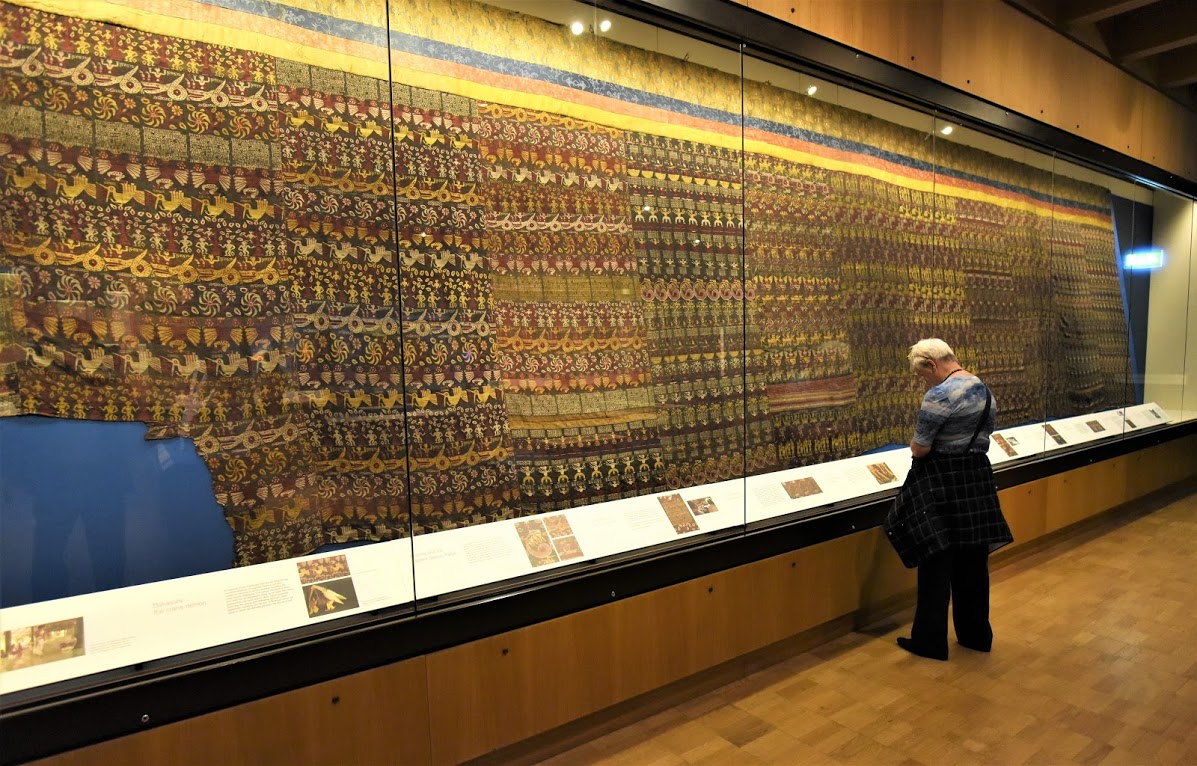
  • Sankaradeva’s Vrindavani Vastra to be displayed in Assam

    Why in the News?

    Assam Chief Minister Himanta Biswa Sarma left for London to initiate the process of bringing back the revered Vrindavani Vastra from the British Museum.

    Sankaradeva’s Vrindavani Vastra to be displayed in Assam

    About Vrindavani Vastra:

    • Origin: 16th-century silk tapestry woven under the guidance of Srimanta Sankaradeva at Taniguchi (Barpeta), Assam.
    • Commission: Requested by Cilarai, brother of Koch king Naranarayana.
    • Weavers: Led by disciple Gopal (Mathuradas Budha Ata).
    • Design & Content:
      • Depicts Krishna’s childhood and Vrindavan leelas – birth, adventures, defeat of Kamsa.
      • Multicoloured silk with loom-embroidered captions for each scene.
    • Current Status:
      • Original piece lost; fragments preserved in British Museum, Victoria & Albert Museum (London), Guimet Museum (Paris).
      • Plans are underway to bring it to Assam temporarily in 2027.

    Who was Srimanta Sankaradeva (1449–1568)?

    • About: Assamese Vaishnavite saint, scholar, cultural reformer, and polymath.
    • Religious Contribution:
      • Founded Ekasarana Dharma: Monotheistic Bhakti movement centred on Lord Krishna.
      • Rejected idol worship, caste divisions, Brahmanical orthodoxy, and sacrifices.
      • Motto: “Eka Deva, Eka Seva, Eka Biney Nahi Kewa” (One God, One Service, None Else).
      • Influenced Koch and Ahom kingdoms.
    • Cultural Contribution:
      • Borgeet (devotional songs).
      • Ankia Naat & Bhaona (religious theatre).
      • Sattriya dance (recognised as a classical dance of India).
      • Brajavali (literary language).
    • Social Reform:
      • Considered the father of modern Assamese identity.
      • Promoted equality, fraternity, and community cohesion.
      • Ended regressive practices (e.g., human sacrifice).
    • Legacy:
      • Combined art, devotion, and social reform into a unified cultural renaissance.
      • Revered as one of Assam’s greatest spiritual and cultural icons.
    [UPSC 2014] With reference to the famous Sattriya dance, consider the following statements:

    1. Sattriya is a combination of music, dance and drama.

    2. It is a centuries-old living tradition of Vaishnavites of Assam.

    3. It is based on classical Ragas and Talas of devotional songs composed by Tulsidas, Kabir and Mirabai.

    Which of the statements given above is/are correct?

    Options: (a) 1 only (b) 1 and 2 only* (c) 2 and 3 only (d) 1, 2 and 3 only


  • Konark Sun Temple

    Why in the News?

    The Archaeological Survey of India (ASI) has prohibited tourist entry to the Nata Mandap (Hall of Dance) at the Sun Temple, Konark, citing safety concerns.

    konark

    About the Konark Sun Temple:

    • It is located approximately 64 km from Bhubaneswar, Odisha.
    • It was built in the 13th century (around 1250 CE) during the reign of King Narasimhadeva I of the Eastern Ganga Dynasty.
    • It is dedicated to Surya, the Sun God.
    • It is designed as a massive chariot drawn by 7 horses with 24 intricately carved wheels.
    • It was constructed from Khondalite stone, known for its durability and intricate carvings.
    • The structure originally included a sanctum (deul) and an assembly hall (jagamohan) that have largely collapsed.

    Historical Significance:

    • The Konark Wheel, featured on Indian currency (old ₹20 and new ₹10 notes), symbolizes Odisha’s rich cultural heritage and national identity.
    • It reflects 13th-century advancements in timekeeping and astronomy through its sundial functionality.
    • It embodies the cycle of life and serves as a testament to the worship of Surya, the Sun God.
    • It is a key example of the Kalinga architectural style, highlighting the Eastern Ganga Dynasty’s achievements.

    konark

    Architectural Significance:

    • Design: Represents a chariot of the Sun God, drawn by 7 horses, with 24 intricately carved wheels.
    • Wheel Details:
      • Diameter: 9 feet 9 inches.
      • Spokes: 8 wide and 8 thin, symbolising prahars (three-hour periods).
    • Symbolism:
      • 7 horses: 7 days of the week.
      • 12 pairs of wheels: 12 months.
      • 24 wheels: 24 hours in a day.
    • Sundial Functionality: Two wheels act as sundials, showing time from sunrise to sunset using the axel’s shadow.
    • Carvings: Features intricate designs of foliage, animals, and human figures, showcasing exceptional craftsmanship.
    [UPSC 2021] With reference to the Chausath Yogini Temple situated near Morena, consider the following statements:
    1. It is a circular temple built during the reign of the Kachchhapaghata Dynasty.
    2. It is the only circular temple built in India.
    3. It was meant to promote the Vaishnava cult in the region.
    4. Its design has given rise to a popular belief that it was the inspiration behind the Indian Parliament building.
    Which of the statements given above are correct?
    Options: (a) 1 and 2 (b) 2 and 3 only (c) 1 and 4* (d) 2, 3, and 4
  • Piprahwa Relics of Buddha

    Why in the News?

    The sacred Piprahwa relics of Lord Buddha have reached Thimphu, Bhutan, as a goodwill gift from India for the Global Peace Prayer Festival (GPPF).

    About the Piprahwa Relics:

    • Discovery: Unearthed in 1898 by William Claxton Peppe, a British engineer, at Piprahwa (Siddharthnagar, Uttar Pradesh), near the Nepal border.
    • Historical Significance: Identified as ancient Kapilavastu, capital of the Shakya republic, where Prince Siddhartha (Buddha) lived before renunciation.
    • Findings at the Site: A buried stupa yielded a large stone coffer containing:
      • Bone fragments believed to be Buddha’s relics
      • Caskets made of soapstone and crystal
      • A sandstone coffer
      • Over 1,800 ornaments: pearls, rubies, sapphires, gold sheets
    • Legal Custody:
      • The British Crown claimed the relics under the Indian Treasure Trove Act, 1878.
      • Most artifacts were transferred to the Indian Museum, Kolkata.

    Stupas with Buddha’s Relics:

    • After the Buddha’s death (Mahaparinirvana), his cremated relics were divided among 8 kingdoms and a Brahmin named Drona, who coordinated their distribution.
    • Each recipient built a Stupa to enshrine their share of the relics, creating important pilgrimage sites and early centers of Buddhist worship.
    • The 9 stupas were in Rajagriha, Vaishali, Kapilavastu, Allakappa, Ramagrama, Vethadipa, Pava, Kushinagar, and Pippalivana.
    • Emperor Ashoka (3rd century BCE) redistributed the relics from these stupas into thousands of new stupas across his empire.
    • The stupa at Ramagrama is unique because it is believed to remain untouched and still holds the original relics.
    • A typical early Buddhist stupa included a hemispherical mound (anda), a square railing (harmika), a central pillar (yashti) with umbrellas (chatra), and a path for circumambulation (pradakshinapatha).
    [UPSC 2023] With reference to ancient India, consider the following statements:

    1. The concept of Stupa is Buddhist in origin.

    2. Stupa was generally a repository of relics.

    3. Stupa was a votive and commemorative structure in Buddhist tradition. How many of the statements given above are correct?

    Options: (a) Only one (b) Only two* (c) All three (d) None


  • ‘Phool Walon Ki Sair’ Festival

    Why in the News?

    For the first time since its 1962 revival (except during COVID-19), Delhi’s interfaith festival Phool Walon Ki Sair will not be held this year.

    About ‘Phool Walon Ki Sair’ Festival:

    • Timing: Held annually post-monsoon (September–November), attracting large participation from artisans, locals, and cultural groups.
    • Meaning: Literally translates to “Procession of the Florists,” celebrated annually in Mehrauli, Delhi.
    • Origin: Began in 1811 under Mughal Emperor Akbar Shah II when Begum Mumtaz Mahal offered floral chadars at both the Yogmaya Temple and the dargah of Khwaja Bakhtiar Kaki.
    • Symbolism: Represents Hindu–Muslim unity, interfaith respect, and religious harmony in Delhi’s cultural fabric.
    • Historical Timeline:
      • Banned by the British (1942) during the freedom movement.
      • Revived in 1962 by then Prime Minister Jawaharlal Nehru as a symbol of secular revivalism.
    • Celebrations: Include floral processions, decorative pankhas (fans), qawwali, folk dances, and traditional fairs.

    Cultural Significance:

    • Ganga–Jamuni Tehzeeb: Embodies Delhi’s composite Indo-Islamic culture, celebrating shared heritage and pluralism.
    • Interfaith Harmony: Promotes unity, peace, and mutual respect between communities.
    • Secular Ethos: Serves as a living symbol of Indian secularism, transcending religious and social boundaries.
    [UPSC 2017] Consider the following pairs:

    Traditions: Communities

    1. Chaliha Sahib Festival- Sindhis 2. Nanda Raj Jaat Yatra- Gonds 3. Wari-Warkari- Santhals

    Which of the pairs given above is/are correctly matched?

    Options: (a) 1 only * (b) 2 and 3 only (c) 1 and 3 only (d) None of the above


  • Lucknow named UNESCO ‘Creative City of Gastronomy’

    Why in the News?

    At the 43rd session of UNESCO’s General Conference held in Samarkand, Uzbekistan, Lucknow was officially designated a “Creative City of Gastronomy”, making it only the second Indian city after Hyderabad (2019) to receive this title.

    About UNESCO Creative Cities Network (UCCN):

    • Aim: To promote the integration of cultural industries into economic, social, and environmental policies, strengthening innovation and cultural diversity.
    • Establishment: Created by UNESCO in 2004 to foster global cooperation among cities leveraging culture and creativity for sustainable urban development.
    • Creative Fields: Recognises excellence across 7 categories: Design, Film, Gastronomy, Literature, Media Arts, Music, and Crafts & Folk Art.
    • Membership Scope: Encompasses over 250 cities worldwide, selected through a rigorous UNESCO evaluation process assessing creativity, sustainability, and community engagement.
    • Core Objectives:
      • Encourage innovation-driven growth and cultural diversity.
      • Facilitate knowledge-sharing, cultural exchange, and urban identity building.
      • Support creative economy development and inclusive city policies.
    • Collaborative Role: Serves as a global platform for member cities to share best practices, co-develop cultural initiatives, and enhance local creative ecosystems.

    Creative Cities in India:

    • Jaipur – Crafts & Folk Arts (2015)
    • Varanasi – Music (2015)
    • Chennai – Music (2017)
    • Mumbai – Film (2019)
    • Hyderabad – Gastronomy (2019)
    • Srinagar – Crafts & Folk Arts (2022)
    • Gwalior – Music (2025)
    • Kozhikode – Literature (2025)
    • Lucknow – Gastronomy (2025)
    [UPSC 2024] Which one of the following was the latest inclusion in the Intangible Cultural Heritage List of UNESCO?

    Options: (a) Chhau dance (b) Durga Puja (c) Garba dance* (d) Kumbh Mela


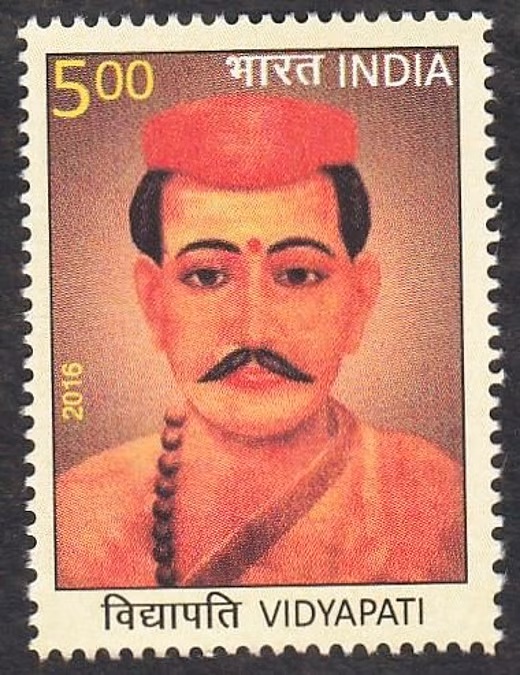
  • Who was Vidyapati Thakur (1352-1448)?

    Why in the News?

    This newscard is an excerpt from the original article published in Down To Earth.

    About Vidyapati Thakur (1352 – 1448):

    • Identity and Origin: Celebrated Maithili poet, philosopher, and scholar from Mithila (northern Bihar), active under the Oiniwar dynasty during the 14th–15th centuries.
    • Languages Used: Composed in Maithili, Sanskrit, and Avahatta, blending classical and vernacular idioms into a unified literary tradition.
    • Cultural Role: Revered as the “Father of Maithili Literature”, he elevated a regional tongue to a medium of devotion and philosophy, breaking Sanskrit monopoly.
    • Historical Setting: Lived amid the Bhakti movement’s eastern rise, when devotional currents merged with courtly Sanskrit and folk traditions.

    Major Contributions:

    • Bhakti Poetry (Padavali): Authored lyrical songs of Radha–Krishna love, giving women voice and agency through emotive Maithili verse.
    • Linguistic Innovation: Asserted “Desil bayana sab jan mittha” – the sweetness of native speech – thereby legitimising vernacular expression against Sanskrit elitism.
    • Ethical and Philosophical Thought: In Purusha-Pariksha, upheld knowledge and humility as the marks of true nobility, challenging caste and wealth hierarchies.
    • Ecological Vision: Bhu-Parikramanam portrayed rivers, groves, winds as moral presences, anticipating environmental ethics centuries before modern discourse.
    • Devotional Hymns: His Ganga Stuti personified the river as divine mother and moral teacher, uniting spirituality with ecological reverence.
    • Administrative Scholarship: Likhanavali functioned as a manual of governance and record-keeping, showing mastery beyond poetics.
    • Regional Influence: His idiom spread to Bengal, Odisha, and Assam, inspiring the Brajabuli tradition and Chaitanya-era Vaishnava poets.
    • Culture–Nature Synthesis: Saw land as sacred, trees as temples, and rivers as teachers, merging ecology with devotion and ethics.
    • Enduring Legacy: A bridge between Sanskrit classic and regional modernity, Vidyapati’s ideals of love, humility, and environmental ethic continue to define Mithila’s cultural identity.
    [UPSC 2019] Consider the following statements:

    1. Saint Nimbarka was a contemporary of Akbar. 2. Saint Kabir was greatly influenced by Shaikh Ahmad Sirhindi.

    Which of the statements given above is/are correct?

    Options: (a) 1 only (b) 2 only (c) Both 1 and 2 (d) Neither 1 nor 2*


  • Gyan Bharatam Mission 

    Why in the News?

    The Union Ministry of Culture will formalise partnerships with around 20 institutions under the Gyan Bharatam Mission, a flagship national initiative for manuscript conservation, digitisation, and research.

    About Gyan Bharatam Mission:

    • Overview: It is a flagship national mission of the Ministry of Culture (GoI) to preserve, digitise, and promote India’s manuscript heritage.
    • Launch: Approved as a Central Sector Scheme (2024–2031) with an outlay of ₹482.85 crore.
    • Background: Builds upon the National Mission for Manuscripts (2003), which documented over 44 lakh manuscripts.
    • Objective: To integrate traditional conservation with modern digital technologies including AI, cloud storage, and blockchain authentication.
    • Core Goal: Establish a National Digital Repository (NDR), a unified, globally accessible platform showcasing India’s intellectual and cultural heritage.
    • Vision Alignment: Supports Viksit Bharat @2047 and India’s role as a Vishwa Guru in global knowledge preservation.

    Key Features:

    • Comprehensive Scope: Covers identification, conservation, digitisation, translation, and public dissemination.
    • Survey & Documentation: Creation of a national manuscript inventory through Manuscript Resource Centres (MRCs).
    • National Digital Repository (NDR): Uses AI-based Handwritten Text Recognition (HTR) for searchable digital access.
    • Institutional Network: Implements through Cluster Centres and Independent Centres for nationwide coordination.
    • Scientific Conservation: Strengthens Manuscript Conservation Centres (MCCs) for preventive and curative preservation.
    • Funding Structure: 70% upfront release and 30% post-verification based on measurable outcomes.
    • Public Engagement: Promotes youth and researcher participation via Gyan-Setu AI Innovation Challenge.
    • Quality Assurance: Ensures accountability through third-party audits, utilisation checks, and review mechanisms.