💥Mains Ready By December. Smash Mains & Smash PYQ Admissions Open

GS Paper: GS3-17.Awareness in the fields of IT, Space, Computers, Robotics, Nano-technology, Bio-technology and issues relating to Intellectual Property Rights.

  • [op-ed of the day] Lady Gaganaut

    Context

    The first gaganaut-Vyomamitra- to head for space in an Indian craft will not be human, but humanoid.

    What Vyomamitra would do on spaceflight?

    • Test the technological environment: Vyomamitra unveiled by ISRO will fly two missions to test the technological environment which human gaganauts will inhabit on India’s first demonstration of human spaceflight in 2022.
      • She will test the systems and instruments that they would use.
      • Vyomamitra cannot test the cabin ecosystem,  as she would not be able to breathe the air.
      • Other functions: Vyomamitra is perfectly capable of issuing commands, activating switches and, obviously, communicating with earth.
    • Give company to human travellers: Her prototype has already chatted with people at the Isro event where she was introduced to the public, and future iterations will be able to give company to human travellers at the loneliest frontier.

    A shift from sending animals to humanoids

    • Performing roles previously performed by animals: Vyomamitra will be executing the pioneering role which has traditionally been given to animals – testing systems for survivability.
      • Fruit flies and monkeys were the first beings to lift off, riding V2 rockets with devices monitoring their vital signs.
    • Why using humanoid is more useful: Using a humanoid robot is more useful because it can be used to replicate the behavioural and operational responses of a human.
      • Indeed, robots need not remain pioneers testing survivability, or assistants to the human crew, but are expected to crew missions that are too prolonged or too dangerous for a human pilot.

    Opportunities and the future of AI-powered humanoid

    • Russian robot in space: As India prepared for human flight, in August 2019, the Russian space agency Roscosmos sent up the anthropomorphic robot Skybot F-850 to dock with the International Space Station.
      • The mission has been halted because of technical issues.
      • Goals beyond survivability testing: If the nation which pioneered human spaceflight with Yuri Gagarin’s mission in 1961 is sending humanoid robots into space, survivability testing is not the only legitimate goal of missions powered by artificial intelligence and robotics.
    • Opportunity to develop new technologies: Humanoid in space also provide opportunities to test and develop these technologies under circumstances that do not prevail on earth.
      • The inputs, goals and skills learned are different and while AI on earth specifically focuses on creating systems which do not think like humans,
    • Human-like AI system need of industry: The space industry would value systems that are human-like, to stand in for crew.

    Conclusion

    Vyomamitra represents the very first iteration of AI in space, and later generations could prove to be as essential for spaceflight as cryogenic engines.


  • Vyom Mitra: ISRO’s half-humanoid


    ISRO unveiled its first ‘woman’ astronaut during the event ‘Human Spaceflight and Exploration’.

    Vyom Mitra

    • The AI-based robotic system is being developed at a robotics lab at the VSSC in Thiruvananthapuram.
    • Vyom Mitra will be used for an unmanned flight of ISRO’s GSLV III rocket in December 2020, which, along with a second unmanned flight in July 2021.
    • This will serve as the test of ISRO’s preparedness for its maiden manned space mission, Gaganyaan, being targeted for 2022 to mark 75 years of India’s independence.

    Functions of the humanoid

    • Vyommitra, equipped with a head, two arms and a torso, is built to mimic crew activity inside the crew module of Gaganyaan.
    • Attaining launch and orbital postures, responding to the environment, generating warnings, replacing carbon dioxide canisters, operating switches, monitoring of the crew module, receiving voice commands, responding via speech (bilingual) are among its functions listed.
    • It will have a human-like face, with lips synchronised for movement to mimic speech.
    • Once it is fully developed, Vyommitra will be able to use equipment on board the spacecraft’s crew module, like safety mechanisms and switches, as well as receive and act on commands sent from ground stations.
  • Thirty Metre Telescope (TMT) in Hawaii


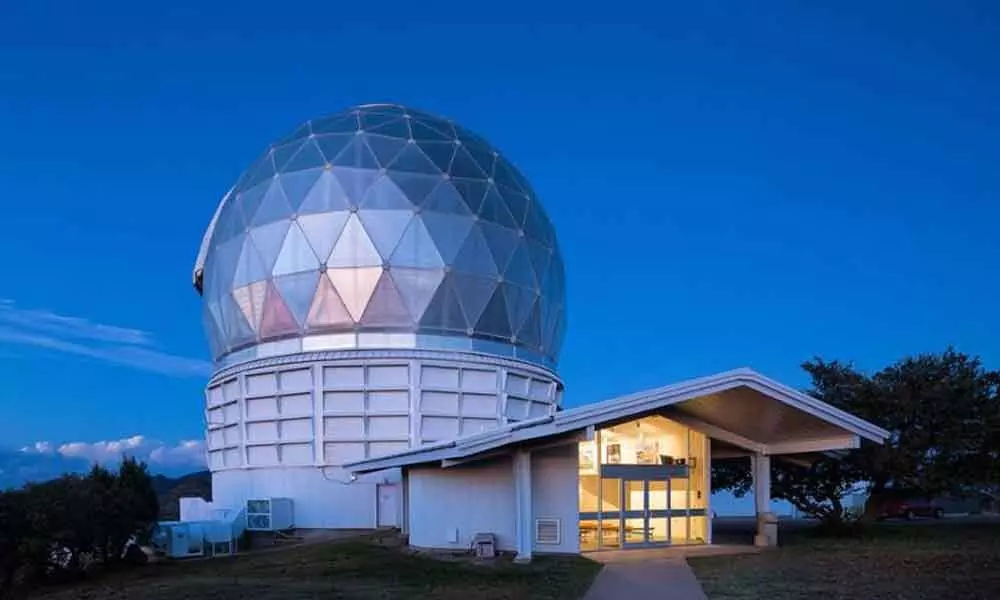
    India, a partner in the construction of one of the largest telescopes in the world, TMT, has said it wants the project to be moved out of the proposed site at Mauna Kea, a dormant volcano in Hawaii.

    Thirty Metre Telescope

    • The TMT is a proposed astronomical observatory with an extremely large telescope (ELT) that has become the source of controversy over its planned location on Mauna Kea on the island of Hawaii in the US state of Hawaii.
    • It is being built by an international collaboration of government organisations and educational institutions, at a cost of $1.4 billion.
    • “Thirty Metre” refers to the 30-metre diameter of the mirror, with 492 segments of glass pieced together, which makes it three times as wide as the world’s largest existing visible-light telescope.
    • The larger the mirror, the more light a telescope can collect, which means, in turn, that it can “see” farther, fainter objects.
    • It would be more than 200 times more sensitive than current telescopes and would be able to resolve objects 12 times better than the Hubble Space Telescope.

    Utility of the telescope

    • One of its key uses will be the study of exoplanets, many of which have been detected in the last few years, and whether their atmospheres contain water vapour or methane — the signatures of possible life.
    • For the first time in history, this telescope will be capable of detecting extraterrestrial life.
    • The study of black holes is another objective.
    • While these have been observed in detail within the Milky Way, the next galaxy is 100 times farther away; the TMT will help bring them closer.
  • Corona Virus


    Chinese scientists have confirmed can spread between human beings.

    Corona Virus

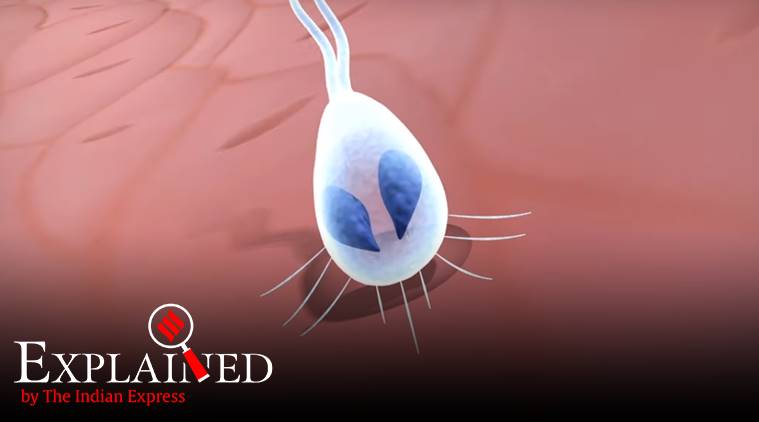
    • Corona viruses are large family of viruses, which cause illnesses to people and also circulate in animals including camels, cats and bats.
    • They cause illness ranging from the common cold to more severe diseases such as Middle East Respiratory Syndrome and Severe Acute Respiratory Syndrome.
    • 2019-nCoV is a new strain that has not been previously identified in humans.
    • Much remains to be understood about the new coronavirus, which was first identified in China earlier this month.
    • Not enough is known about 2019-nCoV to draw definitive conclusions about how it is transmitted, clinical features of disease, or the extent to which it has spread. The source also remains unknown.

    Why is it called the Wuhan Virus?

    • The first cases emerged in Wuhan in central China’s Hubei province.
    • On December 31 last year, authorities confirmed that a large number of patients with unexplained pneumonia were admitted in hospitals in the city.

    Symptoms of infection

    • According to the WHO, common signs include fever, cough, and shortness of breath. Serious infections can lead to pneumonia, kidney failure, and death.
    • Although human-to-human transmission has now been confirmed, the WHO says animals are the outbreak’s likely primary source. It is not known yet which animals are responsible.
    • To prevent the spread of all respiratory infections, the WHO in general asks people to cover their mouths and noses when coughing or sneezing, and to frequently wash their hands.
    • Direct contact with farm or wild animals should be avoided — similar outbreaks in the past, like the Severe Acute Respiratory Syndrome (SARS) emerged from markets where people were in contact with live animals.

    Why is there concern around the world?

    • People see a similarity with the SARS outbreak that infected over 8,000 people and killed around 775 in more than 35 countries worldwide in 2002-03.
    • SARS too, was caused by a mystery coronavirus, and started in China.
    • The source of the virus remained unknown for 15 years, until Chinese scientists in 2017 traced it back to a colony of horseshoe bats living in remote cave in Yunnan province.
    • The virus was carried by civet cats which are sold in markets in China.
    • Fears that SARS could reappear and memories of China misleading the rest of the world on the extent and seriousness of the outbreak have not gone away.
  • Xenobot

    Scientists in the US have created the world’s first “living machines” — tiny robots built from the cells of the African clawed frog that can move around on their own.

    Xenobot

    • Scientists have developed living robots from frogs stem cells.
    • They have named this millimetre-wide robots “xenobots” — after the species of aquatic frog found across sub-Saharan Africa from Nigeria and Sudan to South Africa, Xenopus laevis.
    • Scientists have repurposed living cells scraped from frog embryos and assembled them into entirely new life-forms.
    • The xenobots can move toward a target, perhaps pick up a payload (like a medicine that needs to be carried to a specific place inside a patient) — and heal themselves after being cut.
  • Drone Census

    India’s first drone census has seen only 2,500 Ownership Acknowledgment Numbers (OANs) being issued by the Ministry of Civil Aviation (MoCA) since five days of beginning.

    Drone Census

    • The MoCA had issued a notice providing a one-time opportunity for voluntary disclosure of all drones and operators starting from January 14.
    • The DGCA issued the Civil Aviation Requirements (CAR), Section 3 – Air Transport Series X, Part I, Issue I, dated August 27, 2018 regulates use of drones.
    • It provides the process for obtaining Unique Identification Number, Unmanned Aircraft Operator Permit (UAOP) and other operational requirements; there are drones that do not comply with the CAR.
    • If a drone is not enlisted by 5 p.m. on January 31, then it will most definitely be confiscated.
    • After January 31, only authorised retailers will be allowed to sell them after uploading buyers’ Know your Customer (KYC) and sale invoice, similar to the sale of mobile phones and cars.

    Why such move?

    • The exercise will give the government a picture of who owns what kind of drone in which part of the country.
    • It will help in making policy decisions that should ideally become the base for understanding the scale of operations.
  • [pib] Novel Corona Virus (nCoV)

    The Union Ministry of Health and Family Welfare has been closely monitoring the situation after the reports of 41 confirmed cases of novel Corona virus (nCoV) including one death from Wuhan, China, 2020.

    About Novel Corona Virus

    • Corona viruses are large family of viruses, which cause illnesses to people and also circulate in animals including camels, cats and bats.
    • They cause illness ranging from the common cold to more severe diseases such as Middle East Respiratory Syndrome and Severe Acute Respiratory Syndrome.
    • 2019-nCoV is a new strain that has not been previously identified in humans.
    • Much remains to be understood about the new coronavirus, which was first identified in China earlier this month.
    • Not enough is known about 2019-nCoV to draw definitive conclusions about how it is transmitted, clinical features of disease, or the extent to which it has spread. The source also remains unknown.
  • GSAT-30 successfully launched

    India’s first satellite of 2020, the GSAT-30 was successfully launched. The launch vehicle Ariane 5 VA-251 lifted off from Kourou Launch Base, French Guiana.

    GSAT-30 

    • GSAT-30 derives  its  heritage  from ISRO’s  earlier INSAT/GSAT  satellite  series  and  will  replace  INSAT-4A  in 
    • In the  days  ahead,  orbit-raising  manoeuvres  will  be  performed  to  place  the satellite  in  Geostationary  Orbit  (36,000  km  above  the  equator)  by  using  its  onboard  propulsion
    • During the  final  stages  of  its  orbit  raising  operations,  the  two  solar  arrays  and  the antenna  reflectors  of  GSAT-30  will  be
    • Following this,  the satellite will be  put in  its final orbital .     The satellite will  be  operational  after  the successful  completion  of  all in-orbit  tests.

    Utility of the satellite

    • GSAT-30 will provide  DTH  Television  Services, connectivity to  VSATs for  ATM,  Stock-exchange,  Television unlinking and Teleport  Services,  Digital  Satellite  News  Gathering  (DSNG)  and e-governance applications.
    • The satellite  will  also  be  used  for  bulk  data  transfer  for  a  host  of an emerging  telecommunication
  • Virtual human’ NEON

    NEONs are being called the world’s first artificial humans. They look and behave like real humans, and could develop memories and emotions — though from behind a 4K display.

    NEON

    • Star Labs is headed by India-born scientist Pranav Mistry who underlines that what was showcased at CES was the product of just four months’ work.
    • The company says NEONs are computationally created virtual humans — the word derives from NEO (new) + humaN.
    • For now, the virtual humans can show emotions when manually controlled by their creators.
    • But the idea is for NEONs to become intelligent enough to be fully autonomous, showing emotions, learning skills, creating memories, and being intelligent on their own.
    • Star Labs thinks they can be “friends, collaborators, and companions”, but all that is a few years away.

    How does it work?

    There are two core technologies behind his virtual humans.

    • First, there is the proprietary CORE R3 technology that drives the “reality, real time and responsiveness” behind NEONs.
    • It is the front-end reality engine that is able to give you that real expression.
    • The company claims CORE R3 “leapfrogs in the domains of Behavioral Neural Networks, Evolutionary Generative Intelligence and Computational Reality”, and is “extensively trained” on how humans look, behave and interact.
    • But in the end, it is like a rendition engine, converting the mathematical models to look like actual humans.
    • The next stage will be SPECTRA, which will complement CORE R3 with the “spectrum of intelligence, learning, emotions and memory”.
    • But SPECTRA is still in development, and is not expected before NEONWORLD 2020 later this year.

    How could NEONs be used?

    • NEONs are the interface for technologies and services.
    • They could answer queries at a bank, welcome you at a restaurant, or read out the breaking news on television at an unearthly hour.
    • This form of virtual assistance would be more effective, for example, while teaching languages, as NEONs will be capable of understanding and sympathizing.

    How are they different from Virtual Assistants?

    • Virtual Assistants now learn from all the data they are plugged into. NEONs will be limited to what they know and learn.
    • Their leaning could potentially be limited to the person they are catering to, and maybe her friends — but not the entire Internet.
    • They will not be an interface for you to request a song, rather they will be a friend to speak to and share experiences with.
    • Currently, its developer doesn’t want NEONs to have collective memory, or to share data among themselves.
  • Artemis Mission

    NASA wants to send the first woman and the next man to the Moon by the year 2024, which it plans on doing through the Artemis lunar exploration program. An Indian American astronaut named Raja Chari is set to accompany the crew in this mission.

    Artemis Mission

    • In 2011, NASA began the ARTEMIS (Acceleration, Reconnection, Turbulence, and Electrodynamics of the Moon’s Interaction with the Sun) mission using a pair of repurposed spacecraft and in 2012 the Gravity Recovery and Interior Laboratory (GRAIL) spacecraft studied the Moon’s gravity.
    • For the program, NASA’s new rocket called the Space Launch System (SLS) will send astronauts aboard the Orion spacecraft a quarter of a million miles away from Earth to the lunar orbit.
    • The astronauts going for the Artemis program will wear newly designed spacesuits, called Exploration Extravehicular Mobility Unit, or xEMU.
    • These spacesuits feature advanced mobility and communications and interchangeable parts that can be configured for spacewalks in microgravity or on a planetary surface.