Mains Ready By December. Smash Mains & Smash PYQ Admissions Open

GS Paper: GS3-18.Conservation, Environmental Pollution and Degradation, Environmental Impact Assessment.

  • Kerala’s Butterfly Diversity 

    Why in the News?

    A new monograph published in ENTOMON journal affirms that Kerala hosts the highest butterfly diversity among Indian States along the Western Ghats.

    Source of Study

    • Title: The Butterflies (Lepidoptera, Rhopalocera) of Kerala: Status and Distribution
    • Journal: ENTOMON, open access quarterly journal
    • Published by: Association for Advancement of Entomology
    • Lead researcher: Kalesh Sadasivan

    Key Findings

    • Kerala records 328 butterfly species.
    • Includes 41 species endemic to the Western Ghats.
    • Western Ghats as a whole support 337 butterfly species, most of which are found in Kerala.

    Butterfly Families in Kerala

    Nymphalidae: 97 species, Lycaenidae: 96 species, Hesperiidae: 82 species and Other families: Papilionidae, Pieridae, Riodinidae

    Migratory Species

    36 migratory butterfly species documented. Highlights Kerala as a key migratory corridor for seasonal butterfly movement.

    • Conservation Status
    • 22 species from Kerala listed in the IUCN Red List.
    • Most are Least Concern.
    • 2 species classified as Near Threatened.

    Legal Protection in India

    • 70 butterfly species protected under the Wildlife Protection Act, 1972. 
    • 4 species under Schedule I. Majority under Schedule II.

    Larval Host Plant Diversity

    • Over 1,800 larval feeding records documented.
    • Includes 350 plus new field observations.
    • Covers nearly 800 plant species.
    • One of the largest region specific host plant compilations in India.
    Due to some reasons, if there is a huge fall in the population of species of butterflies, what could be its likely consequence/consequences? (2017)

    1. Pollination of some plants could be adversely affected. 

    2. There could be a drastic increase in the fungal infections of some cultivated plants. 

    3. It could lead to a fall in the population of some species of wasps, spiders and birds. 

    Select the correct answer using the code given below: 

    (a) 1 only (b) 2 and 3 only (c) 1 and 3 only (d) 1, 2 and 3

  • Wildlife Smuggling at Kempegowda International Airport (KIA)

    Why in the News?

    Customs officials at Kempegowda International Airport, Bengaluru, intercepted a wildlife smuggling attempt involving endangered primates brought from Bangkok.

    Key Details

    • Two red shanked douc monkeys were recovered from a passenger arriving on flight TG 325 from Bangkok.
    • The animals were concealed inside check in baggage.
    • The passenger was arrested under provisions of the Wildlife Protection Act, 1972 and the Customs Act, 1962.
    • The rescued primates were handed over to animal welfare authorities for rehabilitation.
    • Further investigation is ongoing.

    About Red Shanked Douc Monkey

    • Scientific name: Pygathrix nemaeus
    • Habitat: Tropical forests of Vietnam, Laos and Cambodia
    • IUCN Status: Critically Endangered
    • Listed under CITES Appendix I
    • Known for distinctive red lower limbs and colourful facial markings

    Legal and International Framework

    • Wildlife Protection Act, 1972 provides legal protection to endangered species in India.
    • CITES regulates international trade in endangered species of wild fauna and flora.
    • Appendix I species face the strictest trade restrictions.

    Prelims Pointers

    • Airports are major transit points for wildlife trafficking.
    • Smuggling of CITES listed species is a serious international offence.
    • India is a signatory to CITES and enforces it through domestic laws.
    • Wildlife trafficking is among the top illegal trades globally after drugs and arms.
    In India, if a species of tortoise is declared protected under Schedule I of the Wildlife (Protection) Act, 1972, what does it imply? (2017)

    (a) It enjoys the same level of protection as the tiger. 

    (b) It no longer exists in the wild, a few individuals are under captive protection; and how it is impossible to prevent its extinction. 

    (c) It is endemic to a particular region of India. 

    (d) Both (b) and (c) stated above are correct in this context.

  • Are methane emissions in India being missed?

    Introduction

    Methane is a short-lived but highly potent greenhouse gas, with 84-86 times the warming impact of CO₂ over 20 years. India is among the world’s largest methane emitters, primarily from waste, agriculture, and fossil fuel systems. However, weak monitoring systems, infrequent data updates, and reliance on modelling assumptions have led to substantial underestimation of actual emissions.

    Why in the News?

    Satellite datasets have, for the first time, revealed that methane emissions from Indian landfills, oil and gas infrastructure, and urban waste sites are significantly underreported, sometimes by a factor of ten. This challenges long-standing inventory-based estimates and highlights a systemic gap between ground reporting and atmospheric reality, making methane a missed but high-impact climate mitigation opportunity.

    Why is methane a critical climate concern for India?

    1. High Global Warming Potential: Methane traps significantly more heat than carbon dioxide in the short term, accelerating near-term warming.
    2. Multi-sectoral Sources: Emissions arise from landfills, wastewater, oil and gas leaks, and organic waste decomposition.
    3. Urban Climate Impact: Large cities generate concentrated methane hotspots due to unmanaged solid waste.
    4. Policy Leverage: Rapid methane reduction delivers faster climate benefits than long-term CO₂ mitigation.

    How have satellite observations changed methane assessment?

    1. Independent Measurement: Satellites measure atmospheric methane directly, bypassing assumptions used in inventories.
    2. High Spatial Resolution: New platforms identify emissions down to individual landfills and infrastructure sites.
    3. First-of-its-Kind Evidence: Indian sites show emissions up to 10x higher than reported estimates.
    4. Comparative Accuracy: Satellite data highlights discrepancies between national inventories and real emissions.

    What gaps exist in India’s current methane inventories?

    1. Model-Based Estimates: Inventories rely on default emission factors and outdated waste generation data.
    2. Infrequent Updates: Sector-wise methane data is updated irregularly at national and state levels.
    3. Source Aggregation: Individual hotspots are masked under regional averages.
    4. Limited Ground Validation: Physical measurement is rare due to cost, logistics, and technical complexity.

    What do case studies from Indian cities reveal?

    1. Delhi (Bhalswa Landfill): Satellite data showed emissions nearly 10 times higher than older estimates.
    2. Mumbai: Emissions from urban waste approached ~0.96 million tonnes, far exceeding theoretical calculations.
    3. Ahmedabad: State estimates at 0.73 million tonnes, with Pirana landfill alone emitting ~0.60 million tonnes.
    4. City-Specific Variability: Differences driven by landfill design, waste composition, and management practices.

    Why is landfill methane particularly underestimated?

    1. Waste Heterogeneity: Indian landfills mix organic, plastic, and industrial waste.
    2. Unengineered Dumps: Most sites lack liners, gas capture systems, or leachate control.
    3. Invisible Emissions: Methane leaks remain undetected without advanced monitoring.
    4. Urban Scale: Mega-cities generate continuous methane flows, not episodic spikes.

    What are the limits of satellite-only monitoring?

    1. Attribution Challenges: Satellites detect plumes but not exact causes.
    2. Complex Urban Signals: Dense cities create overlapping emission sources.
    3. Limited Temporal Coverage: Some emissions remain intermittent or weather-dependent.
    4. Need for Integration: Satellite data requires ground verification for enforcement.

    How does integrated monitoring improve governance outcomes?

    1. Targeted Enforcement: Identifies precise leak points for corrective action.
    2. Policy Feedback Loop: Enables rapid response instead of delayed reporting cycles.
    3. Institutional Coordination: Links urban bodies, pollution boards, and climate agencies.
    4. Cost Efficiency: Directs resources toward highest-impact mitigation sites.

    Conclusion

    Methane emissions in India are not merely underestimated but structurally obscured by outdated inventories and weak monitoring frameworks. Satellite detection has exposed a significant mitigation opportunity, particularly in urban waste systems. Integrating satellite data with ground-level governance can transform methane control into one of India’s fastest climate gains.

    PYQ Relevance

    [UPSC 2022]  Discuss global warming and mention its effects on global climate. Explain the control measures to bring down the level of greenhouse gasses which cause global warming in the light of the Kyoto Protocol 1997. 

    Linkage: This PYQ directly links to methane as a high-impact greenhouse gas and tests understanding of non-CO₂ mitigation, where the article highlights systematic underestimation of methane emissions in India and the need for improved monitoring to achieve climate control commitments.

  • New Ramsar Sites in India

    Why in the News?

    Siliserh Lake in Rajasthan and Kopra Jalashay in Chhattisgarh have been designated as Ramsar Sites, recognising their international importance as wetlands.

    Siliserh Lake

    Location: Alwar district, Rajasthan
    Type: Human made lake
    Setting: Located within the buffer zone of Sariska Tiger Reserve
    History: Constructed in 1845 by Maharaja Vinay Singh to supply drinking water to Alwar city
    Climate Zone: Semi arid region
    Ecological Significance:
    • Important water source in a dry landscape
    • Supports diverse wetland and terrestrial biodiversity

    Fauna:

    • Around 149 bird species
    • 17 mammal species
    • Vulnerable species: River tern
    • Endangered species: Tiger
    • Supports more than 1 percent of the biogeographic population of Black Stork (Ciconia nigra)

    Kopra Jalashay

    Location: Bilaspur district, Chhattisgarh
    Type: Reservoir
    River System: Upper catchment of the Mahanadi River
    Hydrological Importance:
    • Strong hydrological and ecological connectivity
    • Creates a mosaic of wetland habitats

    Avifaunal Importance:

    • Supports over 60 migratory bird species
    • Used for nesting, feeding and as a stopover site

    Fauna:

    • Vulnerable species: Greater Spotted Eagle (Aquila clanga)
    • Endangered species: Egyptian Vulture (Neophron percnopterus)

    Ramsar Convention Key Point for Prelims

    • Ramsar Convention is an international treaty for conservation and wise use of wetlands
      • Adopted in 1971 at Ramsar, Iran
      • India is a contracting party since 1982
    If a wetland of international importance is brought under the ‘Montreux Record’, what does it imply? (2014)

    (a) Changes in ecological character have occurred, are occurring or are likely to occur in the wetland as a result of human interference. 

    (b) The country in which the wetland is located should enact a law to prohibit any human activity within five kilometres from the edge of the wetland. 

    (c) The survival of the wetland depends on the cultural practices and traditions of certain communities living in its vicinity and therefore the cultural diversity therein should not be destroyed. 

    (d) It is given the status of ‘World Heritage Site’

  • India is focusing on PM10 but PM 2.5 is the real threat

    Introduction

    Air pollution in India is no longer episodic or seasonal; it is a structural public health emergency. While global best practices increasingly rely on health-based air quality standards, India’s regulatory architecture continues to emphasise coarser particulate matter (PM10) due to administrative convenience and visible enforcement outcomes. This regulatory bias weakens India’s ability to reduce disease burden, undermines scientific policymaking, and distorts progress assessment under the National Clean Air Programme (NCAP).

    Why in the News?

    A new comparative study by the Sustainable Futures Collaborative (SFC) highlights that India’s air pollution control framework remains disproportionately focused on PM10, while PM2.5, responsible for deeper health damage. remains inadequately addressed. The report is significant because it systematically contrasts India’s regulatory pathway with countries such as China, Mexico, Brazil, Poland, South Korea, and Germany, revealing a structural mismatch between India’s monitoring priorities and the actual toxicity of pollutants. 

    The Scientific Hierarchy of Harm in Particulate Matter

    1. PM2.5 Toxicity: Penetrates deep into the lungs and bloodstream, causing cardiovascular and respiratory diseases.
    2. PM10 Characteristics: Larger particles with lower systemic penetration and comparatively lesser health impact.
    3. Policy Mismatch: Regulatory attention remains fixed on PM10 despite PM2.5 being the primary health risk.
    4. Outcome: Misalignment between pollution control metrics and actual disease burden.

    Regulatory Bias Towards PM10 in India

    1. Monitoring Focus: NCAP progress is measured primarily through PM10 reductions.
    2. Administrative Ease: PM10 reductions are easier to demonstrate through visible actions like road sweeping and construction controls.
    3. Institutional Incentives: City authorities prefer pollutants that show quicker compliance outcomes.
    4. Policy Consequence: PM2.5 mitigation receives limited planning, funding, and enforcement priority.

    Geography and Urban Form as Pollution Amplifiers

    1. Delhi’s Topography: Located on a plateau surrounded by mountains, restricting pollutant dispersion.
    2. Atmospheric Stagnation: Winter inversion traps pollutants close to the ground.
    3. Regional Inflows: Pollutants from surrounding regions add to local emissions.
    4. Result: Structural accumulation of PM2.5 beyond city-level control measures.

    International Regulatory Pathways Compared

    1. China: Transitioned from PM10 to PM2.5 standards after public health pressure; implemented national emission standards and fuel quality upgrades.
    2. Mexico: Introduced health-based air quality standards following judicial and civil society intervention.
    3. Poland: Adopted EU emission norms after civil resistance and local political change.
    4. Common Feature: Strong national regulation, judicial pressure, and health-based standards.
    5. Indian Contrast: Fragmented authority, weak enforcement, and delayed regulatory evolution.

    Institutional Capacity Constraints in India

    1. State Pollution Control Boards (SPCBs): Resource-poor and understaffed.
    2. Monitoring Load: Engineers responsible for air, water, and waste compliance simultaneously.
    3. Outsourcing Dependence: Compliance monitoring outsourced to private agencies, creating conflicts of interest.
    4. Regulatory Gap: Limited accountability and weak on-ground enforcement.

    Monitoring Deficit and Data Blindness

    1. Ground Monitoring: Insufficient real-time PM2.5 monitoring infrastructure.
    2. Compliance Illusion: Cities meet PM10 reduction targets while PM2.5 levels remain hazardous.
    3. NCAP Limitation: PM2.5 reduction not central to non-attainment city evaluation.
    4. Outcome: Policy success measured through incomplete indicators.

    Policy Instruments and Their Limitations

    1. Smog Guns: Symbolic interventions with minimal impact on PM2.5.
    2. Construction Controls: Effective for PM10, marginal for PM2.5.
    3. Road Dust Management: Visibility-driven policy with limited health outcomes.
    4. Structural Failure: Absence of emission source targeting for fine particulates.

    Conclusion

    India’s air pollution strategy suffers not from lack of intent, but from misaligned priorities and weak institutional design. By privileging PM10 over PM2.5, policymakers risk managing visibility rather than mortality. Without a decisive shift towards health-based air quality standards, strengthened monitoring capacity, and PM2.5-centric regulation, India’s pollution control efforts will continue to underperform despite visible compliance gains.

    PYQ Relevance

    [UPSC 2021] Describe the key point of the revised Global Air Quality Guidelines [AQGs] recently released by the World Health Organisation [WHO].How are these different from its last update in 2005? What changes in India’s National Clean Air Programme are required to achieve these revised standards ?

    Linkage: This PYQ directly aligns with the article’s core argument that India’s NCAP remains PM10-centric, whereas WHO AQGs prioritise PM2.5 due to higher health risks. The article provides analytical grounding to argue why India’s air quality framework requires a shift to health-based PM2.5 standards rather than visibility-based PM10 compliance.
  • Pallas’s Gull 

    Why in the News?

    The rare migratory Pallas’s Gull was recently sighted at Udhwa Bird Sanctuary in Jharkhand, marking its return after nearly a decade.

    About Pallas’s Gull

    • Also known as the Great Black headed Gull
    • One of the largest gull species in the world
    • World’s largest black headed gull and third largest gull overall
    • Family: Laridae
    • Scientific name: Ichthyaetus ichthyaetus

    Conservation Status: IUCN Red List: Least Concern

    Distribution and Migration

    • Breeds in colonies across marshes and islands of southern Russia, Kazakhstan, and Mongolia
    • Migratory species
    • Winters in the Mediterranean region, Arabian Peninsula, and Indian subcontinent.

    Prelims Pointers

    • Pallas’s Gull is a migratory wetland dependent bird
    • Associated with Central Asian Flyway
    • Udhwa is Jharkhand’s only bird sanctuary and a Ramsar Site
    • Species belongs to the Laridae family
    Which of the following National Parks is unique in being a swamp with floating vegetation that supports a rich biodiversity? (2015)

    (a) Bhitarkanika National Park 

    (b) Keibul Lamjao National Park 

    (c) Keoladeo Ghana National Park 

    (d) Sultanpur National Park

  • Charaichung Festival at Majuli  

    Why in the News?

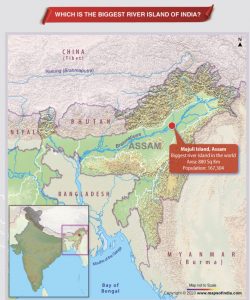
    Assam’s Majuli island hosted the second edition of the Charaichung Festival, aimed at reviving Asia’s first protected Royal Bird Sanctuary, Charaichung, established in 1633 AD.

    About Charaichung Sanctuary

    • Established in 1633 AD by Ahom King Swargadeu Pratap Singha (Burha Roja).
    • Considered Asia’s first protected royal bird sanctuary.
    • Holds a 392-year-old legacy.
    • Once thriving, the sanctuary has deteriorated and now requires active conservation.
    • Home to around 150 species of indigenous and migratory birds.

    About the Charaichung Festival

    • Held from December 7 to 10, 2025, at Majuli.
    • Organised by Majuli Sahitya and local communities.
    • Objective:
      • Revive Charaichung sanctuary
      • Strengthen bird conservation
      • Promote Majuli as a global tourism destination
    • Includes a special forest conservation exhibition showcasing biodiversity protection efforts.

    Significance of Majuli

    • Recognised as the world’s largest river island.
    • One of India’s important bird habitats, attracting domestic and international nature enthusiasts.
    • Rich in biodiversity and cultural heritage.
    Which of the following National Parks is unique in being a swamp with floating vegetation that supports a rich biodiversity? (2015)

    (a) Bhitarkanika National Park 

    (b) Keibul Lamjao National Park 

    (c) Keoladeo Ghana National Park 

    (d) Sultanpur National Park

  • Mass Mortality of Goniopora Corals at One Tree Reef  

    Why in the News?

    A new study published in Proceedings of the Royal Society B (December 10, 2025) reports unprecedented coral bleaching and mortality at One Tree Reef (OTR) in the southern Great Barrier Reef, driven by extreme heat and rapid spread of black band disease (BBD).

    Background

    • Coral reefs have shaped Earth’s climate for 250 million years.
    • OTR has not witnessed bleaching of this severity for decades.
    • The impacted species, Goniopora (flowerpot or daisy corals), typically live in lagoons and turbid reefs and are known for thermal tolerance, making their mass mortality alarming.

    Why Black Band Disease Spread at OTR

    • BBD is common in the Caribbean but historically rare in the southern Great Barrier Reef.
    • OTR is offshore and not affected by major nutrient pollution — usually a known trigger.
    • Other coral genera at OTR that bleached did not develop BBD.
    • Northern Great Barrier Reef surveys (2024) showed very low incidence (1–2 percent).
    Consider the following statements: (2018)

    1. Most of the world’s coral reefs are in tropical waters. 

    2. More than one-third of the world’s coral reefs are located in the territories of Australia, Indonesia and Philippines. 

    3. Coral reefs host far more number of animal phyla than those hosted by tropical rainforests. 

    Which of the statements given above is/are correct? 

    (a) 1 and 2 only (b) 3 only (c) 1 and 3 only (d) 1, 2 and 3

  • Sultanpur National Park Sees Surge in Migratory Birds

    Why in the News?

    Sultanpur National Park in Haryana has recorded a sharp rise in migratory bird arrivals, with numbers increasing from 10,000–15,000 in mid-November to an estimated 25,000–35,000 in early December. The rise is linked to falling temperatures, improved wetland conditions and enhanced conservation efforts.

    About Sultanpur National Park

    • Located in Gurugram district, Haryana.
    • Recognized as one of Asia’s major bird habitats.
    • Declared a Ramsar Site in 2021.
    • Ecosystem: freshwater wetland, surrounded by grassland and acacia woodland.
    • Major attraction during winter due to large flocks of migratory birds.

    Migration Patterns

    • Attracts species from: Siberia, Europe, Central Asia and Other northern regions.
    • Migration triggered by:
      • Decreasing temperatures in breeding grounds
      • Availability of food and safe wetland habitats in India.

    Species Currently Sighted

    • Greylag Goose, Bar-headed Goose, Northern Pintail, Common Teal, Shoveler (Northern Shoveler), Common Coot and Black-tailed Godwit (near-threatened).
    Which of the following National Parks is unique in being a swamp with floating vegetation that supports a rich biodiversity? (2015)

    (a) Bhitarkanika National Park 

    (b) Keibul Lamjao National Park 

    (c) Keoladeo Ghana National Park 

    (d) Sultanpur National Park

  • Meghalaya’s New Spider Discoveries

    Why in the News?

    Researchers from the Zoological Survey of India have identified two new species of jumping spiders in Meghalaya, further highlighting the region’s status as a major biodiversity hotspot.

    The new species are:

    • Asemonea dentis
    • Colyttus nongwar

    Their formal descriptions have been published in Zootaxa, an international peer-reviewed journal.

    Location & Significance

    • Found in the forested landscapes of Meghalaya, part of the Indo-Burma biodiversity hotspot.
    • The Northeast is considered one of India’s least-explored yet ecologically rich regions.

    About the Species

    Asemonea dentis

    • Belongs to the genus Asemonea; this is only the third Indian species in this genus.
    • Named for a distinct tooth-like projection on the male palpal femur.
    • Male: greenish-brown body with pale-yellow V-shaped abdominal marking.
    • Female: creamy white body with fine black markings.
    • Genus characteristics: associated with shrubs and foliage; less studied in India.

    Colyttus nongwar

    • Only the second Indian species of the genus Colyttus.
    • Named after Nongwar village in the Khasi Hills.
    • Both sexes display:
      • Oval reddish-brown carapace
      • Light-brown abdomen
      • Creamy anterior band with five chevron-shaped patches
    • Genus: little-known Oriental group with limited representation in India.
    Recently, for the first time in our country, which of the following States has declared a particular butterfly as ‘State Butterfly’? (2016)

    (a) Arunachal Pradesh 

    (b) Himachal Pradesh 

    (c) Karnataka 

    (d) Maharashtra