To achieve a $5 trillion economy by 2025-26, India must eliminate obstacles hindering Foreign Investments and facilitate smoother processes for companies and investors.
About the Indian Foreign Exchange Management (Non-debt Instruments) Rules
FEMA outlines the formalities and procedures for the dealings of all foreign exchange transactions in India. These foreign exchange transactions have been classified into two categories — Capital Account Transactionsand Current Account Transactions.
The Indian Foreign Exchange Management (Non-debt Instruments) Rules, 2019, commonly referred to as FEMA NDI, regulates foreign investments in Indian companies. These rules are critical for overseeing the flow of foreign capital into the country, ensuring that investments align with national interests and do not pose security risks.
The amendment to the Indian Foreign Exchange Management (Non-debt Instruments) Rules, 2019 (“FEMA NDI”)was again made through press note number 3 in the year 2020.
In exercise of the powers conferred by section 47 of the Foreign Exchange Management Act, 1999 (42 of 1999) and consequent to the Foreign Exchange Management (Non-Debt Instrument) Rules, 2019, the Reserve Bank of India makes the following regulations relating to mode of payment and reporting requirements for investment in India by a person resident outside India.
‘Act’means the Foreign Exchange Management Act, 1999 (42 of 1999);
On April 16, 2024, the Ministry of Finance, through the Department of Economic Affairs, notified the Foreign Exchange Management (Non-debt Instruments) (Third Amendment) Rules, 2024 (the “Amendment“), prescribing new entry routes for foreign investment in activities under the space sector.
Introduction of Press Note 3 (PN3) Requirement:
What does it mean?: This amendment requires prior government approval for any investments from entities or individuals in countries that share a land border with India. This rule applies if the investment comes directly from these countries or if the beneficial owner (the real person who ultimately owns or controls the investment) is a citizen or resident of these countries.
The purpose: Implemented during the COVID-19 pandemic, the rule aims to prevent opportunistic takeovers of struggling Indian companies by neighboring countries
Challenges with the Recent Amendment
Undefined ‘Beneficial Owner’: The term ‘beneficial owner’ isn’t clearly defined in the PN3 Requirement, leading to confusion. Different laws define the term differently, making it hard for companies to know which standards to follow.
Regulatory Uncertainty: Since the latter half of 2023, the Reserve Bank of India (RBI) has adopted a stricter interpretation of these rules. This shift has caused anxiety among investors and companies, as practices previously deemed acceptable are now being scrutinized.
Regulatory Burden: Companies now face significant delays and a high rate of rejection when seeking approval for investments. According to some officials, proposals worth ₹50,000 crore have been stalled or rejected in the past three years, with 201 applications being turned down.
Severe Fines: Non-compliance with the PN3 Requirement can result in fines up to three times the amount of the investment. For many startups, this could mean financial ruin, as the fines could exceed their revenue or assets.
Legal Battles: Violations could lead to lengthy and costly legal disputes, further burdening the already slow judicial system in India.
What can be the better solution? (Way forward)
Ownership Thresholds: Define beneficial ownership with clear thresholds, such as 10% to 25% ownership stakes. This would help companies understand whether they need to seek approval.
Control-Conferring Rights: Specify which rights indicate control, such as the ability to influence board decisions or veto significant operational changes. Exclude rights that merely protect investor interests, such as veto powers over mergers.
Investor Representations: Allow Indian companies to require foreign investors to provide assurances about their compliance with the PN3 Requirement, backed by indemnities.It would provide a safety net for Indian companies.
Time-Bound Reviews: Introduce a system where companies can seek timely advice from regulatory authorities on whether specific clauses in their investment agreements confer control. This would be similar to mechanisms in competition law, offering clarity and reducing the risk of penalties for inadvertent non-compliance.
Mains PYQ:
Q Foreign Direct Investment (FDI) in the defence sector is now set to be liberalized: What influence this is expected to have on Indian defence and economy in the short and long run? (UPSC IAS/2014)
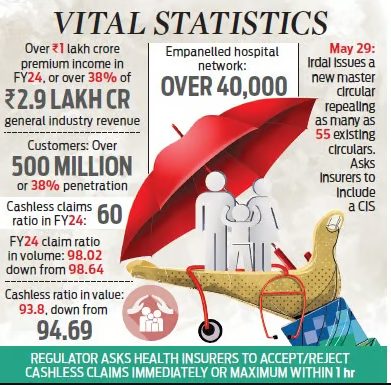
Recently, the Insurance Regulatory and Development Authority (IRDAI) introduced a set of reforms in the health insurance sector aimed at significantly enhancing service standards for policyholders.
The recent rules highlighted by IRDAI (Insurance Regulatory and Development Authority of India) include:
Cashless processing: Insurers are mandated to accept or reject cashless claims immediately, within one hour, and settle such claims on discharge within three hours. Any delay beyond this period would result in the insurer bearing the additional costs, if any.
Claim settlement: Insurers cannot repudiate a claim without the approval of their claims review panel. Documents for claim settlement must be collected from hospitals or third-party administrators, not from the insured.
Policyholders with multiple health policies: They can select the policy under which they want to make a claim, with the primary insurer coordinating the settlement of the balance amount from other insurers.
Reward for No claims: Policyholders with no claims during the policy period may receive either an increased sum insured or discounted premium amounts.
Renewal policies: All individual health policies are renewable and cannot be denied based on previous claims, except in cases of fraud, non-disclosures, or misrepresentation. No fresh underwriting is required for renewal policies unless there is an increase in the sum insured.
Portability requests: Stricter timelines are imposed on portability requests via the Insurance Information Bureau of India portal.
Customer information sheet: Insurers are required to include a customer information sheet as part of the policy document, explaining all customer-facing details such as policy type, sum assured, coverage details, exclusions, deductibles, and waiting periods.
Challenges related to health insurance in India
Opaque Policy Details and Claim Processes: Policyholders often struggle to understand the intricacies of insurance contracts, leading to uncertainty about coverage entitlements and reimbursement procedures.
Claim Rejections: Policyholders frequently face claim rejections due to inadequate documentation and ambiguous claims processes.
Delays in Claim Settlement: Insurance companies often take a long time to process claims, causing inconvenience and financial stress for policyholders
IRDAI and its composition:
The Insurance Regulatory and Development Authority of India (IRDAI) is the regulatory body overseeing the insurance sector in India. It was constituted under the Insurance Regulatory and Development Authority Act, 1999.
The composition of IRDAI typically includes a Chairman and members appointed by the Government of India. The authority regulates various aspects of insurance, including licensing, pricing, and policyholder protection, to ensure the stability and growth of the insurance industry while safeguarding the interests of policyholders.
Conclusion: IRDAI’s recent health insurance reforms aim to improve service standards by mandating timely cashless claim processing, transparent claim settlement, and policyholder rewards for no claims. These changes address challenges like opaque policies and claim rejections, enhancing customer trust. IRDAI plays a vital role in ensuring a fair and efficient insurance sector.
Mains PYQ:
Q Public health system has limitation in providing universal health coverage. Do you think that private sector can help in bridging the gap? What other viable alternatives do you suggest? (UPSC IAS/2015)
Q) Consider the following statements: (UPSC CSE 2023) Statement-1: In India, prisons are managed State Governments with their own rules and regulations for the day-to-day administration of prisons. Statement-2: In India, prisons are governed by the Prisons Act, 1894 which expressly kept the subject of prisons in the control of Provincial Governments. Which one of the following is correct in respect of the above statements? (a) Both Statement-I and Statement-2 are correct and Statement-2 is the correct explanation for Statement-1 (b) Both Statement-1 and Statement-2 are correct and Statement-2 is not the correct explanation for Statement-1 (c) Statement-1 1s correct but Statement-2 is incorrect (d) Statement-1 Is incorrect but Statement-2 is correct
Q) Consider the following statements: (UPSC CSE 2023)
1. According to the Constitution of India, the Central Government has a duty to protect States from internal disturbances. 2. The Constitution of India exempts the States from providing legal counsel to a person being held for preventive detention. 3. According to the Prevention of Terrorism Act, of 2002, confession of the accused before the police cannot be used as evidence. How many of the above statements are correct? (a) Only one (b) Only two (c) All three (d) None
Note4Students:
Prelims: Preventive Detention;
Mains: Criminal Justice System in India; Challenges with Fast Track Courts;
Mentor comment:Preventive Detention law was passed in1950 for the first time. The aim of implementing the Preventive detention was not to punish the individual but to prevent that person from doing a wrong and unconstitutional act. According to Finley, “it is not punitive but a precautionary measure”.
The Indian criminal justice system faces several other challenges too. One of the major challenges is a large backlog of pending cases, which can result in long delays and delays in the delivery of justice. The Indian criminal justice system is also criticized for being slow, inefficient and prone to corruption, that is why, we introduced Fast Track Court system. Investigations are often incomplete or either lack thoroughness, leading to weak cases and wrongful detentions in this type of courts too. One of the live example of this is being highlighted in today’s editorial.
Let’s learn.
–
Why in the News?
A woman who had filed a rape case was sentenced to imprisonment and fined by a court in Bareilly, Uttar Pradesh, leading to a narrative that perpetuated the stereotype that false rape claims are common.
However, a closer examination of the trial proceedings highlights systemic shortcomings in law enforcement and social complexities that require urgent attention.
BACKGROUND STORY:
About Lack of Spirit or Liveliness in the Investigation process:
•Initial Complaint: The girl’s mother filed a missing person’s complaint stating that her 15-year-old daughter (medical examination showed her to be 18 years old) was missing and suspected a person kidnapping her. However, the girl appeared a few days later, claiming she was taken to Delhi by the same suspected person and raped by him. •Lack of Medical Evidence: The Girl refused to undergo a thorough medical examination, crucial for the prosecution’s case (in fact clothes were not collected for forensic analysis). Hence, the lack of medical evidence due to the negligence of the investigating officer and Pooja’s refusal to undergo a medical examination weakened the prosecution’s case. •Administrative Failure: The respective magistrate did not direct further investigation despite glaring gaps. Moreover, the public prosecutor endorsed a weak charge sheet, failing to fulfill their duty to the court and the public. ○ Section 173(8) of the CrPC allows a magistrate to direct further investigation in case of a flawed investigation. Further, the magistrate could call for the case diary under Section ○(172(2) of the CrPC, which may have revealed discrepancies or inadequacies in the investigation.
The Issue with Undertrial Detention
Prolonged Incarceration: One of the tragedies of the Indian prison system is the high proportion of undertrial prisoners (around two-thirds). Undertrial prisoners are kept in prison while awaiting trial or during their trial. The accused boy in this case remained in jail for over four years without accountability for the investigating officers or prosecution.
Lack of Accountability: There were no repercussions for those responsible for wrongful detentions, perpetuating a culture of impunity and undermining public confidence in the integrity of judicial processes.
His trial dragged on in a fast-track court in Bareilly amidst the disruptive backdrop of the COVID-19 pandemic.
Violates the Fundamental Right: Prolonged undertrial detention violates their Rights to Liberty and Fair trial, adversely impacting their lives and livelihood.
The trial in this case spanned 1,559 days, in which there were 109 hearings (data from the e-Courts portal).
The overuse of undertrial detention effectively ends up punishing people before they are convicted and makes a mockery of their right to be presumed innocent until proven guilty.
The state of Fast-track courts in India
Budgetary Allocation: The centrally sponsored scheme for Fast Track Special Courts (FTSC) has been extended till 2026 with a budgetary allocation of around ₹2,000 crore, despite systemic challenges.
Inadequate Infrastructure: Fast-track courts lack dedicated infrastructure and judges, leading to existing courts being designated for these cases, causing judges to manage both regular and expedited cases.
Bail Issues: In this case, the accused person’s bail application was rejected due to the serious nature of the offense, and he remained in jail until his acquittal. His family lacked the means to file an appeal. Indifference and poverty prolong undertrial detention.
Reforms Needed: The case highlights the need for enhancements in police investigation protocols, prosecutorial autonomy, and judicial supervision to mitigate the risk of wrongful and protracted imprisonments.
Conclusion: Ultimately, the notoriety surrounding this case is cited to bolster the stereotype of women lodging false accusations against men, which highlights a critical call for reforms within the criminal justice system. This case highlights the necessity for enhancements in police investigation protocols, prosecutorial autonomy, and judicial supervision to mitigate the risk of wrongful and protracted imprisonments.
Mains: Q) From the resolution of contentious issues regarding the distribution of legislative powers by the courts, the ‘Principle of Federal Supremacy’ and ‘Harmonious Construction’ have emerged. Explain. (UPSC CSE 2019)
Q) Explain the rationale behind the Goods and Services Tax (Compensation to States) Act of 2017. How has COVID-19 impacted the GST compensation fund and created new federal tensions? (UPSC CSE 2020)
Prelims:
Q) Which one of the following in Indian polity is an essential feature that indicates that it is federal in character? (UPSC CSE 2021) (a) The independence of the judiciary is safeguarded. (b) The Union Legislature has elected representatives from constituent units. (c) The Union Cabinet can have elected representatives from regional parties. (d) The Fundamental Rights are enforceable by Courts of Law.
Note4Students:
Prelims: Co-perative federalism; NITI Aayog; GST System;
Mains: Federal Issues; Governance Issues; Regional Disparities;
Mentor comment: India is a vast and diverse country with different regions, cultures, and languages. To govern such a complex society, the Indian Constitution established a federal system of governance, dividing power between the central government and the states. This system is known as a quasi-federal system because it contains elements of both a federation and a union. Despite its importance, Indian federalism faces several challenges regional differences, centralized power, Economic insecurities for states, and communication barriers. These challenges can lead to issues like conflicts over resource allocation and decision-making.
There is a need for the even-handed treatment of all the States by the Centre and also less friction among the rich and poor States when proportionately more resources are transferred to poor States to keep rising inequality in check. The issue of governance, both at the Centre and in the States, needs to be flagged. It determines investment productivity and the pace of development. Corruption and cronyism lead to resources being wasted and a loss of social welfare.
Let’s learn.
–
Why in the News?
The results of the 2024 general election in India have led to a surprise, with regional parties performing well and set to share space in both the ruling and opposition benches in Parliament.
This development is expected to strengthen federalism, which has been fraying due to contentious Centre-State relations and the dominant Centre’s attempts to impose its will on the states.
The recent challenges faced by regional states:
Democratic Issues: The Opposition-ruled States have been complaining about stepmotherly treatment by the Centre. Protests have been held in Delhi and the State capitals.
There is a huge diversity among the States. For example, Assam is unlike Gujarat and Himachal Pradesh is very different from Tamil Nadu. A common approach is not conducive to the progress of such diverse States.
They need greater autonomy to address their issues in their unique ways.
Fiscal-Federal Issues:Kerala has complained about the inadequate transfer of resources, Karnataka about drought relief, and West Bengal about funds for the Mahatma Gandhi National Rural Employment Guarantee Scheme (MGNREGS).
The Supreme Court, expressing its helplessness, recently said that Centre-State issues need to be sorted out immediately.
About Co-operative Federalism: The Constitution of India does not explicitly contain the phrase ‘cooperative federalism,’ but the functioning of the governance and evolution of our Constitution implicitly resulted in building ‘cooperative federalism.’
Significance of Cooperative Federalism:
Need for Robust Institutions and Mechanisms:
Revenue has to be raised through taxes, non-tax sources, and borrowings. The Centre has been given a predominant role in raising resources due to its efficiency in collecting taxes centrally.
Among the major taxes, personal income tax (PIT), corporation tax, customs duty, and excise duty are collected by the Centre. So, the Centre controls most of the resources, and they have to be devolved to the States to enable them to fulfill their responsibilities.
Need for Promoting Intergovernmental Relations:
The Centre-State relations in India are plagued by inter-state tussles and resource disparities. The Finance Commission’s efforts to devolve funds proportionally to poorer States have been unsuccessful, leading to resentment from richer States.
The Centre’s allocation of resources, including expenditures and schemes, can be used to play politics and favor certain States, undermining Federalism and Autonomy.
Initiatives taken by the Government:
NITI Aayog:
NITI Aayog acts as the quintessential platform for the Government of India by bringing States together as ‘Team India’ to work towards the national development agenda.
NITI has also established models and programs for the development of infrastructure and to reignite and establish private-public partnerships, such as the Centre-state partnership model Development Support Services to States and Union Territories (DSSS) and the Sustainable Action for Transforming Human Capital (SATH) program.
Goods and Service Tax (GST) System:
The 101st Amendment to the Constitution, which introduced the GST regime, is a watershed moment in the evolution of cooperative Federalism as enshrined in the Constitution of India.
Before the implementation of GST, the Indian taxation system was a medley of Central, State, and Local area levies.
Judicial Contribution for Co-operative Federalism:
In the case of State of Rajasthan v Union of India (1977) which some state governments brought against the Janata government’s dissolution of state legislatures, the Supreme Court upheld its right to strike down a proclamation imposing the President’s rule if the action was mala fide or irrelevant considerations.
It was held that the ‘maintenance of democratic norms’ could not be regarded as an irrelevant ground for the exercise of the power of proclamation. Since then, the Indian model of federalism has been predominantly ‘cooperative’ as laid down by the Supreme Court in 1977.
Recommendations by Sarkaria Commission on Federalism (1988):
* The Indian government constituted the Sarkaria Commission in 1983 mainly created to explore the relationship between the states and the central government. * The Sarkaria Commission did not favor structural changes and regarded the existing constitutional principles and arrangements relating to the instructions as sound. However, it emphasized the need for changes in the functional or operational aspects. * It discusses the relations between the states and the center by the 8th to 12th Finance Commissions to maintain the dependence on several funds from the center.
Way Forward:
The Sixteenth Finance Commission has begun work, aiming to strengthen federalism and address the fraying of Centre-State relations.
It should ensure even-handed treatment of all states, proportionate resource transfers to poorer states, and reduce Centre domination over states.
To reduce the domination of the Centre over the States, the devolution of resources from the Centre to the States could be raised substantially from its current level of 41%.
For example, the Public Distribution System or MGNREGS are joint scheme, but the Centre asserts that it be given credit. It has penalized States that have not done so.
India’s general election results were surprising, defying exit poll predictions. Despite high economic growth, voters, especially informal workers earning under ₹10,000 monthly, expressed economic concerns.
About the 8% Real GDP Growth in FY24:
Growth Not Inclusive: The 8% real GDP growth has not reached the majority of the population, especially informal-sector workers.
Rural Wages: There’s a contraction in real rural wages, highlighting the dire state of the rural economy.
Income Inequality: High economic growth has not alleviated income inequality, which is reflected in the election results.
The Plight of Taking the Masses into Consideration:
Economic Concerns: Despite the hype around economic growth, voters expressed deep concerns over the state of the economy.
Low Incomes: Over 90% of informal-sector workers registered on the e-Shram portal have a monthly income of ₹10,000 or less.
Election Results: Voters in poorer states have different perceptions; some still support the incumbent government in the hope of better employment and future prospects.
Policy Priorities: The new government must prioritize creating employment opportunities and addressing the economic challenges faced by the masses.
CASE STUDY: Bangladesh:
Role of NGOs: In Bangladesh, NGOs have significantly contributed to social development, especially for women.
Employment Generation: NGOs have provided skilled women power to the apparel industry, enhancing employment opportunities.
NGOs in India: The NGO sector in India has faced scrutiny and high-handedness. The new government should collaborate with NGOs for development programs and employment generation activities.
The Centre has to Work Through the States for Reforms:
Agricultural Sector: With a significant workforce employed in agriculture but contributing minimally to the GVA, reforms in agriculture and allied sectors are essential.
Animal Husbandry and Fisheries: Encouraging growth in animal husbandry, fisheries, and poultry can provide additional income to farmers.
Employment in Other Sectors: To address the surplus workforce in agriculture, employment opportunities must be created in other sectors like textiles, leather, construction, and food processing.
Incentives for Investment: Correcting past policy mistakes and providing incentives for investment in key sectors is crucial.
Infrastructure Development: Improving infrastructure in smaller towns can boost the handicraft, tourism, and hospitality sectors, generating higher incomes and better market access.
Open Network for Digital Commerce (ONDC): Utilizing ONDC to provide new opportunities for craftsmen to access broader markets.
Government Vacancies: Filling government vacancies transparently can address educated unemployment and prevent demotivation among young people.
Conclusion: Develop schemes that specifically cater to informal-sector workers, ensuring they benefit from economic growth. This could include social security measures, skill development programs, and financial inclusion initiatives.
Mains PYQ:
Q ”Economic growth in the recent past has been led by increase in labour productivity.” Explain this statement. Suggest the growth pattern that will lead to creation of more jobs without compromising labour productivity. (UPSC IAS/2022)
Studies conducted by researchers from “the Paris School of Economics” indicate that inequality in contemporary India surpasses that of colonial times.
How does Inequality harm Democratic processes?
Concentration of Power: Inequality can lead to the concentration of monopoly power among a few capitalists relative to the labor force. This concentration allows dominant business groups to set prices, resulting in lower real wages and reduced purchasing power for the majority.
Impact on Consumption and Welfare: High inequality can negatively impact consumption and welfare due to higher mark-ups and lower real wages.
Lower real wages mean that workers can afford fewer goods, which reduces overall consumption and welfare.
Effect on Democratic Processes: Economic inequality can translate into unequal political power, undermining democratic processes.
Those with significant wealth can have disproportionate influence over political decisions, policies, and elections, leading to governance that favours the wealthy over the general populace.
How Redistribution and Growth Can Work Together
Wealth Taxes and Redistribution: Taxing wealth and redistributing it can enhance economic growth by increasing incomes and consumption among the lower and middle classes, who have a higher propensity to consume.
Multiplier Effect: Redistribution can strengthen the multiplier effect, where an initial increase in investment leads to a greater overall increase in income and consumption. Higher incomes among workers and goods-sellers lead to more purchases, driving further economic activity and growth.
Investment and Profit Expectations: Investment is driven by future profit expectations rather than past wealth. Therefore, taxing wealth does not necessarily reduce investment.
Creation of New Entrepreneurs: Redistribution can support the emergence of new entrepreneurs by providing financial resources and reducing dependence on wage employment. This can foster innovation and competition, further contributing to economic growth.
Curtailing Monopolies: Reducing monopolistic power through redistribution and other policy measures can lower prices and increase real wages. Higher real wages boost demand, leading to increased investment and economic expansion.
Conclusion: Addressing inequality through redistribution can promote inclusive growth, empowering marginalized communities and advancing progress towards a more equitable society, essential for fulfilling SDG Goal 10 (Reduced Inequalities).
Mains PYQ:
Q How did land reforms in some parts of the country help to improve the socio-economic conditions of marginal and small farmers? (UPSC IAS/2021)
The Koya tribe in Andhra Pradesh is facing a cultural crisis due to stricter liquor regulations enforced by the Special Enforcement Bureau (SEB).
About Koya tribe
Koya are one of the few multi-racial and multi-lingual tribal communities in India.
They live in the forests, plains, and valleys on both sides of the Godavari River which lies in Andhra Pradesh. Many also live in the states of Madhya Pradesh and Orissa.
They believe their main deity still resides in a cave in the Bastar region.
Cultural Crisis (Disruption of Traditions):
Mahua liquor is brewed from the flowers of the Mahua tree which is integral to Koya cultural and religious ceremonies including naming ceremonies, weddings, and death anniversaries.
Police raids and seizures of Mahua liquor disrupt these traditions causing cultural shocks within the community. For example, recently the naming ceremony of Madakam Janakamma’s child was held without Mahua liquor due to SEB raids.
Tribal Rights (Legal Challenges and Rights):
The Andhra Pradesh Prohibition Act, 1995, does not exempt the Koya tribe from brewing and storing Mahua liquor, despite its cultural significance.
The Panchayat (Extension to Scheduled Areas) Act (PESA), 1996empowers the gram sabha to protect tribal traditions and culture but its implementation is questionable as SEB raids continue unabated.
Koya villagers are often coerced into paying bribes to avoid legal charges, highlighting the tension between law enforcement and tribal rights.
Impact on Collection(Economic Consequences):
Many Koya households have ceased Mahua flower collection due to fear of police raids, significantly affecting their primary source of income.
Destruction of freshly collected flowers during raids further disincentivizes collection, reducing the supply of Mahua flowers to weekly markets (shandies) where they are exchanged for essential goods.
Guardians of Culture (Preservation of Heritage):
The Koya tribe, especially those not displaced by the Polavaram irrigation project, are seen as custodians of their culture. However, displacement and integration with non-tribal communities threaten their cultural identity.
Local leaders and activists argue for the need to empower Koya women with training in producing value-added products from Mahua flowers, rather than undermining their traditional practices and economic activities.
Legal and Policy Measures
Amend the Andhra Pradesh Prohibition Act, 1995: Introduce exemptions or special provisions that recognize and protect the traditional brewing and usage of Mahua liquor for cultural and religious purposes by the Koya tribe.
Strengthen Implementation of PESA Act: Ensure that the Panchayat (Extension to Scheduled Areas) Act (PESA), 1996, is fully implemented. Empower Gram Sabhas to have a greater say in protecting tribal traditions, including the brewing of Mahua liquor.
Conclusion: The enforcement actions by the SEB, while aimed at regulating liquor, pose a significant threat to the Koya tribe’s cultural heritage and economic well-being. Balancing legal regulations with respect for tribal traditions and rights is crucial to preserving the Koya way of life.
Mains PYQ:
Q What are the two major legal initiatives by state since Independence, addressing discrimination against Scheduled Tribes (ST) ? (UPSC IAS/2017)
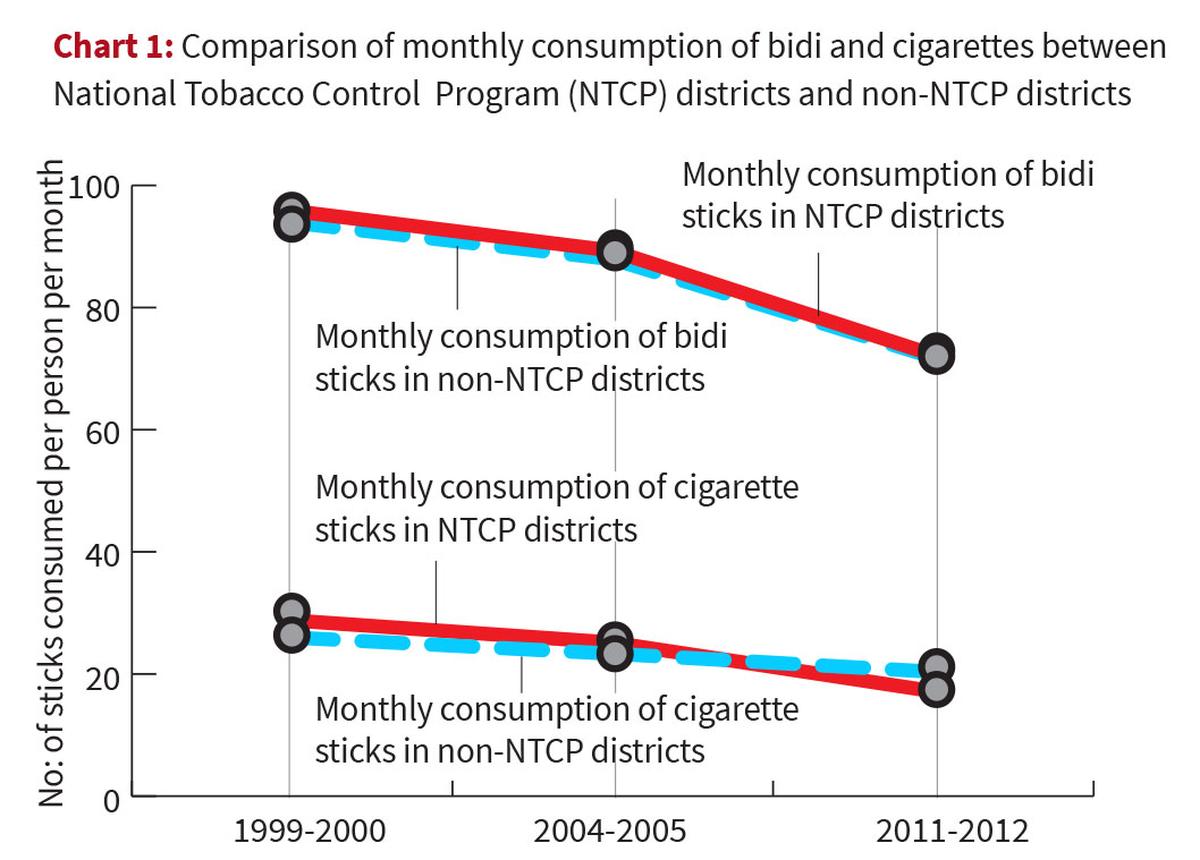
Tobacco is a leading preventable cause of disease which affects nearly 26 crore Indians and 60 lakh industry workers, posing significant health risks.
Reports on Tobacco Consumption in India
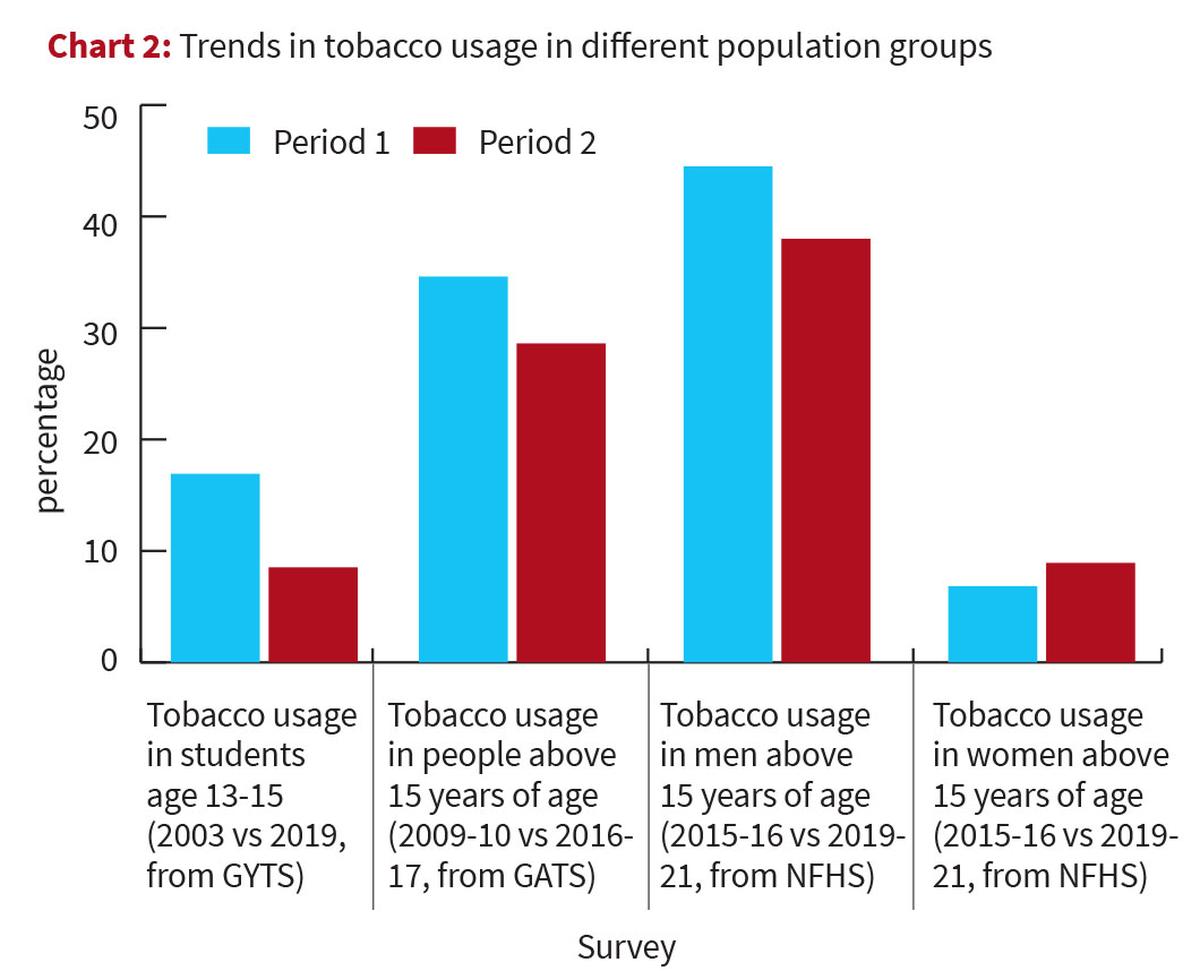
According to the Global Adult Tobacco Survey (GATS), there is a general decline in tobacco use, except for an increase in women between 2015-2016 and 2019-2021. (above 15 years)
According to the Global Youth Tobacco Survey (GYTS), tobacco use among students aged 13-15 years indicates a reduction in tobacco use in this demographic.
The National Family Health Survey (NFHS), which captures data on tobacco use in people above 15 years of age, aligns with the GATS findings, showing a decrease in tobacco use except among women.
What is the WHO Framework Convention on Tobacco Control (FCTC)?
The WHO Framework Convention on Tobacco Control (FCTC) is an international treaty adopted by the World Health Organization (WHO) in 2003. It is a legally binding treaty.
It means that countries that have ratified it are obligated to implement the measures outlined in the convention within their national jurisdictions.
It addresses the global health risks associated with tobacco use and provides a comprehensive framework for governments and organizations to implement effective tobacco control policies and strategies.
Challenges in India:Lobbying by the Tobacco Industry
The tobacco industry exerts substantial influence on policy-making to maintain low tax rates and evade stricter regulations.
Government Engagement: Both in-service and retired government officials often engage with the tobacco industry. Example: A retired Indian Administrative Services officer joined the board of Godfrey Phillips as an independent director.
Government Stake: The Central government holds a 7.8% stake in ITC Ltd., India’s largest tobacco company.
Tax Exemptions: Continuous exemptions of cess on bidis and smaller tobacco manufacturers. Persistent extensions of these exemptions despite the harmful effects of tobacco.
FCTC Recommendation: At least 75% tax on tobacco products.
Challenges at affordability level: Low taxes relative to income growth have kept tobacco products affordable, with cigarettes and SLTs becoming more affordable over the past decade due to the transition to the Goods and Services Tax (GST).
Thus, India’s score has worsened since 2021, indicating increased interference by the tobacco industry in governance.
Initiatives taken by the Government:
Cigarette and Other Tobacco Products Act (COTPA) 2003: It regulates the advertisement, promotion, and sponsorship of tobacco products, prohibits smoking in public places, mandates pictorial health warnings on tobacco product packaging, and sets rules for the sale of tobacco products to minors.
Awareness on Media: India is the first country in the world to implement the larger steps through implementing warnings on OTT platform content when actors are seen using tobacco products.
Awareness of Product: India has implemented prominent and graphic pictorial health warnings on tobacco product packaging.
Challenges in Implementation
Poor Enforcement: Existing measures are not strictly implemented, leading to widespread non-compliance, especially among smokeless tobacco products (SLTs).
Indirect Advertisements: Surrogate advertisements (e.g., using elaichi to promote tobacco brands) circumvent direct advertising bans, undermining control efforts.
Inadequate Fines: Penalties for violations of COTPA regulations have not been updated since 2003, making them ineffective deterrents.
Way forward:
Update COTPA Fines and Penalties: Revise and significantly increase fines for violations of COTPA regulations to create a stronger deterrent.
Strengthen Border and Market Surveillance: Improve customs and market surveillance to combat smuggling and illicit trade of tobacco products.
Mains question for practice:
Q Discuss the various measures undertaken by the Indian government to control tobacco consumption. Evaluate the effectiveness of these measures and suggest improvements. 15M
Tobacco Board of India
The Tobacco Board is a statutory body established under the Ministry of Commerce and Industry.
Hq: Guntur, Andhra Pradesh.
Functions:
To regulate the production and curing of Virginia tobacco by improving the yields and quality of tobacco.
To facilitate the sale of tobacco through e-auctions, undertaking various grower welfare measures and export promotion of tobacco.
Q. Explain how the foundations of the modern world were laid by the American and French revolutions. (UPSC IAS/2016)
Q. “Refugees should not be turned back to the country where they would face persecution or human rights violation”. Examine the statement concerning the ethical dimension being violated by the nation claiming to be democratic with an open society. (UPSC IAS/2021)
Prelims: Which one of the following objectives is not embodied in the Preamble to the Constitution of India? (UPSC IAS/2017) (a) Liberty of thought (b) Economic liberty (c) Liberty of expression (d) Liberty of belief
Note4Students:
Prelims: Liberalism; Constitutional Values;
Mains: Liberalism; Democratic System;
Mentor comment: Since all of us are the form of Nature, we all are equal in a moral sense. Thus Liberalism started as a progressive idea. It aimed at giving liberty and protecting people from coercion. Once the capitalist class could establish themselves in power, their revolutionary fervor had gone. From a progressive philosophy, it was limited to the economic doctrine. It came to be dominated by utilitarians. Liberalism came to be criticized as ‘a pig’s philosophy’ because of utilitarians. Liberalism/utilitarianism became the basis of justification for the extreme exploitation of workers. There were protests against such policies. It has led to the growth of left movements. It forced liberals to change. Liberalism has been the longest-surviving ideology because of its flexible nature. Every ideology represents the interest of a particular class. Liberalism is an ideology of the middle classes. (emerging capitalist class). Liberalism is a philosophy of modern times. Liberalism is a by-product of the Renaissance, reformation, and scientific revolution.
Let’s learn.
–
Why in the News?
Indian liberalism faces challenges from both left and right, with criticisms of elitism, individualism, and Western colonialism.
India’s tryst with liberalism began in the 1990s, but it has faced criticism and a decline in support.
The rise of populist and authoritarian leaders has led to a decline in liberal democracy, with only 34 countries maintaining it in 2022.
Attacks by the left and the right
Left Criticisms
Elitism: Liberalism is seen as prioritizing individual interests over collective needs, promoting inequality and corporate interests.
Individualism: The left views individualism as a dangerous doctrine that widens the gap between the haves and have-nots, marginalizes the disadvantaged, and prioritizes corporate interests over social justice.
Contradiction with Egalitarian Democracy: The left argues that the commitment to egalitarian democracy is incompatible with the individualistic market capitalism promoted by liberalism.
Right Criticisms
Emphasis on Individual Freedom: The right sees individual freedom as a Western colonial import that has no connection with traditional Indian values and way of living.
Disconnection from Tradition and Identity: The right argues that liberalism is disconnected from Indian traditions and identity, prioritizing individual freedom over community and social values.
Liberalism is deeply ingrained in Indian society:
Amartya Sen has pointed out, the key values of liberalism like an emphasis on individual liberty, freedom, social justice, and societal harmony, have been deeply ingrained in Indian society since ancient times.
Liberal values can be found in our civilizational traditions and cultural beliefs, with giants such as Raja Ram Mohan Roy, Swami Vivekananda, M.G. Ranade, Gopal Krishna Gokhale, Gurudev Tagore, and B.R. Ambedkar situating their critique of colonial rule within a liberal framework.
Radical liberal thinkers such as Jyotirao Phule and Ambedkar argued that progress could be achieved through better (and more representative) political instruments rooted in liberal ideals.
What are the proposed solutions for making liberalism more inclusive in India?
Indian liberalism needs to evolve to address the challenges it faces, and the time to start this process is now.
Syncretic Liberalism: Engage with tradition and identity in a more comprehensive and sustained manner to address the feelings of marginalization and overlook that have driven populist success.
This involves recognizing the importance of community and tradition in Indian society and incorporating these values into liberal thought.
Economic Reforms: Adopt a more inclusive and socially just approach to markets, balancing free enterprise with social justice through welfare.
This includes ensuring that economic growth benefits all sections of society, not just the privileged few.
Political Reforms: Revive representative institutions to restore public trust in democracy.
This involves decentralizing power, improving representation, and addressing issues of government overreach and surveillance.
Consensus: Develop a basic consensus among liberals to address criticisms and work together effectively.
This involves recognizing the vast areas of agreement among liberals and focusing on these rather than contesting each other’s political commitments
The ongoing socio-political and economic crises highlight the need for societal reorganization.
Manabendra Nath Roy and colleagues proposed a theory reconciling Freedom with justice, countering the failures of Liberal democracy and modern dictatorship.
They highlighted crises on the following grounds:
19th Century Liberal Democracy and Capitalist Exploitation.
Degeneration of Communism and Rise of Fascism.
World Wars and Global Conflict.
What is Radical Democracy?
Radical democracy is a form of democracy that advocates for an extensive expansion of equality and liberty. It views democracy as an ongoing, inclusive, and reflexive process.
Radical democracy differs from traditional democracy’s approach to equality, liberty, and the democratic process.
Traditional democracy typically focuses on established structures and procedures, aiming for consensus and stability.
The key principles of radical democracy in India (by M. N. Roy):
Decentralized Democracy: Radical democracy advocates for a highly decentralized democracy based on a network of people’s committees, enabling citizens to exercise democratic control over the state.
Economic Reorganization: It emphasizes the progressive satisfaction of material needs as a prerequisite for individuals to unfold their intellectual potential, with economic liberation being essential for advancing toward freedom.
Collective Efforts for Freedom: It envisions a world of freedom achieved through the collective efforts of intellectually free individuals who act as guides and friends of the people, promoting rational and ethical political practices.
Social Renaissance: Radical democracies stressed the importance of educating people on freedom and rational cooperative living to achieve social revolution, requiring an increasing number of individuals committed to freedom, reason, and social harmony.
Party-less Democracy Critique: Roy’s advocacy for party-less democracy is critiqued for potentially contradicting the fundamental democratic freedom of association, as political parties play a crucial role in democratic processes.
Significance of Radical Approach towards Elections:
Empowerment of Citizens: Radical democracy emphasizes empowering citizens beyond mere voting, focusing on raising individuals’ dignity and enabling active participation in decision-making processes.
Critique of Traditional Democracy: Challenges the limitations of traditional liberal democracy, highlighting how parliamentary systems can lead to demagoguery and a loss of civil liberties, especially for economically disadvantaged individuals.
Decentralization and Local Participation: Advocates for decentralization of legislative power to local councils, promoting direct participation and accountability at the grassroots level, ensuring a more inclusive and responsive democratic process.
Protection Against Authoritarianism: Seeks to safeguard against authoritarianism and dictatorship by dispersing power and preventing monopolization by political parties or their leaders, fostering a more pluralistic and accountable political landscape.
Enhanced Democratic Culture: Promotes a vibrant democratic culture that goes beyond institutional arrangements, emphasizing citizen empowerment through critical thinking, and participatory politics, and cultivating a public ethos that values democratic principles and practices.
How does a Radical Democracy provide a Humanist Economy?
Roy criticizes Capitalist and Nationalized economies for their centralization and failure to prioritize human needs.
He advocates for the modernization of agriculturethrough better irrigation, fertility improvement, and infrastructure development, emphasizing the cooperative organization of rural economies.
Economic policies should focuson social security, unemployment insurance, old age pensions, and improving health, housing, and education.
Roy argues for a balanced approach to industrialization that addresses immediate needs and promotes social and economic justice, warning against rapid industrialization that benefits only a small fraction of the population.
Significance of Radical Democracy:
Achieve true freedom and social justice: Radical democracy, according to Roy, is essential for achieving true freedom and social justice. Democracy should be viewed as a product of civilization, possible only in advanced societies where individual freedom is recognized as interconnected with the freedom of others.
Prevent totalitarianism: Roy emphasizes that economic deprivation and social oppression pave the way for totalitarianism. To prevent this, democracy must be grounded in individual creativity, rationality, and collective efforts to transform society.
Humanism and moral radicalism: He advocates for a philosophy rooted in humanism and moral radicalism, asserting that humans are the creators of their world and emphasizing the need for a rational and scientific approach to societal development.
Conclusion: Radical democracy, rooted in humanism and moral radicalism, is crucial for true freedom and social justice, requiring a rational, creative, and collective effort to transform society and prevent totalitarianism.
Manabendra Nath Roy, better known as M. N. Roy, was a prominent 20th-century Indian revolutionary, philosopher, radical activist, and political theorist. He played a significant role in the Indian independence movement and was the founder of the Mexican Communist Party and the Communist Party of India. Roy’s political career was marked by his involvement in various revolutionary activities, his advocacy for radical humanism, and his contributions to Marxist philosophy.
Mains PYQ:
Q Starting from inventing the ‘basic structure’ doctrine, the judiciary has played a highly proactive role in ensuring that India develops into a thriving democracy. In light of the statement, evaluate the role played by judicial activism in achieving the ideals of democracy. (UPSC IAS/2014)
Prelims PYQs
Who among the following were the founders of the “Hind Mazdoor Sabha” established in 1948?
a) Krishna Pillai, E.M.S. Namboodiripad and K.C . George
b) Jayaprakash Narayan, Deen Day al Upadhyay and M.N. Roy
c) C .P. Ramaswamy Iyer, K. Kamaraj and Veeresalingam Pantulu
![[10 June 2024] The Hindu Op-ed: The Bareilly case and a flawed criminal justice system](https://www.civilsdaily.com/wp-content/uploads/2024/06/10-June-1568x882.jpg)
![[8 June 2024] The Hindu Op-ed: The Centre is notional, the States the real entities](https://www.civilsdaily.com/wp-content/uploads/2024/06/8-June-1568x882.jpg)