💥Join UPSC 2027,2028 Mentorship (August Batch) + XFactor Notes & Microthemes PDF

GS Paper: Governance, Transparency & Accountability, Citizens Charters

  • Is there a Rural Bias in National Surveys?

    survey

    Central Idea

    • The Centre has appointed a panel to review the methodology of the National Statistical Organisation (NSO).
    • This step comes amid discussions regarding the accuracy of national surveys such as the National Sample Survey (NSS), National Family Health Survey (NFHS), and Periodic Labour Force Survey (PLFS).

    About National Statistical Office (NSO)

    Historical Background:

    • The NSO was established in 1950 as the Central Statistical Office (CSO) under the Ministry of Planning.
    • It was later renamed the National Sample Survey Office (NSSO) in 1970 and subsequently became the NSO in 2019.
    • Over the years, it has evolved to become the primary statistical agency in India.

    Organizational Structure:

    • The NSO consists of several divisions and units responsible for different statistical functions.
    • These include the Survey Design and Research Division, Field Operations Division, Data Processing Division, National Accounts Division, Price Statistics Division, and Social Statistics Division, among others.

    Key organizations under NSO: Central Statistical Office (CSO)

    • The CSO is a part of the NSO and focuses on macroeconomic statistics and national income accounting.
    • It is responsible for producing key economic indicators such as the Gross Domestic Product (GDP), Index of Industrial Production (IIP), Consumer Price Index (CPI), and Wholesale Price Index (WPI).

    Important Surveys Conducted:

    1. Population Census: The NSO conducts a decennial Population Census in collaboration with the Registrar General and Census Commissioner of India. The census collects data on population size, composition, and other demographic characteristics.
    2. National Sample Survey (NSS): The NSS is a large-scale household survey conducted by the NSO to collect data on various socio-economic aspects. It provides valuable information on employment, consumer expenditure, poverty, education, health, and other important indicators.
    3. Economic Census: The NSO conducts the Economic Census periodically to collect data on the number of business establishments, their distribution across sectors and regions, employment, and other relevant economic variables.
    4. Annual Survey of Industries (ASI): The ASI is conducted by the NSO to collect data on the performance and structure of the industrial sector in India. It covers various aspects such as employment, wages, production, and financial indicators.
    5. Agricultural Census: The NSO conducts the Agricultural Census periodically to collect comprehensive data on agricultural holdings, cropping patterns, land use, irrigation, livestock, and other relevant agricultural variables.
    6. Health and Morbidity Survey: The NSO conducts surveys on health and morbidity to gather data on healthcare utilization, access to healthcare services, prevalence of diseases, and other health-related indicators.

    Why under review?

    • Concerns about Methodology: Experts argue that the usage of outdated survey methodology in national surveys may have systematically underestimated India’s development.
    • Narrower capture of data: The dynamic nature of the Indian economy over the last 30 years might not be adequately captured.
    • Different Perspectives: While some experts believe there is no systematic underestimation of development by these surveys, they acknowledge the presence of errors that should be minimized.
    • Role of National Data: Accurate national-level data is crucial for research, policymaking, and development planning.

    Focus on NFHS Data

    • Crucial development data: The National Family Health Survey provides vital data on health and family welfare indicators.
    • Claims of Bias: Some experts suggest that national surveys, including NFHS, may exhibit a “rural bias” in representation, leading to an underestimation of India’s development.
    • Issue of Error and Random Bias: While errors in population estimations have occurred in some rounds, they appear to be random rather than systematic.

    Minimizing Errors in Data Collection

    • Improving Response Rates: Efforts to increase response rates in both rural and urban areas can lead to more accurate data.
    • Importance of Sample Weights: Proper assignment of sample weights can significantly improve the accuracy of estimations and correct any underrepresentation of rural or urban populations.

    Recommendations for the Review Panel:

    • Addressing Concerns: The review panel should focus on ensuring that the samples are adequately representative rather than proposing a complete overhaul of survey methodologies.
    • Correcting Bias Where It Exists: While addressing any perceived biases, the panel should aim to eliminate bias where it genuinely exists without introducing new biases in policymaking and planning.

    Conclusion

    • Accurate data serves as the bedrock of progress and development in the country.
    • Reviewing the methodology of national surveys is vital to ensure accurate and representative data for India’s development.
    • Striking the right balance between addressing concerns and minimizing errors will lead to more informed decision-making and policy formulation.
  • Cinematograph (Amendment) Bill, 2023

    cinema

    Central Idea

    • Union Information and Broadcasting Minister has introduced the Cinematograph (Amendment) Bill, 2023, in the Rajya Sabha, with the goal of addressing piracy concerns in the film industry.
    • It seeks to amend the Cinematograph Act, 1952.

    What is the Cinematograph Act, 1952?

    • The Cinematograph Act of 1952, was enacted by the Parliament to ensure that films are shown in accordance with the limits of tolerance of society.
    • The Act establishes the Central Board of Film Certification (CBFC, or the censor board) to certify films.
    • Under the Act, the Board scrutinizes the films following the procedure laid down in the Act and can either reject or grant a certificate, valid for ten years.
    • The Act authorizes the police to perform search and seizure actions if the film is being exhibited in contravention of any of the provisions of the Act.

    Cinematograph Amendment Bill, 2023

    Amendment The bill proposes to amend the Cinematograph Act, 1952
    Harsher Penalty The act has provisions for harsher penal provisions for film piracy
    New Age Categories It introduces new sub-age categories for films to bring about uniformity in categorisation across platforms
    Perpetual Certification The certification once given will be perpetual
    New Sub-age based Certification UA-7+’, ‘UA-13+’, and ‘UA-16+’ in place for 12 years
    Alignment The act will be aligned with Supreme Court judgments
    Recertification Recertification of the edited film for television broadcast
    Public Exhibition Only Unrestricted Public Exhibition category films can be shown on television
    Uniformity It will make the act provisions in line with the provisions of the Jammu and Kashmir Reorganisation Act, 2019 to maintain uniformity

    Stringent Laws against Piracy

    Details
    Imprisonment and Penalty It includes imprisonment for three years and a Rs 10 lakh penalty for those found involved in piracy
    Legal Offence The act of piracy will be a legal offense, and even transmitting pirated content will be punishable

    Indian Cinema: A Backgrounder

    • The history of Indian cinema dates back to the late 19th century, with the screening of the Lumiere Brothers’ short films in Bombay (now Mumbai) in 1896.
    • Dadasaheb Phalke is considered to be the father of Indian cinema.
    • The first Indian-made film, Raja Harishchandra, was released by him in 1913 and marked the beginning of Indian cinema.
    • The first Indian talkie, Alam Ara, was released in 1931, marking a new era in Indian cinema.

    Contribution of Indian Cinema

    (1) Economic contribution

    • Revenue Source: The film industry contributes significantly to the country’s economy, generating substantial revenue through production, distribution, and exhibition.
    • Employment Generation: The film sector offers employment opportunities to millions of people in various related fields.
    • Allied Sectors: The film industry provides a boost to other industries like advertising, hospitality, tourism, and fashion.
    • Entertainment Economy: Cinema houses and multiplexes generate revenue through ticket sales, concessions, and merchandise sales.

    (2) Societal Contribution

    • Social Cause: Movies have addressed crucial social issues, raising awareness and encouraging discussions.
    • Breaking Gender Stereotypes: Strong female characters in films challenge traditional gender roles, positively impacting women’s status.
    • Accessible Entertainment: Cinema breaks social barriers by providing affordable and accessible entertainment.
    • Inspirational Aspects: Movies inspire the youth, leading them to look up to their favorite stars as role models.

    (3) Nation Building

    • Promotion of Social Harmony: Indian cinema showcases diversity and cultural richness, promoting social harmony and unity.
    • Inculcation of Moral Values: Films play a crucial role in imparting moral values and social responsibilities.
    • Creating Awareness about Social Issues: Movies raise awareness about various social issues, breaking taboos and addressing important topics.

    Issues with Indian Cinema

    • Portrayal of Violence and Sexuality: Some films depict violence and sexual content, impacting younger viewers negatively.
    • Reinforcement of Stereotypes: Certain films reinforce gender, caste, and religious stereotypes, perpetuating prejudice.
    • Promotion of Materialism: Movies that promote materialism can lead to unrealistic expectations and values.
    • Lack of Diversity: The lack of diversity in mainstream films needs to be addressed to ensure equal representation.
    • Undue Commercialization: Excessive commercialization may overshadow the importance of quality content.
    • Nepotism: The practice of nepotism can hinder deserving talent from entering the industry.

    Way Forward

    • Revising the Certification Process: Ensure transparency and accountability in the certification process.
    • Protecting Artistic Freedom: Safeguard artistic freedom and creativity in filmmaking.
    • Encouraging Regional Cinema: Promote and support regional cinema through incentives and subsidies.
    • Promoting Cultural Diversity: Encourage filmmakers to explore diverse cultures and promote intercultural dialogue.
    • Combating Piracy: Take effective measures to combat film piracy and protect revenues.
    • Developing Film Infrastructure: Invest in developing film infrastructure and educational facilities.
  • Standing Committee on Statistics (SCoS) to review all NSO Data

    Central Idea

    • Revamping the SCES: Standing Committee on Economic Statistics (SCES) set up in late 2019 faced criticism for data quality issues in previous surveys.
    • Broader Mandate: The government establishes the Standing Committee on Statistics (SCoS) to replace the SCES, with a mandate to review all surveys conducted under the National Statistical Office (NSO).

    Standing Committee on Statistics (SCoS): Composition and Mandate

    • Chairperson: Pronab Sen, India’s first chief statistician and former chairman of the National Statistical Commission (NSC), appointed as the chair of the new committee.
    • Membership: SCoS consists of 10 official members and four non-official members, including eminent academics.

    Need for SCoS

    • Concerns from Economic Advisory Council: Members, including Bibek Debroy, called for an overhaul of India’s statistical machinery.
    • Lack of technical Expertise: SCoS aims to address critiques by providing technical advice on survey design and methodology.
    • Issues with Indian Statistical Service: Questions raised about the expertise of the Indian Statistical Service in survey design.

    Roles and Responsibilities of the SCoS

    • Reviewing Framework and Results: SCoS is responsible for reviewing the framework and results of all surveys conducted under the NSO.
    • Data Gap Identification: SCoS identifies data gaps in official statistics and develops strategies to fill those gaps.
    • Use of Administrative Statistics: Committee mandated to explore the use of administrative statistics to improve data outcomes.

    Back2Basics: National Statistical Office (NSO)

    (a) Historical Background:

    • The NSO was established in 1950 as the Central Statistical Office (CSO) under the Ministry of Planning.
    • It was later renamed the National Sample Survey Office (NSSO) in 1970 and subsequently became the NSO in 2019.
    • Over the years, it has evolved to become the primary statistical agency in India.

    (b) Organizational Structure:

    • The NSO consists of several divisions and units responsible for different statistical functions.
    • These include the Survey Design and Research Division, Field Operations Division, Data Processing Division, National Accounts Division, Price Statistics Division, and Social Statistics Division, among others.

    (c) Key organizations under NSO: Central Statistical Office (CSO)

    • The CSO is a part of the NSO and focuses on macroeconomic statistics and national income accounting.
    • It is responsible for producing key economic indicators such as the Gross Domestic Product (GDP), Index of Industrial Production (IIP), Consumer Price Index (CPI), and Wholesale Price Index (WPI).

    (d) Important Surveys Conducted

    • Population Census: The NSO conducts a decennial Population Census in collaboration with the Registrar General and Census Commissioner of India. The census collects data on population size, composition, and other demographic characteristics.
    • National Sample Survey (NSS): The NSS is a large-scale household survey conducted by the NSO to collect data on various socio-economic aspects. It provides valuable information on employment, consumer expenditure, poverty, education, health, and other important indicators.
    • Economic Census: The NSO conducts the Economic Census periodically to collect data on the number of business establishments, their distribution across sectors and regions, employment, and other relevant economic variables.
    • Annual Survey of Industries (ASI): The ASI is conducted by the NSO to collect data on the performance and structure of the industrial sector in India. It covers various aspects such as employment, wages, production, and financial indicators.
    • Agricultural Census: The NSO conducts the Agricultural Census periodically to collect comprehensive data on agricultural holdings, cropping patterns, land use, irrigation, livestock, and other relevant agricultural variables.
    • Health and Morbidity Survey: The NSO conducts surveys on health and morbidity to gather data on healthcare utilization, access to healthcare services, prevalence of diseases, and other health-related indicators.
  • Age of Consent for Data Protection

    data

    Central Idea

    • Empowering the Central Government: The upcoming data protection Bill in India could grant the Centre the authority to lower the age of consent from 18 for accessing Internet services without parental oversight.
    • Exemptions for Certain Companies: The Bill may exempt specific companies from additional obligations in protecting children’s privacy if they can process data in a “verifiably safe” manner.

    Must read:

    Data Protection Bill approved by Cabinet: Content, concerns

    Why in news?

    • Departure from Previous Bill: This marks a departure from the previous data protection Bill, where the age threshold was hard-coded at 18 years.
    • Aligning with global laws: The change aligns with data protection regulations in the Western world, such as the EU and US.

    Journey of a Clause: Changing Definition of a Child

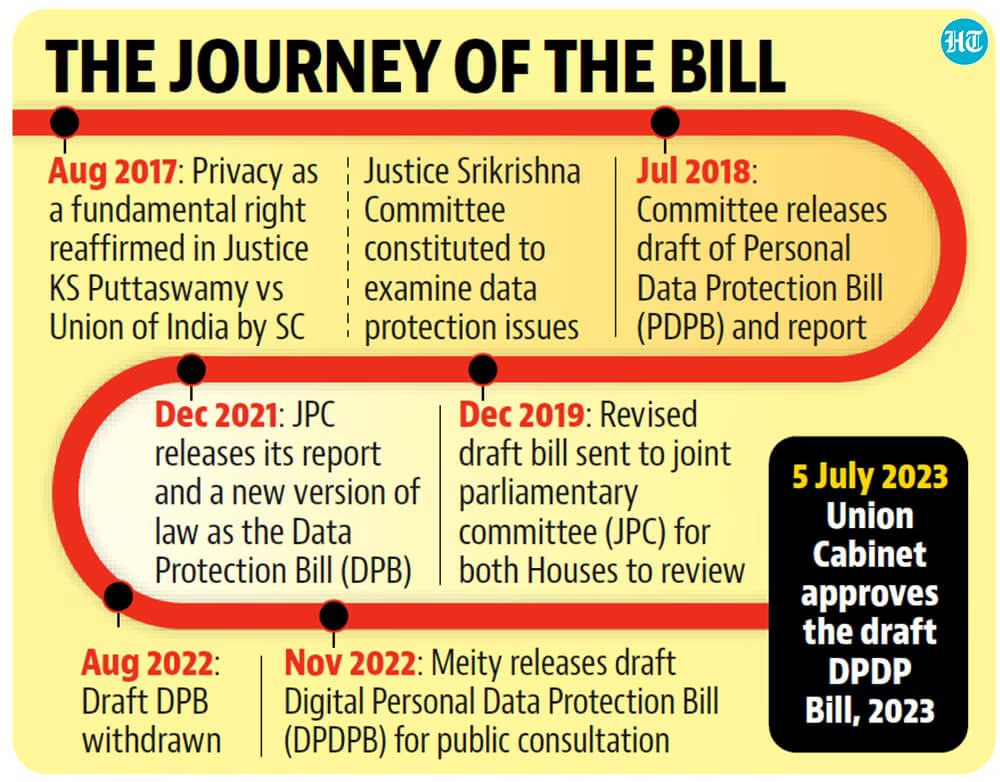
    • Justice BN Srikrishna Committee Report: The committee’s 2018 report recommended seeking parental consent for individuals under 18 years but suggested that the age of consent could be reduced if amendments were made.
    • Personal Data Protection Bill, 2019: The PDP Bill, 2019 retained the recommendation and defined a child as an individual under the age of 18.
    • Joint Committee of Parliament Recommendations: The Joint Committee proposed reducing the age of consent to 13/14/16 years in its final recommendations in late 2021.
    • Digital Personal Data Protection Bill, 2022: The draft Bill defined children as those under 18 years of age, leading to dissatisfaction among social media companies.
    • Final Change: The data protection Bill headed to Parliament’s Monsoon session reportedly changed the definition of a child to an individual who has not completed the age of eighteen years or a lower age notified by the Central Government.

    Global Definitions of Children for Data Regulations

    • EU’s General Data Protection Regulation (GDPR): The age of consent is set at 16 but allows member states to lower it to as low as 13. Specific protections for children’s personal data exist.
    • USA’s Children’s Online Privacy Protection Act (COPPA): Children are defined as under 13 years, and parental consent is required for processing their personal data.
    • Australia’s Privacy Act, 1988: The Act protects personal information regardless of age but requires organizations to assess an individual’s capacity to consent on a case-by-case basis.
    • China’s Personal Information Protection Law (PIPL): Entities handling personal data of individuals under 14 years must obtain parental consent, and children’s data is categorized as sensitive.

    Conclusion

    • Lowering the age of consent in India’s data protection Bill reflects global trends seen in data protection regulations.
    • Countries have different age thresholds for defining children and varying requirements for obtaining parental consent.
    • The final change in the Bill represents a series of discussions and deliberations on determining the age of children in India’s data protection law, addressing concerns of industry stakeholders and aligning with international standards.
  • Cabinet clears Data Protection Bill

    data

    Central Idea

    • The Union Cabinet has granted clearance for the Digital Personal Data Protection (DPDP) Bill, which is set to be introduced in the upcoming Monsoon Session of Parliament.
    • This legislation aims to regulate the management of personal data of Indian residents, emphasizing explicit consent for data collection and usage.

    DPDP, Bill: Key Features and Concerns

    (A) Data Protection Norms and Consent

    • Data Protection Law: The DPDP Bill establishes norms for the management of personal data and mandates explicit consent from individuals whose data is collected and used.
    • Limited Transparency: More than 20,000 comments were received during the public consultation on the draft Bill, but these comments have not been made publicly available.
    • Minimal Changes: The final Bill, to be presented in Parliament, reportedly shows little deviation from the initial draft circulated for public consultation.

    (B) Data Protection Board and Grievance Redressal

    • Role of the Data Protection Board: The DPDP Bill enables individuals to lodge complaints with the Data Protection Board of India, consisting of government-appointed technical experts, in case of unauthorized data usage.
    • Investigation of Breaches: The Board will initiate an investigation into reported breaches of personal data.

    (C) Provisions and Penalties

    • EU Influence: The DPDP Bill draws inspiration from the EU’s General Data Protection Regulation, outlining practices for entities collecting personal data, storage, processing, and the rights of data subjects.
    • Voluntary Undertaking: Entities can admit a breach and pay a penalty as a mitigation measure to avoid court litigation.
    • Penalties and Fines: Penalties for breaches can reach up to ₹250 crore, with a possibility of upward revision to ₹500 crore. Individual offenses may attract fines starting from ₹10,000.
    • Data Protection Board’s Role: The Board will levy fines and penalties for breaches, with a maximum penalty of ₹500 crore for data breaches.

    (D) Exemptions and Concerns

    • Exemptions for Courts and Law Enforcement: The Bill exempts courts and law enforcement agencies from certain requirements when processing personal data for the prevention, detection, investigation, or prosecution of offenses.
    • Concerns over RTI Amendment: An amendment in the DPDP Bill raises concerns among Right to Information activists, as it may restrict the sharing of “personal information” by government departments, potentially impeding transparency and accountability.

    Potential Changes in the Final Draft

    • Cross-Border Data Flows: The approach to cross-border data transfers may shift from a ‘whitelisting’ approach to a ‘blacklisting’ mechanism.
    • Stricter Deemed Consent: The provision on “deemed consent” for private entities could be reworded to be more stringent, while government departments may assume consent for processing personal data in the interest of national security and public interest.

    International Comparisons

    data

    • Global Data Protection Laws: A significant number of countries have enacted data protection and privacy legislation, with the GDPR serving as a template for many jurisdictions.
    • EU, US, and China Models: The EU focuses on comprehensive data protection, the US emphasizes privacy as “liberty protection,” and China has introduced new laws on data privacy and security.

    Why discuss this yet again?

    • Previous Withdrawal: An earlier version of the data protection Bill was withdrawn from Parliament in 2021 due to pushback from various stakeholders.
    • International Relevance: The DPDP Bill’s implementation is crucial for India’s trade negotiations, particularly with regions like the European Union, which has comprehensive privacy laws under the General Data Protection Regulation (GDPR).

    Conclusion

    • The Bill marks a significant step toward safeguarding personal data in India.
    • The legislation introduces stricter norms for data collection and usage, emphasizing explicit consent and establishing penalties for breaches.
    • However, concerns have been raised regarding the limited transparency of the consultation process and potential exemptions that may impact transparency and accountability.


  • Centre planning new Bill on Stray Dog Issue

    dog

    Centre Idea:

    • The Centre will soon formulate a law on the issue of stray dogs, Union Minister Parshottam Rupala said.

    Stray Dog Menace in India

    • Cities have witnessed a sharp increase in the stray dog population, which as per the official 2019 livestock census stood at 1.5 crore.
    • However, independent estimates peg the number to be around 6.2 crore.
    • The number of dog bites has simultaneously doubled between 2012 and 2020.
    • Experts agree there may be a correlation between urbanisation and solid waste production, made visible due to the mismanagement of waste disposal.
    • Tepid animal birth control programmes and insufficient rescue centres, in conjunction with poor waste management, result in a proliferation of street animals in India.

    Reasons behind

    • Poor waste management: Inadequate waste disposal facilities and the mismanagement of solid waste often lead to the congregation of stray dogs around garbage dumps and landfills, where they scavenge for food.
    • Unplanned urbanization: The population boom in Indian cities has led to a sharp increase in the stray dog population. Rapid urbanization has led to the creation of slums and unmanaged solid waste, which attract dogs.
    • Lack of food and shelter: The availability of food and shelter determines the carrying capacity of a city. In the absence of these facilities, free-ranging dogs become scavengers that forage around for food, eventually gravitating towards exposed garbage dumping sites.
    • Territoriality: Stray dogs often become territorial and aggressive about public spaces where they are fed, leading to increased attacks on humans.
    • Improper sterilization and rescue centres: Tepid animal birth control programmes and insufficient rescue centres, in conjunction with poor waste management, result in a proliferation of street animals in India.

    Food wastage in India

    • A population boom in Indian cities has contributed to a staggering rise in solid waste production. Indian cities generate more than 150000 metric tonnes of urban solid waste every day.
    • According to a 2021 UNEP report, an estimated 931 million tonnes of food available to consumers ended up in households, restaurants, vendors and other food service retailers’ bins in 2019.
    • Indian homes on average also generated 50 kg of food waste per person.
    • The presence of free-roaming dogs in urban areas is determined by the “carrying capacity” of a city, which is the availability of food and shelter.

    Urban Stray Dogs and Waste Disposal

    • Food and shelter: The wastage food often serves as a source of food for hunger-stricken, free-roaming dogs that move towards densely-populated areas in cities, such as urban slums which are usually located next to dumping sites.
    • Sanitation assists food hunt: In the absence of proper sanitation and waste disposal facilities, stray dogs become scavengers that forage for food around exposed garbage dumping sites.

    Impact of Unplanned and Unregulated Urban Development

    • ABC Program: Under Animal Birth Control (ABC) program, municipal bodies trap, sterilize, and release dogs to slow down the dog population. This approach aims to control the number of strays while avoiding the inhumane practice of killing them.
    • Rabies Control Measures: Another anchor of India’s response is rabies control measures, including vaccination drives. Rabies is a fatal disease that can be transmitted to humans through dog bites. Thus, preventing rabies is essential in addressing the issue of stray dogs.
    • Informal Measures: These include mass killing of dogs in states like Kerala, which is a controversial practice as it is often inhumane and does not address the root causes of the issue. Other measures include imposing bans on the entry of stray dogs in colonies or feeding them in public.

    Why address stray dog attacks issue?

    • Adds Vulnerability to the poor: The disproportionate burden of dog bites may also fall on people in urban slums, which are usually located in close proximity to dumping sites.
    • Exposes harsher realities: The rise in such attacks speak to core issues of lack of serviced affordable urban housing for all, lack of safe livelihood options and improper solid waste management”.

    Empathizing the strays

    • Abandoned, not strayed: Stray dogs are sentient social beings capable of feeling pain, fear, and joy. Urban living patterns have largely impacted their abandonment.
    • Subjected to abuse: They are often victims of neglect, abuse, and abandonment, and are forced to survive in harsh conditions on the streets.
    • Neglected community guardians: Stray dogs can serve as community guardians by alerting us to potential dangers and can also provide emotional support to humans.

    Way forward

    • Improve waste management: Efficient management of solid waste can help reduce the availability of food for stray dogs and limit their population growth.
    • Increase vaccination and sterilization: ABC and vaccination programs should be implemented in a more organized and efficient manner to control the stray dog population and the spread of rabies.
    • Encourage responsible feeding practices: Regulating feeding around bakeries and restaurants and improving waste management in public spaces can reduce the carrying capacity of the environment for stray dogs and minimize the congregation of dogs in certain areas.
    • Develop national policy: There is a need for a comprehensive national policy that addresses the issue of stray dogs and their management in a more systematic and humane manner.
    • Stop gruesome brutality: Stopping brutality towards dogs is a crucial step towards creating a more compassionate and just management of stray dogs menace.


  • Uniform Civil Code(UCC): Law Commission’s Intention to Gather Public Opinions

    Civil

    Central Idea

    • The 22nd Law Commission of India has recently announced its intention to gather public opinions and engage with recognized religious organizations regarding the Uniform Civil Code (UCC). This move comes as a result of the previous 21st Law Commission’s consultation paper on the Reform of Family Law, which stated that the formulation of a UCC is not necessary or desirable at the present stage.

    All you need to know about Law Commission of India

    • Non-statutory body: The Law Commission of India is a non-statutory body and is constituted by a notification of the Government of India. It plays a crucial role in legal reforms and the development of the Indian legal system.
    • Establishment: The first Law Commission was established in 1955, and since then, there have been several subsequent commissions. The Law Commission operates under the Law Commission Act, 1956.
    • Composition: The Commission consists of a chairman, who is typically a retired judge of the Supreme Court of India or a retired Chief Justice of a High Court, and other members, including legal experts and scholars.
    • Role and Functions: The primary function of the Law Commission is to examine and review the existing laws of the country, suggest reforms, and make recommendations for new legislation. It also conducts research, studies, and consultations on various legal issues referred to it by the government.
    • Research and Reports: The Commission conducts in-depth research on legal matters, examines specific subjects, and prepares detailed reports with recommendations for legal reforms. These reports cover a wide range of topics, including civil and criminal laws, family laws, constitutional law, administrative law, and other legal areas.
    • Consultation with Stakeholders: The Law Commission seeks public opinion and engages with stakeholders, including government departments, judiciary, legal professionals, academic institutions, and civil society organizations, to gather diverse perspectives on legal issues and proposed reforms.
    • Implementation of Recommendations: The government reviews the reports and recommendations of the Law Commission and decides on their implementation. While the Commission’s recommendations are not binding, they often influence legislative changes and legal reforms.
    • Timeframe and Term: Each Law Commission has a specific term, usually three years, during which it functions. At the end of the term, a new Commission may be constituted.
    • Impact and Significance: The Law Commission’s recommendations and reports have played a crucial role in shaping Indian laws and legal reforms. Many landmark legislations and amendments have been based on the Commission’s suggestions.
    • Relationship with Judiciary and Parliament: The Law Commission often collaborates with the judiciary, seeking inputs from judges and addressing legal issues raised in court cases. It also interacts with Parliament, which may refer specific matters to the Commission for its expert opinion.
    • Recent Developments: The Law Commission continues to address contemporary legal challenges, such as reforms in family laws, criminal justice system, electoral laws, and other areas. It adapts to changing societal needs and legal developments to provide relevant recommendations

    Civil

    What is Uniform Civil Code (UCC)?

    • The UCC aims to establish a single personal civil law for the entire country, applicable to all religious communities in matters such as marriage, divorce, inheritance, adoption, etc.
    • The idea of a UCC has a long history in India and has been a topic of debate and discussion.
    • This article explores the basis for a UCC, its timeline, the conflict with the right to freedom of religion, minority opinions, challenges to implementation, and the way forward.

    What is the latest development regarding 22nd Law Commission and UCC?

    • The 22nd Law Commission of India has expressed its intention to gather public opinions and engage with recognized religious organizations regarding the Uniform Civil Code (UCC).
    • The Commission aims to solicit views from the public as well as religious organizations on the topic of the UCC.
    • By actively seeking public opinions and engaging with religious organizations, the 22nd Law Commission aims to gather diverse perspectives on the UCC. This approach recognizes the significance of public input and the need to consider the viewpoints of various religious groups that may be affected by the implementation of a Uniform Civil Code.

    What are the concerns associated with the process?

    • Opposition from Religious Organizations: Religious organizations may have differing views on the UCC, and some may oppose the idea altogether. Engaging with these organizations may lead to resistance and challenges in reaching a consensus on the implementation of a Uniform Civil Code.
    • Potential Polarization: The UCC is a sensitive and contentious issue in India due to its potential impact on religious personal laws. Engaging with religious organizations and seeking public opinions may further polarize society along religious lines, leading to heightened tensions and divisions.
    • Influence of Traditional Practices: Religious organizations may advocate for the preservation of traditional practices and oppose any reforms or changes proposed by the UCC. This can hinder the progress of gender equality and other social reforms that the UCC aims to achieve.
    • Difficulty in Reaching a Consensus: Gathering public opinions from a diverse population with varying viewpoints can make it challenging to reach a consensus on the implementation of the UCC. Conflicting opinions and interests may hinder the formulation of comprehensive and effective recommendations.
    • Delay in Decision-Making: Engaging with multiple stakeholders, including the public and religious organizations, can prolong the decision-making process. This delay may impede the timely implementation of reforms and the realization of the goals set by the UCC.
    • Dilution of Gender Justice: In some cases, religious organizations may advocate for the preservation of discriminatory practices against women in the name of religious freedom or cultural practices. This can hinder efforts to establish gender justice and equality, which are crucial objectives of the UCC.

    Civil

    Pragmatic recommendations put forth by the 21st Law Commission

    • Gender Justice and Uniformity of Rights: The Commission emphasized that family laws of every religion should be reformed to ensure gender justice. It advocated for the uniformity of rights rather than imposing uniform laws, recognizing the diversity of cultural practices while safeguarding equality.
    • Economic Rights of Women: The Commission highlighted the need to address the economic rights of women. It recommended the abolition of the Hindu coparcenary system, which was seen as being used for tax evasion. The Commission also proposed reforms in inheritance laws across religions to ensure fair and equal distribution of property.
    • No-Fault Divorce and Division of Matrimonial Property: The Commission suggested the introduction of “no-fault divorce” in all personal laws, simplifying the process of divorce and reducing the adversarial nature of divorce proceedings. It also recommended that all property acquired after marriage should be divided between the spouses upon dissolution of the marriage, ensuring equitable distribution.
    • Muslim Law of Inheritance and Succession: The Commission recommended the codification of the Muslim law of inheritance and succession, aiming to establish uniform provisions for Shias and Sunnis. It advocated for inheritance based on proximity to the deceased rather than preference to male agnates, promoting gender equality in inheritance rights.
    • Polygamy and Conversion: The Commission commented on the issue of polygamy and conversion, noting that while polygamy is permitted within Islam, it is rare among Indian Muslims. It highlighted instances of individuals from other religions misusing conversion to Islam for the sole purpose of solemnizing another marriage. This observation supported the need for a Uniform Civil Code.
    • Best Interest of the Child: The Commission stressed that courts should prioritize the principle of the “best interest of the child” in matters of custody and guardianship. This approach ensures that decisions related to child custody are made based on what is most beneficial for the child’s well-being and development.
    • Parsi and Christian Women’s Rights: The Commission addressed the rights of Parsi and Christian women, recommending reforms in their personal laws to ensure gender equality and protection of women’s rights.

    Conclusion

    • The debate surrounding the Uniform Civil Code continues to evolve, with the 22nd Law Commission seeking public views and engaging religious organizations. However, it is crucial to consider the pragmatic recommendations made by the 21st Law Commission. Balancing diversity and equality remain a significant challenge, and any future actions regarding the UCC should strive to protect the rights of all individuals while recognizing the importance of cultural differences in a diverse society.

    Also read:

    Uniform Civil Code


  • Sedition Law in India: The Need for Repeal and Reform

    Sedition

    Central Idea

    • French author Andre Gide’s statement, “Everything has been said before, but since nobody listens, we have to keep going back and beginning all over again,” aptly reflects the current state of the sedition debate in India. The 279th Law Commission Report, which upholds the sedition law, symbolizes the lack of attention paid to public opinion.

    sedition

    Historical Perspective of Sedition law

    • Section 124A of the IPC was introduced during the British Raj in 1870 to suppress dissent and protest against the colonial government.
    • The then British government in India feared that religious preachers on the Indian subcontinent would wage a war against the government.
      Particularly after the successful suppression of the Wahabi/Waliullah Movement by the British, the need was felt for such law.
    • Throughout the Raj, this section was used to suppress activists in favor of national independence, including Tilak and Mahatma Gandhi, both of whom were found guilty and imprisoned

    What is the ‘Tendency’ Jurisprudence?

    • The tendency jurisprudence refers to the legal concept or approach that considers the potential or inclination of an act to incite violence or disturb public order, rather than requiring evidence of actual violence or an imminent threat of violence.
    • In the context of sedition laws, it implies that expressions or actions that have a tendency to incite violence or promote hatred, contempt, or disaffection against the government can be penalized, regardless of whether they directly lead to public disorder.

    Key points related to the ‘Tendency’ Jurisprudence

    • Ambiguity: The ‘tendency’ standard is often criticized for its ambiguity and lack of clarity. It allows for the inclusion of acts or expressions that may not have a direct causal connection with public disorder, making it difficult for judicial and executive bodies to interpret and apply consistently.
    • Loose Formulation: The ‘tendency’ standard is a loose formulation that can encompass a wide range of acts or expressions. It opens the possibility of penalizing speech or actions that may not pose an immediate threat but are perceived to have the potential to incite violence or disrupt public order in the future.
    • Judicial Challenges: The ‘tendency’ jurisprudence has been subject to legal challenges in various jurisdictions. Critics argue that it can be misused to suppress dissent, curtail freedom of expression, and stifle legitimate criticism of the government, as it broadens the scope of what can be considered seditious.
    • Pending Petitions: In the Indian context, there are currently nine petitions pending before the Supreme Court challenging the constitutionality of Section 124A (the sedition law). These petitions raise concerns about the ambiguity and potential misuse of the ‘tendency’ standard, highlighting the need for a clearer and more precise definition of sedition.
    • Relevance to Sedition Laws: The ‘tendency’ jurisprudence is significant in the context of sedition laws because it determines whether an act or expression falls within the purview of sedition. By assessing the inclination or potential of an act to incite violence or disrupt public order, authorities can decide whether to initiate sedition charges against individuals.
    • Need for Clarity: Critics argue that the ‘tendency’ standard lacks objective criteria and can be subject to interpretation and abuse. There is a demand for a more precise and narrowly defined standard that clearly distinguishes between protected speech and seditious activities to safeguard freedom of expression and prevent misuse of the law.

    sedition

    Concerns over the Power of the police in the enforcement of sedition laws

    • Investigation and Enquiry: The Law Commission’s recommendation that a police officer, holding the rank of an Inspector or higher, should conduct a “preliminary enquiry” before registering a First Information Report (FIR) in sedition cases. This suggests that the police are granted the power to determine whether an act or expression has the tendency to incite violence, even without proof of actual violence or imminent threat.
    • Ambiguous Standards: The proposed amendment to include the “tendency to incite violence” in sedition laws further adds ambiguity to the assessment of seditious acts. This gives police officers discretionary power to judge whether an act has an inclination towards violence, creating potential room for misuse or subjective interpretations.
    • Wide Net and Misuse: The are concerns that the proposed amendment and the broad discretion given to police officers could result in a wide net being cast, potentially encompassing acts that have no real connection to public disorder.
    • Political Influence: The police officers, especially when influenced by those with political clout at the local, state, or national level, may exercise their power selectively and target individuals or groups critical of the government. This can lead to a suppression of dissent and the abuse of police power for political purposes.

    Disregard for Ground Realities

    • Invalidation of Sedition Laws: The Law Commission overlooks developments in other countries where sedition laws have been invalidated or repealed. It suggests that the Commission dismisses these developments by claiming that the “ground realities” in India are different.
    • High Number of Cases: India has witnessed a significant number of sedition cases filed against individuals for criticizing the government or engaging in harmless activities. It cites the example of 174 cases of sedition filed against nearly 950 individuals since 2010.
    • Confusion caused by Precedent: The confusion caused by the Kedar Nath Singh precedent is another aspect of ground realities that the Commission failed to address. The Supreme Court’s admission of multiple petitions challenging the constitutionality of Section 124A, based on the confusion stemming from the Kedar Nath Singh case, indicates the need for clarity and reform in the interpretation and application of sedition laws.
    • Impact on Freedom of Expression: The disregard for ground realities also encompasses the impact of sedition laws on freedom of expression and dissent. The Commission’s recommendation to retain sedition laws fails to consider the stifling effect these laws can have on individuals’ ability to question authority, engage in political criticism, or express dissenting views without fear of criminal repercussions

    Way forward

    • Narrowing the Definition of Sedition: Refining and narrowing the definition of sedition can help prevent its misuse. The focus should be on acts or speech that directly incite violence or pose a genuine threat to the territorial integrity or sovereignty of the country.
    • Safeguarding Freedom of Speech: Safeguards should be put in place to protect individuals’ right to free speech and expression, while allowing for robust public debate and the peaceful expression of dissenting opinions.
    • Transparency and Accountability: Establish mechanisms to promote transparency and accountability in the application of sedition laws. This includes clear guidelines for law enforcement agencies, regular review of cases, and strict consequences for misuse of the law.
    • Public Awareness and Legal Education: Promote public awareness and legal education about the scope and limitations of the sedition law. This can help individuals understand their rights and responsibilities, empowering them to exercise their freedom of speech responsibly while avoiding unlawful acts.
    • Focus on Alternative Measures: Emphasize the use of alternative legal measures, such as laws related to defamation, incitement to violence, or hate speech, to address genuine threats to public order or national security. These laws should be effectively enforced to protect individuals without infringing upon their fundamental rights.

    sedition

    Conclusion

    • The Law Commission’s recommendations, which include vague standards and police empowerment, do not address the fundamental issues with the sedition law. Lingual changes and procedural reforms alone cannot rectify the deep-rooted problems associated with Section 124A. It is imperative to promote free speech, protect dissent, and foster accountability in a post-colonial democracy like India.

    Also read:

    Sedition Law: A Threat to Freedom of Expression in India


  • Addressing Street Dog Overpopulation: Embracing Animal Birth Control for a Safer Society

    Animal Birth Control

    Central Idea

    • Dogs have always stirred up a range of emotions in people, making it impossible to ignore their presence in our lives. However, the growing population of street dogs in recent decades has presented numerous challenges for cities and municipalities across the country. Unfortunately, some critics have dismissed animal birth control initiatives as failures, demonstrating cynicism that is both mischievous and misguided.

    Stray Dog Attacks in India

    • Cities have witnessed a sharp increase in the stray dog population, which as per the official 2019 livestock census stood at 1.5 crore.
    • However, independent estimates peg the number to be around 6.2 crore.
    • The number of dog bites has simultaneously doubled between 2012 and 2020.
    • Experts agree there may be a correlation between urbanisation and solid waste production, made visible due to the mismanagement of waste disposal.
    • Tepid animal birth control programmes and insufficient rescue centres, in conjunction with poor waste management, result in a proliferation of street animals in India.

    Reasons behind

    • Poor waste management: Inadequate waste disposal facilities and the mismanagement of solid waste often lead to the congregation of stray dogs around garbage dumps and landfills, where they scavenge for food.
    • Unplanned urbanization: The population boom in Indian cities has led to a sharp increase in the stray dog population. Rapid urbanization has led to the creation of slums and unmanaged solid waste, which attract dogs.
    • Lack of food and shelter: The availability of food and shelter determines the carrying capacity of a city. In the absence of these facilities, free-ranging dogs become scavengers that forage around for food, eventually gravitating towards exposed garbage dumping sites.
    • Territoriality: Stray dogs often become territorial and aggressive about public spaces where they are fed, leading to increased attacks on humans.
    • Improper sterilization and rescue centres: Tepid animal birth control programmes and insufficient rescue centres, in conjunction with poor waste management, result in a proliferation of street animals in India.

    Shortcomings of animal birth control

    • Inconsistent Implementation: One of the main challenges is the inconsistent implementation of animal birth control programs across different regions. The effectiveness of these programs can vary depending on the commitment and resources allocated by local authorities.
    • Limited Coverage: Animal birth control programs may not cover all areas affected by street dog overpopulation. Some regions may have inadequate resources or insufficient awareness about the benefits of sterilization programs.
    • Funding Constraints: Insufficient funding can hinder the implementation and sustainability of animal birth control programs. Limited financial resources may result in a shortage of trained personnel, inadequate infrastructure, and reduced outreach efforts.
    • Resistance from Communities: Some communities may resist animal birth control initiatives due to misconceptions, cultural beliefs, or lack of awareness. Overcoming these barriers requires targeted community engagement, education, and dispelling myths surrounding sterilization programs.
    • Behavioral Challenges: Animal birth control programs often face challenges related to capturing street dogs, performing surgeries, and post-operative care. Behavioral issues, such as fear or aggression, can make the process more challenging.
    • Long-term Sustainability: Ensuring the long-term sustainability of animal birth control programs is crucial. These programs require continued investment, monitoring, and evaluation to maintain their effectiveness.

    Facts for prelims

    Animal Birth Control Rules, 2023

    • The Central Government has introduced the Animal Birth Control Rules, 2023, superseding the Animal Birth Control (Dog) Rules, 2001.
    • These rules have been implemented to address the guidelines set by the Hon’ble Supreme Court in the Writ Petition No. 691 of 2009.
    • The Rules emphasize the responsibility of local bodies, such as municipalities, Municipal Corporations, and Panchayats, in conducting Animal Birth Control (ABC) programs for sterilization and immunization of stray dogs.
    • The rules aim to reduce the population of stray dogs and address animal welfare concerns.
    • The guidelines provide a framework for dealing with conflicts between humans and stray dogs without resorting to relocating the dogs from an area.
    • ABC programs must be conducted by organizations recognized by the Animal Welfare Board of India (AWBI) for their expertise in ABC programs

    Misconceptions surrounding Animal Birth Control (ABC) programs

    • Ineffectiveness of Sterilization: Some people believe that sterilization does not effectively control street dog populations. They may argue that sterilized dogs can still reproduce or that the impact of sterilization is minimal. However, numerous studies and successful implementation of ABC programs worldwide have shown that sterilization is a proven method.
    • Cruelty or Harm to Animals: There is a misconception that sterilization surgeries are cruel and cause unnecessary harm to animals. However, ABC programs prioritize the health and welfare of animals, and sterilization is a safe and humane procedure performed under anesthesia by trained veterinarians.
    • Abandonment of Dogs: Some people believe that sterilized dogs are more likely to be abandoned by their owners or that sterilization leads to behavioral changes that make dogs less desirable as pets. However, sterilization has no negative impact on a dog’s behavior or loyalty.
    • Cost Inefficiency: It is sometimes claimed that sterilization programs are expensive and not cost-effective. However, the long-term benefits of ABC programs, such as reduced costs associated with managing stray dogs, decreased risks of dog bites, and improved public health, outweigh the initial investment.
    • Neglect of Other Issues: Some individuals argue that focusing on animal birth control diverts attention and resources from other pressing issues, such as poverty or healthcare. However, addressing street dog overpopulation through ABC programs is not mutually exclusive with addressing societal challenges.

    Animal Birth Control

    Way ahead: A call for change

    • Strengthen Implementation: Efforts should be made to strengthen the implementation of Animal Birth Control (ABC) programs across all regions. This includes standardizing processes, improving infrastructure, and ensuring uniformity in the application of ABC rules and guidelines.
    • Increase Awareness and Education: Public awareness campaigns should be conducted to educate communities about responsible pet ownership, the benefits of sterilization, and how to coexist peacefully with street dogs.
    • Community Engagement: Engaging with local communities is vital to garner support and address concerns surrounding street dogs. Building trust, involving community leaders, and working collaboratively to develop solutions can help foster positive relationships and encourage responsible pet ownership practices.
    • Research and Data Collection: Continued research and data collection are essential to evaluate the impact of ABC programs, track population trends, and understand the dynamics of street dog issues. This data can inform evidence-based decision-making, facilitate targeted interventions, and support the refinement of strategies.
    • Strengthen Legislation and Policies: Reviewing and updating existing legislation related to animal welfare and responsible pet ownership can help create a more conducive environment for effective street dog management.
    • Strengthen Collaboration and Partnerships: Collaboration among government bodies, animal welfare organizations, veterinary professionals, and community stakeholders is crucial. Partnerships can help pool resources, expertise, and funding, leading to more impactful interventions and sustainable outcomes.
    • Long-Term Sustainability: Ensuring the long-term sustainability of street dog management programs requires continued funding, monitoring, and evaluation. Governments, philanthropic organizations, and individuals should allocate resources and support initiatives that prioritize the welfare of both humans and animals.
    • International Best Practices: Learning from successful street dog management programs implemented in other countries can provide valuable insights and guidance. Adopting international best practices, adapting them to local contexts, and sharing knowledge and experiences can contribute to more effective strategies.

    Conclusion

    • Addressing street dog overpopulation requires a comprehensive approach that includes animal birth control as a key component. Instead of dismissing it as ineffective, we should embrace continuous policy reforms and resource investments. Let us work together to eliminate the suffering and public health risks associated with outdated methods, and strive to achieve our noble goal through the implementation of the new rules.

    Also Read:

    Link between poor Solid Waste Management and Stray Dog Attacks
  • Sedition Law: A Threat to Freedom of Expression in India

    sedition law

    Central Idea

    • In its 279th Report, the Law Commission of India has recommended the retention of Section 124A of the Indian Penal Code, commonly known as the Law of Sedition, along with enhanced punishment for the offense in the name of national security.

    What is Sedition?

    The Section 124A defines sedition as:

    • An offence committed when “any person by words, either spoken or written, or by signs, or by visible representation, or otherwise, brings or attempts to bring into hatred or contempt, or excites or attempts to excite disaffection towards the government established by law in India”.
    • Disaffection includes disloyalty and all feelings of enmity.
    • However, comments without exciting or attempting to excite hatred, contempt or disaffection, will not constitute an offense.
    • Sedition is a non-bailable offense.
    • Punishment under Section 124A ranges from imprisonment up to three years to a life term with/without a fine

    Historical Perspective

    • Section 124A of the IPC was introduced during the British Raj in 1870 to suppress dissent and protest against the colonial government.
    • The then British government in India feared that religious preachers on the Indian subcontinent would wage a war against the government.
    • Particularly after the successful suppression of the Wahabi/Waliullah Movement by the British, the need was felt for such law.
    • Throughout the Raj, this section was used to suppress activists in favor of national independence, including Tilak and Mahatma Gandhi, both of whom were found guilty and imprisoned.

    Two notable interpretations which added to the ambiguity surrounding the sedition law

    1. Queen Empress vs Bal Gangadhar Tilak (1897)
    • In this case, Bal Gangadhar Tilak, a prominent freedom fighter, was charged with sedition for writing articles in a Marathi weekly called Kesari that invoked Shivaji and were seen as inciting disaffection towards the British government.
    • The court held that sedition encompassed the act of exciting disaffection towards the government, even if it did not incite rebellion or violence.
    • This interpretation broadened the scope of the offense to include political hatred of the government.
    1. Niharendu Dutt Majumdar And Ors. vs Emperor (1942): Federal Court.
    • The court acquitted the accused, and Chief Justice Sir Maurice Gwyer explained that the essence of sedition lies in public disorder or the reasonable anticipation thereof.
    • According to this interpretation, sedition would be committed only when there is incitement to violence or disorder.

    Constitutionality of Sedition

    • Violation of Freedom of Speech and Expression: The sedition law, as defined in Section 124A of the Indian Penal Code, infringes upon the fundamental right to freedom of speech and expression guaranteed under Article 19(1)(a) of the Indian Constitution. It criminalizes acts that bring hatred, contempt, or disaffection towards the government, which curtails the citizens’ ability to express their political dissent and discontent.
    • Democratic Principles: Disaffection towards a government, which is subject to change through the electoral process, cannot be treated as a criminal offense. The sedition law restricts the democratic principles of public debate, dissent, and accountability.
    • Omission from the Constitution: During the drafting of the Indian Constitution, the Constituent Assembly deliberately excluded sedition as a reasonable restriction on the freedom of speech and expression. This omission signifies the Assembly’s intent to safeguard the citizens’ right to express their opinions, including dissenting views on the government.
    • Ambiguity and Misuse: The broad wording and lack of precise definition allow for arbitrary interpretations, leading to the stifling of legitimate dissent and the targeting of individuals or groups critical of the government. This misuse undermines the rule of law and constitutional protections.
    • Chilling Effect on Free Speech: The existence of a sedition law creates a chilling effect on free speech and expression. The fear of potential sedition charges discourages individuals from openly expressing their opinions and engaging in robust public discourse, inhibiting the free flow of ideas and opinions necessary for a healthy democracy.
    • Conflict with International Standards: International bodies such as the United Nations Human Rights Committee have consistently expressed concerns about the misuse of sedition laws and called for their repeal or amendment to align with international human rights standards.

    sedition law

    Inconsistencies regarding the sedition law in India

    • Interpretational Inconsistencies: The Tilak case (1897) interpreted sedition as exciting disaffection towards the government, even without inciting violence or rebellion. However, the Majumdar case (1942) acquitted the accused by emphasizing that sedition requires a tendency to incite violence or disorder.
    • Varying Judicial Approaches: The Supreme Court’s approach in the Kedarnath case (1962) further adds to the inconsistencies. While the Court upheld the constitutionality of the sedition law, it narrowed its application to only acts that incite violence. The Court’s attempt to retain sedition despite acknowledging its exclusion from the draft Constitution and concerns over its severity creates a contradictory stance.
    • Lack of Clarity in Statutory Language: The language of Section 124A of the Indian Penal Code, which defines sedition, lacks precision and clarity. The vague terms such as hatred, contempt, and disaffection make it susceptible to subjective interpretations and misuse by law enforcement authorities. This lack of clarity contributes to the inconsistent application of the sedition law.
    • Conflict with Constitutional Principles: The sedition law, as it stands, conflicts with constitutional principles, particularly the fundamental right to freedom of speech and expression guaranteed under Article 19(1)(a) of the Indian Constitution. The broad interpretation of sedition and its criminalization of political dissent and disaffection towards the government infringe upon citizens’ constitutional rights.
    • Disparity with International Standards: International bodies, including the United Nations Human Rights Committee, have expressed concerns about the misuse of sedition laws and recommended their repeal or amendment to align with international human rights norms. This disparity highlights the inconsistencies between the sedition law in India and global standards.

    Way ahead: Recommendations to strike a balance

    • Repeal or Substantial Reform: Given the inconsistencies, ambiguity, and potential for misuse, there is a strong case for the repeal or substantial reform of the sedition law. This could involve narrowing the scope of the offense, clarifying the language, and aligning it with constitutional principles and international human rights standards.
    • Precise Definition: The sedition law should be defined more precisely to avoid ambiguity and subjective interpretations. A clear and specific definition would help establish the boundaries of the offense, ensuring that it is not misused to suppress legitimate dissent or criticism.
    • Balancing National Security and Freedom of Expression: Any reform or amendment to the sedition law should strike a balance between protecting national security and safeguarding freedom of expression. This can be achieved by focusing on acts that pose a genuine threat to public order, incite violence, or endanger the integrity of the state while ensuring that peaceful dissent and criticism are not stifled.
    • Judicial Clarity: The judiciary should provide consistent and well-defined guidelines for the interpretation and application of the sedition law. Clear guidelines would help prevent arbitrary enforcement and provide greater clarity on the limits of the offense.
    • Safeguards and Procedural Reforms: Implementing safeguards and procedural reforms can help prevent the misuse of the sedition law. This may include requiring higher standards of evidence, ensuring transparency and accountability in investigations and prosecutions, and providing avenues for redress in cases of wrongful or frivolous charges.
    • Public Awareness and Sensitization: There is a need for public awareness campaigns and sensitization programs to educate citizens, law enforcement authorities, and the judiciary about the nuances of freedom of expression and the potential pitfalls of the sedition law.
    • International Dialogue and Learning: Engaging in international dialogue and learning from best practices can provide valuable insights for reforming the sedition law. Studying the experiences of other democratic countries and considering international human rights standards can help shape more effective and rights-respecting legislation.

    Conclusion

    • The interpretation and application of Section 124A have been inconsistent, leading to misuses and abuses by law enforcement authorities. The Law Commission’s recent recommendations for enhancing punishment and incorporating the tendency to incite disorder fail to address the core issue of the law’s unconstitutionality. It is imperative to reevaluate and repeal the sedition law to protect and uphold the democratic values of free speech and expression in India.

    Also read:

    Sedition Law in India