💥Join UPSC 2027,2028 Mentorship (July Batch) + XFactor Notes & Microthemes PDF

GS Paper: GS1-02.Modern Indian History- Mid-18th century – Present (significant events, personalities, issues);

  • Kolkata Tram

    Why in the News?

    West Bengal has announced the discontinuation of the iconic 150 year old Kolkata trams, India’s last functioning tram system.

    About Kolkata Tram

    • Introduced in 1873 in Calcutta (now Kolkata), the first trams were horse-drawn and operated along a 3.8 km route between Sealdah and Armenian Ghat Street.
    • In 1874, horse-drawn trams reached Bombay (now Mumbai), followed by their introduction in Nashik and Patna.
    • However, their dependency on horse labor made them unsustainable.

    Revival and Modernization of Kolkata’s Trams

    • Lord Ripon revived trams in Calcutta in 1880 by experimenting with steam locomotives.
    • While the steam-powered trams improved speed, they introduced issues like pollution, which discouraged other states from adopting this technology.
    • In 1895, Madras (now Chennai) launched the country’s first electric tramcars, reducing noise and pollution.
    • Following this, Calcutta also transitioned to electric-powered trams by 1902, with routes between Esplanade and Kidderpore, and Esplanade and Kalighat.

    Significance of Trams

    • Kolkata’s trams hold historical significance as India’s oldest running tram system, symbolizing the city’s colonial past and cultural identity.
    • They provide an environmentally friendly and affordable mode of transport, making them relevant even today.
    • As a symbol of resilience, Kolkata’s trams have survived while other cities phased them out.
    • They also serve as a unique tourist attraction, offering a nostalgic glimpse of the city.

    PYQ:

    [2020] Which of the following statements correctly explains the impact of Industrial Revolution on India during the first half of the nineteenth century?

    (a) Indian handicrafts were ruined.

    (b) Machines were introduced in the Indian textile industry in large numbers.

    (c) Railway line were laid in many parts of the country.

    (d) Heavy duties were imposed on the import of British manufactures.

  • Bhagat Singh (1907-1931)

    Why in the News?

    September 28th marks 117th birth anniversary of the legendary freedom fighter “Bhagat Singh”.

    Who was Bhagat Singh?

    Details
    Birth  September 28, 1907; Banga, Punjab (now in Pakistan)
    Family  Came from a family involved in anticolonial activities; his father Kishan Singh and uncle Ajit Singh were active freedom fighters.
    Affiliations • Hindustan Republican Association (1924)
    • Hindustan Socialist Republican Association (1928)
    • Naujawan Bharat Sabha (1926)
    Revolutionary Actions • Played a key role in the Lahore Conspiracy Case (1928) by avenging Lala Lajpat Rai’s death and mistakenly killing J.P. Saunders
    • Threw a bomb in the Central Legislative Assembly on April 8, 1929, with B.K. Dutt, to protest oppressive British laws.
    Ideologies and Principles • Advocated Marxist and socialist ideologies
    • Rejected religion in his essay Why I Am an Atheist
    • Emphasized rationalism, equality, and justice.
    Arrest and Trial
    • Arrested in 1929 for throwing a bomb in the Central Legislative Assembly; later rearrested for the Lahore Conspiracy Case (murder of J.P. Saunders).
    • Jinnah opposed a 1929 Bill allowing trials in absentia, delivering a strong speech in the Central Assembly.
    Execution
    • Hanged on March 23, 1931, along with Sukhdev and Rajguru, in Lahore for his revolutionary activities.
    • Nehru and Subhash Chandra Bose visited Bhagat Singh in prison.
    Literary Works
    • Bhagat Singh was fluent in Urdu, Punjabi, Hindi, and English, and familiar with Sanskrit.
    • His jail notebook referenced thinkers like Karl Marx, Thomas Jefferson, Mark Twain, and others, reflecting his intellectual diversity.
    • At 17, he wrote Vishwa Prem (Universal Love), advocating for universal brotherhood and equality.
    • He urged the oppressed classes to rebel against the social order and spoke about the philosophy of revolution in his writings, such as What is Revolution? (1929).
    • In his series What is Anarchism? he described organized religion and the state as forms of mental and physical slavery.
    • He wrote about the power of love in a 1929 letter to Sukhdev, emphasizing its role in personal and political strength.


    PYQ:

    [2020] Since the decade of the 1920s, the national movement acquired various ideological strands and thereby expanded its social base. Discuss.

  • Deendayal Upadhyaya’s Birth Anniversary

    Why in the News?

    September 25 marks the 108th birth anniversary of Pandit Deendayal Upadhyaya, one of the most influential thinkers of India’s right-wing movement.

    About Pandit Deendayal Upadhyaya (1916-1968)

    Details
    Born September 25, 1916 in Mathura, Uttar Pradesh

    Antyodaya Diwas is observed on this day since 2014.

    Affiliations Rashtriya Swayamsevak Sangh (RSS), Bharatiya Jana Sangh (BJS)
    Political Role • One of the key leaders of the Bharatiya Jana Sangh (BJS)
    • Served as President of BJS
    Key Contributions • Founder of the Integral Humanism philosophy
    • Introduced the concept of Antyodaya for the upliftment of the poorest
    • Promoted self-reliance (Swadeshi) and decentralization of power
    Doctrine of ‘Antyodaya’ Antyodaya means “upliftment of the last person in society.”
    • It focuses on improving the living conditions of the poorest and most marginalized sections of society.
    • Upadhyaya believed that true development can only be measured by the welfare of the weakest sections, promoting policies aimed at economic, social, and educational inclusion of these groups.
    Legacy Antyodaya Anna Yojana and Deendayal Upadhyaya Gram Jyoti Yojana inspired by his ideas

    • In 2015, NRLM was renamed Deendayal Antyodaya Yojana-NRLM.

    Death February 11, 1968, under mysterious circumstances in Mughalsarai, Uttar Pradesh
  • Why Ambedkar and Gandhi disagreed on question of separate electorates for SC’s?

    Why in the News?

    On September 20, 1932, Mahatma Gandhi began a fast unto death in Yerawada Jail, Pune, to protest against the provision of separate electorates for Scheduled Castes.

    Gandhi vs Ambedkar on Caste

    • Gandhi’s Views on Caste: Initially orthodox, Gandhi supported social prohibitions like restrictions on inter-dining and inter-marriage but later rejected untouchability, referring to untouchables as “Harijans.” However, he did not reject the institution of caste itself, as it was tied to Hindu religious practices.
    • Ambedkar’s Radical Approach: Ambedkar believed that to truly abolish caste, one needed to attack the divine authority of the Hindu scriptures (shastras) that justified it. He argued that reforms short of rejecting the religious basis of caste were insufficient.
      • Ambedkar’s strategy was to focus on lower castes achieving political power to challenge their subjugation within the Hindu social order.

    Ambedkar’s Argument for Separate Electorates

    • Distinct Identity of Depressed Classes: Ambedkar argued that the Depressed Classes (Scheduled Castes) formed a distinct group, separate from the Hindus. Despite being part of Hindu society, they did not enjoy equal treatment and were subject to systemic oppression.
    • Political Machinery for Representation: Ambedkar advocated for separate electorates with a double vote system, where Scheduled Castes would vote for their own candidates as well as in the general electorate.
    • Protection from Majority Rule: Ambedkar warned that joint electorates would allow the Hindu majority to control the election of Dalit representatives, making it impossible for lower castes to effectively protect their interests against the tyranny of the majority.

    Why Gandhi Opposed Separate Electorates

    • Integration of Lower Castes: Gandhi opposed separate electorates because he believed they would marginalize lower castes further.
      • Instead of being restricted to a limited share of seats, Gandhi thought lower castes should aim for broader participation in political leadership.
    • Fear of Dividing Hindu Society: Gandhi feared that separate electorates would divide Hindu society, further weakening it.
      • He believed this division would help the British continue their “divide and rule” policy, undermining India’s struggle for independence.
    • Strategic Concerns: The introduction of separate electorates for Scheduled Castes, in addition to those for Muslims, would fragment the Hindu political base, reducing the power and influence of upper-caste Hindu leadership.

    Culmination of the Debate: The Poona Pact

    • Gandhi’s Fast: In 1932, Gandhi went on a fast unto death to oppose separate electorates, pressuring Ambedkar to concede. Ambedkar, despite his misgivings, agreed to the Poona Pact, which provided for reserved seats for Scheduled Castes but within a joint electorate.
    • Ambedkar’s Dissatisfaction: Ambedkar was never fully satisfied with the outcome, believing the joint electorate allowed upper-caste Hindus to nominate Dalit representatives, effectively controlling their political voice.

    Conclusion: The Gandhi-Ambedkar debate on caste culminated in the Poona Pact, with Gandhi opposing separate electorates to maintain Hindu unity, while Ambedkar sought political power for lower castes. Though Ambedkar agreed, he remained dissatisfied with the compromise.

    Mains PYQ:

    Q Mahatma Gandhi and Dr. B R Ambedkar, despite having divergent approaches and strategies, had a common goal of amelioration of the downtrodden. Elucidate. (UPSC IAS/2015)

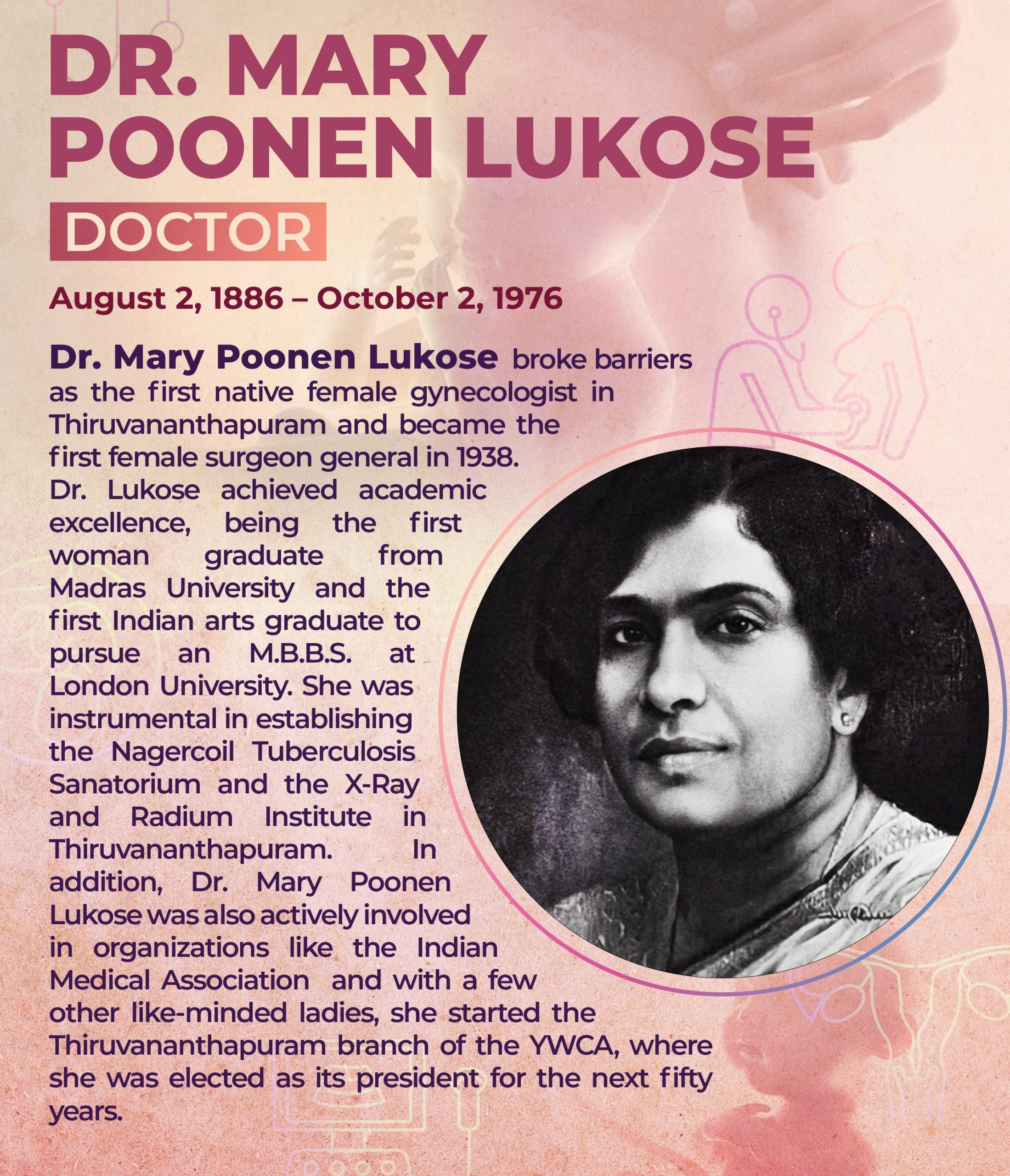
  • Who was Mary Poonen Lukose?

    Why in the News?

    100 years ago, on September 23, 1924, Mary Poonen Lukose became the first woman to join a legislative council in an Indian princely state, entering the Travancore Legislative Council.

    Who Was Mary Poonen Lukose?

    • Born on August 2, 1886, in Kerala, she became the first woman from the state to earn a medical degree, specialising in gynaecology and obstetrics.
    • Her contributions:
      • She performed the first cesarean section in Kerala before 1920, often working under challenging conditions with minimal equipment.
      • She started a midwifery training program for local women, which led to safer home births, reducing risks for mothers and babies.
      • As a member of the Travancore Legislative Council, she influenced public health policy, using her expertise to benefit the community.

    Records set by Mary Poonen Lukose

    • First woman legislator in an Indian princely state: In 1924, she became the first woman member of the Travancore Legislative Council (a predecessor to Kerala’s Legislative Assembly).
    • First woman graduate from Madras University in 1909, despite facing barriers to studying science as a woman.
    • First woman Surgeon General of Travancore, and possibly the first woman Surgeon General in the world, in 1938.
      • First woman to head the health department in Travancore, in 1924.
    • Awarded the Padma Shri in 1975 for her contributions.

    PYQ:

    [2013] Defying the barriers of age, gender and religion, the Indian women became the torch bearer during the struggle for freedom in India. Discuss. (10 marks-200 words).

    [2011] With reference to Indian freedom struggle, Usha Mehta is well-known for

    (a) Running the secret Congress Radio in the wake of Quit India Movement
    (b) Participating in the Second Round Table Conference
    (c) Leading a contingent of Indian National Army
    (d) Assisting in the formation of Interim Government under Pandit Jawaharlal Nehru

  • Why September 12 is observed as Saragarhi Day?

    Saragarhi

    Why in the News?

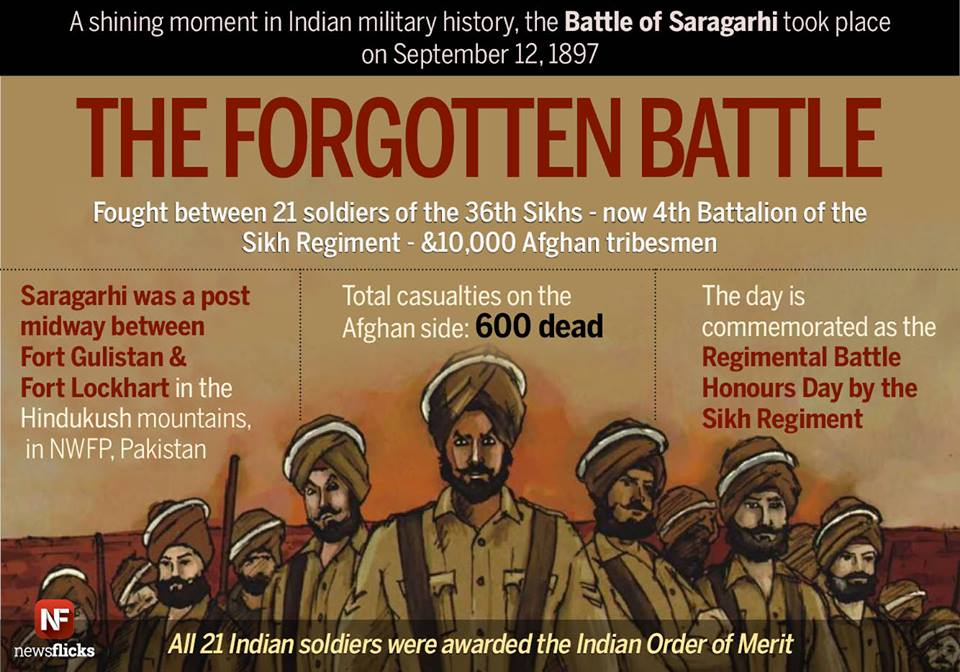
    127th Anniversary of the Battle of Saragarhi was observed on September 12.

    About the Battle of Saragarhi

    • The Battle of Saragarhi occurred on September 12, 1897, between 21 Sikh soldiers of the then 36th Sikh Regiment and around 8,000 Afridi and Orakzai tribals.
    • The soldiers defended a communication post at Saragarhi, connecting Fort Lockhart and Fort Gulistan in the North West Frontier Province (now Pakistan).
    • Led by Havildar Ishar Singh, the Sikhs fought to the last man, marking one of the greatest last stands in military history.
    • Despite their bravery, the soldiers were eventually outnumbered and killed.
    • Their sacrifice gave the British time to strengthen positions at Fort Lockhart and Gulistan, halting enemy advances.

    Implication of the Battle

    • The Sikh soldiers showed extraordinary courage, fighting against overwhelming odds.
    • The 21 soldiers killed around 200 militants and injured 600, holding the enemy for seven hours.
    • The British Government posthumously awarded all 21 soldiers the Indian Order of Merit.
    • The battle highlighted the importance of discipline, leadership, and sacrifice, and underscored the role of Sikh regiments in the British Indian Army.

    PYQ:

    [2020] Wellesley established the Fort William College at Calcutta because:

    (a) He was asked by the Board of Directors at London to do so

    (b) He wanted to revive interest in oriental learning in India

    (c) He wanted to provide William Carey and his associates with employment

    (d) He wanted to train British civilians for administrative purpose in India

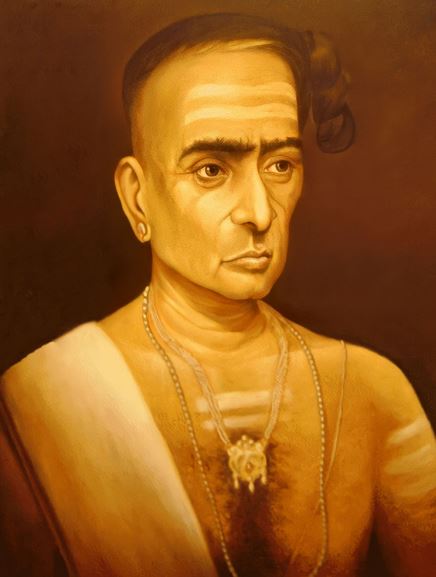
  • Who was Sakthan Thampuran (1751-1805)?

    On Saturday, September 7, Minister of State for Tourism and Thrissur MP Suresh Gopi has pledged to replace the statue of Sakthan Thampuran, which was damaged by a state transport bus in June, with a new bronze statue if the Kerala government fails to do so within 14 days.

    Why in the News?

    Ministry of Tourism has pledged to replace the Sakthan Thampuran statue that was knocked over by a state transport bus in Thrissur.

    Who was Sakthan Thampuran?

    • Sakthan Thampuran, born Raja Rama Varma IX in 1751, was a powerful ruler of the Cochin kingdom from 1790 to 1805.
      • He was raised by an aunt who nicknamed him Sakthan, meaning powerful, reflecting his strong personality and leadership.
    • The title Thampuran is derived from the Sanskrit word samrat, meaning emperor.
    • The Cochin kingdom, a part of the Late Chera Empire, spanned regions from Ponnani (Malappuram) to Thottappally (Alappuzha) in modern-day Kerala.
    • At age 18, in 1769, he became heir apparent, advising the king to maintain friendly relations with both the Dutch and the English, who were competing for control of trade in the region.
    • He orchestrated the Mysore invasion of Travancore, which eventually led to the Powney treaty.
    • This treaty freed the Cochin kingdom from its allegiance to Mysore and formalized its relations with the British East India Company.
    • He ended the institution of the Yogiatirippads, spiritual heads of key temples. He shifted temple management to the government, earning a reputation as a fearsome leader who rid his kingdom of crime.

    Sakthan and the Thrissur Pooram Festival

    • Sakthan relocated the capital of his kingdom from Thrippunithura to Thrissur.
      • He developed Thekkinkadu Maidanam and the surrounding Swaraj Round, which became the foundation for Thrissur’s infrastructure.
    • He invited merchants from all religions and British officials to settle in Thrissur, and personally managed the kingdom’s finances.
    • In 1797, he started the Thrissur Pooram as an alternative to Arattupuzha Pooram, uniting major temples in Thrissur to pay respects to Lord Shiva, the deity at Vadakkumnathan Temple.
      • It is held every year on the Pooram day – the day when the moon rises with the Pooram star in the Malayalam Calendar month of Medam.


    PYQ:

    [2021] With reference to Indian history, which of the following statements is/are correct?​

    1. The Nizamat of Arcot emerged out of Hyderabad State.​

    2. The Mysore Kingdom emerged out of Vijayanangara Empire.​

    3. Rohilkhand Kingdom was formed out of the territories occupied by Ahmad Shah Durrani.​

    Select the correct answer using the code given below:

    (a) 1 and 2 only​

    (b) 2 only​

    (c) 2 and 3 only​

    (d) 3 only ​

  • Major Dhyan Chand (1905-1979): India’s first sporting superstar

    Why in the News?

    National Sports Day is celebrated on August 29 in India to honor the memory of “Major Dhyan Chand”, widely regarded as the first superstar of Indian hockey and arguably India’s first sporting superstar.

    About Major Dhyan Chand:

    Details
    Birth Born on August 29, 1905, in Allahabad, India
    Olympic Achievements Led India to three Olympic gold medals in 1928 (Amsterdam), 1932 (Los Angeles), and 1936 (Berlin).
    Career Goals Scored 33 goals in 12 Olympic matches, nearly averaging a hat-trick per game.
    Signature Skill Renowned for his exceptional dribbling and ball control.
    Anecdotes
      • Famous for his stick work so effective that his hockey stick was checked for magnets;
    • Declined an offer from Adolf Hitler to change nationality after the 1936 Olympics.
    National Recognition
    • In honour of his contributions, August 29 is celebrated as National Sports Day in India.
    • Rajiv Gandhi Khel Ratna Award was renamed the Major Dhyan Chand Khel Ratna Award in 2021.
    • It is the highest sporting award given by the Ministry of Youth Affairs and Sports for the spectacular and most outstanding performance in the field of sports by a sportsperson over four years.
      • The award comes with a cash prize of Rs 25 lakh.
    • The Khel Ratna Award was instituted in 1991-1992 and the first recipient was Chess legend Viswanathan Anand.
      • Winners: Leander Paes, Sachin Tendulkar, Dhanraj Pillay, Pullela Gopichand, Abhinav Bindra, Anju Bobby George, Mary Kom and Rani Rampal in 2020.
    Legacy Major Dhyan Chand National Stadium in New Delhi is named after him, underscoring his impact on Indian sports infrastructure.
  • [20th August 2024] The Hindu Op-ed: The ‘livery of India’s freedom’ is under threat

    [20th August 2024] The Hindu Op-ed: The ‘livery of India’s freedom’ is under threat

    PYQ Relevance:
    Mains:
    Q.1 Bring out the constructive programmes of Mahatma Gandhi during the Non-Cooperation Movement and Civil Disobedience Movement. (UPSC IAS/2021) 
    Q.2 Can the strategy of regional-resource-based manufacturing help in promoting employment in India? (UPSC IAS/2019) 

    Note4Students: 

    Prelims: Khadi and Village Industries Commission (KVIC);

    Mains: Challenges related to khadi industry;

    Mentor comments:  The khadi industry in India is a vital segment of the textile sector, known for its hand-spun and hand-woven fabrics made from cotton, silk, and wool. It plays a crucial role in generating employment, particularly in rural areas, with millions of artisans involved in its production. The industry has seen significant growth, with khadi production valued at ₹1,904.5 crore (USD 255.8 million) in FY21, up from ₹1,520.8 crore (USD 204.3 million) in FY17. Promoted by the Khadi and Village Industries Commission (KVIC), khadi symbolizes India’s heritage and commitment to sustainable practices.

    Let’s learn —

    Why in the News? 

    • The Prime Minister’s ‘Har Ghar Tiranga’ campaign highlights moral contradiction, as machine-made polyester flags, often imported, overshadow the significance of our national flag.
    • The Flag Code of India has historically required the national flag to be made of “hand spun and hand-woven wool/cotton/silk khadi bunting”

    Significance of Khadi Industries: 

    • Second Largest Employer: After agriculture, the khadi industry is the second largest industry to provide employment opportunities to the unemployed and rural people
    • Preserving Heritage: Khadi is a national heritage fabric of India with a unique identity and a rich tradition dating back to ancient times.
    • Symbol of Freedom Struggle: Khadi was the fabric of the freedom struggle, with Mahatma Gandhi launching the movement of ‘spin your own cloth and buy hand-spun cloth’ in 1921
    • Eco-friendly Production: The production of khadi focuses on the environment right from the beginning, using locally manufactured raw materials without chemicals and energy resources.

    The reason behind the Khadi procurement has fallen: 

    • Neglect of Mandates: Government departments are reportedly ignoring or overruling mandates requiring them to procure khadi. For instance, many departments shifted to other materials, resulting in a drop in khadi purchases from ₹50-60 crore per year to ₹32 crore over a decade.
    • Amendment to the Flag Code: In 2022, the Government amended the Flag Code of India to allow for the use of machine-made polyester bunting for the national flag, which historically required khadi.  
    • Tax Exemption for Polyester Flags: The government exempted polyester flags from the Goods and Services Tax (GST), placing them on the same tax footing as khadi flags.  
    • Indefinite Strike by Khadi Producers: The Karnataka Khadi Gramodyoga Samyukta Sangha (KKGSS), the sole national flag manufacturing unit accredited by the Bureau of Indian Standards, resorted to an indefinite strike to protest the government’s actions, which they view as detrimental to the khadi industry.
    • Market Regulation Failures: The khadi market lacks effective regulation, leading to the sale of khadi produced from semi-mechanized charkhas alongside traditional hand-spun khadi. This situation creates confusion among consumers and undermines the authenticity of traditional khadi.  
    • Lack of Global Promotion: The government has failed to establish a global audience for Indian handlooms, particularly khadi. For instance, khadi’s share remains very low, accounting for less than 0.22% of the total textile sector exports.  
    • Economic Pressures on Workers: Khadi spinners and weavers are facing economic hardships, with wages remaining low at ₹200-₹250 per day despite their labour-intensive work.  
    • Impact of Policy Changes: Recent policy changes, such as the introduction of the Goods and Services Tax (GST), have placed additional burdens on handloom workers. The GST applies to both finished khadi products and raw materials, increasing costs for producers.  
    Khadi and Village Industries Commission (KVIC)

    Establishment: The KVIC was established in April 1957 by the Government of India under the Khadi and Village Industries Commission Act. It is a statutory body aimed at promoting and regulating the khadi and village industries in India.
    Objectives: The KVIC has three main objectives:
    1. Social Objective: To provide employment in rural areas.
    Economic Objective: To produce saleable articles.
    2. Wider Objective: To create self-reliance among people and build a strong rural community spirit.

    Affiliation and Oversight: The KVIC oversees approximately 5,600 registered khadi institutions and 30,138 cooperative societies across India. It collaborates with 30 State Khadi and Village Industry Boards (KVIBs) to implement its programs at the state level.

    Trademark Protection: KVIC holds exclusive rights to the “Khadi” and “Khadi India” trademarks, ensuring that the term is used correctly and protecting the integrity of khadi products in the market.

    Way forward: 

    • Revitalize Government Mandates & Incentivize Khadi Procurement: Reinforce mandates requiring government departments to prioritize khadi procurement and introduce subsidies or tax incentives for using traditional hand-spun khadi, ensuring fair competition against synthetic alternatives.
    • Global Promotion & Fair Wages: Launch targeted campaigns to promote khadi internationally, increasing its market share while ensuring that khadi spinners and weavers receive fair wages through direct government support and better pricing mechanisms.
  • [pib] Maharaja Bir Bikram Kishore Manikya Bahadur

    Why in the News?

    The Prime Minister has paid homage to the great Maharaja of Tripura Bir Bikram Kishore Manikya Bahadur on his birth anniversary.

    Who was Maharaja Bir Bikram Kishore Manikya Bahadur?

    Details
    Reign 1923 – 1947
    Birth August 19, 1908
    Contributions to Tripura – Modernized Tripura with infrastructure and educational reforms.
    – Planned and designed the city of Agartala, earning the title “Architect of Modern Tripura.”-He took initiatives to explore tea cultivation and established several tea estates in Tripura.
    Education and Infrastructure – Established schools, colleges, and hospitals.
    – He was instrumental in establishing the first airport in Tripura, the Maharaja Bir Bikram Airport, which greatly improved connectivity and facilitated economic growth
    Social Reforms Introduced land reforms, granted land rights to indigenous people, and worked to abolish untouchability.

    Maharaja Bir Bikram was a patron of the arts and culture, supporting various cultural activities and institutions.

    Military Role Supported the British during World War II.
    Legacy Died on May 17, 1947

    Remembered as a visionary ruler who played a crucial role in shaping modern Tripura.

    PYQ:

    [2022] The political and administrative reorganization of states and territories has been a continuous ongoing process since the mid-nineteenth century. Discuss with examples. (250 words, 15 marks)

    [2007] Which one of the following is the correct chronological order of the formation of the following states as full states of the Indian Union?

    (a) Sikkim, Arunachal Pradesh, Nagaland, Haryana

    (b) Nagaland , Haryana, Sikkim, Arunachal Pradesh

    (c) Sikkim, Haryana, Nagaland, Arunachal Pradesh

    (d) Nagaland, Arunachal Pradesh, Sikkim, Haryana