💥Join UPSC 2027,2028 Mentorship (July Batch) + XFactor Notes & Microthemes PDF

GS Paper: GS1-02.Modern Indian History- Mid-18th century – Present (significant events, personalities, issues);

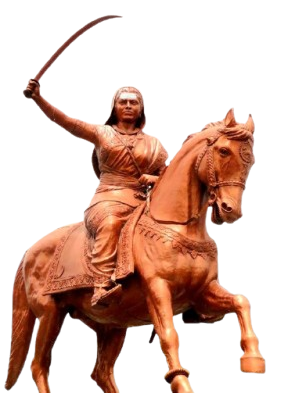
  • 200 Years of Kittur Rani Chennamma’s Victory

    Why in the News?

    The Ministry of Culture is commemorating 200 years of Rani Chennamma’s victory over the British, marking her as a pioneering figure in India’s early anti-colonial resistance.

    200 Years of Kittur Rani Chennamma's Victory

    Who was Rani Chennamma?

    • Birth and Early Life: Born on 23 October 1778 in Kakati village, Belagavi district, Karnataka, to a Lingayat family known for valour and self-reliance.
    • Marriage: Married at the age of 15 to Raja Mallasarja Desai, ruler of Kittur, a small princely state in present-day Karnataka.
    • Ascension to Power: After her husband’s death in 1816, and the death of her only son, she adopted Shivalingappa as her heir to secure the throne.
    • Conflict with the British: The British East India Company rejected the adoption under the Doctrine of Lapse, declaring Kittur annexed to British India.
    • Battle of Kittur (1824): When John Thackery, the British political agent at Dharwad, attacked Kittur with 20,000 troops, she led her army personally and killed Thackery in battle.
    • Resistance and Leadership: Trained in horse-riding, swordsmanship, and military strategy, she employed guerrilla tactics and rallied local soldiers and peasants against British forces.
    • Defeat and Imprisonment: After initial victory, the British reinforced their attack, captured Kittur Fort, and imprisoned her at Bailhongal Fort, where she died in 1829.
    • Historical Position: Recognised as India’s first female freedom fighter, her uprising predates the Revolt of 1857 and symbolizes early defiance against colonial annexation.

    Back2Basics: Doctrine of Lapse

    • Origin: Introduced by Lord Dalhousie, Governor-General of India (1848–1856), as a tool of colonial expansion under British East India Company rule.
    • Core Principle: Stated that any princely state without a natural male heir would be annexed by the British; adopted heirs were not recognised.
    • Purpose: Justified British annexations under the pretext of maintaining “good governance” and administrative efficiency.
    • Annexed States: Applied to Satara (1848), Sambalpur (1849), Udaipur (1852), Jhansi (1853), and Nagpur (1854), among others.
    • Violation of Indian Customs: Contradicted the Indian tradition of adoption and hereditary succession, angering princely rulers across India.
    • Impact on Revolt of 1857: The doctrine became one of the major causes of resentment leading to the First War of Independence (1857).
    • Abolition: The policy was abandoned in 1859, after the end of Company rule and the assumption of power by the British Crown.


    [UPSC 2014] What was/were the object/objects of Queen Victoria’s Proclamation (1858)?
    1. To disclaim any intention to annex Indian States
    2. To place the Indian administration under the British Crown
    3. To regulate East India Company’s trade with India
    Select the correct answer using the code given below:
    (a) 1 and 2 only* (b) 2 only (c) 1 and 3 only (d) 1, 2 and 3


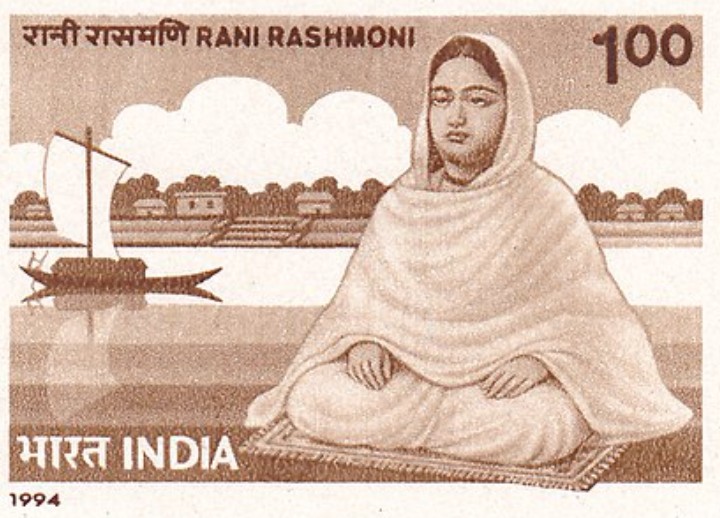
  • [pib] Who was Rani Rashmoni (1793-1861)?

    Why in the News?

    The Prime Minister has paid tribute to Rani Rashmoni on her birth anniversary on 28th September.

    Rani Rashmoni (1793-1861)

    Who was Rani Rashmoni (1793–1861)?

    • Overview: A prominent zamindar, businesswoman, philanthropist, and social reformer from 19th-century Bengal.
    • Birth: Born on 28 September 1793 in Halisahar, Bengal.
    • Marriage: Married at the age of 11 to Raja Raj Chandra Das, wealthy zamindar of Janbazar, Kolkata.
    • Leadership: Took charge of the estate and business after her husband’s death in 1836, unusual for women of her time.
    • Reputation: Revered as “Lokmata” (Mother of the People) for her courage, administration, and social commitment.

    Her Contributions:

    • Patronage: Built the Dakshineswar Kali Temple (1847–1855); appointed Sri Ramakrishna Paramahamsa as chief priest despite caste opposition.
    • Social Reforms: Opposed polygamy and child marriage; supported widow remarriage; submitted a draft bill against polygamy to the British.
    • Public Welfare & Infrastructure: Constructed major ghats on the Ganga including Babughat, Ahiritola Ghat, Nimtala Ghat. Funded roads, reservoirs, and pilgrim facilities, such as the road from Subarnarekha River to Puri.
    • Resistance to British Rule: Fought against fishing taxes on Hooghly fishermen by blocking river traffic, compelling British to abolish the tax. Defied British restrictions on Durga Puja processions, preserving traditions.
    • Support for Education & Culture: Donated to the Imperial Library (now National Library of India) and Hindu College (now Presidency University). Established schools for women and marginalized groups.
    [UPSC 2024] Consider the following statements about Raja Ram Mohan Roy:

    I. He possessed great love and respect for the traditional philosophical systems of the East.

    II. He desired his countrymen to accept the rational and scientific approach and the principle of human dignity and social equality of all men and women.

    Which of the statements given above is/are correct?

    (a) I only (b) II only (c) Both I and II* (d) Neither I nor II


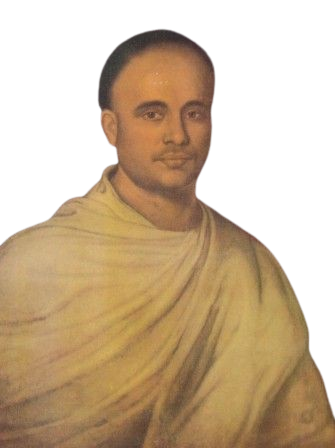
  • Who was Ishwar Chandra Vidyasagar (1820–1891)?

    Why in the News?

    On his birth anniversary (26 September), the Union Home Minister paid tribute to the Bengali social reformer, Ishwar Chandra Vidyasagar.

    Ishwar Chandra Vidyasagar

    About Ishwar Chandra Vidyasagar:

    • Birth & Death: Born on 26 September 1820 in Birsingha, Paschim Medinipur, West Bengal; died on 29 July 1891 in Kolkata.
    • Early Life: Born into a poor priest family to Thakurdas Bandyopadhyay and Bhagavati Devi.
    • Title “Vidyasagar”: Meaning “Ocean of Knowledge,” conferred by Sanskrit College for his mastery of Sanskrit and philosophy.
    • Education: Excelled in Sanskrit grammar, Vedanta, literature, astronomy, logic; graduated with honours in 1841 from Sanskrit College, Calcutta.
    • Career: Served as Head Pandit at Fort William College, later Principal of Sanskrit College, Kolkata, and also Inspector of Schools.

    His Contributions:

    • Educational Reforms:

      • Simplified and modernised the Bengali alphabet and prose.
      • Authored “Borno Porichoy”, a primer still used to teach Bengali script.
      • Opened teacher training institutions and promoted non-Brahmin access to Sanskrit College.
      • Advocated blending traditional Indian learning with Western education.
    • Women’s Rights and Social Reform:

      • Leading advocate of Hindu widow remarriage; efforts led to the Hindu Widows’ Remarriage Act, 1856.
      • Strongly opposed child marriage and polygamy.
      • Championed raising the age of consent, influencing the Age of Consent Act, 1891.
      • Promoted women’s education, serving as secretary of the Hindu Female School (later Bethune School).
    • Philanthropy and Grassroots Work:

      • Founded schools for girls and adults in Santhal Parganas (Jharkhand).
      • Set up a free homeopathy clinic for tribals and the poor.
    • Language and Literature:

      • Regarded as the Father of Modern Bengali Prose.
      • Made Bengali prose clear, concise, and accessible to common people.
    [UPSC 2021] Who among the following was associated as Secretary with Hindu Female School which later came to be known as Bethune Female School?

    Options: (a) Annie Besant (b) Debendranath Tagore  (c) Ishwar Chandra Vidyasagar* (d) Sarojini Naidu


  • In news: Malabar Revolt (1921)

    Why in the News?

    This newscard is an excerpt from the original articles published in The Hindu.

    About the Malabar Revolt:

    • Nature: Also known as the Moplah or Mappila Rebellion, it was a major uprising in the Malabar region of Kerala.
    • Causes:
      • Exploitative land tenure policies and high rents on tenant farmers.
      • Lack of tenure security and arbitrary evictions by Hindu Jenmi landlords.
      • A tradition of smaller Moplah uprisings since the 19th century.
    • Immediate trigger: British attempts to arrest Khilafat leaders in Eranad and Valluvanad during the Khilafat and Non-Cooperation Movements.
    • Character: Combined anti-colonial resistance, agrarian unrest, and communal violence, making it one of the most complex uprisings of the freedom struggle.
    • Beginning: Revolt broke out on 20 August 1921, with attacks on police stations, British offices, and landlord property.
    • British Response: Martial law, mass troop deployment, brutal suppression by early 1922.
    • Leaders:
      • Variyamkunnath Kunjahammed Haji: Set up a parallel Khilafat government in Nilambur.
      • Ali Musaliar: Spiritual guide, revered locally, executed by British.
      • Sayyid Alavi Tangal: religious inspiration for resistance.

    Consequences and Atrocities:

    • Parallel Government: Rebels briefly established parallel administration in parts of Malabar.
    • Casualties: 2,337 rebels killed, over 45,000 imprisoned, nearly 10,000 missing.
    • Violence: Widespread communal killings, forced conversions, destruction of temples and homes.
    • Wagon Tragedy (Nov 1921): 67 Moplah prisoners suffocated to death in a railway wagon.
    • Impact: Large-scale displacement, ruined villages, families uprooted.
    • Political Shift: Indian National Congress initially supported the anti-British nature, but withdrew after communal excesses.

    Historical Assessment:

    • Bipan Chandra: Saw it primarily as a peasant/agrarian revolt.
    • Sumit Sarkar: Interpreted it as an anti-landlord revolt.
    • Colonial View: Framed as a communal rebellion to weaken anti-British legitimacy.
    • Recent Scholarship: Abbas Panakkal highlights it as part of Khilafat and Non-Cooperation, initially uniting Hindus and Muslims.
    • E.M.S. Namboodiripad, Saumyendranath Tagore: Called it a spontaneous peasant uprising against colonial oppression.
    • Recognition: Many rebels are honoured as freedom fighters by Kerala government, though debates continue whether to classify it as anti-colonial, agrarian, or communal.
    [UPSC 2020] With reference to the history of India, “Ulgulan” or the Great Tumult is the description of which of the following events?

    Options:

    (a) The Revolt of 1857 (b) The Mappila Rebellion of 1921 (c) The Indigo Revolt of 1859 – 60 (d) Birsa Munda’s Revolt of 1899-1900*


  • 100 years of the Self-Respect Movement in Tamil Nadu

    Why in the News?

    This year marks the centenary of the Self-Respect Movement in Tamil Nadu, a transformative socio-political reform movement.

    About Self-Respect Movement:

    • Overview: Started in 1925 by E.V. Ramasamy Periyar in Tamil Nadu after his exit from the Indian National Congress.
    • Aim: To challenge Brahminical dominance, caste hierarchy, patriarchy, and blind religious practices; to create a rational, egalitarian society.
    • Methods:
      • Promotion of Self-Respect Marriages (without priests or caste rituals).
      • Advocacy of women’s rights – widow remarriage, divorce, property rights, inter-caste marriage.
      • Use of Kudi Arasu journal for spreading radical ideas and reform propaganda.
    • Significance:
      • Laid the foundation of the Dravidian movement in Tamil Nadu.
      • Prioritized social reform over political independence.
      • Gave marginalized communities and women a platform for dignity and equality.

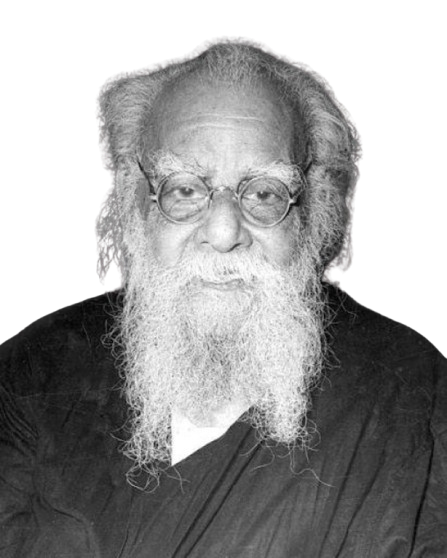
    100 years of the Self-Respect Movement in Tamil Nadu

    Who was E.V. Ramasamy Periyar?

    • Overview: Erode Venkatappa Ramasamy (1879–1973), popularly known as Periyar or Thanthai Periyar (“Father Periyar”).
    • Identity: Social reformer, rationalist, and political thinker; called the “Father of the Dravidian Movement.”
    • Key Roles:
      • Led the Vaikom Satyagraha (1924-25) in Kerala against caste restrictions in temples, earning the title “Vaikom Hero.”
      • Founded the Self-Respect Movement (1925) and later Dravidar Kazhagam.
    • Ideology:
      • Advocated rationalism, atheism, equality, and eradication of caste.
      • Strongly opposed gender inequality and social exploitation.
    • Legacy: Inspired later Dravidian parties (DMK, AIADMK) and influenced Tamil Nadu’s policies on social justice, women’s rights, and education.
    [UPSC 2025] Who among the following was the founder of the ‘Self-Respect Movement’?

    Options:

    (a) ‘Periyar’ E. V. Ramaswamy Naicker* (b) Dr. B. R. Ambedkar (c) Bhaskarrao Jadhav (d) Dinkarrao Javalkar


  • [pib] Mahatma Ayyankali (1863–1941)

    Why in the News?

    On his Jayanti (August 28), PM paid tribute to Mahatma Ayyankali.

    About Mahatma Ayyankali:

    • Birth: August 28, 1863, in Venganoor, Travancore (present-day Thiruvananthapuram, Kerala).
    • Community: Belonged to the Pulayar caste, among the most oppressed and excluded groups.
    • Background: Faced severe caste discrimination despite family owning land; denied access to temples, schools, roads, and public spaces.
    • Legacy: Remembered as a Dalit leader of modern Kerala and a pioneer of social justice, education, and labour rights.

    Key Reforms and Contributions:

    • Caste Defiance: Famous Villuvandi Yatra (1893) – ox-cart ride on caste-restricted roads, triggering riots but also mass mobilization for Dalit rights.
    • Education Movement: Demanded access for Dalit children to public schools; Travancore government issued 1907 order allowing entry, implemented by 1910.
    • Sadhu Jana Paripalana Sangham (SJPS): Founded in 1907 to promote Dalit education, legal aid, and social upliftment; expanded into hundreds of branches.
    • Legislative Role: In 1910, became the first Dalit member of the Sree Moolam Popular Assembly (Travancore Legislative Council).
    • Labour Reforms: Fought for higher wages and dignity for agricultural labourers.
    • Social Reforms: Campaigned for Dalit women’s right to cover their upper bodies in public, a practice denied earlier.
    • Temple Entry Movement: Early campaigns from 1895 onwards contributed to the 1936 Temple Entry Proclamation, ending exclusion of Dalits from temples in Travancore.
    • Recognition: Admired by Mahatma Gandhi, who called him the “Pulaya King”. Indira Gandhi later hailed him as “India’s greatest son”.
    [UPSC 2025] Who among the following was the founder of the ‘Self-Respect Movement’?

    Options: (a) ‘Periyar’ E. V. Ramaswamy Naicker * (b) Dr. B. R. Ambedkar (c) Bhaskarrao Jadhav (d) Dinkarrao Javalkar


  • Origins of the modern Ganesh Chaturthi Festival 

    Why in the News?

    This newscard is an excerpt from the original article published in the Indian Express.

    How did the Public Ganesh Chaturthi Festival Start?

    • May 1894: Governor George Robert Canning Harris issued a circular regulating music in religious processions in Poona with a communal bias.
    • July 1894: During the palkhi procession of saints Dnyanoba & Tukaram, disturbances occurred near a dargah in Poona.
    • Newspapers (Kalpataru, Mumbai Vaibhav, Indu Prakash, Deenbandhu, Subodh Patrika) urged people to reduce participation in Moharram that year.
    • July 22, 1894: Reports indicated preparations for Ganesh Chaturthi on a larger public scale in Poona.
    • September 13, 1894: For the first time, large Ganesh idols were taken out in public processions with immersion ceremonies, modeled on the style of tabut processions.
    • Press Accounts: The Times of India and The Mahratta noted the transformation of Ganpati celebrations from private household worship to community-wide public processions.

    Role of Lokmanya Tilak:

    • Newspapers:
      • Through Kesari (Marathi) and The Mahratta (English), Lokmanya Tilak promoted Ganpati as a social and cultural festival.
    • 1894–95: Advocated that the festival be used to foster unity and collective identity.
    • September 1895 (Kesari editorial): Stated that a nation requires common laws, a common language, and a shared cultural identity.
    • Contribution:
      • Popularised Ganesh Chaturthi as a community celebration, open to all sections of society.
      • Created a platform for mass participation, bridging the gap between political movements (Congress) and ordinary people.
    • Impact: Helped transform Ganesh Chaturthi into an instrument of socio-political mobilisation, while retaining its religious character.
    [UPSC 2016] What was the main reason for the split in the Indian National Congress at Surat in 1907?

    Options: (a) Introduction of communalism into Indian politics b Lord Minto

    (b) Extremists’ lack of faith in the capacity of the moderates to negotiate with the British Government*

    (c) Foundation of Muslim League

    (d) Aurobindo Ghosh’s inability to the elected as the President of the Indian National Congress


  • Vithalbhai Patel and the Legacy of India’s Legislative Traditions

    Why in the News?

    The Delhi Assembly has hosted a two-day All India Speakers’ Conference to mark 100 years since Vithalbhai Patel became the first Indian President of the Central Legislative Assembly, the precursor to today’s Parliament.

    Vithalbhai Patel and the Legacy of India’s Legislative Traditions

    Who was Vithalbhai Patel?

    • Early Life: Vithalbhai Jhaverbhai Patel (1873–1933), Elder brother of Sardar Vallabhbhai Patel; trained lawyer (studied law in England, practiced in Bombay).
    • Political career:
      • Member, Bombay Legislative Council (1912).
      • Member, Imperial Legislative Council (1918).
      • Elected to Central Legislative Assembly in 1924 from Bombay city.
    • First Indian President of the Central Legislative Assembly (1925), equivalent to today’s Lok Sabha Speaker under British rule.

    His Political Legacy:

    • Associated with Swaraj Party (1923): Co-founded by him, Motilal Nehru, Chittaranjan Das, Subhas Chandra Bose, opposing Gandhi’s suspension of Non-Cooperation Movement.
    • Strengthening Speaker’s Authority: Asserted that the Assembly President (Speaker) was paramount, even over the Viceroy inside the House.
    • Parliamentary Security: Insisted on keeping Assembly security under Speaker’s control, even after Bhagat Singh’s 1929 bomb incident. This autonomy lasted until 2024 when CISF took over.
    • Independent Parliament Secretariat: Established a staff system reporting only to the Speaker, ensuring independence from executive interference.
    • Institution Builder: Motilal Nehru and Lala Lajpat Rai supported his push, leading to creation of a separate Legislative Assembly Department in 1929.
    • Freedom Struggle Role: Critic of Gandhian withdrawal strategy; collaborated with Netaji Subhas Chandra Bose abroad to internationalize India’s cause.
    • Controversial Will: Left part of his wealth to support Bose’s political work, later overturned in court after family challenge.
    [UPSC 2016] For the Karachi session of Indian National Congress in 1931 presided over by Sardar Patel. Who drafted the Resolution Fundamental Rights and Economic Programme?

    Options: (a) Mahatma Gandhi (b) Pt Jawaharlal Nehru* (c) Dr. Rajendra Prasad (d) Dr. BR Ambedkar


  • In news: Women Revolutionaries of Bengal 

    Why in the News?

    This newscard is an excerpt from the original article published in the Indian Express.

    Women in Revolutionary Movements:

    Pritilata Waddedar:

    • Early Life: Born on 5 May 1911 in Chittagong. One of the first Bengali women to lead an armed revolutionary group.
    • Education: Graduated in philosophy from Bethune College, Kolkata; became a school teacher.
    • Inspiration: Influenced by revolutionary literature and women’s activism; joined Deepali Sangha.
    • Role: Collected bomb cases, distributed pamphlets, gathered jail intelligence by posing as relatives.
    • Legacy: Left a suicide note explaining her cause; remembered as a fearless martyr.

    Kalpana Datta:

    • Early Life: Born in 1913 in Sripur, Chittagong; studied at Bethune College, joined Chhatri Sangha.
    • Activities: Conducted reconnaissance before the European Club attack; arrested a week earlier.
    • Later Role: Joined bombing attempt to free Surya Sen; sentenced to life, released in 1939.
    • Post-freedom: Became a Communist Party leader, focused on social activism.

    Bina Das:

    • Early Life: At 21, attempted assassination of Governor Stanley Jackson (1932) with a revolver supplied by Kamala Das Gupta.
    • Networks: Part of secret revolutionary student circles.
    • Court Statement: Famous for her passionate resistance plea before Calcutta High Court.

    Begum Rokeya Sakhawat Hossain:

    • Early Life: Born on 9 December 1880; pioneer of women’s rights and education.
    • Writings: Authored “Sultana’s Dream” (1908), envisioning a feminist utopia.
    • Institutions: Founded the first school for Muslim girls in Kolkata; formed Muslim Women’s Association (1916).
    • Activism: Led women’s conferences, challenged purdah, advocated education.

    Kamala Das Gupta:

    • Early Life: Born in Dhaka; completed MA in history at Kolkata. Initially Gandhian, later joined Jugantar.
    • Role: Provided shelter, weapons, and materials; arrested multiple times.
    • Connection: Supplied Bina Das with revolver for her assassination attempt.
    • Legacy: Wrote “Rakter Akshare” and “Swadhinata Sangrame Nari”; led refugee relief and vocational training.

    Nanibala Devi:

    • Early Life: Disguised as a revolutionary’s wife; spied in prisons for intelligence.
    • Sacrifice: Endured brutal police torture (including red chili powder) without revealing secrets.
    • End: Died in poverty but symbolised courage and resilience.

    Labanya Prabha Ghosh:

    • Early Life: Born on 14 August 1897, Purulia.
    • Contribution: Helped establish Shilpashram, hub of revolutionaries like Subhas Bose, C.R. Das.
    • Political Role: First woman MLA from Purulia; wrote and edited nationalist journals.
    • Later Activism: Led movements for land rights, justice for the poor.

    Matangini Hazra (“Gandhi Buri”):

    • Early Life: Born in 1870, Hogla village, Midnapore; widowed young, lived in poverty.
    • Freedom Struggle: Joined Salt Satyagraha, arrested for making salt; resisted chowkidari tax.
    • Repression: Imprisoned and beaten; served the sick during epidemics.
    • Martyrdom: Killed by police firing while leading Quit India procession (1942), holding the tricolour until death.
    [UPSC 2009] During the freedom struggle, Aruna Asaf Ali was a major woman organizer of underground activity in

    Options:

    (a) Civil Disobedience Movement

    (b) Non-Cooperation Movement

    (c) Quit India Movement*

    (d) Swadeshi Movement


  • Gopal Patha and Direct Action Day

    Why in the News?

    A recent movie depicted the 1946 “Great Calcutta Killing” — four days of communal riots on Direct Action Day (August 16, 1946), spotlighting Gopal Patha’s role in mobilising Hindu youth.

    About Direct Action Day:

    • Declaration: Called by the All-India Muslim League to press for Partition and creation of Pakistan.
    • Bengal Role: Muslim League’s H. S. Suhrawardy (then Bengal Premier) declared 16 August a public holiday.
    • Mass Rally: Nearly 1,00,000 gathered at the Maidan, Calcutta; addressed by Suhrawardy and Khwaja Nazimuddin.
    • Violence: Immediate communal clashes broke out, remembered as the Great Calcutta Killing.
    • Casualties: 5,000–10,000 killed; ~15,000 injured.
    • Spread: Violence lasted four days (16–19 August), army intervention required; later spread to Bombay, Noakhali, Bihar, Punjab.

    Who was Gopal Patha (Gopal Mukherjee)?

    • Background: Born 1916 in Bowbazar, Calcutta; nicknamed Patha (goat) since family ran a College Street mutton shop.
    • Gang Leader: Headed a street group of ~800 men; mobilized masses for defense during riots.
    • Approach: Declared aim was to retaliate against rioters but forbade harm to women, children, or ordinary people.
    • Links: Associated with revolutionary groups like Atma Unnati Samiti; influenced by Subhas Chandra Bose.
    [UPSC 2002] The last opportunity to avoid the partition of India was lost with the rejection of:

    Options: (a) Cripps Mission (b) Rajagopalachari Formula (c) Cabinet Mission* (d) Wavell Plan