💥Join UPSC 2027,2028 Mentorship (July Batch) + XFactor Notes & Microthemes PDF

GS Paper: GS1-10.Social empowerment, communalism, regionalism & secularism.

  • What are the challenges to our cultural practices in the name of secularism. (10m,150 words)

    Secularism in the Indian context implies a “principled distance”, ensuring freedom of conscience while upholding constitutional morality, equality, and public order.

    Challenges to cultural practices in the name of secularism

    State intervention in religious institutions dilutes traditional autonomy. Eg- Government management of Hindu temples

    Courts determining “essential practices” (Shirur Math case) oversimplify lived culture.

    Sabrimala temple verdict

    Triple talaq ban

    Uniformity over diversity – Secular frameworks ignore internal plurality within religions.

    Marginalization of indigenous and folk traditions – Eg- ban on Jallikattu or kambala

    UCC can lead to erosion of distinct cultural identity of tribals and the “Legal Pluralism” guaranteed under Article 25.

    Environmental Regulations on Festivals restrict cultural expressions.

    Supreme Court’s ban on firecrackers during Diwali,

    Restrictions on loudspeakers for Azaan/Bhajans

    Height limits for Dahi Handi pyramids.

    Politicization of secularism for vote bank politics. Eg- controversy over Hijab ban in schools in Karnataka

    Intervention in Food Culture- Eg- meat-sale bans during religious festivals like Paryushan

    Right to profess and propagate religion is misused for forced conversions especially of tribals

    Way Forward

    Substantive secularism – Balance cultural freedom with equality, dignity, and justice.
    Judicial restraint – Limit theological interpretation to constitutional necessity.

    Protection of pluralism – Safeguard folk, tribal, and minority cultural practices.

    Adopting Multicultural Secularism – active accommodation of religious symbols

    Promoting Inter-Faith & Intra-Faith Dialogue for “reforms from within” (T.N. Madan)

    When practiced as principled neutrality with respect for pluralism, secularism protects both cultural practices and constitutional values.

  • Customs and traditions suppress reason leading to obscurantism. Do you agree?

    Customs represent the “inherited wisdom” of a society, providing a sense of identity and continuity. However, when they become rigid and immune to questioning, they can lead to obscurantism i.e. deliberate suppression of facts, logic, and scientific inquiry.

    Customs and traditions suppressing reason and leading to obscurantism

    Blind Ritualism – Mechanical adherence discourages questioning and rational inquiry. Eg- Astrology determining marriage, education, and career decisions.

    Moral Absolutism – Customs treated as eternal truths beyond questioning. Eg- practice of Nikah Halala or rigid Purdah systems

    Superstitions – Fear-based practices override scientific thinking. Eg- Witch-hunting in some tribal belts.

    Caste-Based Discrimination – Tradition legitimises hierarchy and inequality. Eg- Persistence of untouchability practices.

    Patriarchal Customs restrict autonomy and rational reform. Eg- Child marriage and son meta preference.

    Religious Orthodoxy – Dogmatic interpretations suppress dissent. Eg- honor killings.

    Resistance to Social Reform – Tradition used to justify the status quo. Eg- Opposition sabrimala temple entry for women.

    Fear of social boycott silences rational voices. Eg- Khap panchayat diktats.

    Obstruction to Scientific Temper – Eg- Faith healing replacing medical treatment or vaccine hesitancy among tribals

    Educational Constraints – Eg- Restrictions on girls’ education in conservative communities.

    Legal Stagnation – Laws based on “customary practice” often protect outdated behaviors that modern reason would deem criminal. Eg- legal immunity for Marital Rape

    Counter-Argument- The Rationality of Tradition

    Cultural Identity and Stability – Traditions ensure social cohesion. Eg- Family and kinship systems.

    Scientific nature of traditions and customs. Eg- use of Turmeric (Haldi) for its antiseptic properties

    Traditions act as ethical frameworks and provide moral guidance. Eg- Values of ahimsa, dharma, tolerance.

    Reform from Within Tradition – Many reform movements emerged internally. Eg- Buddhism, Bhakti movement.

    Adaptive Nature of Traditions – Customs evolve with social change. Eg- greater acceptance of widow remarriage

    Ecological Conservation – customs establish a symbiotic relationship with nature. Eg- Sacred Groves (Devrai)

    Social Safety Nets – Traditions of collectivism provide psychological and material support. Eg- Langar tradition in Sikhism

    The need of the hour is to harmonise tradition with reason, scientific temper, and constitutional morality, ensuring cultural continuity without compromising rational progress.

  • Do you agree that regionalism in India appears to be a consequence of rising cultural assertiveness? Argue.

    Regionalism is political, social, or cultural mobilization around a specific region, rooted in language, culture, history, economy, or perceived neglect, seeking greater autonomy, recognition, or resources.

    Regionalism as a Consequence of Rising Cultural Assertiveness

    Linguistic assertiveness against cultural centralization Eg- Anti-Hindi agitations in Tamil Nadu or the recent Kannada-first signage mandates in Karnataka.

    Ethno-cultural nationalism – Region imagined as a cultural nation.

    Tamil cultural nationalism emphasizing classical language and Dravidian heritage.

    Demand for Greater Nagalim rooted in the assertion of a unique Naga identity.

    Religious identity also acts as a base for regional assertiveness. Eg- demand for Khalistan

    Preservation of Folk Traditions- Eg- protests against Jallikattu Ban (2017) were framed as an assertion of Tamil “Veeru” (bravery) against “outsider” legal impositions.

    Cultural symbolism is used for political mobilization. Eg- renaming Bombay to Mumbai and Calcutta to Kolkata.

    Sons of the Soil Doctrine- Movements like the Shiv Sena’s initial “Marathi Manoos” campaign assert that locals must have the first right over the state’s resources.

    Sub-Regional Assertion- Eg- demand for Tulu Nadu based on the distinct Tulu language and culture.

    Resistance to “Mainstreaming”- Tribal regionalism in Jharkhand and Chhattisgarh began as an assertion of Adivasi culture against the “Diku” (outsiders).

    Other Factors Driving Regionalism in India

    Inter-State Disparities- widening economic gap between the prosperous South/West and the lagging East/North creates friction. Eg- violence against Bihari migrants in Gujarat

    Relative Deprivation

    Vidarbha in Maharashtra.

    Demand for Telangana before 2014

    Paul Brass argues that regionalism is politically constructed, where cultural markers are activated by elites for political benefits. Eg- invoking “bengal pride” by TMC

    Inter-state disputes over resources fuels regionalism. Eg- Krishna-Godavari water disputes between Telangana and Andhra Pradesh.

    Administrative Neglect- Large states become too big to govern, leading to the demand for smaller states. Eg- demand for the division of UP into Harit Pradesh, Purvanchal, Bundelkhand, and Awadh Pradesh

    Way Forward

    Cooperative Federalism- Strengthening the Inter-State Council (Article 263)

    Balanced Regional Development- Eg- aspirational district program

    Scaling the “Ek Bharat Shreshtha Bharat” program for promoting fraternity

    Administrative Decentralization- empowering Local Bodies

    A mature Indian federalism must promote inclusive development, autonomy with unity, and diversity with constitutional fraternity.

  • Has caste lost its relevance in understanding the multi-cultural Indian Society? Elaborate your answer with illustrations.

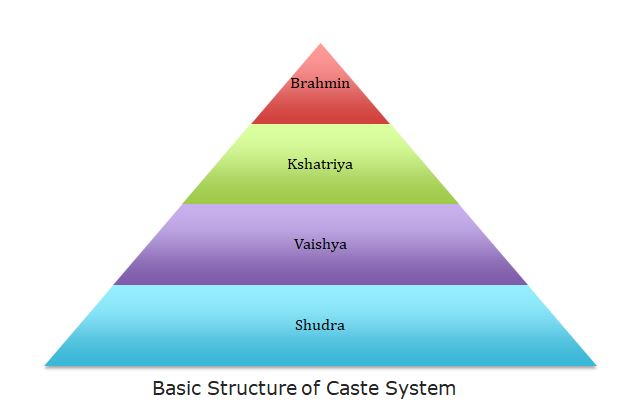
    Caste can be defined as a localized, hereditary, and endogamous group characterized by a fixed rank in a ritual hierarchy (Varna).

    Caste losing relevance

    Decline of Ritual Hierarchy – Notions of purity and pollution have weakened. Eg- Inter-caste dining in urban areas is common

    Occupational Mobility – Caste-occupation linkage has diluted. Eg- Dalits and OBCs in IT, civil services, academia.

    Urbanisation and Migration promote anonymity and mixed social spaces. Eg- Cosmopolitan life in metros like Mumbai and Bengaluru.

    Legal and Constitutional Framework has established equality before law irrespective of caste hierarchy. Eg- Article 14 and Article 17.

    Rise of Individualism – Personal choice gaining prominence over ascriptive identity. Eg- Love marriages, nuclear families.

    Growth of Class-Based Stratification in urban settings. Eg- rise of dalit and OBC Middle Class

    Relevance of caste

    Enduring EndogamyNFHS-5 (2023-24) data confirms that over 90% of marriages remain intra-caste

    Political MobilisationCaste act as a “Political Vote Bank.” Eg- 2024-25 Bihar Caste Survey and announcement of “Caste Census”

    Caste remains a basis for welfare and representation. Eg- Reservations for SCs, STs, and OBCs.

    Economic inequalities along caste lines. Eg- 96% manual scavengers are Dalits

    Social Discrimination along caste lines persists. Eg- Hatras rape case or Rohith Vemula death.

    Intersectionality – Caste intersects with gender, religion, and region. Eg- Dalit women facing multiple marginalities.

    New associational forms. Eg- Maratha Kranti Morcha, Patidar Anamat Andolan.

    Caste based economic groups. Eg- Dalit Indian Chamber of Commerce and Industry (DICCI) promoting “Dalit Capitalism”

    Caste-Based Spatial Segregation (Ghettoization) in modern cities

    Inter-generational Wealth Gap – The Oxfam Inequality Report (2024) highlights that the average wealth of a General Category family is nearly triple that of a Dalit family.

    Understanding contemporary India therefore requires recognising caste not as a static relic, but as a dynamic and evolving social reality operating alongside class, gender, religion, and region.

  • Are tolerance, assimilation and pluralism the key elements in the making of an Indian form of secularism? Justify your answer.

    Secularism in the Indian context implies a “principled distance”, ensuring freedom of conscience while upholding constitutional morality, equality, and public order.

    Key Elements of Indian Secularism

    Tolerance

    Historical coexistence of faiths – Eg- Coexistence of Hinduism, Buddhism, Jainism, Islam, Christianity, Sikhism over centuries.

    Constitutional protection – Freedom to profess, practice, and propagate religion under Articles 25 reflects tolerance towards different religious practices

    Sarva Dharma Sambhava remains the philosophical bedrock of Indian secularism, ensuring no single religion is prioritized.

    Article 51A (f)- Mandates a Fundamental Duty to “value and preserve the rich heritage of our composite culture.”

    India’s history of sheltering persecuted communities (Parsis, Jews, Tibetans) highlights civilizational tolerance.

    Assimilation

    Cultural assimilation through syncretism – Eg- Bhakti-Sufi traditions blending devotional practices.

    Rejection of forced assimilation – Eg- protection to cultural practices of tribals under 6th schedule

    Linguistic Assimilation- Eighth Schedule reflects an assimilation of Sanskrit, and regional dialects.

    Architecture and Art- The Indo-Islamic style (Taj Mahal, Red Fort) is a physical manifestation of the assimilation of two distinct cultural worlds.

    Only practices violating equality and dignity are reformed. Eg- Abolition of untouchability under Article 17.

    Pluralism as the core principle

    Recognition of diversity as intrinsic – Eg- Legal recognition of multiple personal laws.

    Indian secularism emphasizes principled distance (Rajeev Bhargava) rather than equidistance. Eg- State support for pilgrimages.

    Article 29 & 30- Provides the “Right of Minorities” to establish and administer educational institutions, protecting their distinct language, script, or culture.

    Religious Denominations (Article 26)- Grants every religious group the right to manage their own affairs in matters of religion.

    National holidays on festivals of all religions. Eg- diwali, eid etc

    Other Aspects of Indian Secularism

    Reformatory Justice- state can intervene in religion to ban harmful practices like Sati, or Triple Talaq.

    State Funding to religious schools as long as they meet secular educational standards.

    Substantive Equality- It focuses on equality between religious groups as much as equality within them.

    Practiced as principled neutrality with respect for pluralism, Indian secularism protects both cultural practices and constitutional values.

  • Discuss the impact of post-liberal economy on ethnic identity and communalism.

    The phase after 1991 economic reforms was marked by market liberalization, privatization, globalization, and reduced state control. It also reshaped social relations.

    Impact on Ethnic Identity

    Positive Impacts

    New states were created to give ethnic blocks control over resources. Eg- formation of Jharkhand for tribal resource autonomy.

    Better infrastructure and connectivity mainstreaming neglected ethics groups. Eg- tribes from North-East migrating to Delhi for education and employment

    Global Market for Ethnic Goods

    Global demand for Pashmina shawls from Kashmir.

    Revival of the Kanchipuram silk weaving industry.

    Intellectual Property Protection- Eg- GI status Channapatna Toys

    Rise of Cultural Tourism- Eg- Hornbill Festival in Nagaland

    Digital Ethnic Revivals- Eg- use of YouTube by Tulu speakers to promote their language.

    Negative Impacts

    Uneven growth – Disparities sharpen identity consciousness.

    Cultural Homogenization- “MacDonaldization” has replaced ethnic diets and dress with global standards. Eg- decline of millet-based diets.

    Development-Induced Displacement- Eg- Tribal displacement in the Hasdeo forests due to mining.

    Linguistic Dominance- economic necessity of English and Hindi marginalizes local ethnic dialects.

    Resource Exploitation- Eg- desecration of sacred groves and ethnic lands.

    Impact on Communalism

    Positive Impacts

    Economic interdependence – Market ties reduce incentives for conflict. Eg- Inter-community business partnerships in urban clusters.

    Professionalism over Parochialism- Corporate cultures prioritize merit and profit over religious identity.

    Urban plural living – Mixed neighbourhoods foster everyday coexistence. Eg- Apartment cultures in metros.

    Secularization of Public Spaces- Malls, airports, and IT parks act as “identity-neutral” zones.

    Growth of the Rational Middle Class that prioritizes stability and development over conflict.

    Information Transparency- digital age allows for the rapid debunking of communal “rumors” by civil society. Eg- ALT news

    Negative Impacts

    Relative Deprivation-

    Sachar Committee Report (2006) highlighted the lack of Muslims in government jobs, fueling a sense of systemic deprivation.

    Ghettoization and poverty in cities foster “us vs. them” mentalities.

    Digital Polarization- Social media algorithms create communal “echo chambers” and facilitate hate speech leading to riots. Eg- Delhi Riots

    Withdrawal of the State- As the state withdrew from welfare, communal organizations filled the gap, increasing group loyalty.

    Migration and fear of demographic change- Native populations feel deprived of jobs by “outsiders.” Eg- Communal tensions in Assam due to migration of Bangladeshi muslims

    Inclusive development policies and ethical political leadership are needed to ensure that power competition does not fracture social cohesion and deprivation does not become a communal grievance.
    Miscellaneous

  • Why is caste identity in India both fluid and static?

    Caste can be defined as a localized, hereditary, and endogamous group characterized by a fixed rank in a ritual hierarchy (Varna).

    Reasons behind fluidity of caste system

    Sanskritization Mobility Process: Lower castes alter domestic customs and dietary rituals to mimic higher castes for upward mobility.

    Decline of Ritual Hierarchy – Notions of purity and pollution have weakened. Eg- Inter-caste dining in urban areas is common

    Occupational Mobility – Caste-occupation linkage has diluted. Eg- Dalits and OBCs in IT, civil services, academia.

    Urbanisation and Migration promote anonymity and mixed social spaces. Eg- Cosmopolitan life in metros like Mumbai and Bengaluru.

    Legal and Constitutional Framework has established equality before law irrespective of caste hierarchy. Eg- Article 14 and Article 17.

    Rise of Individualism – Personal choice gaining prominence over ascriptive identity. Eg- Love marriages, nuclear families.

    Growth of Class-Based Stratification in urban settings. Eg- rise of dalit and OBC Middle Class

    Democratic Electoral Mobilization: Sub-castes merge into political interest blocks, completely altering traditional micro-level hierarchies. Eg: AJGAR alliance in northern India

    Reasons behind static nature of caste identity

    Caste remains a basis for welfare and representation. Eg- Reservations for SCs, STs, and OBCs.

    Occupational hierarchies along caste lines. Eg- 96% manual scavengers are Dalits

    Social Discrimination along caste lines persists. Eg- Hatras rape case or Rohith Vemula death.

    Intersectionality – Caste intersects with gender, religion, and region. Eg- Dalit women facing multiple marginalities.

    New associational forms. Eg- Maratha Kranti Morcha, Patidar Anamat Andolan.

    Caste based economic groups. Eg- Dalit Indian Chamber of Commerce and Industry (DICCI) promoting “Dalit Capitalism”

    Caste-Based Spatial Segregation (Ghettoization) in modern cities

    Inter-generational Wealth Gap – The Oxfam Inequality Report (2024) highlights that the average wealth of a General Category family is nearly triple that of a Dalit family.

    Understanding contemporary India therefore requires recognising caste not as a static relic, but as a dynamic and evolving social reality operating alongside class, gender, religion, and region.

    Population and Migration

  • Despite comprehensive policies for equity and social justice, underprivileged sections are not yet getting the full benefits of affirmative action envisaged by the Constitution. Comment.

    The Constitution envisages substantive equality to correct historical injustices faced by vulnerable groups. However, despite being the 4th largest economy, India’s ranking in HDI, 2025 was 130th out of 193 countries.

    Policies for equity and social justice

    Constitutional provisionsArticles 14, 15(4), 15(5), 16(4), 17, 46

    Reservations in education, public employment, and political representation

    Protective legislation – SC/ST (Prevention of Atrocities) Act

    Targeted welfare schemes

    Sarva Shiksha Abhiyan

    MGNREGA

    Ayushman Bharat

    PM-JANMAN (for PVTGs)

    SHRESHTA (high-quality residential education for SCs).

    Institutional mechanisms – National Commissions for SCs, STs, OBCs

    UGC Equity Regulations 2026, which mandate anti-discrimination cells in all universities.

    Reasons behind underprivileged sections not getting benefits of affirmative action

    Political factors

    Politicization of affirmative action policies hinders adaptability to changing needs. Eg- high income limit for creamy layer

    Proxy representation – Eg- Sarpanch Pati phenomenon in panchayats

    Short termism and political populism rather than focusing on “empowerment.” Eg- loan waivers, ladli behna etc reduce public investment in health, education etc

    Social factors

    Social Stratification- Caste-based discrimination prevents upward mobility for the marginalized. Eg- 96% manual scavengers are Dalits

    Population Pressure (1.35 billion) strains public infrastructure, housing, and the job market.

    Elite Capture within Beneficiary Groups – Eg- Advanced sections among SCs dominating reserved seats (“class within caste”)

    Regional disparity – Eg- BIMARU states lag behind southern states in human development indicators

    Low Social Capital and Networks – Lack of mentoring and peer support for marginalised students leading to social isolation. Eg- Rohith Vemula

    Glass ceiling effect for women – discrimination and low representation at higher positions

    Economic factors

    Shrinking Public Sector – Eg- Over 90% workforce outside formal government employment where reservation is absent

    Intergenerational Poverty limits health, education outcomes and employment productivity. Eg- stunting and wasting rates among ST children is ~10-15% higher than the national average.

    Economic Inequality – richest 1% control more than 40% of total wealth, while the bottom 50% own merely 3% (Oxfam Report)

    Administrative factors

    Leakages and corruption –

    Inclusion-exclusion errors in PDS (Shanta Kumar committee)

    Ghost beneficiaries in Ayushman Bharat identified by CAG

    Lack of last mile reach due to security issues like naxalism, insurgency etc.

    Poor Social Infrastructure

    Healthcare – low public spending (2.1% of GDP) and high out of pocket expenditure (40%)

    Education – low public investment (2.9% of GDP) lead to “quality crisis” and high dropout rates at secondary and higher levels

    Skill Gap – only about 51.25% of youth are employable.

    Way Forward

    Outcome-Oriented Design – Eg- Aspirational district program

    Better targeting

    Subcategorization within SCs (Davinder Singh case)

    Multi-dimensional Deprivation Index (MDI) for EWS and OBC categories

    Capability Approach- increase expenditure on Health (2.5% of GDP) and Education (6% of GDP)

    Women Empowerment by adopting best practices like Kerala’s Kudumbshree Model

    Focus on Gender-Caste Intersectionality to address the “double burden” of women from underprivileged sections.

    There is need for whole of government and life-cycle approach to realise the vision of Viksit Bharat@2047

  • ⁠The ethos of civil service in India stand for the combination of professionalism with nationalistic consciousness – Elucidate.

    The Indian civil service, rooted in the Weberian model of bureaucracy, has evolved to combine professional competence with a deep commitment to national development and constitutional values.

    Professionalism in Civil Service

    Merit-based recruitment through the Union Public Service Commission ensures competence and impartiality. Eg- Competitive examination system for IAS, IPS, IFS.

    Training institutions like Lal Bahadur Shastri National Academy of Administration (Mussoorie) instill administrative skills, ethics, and leadership. Eg- ‘Bharat Darshan’ exposure tours.

    Adherence to rules, procedures, and the principle of political neutrality.

    Expertise in policy formulation, implementation, and evaluation across diverse sectors.

    Commitment to Rule of Law – civil servants uphold constitutional provisions and legal frameworks.

    Nationalistic Consciousness

    The civil service was ‘Indianised’ after independence, transforming from a colonial instrument of control to a vehicle of national development. Eg- Sardar Vallabhbhai Patel’s vision of IAS as the ‘steel frame’ of India.

    District administration model – DMs serve as the face of governance in remotest areas, ensuring national integration.

    Role in nation-building – Eg- land reforms, Green Revolution, poverty alleviation, literacy missions, Aadhaar, Digital India.

    Crisis management during national emergencies – natural disasters, pandemics (COVID-19 management by district administration).

    Constitutional values of justice, liberty, equality, and fraternity guide civil service conduct. Eg- Upholding secularism and protecting minority rights.

    Commitment to social justice – implementation of reservation policies, tribal welfare, women’s empowerment schemes.

    Challenges

    Political interference and transfers undermine neutrality.

    Red tape and resistance to reform.

    Ethical dilemmas in balancing political directives with public interest.

    The Indian civil service, at its best, embodies what Jawaharlal Nehru envisioned: “a service that is devoted to the nation, that understands the problems of the country, and that has the courage and integrity to serve the people.”

  • Citizens, domicile, migrants: Why should we worry about Provincial Citizenship?

    Introduction

    Indian citizenship was envisioned as singular and uniform, rising above provincial or ethnic divides. Yet, as Ranjan’s recent research (2025) and Sarkar’s reflections suggest, the rise of provincial citizenship has complicated this narrative. Rooted in nativist politics and tied to emotional belonging to one’s State, this phenomenon is altering the politics of domicile, migration, and rights. While the COVID-19 migrant crisis exposed vulnerabilities of inter-state labour, subsequent domicile policies and debates around NRC, SIR, and regional protectionism have re-opened constitutional fault lines. The issue compels us to revisit constitutional provisions, historical warnings, and contemporary challenges to Indian federalism.

    Why in the News

    The discussion on provincial citizenship has gained traction because it reflects a sharp break from the constitutional promise of uniform Indian citizenship. Jharkhand’s domicile politics, post-2000, demonstrates how regional grievances can weaponize ‘sons of the soil’ sentiment. J&K’s domicile rules post-2019 abrogation illustrate how domicile is used as a tool of inclusion and protection. Assam’s migration-linked exclusions add another layer of contestation. For the first time, an “unofficial citizenship” has become powerful enough to rival the official national framework, forcing judicial interventions and challenging the foundational principle of equality under Article 16(2). This is no longer a marginal issue but a structural problem, shaping electoral politics and democratic legitimacy.

    What is meant by Provincial Citizenship?

    1. Concept: Rooted in nativist politics, it emphasizes belonging to a State rather than to India as a whole.
    2. Political use: Gains leverage in regional elections by mobilising ‘locals’ against ‘outsiders’.
    3. Entanglement: Blurs lines between spatial identity, freedom of movement, and constitutional citizenship.

    Issues with Provincial Citizenship

    1. Exclusion & Discrimination: Creates second-class citizens among internal migrants, violating the spirit of Articles 15, 16(2), 19.
    2. Fragmentation of National Unity: Undermines the principle of one nation, one citizenship, fostering parochialism and regionalism.
    3. Economic Inefficiency: Restricts labour mobility, hurting industries and services in cities dependent on migrant workers.
    4. Judicial Burden: Conflicts between migrants’ rights and domicile rules often end up in Supreme Court adjudication, showing gaps in political resolution.

    Benefits of Provincial Citizenship

    1. Local Identity & Belonging: Strengthens emotional connection of “sons of the soil” to their State.
    2. Protection of Vulnerable Groups: In J&K, domicile rules safeguarded historically excluded groups like Valmikis, Gorkhas, and West Pakistan refugees.
    3. Equitable Resource Allocation: Ensures locals are not overshadowed by migrants in jobs, education, and land rights.
    4. Democratic Mobilisation: Acts as a rallying point in regional politics, giving voice to sub-national concerns.

    How has Jharkhand become a case study?

    1. Statehood in 2000: Did not end sub-nationalist demands but transformed them into domicile-based politics.
    2. Domicile politics: Used to articulate majoritarian grievances against minority elites.
    3. Departure: Unlike Sixth Schedule areas, it encompassed the entire State, challenging federal norms and Article 16(2).

    What role does Jammu & Kashmir and Assam play?

    1. J&K (Post-2019): Domicile introduced to safeguard minorities like Valmikis, Gorkhas, West Pakistan refugees after abrogation of Article 370.
    2. Assam: NRC and SIR processes highlight anxieties around migration and exclusion.

    How does this challenge the idea of One Citizenship?

    1. Undermines Article 15, 16, 19: Domicile restrictions contradict equality and mobility rights.
    2. Supreme Court interventions: Conflicts between migrants and provincial citizenship often need judicial resolution.
    3. Multiple vocabularies: Terms like citizen-outsiders (Roy), differentiated citizenship (Jayal), paused citizens (Sharma), hyphenated nationality (Sarkar) capture fragmented realities.

    Is this a new phenomenon or an old concern?

    1. Historical context: Myron Weiner’s Sons of the Soil (1978) already flagged migration-linked conflicts.
    2. SRC Report 1955: Explicitly warned that domicile rules undermine the concept of common Indian citizenship.
    3. Newness: The idea has now moved from reports and theory to an active political reality.

    Way Forward

    1. Constitutional Balance: Uphold national citizenship guarantees while allowing limited affirmative safeguards for locals.
    2. Labour Protections: Create a national migrant workers framework to ensure portability of rights and benefits.
    3. Dialogue & Federal Coordination: Encourage Centre–State mechanisms to harmonise domicile policies with constitutional provisions.
    4. Judicial & Policy Oversight: Courts to curb excesses, and Parliament may revisit domicile laws as warned by the States Reorganisation Commission (1955).
    5. Promote Inclusion: Foster constitutional morality and fraternity so regional protections don’t become exclusionary.

    Conclusion

    The rise of provincial citizenship shows that the unity of Indian citizenship is being tested not by foreign threats but by internal contestations of belonging. Jharkhand’s domicile struggles, Assam’s NRC anxieties, and J&K’s experiments demonstrate that citizenship is increasingly layered, contested, and politicised. Unless reconciled, such provincial claims may fracture the inclusive national vision of Akhanda Bharat and weaken democratic federalism.

    PYQ Relevance

    [UPSC 2024] Why do large cities tend to attract more migrants than smaller towns? Discuss in the light of conditions in developing countries.

    Linkage: This article is best linked with the GS1 PYQ “Why do large cities tend to attract more migrants than smaller towns?” as it directly discusses internal migration, mobility vs sedentarism, and the allure of metropolises for rural workers despite precarity, highlighted starkly during COVID-19. It also adds depth by showing how migrants face exclusion through provincial citizenship and domicile politics, raising constitutional questions under Articles 15, 16(2), and 19 and reflecting federal tensions. For UPSC, it is relevant across GS1 (urbanisation, migration, regionalism), GS2 (citizenship, federalism, rights), GS3 (labour and economic vulnerabilities), and GS4 (constitutional morality vs exclusion), making it a rich theme that connects social realities with polity and governance debates.