💥Join UPSC 2027,2028 Mentorship (July Batch) + XFactor Notes & Microthemes PDF

GS Paper: GS2-11.Development processes and the development industry —the role of NGOs, SHGs, various groups and associations, donors, charities, institutional and other stakeholders.

  • “Micro-Finance as an anti-poverty vaccine, is aimed at asset creation and income security of the rural poor in India”. Evaluate the role of Self Help Groups in achieving the twin objectives along with empowering women in rural India.

    Microfinance aims to provide collateral-free credit and promote self-employment among the poor. In India, Self-Help Groups (SHGs) have emerged as a cornerstone of this model.

    Role of Micro-Finance and SHGs in Asset Creation

    Access to Institutional Credit – Provide collateral-free microcredit. Eg- over 1 Cr SHGs linked to banks, mobilising (NABARD, 2024).

    Productive Investment – Loans used for purchasing livestock, equipment, raw materials, leading to tangible asset formation. Eg- Kudumbashree (Kerala)

    SHGs facilitate small-scale entrepreneurship among rural poor, generating durable assets. Eg- Jeevika (Bihar) created over 1 crore women micro-entrepreneurs.

    Community Assets – Many SHG federations contribute to community-level assets such as storage units, community halls, and water facilities.

    Role of Micro-Finance and SHGs in Income Security

    Diversification of Livelihoods – Credit supports farm and non-farm enterprises, ensuring multiple income streams.

    Savings and Financial Literacy – SHGs promote thrift and savings discipline, building a safety net against economic shocks.

    Access to formal banking lowers interest burden and enhances disposable income.

    Resilience during Crises – During COVID-19, SHGs produced PPEs, masks, and ran community kitchens, ensuring income continuity and local resilience.

    Linkages with Government Schemes – Convergence with PMEGP, MUDRA, and NRLM enhances employment and financial stability.

    Role of Micro-Finance and SHGs in Empowering Women

    Economic Empowerment – SHGs provide women with control over credit, income, and assets. Eg- Lakhpati Didi Initiative (2023) aims to enable 2 crore rural women

    Social Empowerment – Collective decision-making improves confidence, literacy, and awareness on issues like health, sanitation, and domestic violence.

    Political Empowerment – SHGs act as platforms for leadership training, increasing participation in Panchayati Raj Institutions.

    Digital and Financial Inclusion – Initiatives like Bank Sakhi model and digital SHGs under PMGDISHA strengthen women’s agency in the digital economy.

    Social Capital Formation – SHGs nurture solidarity, cooperation, and local governance participation, building community-level empowerment.

    Challenges

    High Interest Rates: MFIs often charge 20-24%, burdening the poor.

    “Missing Middle” finance trap – they outgrow microcredit but cannot access medium-scale loans.

    Regional Imbalance: Concentration of SHGs in southern states (71%); weak in the north and northeast.

    Limited Market Access: Lack of integration with value chains and formal markets.

    Poor Financial Management – Irregular bookkeeping, misappropriation of funds, and lack of audit systems result in low creditworthiness.

    Patriarchal Resistance – In many regions, especially in North India, SHGs are viewed as token collectives rather than serious economic actors.

    Way Forward

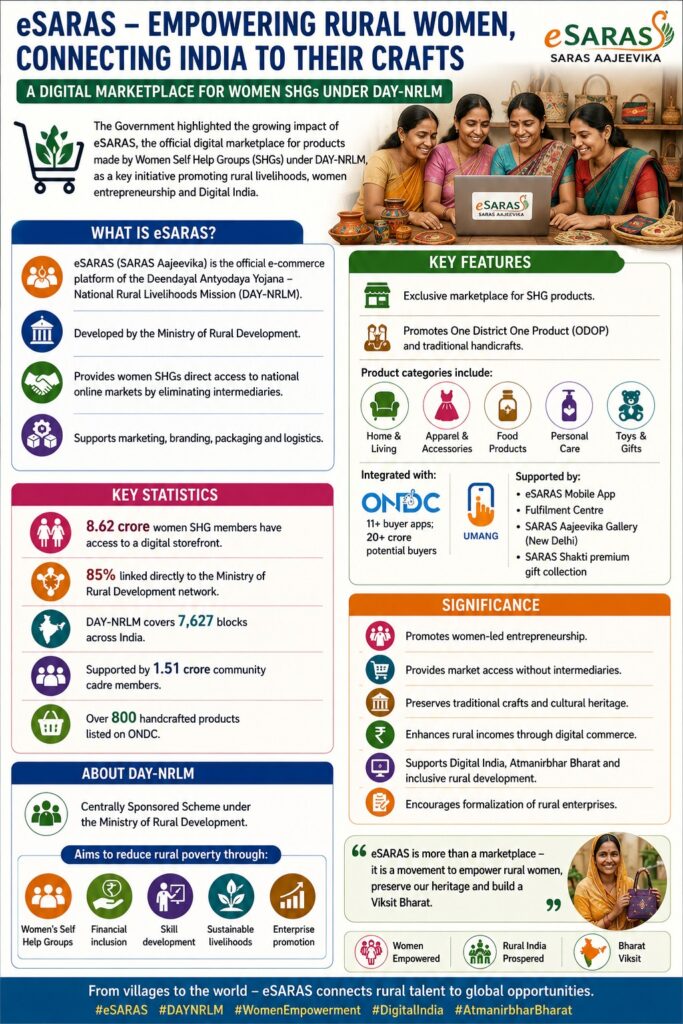
    Develop Market Linkages: Integrate SHGs with ONDC, GeM, and e-NAM for fair pricing and wider market access.

    Interest Subvention and Credit Expansion: Strengthen access to MUDRA, PMEGP, and Stand-Up India for low-interest enterprise loans.

    Regional Diversification: Replicate best practices from Kudumbashree and Jeevika in less-developed regions.

    Social Empowerment Convergence: Link SHGs with Poshan Abhiyaan, PMAY-G, and Ujjwala Yojana for holistic welfare outcomes.

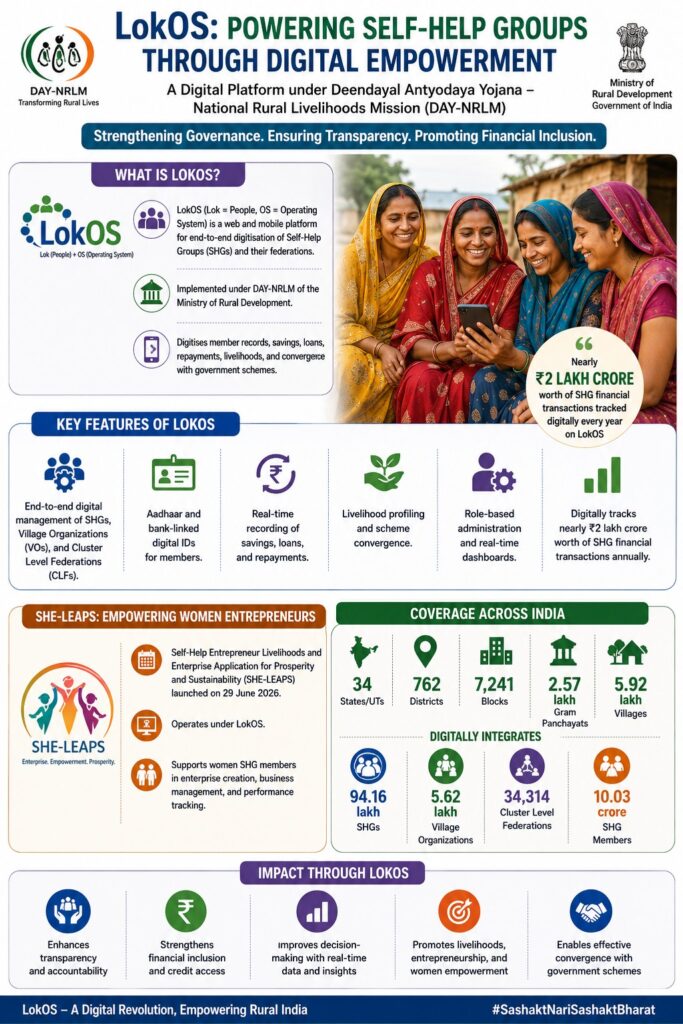
    Monitoring and Transparency: Use digital dashboards under DAY-NRLM to track financial performance and social outcomes.

    SHGs can transform India’s rural development landscape from beneficiary-based welfare to participatory empowerment, aligning with the vision of Atmanirbhar Bharat and inclusive growth.

  • Can Civil Society and Non-Governmental Organizations present an alternative model of public service delivery to benefit the common citizen? Discuss the challenges of this alternative model.

    Role of Civil Society and NGOs in Public Service Delivery

    Education – Run low-cost, community schools, teacher training, and literacy drives. Eg- Pratham’s Read India Campaign.

    Health and Nutrition – Provide mobile health units, maternal care, and nutrition programs. Eg- Akshaya Patra mid-day meals.

    Women Empowerment – Organize self-help groups and cooperatives to promote income generation. Eg- SEWA – women’s cooperatives in Gujarat.

    Rural Development – Implement watershed management and livelihood programs. Eg- WOTR – soil and water conservation in drought-prone regions.

    Governance & Accountability – Conduct awareness campaigns, social audits, and legal advocacy. Eg- MKSS pioneered Right to Information through Jan Sunwai model.

    Environment and Sustainability – Promote community-based natural resource management and renewable energy use. Eg- TERI

    Strengths of NGO-Civil Society Model

    Community-Centric Programs

    Flexible and Innovative low-cost models

    Last-Mile Reach

    Participatory Governance

    Fills governance and capacity gaps in public service delivery

    Challenges of this Alternative Model

    Funding Constraints – Dependence on foreign/donor funding.

    Fragmentation and Duplication – Poor coordination with government departments.

    Accountability and Transparency Deficit – Eg- CBI report: <10% NGOs file audited financial statements.

    Anti-Developmental Concerns – Eg- IB Report: NGO activism causing ~2% GDP loss.

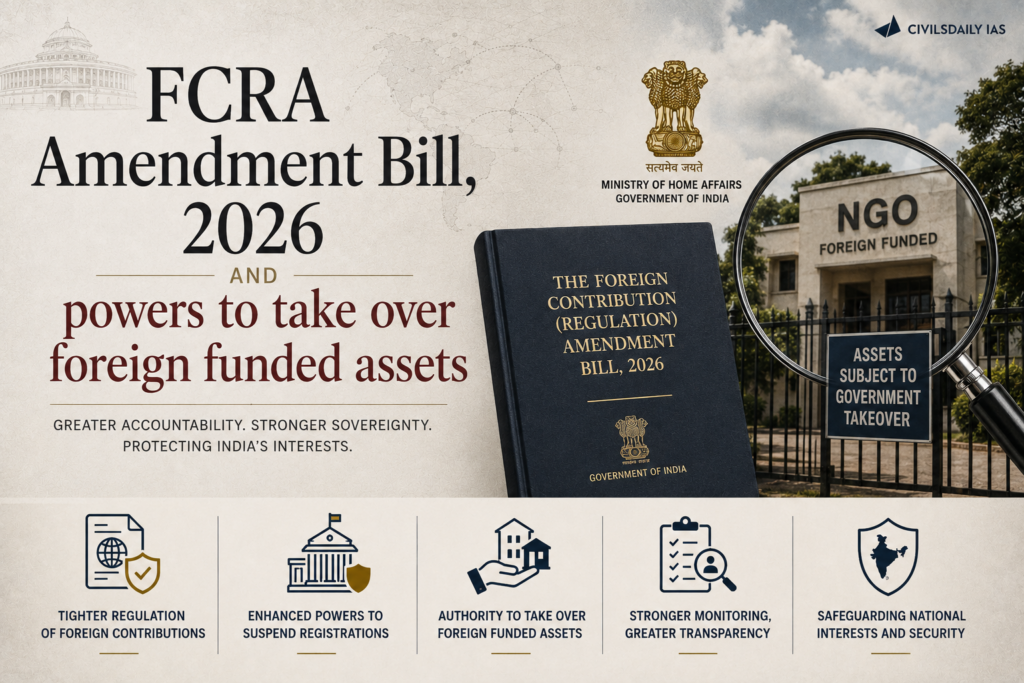
    Regulatory Restrictions – Stringent FCRA, CSR, compliance laws.

    Elite and Urban Bias – Disconnect from grassroots realities.

    Sustainability Issues – Short-term donor-driven projects.

    Way Forward

    Vijay Kumar Committee Recommendations – Promote ‘Light regulation’ of NGOs.

    2nd ARC Recommendation – Establish an independent National Accreditation Council.

    Government-NGO Collaboration Platforms – Eg- Kerala’s Kudumbashree model.

    Diversified Funding – Reduce donor dependency.

    Outcome-Based Monitoring – Introduce impact assessment frameworks (NITI Aayog).

    NGOs are “integral cogs in the wheel of good governance”. A balanced partnership between genuine NGOs and the government is crucial for India’s inclusive and sustainable development.

  • Can the vicious cycle of gender inequality, poverty and malnutrition be broken through microfinancing of women SHGs? Explain with examples.

    Microfinance, channelled through women-led SHGs, offers a transformative pathway by enhancing economic agency, social empowerment, and nutritional security.

    The Vicious Cycle

    Gender Inequality – Women’s lack of access to education, income, and decision-making.

    Poverty – Limited income and savings reduce food security and healthcare access.

    Malnutrition – Poor maternal nutrition and child health perpetuate intergenerational poverty.

    How Microfinance via Women SHGs Breaks the Cycle

    Economic Empowerment Reduces Poverty

    Access to Collateral-Free Credit: Enables women to invest in productive activities (livestock, handicrafts, food processing).

    Eg- Jeevika (Bihar) lifted over 1 crore women from subsistence to sustainable livelihoods, raising family incomes by 30%.

    Financial Inclusion Strengthens Decision-Making

    SHGs enhance financial literacy, savings, and bargaining power in households. Eg- Kudumbashree (Kerala) – women’s collective income used for improved household nutrition and sanitation.

    Social Capital – SHGs build trust, networks, and solidarity, empowering women to demand better services (PDS, ICDS, health).

    Women’s Role in Nutrition and Food Security

    Empowered women spend up to 90% of income on family well-being (UNDP).

    SHG-linked programs like Poshan Sakhi (NRLM) and Livelihood Mission Nutrition Gardens promote dietary diversity.

    Reducing Gender Inequality through Economic Agency – Women gain voice and mobility, shifting from dependents to decision-makers. Eg- Lakhpati Didi initiative (2023) targets 2 crore women

    Challenges

    High Interest Rates: MFIs often charge 20-24%, burdening the poor.

    “Missing Middle” finance trap – they outgrow microcredit but cannot access medium-scale loans.

    Regional Imbalance: Concentration of SHGs in southern states (71%); weak in the north and northeast.

    Limited Market Access: Lack of integration with value chains and formal markets.

    Poor Financial Management – Irregular bookkeeping, misappropriation of funds, and lack of audit systems result in low creditworthiness.

    Patriarchal Resistance – In many regions, especially in North India, SHGs are viewed as token collectives rather than serious economic actors.

    Way Forward

    Develop Market Linkages: Integrate SHGs with ONDC, GeM, and e-NAM for fair pricing and wider market access.

    Interest Subvention and Credit Expansion: Strengthen access to MUDRA, PMEGP, and Stand-Up India for low-interest enterprise loans.

    Regional Diversification: Replicate best practices from Kudumbashree and Jeevika in less-developed regions.

    Social Empowerment Convergence: Link SHGs with Poshan Abhiyaan, PMAY-G, and Ujjwala Yojana for holistic welfare outcomes.

    Monitoring and Transparency: Use digital dashboards under DAY-NRLM to track financial performance and social outcomes.

    SHGs can help shift beneficiary-based welfare to participatory empowerment, aligning with the vision of Nari Shakti & SDG 5.

    .

  • Do you agree with the view that increasing dependence on donor agencies for development reduces the importance of community participation in the development process ? Justify your answer.

    The Indian Constitution envisions a Welfare State under the DPSP. Donor agencies play a vital role in financing and technical support for these welfare measures.

    Increasing Dependence Reduces Community Participation

    Top-Down Project Design, with limited grassroots consultation.

    Erosion of Local Ownership – Beneficiary communities become recipients, not stakeholders

    Conditionalities restrict local policy space. Eg- IMF’s 1991 Structural Adjustment Programme reduced social sector expenditure

    Dependency Syndrome – Over-reliance on external funding discourages domestic resource mobilization and self-reliance. (A.G.Frank – “development of underdevelopment.”)

    Marginalization of Traditional Knowledge – Donor-driven modern approaches often ignore indigenous practices and local innovation.

    Transparency and Accountability Gaps – lack of clear monitoring frameworks or open reporting mechanisms limits public scrutiny and impact evaluation.

    Foreign Influence – Eg-Concerns were raised about World Vision India allegedly promoting religious conversion using foreign funds.

    Positive Role of Donor Agencies in Development

    Resource Mobilization – World Bank funding for the National Rural Health Mission (NRHM)

    Capacity Building – – DFID’s Bihar Rural Livelihood Project (JEEViKA) strengthened the capacity of SHGs and Panchayats.

    Donor agencies often introduce bottom-up approaches and emphasize stakeholder consultation.

    Catalyzing Policy Reforms – Eg- IMF’s fiscal frameworks encouraged better macroeconomic management post-1991 reforms.

    Promotion of Human Development – – UNICEF and UNFPA have supported India’s Reproductive and Child Health Programme (RCH-II) and Poshan Abhiyaan.

    Strengthening Civil Society – – UNDP’s Disha Project (with IKEA Foundation) enhanced employability of 1 million rural women across 10 states.

    Donor agencies are integral cogs in the wheel of good governance”. A balanced partnership with government is crucial make development inclusive, sustainable and rapid..

  • Discuss the contribution of civil society groups for women’s effective and meaningful participation and representation in state legislatures in India.

    “Women’s political participation is the surest indicator of democracy’s depth.” – UN Women.

    CSOs and women’s rights groups have played a pivotal role in mobilizing, training, and advocacy for women’s political empowerment.

    Contributions of Civil Society Groups

    Advocacy for Legislative Reforms – Eg- National Alliance for Women’s Reservation Bill (NAWRB) mobilized multi-party support for the 128th Constitutional Amendment (2023).

    Political Education – Conduct capacity-building programs to train women in political leadership, campaigning, and governance. Eg- Sakhi Resource Centre (Kerala)

    Building Networks – Create coalitions and forums to amplify women’s collective voice in politics. Eg- National Alliance of Women (NAWO)

    Promoting Gender Sensitization within Parties to reform candidate selection processes and promote internal gender quotas.

    Electoral Mobilization – Run voter education drives to increase women’s turnout and encourage women candidates.

    Research and Documentation – Eg- Association for Democratic Reforms (ADR) publishes gender-disaggregated election data to expose gaps in representation.

    Grassroots-to-Legislature Leadership Pipeline – Supported Panchayat women leaders to transition into state politics.

    Increased political visibility and legitimacy of women’s issues in policy spaces.

    Challenges

    Patriarchal Political Culture – Party hierarchies resist internal reforms and tokenize women leaders.

    Resource Constraints – Civil society campaigns depend on donor funding and lack long-term institutional backing.

    Fragmentation – Lack of unified women’s coalition across regions and ideologies.

    Limited Media Coverage – Women’s political work underreported compared to male counterparts.

    Token Representationsymbolic presence without real decision power. Eg- Sarpanch Pati

    Regulatory Hurdles – Strict FCRA and compliance norms restrict civil society operations.

    Socio-Cultural Barriers – Family opposition and traditional gender roles deter active participation.

    Way Forward

    Early implementation of Nari Shakti Vandan Adhiniyam

    Joint CSO-government programs to train women politicians.

    Formal Party-CSO Dialogue Platforms to improve women’s candidate representation.

    Intersectional Inclusion – Target programs for Dalit, tribal, and minority women.

    This can strengthen Civil society to transform women from voters to legislators, ensuring inclusive and participatory democracy.

  • Public charitable trusts have the potential to make India’s development more inclusive as they relate to certain vital public issues. Comment.

    Public charitable trusts (PCTs) are non-profit legal entities and act as social capital institutions that complement the government in achieving inclusive and sustainable development.

    Role of Public Charitable Trusts in Promoting Inclusive Development

    Expanding Access to Education – Eg- Azim Premji Foundation Trust – runs 3500+ schools and Azim Premji University to democratize education.

    Strengthening Healthcare Access in underserved areas. Eg-Tata Trusts: Developed Cancer Care Network – 17 cancer centres in Tier-II cities.

    Promoting Rural Livelihoods and Skill Development – Eg- Aga Khan Rural Support Programme benefited 1.5 million rural households through watershed and women’s cooperatives in Gujarat and MP.

    Addressing Social Inequality and Marginalization Eg-Smile Foundation runs Mission Education and Swabhiman programs benefiting 750,000 underprivileged children

    Environmental Sustainability – Invest in water conservation, renewable energy, and afforestation projects. Eg- Go Green Initiative of Wadia trust

    Disaster Relief and Humanitarian Response – Eg-Akshaya Patra Foundation delivered meals during COVID-19 lockdowns.

    Promoting Democratic Participation and Rights Awareness – Eg- Centre for Equity Studies promotes policy reforms for migrant and urban poor welfare.

    Promoting Research and Policy Innovation – Eg- PRIDE India documents and disseminates data on women’s representation in local governance.

    Challenges in the Functioning of Public Charitable Trusts

    Regulatory Complexity: Multiple laws (Income Tax, FCRA, Trusts Act) create compliance burden.

    Transparency Deficit: Eg- CBI report: <10% NGOs file audited financial statements.

    Urban Bias leaves rural regions underserved.

    Duplication: Overlap among similar welfare programs reduces efficiency.

    Funding Constraints – Heavy dependence on foreign or donor funding.

    Anti Developmental Role – Eg- IB Report – NGO activism leading to loss of 2% of GDP

    Way Forward

    Vijay Kumar Committee Recommendations: ‘Light regulation’ of NGO

    2nd ARC: enact a law to set up an independent National Accreditation Council

    Create formal government-NGO platforms (as in Kerala’s Kudumbashree).

    This can strengthen Public charitable trusts act as agents of equity and inclusion, aligning private philanthropy with public good.