Mains Ready By December. Smash Mains & Smash PYQ Admissions Open

GS Paper: GS2-01.Indian Constitution-Historical underpinnings & evolution; Features, amendments, significant provisions, basic structure of Constitution

  • “Parliament’s power to amend the Constitution is a limited power and it cannot be enlarged into absolute power.” In the light of this statement explain whether Parliament under Article 368 of the Constitution can destroy the Basic Structure of the Constitution by expanding its amending power?

    Article 368 empowers Parliament to amend the Constitution, but this power is not absolute. The SC, through the Basic Structure Doctrine, has clarified that while Parliament can amend any part of the Constitution, it cannot alter or destroy its essential features.
    Limitations on the Amending Power of Parliament

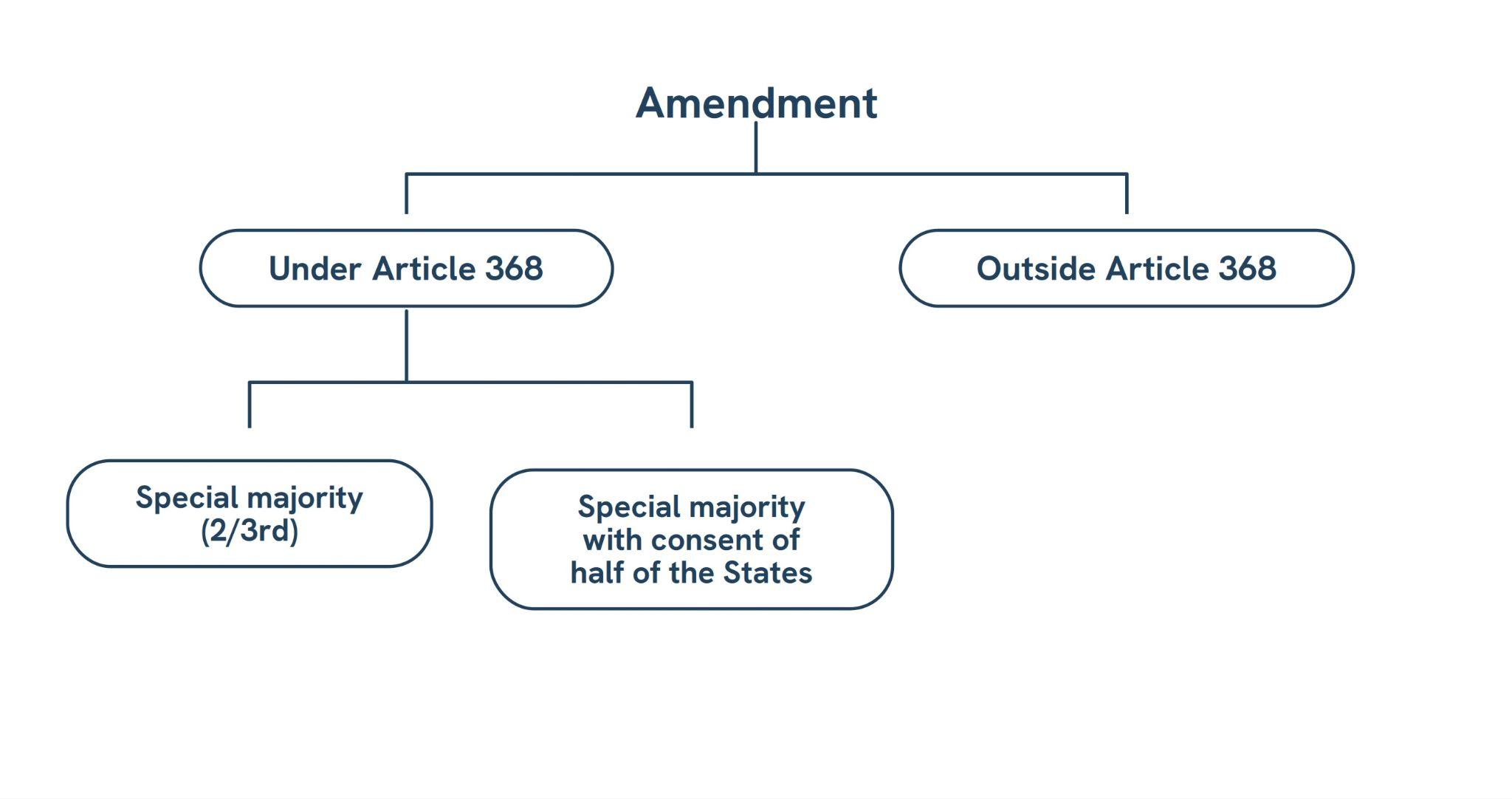
    Procedure under Article 368 – Constitutional amendments must strictly follow special majority and, where applicable, state ratification (for federal provisions).

    Basic Structure Doctrine (Kesavananda Bharati, 1973) – Parliament cannot alter, abrogate, or destroy the Basic Structure of the Constitution.

    Minerva Mills, 1980 – The limited amending power itself is part of the Basic Structure.

    Balance Between Fundamental Rights and DPSPs – Parliament cannot give unlimited precedence to one over the other, preserving constitutional harmony.

    Separation of Powers – Parliament cannot encroach upon the independence of the judiciary or the executive-legislative balance. Eg- NJAC

    Federal Structure – Amendment cannot centralize power to the extent of destroying federalism or state autonomy. (S.R. Bommai Judgment)

    I.R. Coelho v. State of Tamil Nadu (2007) – Even laws under the Ninth Schedule are open to judicial review if they violate Basic Structure.

    Thus, parliament cannot destroy or expand its amending power beyond constitutional limits. It is subject to Basic Structure

    Supremacy of the Constitution

    Republican and democratic form of government

    Secularism

    Federalism

    Judicial Review and Rule of Law

    Separation of Powers

    Limited amending power (Minerva Mills)

    Analysis

    The power of amendment under Article 368 is an instrument to ensure the Constitution’s continuity, and dynamic adaptation, not institutional annihilation. In a democracy governed by the Rule of Law, no organ can arrogate to itself absolute power, for that would negate the very idea of constitutionalism.
  • ‘Constitutional Morality’ is rooted in the Constitution itself and is founded on its essential facets. Explain the doctrine of ‘Constitutional Morality’ with the help of relevant judicial decisions. (150 words)

    Constitutional morality implies adherence to the core principles and spirit of the Constitution in a democracy.

    As per George Grote, it involves

    Paramount reverence for forms and procedures of the Constitution.

    Adherence to law while enabling open criticism of authority.

    Need for public reason, self-restraint, and trust in institutions.

    Essential Facets and Roots within the Constitution

    Preamble – It acts as the moral compass, explicitly mandating the preservation of justice, liberty, equality, and fraternity.

    Fundamental Rights – Protect dignity, autonomy, equality. Eg – Navtej Johar (2018) decriminalised homosexuality.

    DPSPs – Provide moral compass for social and economic justice.

    Institutional Checks & Balances – Separation of powers, judicial review, federalism. Eg – Kesavananda Bharati (1973) upheld Basic Structure.

    Democratic Processes – Free elections, executive accountability, judicial independence.

    Judicial Decisions

    Kesavananda Bharati (1973)- Upheld Basic Structure as a reflection of constitutional morality above political majority.

    Naz Foundation (2009, Delhi HC)- Asserted constitutional morality over public morality in striking down Sec. 377 IPC (later affirmed in Navtej Johar).

    Navtej Singh Johar (2018)- SC decriminalized homosexuality, stating constitutional morality must prevail over majority opinion.

    Sabarimala case (2018)- Affirmed women’s entry in temples on grounds of constitutional morality and gender equality.

    Government of NCT of Delhi v. Union of India (2018) – SC held that constitutional morality ensures cooperative federalism and prevents concentration of power in the hands of one authority.

    Joseph Shine v. Union of India (2018) – struck down Section 497 IPC (Adultery) as discriminatory, invoking constitutional morality to protect individual dignity and autonomy.

    Constitutional morality is the soul of Indian democracy. As Rajeev Bhargava notes, it embodies a form of constitutional patriotism that enables unity in diversity while upholding pluralism

  • The most significant achievement of modern law in India in the constitutionalization of environmental problems by the Supreme Court. Discuss this statement with the help of relevant case laws.

    “The Constitution is not a mere lawyers’ document, it is a vehicle of Life, and its spirit is always the spirit of Age.”- B.R. Ambedkar

    Constitutionalization of environmental problems under Article 21 is the embodiment of this spirit.

    Constitutionalization is done through

    Expansion of Article 21

    Use of Directive Principles (Art. 48A, 51A(g))

    Development of Doctrines (Polluter Pays, Precautionary Principle, Public Trust, Absolute Liability, Intergenerational Equity)

    Expansion of Judicial Review & PILs

    Use of Continuous Mandamus

    Relevant case laws

    Industrial Pollution

    MC Mehta v. Union of India (Oleum Gas Leak, 1986) – Established Absolute Liability for hazardous industries.

    Indian Council for Enviro-Legal Action v. UOI (1996) – Applied Polluter Pays Principle.

    Water Pollution

    MC Mehta v. UOI (Ganga Pollution, 1988) – Ordered closure of polluting tanneries.

    Paryavaran Suraksha Samiti v. UOI (2017) – Directed installation of Sewage Treatment Plants (STPs).

    Air Pollution

    MC Mehta v. UOI (Delhi Pollution, 1998) – Mandated conversion of public transport to CNG.

    MC Mehta v. UOI (Firecrackers, 2024) – Imposed ban to ensure clean air.

    Deforestation & Forest Rights

    T.N. Godavarman v. UOI (1997-ongoing) – Continuous mandamus for forest conservation.

    Niyamgiri Case (2013) – Empowered Gram Sabha to protect tribal rights.

    Climate Change

    M.K. Ranjitsinh v. UOI (2024) – Recognised Right against adverse climate impacts under Articles 14 and 21.

    Natural Resources

    MC Mehta v. Kamal Nath (1997) – Applied Public Trust Doctrine to rivers.

    Reliance Natural Resources v. RIL (2010) – Declared natural resources as public property.

    Development Projects

    Narmada Bachao Andolan v. UOI (2000) – Integrated sustainable development into constitutional law.

    Vanashakti v. UOI (2024) – Stressed need for prior environmental clearance.

    As Justice P.N. Bhagwati observed, “Right to life includes the right to live with human dignity” – and dignity today is inseparable from a clean and healthy environment.

  • Right of movement and residence throughout the territory of India are freely available to the Indian citizens, but these rights are not absolute. Comment

    “Liberty means freedom to do everything which injures no one else.” (French Declaration of the Rights of Man, 1789). The Right to Movement and Residence under the Indian Constitution embodies this idea of liberty.

    Constitutional Provision

    Article 19(1)(d) – Right to move freely throughout the territory of India.

    Article 19(1)(e) – Right to reside and settle in any part of India.

    However, it is not absolute as

    Reasonable Restrictions under Article 19(5) – interests of the general public or for the protection of Scheduled Tribes.

    Protection of Scheduled Tribes – Restrictions in 5th and 6th Schedules safeguard traditional culture, property rights, and protect tribes from exploitation by outsiders.

    Security of State – Eg – Restrictions under AFSPA in disturbed regions.

    Public Order – Curfews, preventive detention, or restrictions during riots.

    Judicial Endorsement – Eg – State of UP v. Kaushailiya (1964) upheld restrictions on movement of prostitutes to protect public health and morality.

    Pandemic Situations – During COVID-19 lockdowns, freedom of movement was restricted to control spread of the virus.

    Inner Line Permit (ILP) – Required in certain north-eastern states; prior approval of state government needed to protect local interests.

    Foreigners – Can be deported for violating rules, even though citizens enjoy freedom of residence.

    “Liberty is not a license, but is regulated freedom.” Ensuring individual liberty while safeguarding collective interests reflects balanced constitutionalism.

  • Explain the constitutional perspectives of Gender Justice with the help of relevant Constitutional Provisions and case laws.

    Gender justice implies ensuring equality, dignity, and non-discrimination for women genders in political, social, and economic spheres.

    As per UN Women, gender justice entails ending the inequalities between women and men that are produced and reproduced in the family, the community, the market and the state.

    Constitutional Provisions

    Articles 14, 15, 16 – Equality before law, prohibition of gender discrimination, equal opportunities in employment.

    Article 21 – Right to life with dignity, bodily autonomy, and reproductive choice.

    Articles 39(a), 39(d), 42 – Equal pay for equal work, maternity relief, humane conditions of work.

    73rd & 74th Amendments – 33% reservation for women in Panchayati Raj and urban local bodies.

    Articles 23 & 24 – Prohibition of trafficking of women and child labour.

    Article 51A(e) – Fundamental duty to renounce practices derogatory to women’s dignity.

    Case Laws

    Air India v. Nargesh Mirza (1981) – Struck down discriminatory service rules against women employees.

    Anuj Garg v. Hotel Association (2008) – Invalidated law barring women from working in bars as stereotypical.

    Vishaka v. State of Rajasthan (1997) – Laid down sexual harassment guidelines at workplace.

    Joseph Shine v. UOI (2018) – Struck down adultery law as discriminatory.

    Rajesh Kumar Gupta v. State of UP (2005) – Upheld reservation for women in teacher recruitment.

    Laxmi v. Union of India (2014) – Guidelines for acid attack victims’ compensation.

    Independent Thought v. UOI (2017) – Criminalised marital rape of girls aged 15-18.

    Shah Bano Case (1985) – Muslim woman’s right to maintenance upheld.

    Shayara Bano v. UOI (2017) – Instant triple talaq declared unconstitutional.

    Indian Young Lawyers Assn. v. State of Kerala (2018) – Sabarimala judgment ensured women’s entry into temples.

    Challenges

    Patriarchal Mindset – Eg- khap Panchayats

    Implementation Gap – Eg- Beti Bachao Beti Padhao

    Violence Against Women – Rising cases of domestic violence, acid attacks, honour killings.

    Intersectional Discrimination – Dalit, tribal, and minority women face compounded marginalisation.

    Way Forward for Gender Justice–

    Effective Implementation – Strict monitoring of laws like POSH Act, Dowry Prohibition Act, and POCSO.

    Judicial Responsiveness – Fast-track courts and gender-sensitive training for judges.

    Bibipur Model (Haryana) naming streets after daughters to promote recognition.

    Digital Empowerment – Tamil Nadu’s Agal Vilakku to address cyberbullying and online harassment.

    “I measure the progress of a community by the degree of progress which women have achieved.” – Ambedkar

    Salient Features – Preamble to Emergency

  • ”The Constitution of India is a living instrument with capabilities of enormous dynamism. It is a constitution made for a progressive society”. Illustrate with special reference to the expanding horizons of the right to life and personal liberty.

    A Living Constitution rejects rigid textualism and evolves with time to meet the changing needs of society while upholding core constitutional values. According to Woodrow Wilson, Constitution must be Darwinian in structure and in practice.

    Dynamism of Indian Constitution

    Expanding Interpretation of Fundamental Rights. Eg- Right to internet access

    Judicial Doctrines – Eg- Basic Structure Doctrine (Kesavananda Bharati, 1973)

    Democratic and Federal Evolution through constitutional amendments (over 100 so far)

    Constitution made for Progressive Society

    Social Justice – Abolition of untouchability (Article 17), reservation policies

    Gender Equality – Guarantees of equal rights (Articles 14-16)

    Political equality – Universal Adult Franchise

    Vision for a welfare state – Article 39(b)(c) (equitable distribution of resources) and Article 45 (free and compulsory education).

    Secularism & Fraternity – Promotes unity in diversity, preventing majoritarian domination while protecting minority rights.

    Expanding Horizons of Right to Life and Personal Liberty (through SC judgments)

    Right to Livelihood – Recognised in Olga Tellis v. Bombay Municipal Corporation (1985), linking livelihood to dignity of life.

    Right to Education – Unni Krishnan v. State of Andhra Pradesh (1993) paved way for RTE Act, 2009.

    Right to Clean Environment – Subhash Kumar v. State of Bihar (1991) connected the environment with quality of life.

    Right to Health – In Paschim Banga Khet Mazdoor Samity (1996), SC held that the state must provide adequate healthcare.

    Right to Privacy – Justice K.S. Puttaswamy v. Union of India (2017) declared privacy intrinsic to personal liberty.

    Right to Die with Dignity – Common Cause v. Union of India (2018) legalised passive euthanasia.

    Right to Internet Access – Anuradha Bhasin v. Union of India (2020) recognised internet as essential for speech, trade, and education.

    Right to Marry a Person of Choice – Shafin Jahan v. Asokan (2018) upheld liberty in matters of marriage.

    Expanding Horizons of Right to Life and Personal Liberty (Through Amendments)

    44th Amendment Act (1978) – Imposed limitations on Emergency powers by ensuring that Articles 20 and 21 cannot be suspended even during a National Emergency.

    86th Amendment Act (2002) – Inserted Article 21A, making Right to Education (6-14 years) a fundamental right under Article 21.

    The Indian Constitution, through its dynamism, has transformed into a progressive charter of human rights. As Granville Austin remarked, the Constitution is a “social document aiming at transforming society through law.”

  • Right to privacy is intrinsic to life and personal liberty and is inherently protected under Article 21 of the Constitution. Explain. In this reference discuss the law relating to D.N.A. testing of a child in the womb to establish its paternity.

    “Privacy is the constitutional core of human dignity.” – Justice D.Y. Chandrachud

    The Supreme Court in Justice K.S. Puttaswamy v. Union of India (2017) declared that Right to Privacy is intrinsic to Right to Life and Personal Liberty under Article 21.

    Scope of Right to Privacy (post-Puttaswamy)

    Informational Privacy – Protection of personal data, Aadhaar details, medical records, online footprints.

    Decisional Autonomy – Eg- Navtej Singh Johar (2018) decriminalised same-sex relations.

    Bodily Integrity – Eg- Suchita Srivastava v. Chandigarh Administration (2009) recognised reproductive choice.

    Family, Marriage & Relationships – Eg- Shafin Jahan v. Asokan (2018, Hadiya case) upheld interfaith marriage choice.

    Reproductive Rights – Eg- in X v. Principal Secretary, Health case (2022), SC allowed abortion for unmarried women under MTP Act.

    Digital Privacy – Protection against surveillance, right to internet access, and data protection in cyberspace. Eg- Aadhar Judgment

    However, Privacy is not absolute and subject to Reasonable Restrictions

    Test of Proportionality – Puttaswamy (2017) –

    Legality – sanctioned by law, with a just, fair, and reasonable procedure.

    Legitimate Aim – e.g., national security, public health.

    Proportionality – The nature, method, and extent of interference must be proportionate to the purpose sought.

    Arguments in Favour of DNA Testing

    Truth and Justice – Ensures scientific accuracy in resolving paternity disputes. Eg – Goutam Kundu v. State of West Bengal (1993) allowed DNA in exceptional cases.

    Child’s Right to Identity – Establishing paternity secures child’s dignity and identity under Article 21.

    Preventing Fraud – Avoids false claims in inheritance, custody, or maintenance disputes.

    Criminal Justice Support – DNA helps in rape and assault cases, strengthening convictions.

    International Standards – Aligns with UNCRC’s recognition of a child’s right to know parents.

    Arguments Against DNA Testing

    Privacy of Parents – Supreme Court in 2025 held that DNA cannot be used for “roving inquiries into paternity.”

    Right to Dignity – Privacy includes the right to be left alone; forceful DNA tests intrude into intimate decisions

    Genetic information = core privacy – DNA reveals “a person’s very essence” and is part of the fundamental right to privacy under Article 21.

    Potential Misuse – DNA demands in marital disputes may be used to harass women and allege infidelity.

    Mother’s dignity – Forced DNA tests also harm the reputation and dignity of mothers, by casting aspersions on fidelity.

    Presumption of Legitimacy – Section 112, Indian Evidence Act presumes legitimacy of child born in wedlock.

    Child’s dignity – Children cannot be treated as material objects in divorce battles; they have a right not to have their legitimacy frivolously questioned.

    UN Convention on Rights of the Child – Recognises privacy, autonomy and identity as core entitlements of children.

    Thus, the doctrine of ‘Eminent Need’ and ‘Last resort’ (Family courts should order DNA tests only in rare, expedient cases) is essential to balance a child’s right to identity with parents’ dignity and privacy.

  • Indian Constitution has conferred the amending power on the ordinary legislative institutions with a few procedural hurdles. In view of this statement, examine the procedural and substantive limitations on the amending power of the Parliament to change the Constitution.

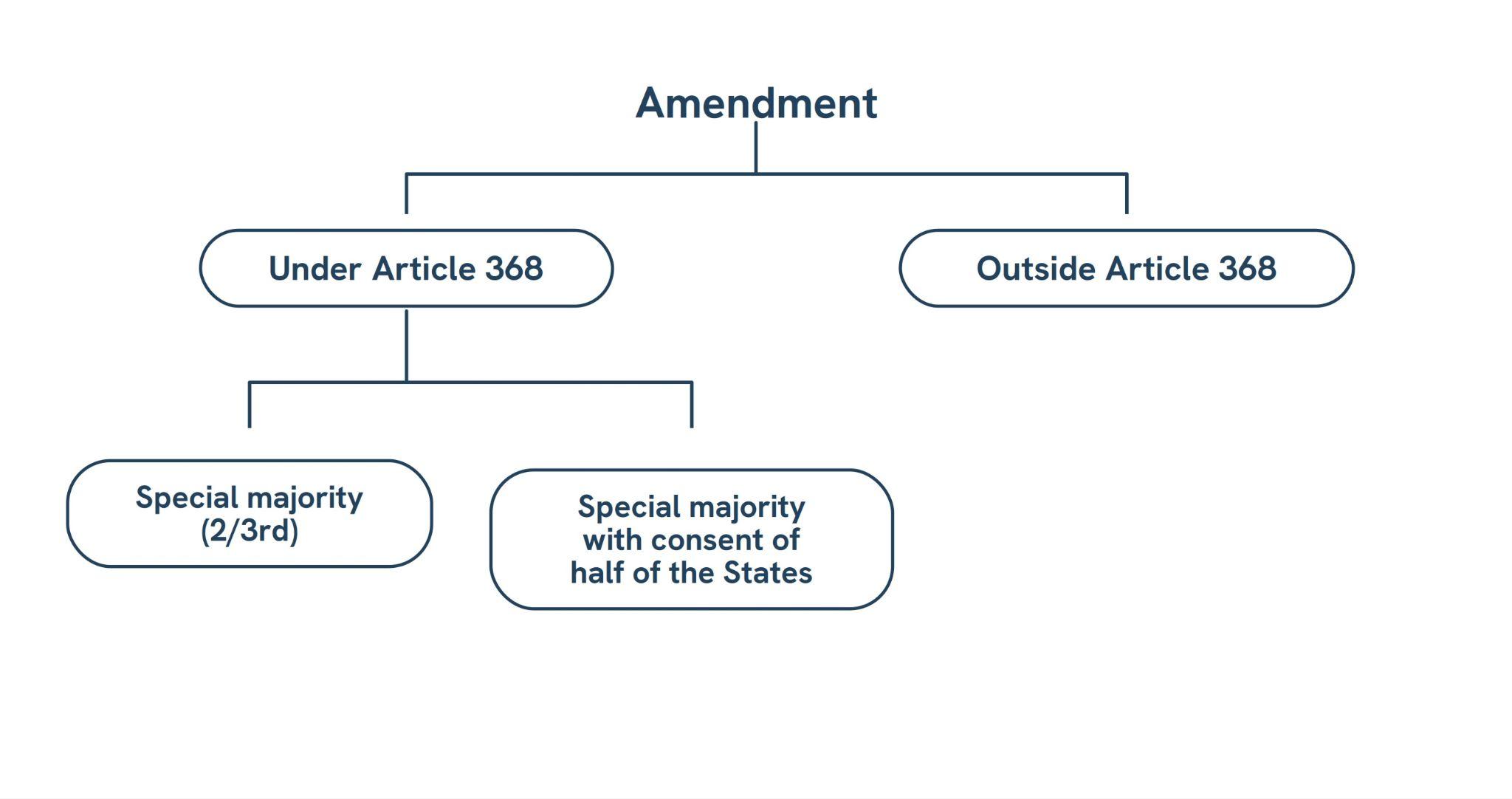
    The Indian Constitution, under Article 368, confers the power of amendment on Parliament. However, this power is neither absolute nor unlimited, being subject to procedural and substantive limitations.

    Procedural Limitations

    These are explicit constitutional conditions laid down in Article 368. Violation of any renders the amendment invalid.

    Special Majority Requirement – Majority of total membership of each House, and Two-thirds of members present and voting.

    Separate Approval by Each House – No joint sitting is allowed under Article 108.

    Ratification by Half States for Federal Provisions – Eg- 101st Amendment (GST) required ratification.

    Presidential Assent under Article 368(2).

    Bill must follow all legislative procedures – notice, debate, quorum, and voting. Procedural irregularities can invite judicial scrutiny (as per Raj Narain v. Indira Gandhi, 1975).

    Substantive Limitations on the Amending Power

    These are judicially evolved constraints that restrict Parliament from altering the core identity of the Constitution.

    Doctrine of Basic Structure (Kesavananda Bharati v. State of Kerala (1973))

    Limited Amending Power Itself is Basic Structure (Minerva Mills, 1980) – Clauses (4) and (5) of Article 368 (inserted by the 42nd Amendment) were struck down.

    I.R. Coelho v. State of Tamil Nadu (2007) held that even laws placed in the Ninth Schedule after 1973 are open to Basic Structure review.

    Parliament cannot amend to abrogate or emasculate Fundamental Rights forming part of the Basic Structure (e.g., equality, liberty).

    Parliament cannot alter the essential federal balance between Centre and States. (Kuldip Nayar v. Union of India (2006))

    Indira Nehru Gandhi v. Raj Narain (1975)- Free and fair elections, rule of law, and judicial review are part of Basic Structure.

    Harmony between Fundamental Rights and Directive Principles – Both must coexist; destroying one in favor of the other violates Basic Structure.

    Examination of limitations

    Thus, the limited amending power under Article 368 makes the Indian Constitution a living document, capable of growth yet immune from destruction.

  • “Constitutional morality is the fulcrum which acts as an essential check upon the high functionaries and citizens alike…” In view of the above observation of the Supreme Court, explain the concept of constitutional morality and its application to ensure balance between judicial independence and judicial accountability in India.

    Constitutional morality implies adherence to the core principles and spirit of the Constitution in a democracy. In the words of Ambedkar, “Constitutional morality is not a natural sentiment. It has to be cultivated”.

    Constitutional morality as the fulcrum

    Checks on High Functionaries

    Supremacy of Constitution – Limits arbitrary use of executive or legislative power.

    Rule of Law – Ensures decisions are legal, not personal or political.

    Judicial Review – Eg- NJAC Judgment

    Equality & Non-discrimination – Prevents rulers from favouring particular groups.

    Democratic Accountability – Demands transparency and answerability in governance. Eg- D. C. Wadhwa Case – frequent promulgation of ordinance as “fraud on the Constitution.”

    Separation of Powers – Eg – Indira Gandhi v. Raj Narain (1975) struck down 39th Amendment to protect judicial review.

    Spirit of Justice – Requires policies and judgments to align with fairness.

    Checks on Citizens

    Ensures public morality does not override rights and dignity of individuals. Eg – Navtej Johar (2018) decriminalised homosexuality, Sabrimala Judgment.

    Equality & Non-discrimination – Binds citizens against practising caste, gender, or religious exclusion.

    Tolerance & Fraternity – Discourages hate speech, intolerance, or majoritarian excesses.

    Constitutional Patriotism – Promotes loyalty to constitutional ideals over narrow identity politics. Eg- Fundamental Duties

    Concept of constitutional morality

    George Grote, in his History of Greece, described constitutional morality as a “rare and difficult sentiment”–

    Paramount reverence for forms and procedures of the Constitution.

    Adherence to law while enabling open criticism of authority.

    Need for public reason, self-restraint, and trust in institutions.

    Application of Constitutional Morality in Balancing Judicial Independence and Accountability

    Judicial Appointments – Constitutional morality preserves judicial primacy in appointments (NJAC Case 2015), while demanding transparency and collegium reforms for accountability.

    Judicial Review – Protects independence of judiciary to strike down unconstitutional laws (Kesavananda Bharati 1973), yet requires judicial restraint to avoid overreach.

    Judicial Conduct – Ensures judges remain free from executive pressure, but also subject to scrutiny for corruption or misconduct (K. Veeraswami v. Union of India 1991).

    Public Trust – Judicial independence protects rule of law, while accountability ensures public confidence in the judiciary.

    Ensures Transparency and accountability – Subhash Agarwal Case- Brought CJI’s office under RTI.

    Public Interest Litigation (PIL) – Expands access to justice for the poor and marginalised, but constitutional morality demands avoidance of frivolous PILs to preserve judicial credibility.

    Contempt Powers – Secure judicial independence, but require tolerance of criticism unless it obstructs justice delivery. Eg- Prashant Bhushan Case

    As Justice D.Y. Chandrachud observed, “Judicial independence is not a privilege but a responsibility owed to the Constitution.”

  • Right of way

    Why in the News?

    The Supreme Court has reaffirmed that the right to walk safely on demarcated footpaths is part of Article 21 and therefore a fundamental right. The judgment highlights the gap between constitutional recognition of pedestrian rights and the absence of adequate pedestrian infrastructure.

    What has the Supreme Court held on the right to walk?

    1. Article 21 Protection: The Court held that safe access to footpaths forms part of the right to life and personal liberty.
    2. Pedestrian Dignity: Walking is not merely a mode of transport. It is a constitutional entitlement linked to safety and dignity.
    3. State Responsibility: Governments must ensure safe pedestrian infrastructure and cannot treat pedestrians as secondary road users.
    4. Compensation Jurisprudence: The ruling emerged from a case involving the death of a five-year-old child who was hit by a tanker lorry in Karnataka.

    Why Does India Lack Functional Pedestrian Infrastructure?

    1. No central law: No national law governs pedestrian rights or safety.
    2. Vehicle-Centric Planning: Urban transport systems prioritise road expansion and vehicle movement.
    3. Fragmented responsibility: Responsibility for pedestrian safety is split across municipal laws, town-planning statutes, and street design guidelines, with no single accountable authority.
    4. Minimal safety standard: Current practice treats pedestrians as safe if they face no immediate physical harm, not if they have usable, continuous infrastructure.
    5. Physical encroachment: Existing footpaths are frequently encroached by parking, vendors, utilities, and construction debris.
    6. Competing infrastructure priorities: Road-widening projects compete with footpath space, with roads typically winning.

    Why is recognition of a right insufficient by itself?

    1. Rights Need Infrastructure: A right becomes ineffective when the supporting public infrastructure is absent.
    2. Implementation Deficit: India often struggles with execution rather than legal recognition.
    3. Administrative Neglect: Urban local bodies frequently delay or abandon pedestrian projects.
    4. Funding Priorities: Public expenditure remains concentrated on road widening and motorised transport.
    5. Behavioural Norms: Motorists often view pedestrians as obstacles rather than legitimate road users.

    What Tension Does the Ruling Expose Between Rights Recognition and State Capacity?

    1. Right without infrastructure is hollow: If the state does not build footpaths, the citizen’s right to walk on them carries no practical content.
    2. Compensation is not prevention: A right enforced only through post-tragedy compensation does not change the conditions that caused the harm.
    3. Conflict with the Street Vendors Act: The new judgment is likely to generate disputes with the 2014 Act, since reclaiming footpaths for pedestrians can mean removing vendors the 2014 Act protects.
    4. Risk of gentrification: A state acting on this ruling could use it to clear footpaths of informal commercial activity, criminalising the survival strategies of the urban poor under the cover of a pedestrian-rights judgment.

    Does India’s Experience with Rights-Based Legislation Suggest that Legal Recognition Alone Is Insufficient?

    1. Street Vendors Act, 2014: The Act protects vendors’ right to trade under Article 19(1)(g). Implementation has lagged because surveys, Town Vending Committees, and vending zones remain incomplete. Municipalities continue eviction drives despite legal protection.
    2. Cigarettes and Other Tobacco Products Act 2003: Public smoking declined through sustained enforcement, social messaging, and small immediate penalties. Behaviour changed because legal recognition was backed by continuous implementation.
    3. Swachh Bharat and Waste Segregation Laws: Citizens are required to segregate waste. Municipal systems often fail to collect segregated waste. The absence of supporting infrastructure weakens compliance.
    4. Implementation Gap: Rights and duties succeed only when governments create the institutions, incentives, and enforcement mechanisms needed to support them.
    5. Lesson for the Right to Walk: Pedestrian rights will remain symbolic unless cities build continuous, unobstructed footpaths and protect them from encroachment.

    What Precondition Determines Whether the Right Produces Real Change?

    1. Pedestrian Infrastructure as the Missing Link: Constitutional recognition cannot improve pedestrian safety unless cities build continuous and unobstructed footpaths.
    2. Funding Redirection as the Binding Constraint: The ruling’s success depends on shifting public expenditure towards pedestrian infrastructure rather than treating the judgment as a compensation mechanism.
    3. Risk of Legal Tokenism: If the right remains usable only for post-tragedy compensation claims, it produces no change in pedestrian mobility or safety.
    4. Cultural Internalisation of Right of Way: Pavements must be socially recognised as pedestrian space. Judicial declaration alone cannot alter road-use behaviour.

    What must change for the right to walk to become meaningful?

    1. Dedicated Pedestrian Infrastructure: Cities must invest in continuous and obstruction-free footpaths.
    2. Pedestrian-First Urban Design: Walking must become the foundation of street planning.
    3. Clear Space Allocation: Urban authorities must balance pedestrian access and vendor livelihoods.
    4. Municipal Accountability: Local bodies must be assessed on pedestrian safety outcomes.
    5. Stable Funding: Budget allocations must shift towards non-motorised transport infrastructure.

    Conclusion

    The Supreme Court has expanded constitutional protection for pedestrians, but rights alone cannot create safe streets. India’s challenge is not recognising the right to walk but building the footpaths, governance mechanisms and urban priorities that make that right real. The success of the judgment depends on shifting public investment and administrative attention towards pedestrian infrastructure rather than merely providing legal remedies after accidents.