Article 368 empowers Parliament to amend the Constitution, but this power is not absolute. The SC, through the Basic Structure Doctrine, has clarified that while Parliament can amend any part of the Constitution, it cannot alter or destroy its essential features.
Limitations on the Amending Power of Parliament
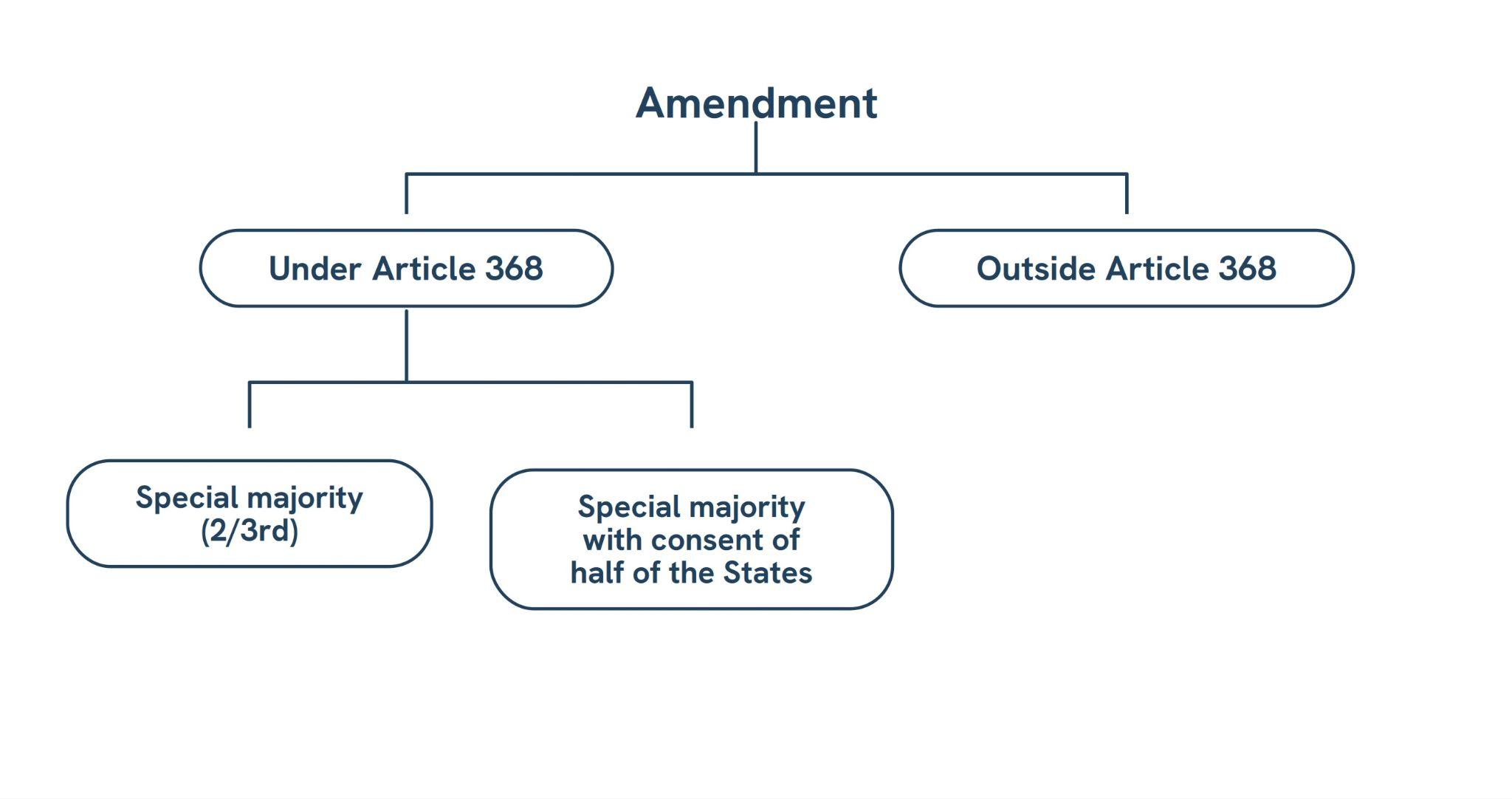
Procedure under Article 368 – Constitutional amendments must strictly follow special majority and, where applicable, state ratification (for federal provisions).
Basic Structure Doctrine (Kesavananda Bharati, 1973) – Parliament cannot alter, abrogate, or destroy the Basic Structure of the Constitution.
Minerva Mills, 1980 – The limited amending power itself is part of the Basic Structure.
Balance Between Fundamental Rights and DPSPs – Parliament cannot give unlimited precedence to one over the other, preserving constitutional harmony.
Separation of Powers – Parliament cannot encroach upon the independence of the judiciary or the executive-legislative balance. Eg- NJAC
Federal Structure – Amendment cannot centralize power to the extent of destroying federalism or state autonomy. (S.R. Bommai Judgment)
I.R. Coelho v. State of Tamil Nadu (2007) – Even laws under the Ninth Schedule are open to judicial review if they violate Basic Structure.
Thus, parliament cannot destroy or expand its amending power beyond constitutional limits. It is subject to Basic Structure
Supremacy of the Constitution
Republican and democratic form of government
Secularism
Federalism
Judicial Review and Rule of Law
Separation of Powers
Limited amending power (Minerva Mills)
Analysis
The power of amendment under Article 368 is an instrument to ensure the Constitution’s continuity, and dynamic adaptation, not institutional annihilation. In a democracy governed by the Rule of Law, no organ can arrogate to itself absolute power, for that would negate the very idea of constitutionalism.