💥Join UPSC 2027,2028 Mentorship (July Batch) + XFactor Notes & Microthemes PDF

GS Paper: GS3-13.Infrastructure: Energy, Ports, Roads, Airports, Railways etc:

  • Vande Bharat production to begin in October: Minister

    vande bharat

    Indian Railways had successfully completed trials of the second generation Vande Bharat train that will come with enhanced passenger comfort and safety features.

    What is Vande Bharat Express?

    • The Vande Bharat Express is a semi-high-speed train designed, developed, and built by the Integral Coach Factory (ICF).
    • Presently there are only two Vande Bharat trains that are running — Delhi to Varanasi and Delhi to Katra.

    Key Features

    • The current Vande Bharat trains have seating only in two classes — chair car and executive chair car. But Railways is planning to upgrade it.
    • The trains have fully sealed gangways for a dust-free environment, modular bio-vacuum toilets, rotating seats in Executive Class, personalized reading lights, automatic entry/exit doors with sliding footsteps, diffused LED lighting, mini pantry, and sensor-based interconnecting doors in each coach.
    • They are self-propelled trains that do not require an engine. This feature is called a distributed traction power system.

    Benefits of Vande Bharat Trains

    • Cuts Travel Time Drastically
    • Energy Efficient
    • Reduce Turnaround Time
    • Faster Acceleration and Deceleration among others.


    UPSC 2023 countdown has begun! Get your personal guidance plan now! (Click here)

  • Indian Railways powerful experiment on AC III tier economy class coaches

    AC III tier economy class coachesContext

    • The Indian Railways’ experiment to introduce AC III tier economy class coaches has started to pay off. Since its introduction, in the last one year, these coaches have earned the Railways more than Rs.230 crore in revenue.

    AC III tier economy classWhat is AC III tier economy class coach?

    • The AC 3 tier economy class in Indian Railways is a milestone concerning pocket-friendly traveling experience for common man.
    • With fare slightly more than sleeper class and lower than conventional AC class.
    • The objective of the railway is to move sleeper class passengers to a comfortable AC class with luxurious facilities. AC-3 tier comprises air-conditioned coaches with 64 sleeping berths.

    When it is introduced?

    • The Indian Railway has introduced the first AC III tier Economy Class for North Central Railway Zone in 2021 to provide a convenient traveling experience to the passengers.
    • As of now 7 trains are equipped with AC III tier economy class coaches are running on the tracks

    AC III tier economy class coachesFeatures of the AC III tier economy coach:

    • Pocket friendly: According to the Indian Railways, the fair in these coaches are cheaper than the normal AC three-tier coach. Fares in AC III tier economy are 6%-7% cheaper than the AC III tier class. The economy class has a capacity of 83 berths compared to 72 in the regular coach.
    • Divyang friendly and modern designs: The coaches were specially designed for the convenience of the divyangs. Providing Improved and modular design of berths and ergonomically designed ladder for accessing the middle and upper berths etc.
    • Modern features: In these, modern arrangements have been made for mobile phones and magazine holders, fire safety, personalised reading lights, AC vents, USB points, mobile charging points.
    • Optimum Speed: These air-conditioned three-tier economy class coaches are capable of running at an optimum speed of 160 kilometers per hour.
    • More Capacity: The economy class has a capacity of 83 berths compared to 72 in the regular coach.

    What is the current status of AC III tier class?

    • AC- III tier, the favorite mode of train travel of people falling in the bottom rung of the middle class, is the only class that earns the Railways profit among all its passenger services.
    • The AC III tier is the only class of service which has generated consistent profits for the Railways. Between FY16 and FY20,
    • AC III tier coaches carried only 1% of the total passengers, but were responsible for 21% of the earnings from travelers. Such a low-passenger, high-revenue dichotomy was not seen in any other class.
    • It is not as expensive as the other AC classes and at the same time, its share in revenue has not been impacted by the relatively low pricing

    AC III tier economy class coachesRevenue of Indian railways

    • The overall revenue of Indian Railways at the end of August 2022 was Rs 95,486.58 crore, showing an increase 38 per cent over the corresponding period of last year.
    • Goods revenue climbed by Rs 10,780.03 crore (or 20 per cent) to Rs 65,505.02 crore till August-end this year
    • The revenue from passenger traffic was Rs 25,276.54 crore, an increase of Rs 13,574.44 crore (116 per cent) year-on-year.
    • Passenger traffic also increased compared to last year in both the segments — reserved and unreserved
    • Railways’ total revenue during the entire last fiscal (2021-22) stood at Rs.1,91,278.29 crore.

    What are the issues faced by Indian railways to increase its revenue?

    • Cross Subsidized: The cross-subsidiszation in respect of second class, ordinary class and suburban services has increased continuously in the past five years with subsidy on ordinary class being the maximum,
    • Concessional fare: The revenue forgone in passenger earnings due to concessions to various categories of passengers (physically challenged persons, patients, senior citizens, Izzat monthly season tickets, press correspondents, sport persons and war widows among others) increased from Rs 1,994.83 crore in 2018-19 to Rs 2,058.61 crore in 2019-20.
    • Low -Revenue dichotomy in Expensive class: A high-passenger, low-revenue dichotomy was seen in the inexpensive classes. For instance, over 90% passengers travelled by second class which accounted for only 37% of the earnings.
    • Operational Loss: Operational losses (in crore) incurred while operating various classes of service. For instance, in operating AC first class service, the Railways incurred a loss of 403 crore in FY20

    Conclusion

    • Adding more AC III tier economy class coaches is a step in the right direction as it has shown positive result in revenue generation for railways and it provides a travel with dignity to a common man. But If Indian railway has to benefit it have to work extensively on operational loss incurred out of low Revenue dichotomy in Expensive classes.

    Mains Question

    Q. Indian Railways is often referred to as the lifeline of the country but runs at a loss when it comes to running class-divided coaches. In this context discuss the utility of class divided coaches.

    UPSC 2023 countdown has begun! Get your personal guidance plan now! (Click here)

  • Energy Atmanirbharta

    EnergyContext

    • The Prime Minister has called for “Energy Atmanirbharta” by 2040.

    What is Atmanirbharta?

    • Atmanirbharta translates literally to self-reliance.

    What is the main purpose of Atmanirbhar Bharat?

    • The aim is to make the country and its citizens independent and self-reliant in all senses. Five pillars of Aatma Nirbhar Bharat are – Economy, Infrastructure, System, Vibrant Demography and Demand.

    How to achieve energy self-reliance?

    • Definitional clarity: Atmanirbharta translates literally to self-reliance. Many interpret it to mean self-sufficiency. That should not be our goal. Energy self-sufficiency is infeasible and uneconomic. A better statement of intent would be “strategic autonomy”.
    • Affordable access to fuel: Our policy must continue to emphasise affordable and secure access to oil and gas. Part of this objective could be met by intensifying domestic exploration.
    • Prioritise access to the building blocks of green energy: The sine qua non for realising this forecast will be cost-competitive access to minerals/components (copper, cobalt, lithium, semiconductor chips etc) required to build EVs, solar panels, wind turbines and batteries.
    • Infrastructure development: We must expand our strategic petroleum reserves to cover at least 30 days of consumption and upgrade the transmission grid and battery storage systems to scale up renewables and smoothen its supplies. We will need to develop innovative financing mechanisms to fund green infrastructure. It should be emphasised that all such investments will get impaired if state discoms are financially insolvent.
    • Green incentives: The government’s production-linked incentive scheme (PLI) offers benefits for investment in green energy.
    • Demand conservation and efficiency: Energy usage norms must be standardised and tightened. Legislation should be contemplated to ensure compliance.
    • Energy diplomacy: Our diplomats should add the arrows of energy diplomacy to their quiver. This is because of our dependence on the international energy supply chains. Success in navigating the cross-currents of economic and geopolitical uncertainties will rest greatly on skilful diplomacy.
    • Holistic governance: The current siloed structures of energy governance are suboptimal. A root and branch administrative overall is required. Institutions should be created to facilitate integrated energy planning and implementation.

    Case study for value addition

    • Costa Rica lasted 300 consecutive days on renewable energy alone. Costa Rica set the record in 2017 for most consecutive days with renewable energy. The previous record for this feat was in 2015 when Costa Rica lasted 299 consecutive days on pure, clean energy.

    Challenges ahead

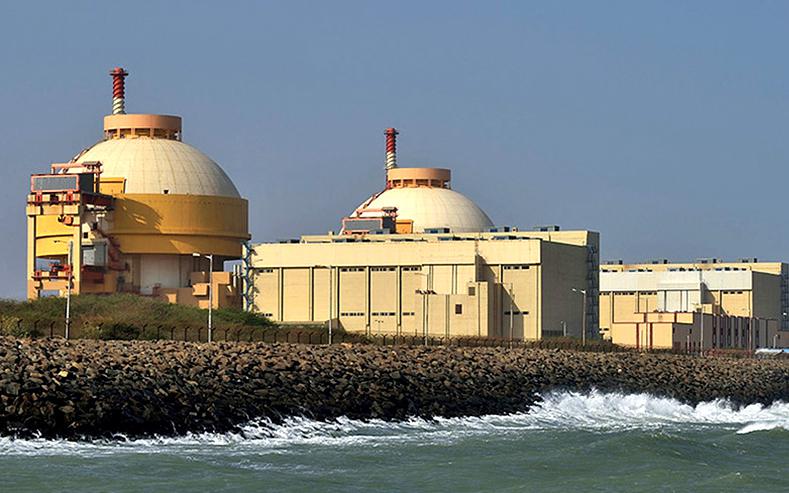
    • Anti-nuclear public sentiment: The Fukushima-Daiichi accident resulted in growing concern over the safety of nuclear plants in India .The construction of a nuclear plant in Kudankulam, Tamil Nadu, brought the issue directly into the public domain in 2012.
    • Management autonomy: Power sector is dominated by public sector companies or PSUs (owned by the central and state government). Some parts of the energy sector have made very little progress in attracting private investment since 2007.
    • Pricing: is the key to ensure the commercial viability of business entities and to attract investment into each fuel sector.
    • Rigid tariff setting mechanism: Theoretically,  prices should be supervised and adjusted in a timely manner and adequately by independent regulators to reflect changing costs. However, in India, regulators including CERC and SERCs operate in a very rigid way due to political considerations. This jeopardises the operational profitability of companies.

    EnergyConclusion

    • We need leadership that can reconcile temporal differences and balance the short-term pressures of elections with the longer-term imperatives of sustainability in energy security which calls for bold and pragmatic decision making by the leadership.

    Mains question

    Q. How India can achieve “Energy Atmanirbharta” by 2040 an ambitious target stated by prime minister? What are the challenges in achieving this goal?.

    UPSC 2023 countdown has begun! Get your personal guidance plan now! (Click here)

  • Why are the fisherfolk protesting over Vizhinjam Port Project?

    Vizhinjam near Thiruvananthapuram, is on the boil due to the under-construction Vizhinjam Port Project, from both sea and land.

    Vizhinjam Port Project

    • The Vizhinjam International Transhipment Deep-water Multipurpose Seaport is an ambitious project taken up by Government of Kerala.
    • It is designed primarily to cater container transhipment besides multi-purpose and break bulk cargo.
    • The port is being currently developed in landlord model with a Public Private Partnership component on a design, build, finance, operate and transfer (“DBFOT”) basis.

    Why protests are erupted?

    • The protestors have been opposing the construction work by the Adani Vizhinjam Port Private Limited.
    • Adani group is developing the port on DBFOT basis.

    What lies at the heart of the protest?

    • According to fisherfolk, the port work has aggravated the coastal erosion along the coast of Thiruvananthapuram.
    • A scientific study to assess the impact of the port work on the shoreline has to be conducted urgently by stopping the construction.
    • Further, around 300 families along the coastline were shifted to relief camps after their houses were destroyed due to high-intensity coastal erosion.
    • The protesters demand a comprehensive rehabilitation package, an assured minimum wage when the sea turns rough due to inclement weather and subsidised kerosene for boats.

    Why the Vizhinjam project is considered important?

    • The port is located on the southern tip of the Indian Peninsula, just 10 nautical miles from the major international sea route and east-west shipping axis.
    • It has a natural water depth of more than 20 m within a nautical mile from the coast.
    • The Vizhinjam port is likely to play a pivotal role in the maritime development of the country and Kerala.
    • The commissioning of the port is expected to leverage the growth of 17 minor ports in the State along with creating thousands of employment opportunities.


    UPSC 2023 countdown has begun! Get your personal guidance plan now! (Click here)

  • Dams in news: Vishnugadh Project

    An independent panel of the World Bank is considering a plea by residents of some village to investigate environmental damage from the under-construction Vishnugad Pipalkoti Hydro Electric Project (VPHEP).

    Vishnugadh Project

    • The 444-MW VPHEP is being built by the Tehri Hydropower Development Corporation (THDC), a partially State-owned enterprise.
    • It is being constructed on Dhauliganga River in Chamoli District of Uttarakhand.
    • The project is primarily funded by the World Bank and was sanctioned in 2011. It is proposed to be completed in June 2023.
    • About 40% of the funds for the $792 million project (₹64,000 crore approx.) has already been disbursed.

    Why in news now?

    • Residents in their complaint have said muck dumping from the dam threatens the local Lakshmi Narayan Temple, which is deemed to be of historical and cultural importance.
    • They also complained about the limited availability of water, saying that 70 of the 92 households received water only for two hours daily.
    • Before the project construction, they had ready access to water.


    UPSC 2023 countdown has begun! Get your personal guidance plan now! (Click here)

  • Automatic Number Plate Reader (ANPR) cameras for toll collection

    In light of congestion at toll plazas, the Road Transport and Highways Ministry is now moving ahead with a plan to replace toll plazas with cameras that could read number plates, also known as Automatic Number Plate Reader (ANPR) cameras.

    ANPR cameras

    • The plan is to remove toll plazas on national highways and instead rely on ANPR cameras, which will read vehicle number plates and automatically deduct toll from the linked bank accounts of vehicle owners.
    • The model is simple: Entry and exit of toll roads will have cameras capable of reading number plates, and toll will be deducted based on these cameras.

    Can all number plates be read by the cameras?

    • Not all number plates in India can be read, and only those that have come after 2019 will be registered by the cameras.
    • The government, in 2019, had come up with a rule mandating passenger vehicles to have company-fitted number plates, and only these number plates can be read by cameras.
    • The government plans to come up with a scheme to replace older number plates.
    • A pilot of this scheme is underway and legal amendments to facilitate this transition are also being moved to penalise vehicle owners who skip toll plazas and do not pay.

    Current model for toll collection: FASTags

    • Currently, about 97 per cent of the total toll collection of nearly Rs 40,000 crore happens though FASTags — the remaining 3 per cent pay higher than normal toll rates for not using FASTags.
    • With FASTags, it takes about 47 seconds per vehicle to cross a toll plaza.
    • There’s a marked throughput enhancement – more than 260 vehicles can be processed per hour via electronic toll collection lane as compared to 112 vehicles per hour via manual toll collection lane, according to government data.
    • While FASTags have eased traffic at toll plazas across the country, congestion is still reported as there are toll gates that need to be crossed after authentication.

    Why such move?

    • Congestion at toll plazas on national highways continues to impact commuters despite 97 per cent of tolling happening through FASTags.
    • Apart from ANPR helping to ease congestion, the government is also looking at GPS technology as one of the options for toll collection.

    Are there issues with ANPR?

    • The success of ANPR cameras will depend on creating an ecosystem that is in sync with the requirements of the camera.
    • The biggest problem being faced during the trials is when things are written on number plates, beyond the nine digit registration number, such as ‘Govt of India/Delhi’ etc.
    • Another problem that ANPR cameras face is in reading number plates on trucks, as most of the time they are hidden or soiled etc.
    • A pilot on a key expressway has found that about 10 per cent of vehicles with such number plates are being missed by the ANPR cameras.

    Back2Basics: What is ‘FASTag’?

    • As per Central Motor Vehicles Rules, 1989, since 1st December 2017, the FASTag had been made mandatory for all registered new four-wheelers and is being supplied by the Vehicle Manufacturer or their dealers.
    • It has been mandated that the renewal of fitness certificate will be done only after the fitment of FASTag.
    • For National Permit Vehicles, the fitment of FASTag was mandated since 1st October 2019.
    • FASTags are stickers that are affixed to the windscreen of vehicles and use Radio Frequency Identification (RFID) technology to enable digital, contactless payment of tolls without having to stop at toll gates.
    • The tags are linked to bank accounts and other payment methods.
    • As a car crosses a toll plaza, the amount is automatically deducted, and a notification is sent to the registered mobile phone number.

    How does it work?

    • The device employs Radio Frequency Identification (RFID) technology for payments directly from the prepaid or savings account linked to it.
    • It is affixed on the windscreen, so the vehicle can drive through plazas without stopping.
    • RFID technology is similar to that used in transport access-control systems, like Metro smart card.
    • If the tag is linked to a prepaid account like a wallet or a debit/credit card, then owners need to recharge/top up the tag.
    • If it is linked to a savings account, then money will get deducted automatically after the balance goes below a pre-defined threshold.
    • Once a vehicle crosses the toll, the owner will get an SMS alert on the deduction. In that, it is like a prepaid e-wallet.


    UPSC 2023 countdown has begun! Get your personal guidance plan now! (Click here)

  • Ethanol Blending

    Prime Minister has announced that India has achieved its target of blending 10% sugarcane-extracted ethanol in petrol, ahead of schedule.

    What is ethanol blending?

    • Blending ethanol with petrol to burn less fossil fuel while running vehicles is called ethanol blending.
    • Ethanol is an agricultural by-product which is mainly obtained from the processing of sugar from sugarcane, but also from other sources such as rice husk or maize.
    • Currently, 10% of the petrol that powers your vehicle is ethanol.
    • Though we have had an E10 — or 10% ethanol as policy for a while, it is only this year that we have achieved that proportion.
    • India’s aim is to increase this ratio to 20% originally by 2030 but in 2021, when NITI Aayog put out the ethanol roadmap, that deadline was advanced to 2025.

    Why need ethanol blending?

    • Ethanol blending will help bring down our share of oil imports (almost 85%) on which we spend a considerable amount of our precious foreign exchange.
    • Secondly, more ethanol output would help increase farmers’ incomes.
    • India’s net import of petroleum was 185 million tonnes at a cost of $55 billion in 2020-21.
    • A successful ethanol blending programme can save the country $4 billion per annum.

    What are first-generation and second-generation ethanols?

    • With an aim to augment ethanol supplies, the government has allowed procurement of ethanol produced from other sources besides molasses — which is first-generation ethanol or 1G.
    • Other than molasses, ethanol can be extracted from materials such as rice straw, wheat straw, corn cobs, corn stover, bagasse, bamboo and woody biomass, which are second-generation ethanol sources or 2G.
    • While inaugurating the Indian Oil Corporation’s (IOC) 2G ethanol plant last week, PM referred to not only the prospect of higher farmer income but also dwelt upon the advantages of farmers selling the residual stubble — left behind after rice is harvested — to help make biofuels.
    • This means lesser stubble burning and therefore, lesser air pollution.

    How have other countries fared?

    • Though the U.S., China, Canada and Brazil all have ethanol blending programmes, as a developing country, Brazil stands out.
    • It had legislated that the ethanol content in petrol should be in the 18-27.5% range, and it finally touched the 27% target in 2021.

    How does it impact the auto industry?

    • At the time of the NITI Aayog report in June last year, the industry had committed to the government to make all vehicles E20 material compliant by 2023.
    • This meant that the petrol points, plastics, rubber, steel and other components in vehicles would need to be compliant to hold/store fuel that is 20% ethanol.
    • Without such a change, rusting is an obvious impediment.

    Are there other alternatives?

    • Auto industry prefer the use of biofuels as the next step, compared to other options such as electric vehicles (EV), hydrogen power and compressed natural gas.
    • This is mainly because biofuels demand the least incremental investment for manufacturers.
    • Even though the industry is recovering from the economic losses bought on by the pandemic, it is bound to make some change to comply with India’s promise for net-zero emissions by 2070.

    What are the challenges before the industry when it comes to 20% ethanol blended fuel?

    • Key challenge is the optimisation of engines for higher ethanol blends and the conduct of durability studies on engines and field trials before introducing E20 compliant vehicles.
    • Storage is going to be the main concern, for if E10 supply has to continue in tandem with E20 supply, storage would have to be separate which then raises costs.

    Sources for ethanol in India

    The plan was to divert its excess sugar production to produce ethanol, 3.5 million tonnes in 2021-22 and 6 million tonnes the next year, in addition to grains like rice, corn, and barley.

    • Using surplus rice: The government’s food department revealed its plans to divert 17 million tonnes of surplus rice from its food stocks of 90 million tonnes to produce ethanol.
    • Sugarcane: This is in addition to the 2 million tonnes of sugar which is already being diverted to produce ethanol.

    How would this benefit the country?

    • Cost saving: A successful biofuels programme can save India $4 billion or about ₹30,000 crore every year by lowering import of petroleum products.
    • Emission cut: Ethanol is also less polluting and offers equivalent efficiency at a lower cost than petrol.
    • Biofuel’s policy boost: Rising production of grains and sugarcane and feasibility of making vehicles compliant to ethanol-blended fuel makes its biofuels policy a strategic requirement.
    • Early rollout: Towards this, govt has put in place interest subsidies for distilleries to expand capacity while auto firms have agreed to make compatible vehicles.

    What are the unintended effects of the policy?

    • Unsustainability of cash-crops: Increasing reliance on biofuels can push farmers to grow more water-intensive crops like sugarcane and rice.
    • Huge water requirement: Currently use 70% of the available irrigation water, negating some positive impact on the environment of using more ethanol.
    • Food and nutrition security: The move could impact India’s hunger situation by limiting the coverage of the food security schemes.
    • Food inflation: Diversion of mass consumption grains can also push food prices up.

    How will it impact crop diversification?

    • Monotonous crops: Although the biofuels policy stresses on using less water-consuming crops, farmers prefer to grow more sugarcane and rice due to price support schemes.
    • Water stress: Growing more of them can lead to an adverse impact in water-stressed areas in states.

    What about food security?

    • It is unethical to use edible grains to produce ethanol in a country where hunger is rampant.
    • India is already a poor performer in Global Hunger Index.
    • Although about 80 crore people are now receiving subsidized food grains, calculations show that over 10 crore eligible households are still excluded.


    UPSC 2023 countdown has begun! Get your personal guidance plan now! (Click here)

  • Super Vasuki: India’s longest train

    The Railways conducted a test run of its longest freight train, Super Vasuki, with 295 loaded wagons carrying over 27,000 tonnes of coal.

    Super Vasuki

    • The 3.5-km-long freight train covered the distance of about 267 km between Korba in Chhattisgarh and Rajnandgaon in Nagpur.
    • It was run by the South East Central Railway (SECR).
    • The Railways plans to use this arrangement (longer freight trains) more frequently, especially to transport coal in peak demand season to prevent fuel shortages in power stations.

    Feats achieved

    • This is the longest and heaviest freight train ever run by the Indian Railways.
    • The train takes about four minutes to cross a station.
    • The amount of coal carried by Super Vasuki is enough to fire 3,000 MW of power plant for one full day.
    • This is three times the capacity of existing railway rakes (90 cars with 100 tonnes in each) that carry about 9,000 tonnes of coal in one journey.


    UPSC 2023 countdown has begun! Get your personal guidance plan now! (Click here)

  • Assessment of discoms

    Context

    • The Andhra Pradesh (A.P.) power distribution companies (DISCOMs) subscribed to the Late Payment Surcharge (LPS) scheme introduced by the Central government to reduce their liability to generators in a phased manner over the next 12 months.

    What are discoms?

    • Power distribution companies collect payments from consumers against their energy supplies (purchased from generators) to provide necessary cash flows to the generation and transmission sectors to operate.

    What is UDAY scheme?

    • Ujjwal DISCOM Assurance Yojana is the financial turnaround and revival package for electricity distribution companies of India initiated by the Government of India with the intent to find a permanent solution to the financial mess that the power distribution is in.

    What is The Revamped Distribution Sector Scheme (RDSS)?

    • The revamped power distribution sector scheme aims to: Improve operational efficiencies, financial sustainability of discoms and power departments. Provide financial assistance to discoms. Modernise and strengthen distribution infrastructure. Improve reliability and quality of supply to the end consumers.

    Low performance of Discoms

    1) On the basis of AT&C losses

    • A key metric to measure the performance of discoms is AT&C losses.
    • The UDAY scheme had envisaged bringing down these losses to 15 per cent by 2019.
    • However, as per data on the UDAY dashboard, the AT&C losses currently stand at 21.7 per cent at the all-India level.
    • In the case of the low-income north and central-eastern states — Uttar Pradesh, Bihar, Jharkhand and Chhattisgarh — the losses are considerably higher.

    2) On the basis of cost and revenue per unit

    • On another metric — the gap between discoms costs and revenues — the difference, supposed to have been eliminated by now, stands at Rs 0.49 per unit in the absence of regular and commensurate tariff hikes.
    • For the high-income southern states of Tamil Nadu, Andhra Pradesh, and Telangana, this gap between costs and revenues is significantly higher.

    What are the factors responsible for inefficiencies?

    1) Electrification push without cost restructuring

    • The government’s push for ensuring electrification of all have contributed to greater inefficiency.
    •  To support higher levels of electrification, cost structures need to be reworked, and the distribution network would need to be augmented — in the absence of all this, losses are bound to rise.

    2) Economic fallout of the pandemic

    • With demand from industrial and commercial users falling, revenue from this stream, which is used to cross-subsidise other consumers, has declined, exacerbating the stress on discom finances.
    • A turnaround in the economy will provide some relief, but will not form the basis of a sustained improvement in finances.

    3) Lack of consumer data and metering

    •  Even six years after UDAY was launched, various levels in the distribution chain — the feeder, the distribution transformer (DT) and the consumer — have not been fully metered.
    • As a result, it is difficult to ascertain the level in the chain where losses are occurring.
    • Other than discoms in metros like Delhi and Mumbai, there is also limited data on which consumer is attached to which DT.
    • This lack of data makes it difficult to isolate and identify loss-making areas and take corrective action.

    4) No tariff hike

    • The continuing absence of political consensus at the state level to raise tariffs or to bring down AT&C losses signal a lack of resolve to tackle the issues plaguing the sector.

    Suggestions to improve the situation

    • Single discom: One of the solution centres around a national power distribution company.
    • Financial adjustment: Another option is to deduct discom dues, owed to both public and private power generating companies, from state balances with the RBI forcing states to take the necessary steps to fix discom finances.
    • National Open Access Registry (NOAR): NOAR is a centralized online platform through which the short-term open access to the inter-state transmission system is being managed in India.
    • Promote privatization: Since in an earlier policy statement the government had mentioned that privatization of discoms is to be promoted, it would make sense to consider this transitional support as a catalyst.
    • Provide transitional financial support: An alternate approach that could be considered by the Centre (in lieu of such assistance schemes) is providing only transitional financial support to all discoms, which are privatized under the private-public partnership mode.

    Conclusion

    • Continuously subsidising discoms for their AT&C losses (operational inefficiencies), and for not supplying power at commensurate tariffs to low-income households and agricultural customers (for political considerations) will become fiscally untenable.

    Mains question

    Q.There is growing demand for one nation one grid in this context Discuss the problems faced by various discoms. Suggest some robust solutions to address these problems sustainably.

    UPSC 2023 countdown has begun! Get your personal guidance plan now! (Click here)


  • Nehru’s luminous legacy

    Context

    • Seventy-five years ago, India’s first Prime Minister Pandit Jawaharlal Nehru made these remarks in his stirring speech on India attaining freedom at midnight: “The achievement we celebrate today is but a step, an opening of opportunity, to the greater triumphs and achievements that await us. Are we brave enough and wise enough to grasp this opportunity and accept the challenge of the future?”

    Nehru’s vision for India

    • Nehru’s vision of India was anchored in a set of ideas such as democracy, secularism, inclusive economic growth, free press and non-alignment in international affairs and also in institutions that would lay the foundation for India’s future growth.

    Leadership of Nehru after independence

    • In 1947, Nehru, as Prime Minister, inherited an India that was politically shattered, socially divided and emotionally devastated. Yet, with restraint and self-confidence, he steered the country through those turbulent times and laid out the vision of a modern, progressive nation that quietly earned the respect of the global community.

    Temple of modern India

    • The Bhakra-Nangal Dam: The Bhakra-Nangal Dam project is a series of multi-purpose dams that were among the earliest river valley developments schemes undertaken by the government of India after independence. The project, though, had been conceived long before independence.
    • Bhilai Steel Plant: Bhilai, located in Chhattisgarh, was home to massive iron-ore deposits at Dalli Rajhara. Taking this into consideration, the government of India and the USSR entered into an agreement which was signed on March 2nd 1955, at New Delhi.
    • Bhabha Atomic Research Centre: The Atomic Energy Establishment, Trombay (AEET), was started by the government of India on January 3rd 1954 with the intention of consolidating all research and development activities for nuclear reactors and technology under the Atomic Energy Commission.
    • Indian Council of Agricultural Research (ICAR): to support indigenous scientists like Boshi Sen, who is credited with producing hybrid maize and irradiated wheat mutant.

    Relevance of these institutions

    • Economic Development:Economic development mainly depends upon industrial development. Heavy & basic industries like iron & steel, shipping, mining, etc. are required for supplying raw materials to small industries.
    • Regional Development:Private sector usually neglect backward area. But public sector organizations set up their units in economically backward areas. By this public sector removes regional imbalance & brings regional development.
    • Employment:Various public sectors operating in India needs lot of manpower & this provide employment to unlimited individuals according to their education, experience & abilities.
    • Service Motive: Public sector organizations are working with the only motive of providing public utility services to society at large irrespective of profit.
    • Sound Infrastructure:Rapid industrial growth in a country needs sound infrastructure. Infrastructural industries require huge capital for construction of Roads, Railways, Electricity & many such industries. Private sector is unable to have such huge capital & that also without any high return but public sector can easily afford to provide all infrastructural facilities.

    Some challenges they face today

    • Inefficient Management: It has been found that these enterprises are managed by public savants. They are not professionally qualified nor experts in the management of industrial enterprises.
    • Lack of Efficiency: They are not run on commercial principles. Their main motto is social welfare, not profit earning.
    • Lack of Innovations: Innovations are essential for economic development. Public enterprise lacks it due to monopoly or lack of competition. The private sector is always busy with innovating new techniques, new production methods, etc. For the purpose of cost reduction and profit maximization.

    Some suggestions to address the challenges

    • Sound business principles: The enterprise should be run on sound business principles. There should be focus on improving efficiency in all functional areas. Policies, systems and procedures should be modified with the aim of making the enterprise flexible, efficient and profitable.
    • Autonomy: Public enterprises should have considerable autonomy in their functioning. Authority should be delegated and they should have the freedom to take decisions. Autonomy would ensure that decisions are taken at the right time and growth opportunities utilized in the best possible manner.
    • Freedom from political interference: Many public enterprises are considered to be the kingdoms of politicians. They are run to suit the needs and requirements of the ruling party.

    Conclusion

    • Today, opinions are divided about the iconic leader. While Nehru always had his critiques even back in the day, a significant section of the masses despise the dynasty politics of the Congress that ensued after his passing in 1964.
    • However, his contributions to India’s freedom, and as a Prime Minister to his country are acknowledged by people both within and outside India. His shortcomings do not take away from the legacy he cemented as a propagator for freedom, and as the free nation’s first Prime Minister.

    Mains question

    Assess the Nehruvian legacy of public sector. Do you think they are still relevant today? While discussing challenges they face what suggestion will you give to improve their performance.

    UPSC 2023 countdown has begun! Get your personal guidance plan now! (Click here)