Why in the news?
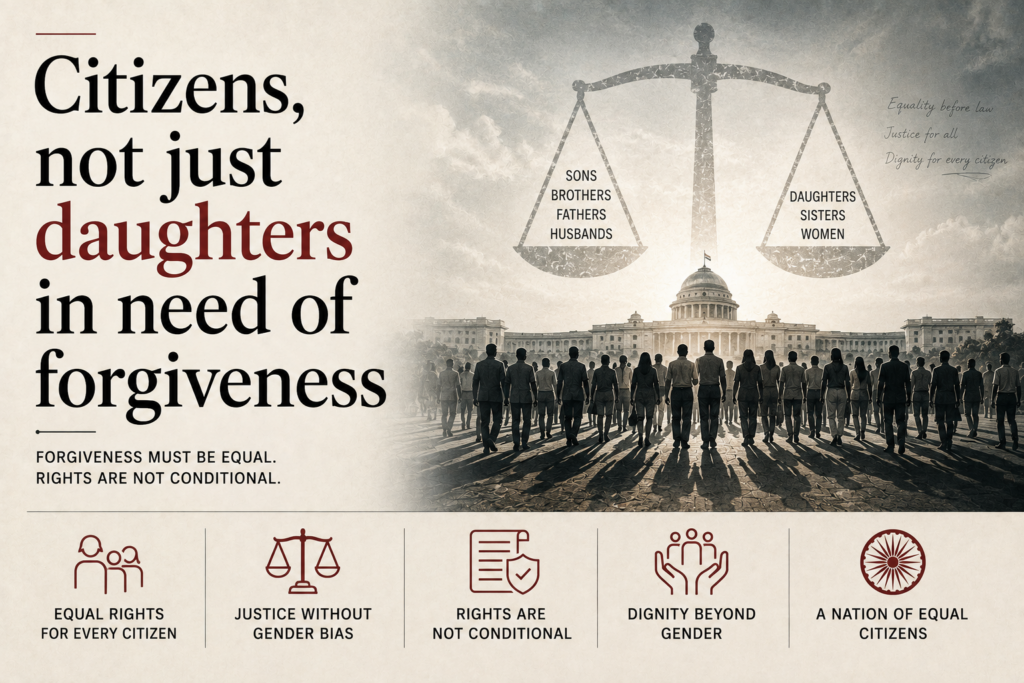
A remark by the Prime Minister offering “forgiveness” to young women who protested over examination irregularities has reopened a basic constitutional question. The framing casts the state as a benevolent patriarch and the women as daughters to be corrected, rather than as citizens exercising a right. The dispute is whether women who protest are treated as rights bearing citizens or as wards whose speech must first be polite.
What does the right to free speech under Article 19 protect?
- Scope: Article 19(1)(a) of the Constitution guarantees the freedom of speech and expression to every citizen, and this includes the right to protest and to dissent.
- Provocative speech included: The right covers expression that is impolite, provocative, or even offensive, not only measured or agreeable speech.
- Only reasonable restrictions: The right is limited solely by the reasonable restrictions in Article 19(2), such as public order, decency or morality, and defamation, incitement to an offence and not by a general demand for civility.
Why is the “forgiveness” framing seen as paternalistic?
- State as patriarch: Offering forgiveness positions the state as a merciful patriarch dispensing pardon, rather than an authority answerable to its citizens.
- Infantilising women: Describing protesting women as “daughters” who spoke wrongly reduces them to misguided children in need of correction.
- Agency denied: It treats a woman’s political grievance as an error of conduct, shifting attention from the demand to the manner of its expression.
How does the double standard operate?
- Men’s anger normalised: Aggressive language by men in protests, rallies, and legislatures is read as conviction and rarely becomes a national debate.
- Women’s anger moralised: The same expression by women is recast as a question of morality and cultural shock, which invalidates the underlying political claim.
- Burden shifts to the woman: The pattern mirrors sexual violence cases, where a woman’s character is examined before the offence itself is addressed.
Can free speech protect angry dissent?
- Protest is born of frustration: Dissent by its nature arises from anger at the prevailing system, so citizens cannot be required to soften their anger before being heard.
- Civility is not a legal test: Politeness is a social norm, not one of the grounds on which Article 19(2) permits the state to restrict speech.
- The real offence was elsewhere: At the protests the demonstrable wrong was the assault, doxxing, and harassment of students, not the words some of them used.
What is the current Status of the freedom of speech and expression in India
- Who it protects: Article 19(1)(a) extends to all citizens, and its protection of protest and criticism has been repeatedly affirmed by the judiciary.
- Settled limits: Speech may be restricted only under the eight grounds in Article 19(2), including the sovereignty and integrity of India, security of the State, public order, decency or morality, defamation, contempt of court, friendly relations with foreign states and incitement to an offence.
- Recognised expansions: Courts have read the right to include the right to know, the right to protest peacefully, and expression through diverse media.
What are the constitutional Provisions related to speech, agency, and equality
- Article 19(1)(a): Guarantees the freedom of speech and expression.
- Article 19(2): Lists the reasonable restrictions that alone may limit that freedom.
- Article 21: Protects personal liberty and autonomy, the basis on which courts uphold a woman’s right to choose her partner, faith, and way of life.
- Articles 14 and 15: Guarantee equality before the law and bar discrimination on the ground of sex, underpinning equal citizenship for women.
What are the major debates surrounding free speech and women’s agency
- Civility versus liberty: Whether provocative or offensive protest speech can be curbed in the name of decorum, or only under Article 19(2).
- Paternalism versus autonomy: Whether the state and courts may protect women in ways that override their own choices, as critiqued through the Hadiya case.
- Unequal citizenship: The argument, drawn from political theorist Carole Pateman, that the formal citizenship of men counts for more than that of women because of patriarchal privilege.
Conclusion
The central claim is that women who protest are citizens exercising a right, not daughters awaiting pardon. Treating their speech as a question of civility, while men’s aggression passes as conviction, denies them equal citizenship and misreads a right that protects even uncomfortable expression. The remedy is to treat women as full rights bearing individuals and to judge protest speech only against the limits the Constitution actually sets.
Back2Basics:
Hadiya case (2018)
- What it was: The Kerala High Court annulled the marriage of an adult woman on the assumption that she was weak and vulnerable.
- What the Supreme Court held: It set aside the annulment and restored her fundamental right to make choices about her life, faith, and partner.
- Why it matters: It is a leading illustration of courts correcting a paternalistic denial of a woman’s autonomy under Article 21.
Fundamental Rights in India (Foundational Context)
- About: Fundamental Rights in Part III of the Constitution are justiciable guarantees that an individual can enforce against the state.
- Rationale: They protect individual liberty and dignity and place limits on state power, and form part of the basic structure.
- Key concerns: Recurring tensions include balancing liberty against public order, the scope of reasonable restrictions, and the unequal enjoyment of rights across gender and class.
Way Forward
- Judge speech by Article 19(2) alone: Restrict protest speech only on the constitutional grounds, not on norms of politeness.
- Protect protestors from harassment: Act against the doxxing, assault, and vilification of demonstrators rather than policing their tone.
- Recognise women’s agency: Frame women in public life as citizens with political and personal autonomy, not as dependents to be protected.
PYQ Relevance
[UPSC 2014] What do you understand by the concept “freedom of speech and expression”? Does it cover hate speech also? Why do the films in India stand on a slightly different plane from other forms of expression? Discuss.
Linkage: The PYQ is directly relates to the constitutional scope of freedom of speech and expression under Article 19(1)(a). The article extends this debate to angry dissent, provocative speech, reasonable restrictions and women’s right to political expression.
