Why in the News
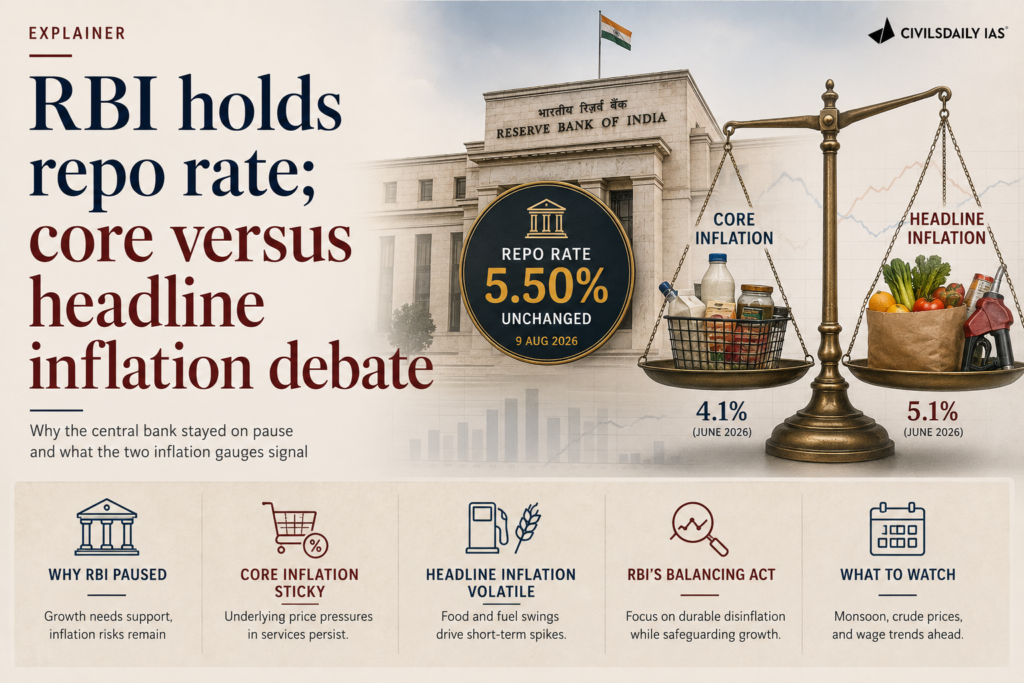
The Reserve Bank of India (RBI) held the repo rate at 5.25%. Economists are divided over whether the central bank is anchoring policy to headline CPI or to core inflation, which strips out food and fuel.
What is core inflation?
- Definition: Core inflation measures price change after removing volatile food and fuel components, showing the underlying, persistent trend.
- Why it matters: Monetary policy affects demand-driven prices, not a monsoon-driven food spike, so core is a cleaner signal for interest-rate decisions.
Why is the anchor contested?
- Mandate is headline: The RBI’s legal target is headline retail inflation around 4%, not core, so leaning on core risks appearing to shift the goalpost.
- Food weight is large: Food is a large share of India’s consumption basket, so ignoring it understates the inflation households actually face.
- Credibility risk: Frequent redefinition of the operative measure weakens the predictability that anchors inflation expectations.
Conclusion
The rate hold reflects a judgement that underlying price pressure is easing even as headline stays elevated. The next milestone is whether food inflation cools enough to align headline with the target.
PYQ Relevance
[UPSC 2024] What are the causes of persistent high food inflation in India? Comment on the effectiveness of the monetary policy of the RBI to control this type of inflation.
Linkage: The PYQ examines the limits of monetary policy in controlling persistent food-driven inflation. The debate over headline versus core inflation highlights how the RBI balances its inflation mandate with supply-side food shocks.
