Why in the News
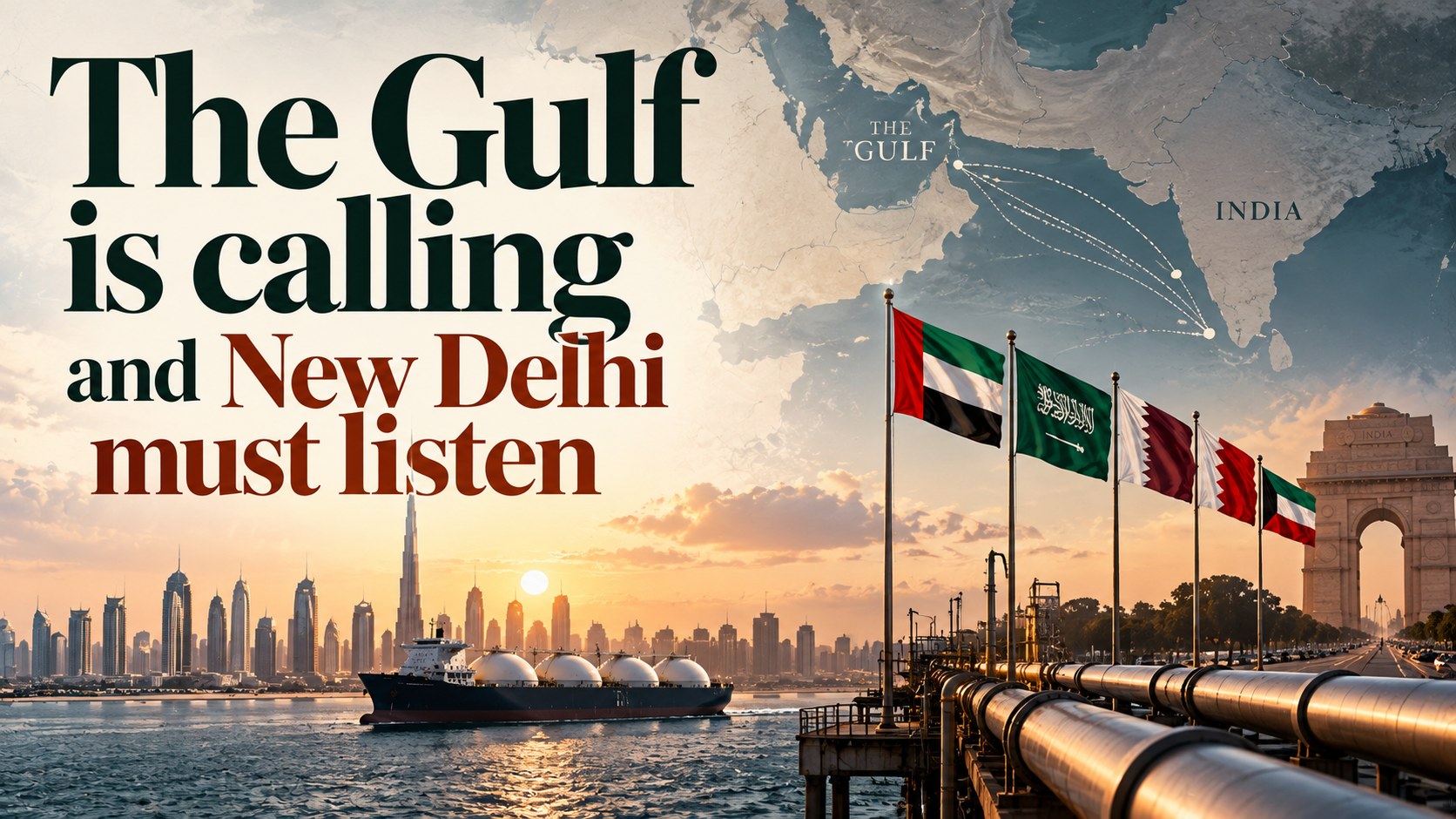
Saudi Arabia, Türkiye and Pakistan have entered a collective defence arrangement, the Mecca Joint Defence Agreement, at India’s western maritime doorstep. The agreement follows an American retreat into an unpredictable “selective engagement” posture, which has opened a security vacuum that regional states are now filling with new partners. India’s West Asia policy was built for the opposite condition. The United States guaranteed regional security and kept sea lines of communication open, so India could hedge between Riyadh, Tehran, Tel Aviv and Abu Dhabi without accepting security obligations to any of them. That posture, called multi alignment, bought influence while the region wanted markets, labour and capital. The region now wants security guarantees, and India has none on offer.
What is the Mecca Joint Defence Agreement?
- Three capabilities in one arrangement: It links Gulf capital to Turkish defence technology and to Pakistani military manpower and skill, inside a collective defence framework.
- It is framed as defensive: The pact is presented as a way of managing shared vulnerabilities among its members rather than as a bloc aimed at any particular state.
- Its significance is structural: It signals that West Asia’s security framework is being rewritten, and that the rewriting is being done by actors whose strategic interests run counter to India’s long term objectives.
What did India’s multi alignment rest on?
- The region was read as an economic hinterland: West Asia was treated as a critical source of crude oil, a reliable destination for outbound labour and a vital conduit for remittances.
- Hedging was the default in a crisis: India balanced relations between competing power centres and declined security obligations to any single capital.
- The framing was macroeconomic: The region’s geography, oil and gas reserves, capital accumulation and appetite for imported labour and skills positioned it as the bridge between a debt burdened West and a rising Asia.
- Distance was itself the asset: Being friendly to all without being too friendly to any was the point of the policy, since an obligation to one power centre would have cost access to another.
What has changed in the region’s security market?
- Distancing has lost its value: West Asian capitals no longer treat non alignment or multi alignment as a virtue, and are actively seeking dependable security partners.
- Diplomatic and commercial offers no longer buy influence: What is sought is naval patrols, intelligence sharing, defence industrial collaboration and credible counter terrorism capability, not platitudes and routine economic cooperation.
- The vacuum is filled by whoever arrives first: Türkiye has already converted the opening into a treaty commitment, and regional security arrangements will coalesce with or without Indian participation.
- The exposure is concrete: Hostile regional pacts and the growing influence of external powers bear directly on India’s trade routes, its energy security and the welfare of millions of Indian citizens in the Gulf.
Why does economic infrastructure not buy security?
- Low cost weapons defeat capital intensive assets: The eruption of hostilities involving Iran showed that state of the art port facilities, energy networks and logistics corridors remain vulnerable to low cost drones in grey zone, asymmetric warfare, meaning attacks kept below the threshold of declared war and carried out by deniable or irregular means.
- A secure enclave is not secure: Hyper secure economic zones stay exposed to spillover from the instability around them, because the perimeter is not where the risk originates.
- The Gulf model is hostage to perception: The economy runs on foreign corporations and expatriate labour, so talent and capital exit as rapidly as they arrived once security risk crosses a psychological threshold.
- A corridor is only as strong as its worst link: Disruption at a narrow naval chokepoint or along an overland route stalls the whole supply chain, whatever the quality of the infrastructure at either end.
What hard moves are available to India?
- Build presence at the chokepoints: The named priorities are the Strait of Hormuz, the Gulf of Oman, the Gulf of Aden, the waters off the Somali coast and the Bab el-Mandeb.
- Convert presence into standing arrangements: Joint maritime patrols, permanent logistics access arrangements and interoperable surveillance networks with friendly Gulf states are what turn deployments into a net security provider role.
- Sell capability rather than only buying it: India’s defence manufacturing base can offer West Asian states an alternative source of hardware and technology, with collaborative ventures, exercises carrying real operational content and deep intelligence sharing replacing procurement discussions.
- Use minilaterals rather than alliances: Security frameworks with the United Arab Emirates or Israel, and separately with Saudi Arabia, build a counterweight against hostile axes without the rigidity of a Cold War style alliance.
Challenges to an Indian security role in West Asia
- India holds no base of its own in the region: Sustained naval presence at several chokepoints needs repair, replenishment and crew rotation ashore, which an access agreement does not guarantee during a crisis. Eg. India’s logistics in the western Indian Ocean rest on access to Port Duqm in Oman rather than on infrastructure it controls.
The Fix: Convert existing access arrangements into pre stocked logistics hubs with agreed wartime access clauses, so replenishment does not turn on a host government’s decision mid conflict. - A Gulf security partnership collides with the Iran relationship: Deeper security alignment with Riyadh and Abu Dhabi narrows the space for India’s connectivity investments in Iran. Eg. The Chabahar port project has already run into payment and equipment difficulties because of exposure to United States sanctions.
The Fix: Keep the maritime role functional rather than political, built around freedom of navigation and anti piracy tasks from which Iran also benefits. - Pakistan’s institutional depth in Gulf security cannot be matched quickly: Decades of troop deployments, training missions and personnel exchanges give it standing that a new partner cannot replicate through joint exercises. Eg. Pakistani personnel have served in Saudi Arabian training and internal security roles across successive decades.
The Fix: Compete where the incumbent is weak, in maritime domain awareness, satellite surveillance and cyber defence, rather than in ground manpower. - The defence export base is small relative to the offer: Supplying a serious regional partner requires sustained production, spares and lifecycle support, which the Indian ecosystem has demonstrated in a narrow band of systems. Eg. India’s defence exports remain concentrated in components, subsystems and a small number of complete platforms.
The Fix: Anchor offers to systems with a proven service record and a committed spares chain, instead of promising a full spectrum supplier relationship the industrial base cannot yet sustain. - A guarantor role imports the region’s own quarrels: Standing commitments make India a party to disputes among partners who are themselves in conflict with each other. Eg. Saudi Arabia and the United Arab Emirates backed rival factions in Yemen while both are named as prospective Indian partners.
The Fix: Restrict commitments to maritime and counter terrorism tasks with defined geographic limits, excluding participation in intra regional ground conflicts.
Conclusion
The currency of influence in West Asia has changed from investment to protection, and India’s instruments were built for the older one. Trade volume and a large resident population do not translate into a seat in a security arrangement, which is what the region is now assembling. The marker to watch is whether the Mecca arrangement acquires operational content, meaning a joint command, basing rights or a published exercise calendar, since that is the point at which a signed pact becomes a standing capability. India’s answer will register in the same currency or it will not register at all.
India and West Asia
- The policy has a named progression: A pro Arab, Non Aligned Movement era stance gave way to full diplomatic ties with Israel in 1992, a “Look West” policy in 2005 centred on the Gulf Cooperation Council, and a “Think West” approach from 2014 that added maritime security, counter terrorism and investment to oil and diaspora.
- Energy is the base of the relationship: The region supplies nearly 60 percent of India’s crude oil and about 70 percent of its liquefied petroleum gas and liquefied natural gas requirements.
- The Gulf is India’s largest trading bloc: India-GCC bilateral trade stood at $178 billion in FY 2024-25, making the Gulf Cooperation Council India’s largest trading partner bloc.
- The human link is the largest anywhere: About 10 million Indians live and work in West Asia, and the region contributes roughly 38 percent of India’s global remittances.
Government Initiatives and Frameworks for India-West Asia Relations
- I2U2: A grouping of India, Israel, the United Arab Emirates and the United States, working on joint projects in food and energy security.
- India-Middle East-Europe Economic Corridor (IMEC): A rail and shipping corridor intended to link India to Europe through the Gulf, bypassing the Suez route.
- India-UAE Comprehensive Economic Partnership Agreement (CEPA): A bilateral trade agreement that removed tariffs across most trade lines and deepened investment flows between the two countries.
- Chabahar port agreement: A ten year contract signed in 2024 to operate the Shahid Beheshti terminal in Iran, giving India a land and sea route to Afghanistan and Central Asia that avoids Pakistan.
Challenges in India’s West Asia Engagement
- Energy import concentration: A large share of India’s crude and gas comes from a single region whose export routes run through two narrow straits. Eg. Qatar supplies roughly 40 percent of India’s liquefied natural gas imports.
The Fix: Expand long term contracts with West African, American and Australian suppliers, so no single region carries a majority of the import basket. - Remittance dependence at the State level: Household incomes and State finances in parts of India rest on Gulf transfers that fall the moment the regional economy contracts. Eg. Kerala reported roughly a 20 percent decline in monthly Gulf inflows during the 2026 crisis.
The Fix: Widen the destination mix for emigrant workers through skill mobility agreements with Japan, Germany and Australia, so remittance flows are not tied to one region’s business cycle. - Fertiliser and food input exposure: Gulf sourced urea and phosphate underpin Indian crop cycles, so a shipping disruption reaches the farm within a season. Eg. Long term potash and phosphate supplies from Jordan and Oman are central to India’s fertiliser availability.
The Fix: Hold buffer stocks timed to the Rabi and Kharif input calendars, and widen phosphate sourcing towards Morocco, so one corridor’s closure does not hit a sowing season.
[2018, GS2, 15 marks] In what ways would the ongoing US-Iran Nuclear Pact Controversy affect the national interest of India? How should India respond to this situation?”
