Why in the News
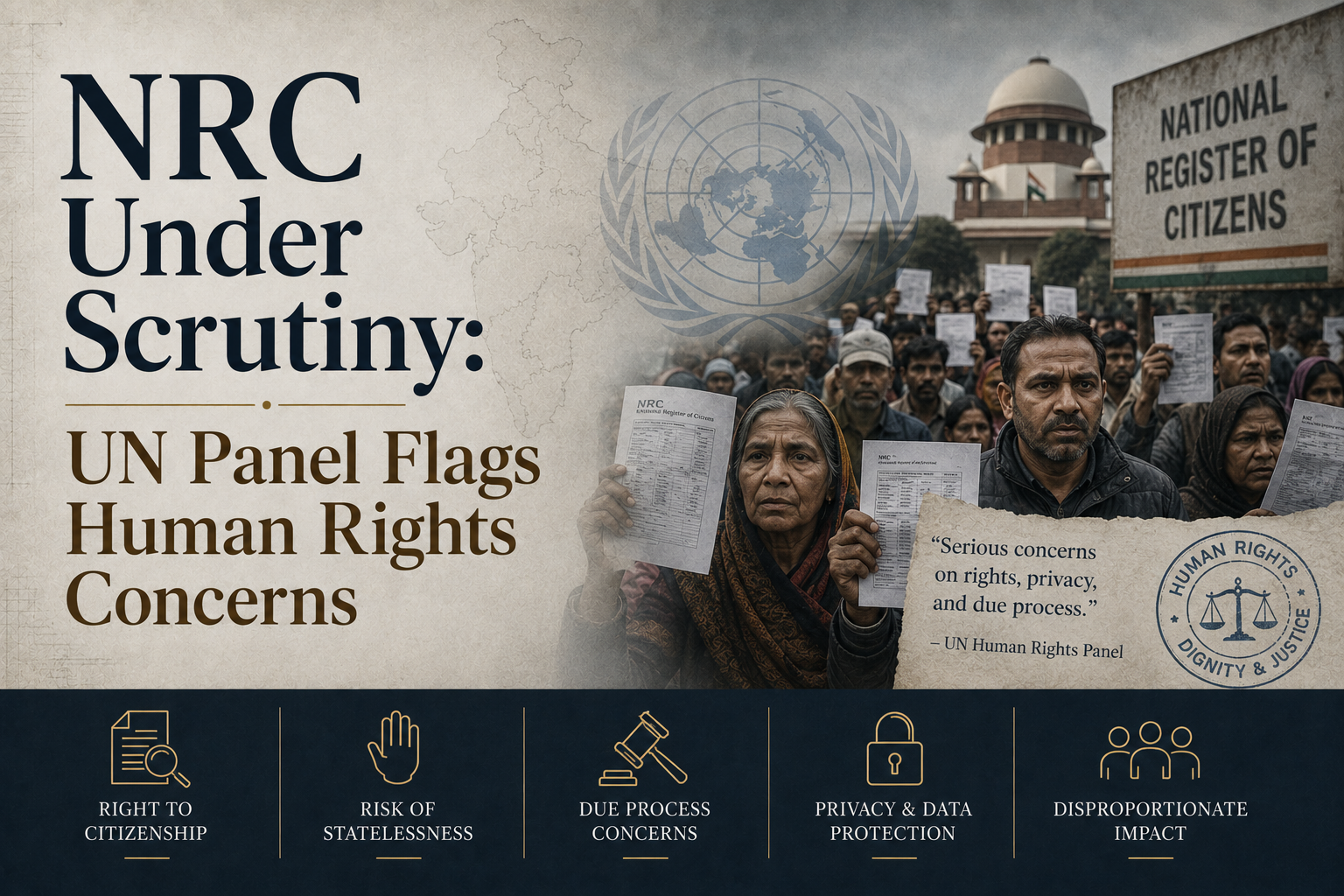
The UN Committee on the Elimination of Racial Discrimination (CERD) has released concluding observations, following its eleventh periodic review of India on August 11-12, criticising the implementation of the National Register of Citizens (NRC) in Assam and calling for its suspension. This is a One development, one row item; The Hindu and The Indian Express both carried the Committee’s findings, and this entry is filed from the Indian Express account, which reports the call to suspend the NRC and the Committee’s specific concern about the Special Intensive Revision (SIR) process, in more detail.
What did the Committee find, and what did it call on India to do?
- The Committee criticised the NRC’s implementation in Assam: It found that the process subjected Bengali-speaking Muslims to what it described as “systematic and structural racial discrimination,” and called for the NRC to be suspended and India’s legislative framework around it to be reviewed.
- The Special Intensive Revision process was separately flagged: The Committee raised concern that Bengali-speaking Muslim voters were reportedly disproportionately affected by the Election Commission’s SIR process in West Bengal and Assam.
- The Committee’s concern extends to Scheduled Castes, Scheduled Tribes, and Rohingya refugees: It said it was “gravely concerned” about reports of large-scale violations by law enforcement officials against ethnic and ethno-religious groups, including Scheduled Tribes, Scheduled Castes (particularly Dalits), and non-citizens, and cited allegations of racially motivated violence, excessive use of force, extrajudicial killings, arbitrary detention, torture and sexual violence.
- It called for accountability, not merely acknowledgement: The Committee asked India to conduct prompt, thorough and impartial investigations into these allegations and ensure accountability for those responsible, and to urgently address hate speech and hate crimes against Rohingya, Bengali-speaking Muslims, migrants and asylum-seekers.
- India’s response came through its review delegation: India sent the Solicitor-General as head of delegation for the underlying periodic review held on August 11-12, ahead of these concluding observations.
Conclusion
CERD’s concluding observations place NRC suspension, a review of the associated legislative framework, and law enforcement accountability toward Scheduled Castes, Scheduled Tribes and Rohingya refugees on record as a formal treaty-body finding against India, made under the same UN human rights review process, rather than as commentary on a single incident, with India’s substantive reply yet to be reported.
Back2Basics
- UN Committee on the Elimination of Racial Discrimination (CERD): The treaty body of independent experts that monitors States parties’ implementation of the International Convention on the Elimination of All Forms of Racial Discrimination (ICERD), which India ratified in 1968, through periodic reviews and concluding observations.
- National Register of Citizens (NRC), Assam: A register, first prepared in 1951 and updated under Supreme Court supervision, intended to identify genuine Indian citizens in Assam by excluding illegal migrants, particularly in the context of the Assam Accord (1985).
