Source: The Hindu, Page 8 Published: 15 October 2026
Why in the News
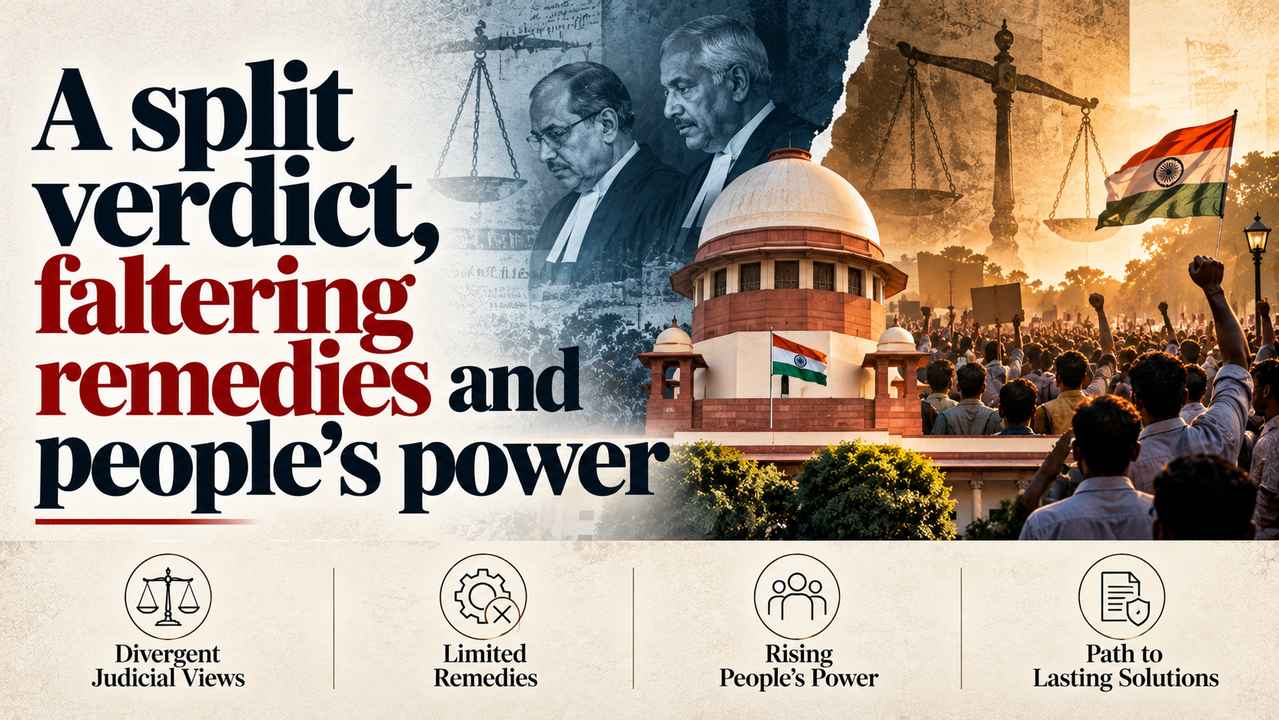
The choice of the Chief Election Commissioner (CEC) and Election Commissioners (ECs) was to be shielded from the executive after Anoop Baranwal vs Union of India (2023), yet a 2023 law handing it back to a government led panel remains in force. In Dr. Jaya Thakur vs Union of India, a two judge Bench of the Supreme Court delivered a split verdict on that law, leaving it to a Constitution Bench.
What did Anoop Baranwal settle, and what does the 2023 Act do?
- What it is: The CEC and ECs run elections as neutral umpires. A Constitution Bench in Baranwal held that a committee with executive predominance, one the government of the day controls, cannot select them, much like one team cannot pick the referee.
- The 2023 Act: The Chief Election Commissioner and Other Election Commissioners (Appointment, Conditions of Service and Term of Office) Act, 2023 gives selection to the Prime Minister, a Union Minister he chooses and the Leader of the Opposition.
- Government majority: The Prime Minister and his Minister form two thirds of the committee, so the Opposition leader can always be outvoted.
- Lifelong immunity: The Act also gives the CEC and ECs lifelong immunity for their acts and words in office.
- The takeaway: Whoever controls the selection committee decides who runs elections.
How did the two judges split?
- Justice Dipankar Datta: Baranwal settled the position, so the Act must be tested against it. A panel led by the Prime Minister and his Minister has the executive predominance Baranwal barred.
- Justice Satish Chandra Sharma: The issues were important enough to need a reference to a larger Constitution Bench.
- Common order: On September 23, 2026, the judges jointly sought an early hearing by a Constitution Bench.
- Delay as failure: Counsel for the petitioners calls the reference an “institutional confession” that the Court failed to decide in time.
Why is the referral itself under question?
- Undisclosed link: Justice Sharma’s son has served as empanelled standing counsel, a lawyer on the regular panel, for the Election Commission of India (ECI) in the Madhya Pradesh High Court. The link went undisclosed, a possible conflict of interest.
- Recall petitions: Petitions in the Supreme Court now seek to recall and nullify Justice Sharma’s order.
- Rupa Ashok Hurra vs Ashok Hurra (2002): A Constitution Bench indicated that a judge’s failure to disclose a link with the subject or the parties vitiates, or taints, the judgment, so it warrants a revisit.
- Judicial ethics codes: The Bangalore Principles of Judicial Conduct bar impropriety and its appearance, including sitting where a family member is linked to the case. The Court’s Restatement of Values of Judicial Life (May 1997) agrees.
Why look beyond the courts?
- Ambedkar’s 1951 speech: Justice Datta quoted B.R. Ambedkar’s speech of October 28, 1951. It cited Shyama Prasad Mukherjee’s charge that officials were helping the ruling Congress.
- Ambedkar’s warning: Ambedkar warned that a failed parliamentary democracy would end in “rebellion, anarchy and Communism”.
- Laws undone by politics: The Court upheld the Terrorist and Disruptive Activities (Prevention) Act, 1987 (TADA) and the Prevention of Terrorism Act, 2002 (POTA). TADA was later allowed to lapse and POTA was repealed.
- Emergency verdict: The Court upheld the Emergency, including in ADM Jabalpur (1976), yet voters removed that government at the next election.
- Farm laws: Parliament repealed the farm laws in 2021 after massive protests.
Challenges
- Contested umpires keep working: Commissioners chosen under the challenged Act will run elections until a Constitution Bench rules.
- Recusal left to conscience: No written procedure obliges a judge to disclose a family link before hearing a case.
- One resignation fixes little: Protests, including by the Cockroach Janta Party, seek the CEC’s resignation, but a successor would come through the same selection design.
- Low public trust: Voters already doubt electoral institutions, and delay deepens it.
Way Forward
- Neutral selection body: Parliament should repeal the 2023 Act and let a neutral body select the CEC and ECs.
- Hearing schedule: The Chief Justice of India should form the Constitution Bench promptly with a fixed timeline.
- Written disclosure: Judges should record any family link with a party or counsel before a hearing begins.
- Review of the rolls: The controversial revision of electoral rolls should be revisited and wrongful deletions undone.
Conclusion
Who chooses India’s election umpires is settled in principle but open in practice. The pace of the Constitution Bench and the fate of the recall petitions will show whether courts or the street settle it first.
PYQ
[2026, GS2, 10 marks] Is the right to vote a fundamental right? Discuss the position of the Election Commission of India while undertaking the revision of electoral rolls. Can it also examine the question of citizenship of voters?
