💥Join UPSC 2027,2028 Mentorship (July Batch) + XFactor Notes & Microthemes PDF

Category: Burning Issues

  • Conference of Parties and Paris Agreement – Comprehensive Notes

    Get more such notes in our Samachar Manthan Program.

    With the Paris Climate Deal set to come into effect in 2020, nearly 200 countries gathered at Katowice in Poland to adopt a set of rules to limit global warming.

    INTRODUCTION-

    • The global fight against climate change reached another milestone when negotiators from 196 countries finalized a rulebook for the 2015 Paris Agreement.
    • The finalization paves the way for implementation of the Paris Agreement, which is supposed to replace the existing Kyoto Protocol in 2020.

    What were the key issues at the conference?

    • After the adoption of the Paris Agreement in 2015, the conference was mandated to finalize the modalities, procedures, and guidelines, called the “Paris Rulebook”.
    • The Paris Agreement called for keeping a global average temperature rise this century to well below 2°C above pre-industrial levels while pursuing efforts to limit the temperature increase to 1.5°C.
    • The other two key issues at the conference were the conclusion of the 2018 Facilitative Talanoa Dialogue and the stock-taking exercise on pre-2020 implementation and ambition.

    BACKGROUND-

    #What is the Paris Agreement?

    It is an agreement within the UNFCCC dealing with greenhouse gas emissions mitigation, adaptation, and finance starting in the year 2020. The Paris Accord is considered as a turning point for global climate policy.

    Aims:

    • The central aim is to strengthen the global response to the threat of climate change by keeping a global temperature rise this century well below 2 degrees Celsius above pre-industrial levels.
    • It further aims at pursuing efforts to limit the temperature increase even further to 1.5 degrees Celsius.
    • The agreement aims to increase the ability of countries to deal with the impacts of climate change.
    • It also aims at making finance flows consistent with a pathway towards low greenhouse gas emissions and climate-resilient development.

    #What are INDCs?

    • INDCs are a declaration of individual countries which indicate what post-2020 climate actions they intend to take under a new international agreement, known as their Intended Nationally Determined Contributions (INDCs).
    • The INDCs combine the top-down system of a United Nations climate agreement with bottom-up system-in elements through which countries put forward their agreements in the context of their own national circumstances, capabilities and priorities, within the ambition to reduce global greenhouse gas emissions enough to keep global temperature rise to 2 degrees Celsius.
    • The INDCs will not only contain steps taken towards emission reductions, but also aim to address steps taken to adapt to climate change impacts, and what support the country needs-or will provide to address climate change.

    India’s INDC :

    india emissions cut climate change paris

    What was the main outcome?

    • After two weeks of negotiations, the Katowice conference finalized a 133-page rulebook for implementation of the Paris Agreement, which was unanimously adopted by all member countries.
    • The guidelines set out how countries will provide information about their Nationally Determined Contributions describing their domestic climate actions, mitigation and adaptation measures.
    • The global stock-take also takes into consideration loss and damage due to adverse effects of climate change. However, the conference could not reach consensus on voluntary market mechanisms.

    What was agreed at COP24?

    • Countries settled on most of the tricky elements of the “rulebook” for putting the 2015 Paris agreement into practice.
    • This includes how governments will measure, report on and verify their emissions-cutting efforts, a key element because it ensures all countries are held to proper standards and will find it harder to wriggle out of their commitments.
    • This global deal is meant for climate actions by all the countries across the globe post-2020.


    What it contains?

    • The Katowice package includes guidelines that will operationalize the transparency framework. It sets out how countries will provide information about their Nationally Determined Contributions (NDCs) that describe their domestic climate actions.
    • This information includes mitigation and adaptation measures as well as details of financial support for climate action in developing countries.
    • Besides transparency framework, the Katowice package also includes guidelines that relate to the process for establishing new targets on finance from 2025 onwards to follow-on from the current target of mobilizing $100 billion per year from 2020 to support developing countries.
    • It also includes how to conduct the Global Stocktake (GST) of the effectiveness of climate action in 2023 and how to assess progress on the development and transfer of technology.


    The significance of the rulebook:

    • The global rules are important to ensure that each tonne of emissions released into the atmosphere is accounted for.
    • In this way, progress towards the emission limitation goals of the Paris Agreement can be accurately measured.
    • Currently, the climate actions of rich nations for the pre-2020 period are being guided by the Kyoto Protocol.

    Has the rulebook addressed all issues it was meant to look at?

    One important element could not be agreed upon and had to be deferred for until next year. This relates to Article 6 of the Paris Agreement which talks about setting up a market mechanism for trading of carbon emissions.

    An emissions trading system already exists under the Kyoto Protocol, though it has become ineffective over the last few years and is meant to end with the end of Kyoto Protocol in 2020.

    Why did it take so long?

    • There was a row over carbon credits, which are awarded to countries for their emissions-cutting efforts and their carbon sinks, such as forests, which absorb carbon.
    • These credits count towards countries’ emissions-cutting targets. Brazil, which hopes to benefit from its large rainforest cover, insisted on a new form of wording that critics said would allow double counting of credits, undermining the integrity of the system. This issue has been put off until next year.

    Any other highlights?

    • The US continued to obstruct the climate action talks on coal. The US, Saudi Arabia, Russia and Kuwait objected to “welcoming” the Intergovernmental Panel on Climate Change report on global warming.

    What wasn’t agreed?

    • Largely absent from these talks, which had a technical focus, was the key question of how countries will step up their targets on cutting emissions.
    • On current targets, the world is set for 3C of warming from pre-industrial levels, which scientists say would be disastrous, resulting in droughts, floods, sea level rises and the decline of agricultural productivity.


    When will that be agreed?

    The key deadline is 2020, when countries must show they have met targets set a decade ago for cutting their emissions, and when they must affirm new, much tougher targets.


    What does the science say?

    The Intergovernmental Panel on Climate Change (IPCC), the global body of the world’s leading climate scientists, warned two months ago that allowing warming to reach 1.5C above pre-industrial levels would have grave consequences, including the die-off of coral reefs and devastation of many species.


    How long have we got?

    If we extrapolate from the IPCC’s findings, the world has little more than a decade to bring emissions under control and halve them, which would help to stabilize the climate.


    Are we getting there?

    After years in which the world’s carbon emissions appeared to be stabilising, they are on the rise again. Coal use continues and oil is still the engine of much of the world’s economy. Clean energy is coming on-stream at a faster rate than many predicted, and the costs of it have come down rapidly, but its adoption needs to be speeded up.


    Infrastructure, such as energy generation plants, transport networks and buildings, is a central issue: infrastructure built now to rely on high-carbon energy effectively locks in high emissions for decades to come. Some people are also saying we need to invest in projects to remove carbon from the atmosphere.


    What happens next?

    • The UN will meet again next year in Chile to thrash out the final elements of the Paris rulebook and begin work on future emissions targets. But the crunch conference will come in 2020, when countries must meet the deadline for their current emissions commitments and produce new targets for 2030 and beyond that go further towards meeting scientific advice.
    • That conference may be held in the UK or Italy, both of which have bid to be hosts. The UK’s intention in offering to host is to signal it will retain its role on the world stage after Brexit. The event may also provide a welcome change from wranglings over Brexit and intractable trade deals.

    What was India’s response?

    • India reaffirmed its commitment to meeting the goals under the Paris Agreement and engaged in all the negotiations while protecting its key interests, including climate justice.
    • But it expressed strong reservation over the lack of equity in the global stock-take decision, a proposed five-yearly review of the impact of countries’ climate change actions.
    • India had expected that decisions would be in consonance with the principles of the United Nations Framework Convention on Climate Change and the Paris pact.

    What were the negotiations on climate finance?

    • The guidelines on finance provisions operationalized the obligation of developed countries to provide the means of implementation to developing countries, while recognizing the need for separate and additional finance for climate action.
    • This includes guidelines for establishing new climate finance targets from 2025 onwards to follow on from the target of mobilizing $100 billion a year from 2020 to support developing countries.
    • The rulebook spells out what kinds of financial flows can be classified as climate finance, how they should be accounted for, and the kind of information about them needed to be submitted.

    ANALYSIS-

    • Katowice seems to have succeeded in instilling a modicum of strictness, establishing a tough apparatus for countries to share detailed information on their respective climate actions.
    • There has been, the delegates argue, some improvement on the prickly issues of transparency and climate finance: the rule book has ensured that a compliance commission would step in to address breaches committed by tardy nation states.
    • This is not to suggest that the talks were an unequivocal success. Before the conference came to an end, India’s lead negotiator had stated that the principle of equity had not been adhered to in the case of the ‘global stock-take’ in 2023, an exercise that is meant to assess whether the sum total of interventions implemented by all nations is enough to keep the global average temperature near or, hopefully, below two degree Celsius at pre-industrial levels.
    • Finances remain asymmetrical. There is no provision yet to extend the commitment by richer countries to finance the Green Climate Fund beyond 2025 — the year their pledge expires.
    • Ominously, the global solidarity that had been achieved to act against climate change is fraying, with the United States of America leading the pack of climate-change sceptics. Katowice has not achieved enough to stem this tide.

    CONCLUSION 

    • The key objective of the meeting is to adopt the implementation guidelines of the Paris Climate Change Agreement.

      This is crucial because it ensures the true potential of the Paris Agreement can be unleashed, including ramping up climate action so that the central goal of the agreement can be achieved, namely to hold the global average temperature to as close as possible to 1.5 degrees Celsius.

     

  • G20 – Comprehensive Notes

    Note4Students – A prelims question can be framed from any of the given details.

    CONTEXT 

    As more than 50 ministers and world leaders met in Argentina for this year’s G20 summit, they will have three priorities in mind: the future of work, infrastructure for development and sustainable food production.


    INTRODUCTION

    • The recent 13th G20 summit in Buenos Aires was a success because at least it managed to issue a Joint Communique, unlike in the case of the APEC summit which took place in Papua New Guinea in October when the two economic giants, the US and China, did not agree on a joint communique.
    • Communiques matter. While they are non-binding in the legal sense, they are binding in the political sense. Leaders and officials fight tooth-and-nail over the commitments included in the communique.
    • These commitments are used to pressure countries into action. Countries use them to sell difficult reforms domestically. Skillful politicians use them to leverage domestic legislatures.
    • When observed over time, the commitments in APEC and G20 communique reveal the unmistakable power of multilateral forums to build a global consensus on some of the most pressing challenges facing the world.


    About G20:

    • Formed in 1999, the G20 is an international forum of the governments and central bank governors from 20 major economies.
    • Collectively, the G20 economies account for around 85 percent of the Gross World Product (GWP), 80 percent of world trade.
    • To tackle the problems or the address issues that plague the world, the heads of governments of the G20 nations periodically participate in summits. In addition to it, the group also hosts separate meetings of the finance ministers and foreign ministers.
    • The G20 has no permanent staff of its own and its chairmanship rotates annually between nations divided into regional groupings.
    • The first G20 Summit was held in Berlin in December 1999 and was hosted by the finance ministers of Germany and Canada.


    Objectives:

    • The Group was formed with an aim of studying, reviewing, and promoting high-level discussion of policy issues pertaining to the promotion of international financial stability.
    • The forum aims to pre-empt balance of payments problems and turmoil on financial markets by improved coordination of monetary, fiscal, and financial policies.
    • The forum seeks to address issues that go beyond the responsibilities of any one organisation.


    Member Countries:

    The members of the G20 consist of 19 individual countries plus the European Union (EU).

    • The 19 member countries of the forum are Argentina, Australia, Brazil, Canada, China, France, Germany, India, Indonesia, Italy, Japan, Mexico, Russia, Saudi Arabia, South Africa, South Korea, Turkey, United Kingdom and the United States.
    • The European Union is represented by the European Commission and by the European Central Bank.


    • Shaktikanta Das, the former Secretary of the Department of Economic Affairs (DEA), has been appointed as India’s G20 Sherpa till December 31, 2018 for the Development Track of the G20 summit.
    • A Sherpa is a personal representative of the leader of a member country at an international Summit meeting such as the G8, G20 or the Nuclear Security Summit and are responsible for thrashing out the details before the meeting of the leaders.


    The G20 Troika

    Every year, when a new country assumes the presidency (Argentina in 2018), it works hand in hand with the previous presidency (Germany) and the next presidency (Japan) in what is known as the troika. This ensures continuity in the group’s agenda.

    Significance of G20

    Together, the G20 members represent –

    • 2/3rd of the world population.
    • 85% of the global gross product.
    • 75% of international trade.
    • 80% of global investments in research and development.

    Because the G-20 is a forum, its agreements or decisions have no legal impact, but they do influence countries’ policies and global cooperation.

    Takeaways for India @ 13th G20 Summit

    JAI

    • It was the first meeting among the three leaders of Japan, India and USA. Currently, India’s relation with Japan and America are the best that they have ever been. All the three countries are democracies therefore, in terms of values; they are on the same page.
    • What really brings them together at the moment is the convergence of interests such as ensuring stability, prosperity, and security in the Indo-Pacific region. Greater importance was also given to India in terms of economic, political and security architecture by both countries.
    • Free, open, inclusive and rules-based order is essential for regional peace and prosperity. The Prime Minister also offered some ideas on how JAI countries should take forward on the concept of Indo-Pacific and how the three countries can work together to promote this concept.
    • These meetings were useful and they should continue on the margins of subsequent G-20 meetings.
    • Japan, India, and the USA are also engaged in Quadrilateral Security Dialogue (initiated in 2007 and reestablished in 2017) in parallel with joint military exercises of an unprecedented scale, called Exercise Malabar. Such dialogues are important in providing a counterbalance to tensions created in South China by especially China.


    China issue

    • In the last few years, China has expanded its influence and assertiveness in the region particularly in the South China Sea.
    • It continues to create and occupy more islands and militarize them in the South China Sea despite opposition from the neighboring countries like the Philippines and ASEAN as well.
    • This has also brought India, US and Japan together.


    Action on economic offenders

    • Prime Minister Narendra Modi presented a nine-point programme on ways to take action against fugitive economic offenders. India managed to push through a clause in the final communiquéwhich calls for a universal law which allows the assets of economic offenders in other nations to be frozen, and their repatriation expedited. 
    • This is significant given that some defaulters have fled the country after transferring assets abroad.


    RIC

    • Leaders of India, China and Russia called for reforming multilateral institutions, including the United Nations (UN) and the World Trade Organization (WTO), as they understood the benefits of a multilateral trading system and an open world economy for global growth.
    • They also agreed to have regular consultations to jointly promote international and regional peace and stability, to strengthen cooperation through BRICS (Brazil, Russia, India, China and South Africa), the SCO (Shanghai Cooperation Organization) and the East Asia Summit (EAS) mechanisms, to address global challenges such as terrorism and climate change.


    Criticism Insufficiently legitimate


    • The G20 is in a dangerous downward spiral of its own. Much like Argentina, it requires a return to global cooperation if it is to break out of it. US President Donald Trump has made the upcoming G20 meeting all about his bilateral meeting with Chinese President Xi Jinping.
    • But if the G20 is to find durable long-term solutions to the challenges facing the world, it cannot allow itself to be sidelined so easily into a Trump-style Punch-and-Judy show. Global challenges require global solutions.
    • The consensus approach is now being aggressively challenged. It leaves many wondering whether this week’s G20 meeting will be doomed to the same fate as that of APEC.
    • President Trump is no fan of the G20. His extreme views and unreasonable demands mean that G20 meetings quickly become the ‘G19 versus one’. Bilateral dealing is designed to help him circumvent this problem. He has created a great deal of hype about his bilateral meeting with President Xi. 

    No permanent secretariat

    • Simultaneously, the informal structure of the G20, with a rotating chair and no permanent secretariat, means that agendas are determined each year by the chair and so can swing widely, and formal mechanisms to monitor follow-through on countries’ public commitments are weak.

    Bias

    • The G20 is composed of 20 large and important economies. This creates a situation in which small countries have to follow their big brothers, in order to survive.
    • The main threat to the G20’s effectiveness is its lack of domestic legitimacy within member countries. The group is widely perceived by the public as transnational elites hatching plans behind closed doors in insulated centers of power.
    • The US had a big presence and clearly, the most unpredictable and volatile President Trump dominated the entire meeting and the Communique echoed Trump’s words regarding the need to reform the WTO and the world trading system.
    • Without genuine ex-ante engagement to build trust and support with diverse domestic constituencies such as labor, business, civil society, and the members of parliaments and congresses that purportedly represent these different interests — leaders will never have space within the G20 to negotiate meaningful agreements.

    Failed to live up to the expectations

    • Finance ministers and heads of state now come to the table with their hands tied, their positions determined in advance by their governments and a formal script that precludes meaningful and creative compromises.
    • And the problem only increases once leaders leave summits to return home. Bound internationally by public commitments, but without the ability to get those agendas enacted at home, the effective implementation of commitments is even weaker than the ability of leaders to forge meaningful agreements in the first place.
    • The G20 summit has in effect become a G30 because countries unhappy about being frozen out of the club have turned up anyway.

    More showoff and less efficient

    • Meetings have become talkfests and photo opportunities. The willingness to come together in the hostile environment of late 2008 and early 2009 has entirely dissipated.
    • The G20 agenda utterly fails to break with the tired, broken policies of the free market.
    • Today the 20 countries have a different identity than when G20 was founded. Intended to be setting a framework for global governance, it has become a stage for an increasing number of authoritarian and populist leaders.  This year, the controversial presence of Prince Salman bin Mohammad of Saudi Arabia created a stir.
    • The G20 summits come at a great cost, especially for a country like Argentina which is still reeling under high inflation and an austerity drive.

    What impact does the G20 have?

    The G20 is the most important forum for international cooperation. During the meetings, the main challenges of the world are discussed and the main policies are coordinated at the global level. In the face of an uncertain international context, international cooperation is key, and thus the G20 acquires even more relevance.

    The main achievements of the G20 include:

    • the increased participation of emerging countries in global issues,
    • the reform of international financial institutions,
    • the monitoring of national financial institutions,
    • the improvement in the regulations of the economies whose problems led to the crisis and the creation of safety nets to prevent problems in the future.

    The G20 also specifically helped to provide emergency funds during the 2008 crisis and plays an important role in financing for development. 

    Conclusion:

    • Differences aside, the global alliances played out on the G20 stage are a reminder of the benefits of having such a forum to establish consensus on the issues that matter.
    • They might not always deliver on the promises made but such platforms give hope of talk followed by meaningful action.
    • It is only when their leaders sit down together that there is a real chance of finding collective solutions to globally pressing issues.
    • The G20 is capable of delivering practical outcomes if countries use it strategically.


    The complete story can be found here – 

    G20 : Economic Cooperation ahead

  • [Burning Issue] Ten Years after the Mumbai Attack

    CONTEXT

    • Ten years ago, Pakistan carried out one of the most heinous of terror attacks perpetrated anywhere in the world. The 26/11 Mumbai terror attack, named after the date in 2008.
    • The targets were carefully chosen after being surveyed for maximum impact, viz. the Taj and Oberoi Hotels, Chhatrapati Shivaji Maharaj Terminus, the Jewish centre at Nariman House, and the Leopold Cafe, since these places were frequented by Europeans, Indians and Jews.

    INTRODUCTION

    • India’s internal security apparatus continues to move with characteristic and elephantine slowness ten years after the Mumbai 26/11 attacks, when the national leadership had promised it would take all possible measures to ensure that such incidents would never be repeated.
    • A constellation of factors – domestic, regional, and global – have nevertheless worked to ensure that there have been no repeats of the 26/11 attacks since, but vulnerabilities remain endemic.
    • Indeed, speaking of the threat of Islamist terrorism, Union Home Minister Rajnath Singh rightly observed, “There has been a decline in the incidents of extremism. The credit for this should go to the followers of Islam in India.”
    • Nevertheless, despite enveloping deficiencies and deficits, the intelligence and policing establishments have also responded with surprising alacrity and effectiveness.
    • Specifically, with regard to the threat from the Islamic State (Daesh), at least 112 persons have been arrested, including at least 33 in 2017, and another 60 detained, for linkages with, plots connected to, or attempts to travel to join this global terrorist formation.

    Background

    26/11 Attack

    • The 26/11 Mumbai terror attack was one of a kind and not a mere variant of previous instances of terrorist violence.
    • It was the rarest of rare cases, where one state’s resources, viz. Pakistan’s were employed to carry out a series of terror attacks in a major Indian city.
    • It was a case of ‘war by other means’, in which the authorities in Pakistan, the Inter-Services Intelligence Directorate, the Pakistani armed forces, were involved.
    • The Mumbai terror attack was not based on a sudden impulse. Several years of planning and preparation had preceded the attack, even as the peace talk was going on between India and Pakistan.
    • From an Indian standpoint, it was for the first time that an operation of this nature involved Rapid Action Force personnel, Marine Commandos (MARCOS), the National Security Guard (NSG*) and the Mumbai Police.

    Lessons Learned

    • The incident made changes in India’s attitudes toward terrorism. It hardened the country’s attitude towards terrorists and militants of all stripes.
    • Following the Mumbai attacks, the government of India came up with many measures to deal with the new threat.
    • A specialised agency to deal with terrorist offences, the National Investigation Agency, was set up and has been functioning from January 2009.
    • Four National Security Guard (NSG) hubs were set up for a rapid response to attacks. (Mumbai, Kolkata, Hyderabad and Chennai post-2008, and in 2017 Gujarat got the 5th NSG hub)
    • An amended Unlawful Activities (Prevention) Act was created to provide for the arrest and interrogation of terrorism suspects.
    • Outcomes of 26/11 were also to get the Multi-Agency Centre (MAC), an intelligence agency clearinghouse, in motion. Subsidiary MACS at the state level came up next.
    • The Multi-Agency Centre, which functions under the Intelligence Bureau, was further strengthened and its activities expanded.
    • One of the major decisions of the government was to place the Indian Coast Guard under the Indian Navy and make the latter the overall in-charge of maritime security, in coordination with the state government agencies and the marine police.
    • A number of radars and automatic identification systems were later set up along the coast, and also a command, control and coordination center was set in New Delhi to monitor the operations.
    • The National Intelligence Grid (NATGRID) has been constituted to create an appropriate database of security-related information.
    • The Navy constituted a Joint Operations Centre to keep vigil over India’s extended coastline.
    • Financial Intelligence Unit-IND (FIU-IND) is the central national agency responsible for receiving, processing, analysing and disseminating information relating to suspect financial transactions.
    • A special Combating Financing of Terrorism (CFT) Cell has been created in the Ministry of Home Affairs in 2011, to coordinate with the Central Intelligence/Enforcement Agencies and the State Law Enforcement Agencies for an integrated approach to tackle the problem of terror funding.

    National Security Guard (NSG)

    • NSG is a Federal Contingency World Class Zero Error Force to deal with anti-terrorist activities in all its manifestation.
    • Motto: Sarvatra Sarvottam Suraksha
    • The Union Cabinet took the decision to create NSG in 1984 and it formally came into being from 1986. NSG is under the Ministry of Home Affairs.
    • It consists of officers/personnel from Army, Central Armed Police Forces and State Police Forces.

    NATGRID

    • NATGRID is an ambitious counterterrorism programme
    • It which will utilise technologies like Big Data and analytics to study and analyse the huge amounts of data from various intelligence and enforcement agencies to help track suspected terrorists and prevent terrorist attacks.
    • It will connect, in different phases, data providing organisations and users besides developing a legal structure through which information can be accessed by the law enforcement agencies.

    Financial Intelligence Unit of India (FIU -IND)

    • FIU-IND is an independent body reporting directly to the Economic Intelligence Council (EIC) headed by the Finance Minister.
    • The function of FIU-IND is to receive cash/suspicious transaction reports, analyse them and, as appropriate, disseminate valuable financial information to intelligence/enforcement agencies and regulatory authorities.

    Constitution of FIU

    • The FIU – IND is a multidisciplinary body with a sanctioned strength of 74 members from various government departments.
    • The members are inducted from organizations including Central Board of Direct Taxes (CBDT), Central Board of Excise and Customs (CBEC), Reserve Bank of India (RBI), Securities Exchange Board of India (SEBI), Department of Legal Affairs and Intelligence agencies

    New Forms of Terrorist Attacks and Activities:

    • Notwithstanding increased vigil and streamlining of the counter-terrorism apparatus, the ground reality is that newer methodologies, newer concepts more daringly executed, and more deeply laid plans of terrorist groups have made the world a less safe place.
    • Terrorism remains a major threat, and with modern refinements, new terrorist methodologies and terrorism mutating into a global franchise, the threat potential has become greater.
    1. One new variant is the concept of ‘enabled terror’ or ‘remote controlled terror, that is violence conceived and guided by a controller thousands of miles away.
    2. Today the ‘lone wolf’ is, more often than not, part of a remote-controlled initiative, with a controller choosing the target, the nature of the attack and even the weaponry to be used.
    3. Internet-enabled terrorism and resort to remote plotting is thus the new threat.
    4. Operating behind a wall of anonymity, random terror is likely to become the new terror imperative.
    • Terrorists are motivated by different goals and objectives. Depending on the objectives of the group/groups, the nature of terrorism also differs.

    New terrorists tend to be religiously motivated:-

      • Many terrorist groups are inspired by a specific interpretation of religious or prophetic scriptures
      • Because religious terrorists are usually more interested in killing outsiders than causing political change, they tend to be more lethal.

    New terrorism:-

      • Newest terrorists encourage more frequent active violence, hostage-takings and kidnappings. They seek to kill in the most horrifying ways. They distribute acts of violence widely in time and space.
      • New terrorists are more drawn to chemical, biological, radiological and nuclear weapons. For instance, from 2014 through 2016, IS used chemical weapons at least 52 times in Iraq and Syria
      • In the 21st century, terrorist groups are most strikingly those concerned with ‘global jihad’ often lack clear political goals, some not even claiming responsibility for their actsNow, the means the sacrifice of the perpetrators’ lives  seems to be the end in itself leading to martyrdom and the passage to heaven that it claims to bring.
      • Newest terrorists aim to kill as many people as possible, as frequently as possible, as horrifically as possible, intimately, suicidally, with the most accessible weapons, in the most accessible public spaces.

    India is safer today but still vulnerable-

    The sobering reality, however, is that while there have been significant augmentations to technical intelligence capabilities, and these have been reflected in several counter-terrorism successes, the overall capacities of central and state intelligence agencies remain cripplingly inadequate in terms of their growing mandate.

    While immediate dangers have been contained, vulnerabilities still persist. This is despite the symbolism of various initiatives to augment capacities in diverse security sectors.

    • Crucially, India’s policing apparatus – the ‘first responders’, we have been repeatedly reminded, in case of terrorist attacks, and the most productive sources of counter-terrorism intelligence – remains decrepit, ill-equipped, and substantially unprepared. Union Minister of State for Home Kiren Rijiju rightly noted, “Most police security systems are old and obsolete… We are slowly adopting a new system.”
    • The problem is that we are doing this much too slowly. Basic capacities are nowhere near adequate. To take the most rudimentary index of capacity, the police-to-population ratio, this remains a fraction of what is actually needed.
    • The Bureau of Police Research & Development, which has now taken over maintenance of data on police strength from the far more stable and reliable databases of the National Crime Records Bureau, appears to be resorting to a measure of fudging to show relatively quick progress.
    • Its 2017 report, for instance, claims that the ratio has gone up from 137.11 as on January 1, 2016, to 150.75 on January 1, 2017. For a population of roughly 1.3 billion, this would imply an addition to strength of over 177,000; further, one may assume a natural rate of attrition – death, disability, and retirement – of about 10 per cent in a force of over 1.9 million: about 190,000.
    • But the report informs us that total recruitment in 2016 was just 78,030 (in one table, however, we are shown an increase in actual strength of 194,581). There is clear deception in much of this. Whatever the case, the exaggerated 150.75 ratio is well below what is necessary even for peacetime policing (projected at 220/100,000).
    • The 26/11 attacks came from the sea and coastal security has since been projected as a major priority. Despite significant expenditure and acquisitions in this direction, however, vulnerabilities remain undiminished as a result of fitful, poorly integrated, and insufficiently implemented projects.
    • Many critical projects have been delayed beyond reason. The most crucial of these, the Crime and Criminal Tracking Network and Systems (CCTNS), was originally intended to be completed by March 31, 2012.
    • Significantly, CCTNS received no budgetary allocations in financial years 2014-15 and 2015-16, and resource allocation has only been restored in the current financial year.
    • Meanwhile, some sources suggest that the technologies acquired for CCTNS are already approaching obsolescence.
    • Another major database project with security implications, the National Intelligence Grid (NATGRID), remained headless for two years between May 2014 and July 2016. NATGRID was originally slated for completion by May 2011 but is yet to be operationalised.

    Way Forward

    • Dealing with the menace of terrorism would require a comprehensive strategy with involvement of different stakeholders, the Government, political parties, security agencies, civil society and media.
    • There is a need for the National Counter Terrorism Centre. A centrally co-ordained Terrorism Watch Centre, which could also operate as a think tank with sufficient inputs from academic and private experts.
    • The previous Government conceived National Counter Terrorism Centre to centrally focus on myriad developments in terrorism.
    • A strategy for fighting terror in India has to be evolved in the overall context of a national security strategy. To tackle the menace of terrorism, a multi-pronged approach is needed.
    • Socio-economic development is a priority so that vulnerable sections of society do not fall prey to the propaganda of terrorists promising them wealth and equity.
    • There are no ready-made answers to this new threat. Vigilance is important, but remaining ahead of the curve is even more vital.

    CONCLUSION

    • Terrorism is a menace which has huge socio-economic ramifications so there is a need for a holistic approach with all the countries coming together to find the solution to this menace.
    • India has become inexplicably safer over the past years but her vulnerabilities have not diminished.
  • Big Data and its Applications


    What is Big Data?

    Big data is a term that describes the large volume of data – both structured and unstructured beyond the ability of commonly used software tools to capture, curate, manage, and process data within a tolerable elapsed time.

    It’s what organizations do with the data that matters. Big data can be analyzed for insights that lead to better decisions and strategic business moves.

    Big data is characterized by 4Vs as shown in the figure.

    Applications of Big Data

    Companies use big data to better understand and target customers by bringing together data from their own transactions as well as social media data and even weather predictions.

    Businesses optimize their processes by tracking and analyzing their supply chain delivery routes and combine that data with live traffic updates. Others use machine data to optimize the service cycles of their equipment and predict potential faults.

    Big Data is used in healthcare to find new cures for cancer, to optimize treatment and even predict diseases before any physical symptoms appear.

    Big Data is used to analyze and improve the performance of individuals (at sports, at home or work) where data from sensors in equipment and wearable devices can be combined with video analytics to get insights that traditionally were impossible to see.

    Police forces and security agencies use big data to prevent cyber-attacks, detect credit card fraud, foil terrorism and even predict criminal activity.

    Big Data is used to improve our homes, cities and countries by optimizing the heating or lighting in our homes, the traffic flow in our cities, or the energy grid across the country.

    Application in agriculture and food 


    Seed Selection – Big-data businesses can analyse varieties of seeds across numerous fields, soil types, and climates and select the best.

    Crop disease – Similar to the way in which Google can identify flu outbreaks based on where web searches are originating, analysing crops across farms helps identify diseases that could ruin a potential harvest.

    Irrigation – Precision agriculture aids farmers in tailored and effective water management, helping in production, improving economic efficiency and minimising waste and environmental impact.

    Weather – Advanced analytics capabilities and agri-robotics such as aerial imagery, sensors help provide sophisticated local weather forecasts can help increasing global agricultural productivity over the next few decades.

    Climate change –  Since, climate change and extreme weather events will demand proactive measures to adapt or develop resiliency, Big Data can bring in the right information to take informed decisions.

    Food processing – They help in streamlining food processing value chains by finding the core determinants of process performance, and taking action to continually improve the accuracy, quality and yield of production. They also optimise production schedules based on supplier, customer, machine availability and cost constraints.

    Loss control – In India, every year 21 million tons of wheat is lost, primarily due to scare cold-storage centres and refrigerated vehicles, poor transportation facilities and unreliable electricity supply. Big Data has the potential of systematisation of demand forecasting thus reducing such losses.

    Pricing – A trading platform for agricultural commodities that links small-scale producers to retailers and bulk purchasers via mobile phone messaging can help send up-to-date market prices via an app or SMS and connect farmers with buyers, offering collective bargaining opportunities for small and marginal farmers.


    Big Data in India

    With a population of 1.2 billion, the relevance of Big Data becomes all the more pronounced for India.

    Recently, NITI Aayog also echoed the idea of evidence-based policymaking guided by Big Data.

    Discoms in India are using data from last mile sensors to implement measures of cutting down aggregated technical and commercial losses.

    Challenges

    • Inefficient infrastructure (data management centers) for data collection and management
    • Constant evaluation of feedbacks generated from new data required: To use Big Data effectively for policymaking, the government must adopt a dynamic approach and be willing to be flexible regarding its policy structure and processes.
    • Anonymization of data or invasion of privacy and Data security: Lack of proper virtual safety raise grave concerns as most of Data today is generated online.

    Way Forward

    In order to effectively analyze the large chunks of data available, the government must establish well-equipped data centres. It is essential to segregate the relevant data from the irrelevant.

    It must strengthen its cybersecurity in order to make the large pool of data available virtually safe.

    It must also address the ethical issues regarding big data analytics and formulate a policy regarding data privacy.


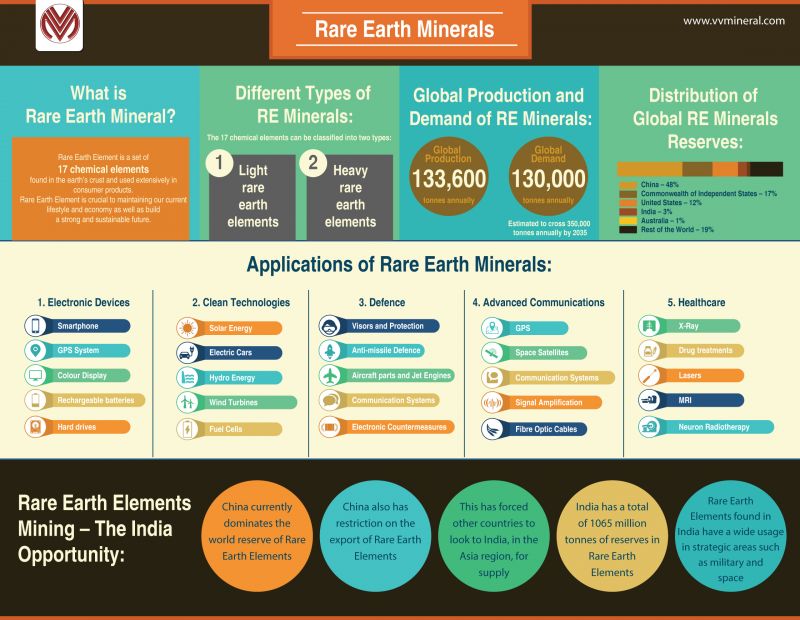
  • Rare Earth Elements

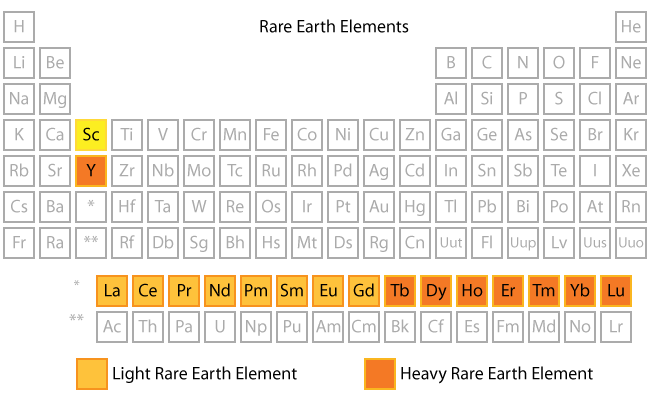
    Related image

    • The rare earth elements (REE) are a set of seventeen metallic elements. These include the fifteen lanthanides on the periodic table in addition to scandium and yttrium that show similar physical and chemical properties to the lanthanides
    • The REEs have unique catalytic, metallurgical, nuclear, electrical, magnetic and luminescent properties.
    • While named ‘rare earth’, they are in fact not that rare and are relatively abundant in the Earth’s crust


    Common Properties of REE

    • The rare earths are silver, silvery-white, or gray metals.
    • The metals have a high luster, but tarnish readily in air.
    • The metals have high electrical conductivity.
    • The rare earths share many common properties. This makes them difficult to separate or even distinguish from each other.
    • There are very small differences in solubility and complex formation between the rare earths.
    • The rare earth metals naturally occur together in minerals (e.g., monazite is a mixed rare earth phosphate).


    Distribution of REE

    • China currently accounts for an overwhelming 97% of global production.
    • India currently has a little over 2% share of global output of rare earths.
    • Kerala, Orissa and Tamil Nadu account for nearly 95% of the country’s production of rare earths.


    Institutional Setup

    Indian Rare Earths Limited (IREL) was incorporated on August 18, 1950 with its first unit Rare Earths Division (RED), Aluva in Kerala. It became a full-fledged Government of India Undertaking, under the administrative control of Department of Atomic Energy (DAE) in year 1963 and took over companies engaged in mining and separation of beach sand minerals in southern part of the country, by establishing two more divisions one at Chavara, Kerala and the other at Manavalakurichi (MK),Tamilnadu.

  • Polar Sciences – Arctic, Antarctic, Himalayas, etc.

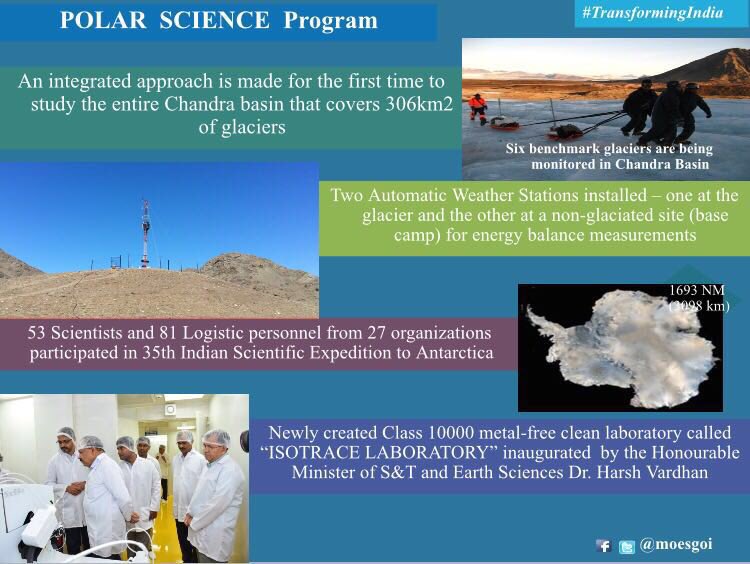
    Image result for indian arctic program antarctic program

    ARCTIC

    India initiated its Arctic Research Program in 2007 with thrust on climate change in the circumpolar north. The major objectives of the Indian Research in Arctic Region are as follows:

    To study the hypothesized tele-connections between the Arctic climate and the Indian monsoon by analyzing the sediment and ice core records from the Arctic glaciers and the Arctic Ocean.
    To characterize sea ice in Arctic using satellite data to estimate the effect of global warming in the northern polar region.
    To conduct research on the dynamics and mass budget of Arctic glaciers focusing on the effect of glaciers on sea-level change.
    To carry out a comprehensive assessment of the flora and fauna of the Artic vis-àvis their response to anthropogenic activities. In addition, it is proposed to undertake a comparative study of the life forms from both the Polar Regions.


    Research Stations in the Arctic

    Himadri – India launched its first scientific expedition to the Arctic Ocean in 2007 and opened a research base named “Himadri” at the International Arctic Research Base at Ny-Alesund, Svalbard, Norway in July 2008 for carrying out studies in disciplines like Glaciology, Atmospheric Sciences & Biological Sciences.


    ANTARCTIC

    Many countries have set up research stations in Antarctica to study the climate, weather, geology, and wildlife of this unique region.

    The Indian Antarctic Program is a multi-institutional program under the control of the National Centre for Antarctic and Ocean Research, Ministry of Earth Sciences, Government of India. It was initiated in 1981 with the first Indian expedition to Antarctica. Under the program, atmospheric, biological, earth, chemical, and medical sciences are studied.

    Indian Research Stations in Antarctica

    S No. Station Description
    1 Dakshin Gangotri(1981) 1. India’s first research station in Antarctica.

    2. Currently being used as a supply base and transit camp

    2 Maitri(1989) 1. Located on the Schirmacher Oasis and has been conducting experiments in geology, geography and medicine

    2. A freshwater lake was built around Maitri- Lake Priyadarshini

    3 Bharati(2015) 1. Located beside Larsemann Hills and conducts oceanographic research.


    Antarctic Treaty System

    • The Antarctic Treaty and related agreements, collectively known as the Antarctic Treaty System (ATS), regulate international relations with respect to Antarctica, Earth’s only continent without a native human population.
    • The treaty entered into force in 1961 and currently has 53 parties.
    • The treaty sets aside Antarctica as a scientific preserve, establishes freedom of scientific investigation and bans military activity on the continent.
    • India officially acceded to the Antarctic Treaty System in 1983.

    Accomplishments of Indian scientific community in Antarctica

    1. Identification of a number of new species of bacteria from the cold habitats of Antarctica- 30 out of 240 new species discovered so far have been by Indian scientists.
    2. Identification of new genes from the bacteria as genes required for the survival of bacteria at low temperature.
    3. Identification of a number of lipases and proteases active at low temperatures and useful for the biotechnology industry.
    4. Preparation of comprehensive geological and geomorphological maps of the Schirmacher Oasis.
    5. Studies of cold adaptability of human beings in the harsh environment of Antarctica which have provided significant baseline data for use in similar studies on India’s armed forces serving in the Himalaya.


    Himansh

    A centre has been established as a part of Indian government’s initiative to study and quantify the Himalayan glacier responses towards climate change.

    Significance of HIMANSH

    • Help researchers to quantify the glacier melting and its relation to changing climate.

    • For undertaking surveys using Terrestrial Laser Scanners (TLS) and Unmanned Aerial Vehicles (UAV).

    • Help indigitizing the glacier motion and snow cover variations with utmost precision.

    • Some of the glacier that are already being studied under this project include Bada Shigri, Samudra Tapu,
    Sutri Dhaka, Batal, Gepang Gath and Kunzam.

  • Deep Sea Mining – Polymetallic Nodules, Polymetallic Sulphides, Cobalt-rich ferromanganese crusts

    deep sea and mineral hunters


    Polymetallic manganese nodules (PMN)
    These are small potato-sized (from millimetres to tens of centimetres in diameter) lumps of material precipitated from seawater and sediment pore water at slow rates over millions of years and occur mainly on the deep-seafloor.
    They contain approximately 24% manganese, compared to 35 to 55% manganese in land ore bodies, so they do not offer solid economics as a manganese source, but they also contain iron (14%), copper (>1%), nickel(>1%), and cobalt (0.25%).


    Polymetallic sulphides (PMS)
    PMS are formed by precipitation of metals leached by hydrothermal fluid as it interacts with the cooler ambient seawater at or beneath the seafloor at hydrothermal vent sites.
    PMS are typically composed of iron pyrite but contain varying proportions of pyrrhotite, pyrite/marcasite, sphalerite/wurtzite, chalcopyrite, bornite, isocubanite, and galena.

    Copper and zinc are the most likely metals to be recovered, but some deposits exhibit significant gold (0–20ppm) and silver (0–1200 ppm) grades as well.
    Submarine massive polymetallic sulphide bodies are principally found along the earth’s major tectonic belts.


    Cobalt-rich ferromanganese crusts
    Cobalt-rich ferromanganese crusts occur at shallower depths of <400 to about > 5000 meters in areas of significant volcanic activity.
    The crusts grow on hard-rock substrates of volcanic origin by the precipitation of metals dissolved in seawater in areas of seamounts, ridges, plateaus and where prevailing currents prevent deposition of unconsolidated sediments and occupy large areas on top of these topography highs.
    In many cases, the deposits occur within the exclusive economic zone (EEZ) of the countries.
    Similar in general composition to the polymetallic nodules, cobalt crusts are attracting investment in exploration for higher cobalt percentage (up to 2%), platinum (0.0001%) and Rare Earth Elements (REE) besides Nickel and Manganese.


    Issues 

    Related imagehttps://www.downtoearth.org.in/coverage/mining/mining-at-deep-sea-46049


    Efforts by India

    Polymetallic Nodules Programme(PNP)

    • The programme is oriented towards exploration and development of technologies for harnessing of nodules from the Central Indian Ocean Basin (CIOB) allocated to India.
    • It has 4 components viz. Survey & Exploration, Environmental Impact Assessment, Technology Development (Mining), and Technology Development (Metallurgy).
    • India is presently having an area of 75,000 square km, located about 1600 km away from her southern tip
    • India has entered into a 15-year contract with the International Seabed Authority in the year 2002 for pursuing developmental activities for polymetallic nodules in the Indian Ocean
    • India’s exclusive rights to explore polymetallic nodules from seabed in Central Indian Ocean Basin (CIOB) have been extended by five years.

    Contract with International Seabed Authority

    India’s exclusive rights to explore polymetallic nodules from seabed in Central Indian Ocean Basin (CIOB) have been extended by five years by International Seabed Authority.

    Importance

    1. India’s exclusive rights for exploration of Polymetallic Nodules in the allotted area in the Central Indian Ocean Basin will continue and would open new opportunities for resources of commercial and strategic value.

    2. India is entirely dependent on imports to meet its requirements of cobalt, which is the most strategic of the three metals (cobalt, copper and nickel). As for copper and nickel, India is in a precarious position.

    Economic significance

     Empowerment of coastal communities and attaining greater social and economic inclusion by providing Employment opportunities, skill-sets and capacities.

     Providing a boost to coastal and national economies and development of blue economy.

     Promoting entrepreneurship in new areas of economic activity and new development in electronics industry.

    Strategic advantages

     Presently, China is controlling more than 95% of rare earth metals. This move will nullify the increasing influence of China.

     It will strengthen the bilateral relationship of India with Japan, Germany and South Korea.

  • Computers, Supercomputers, Quantum Computing, etc.

    1. Five Generations of Computers

    Generation Period Technology Used
    First 1940-1956 Vacuum Tubes
    Second 1956-1963 Transistors
    Third 1964-1971 Integrated Circuits(IC)
    Fourth 1972-2010 Microprocessors
    Fifth 2010-present Artificial Intelligence

    2. Bytes

    • The number of instructions or the amount of data a computer can store in its memory is measured in bytes.

    3. Internet

    • It is a worldwide system of computer networks – a network of networks in which users at any one computer can get information from any other computer(if they have permission).

    How does the Internet work?

    https://www.youtube.com/watch?v=7_LPdttKXPc

    Administration of Internet

    • Internet Corporation for Assigned Names and Numbers(ICANN), a US non-profit organization administers the allocation of domain names and IP addresses.
    • Internet Society(ISOC) is responsible for developing internet technical standards.

    4. Supercomputers

    • A computer or an array of computers that act as one collective machine capable of processing enormous amounts of data.
    • They work at very high speeds and perform complex jobs such as nuclear research or forecasting weather patterns.
    • It channels all its power into executing a few programs as fast as possible rather than executing many programs concurrently.
    • It uses parallel processing instead of the serial processing in the case of an ordinary computer

    Supercomputers in India

    S No. Name Site
    1 SahasraT Indian Institute of Science, Bengaluru
    2 Aaditya Indian Institute of Tropical Meteorology, Pune
    3 TIFR-Cray XC30 Tata Institute of Fundamental Research, Mumbai
    4 HP Apollo 6000 Indian Institute of Technology, Delhi
    5 PARAM Yuva-2 Centre for Development of Advanced Computing(C-DAC), Pune
    6 PARAM ISHAN Indian Institute of Technology, Guwahati

    Supercomputers of the World

    5. Quantum Computing

    https://www.youtube.com/watch?v=WVv5OAR4Nik

    • Quantum computing studies computation systems that make direct use of quantum-mechanical phenomena to perform operations on data.
    • Classical computers encode information in bits. Each bit can take the value of 1 or 0. These 1s and 0s act as on/off switches that ultimately drive computer functions. Quantum computers, on the other hand, are based on qubits, which operate according to two key principles of quantum physics: superposition and entanglement.
    • Superposition means that each qubit can represent both a 1 and a 0 at the same time.
    • Entanglement means that qubits in a superposition can be correlated with each other i.e. the state of one (whether it is a 1 or a 0) can depend on the state of another.

    6. Types of Cybercrimes


    7. Cloud Computing

    https://www.youtube.com/watch?v=uYGQcmZUTaw

    • It is an Internet-based computing solution where shared resources are provided like electricity distributed on the electrical grid
    • Computers in the cloud are configured to work together and the various applications use the collective computing power as if they are running on a single system.


    IT PROJECTS IN INDIA

    1. National Supercomputer Mission(NSM)

    • The Mission envisages empowering our national academic and R&D institutions spread over the country by installing a vast supercomputing grid comprising a cluster of more than 70 high-performance computing facilities
    • The Mission would be implemented and steered jointly by the Department of Science and Technology (DST) and Department of Electronics and Information Technology (DeitY) at an estimated cost of Rs.4500 crore over a period of seven years.

    Objectives

    • To make India one of the world leaders in Supercomputing and to enhance India’s capability in solving grand challenge problems of national and global relevance
    • To empower our scientists and researchers with state-of-the-art supercomputing facilities and enable them to carry out cutting-edge research in their respective domains
    • To minimize redundancies and duplication of efforts, and optimize investments in supercomputing
    • To attain global competitiveness and ensure self-reliance in the strategic area of supercomputing technology

    Application areas

    • Climate Modelling
    • Weather Prediction
    • Aerospace Engineering
    • Computational Biology
    • Molecular Dynamics
    • Atomic Energy Simulations
    • National Security/ Defence Applications
    • Seismic Analysis
    • Disaster Simulations and Management
    • Computational Chemistry
    • Computational Material Science and Nanomaterials
    • Discoveries beyond Earth (Astrophysics)
    • Large Complex Systems Simulations and Cyber Physical Systems
    • Big Data Analytics
    • Finance
    • Information repositories/ Government Information Systems

    2. National e-Governance Plan

    • An initiative of the Government of India to make all Government services available to the citizens of India via electronic media
    • It was formulated by the Department of Electronics and Information Technology (DeitY) and Department of Administrative Reforms & Public Grievances (DAR&PG) to reduce government costs and allow citizen access to government services through Common Service Centres (CSC).
    • It comprises of 27 Mission Mode Projects(MMP) and 10 program support components.

    3. e-Kranti/National e-Governance Plan 2.0

    • It is an important pillar of the Digital India programme.
    • The vision of e-Kranti is “Transforming e-Governance for Transforming Governance”.
    • The Mission of e-Kranti is to ensure a Government wide transformation by delivering all Government services electronically to citizens through integrated and interoperable systems via multiple modes, while ensuring efficiency, transparency and reliability of such services at affordable costs.

    4. National Knowledge Network(NKN)

    • It aims to bridge the gap between rural education, urban education, and International education by interconnecting all universities, government as well as private institutions of higher learning and research with a high-speed data communication network in the country.
  • Blockchain Technology and Bitcoins

    Note4Students 

    Question already asked in Mains. Could be asked again.

    Watch this video if you want to understand the essence of Blockchain in a very non-technical way.


    The more technical explanations are as follows –

    https://lh5.googleusercontent.com/MrRLf7tKMSgfpMA8JdJTyS9G9ZIa4MBYPuIkbONCRsLJdVfcfrcOuow2lonU_2BRMCZ_3fJFYOi6rDO2OrDJJW-JLzsLppjntFSGbMpSnMpC7f2-YfiIu0QmY_g2f2APKraUk8D84RfeHdyt6w

    Image Source

    What is Blockchain Technology?

    1. It is a decentralized digital ledger that records transactions on thousands of computers globally in such a way that the registered transactions cannot be altered retrospectively.
    2. It is a secured way of conducting online transactions and its use removes the characteristic of infinite reproducibility from a digital asset.
    3. In the case of cross-border remittances, its use enables instant transfer of money as against the current system that takes about a week for the same.

    Application

    1. It is the technology behind crypto-currencies, for example, Bitcoins.
    2. *Each block comprises of a hash pointer that acts as a link to a previous block. Along with those it comprises of a timestamp and transaction data.
    3. *Blockchains are resistant technologies to modification of the data.

    What is Bitcoin? 

    1. It is an electronic or digital currency that works on a peer-to-peer basis. It is decentralized and has no central authority controlling it.
    2. Bitcoins can be sent digitally to anyone who has a bitcoin address anywhere in the globe. One person could have multiple addresses for different purposes – personal, business and the like.
    3. A bitcoin is not printed currency but is a non-repudiable record of every transaction that it has been through. All this is part of a huge ledger called the blockchain.
    4. Bitcoins are available in bitcoin exchanges. They can be purchased from other users. A bitcoin is generated when an entity, i.e. a person or a business, uses software power to solve a mathematical puzzle that makes the blockchain more secure. The difficulty level of solving the problem is high enough to ensure that it takes time to do it.

    Advantage Associated with Bitcoin


    Problems

    1. Limitation of 21 M bitcoin currency that will last till 2040
    2. It is possible to launder money and buy illegal products. Since Bitcoins can be spent on the Internet without the use of a bank account, they offer a convenient system for anonymous purchases.
    3. Money laundering
    4. No regulation
    5. Possibility of  Hacking
    6. Degree of acceptance – Many people are still unaware of Bitcoin.
    7. Ongoing development – Bitcoin software is still in beta with many incomplete features in active development.
    8. Volatility – The total value of bitcoins in circulation and the number of businesses using Bitcoin are still very small compared to what they could be. Therefore, relatively small events, trades, or business activities can significantly affect the price.

    Question:

    Q.) What do you understand by bitcoin’s ‘hard fork’? Is ‘hard fork’ a good development? Examine.

  • India’s Nuclear Energy Program

    Note4Students

    One of the most important topics both from the point of view of prelims and mains.

    India envisages A Three Stage Programme based on the optimum utilisation of the indigenous limited uranium and abundant thorium resources.  It was formulated by Dr. Homi Bhabha in the 1950s to secure the country’s long term energy independence.

    STAGE 1 » Pressurised Heavy Water Reactor

    STAGE 2 » Fast Breeder Reactor

    STAGE 3 » Breeder Reactor

    Why the 3 stages?

    Although we have around 25% of the world’s thorium reserves, it itself is not a fissile material. It needs to undergo transmutation to U-233 in a reactor fuelled by other fissile material.

    The sequential 3-stage programme is based on a closed fuel cycle, where the spent fuel of one stage is reprocessed to produce fuel for the next stage.

    The diagram below should explain that.


    STAGE 1: PRESSURIZED HEAVY WATER REACTORS(PHWR)

    • Natural Uranium is used as a fuel and heavy water as a coolant and moderator
    • The 0.7% U-235 undergoes fission to release energy. As the remaining 99% U-238 is not fissionable, it undergoes transmutation and forms Plutonium-239(Pu-239).

    Working of the reactor –

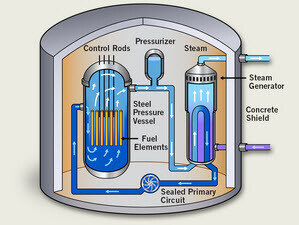
    Image result for Pressurized Heavy Water Reactor

    • The heat is removed from the reactor by water flowing in a closed pressurised loop
    • The heat is transferred to a second water loop through a heat exchanger.
    • The second loop is kept at a low pressure allowing the water to boil and create steam, that is used to turn the turbine-generator
    • Then the steam is condensed into water and returned to the heat exchanger

    VVER – Reactors 

    Two Russian-built VVER-1000 reactors have been in commercial operation in Kudankulam, southern India, since 2014 and 2017 respectively.


    STAGE 2: FAST BREEDER REACTORS(FBR)

    • The reactor is fuelled by a mixed oxide of U-238 and Pu-239 which have been recovered by reprocessing the spent fuel in the first stage
    • Pu-239 undergoes fission producing energy and more Pu-239 through the transmutation of U-238.

    Working of the reactor – 

    • Why fast? The neutrons are not slowed down. There is no need of a moderator
    • Why breeder? More fissionable material(Plutonium) will be present after the reaction than what was present before the reaction. It breeds fissile material.
    • In FBR, the fission chain reaction is sustained by fast moving neutrons.
    • India and Russia are the only two countries that are constructing commercial scale breeder reactors.
    • Solves 5 problems — safety, competitiveness, shortage of fuel, reprocessing and refabricating the used nuclear fuel and radioactive waste. Enforcing non-proliferation of fission materials and weapon technologies

    MBIR Project

    The multipurpose fast reactor project, known by the Russian acronym MBIR, is coming up at the International Research Centre in Dimitrovgrad located in the Ulyanovsk region in Russia.
    It is a fast reactor project follows the closed fuel cycle.
    Transitioning to closed fuel cycle which is based on fast neutron reactors can solve five essential problems:
    safety, competitiveness, shortage of fuel, reprocessing and refabricating the used nuclear fuel and radioactive waste.
    It also addresses the non-proliferation of fission materials and weapon technologies.

    The main purpose of the MBIR is to conduct large no. of reactor studies of Generation-4 nuclear systems.
    MBIR’s design includes three independent loops that can be used to test different coolants like gas, lead, molten salt and others.


    STAGE 3: THORIUM BASED REACTORS

    • It is based on the Thorium Uranium-233 Cycle.
    • Naturally occurring Thorium-232 is not a fissile material. It needs to be converted to a fissile material, U-233, by transmutation in a FBR
    • In the second stage, once sufficient Pu-239 is built up, Thorium-232 is introduced as a blanket material to be converted to Uranium-233.

    KAMINI (Kalpakkam Mini reactor) in Kalpakkam is the world’s only thorium-based experimental reactor.  It achieved criticality on 1996. Designed and built jointly by the Bhabha Atomic Research Centre (BARC) and Indira Gandhi Centre for Atomic Research (IGCAR), it produces 30 KW[3] of thermal energy at full power.


    Sites with Nuclear Power Plants

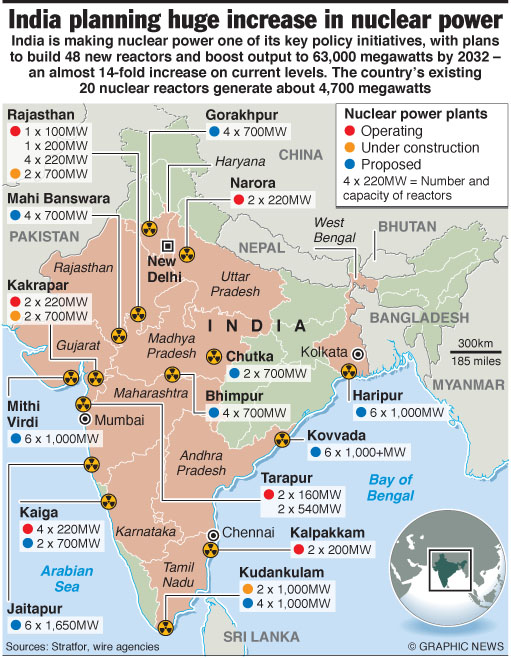
    Image result for NUCLEAR POWER plants in India graphic news


    • As of 2017, India has 22 nuclear reactors in operation in 7 nuclear power plants with an installed capacity of 6780 MWe.
    • With a total capacity of 1400 MWe, Tarapur is the largest nuclear power station in India
    • Kundankulam Nuclear Power Station started its commercial operation in March 2017


    Organisation structure


    Department of Atomic Energy(DAE) 

    • It is under the direct charge of the Prime Minister.
    • Engaged in the development of nuclear power technology and applications of radiation technology.

    Atomic Energy Commission(AEC)

    • It is the governing body of the DAE.
    • It organises and promotes atomic research and train atomic researcher in the country.
    • It is the main policy making body.

    International News

    International Thermonuclear Experimental Reactor(ITER)

    • It is an international nuclear fusion research and engineering mega project which will be the world’s largest magnetic confinement plasma physics experiment
    • What is Plasma Physics? It is the study of charged particles and fluids with interacting with self-consistent electric and magnetic fields
    • It is being built next to the Cadarache facility in Southern France
    • India is a part of ITER.

    https://www.youtube.com/watch?v=0jMGpio5d7E

    International Atomic Energy Agency(IAEA)

    • It seeks to promote the peaceful use of nuclear energy and inhibit its use for any nuclear purpose, including nuclear weapons.
    • HQ located in Vienna, Austria.
    • India is a member of the IAEA.

    Convention on Supplementary Compensation(CSC)

    • It seeks to establish a uniform global regime for compensation to victims in the unlikely event of a nuclear accident.
    • India has ratified the convention.