💥Mains Ready By December. Smash Mains & Smash PYQ Admissions Open

GS Paper: GS1-01.Indian Culture- Salient aspects of Art Forms, Literature and Architecture from ancient to modern times.

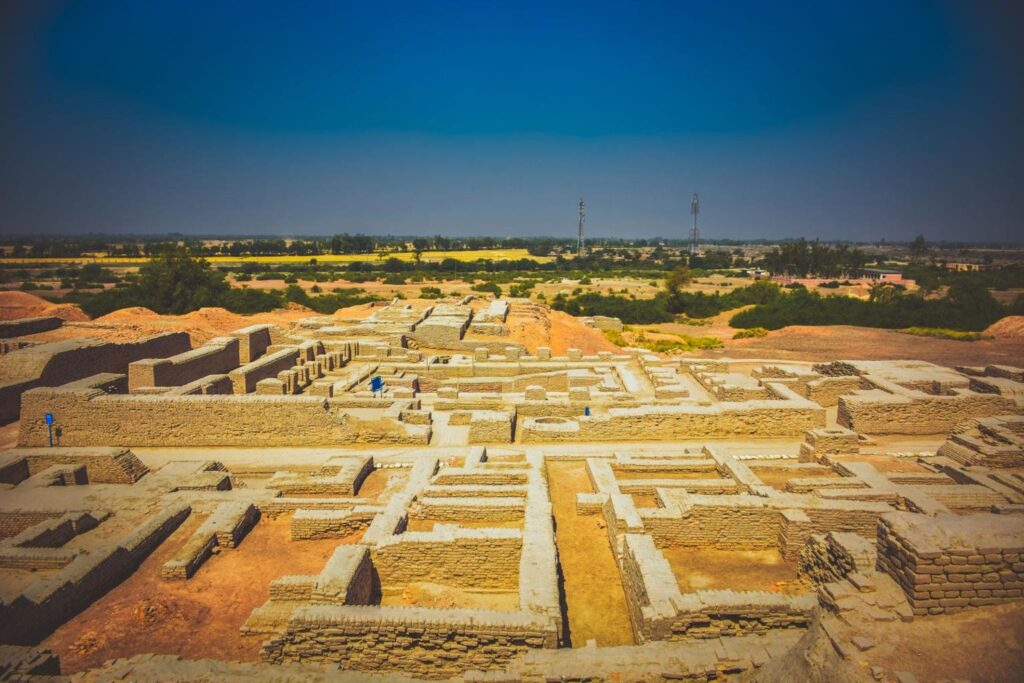
  • Mohenjo-daro as Democratic as Ancient Greece & Rome: Study

    Why in the News

    • A study published in Science Advances (March 2026) finds that Mohenjo-daro exhibited collective (democratic-like) governance, comparable to Athens and Republican Rome.

    About Mohenjo-daro

    • Part of the Indus Valley Civilization (IVC)
    • Located in present-day Sindh (Pakistan)
    • Known for:
      • Advanced urban planning (grid system)
      • Drainage and sanitation systems
      • Lack of clear evidence of centralized monarchy

    Key Findings of the Study

    1. Democracy Beyond Greece & Rome

    • Democratic/collective governance was not unique to Europe
    • Similar systems found in:
      • North America: Iroquois Confederacy, Zuni
      • Mesoamerica: Teotihuacan, Monte Albán, Tlaxcala
      • South Asia: Mohenjo-daro

    2. Two Dimensions of Governance

    Researchers used two parameters:

    • Power concentration: Whether authority is centralized or dispersed
    • Inclusiveness: Degree of public participation in governance

    3. Indicators of Collective Governance

    • Urban planning features:
      • Large open public spaces (for gatherings)
      • Absence of palaces or grand royal tombs
    • Art & architecture: Limited glorification of rulers
      • It shows Shared decision-making systems

    4. Indicators of Autocracy

    • Monumental: Palaces, pyramids, elite tombs
    • City layouts: Roads converging to ruler’s residence
    • Rituals: Grand spectacles reinforcing ruler authority

    5. “Autocracy Index”

    • Study created a spectrum:
      • From highly autocratic → highly collective
      • Mohenjo-daro ranked towards collective governance

    6. Role of Economic Structure (Key Insight)

    • Autocratic societies:
      • Based on controlled resources
        (mines, trade routes, war plunder)
    • More democratic societies:
      • Based on: Broad taxation and Community labour

    7. Inequality Link

    • Inclusive systems: Lower economic inequality
    • Challenges assumption: Complexity always leads to autocracy

    Broader Significance

    • Democracy has deep, global historical roots
    • Challenges Eurocentric view: That democracy began only in Greece & Rome
    • Important for modern governance: Helps understand power concentration & inequality trends
    [2013] Which of the following characterizes/characterize the people of Indus Civilization? 
    1. They possessed great palaces and temples. They worshipped both male and female deities. 
    2. They employed horse-drawn chariots in warfare. 
    Select the correct answer using the code given below: (a) 1 and 2 only (b) 2 only (c) 1, 2 and 3 (d) None of the statements given above is correct
  • National Book Trust’s India@75 Series Highlights Forgotten Figures

    Why in the News

    New books in the India@75 series are bringing attention to overlooked scientists, freedom fighters, and social leaders, such as Anna Mani, whose contributions had received limited public recognition.

    About the India@75 Series

    • Launched during Azadi Ka Amrit Mahotsav.
    • The series aims to document India’s historical journey before and after independence.
    • Categories in the Series: The books are divided into four themes: People, Places, Events, and Themes

    Focus on Unsung Personalities

    • Under the People category, the series highlights both famous and lesser known figures such as:
      • Anna Mani
      • Janaki Ammal
      • Dhyan Chand
      • Minoo Masani
      • Rani Chennamma

    Anna Mani

    • Known as India’s “weather woman.”
    • Designed and standardised more than 100 meteorological instruments.
    • Contributed significantly to meteorology, solar radiation research, and wind energy studies.

    Janaki Ammal

    • Full name: Edavaleth Kakkat Janaki Ammal (1897–1984).
    • One of India’s first women botanists and cytogeneticists.
    • Known for pioneering work in plant breeding and genetics.

    Dhyan Chand

    • Born: 1905, Prayagraj; died: 1979.
    • Known as the “Wizard of Hockey.”
    • One of the greatest hockey players in history.

    Minoo Masani

    • Full name: Minocher Rustom Masani (1905–1998).
    • A prominent Indian liberal political leader and writer.
    • Co-founder of the Swatantra Party in 1959 with C. Rajagopalachari.
    • Advocated free markets, individual liberty, and democratic values.

    Rani Chennamma

    • Born: 1778 in present-day Karnataka.
    • Queen of the Kittur.
    • Role in Freedom Struggle: Led an armed rebellion against the British East India Company in 1824.
      • Opposed the British refusal to recognize her adopted heir to the throne.
    [2023] Consider the following pairs with regard to sports awards: 1. Major Dhyan Chand Khel Ratna Award : For the most spectacular and outstanding performance by a sportsperson over period of last four years 2. Arjuna Award : For the lifetime achievement by a sportsperson 3. Dronacharya Award : To honour eminent coaches who have successfully trained sportspersons or teams 4. Rashtriya Khel Protsahan Puraskar : To recognize the contribution made by sportspersons even after their retirement How many of the above pairs are correctly matched? (a) Only one (b) Only two (c) Only three (d) All four
  • Return of 16th Century Bronze Statue of Thirumangai Alvar

    Why in the News

    The Ashmolean Museum has returned a 16th century bronze statue of Thirumangai Alvar to the Government of India after provenance research confirmed that the idol originally belonged to the Sundararaja Perumal Temple in Tamil Nadu.

    Key Facts

    • The statue was handed over to the Indian High Commission in London.
    • The Ashmolean Museum had acquired the idol in 1967 from a private collector J.R. Belmont.
    • Provenance research linked the statue to a 1957 photograph from the temple archives preserved by the Institut Français de Pondichéry and the École française d’Extrême-Orient.
    • In 2020, the temple authorities filed a police complaint after discovering that the original idol had been replaced with a replica.
    About Thirumangai AlvarOne of the 12 Alvars, the Tamil poet-saints devoted to Lord Vishnu.Associated with the Bhakti movement in South India.His hymns are part of the Divya Prabandham, an important Vaishnavite devotional text.

    Significance of the Repatriation

    • Restoration of stolen cultural heritage to its original religious context.
    • Demonstrates growing global cooperation against illicit trafficking of antiquities.
    • Strengthens India’s efforts to recover temple idols and artefacts smuggled abroad.

    Prelims Pointers

    • Alvars: Tamil Vaishnavite saints who composed devotional hymns to Vishnu.
    • Major Alvar texts compiled in Nalayira Divya Prabandham.
    • Idol repatriation often occurs through provenance research and diplomatic negotiations.
    [2022] The world’s second tallest statue in sitting pose of Ramanuja was inaugurated by the Prime Minister of India at Hyderabad recently. Which one of the following statements correctly represents the teachings of Ramanuja? (a) The best means of salvation was devotion. (b) Vedas are eternal, self-existent and wholly authoritative. (c) Logical arguments were essential means for the highest bliss. (d) Salvation was to be obtained through meditation.
  • Unearthing the Silent Splendour of the Hoysalas

    Why in the News

    A recent feature highlights lesser known Hoysala era temples and basadis in rural parts of Hassan, Mandya and Mysuru districts of Karnataka, drawing attention to the architectural and cultural legacy beyond the famous sites.

    About the Hoysala Dynasty

    • The Hoysala dynasty ruled parts of present day Karnataka between the 11th and 14th centuries. Their rule is known for:
      • Temple architecture in soapstone
      • Intricate sculptural detailing
      • Fusion of Shaiva, Vaishnava and Jain traditions
    • Prominent rulers include:
      • Veera Ballala II
      • Vira Someshwara

    Key Architectural Features

    • Material: Built using soft chloritic schist, commonly called soapstone. 
    • Platform: Temples rest on star shaped raised platform called Jagati
    • Temple Plans
      • Ekakuta: Single shrine
      • Dvikuta: Two shrines
      • Trikuta: Three shrines
      • Panchakuta: Five shrines
    • Sculptural Elements
      • Friezes depicting epics like Ramayana and Mahabharata
      • Celestial dancers
      • Finely lathe turned pillars
      • Elephant processions

    Important Sites  

    • Halebidu: Hoysaleswara Temple. Jain Basadi complex including Parshvanatha, Shantinatha and Adinatha shrines
    • Belur: Chennakeshava Temple
    • Somanathapura: Keshava Temple
    • Doddagaddavalli: Lakshmidevi Temple. One of the earliest surviving Hoysala temples, built in 1114 CE
    • Koravangala: Nageshwara, Govindeshwara and Bucheshwara temples
    • Hulikere: Hulikere Kalyani. Stepwell architecture linked symbolically with zodiac and nakshatras. 
    [2024] Consider the following properties included in the World Heritage List released by UNESCO: 1. Shantiniketan 

    2. Rani-ki-Vav 

    3. Sacred Ensembles of the Hoysalas 

    4. Mahabodhi Temple Complex at Bodhgaya 

    How many of the above properties were included in 2023? 

    (a) Only one (b) Only two (c) Only three (d) All four

  • Inauguration of Seva Teerth and Kartavya Bhavan

    Why in the News?

    The Prime Minister inaugurated the new Prime Minister’s Office complex named Seva Teerth and two Central Secretariat buildings called Kartavya Bhavan 1 and 2 in New Delhi. A commemorative stamp and coin were also released on the occasion.

    Key Highlights

    • New PMO named Seva Teerth
    • Two new Secretariat buildings named Kartavya Bhavan 1 and 2
    • Aim to reflect citizen centric governance and Viksit Bharat vision
    • Replaces space constrained functioning from North Block and South Block

    About the Architectural Context

    • Colonial Era Buildings: North Block and South Block.
    • Built during the British era when the capital shifted from Kolkata to Delhi in 1912. Designed to represent imperial authority.

    Features of the New Complex

    • Built using white and red sandstone inspired by Indian civic traditions
    • Domes inspired by Buddhist Stupa architecture
    • Entrance design draws from Chalukyan temple stone screen work
    • Plinth band inspired by the 12th century Chennakeshava Temple
    [2023] With reference to ancient India, consider the following statements: 1. The concept of Stupa is Buddhist in origin. 

    2. Stupa was generally a repository of relics. 

    3. Stupa was a votive and commemorative structure in Buddhist tradition. 

    How many of the statements given above are correct? 

    (a) Only one (b) Only two (c) All three (d) None

  • Indian Inscriptions Found in Egypt’s Valley of the Kings

    Why in the News

    Researchers have identified nearly 30 Indian inscriptions in the Valley of the Kings in Egypt, shedding new light on trade and cultural links between ancient Tamilagam, other parts of India and the Roman Empire during the 1st to 3rd centuries CE.

    Key Findings

    • Tamil Majority Presence

      • Most inscriptions belong to individuals from southern India, especially ancient Tamilagam, though some were from north-western and western India.
    • Repeated Name: Cikai Koṟṟaṉ

      • Appears eight times across five tombs.
      • Found near entrances and high interior walls.
      • The term Koṟṟaṉ has Tamil roots associated with victory and warfare.
      • Related to the Chera warrior goddess Koṟṟavai and the word koṟṟavaṉ meaning king.
    • The name also appears in:
      • Sangam literature such as Purananooru
      • Inscriptions from Pugalur, linked to the Chera dynasty
      • A pottery sherd found at Berenike in Egypt
    • Other Tamil Names

      • Kopāṉ varata kantan meaning Kopāṉ came and saw
      • Cātaṉ
      • Kiraṉ

    The name Kopāṉ has also been found at Ammankovilpatti in Tamil Nadu.

    Historical Significance

    • Confirms movement of Indian traders or visitors beyond Red Sea ports into the Nile valley.
    • Strengthens evidence of Indo Roman trade links.
    • Earlier excavations at Berenike had already shown Indian trade presence.
    • This discovery shifts focus from coastal trade points to inland Egyptian sites.
    [2023] With reference to ancient South India, Korkai, Poompuhar and Muchiri were well known as: (a) capital cities 

    (b) ports 

    (c) centres of iron and steel making 

    (d) shrines of Jain Tirthankaras

  • 3 Buddhist sites in UNESCO tentative list

    Why in the News?

    UNESCO has included the ‘Diamond Triangle’ Buddhist sites of Odisha in India’s Tentative List for future consideration as a World Heritage Site.The sites are located in Jajpur and Cuttack districts of Odisha

    What is the ‘Diamond Triangle’?

    • A cluster of three ancient Buddhist sites 
      • Ratnagiri
      • Udayagiri
      • Lalitgiri Known as the epicentre of Buddhism in eastern India

    Historical and Religious Significance

    • The sites witnessed the propagation of all three schools of Buddhism
      Hinayana
      Mahayana
      Vajrayana
      • Rich remains of Stupas, Monasteries, Relics, Sculptures of Lord Buddha and Buddhist deities

    What is a Tentative List?

    • Mandatory prerequisite for nomination to the World Heritage List
    • Identifies sites of Outstanding Universal Value
    • Can be cultural, natural or mixed
    • Only sites on the tentative list can be considered for final inscription

    India and the Tentative List

    • India currently has 70 sites on the tentative list
    • Categories include cultural, natural and mixed
    • Odisha sites already on the tentative list include
      • Ekamra Kshetra, Bhubaneswar
      • Chilika Lake
      • Chausathi Yogini temples group was added last year
      • Two located in Odisha at Bhubaneswar outskirts and Balangir

    Prelims Pointers

    • Tentative list inclusion does not guarantee World Heritage status
    • Diamond Triangle reflects pan Buddhist evolution in India
    • ASI is the official nodal agency for UNESCO nominations
    • Odisha is emerging as a major Buddhist heritage corridor
    [2024] Consider the following properties included in the World Heritage List released by UNESCO: 

    1. Shantiniketan 

    2. Rani-ki-Vav 

    3. Sacred Ensembles of the Hoysalas 

    4. Mahabodhi Temple Complex at Bodhgaya 

    How many of the above properties were included in 2023? 

    (a) Only one (b) Only two (c) Only three (d) All four

  • Neolithic Relics Unearthed at Lakkundi, Karnataka

    Why in the News?

    Excavations begun on January 16 at the Kote Veerabhadreshwar Temple premises in Lakkundi village of Gadag have yielded Neolithic period relics, strengthening efforts to nominate Lakkundi for inclusion in the UNESCO World Heritage Sites list.

    About Lakkundi

    • Located about 12 km from Gadag district headquarters
    • Historically known as Lokkigundi
    • Referred to as the village of hundred wells and temples
    • Mentioned in 11th and 12th century inscriptions, compared to Amaravati for affluence
    • Known for tankashale or mint

    Historical Significance

    • Ruled by Kalyana Chalukyas, Yadavas and Hoysalas
    • Capital of Hoysala king Eradane Ballala (Veeraballala) in 1192 AD
    • Centre of Jainism and Shaivism

    Cultural and Religious Legacy

    • Associated with Queen Attimabbe, known as Daana Chintamani, patron of Jainism
    • Built temples, Jain basadis and wells for public welfare
    • Daana Chintamani Attimabbe Prashasti instituted by Karnataka government
    • Shelter to 12th century Sharanas like Ajaganna and Muktayakka linked to Basaveshwara movement

    Architectural Features

    • Temples built in Kalyana Chalukya architectural style
    • Mumbai State Gazetteer records 13 temples, including Kashi Vishveshwara, Mallikarjuna, Virupaksha, Nanneshwara and Someshwara. 
    • Wells are noted for ornate stone carvings

    Prelims Pointers

    • Neolithic findings indicate prehistoric human activity
    • Lakkundi reflects temple town planning with wells
    • UNESCO tentative list precedes final World Heritage inscription
    • Community participation is central to heritage conservation here
    [2024] Consider the following properties included in the World Heritage List released by UNESCO: 

    1. Shantiniketan 

    2. Rani-ki-Vav 

    3. Sacred Ensembles of the Hoysalas 

    4. Mahabodhi Temple Complex at Bodhgaya 

    How many of the above properties were included in 2023? 

    (a) Only one (b) Only two (c) Only three (d) All four

  • Jeevan Raksha Padak Series of Awards 2025

    Why in the News?

    The President of India has approved the conferment of the Jeevan Raksha Padak Series of Awards 2025 to 30 individuals for acts of exceptional courage in saving lives.

    • 6 Sarvottam Jeevan Raksha Padak
    • 6 Uttam Jeevan Raksha Padak
    • 18 Jeevan Raksha Padak
    • 6 awards are posthumous

    What are the Jeevan Raksha Padak Awards?

    • A civilian life saving gallantry award series
    • Recognises meritorious acts of humane nature involving personal risk to save another person’s life
    • Established in 1961
    • Originated as an offshoot of the Ashoka Chakra series of Gallantry Awards

    Categories

    • Sarvottam Jeevan Raksha Padak: Conspicuous courage in saving life under very great danger to the rescuer
    • Uttam Jeevan Raksha Padak: Courage and promptitude under great danger to the rescuer
    • Jeevan Raksha Padak: Courage and promptitude involving grave risk of bodily injury to the rescuer

    Eligibility

    • Open to persons of all genders and walks of life
    • Posthumous awards permitted
    • Acts considered include rescues during Drowning, Fires, Accidents, Electrocution, Mine rescues and Natural calamities.
    [2021] Consider the following statements in respect of Bharat Ratna and Padma Awards: 

    1. Bharat Ratna and Padma Awards are titles under Article 18(1) of the Constitution of India. 

    2. Padma Awards, which were instituted in the year 1954, were suspended only once

    3. The number of Bharat Ratna Awards is restricted to a maximum of five in a particular year. 

    Which of the above statements are not correct? 

    (a) 1 and 2 only (b) 2 and 3 only (c) 1 and 3 only (d) 1, 2, and 3

  • Padma Awards 2026

    Why in the News?

    The Padma Awards 2026 were announced on the eve of Republic Day, with the President of India approving 131 awards across the Padma Vibhushan, Padma Bhushan, and Padma Shri categories.

    What are the Padma Awards?

    • Among India’s highest civilian honours
    • Conferred for distinguished and exceptional service with a clear element of public service
    • Instituted in 1954 by the Government of India

    Historical Background

    • Initially, two civilian awards were instituted in 1954
      • Bharat Ratna
      • Padma Vibhushan
    • In 1955, Padma Vibhushan was reclassified into three categories
      • Padma Vibhushan
      • Padma Bhushan
      • Padma Shri
    • Awards are announced annually on Republic Day
    • Not conferred during 1978 to 1979 and 1993 to 1997

    Categories and Purpose

    • Padma Vibhushan: Exceptional and distinguished service
    • Padma Bhushan: Distinguished service of a high order
    • Padma Shri: Distinguished service in any field

    Eligibility Criteria

    • Open to all persons, irrespective of race, gender, occupation, or position
    • Government servants, including PSU employees, are generally not eligible
      • Exception for doctors and scientists
    • Normally not awarded posthumously
      • Permitted in exceptional cases
    • Minimum gap of 5 years required for a higher Padma category
      • Can be relaxed in deserving cases
    • Award recognises excellence plus, not merely long service

    Fields Recognised

    • Art, Social Work, Public Affairs, Science and Engineering, Trade and Industry, Medicine, including AYUSH, Literature and Education, Civil Service, Sports and Others, such as culture, environment, wildlife conservation, and human rights
    Consider the following statements in respect of Bharat Ratna and Padma Awards: 

    1. Bharat Ratna and Padma Awards are titles under Article 18(1) of the Constitution of India. 

    2. Padma Awards, which were instituted in the year 1954, were suspended only once

    3. The number of Bharat Ratna Awards is restricted to a maximum of five in a particular year. 

    Which of the above statements are not correct? 

    (a) 1 and 2 only (b) 2 and 3 only (c) 1 and 3 only (d) 1, 2, and 3