Mains Ready By December. Smash Mains & Smash PYQ Admissions Open

GS Paper: GS2-18.Bilateral, regional and global groupings and agreements involving India and/or affecting India’s interests.

  • Pakistan allows import of cotton, sugar from India

    Partially reversing a two-year-old decision to suspend all trade with India, Pakistan recently announced that it would allow the import of cotton and sugar from across the border.

    Ever wonder why the neighbour next door suddenly wants to normalize all ties? Read this edition of ours:

    India-Pakistan trade relations

    • Trade between the subcontinental neighbours has always been linked to their political interactions, given their tumultuous relationship.
    • For instance, India’s exports to Pakistan dropped by around 16 per cent to $1.82 billion in the 2016-17 financial years from $2.17 billion in 2015-16.
    • This coincided with the rise in tensions between the two countries following the terrorist attacks in Uri in 2016 and the surgical strikes by India against Pakistan-based militants.

    How much is the volume of trade?

    • Trade between the two countries grew marginally in subsequent years despite continuing tensions.
    • India’s exports to Pakistan increased to nearly 6 per cent to $1.92 billion in 2017-18, and by around 7 per cent to $2.07 billion in 2018-19.
    • Imports from Pakistan, though much lower than India’s exports to the country, also increased by 7.5 per cent to $488.56 million in 2017-18 from $454.49 million in 2016-17.
    • Growth of imports from Pakistan slowed to around $494.87 million in 2018-19 — an increase of around 1 per cent — before political relations between the two countries took a turn for the worse in 2019.

    Why did Pakistan ban trade with India?

    • Pakistan’s decision to suspend bilateral trade with India in August 2019 was primarily a fallout of India’s decision to scrap Article 370.
    • Pakistan called the move “illegal”, and took this trade measure as a way of showing its dissatisfaction.
    • However, an underlying reason for suspending trade between the two countries was also the 200 per cent tariff imposed by New Delhi on Pakistani imports.
    • This was a move that India implemented earlier that year after revoking its status as a Most Favoured Nation following the suicide bomb attack on the CRPF in Pulwama.
    • Pakistan’s announcement, coupled with India’s decision to revoke its MFN status and hike duties on its goods, was considered by some experts to be one of the most drastic measures ever taken in diplomatic tensions.

    Why is Pakistan allowing cotton and sugar import now?

    • Textiles from Pakistan are its value-added export.
    • The proposal to lift the ban on cotton imports came in the backdrop of a shortfall in raw material for Pakistan’s textile sector, which has reportedly been facing issues due to a low domestic yield of cotton in the country.
    • On top of this, imports from other countries like the US and Brazil have reportedly been more expensive and takes longer to arrive in the country.

    Why only these two commodities?

    • Even when we had a very small positive list (of goods for trade with Pakistan), agricultural commodities were always there in the list.
    • Cotton has been one of Pakistan’s major imports from India. In 2018-19, Pakistan imported $550.33 million worth of cotton from India.
    • When coupled with $457.75 million worth of organic chemicals, these products made up around half of its total imports from India.
    • Where sugar is concerned, trade experts feel it is a result of a long-standing interdependence between India and Pakistan over such agricultural commodities and a potential shortage in domestic supply.
    • If finally approved, cotton and sugar would be the second and third commodities allowed for export from India after Islamabad lifted the ban on medicine and related raw material imports during the Covid-19 pandemic.
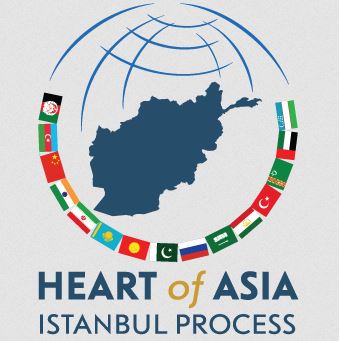
  • Heart of Asia – Istanbul Process (HoA-IP)

    External Affairs Minister S Jaishankar has attended the Heart of Asia Conference in Dushanbe, Tajikistan.

    The 9th Heart of Asia-Istanbul Process (HoA-IP) ministerial conference is part of the Istanbul Process – a regional initiative on security and cooperation for a stable and peaceful Afghanistan – that was launched on November 2, 2011, in Turkey.

    Note the participating countries from the logo itself.

    Heart of Asia – Istanbul Process

    • The Heart of Asia – Istanbul Process (HoA-IP) is an initiative of Afghanistan and Turkey, which was officially launched at a conference hosted by Turkey in Istanbul on 2 November 2011.
    • Since then, Afghanistan supported by fourteen participating countries and supporting countries beyond the region as well as 12 Regional and International Organizations is leading and coordinating this Process.

    Goals of the Process

    • The HoA-IP aims at promoting and strengthening peace, security, stability and prosperity in Afghanistan and in the region.
    • The HoA-IP has become one of the most interactive voluntary state-groupings in the HoA Region.
    • It brings Afghanistan’s immediate and extended neighbours as well as international supporters together through the following focus areas:
    1. Political Consultations
    2. Implementation of the Confidence Building Measures (CBMs)
    3. Cooperation with Regional Organizations

    Note: India too, has held the Ministerial Conferences of HoA-IP back on 4 December 2016 at Amritsar.

  • The Afghan Endgame and the US

    As the May 1 deadline for pulling out all American troops from Afghanistan nears, US President Joe Biden faces some difficult decisions.

    Key tasks for the US before they exit

    • The U.S. could abide by the promise made in the U.S.-Taliban agreement signed in February 2020 to withdraw the last of the around 2,500 American Marines stationed in Afghanistan.
    • However, Mr Biden has said it would be tough given the levels of violence there.
    • The US could negotiate with the Taliban for an extension of the agreement, offering other incentives like the release of more prisoners and the delisting of sanctioned Taliban terrorists.
    • The other option is to scrap the 2020 agreement and back the Ashraf Ghani government to continue towards a negotiated settlement, even as US troops remain in Afghanistan to stabilize the security situation.

    What is the US likely to do?

    • The US exit plan is still underway and that no decision on the length of stay or troop numbers have been made to this point, cleared the US Secy of Defence.
    • No U.S. troops have been targeted by Taliban militants in the past year, but violence against Afghan civilians, particularly women, journalists, students and activists has gone up manifold despite the peace agreement.
    • More than 3,000 civilians were killed in 2020.
    • The US has shown some impatience with the Ghani government as well, believing that it is dragging its feet on intra-Afghan negotiations that began last year in Doha but have stalled for the moment.

    Plans for Ashraf Ghani

    • A US plan proposes that Mr Ghani step up negotiations with the Taliban for “power-sharing”, discuss principles of future governance and step aside eventually for a “more inclusive” or interim government. The
    • The tone of the letter seems to make it clear that the US is not in favour of completely scrapping the 2020 agreement.
    • Therefore, it is most likely to pursue the option of negotiating for an extension of the agreement, according to experts, as it builds other dialogue platforms.

    Try this question from our AWE Initiative:

    What is President Ghani’s plan?

    • Ghani has proposed his own peace plan.
    • It would involve a full ceasefire, inviting the Taliban to participate in early elections in Afghanistan, and then for Mr Ghani to hand over power to the elected government.
    • He also said no regional talks could be successful if they did not include India, which is a development partner and a stakeholder.

    Where does India stand?

    • India’s position has been to back an “Afghan-owned, Afghan-led, Afghan-controlled” peace process, backing the elected government in Kabul, and it has not yet held talks with the Taliban directly.
    • As a result, its option remains to stand with the Ghani government and support the constitution that guarantees a democratic process and rights of women and minorities, over any plans the Taliban might have if they come to power.
    • At the same time, India has not foreclosed on the option of talking to the Taliban if it does join the government in Afghanistan.
    • India too has made it clear that it seeks to be an integral part of the process, as the outcomes will have a deep impact on India’s security matrix as well.
  • Teesta Water Sharing Deal

    PM while on his tour of Bangladesh assured his best to ink the long-awaited deal over the Teesta and other common rivers. On at least two occasions—2011 and 2017—Bangladesh and India came close to signing a deal on the Teesta.

    Teesta River

    • Teesta River is a 315 km long river that rises in the eastern Himalayas, flows through the Indian states of Sikkim and West Bengal through Bangladesh and enters the Bay of Bengal.
    • It is a tributary of the Brahmaputra (known as Jamuna in Bangladesh), flowing through India and Bangladesh.
    • It originates in the Himalayas near Chunthang, Sikkim and flows to the south through West Bengal before entering Bangladesh.
    • Originally, it continued southward to empty directly into the Padma River but around 1787 the river changed its course to flow eastward to join the Jamuna river.
    • The Teesta Barrage dam helps to provide irrigation for the plains between the upper Padma and the Jamuna.

    What is the dispute about?

    • The point of contention between India and Bangladesh is mainly the lean season flow in the Teesta draining into Bangladesh.
    • The river covers nearly the entire floodplains of Sikkim while draining 2,800 sq km of Bangladesh, governing the lives of hundreds of thousands of people.
    • For West Bengal, Teesta is equally important, considered the lifeline of half-a-dozen districts in North Bengal.
    • Bangladesh has sought an “equitable” distribution of Teesta waters from India, on the lines of the Ganga Water Treaty of 1996, but to no avail.
    • The failure to ink a deal had its fallout on the country’s politics, putting the ruling party of PM Sheikh Hasina in a spot.

    The hydrological linkages between India and Bangladesh are a product of geography and a matter of shared history. Discuss this statement in line with the Teesta water sharing dispute.

    The deal

    • Following a half-hearted deal in 1983, when a nearly equal division of water was proposed, the countries hit a roadblock. The transient agreement could not be implemented.
    • Talks resumed after the Awami League returned to power in 2008 and the former Indian PM Manmohan Singh visited Dhaka in 2011.
    • In 2015, PM Modi’s visit to Dhaka generated more ebullient lines: deliberations were underway involving all the stakeholders to conclude the agreement as soon as possible.

    Issues from the Indian side

    • It remains an unfinished project and one of the key stakeholders — West Bengal CM is yet to endorse the deal.
    • Her objection is connected to “global warming. Many of the glaciers on the Teesta basin have retreated.
    • The importance of the flow and the seasonal variation of this river is felt during the lean season (from October to April/May) as the average flow is about 500 million cubic metres (MCM) per month.
    • The CM opposed an arrangement in 2011, by which India would get 42.5% and Bangladesh 37.5% of the water during the lean season, and the plan was shelved.

    Why does it matter?

    • India witnessed a surge in the insurgency in the northeast during the rule of the Bangladesh Nationalist Party (BNP) from 2001 to 2005.
    • Bangladesh allegedly sheltered insurgents engaged in anti-India activities, and nearly all the Home Ministry-level talks ended without agreement, and India had to increase the security budget for the northeast.
    • In a couple of years of assuming office in 2008, the Awami League targeted insurgent camps and handed over the rebels to India.
    • As India’s security establishment heaved a sigh of relief, the relationship improved on multiple fronts.
  • Traffic jam in the Suez Canal

    A massive cargo ship has turned sideways in Egypt’s Suez Canal, blocking traffic in a crucial East-West waterway for global shipping.

    Try this PYQ:

    Q.Between India and East Asia, the navigation time and distance can be greatly reduced by which of the following?

    1. Deepening the Malacca straits between Malaysia and Indonesia.
    2. Opening a new canal across the Kra isthmus between the Gulf of Siam and Andaman sea.

    Which of the statements given above is/are correct?

    (a) 1 only

    (b) 2 only

    (c) Both 1 and 2

    (d) Neither 1 nor 2

    Suez Canal

    • The Suez Canal is an artificial sea-level waterway in Egypt, connecting the Mediterranean Sea to the Red Sea through the Isthmus of Suez; and dividing Africa and Asia.
    • Constructed by the Suez Canal Company between 1859 and 1869, it officially opened on 17 November 1869.
    • The canal was earlier controlled by British and French interests in its initial years but was nationalized in 1956 by Egypt’s then leader Gamal Abdel Nasser.
    • It extends from the northern terminus of Port Said to the southern terminus of Port Tewfik at the city of Suez.
    • Its length is 193.30 km including its northern and southern access channels.

    Its significance

    • The Suez Canal provides a crucial link for oil, natural gas and cargo being shipping from East to West.
    • It provides a major shortcut for ships moving between Europe and Asia, who before its construction had to sail around Africa to complete the same journey.
    • Around 10 % of the world’s trade flows through the waterway and it remains one of Egypt’s top foreign currency earners.
    • As per a report, the canal is a major source of income for Egypt’s economy, with the African country earning $5.61 billion in revenues from it last year.
  • Recalibrating India-Taiwan ties

    25 years of friendship

    • India and Taiwan are celebrating 25 years of their partnership.
    • Mutual efforts between Delhi and Taipei have enabled a range of bilateral agreements covering agriculture, investment, customs cooperation, civil aviation, industrial cooperation and other areas.
    • This growing relationship indicates that the time has come to recalibrate India-Taiwan relations.

    Recalibrating relationship

    1) Creating political framework

    • Both partners have increasingly deepened mutual respect underpinned by openness, with democracy and diversity as the key principles for collective growth.
    • To make this relationship more meaningful, both sides can create a group of empowered persons or a task force to chart out a road map in a given time frame.

    2) Cooperation in healthcare

    • Taiwan’s handling of the pandemic and its support to many other countries underlines the need to deepen healthcare cooperation.
    • India and Taiwan already collaborate in the area of traditional medicine.
    • The time is ripe to expand cooperation in the field of healthcare.

    3) Bio-friendly technologies

    • Stubble burning and an associated decline in air quality has become a challenge for Indian government.
    • Taiwan could be a valuable partner in dealing with this challenge through its bio-friendly technologies.
    • Such technologies convert agricultural waste into value-added and environmentally beneficial renewable energy or biochemicals.
    • This will be a win-win situation as it will help in dealing with air pollution and also enhance farmers’ income.
    • Further, New Delhi and Taipei can also undertake joint research and development initiatives in the field of organic farming.

    4) Cultural exchange

    • India and Taiwan need to deepen people-to-people connect.
    • Cultural exchange is the cornerstone of any civilisational exchange.
    • However, Taiwanese tourists in India are a very small number.
    • The Buddhist pilgrimage tour needs better connectivity and visibility, in addition to showcasing incredible India’s diversity. .
    • With the Taiwan Tourism Bureau partnering with Mumbai Metro, Taiwan is trying to raise awareness about the country and increase the inflow of Indian tourists.

    5) Deepening economic ties

    • India’s huge market provides Taiwan with investment opportunities.
    • The signing of a bilateral trade agreement in 2018 was an important milestone.
    • Taiwan’s reputation as the world leader in semiconductor and electronics complements India’s leadership in ITES (Information Technology-Enabled Services).
    • This convergence of interests will help create new opportunities.
    • Despite the huge potential, Taiwan investments have been paltry in India.
    • Taiwanese firms find the regulatory and labour regime daunting.

    Consider the question “Though mutual efforts between Delhi and Taipei have enabled a range of bilateral agreements, the time has come to recalibrate India-Taiwan relations” In light of this, discuss the ways in which the two countries can deepen bilateral relations and increase cooperation.

    Conclusion

    The two countries have much to cooperate and build the relationship on. What is needed is the political will to recalibrate the relationship.

  • Sanctions on China over Uighurs: Cause & Effect

    In a coordinated move, many countries imposed sanctions on Chinese officials for human rights abuses against Uighurs and other minorities in Xinjiang province.

    The Uighurs

    • Xinjiang has a large number of Uighurs, Muslims of Turkic descent.
    • Over the past few decades, more and more Han Chinese has settled in Xinjiang, which saw violent clashes between them and the Uighurs.

    The sanctions have come after a meeting between the US and Chinese officials in Alaska last week, in what Washington described as “tough and direct talks”.

    This was a “Tu-Tu, Mai-Mai” conservation if you had seen the news!

    Sanctions on China

    • The European Union, the US, Britain, and Canada imposed sanctions on Chinese Officials.
    • Australia and New Zealand issued a joint statement welcoming the Western action, adding they were concerned about reports of abuses from Xinjiang.
    • China on the other hand has consistently denied all reports of atrocities against Uighurs, maintaining it is only “deradicalising” elements of its population in the interests of security.

    Retaliation by China

    • Those sanctioned by China include five Members of the European Parliament and the Political and Security Committee, the EU’s main foreign policy decision-making body, among others.
    • China also summoned the EU ambassador and the UK ambassador to lodge “solemn protests”.

    Why these sanctions are crucial?

    • This is the first time the EU has imposed sanctions on China since an arms embargo after the 1989 Tiananmen Square crackdown. That is still in place.
    • Although the EU sanctions are not very damaging, they show a hardening of stance against its largest trading partner.
    • Also significant is that the Western powers moved together, in what is being seen as a result of the US push to deal with China along with its allies.

    Nations that claim to be defenders of the faith or self-proclaimed Caliphates are silent on the persecution of Uighurs! They perceived the abrogation of Art. 370 as a doomsday event! This is height of hypocrisy!

    Reasons behind: Crackdown on Uighurs

    • China is accused of putting over a million people in internment camps to “de-Muslimise” them and make them integrate better in the Communist country.
    • Allegations are that these people have been forced to leave behind their occupations, properties and families, to stay at the camps.
    • Survivors, human rights organisations, and governments of other countries have alleged physical, psychological and sexual torture.
    • People can be sent to the camps for showing any signs of “extremism” — sporting beards, fasting during Ramzan, dressing differently from the majority, sending Eid greetings, praying “too often” etc.

    The idea of the sacred is quite simply one of the most conservative notions in any culture because it seeks to turn other ideas – uncertainty, progress, change – into crimes.

  • National Bank for Financing Infrastructure and Development Bill, 2021

    Finance Minister has introduced the National Bank for Financing Infrastructure and Development (NaBFID) Bill 2021 in the Lok Sabha to pave way for setting up a government-owned DFI to fund infra projects.

    NaBFID Bill

    • The NaBFID Bill, 2021 was introduced in Lok Sabha on March 22, 2021.
    • The Bill seeks to establish the National Bank for Financing Infrastructure and Development (NBFID) as the principal development financial institution (DFIs) for infrastructure financing.

    What are DFIs?

    • DFIs are set up for providing long-term finance for such segments of the economy where the risks involved are beyond the acceptable limits of commercial banks and other ordinary financial institutions.
    • Unlike banks, DFIs do not accept deposits from people.
    • They source funds from the market, government, as well as multi-lateral institutions, and are often supported through government guarantees.

    Note every statement about DFIs such as – Terms of finance, Sources of funds, Savings option etc. 

    Key provisions of the Bill

    NBFID:

    • NBFID will be set up as a corporate body with an authorised share capital of one lakh crore rupees.
    • Shares of NBFID may be held by (i) central government, (ii) multilateral institutions, (iii) sovereign wealth funds, (iv) pension funds, (v) insurers, (vi) financial institutions, (vii) banks, and (viii) any other institution prescribed by the central government.
    • Initially, the central government will own 100% shares of the institution which may subsequently be reduced up to 26%.

    Functions of NBFID:

    • NBFID will have both financial as well as developmental objectives.
    • Financial objectives will be to directly or indirectly lend, invest, or attract investments for infrastructure projects located entirely or partly in India.
    • The central government will prescribe the sectors to be covered under the infrastructure domain.
    • Developmental objectives include facilitating the development of the market for bonds, loans, and derivatives for infrastructure financing.

    Functions of NBFID include:

    • extending loans and advances for infrastructure projects,
    • taking over or refinancing such existing loans,
    • attracting investment from private sector investors and institutional investors for infrastructure projects,
    • organising and facilitating foreign participation in infrastructure projects,
    • facilitating negotiations with various government authorities for dispute resolution in the field of infrastructure financing, and
    • providing consultancy services in infrastructure financing

    Source of funds:

    • NBFID may raise money in the form of loans or otherwise both in Indian rupees and foreign currencies, or secure money by the issue and sale of various financial instruments including bonds and debentures.
    • NBFID may borrow money from: (i) central government, (ii) Reserve Bank of India (RBI), (iii) scheduled commercial banks, (iii) mutual funds, and (iv) multilateral institutions such as World Bank and Asian Development Bank.

    Management of NBFID:

    • NBFID will be governed by a Board of Directors.
    • The members of the Board include: (i) the Chairperson appointed by the central government in consultation with RBI, (ii) a Managing Director, (iii) up to three Deputy Managing Directors among others.
    • A body constituted by the central government will recommend candidates for the post of the Managing Director and Deputy Managing Directors.
    • The Board will appoint independent directors based on the recommendation of an internal committee.

    Support from the central government:

    • The central government will provide grants worth Rs 5,000 crore to NBFID by the end of the first financial year.
    • The government will also provide a guarantee at a concessional rate of up to 0.1% for borrowing from multilateral institutions, sovereign wealth funds, and other foreign funds.
    • Costs towards insulation from fluctuations in foreign exchange (in connection with borrowing in foreign currency) may be reimbursed by the government in part or full.
    • Upon request by NBFID, the government may guarantee the bonds, debentures, and loans issued by NBFID.

    Prior sanction for investigation and prosecution:

    • No investigation can be initiated against employees of NBFID without the prior sanction of (i) the central government in case of the chairperson or other directors, and (ii) the managing director in case of other employees.
    • Courts will also require prior sanction for taking cognisance of offences in matters involving employees of NBFID.

    Other DFIs:

    • The Bill also provides for any person to set up a DFI by applying to RBI.
    • RBI may grant a licence for DFI in consultation with the central government.
    • RBI will also prescribe regulations for these DFIs.

    With inputs from:

    PRS India

  • Indus Water Panel holds meeting

    After a gap of more than two and a half years, the Indian and Pakistani delegations began the 116th Meeting of the Permanent Indus Commission.

    Indus Waters Treaty, 1960

    • The Indus Waters Treaty is a water-distribution treaty between India and Pakistan, brokered by the World Bank signed in Karachi in 1960.
    • According to this agreement, control over the water flowing in three “eastern” rivers of India — the Beas, the Ravi and the Sutlej was given to India
    • The control over the water flowing in three “western” rivers of India — the Indus, the Chenab and the Jhelum was given to Pakistan
    • The treaty allowed India to use western rivers water for limited irrigation use and unrestricted use for power generation, domestic, industrial and non-consumptive uses such as navigation, floating of property, fish culture, etc. while laying down precise regulations for India to build projects
    • India has also been given the right to generate hydroelectricity through the run of the river (RoR) projects on the Western Rivers which, subject to specific criteria for design and operation is unrestricted.

    Based on equitable water-sharing

    • Back in time, partitioning the Indus rivers system was inevitable after the Partition of India in 1947.
    • The sharing formula devised after prolonged negotiations sliced the Indus system into two halves.
    • Equitable it may have seemed, but the fact remained that India conceded 80.52 per cent of the aggregate water flows in the Indus system to Pakistan.
    • It also gave Rs 83 crore in pounds sterling to Pakistan to help build replacement canals from the western rivers. Such generosity is unusual of an upper riparian.
    • India conceded its upper riparian position on the western rivers for the complete rights on the eastern rivers. Water was critical for India’s development plans.

    Significance of the treaty

    • It is a treaty that is often cited as an example of the possibilities of peaceful coexistence that exist despite the troubled relationship.
    • Well-wishers of the treaty often dub it “uninterrupted and uninterruptible”.
    • The World Bank, which, as the third party, played a pivotal role in crafting the IWT, continues to take particular pride that the treaty functions.

    Need for a rethink

    • The role of India, as a responsible upper riparian abiding by the provisions of the treaty, has been remarkable.
    • However, of late, India is under pressure to rethink the extent to which it can remain committed to the provisions, as its overall political relations with Pakistan becomes intractable.
  • Mounting counter challenge to China through Quad

    The article discusses the outcomes of the recently concluded first Quad Summit in the context of India.

    Message to China after Quad summit

    • The first Learders’ Summit of the Quadrilateral Framework was held on March 12.
    • This Summit conveyed a three-pronged message to China:
    • 1) Under the new U.S. President, “America is back” in terms of its desire to play a leading role in other regions.
    • 2) It views China as its primary challenger for that leadership.
    • 3) The Quad partnership is ready to mount a counter-challenge, albeit in “soft-power” terms at present, in order to do so.
    • For both Japan and Australia the outcomes of the summit, both in terms of the “3C’s”working groups established on COVID-19 vaccines, Climate Change and Critical Technology and in terms of this messaging to the “4th C” (China) are very welcome.

    4 Outcomes of Quad Summit for India

    • For India the outcomes of the Quad Summit need more nuanced analysis.

    1) COVID-19 Vaccine

    • India is not only the world’s largest manufacturer of vaccines (by number of doses produced, it has already exported 58 million doses to nearly 71 countries.
    • It is also manufacturing a billion doses for South East Asia (under the Quad), over and above its current international commitments.
    • India has also planned to vaccinate 300 million people as originally planned by September.
    • All this comes down to total 1.8 billion doses which will require a major ramp up in capacity and funding, and will bear testimony to the power of Quad cooperation, if realised.
    • However, the effort could have been made much easier had India’s Quad partners also announced dropping their opposition to India’s plea at the World Trade Organization.
    • India had filed the plea along with South Africa in October 2020, seeking waiver from certain provisions of the Agreement on Trade-Related Aspects of Intellectual Property Rights for the prevention, containment and treatment of COVID-19.

    2) Climate change

    • On climate change, India has welcomed the return of the U.S. to the Paris accord.
    • Mr. Biden has promised to restart the U.S.’s funding of the global Green Climate Fund, which Mr. Trump ended.
    • India still awaits a large part of the $1.4 billion commitment by the U.S. to finance solar technology in 2016.
    • Mr. Biden might also consider joining the International Solar Alliance, which the other Quad members are a part of, but the U.S.

    3) Critical technology

    • India will welcome any assistance in reducing its dependence on Chinese telecommunication equipment and in finding new sources of rare-earth minerals.
    • India would oppose Quad partners weighing in on international rule-making on the digital economy, or data localisation.
    • Such a move had led New Delhi to walk out of the Japan-led “Osaka track declaration” at the G-20 in 2019.

    4) Dealing with China

    • On this issue, it is still unclear how India can go on the Quad’s intended outcomes.
    • While India shares the deep concerns and the tough messaging set out by the Quad on China, especially after the year-long stand-off at the Line of Actual Control (LAC) and the killings at Galwan that India has faced, it has demurred from any non-bilateral statement on it.
    • India is the only Quad member not a part of the military alliance that binds the other members.
    • India is also the only Quad country with a land boundary with China.
    • And it is the only Quad country which lives in a neighbourhood where China has made deep inroads.
    • Indian officials are still engaged in LAC disengagement talks and have a long way to go to de-escalation or status quo ante.

    3 long term impacts on strategic planning

    • The violence at the LAC has also left three long-term impacts on Indian strategic planning:
    • First, the government must now expend more resources, troops, infrastructure funds to the LAC and ensure no recurrence of the People’s Liberation Army April 2020 incursions.
    • Second, India’s most potent territorial threat will not be from either China or Pakistan, but from both i.e. “two-front situation”.
    • Third, that India’s continental threat perception will need to be prioritised against any maritime commitments the Quad may claim, especially further afield in the Pacific Ocean.

    Consider the question “The Quad’s ideology of a “diamond of democracies” can only succeed if it does not insist on exclusivity in India’s strategic calculations given that India shares a special place among the Quad members when it comes to its relationship with China. Comment”

    Conclusion

    Despite last week’s Quad Summit, India’s choices for its Quad strategy will continue to be guided as much by its location on land as it is by its close friendships with fellow democracies.