Mains Ready By December. Smash Mains & Smash PYQ Admissions Open

GS Paper: GS2-18.Bilateral, regional and global groupings and agreements involving India and/or affecting India’s interests.

  • [pib] US India Artificial Intelligence (USIAI) Initiative

    The US India Artificial Intelligence (USIAI) Initiative was recently launched.

    USIAI Initiative

    • This initiative focuses on AI cooperation in critical areas that are priorities for both countries.
    • It has been launched by the Indo-U.S. Science and Technology Forum (IUSSTF).
    • The IUSSTF is a bilateral organisation funded by the Department of Science & Technology (DST), the GOI and the U.S. Department of States.
    • USIAI will serve as a platform to discuss opportunities, challenges, and barriers for bilateral AI R&D collaboration, enable AI innovation, help share ideas for developing an AI workforce etc.
    • AI R&D is being promoted and implemented in the country through a network of 25 technology hubs working as a triple helix set up under the National Mission on Interdisciplinary Cyber-Physical Systems (NM-ICPS).

    Back2Basics: Artificial intelligence (AI)

    • Artificial intelligence (AI) refers to the simulation of human intelligence in machines that are programmed to think like humans and mimic their actions.
    • The term may also be applied to any machine that exhibits traits associated with a human mind such as learning and problem-solving.
    • The ideal characteristic of artificial intelligence is its ability to rationalize and take actions that have the best chance of achieving a specific goal.
    • A subset of artificial intelligence is machine learning, which refers to the concept that computer programs can automatically learn from and adapt to new data without being assisted by humans.
    • Deep learning techniques enable this automatic learning through the absorption of huge amounts of unstructured data such as text, images, or video.
  • A robust economic relationship between India and U.S.

    The article outlines the potential for India-U.S. collaboration in certain ares of trade which will bring many gains.

    India-U.S. bilateral trade

    • In the five years to 2019, bilateral trade grew at a CAGR of 7.7% per year to $146 billion.
    • If we assume the same rate of growth, the $500 billion target will be achieved by 2036.
    • To ensure this, the CAGR would need to be set at 11.9%.
    • This is doable if the right policy actions are taken.

    Areas of collaboration

    1) Healthcare exchanges

    • A collaborative response to the pandemic would contribute to global containment of the virus.
    • Business partnerships are already taking place in the supply chain.
    • As India becomes the hub of global vaccine distribution, building confidence in the Indian IPR regime, reviving the U.S.-India Health Dialogue, and mutually recognising standards and approvals will help drive healthcare exchanges.

    2) Improving the macro trade architecture

    • The macro trade architecture can be strengthened with a broad trade agreement focusing on resolving the low-hanging fruit.
    • The U.S.-India Trade Policy Forum meetings can be revived along with a cross-sector track-2 group to look at convergence on issues such as market access.
    • There is potential for flexibility from both sides for restoring the Generalised System of Preferences.
    • The two countries should consider initiating discussions on a free trade agreement.

    3) Trade in services

    • Recent regulations in the U.S. have impacted labour mobility which can be addressed through immigration reforms for employment-based visa backlogs and smooth and timely processes.
    • The MoU on labour cooperation signed in 2011 could be updated in line with India’s recent labour regulatory changes.
    • This may also be a good time to reconsider a totalisation agreement pertaining to social security, given that both have already entered into such agreements with many of the same partner countries.

    4) Defence industry ties

    • Defence industry ties can be stepped up in coordination with industry.
    • A defence dialogue including the private sectors of both sides could help in co-production and co-development in the defence and aerospace sectors.

    5) Stepping up engagement of SMEs

    • Five, engagement of small and medium enterprises (SMEs) can be stepped up.
    • Smaller U.S. companies can find significant new opportunities for investments in India and sourcing from India.
    • A U.S.-India SME CEOs Forum can be set up to catalyse such partnerships.

    6) Clean energy and climate change

    • The U.S.-India Strategic Energy Partnership should be geared towards joint investments in industrial decarbonisation, carbon dioxide removal and green hydrogen.
    • The programmes of Partnership to Advance Clean Energy Research, Partnership to Advance Clean Energy Deployment and Promoting Energy Access through Clean Energy must be relaunched.

    7) Digital economy partnership

    • India has proved its ability in this space with new opportunities opening up in robotics, space, AI and electric vehicles.
    • It is also important to disseminate information on India’s IPR regime improvements and work towards taking India off the U.S. Trade Representative IPR priority watchlist.

    8) Other areas

    • Other opportunities in the bilateral economic relationship include education, innovation and R&D, and agricultural trade and technology.

    Conclusion

    A closer economic partnership would bring gains to both sides in terms of GDP, employment, and productivity, given the complementary natures of their economies.

  • UK turns to Indo-Pacific  

    Britain wants to expand its influence among countries in the Indo-Pacific region to try to moderate China’s global dominance.

    Seems like QUAD is getting attention from other democratic nations for the big-brother role!

    What is the news?

    • A document laying out post-Brexit has highlighted foreign defence policy priorities of the UK.

    Britain’s post BREXIT plan

    • This document is Britain’s biggest foreign and defence policy review since the end of the Cold War.
    • It sets out a planned increase to Britain’s nuclear arsenal to weigh against evolving global security threats and underlines the importance of strong ties with the US while naming Russia as the top regional threat.
    • It sets out how PM Boris Johnson wants to be at the forefront of a reinvigorated, rules-based international order based on cooperation and free trade.

    Focus on Indo-pacific

    • China and the U.K. both benefit from bilateral trade and investment, but China also presents the biggest state-based threat to the U.K.’s economic security, the report said.
    • Calling the Indo-Pacific increasingly the geopolitical centre of the world, the government highlighted a planned British aircraft carrier deployment to the region.
    • Britain, the world’s sixth-largest economy, is dwarfed economically and militarily by China.
    • The UK believes, through soft power and strategic alliances, it can help persuade Beijing to play by the rules of a new, more dynamic international system.

    Content over Hong Kong

    • The Sino-British ties have tensed since over issues including Beijing’s security crackdown on former British colony Hong Kong.

    UK needs India for this juncture

    • UK PM Boris Johnson has called ”India is an increasingly indispensable partner for the United Kingdom.”
    • India’s skilled labour, technological assistance and the vibrant market will open a lot of avenues for Britain which has recently parted ways with the European Union.
    • India is not the world’s largest telecom market; it is also the fastest-growing.
    • According to a study on India’s telecom sector, an increase in telecom subscriptions often touches 20 million a month.
    • India also offers the cheapest data compared at current market exchange rates. As per cable.co.uk, the price per GB data in India to be $0.09.
    • Along with the world, India is now steering towards 5G. The UK will need India’s help to marginalize China in the telecom market.

    What else?

    • The report categorised India as “an international actor of growing importance”
    • Earlier the British government has approached Washington about a “D10” club of democratic partners, based on G7 plus Australia, South Korea and India.
  • ACT-Accelerator Coalition

    ACT-Accelerator, a global coalition formed in April 2020 to fight the novel coronavirus disease (COVID-19) is facing a severe fund crunch to meet its goals for 2020-21.

    ACT-Accelerator

    • The Access to COVID-19 Tools Accelerator (ACT Accelerator) is a G20 initiative announced on 24 April 2020.
    • A call to action was published simultaneously by the World Health Organization (WHO).
    • The ACT Accelerator is a cross-discipline support structure to enable partners to share resources and knowledge.
    • It comprises four pillars, each managed by two to three collaborating partners:
    1. Vaccines (also called “COVAX”)
    2. Diagnostics
    3. Therapeutics
    4. Health Systems Connector
    • India is an active donor in this alliance.

    Try this PYQ based on a global coalition:

    Q.Consider the following statements:

    1. Climate and Clean Air Coalition (CCAC) to Reduce Short Lived Climate Pollutants is a unique initiative of G20 group of countries.
    2. The CCAC focuses on methane, black carbon and Hydrofluorocarbons.

    Which of the above statements is/are correct?

    (a) 1 only

    (b) 2 only

    (c) Both 1 and 2

    (d) Neither 1 nor 2

  • A giant leap forward for the Quad

    The first-ever Quad summit is an important milestone in the geopolitics of the region. The article highlights its significance.

    Significance of the first Quad summit

    • The maiden Quadrilateral Security Dialogue summit of the leaders of Australia, India, Japan and the U.S. on March 12 was a defining moment in Asian geopolitics.
    • That it was a meeting at the highest political level, occasioned a productive dialogue, and concluded with a substantive joint statement is indicative of its immediate significance.
    • If it leads to tangible action and visible cooperation, it will impact the whole region.

    Brief background of the Quad

    • The Indian Ocean tsunami of 2004 triggered cooperation among the navies and governments of the Quad powers.
    • They sought to forge diplomatic cooperation on regional issues in 2006-08.
    • But gave up mainly because China objected to it and the hostility to China was not yet a potent enough glue.
    • This began to change in 2017 when Beijing’s behaviour turned hostile, climaxing in multiple challenges in 2020.
    • This time, U.S. President Joe Biden moved swiftly to host a virtual summit, drawing immediate response from the other three leaders.

    5 highlights of the summit

    • A more sophisticated approach is being invented, with enhanced emphasis by the U.S. on carrying its allies and strategic partners together.
    •  The summit’s outcome, therefore, merits close attention for at least five reasons.

    1) Compromise over vision of Indo-Pacific

    • Past debates over diverse, even differing, visions of the Indo-Pacific are over.
    • The joint statement struck a neat compromise:
    • To please the U.S. and Japan, it refers to a “free and open” Indo-Pacific, but in the very next sentence it offers an elaboration – “free, open, inclusive, healthy, anchored by democratic values, and unconstrained by coercion” – that amply satisfy India and Australia.

    2) Alignment of approach towards China

    • The summit leaders have secured an adequate alignment of their approaches towards China.
    • Senior officials gave sufficient hints on this score, reinforced by phrases such as “security challenges” and “the rules-based maritime order in the East and South China Seas” in the joint statement.
    • Instead of unidimensional antagonism, the Quad members have preferred a smart blend of competition, cooperation and confrontation.

    3) Quad’s commitment development and well being of the region

    • The Quad has placed a premium on winning the battle for the hearts and minds of people in the Indo-Pacific region.
    • This explains the special initiative to ensure equitable access to COVID-19 vaccines for every person in need in the region from the western Pacific to eastern Africa.

    4) Working groups

    • The establishment of three working groups on vaccine partnership; climate change; and critical and emerging technologies and their new standards, innovation and supply chains is a welcome step.
    • All this should get the four national establishments into serious policy coordination and action mode, creating new capacities.
    • The careful choice of themes reflects a deep understanding of the long-term challenge posed by China and has global implications.

    5) Quad working together in future

    • The March 12 summit will not be a one-off.
    • The leaders have agreed to meet in-person later this year, possibly at an international event within the region.
    • Foreign ministers will gather at least once a year; other relevant officials, more often.
    • Thus, will grow the habits of the Quad working together for a common vision and with agreed modalities for cooperation.

    How ASEAN and China will react

    • The summit has been watched closely by the ASEAN capitals. A few of them may express cautious welcome.
    • Beijing seems rattled but resigned to the Quad’s new momentum.
    • The Chinese see it in negative terms, targeting New Delhi in particular.

    Consider the question “With the first-ever summit, the Quad is moving towards a strong coalition. In light of this, examine the challenges India faces as it deepes its engagement in the grouping.” 

    Conclusion

    The summit and ‘The Spirit of the Quad’ – the inspired title of the joint statement – represented a giant leap forward. Now is the time to back political commitment with a strong mix of resolve, energy, stamina and the fresh ideas of stakeholders and experts outside of government to fulfil the promise of the Quad.
  • The Quad’s importance to India’s strategic autonomy

    India is a member of both the Quad and the BRICS. Is not it the contradiction? The article answers this question and maps the transformation of India’s relation with the U.S. over the years.

    Is India’s participation in BRICS and Quad contradictory?

    • Global Times, the Chinese newspaper last week speculating on the implications of the historic Quad summit for the BRICS.
    • In calling the Quad a “negative asset” for the BRICS the Global Times was highlighting what it sees as a contradiction in India’s participation in both the forums.
    • The paper argues that India has worsened “India-China and India-Russia relations” and halted progress “in the development of BRICS and SCO”.
    • Global Times warns that if India continues to get closer to Washington, India “will eventually lose its strategic autonomy”.

    Understanding India’s strategic autonomy

    • “Strategic autonomy” is the framework that guided Delhi’s international relations since the Cold War.
    • In the early 1990s, strategic autonomy was about creating space for India against the overweening American power.
    • Why the space was needed? It was mainly because of the U.S. stance on two important aspects: Kashmir issue and nuclear program.
    • President Bill Clinton had questioned the legitimacy of Jammu and Kashmir’s accession to India and declared the US’s intent to resolve Delhi’s Kashmir dispute with Pakistan.
    • Washington insisted that rolling back India’s nuclear and missile programmes was a major objective of US foreign policy.
    • All that changed over the last three decades.

    8 elements of  transformation of India’s relations with the U.S and China

    • A rising China has emerged as the biggest challenge to India and the US is increasingly an important part of the answer.
    • A few elements stand out.
    • First, China has become more assertive on the contested boundary, therefore, the support from the US and its Asian allies has been valuable.
    • Second, on the Kashmir question, China raises the issue at the UNSC while the US is helping India to block China’s moves.
    • Third, on cross-border terrorism, the US puts pressure on Pakistan and China protects Rawalpindi.
    • Fourth, the US has facilitated India’s integration with the global nuclear order while Beijing blocks Delhi’s membership of the Nuclear Suppliers Group.
    • Fifth, the US backs India’s permanent membership of the UNSC, China does not.
    • Sixth, India now sees the trade with China hollowing out India’s manufacturing capability.
    • Its objective on diversifying its economy away from China is shared by the US and the Quad partners.
    • Seventh, India opposes China’s Belt and Road Initiative as a project that undermines India’s territorial sovereignty and regional primacy.
    • India is working with Quad partners to offer alternatives to the BRI.
    • Finally, India sees China’s rising military profile in the subcontinent and the Indian Ocean as a problem and is working with Washington to redress the unfolding imbalance in India’s neighbourhood.

    India’s approach to BRICS and SCO

    • The BRICS was part of India’s strategy in the unipolar moment that dawned at the end of the Cold War.
    • India’s current enthusiasm for the Quad is about limiting the dangers of a unipolar Asia dominated by China.
    • But India will continue to attach some value — diplomatic if not strategic — to a forum like the BRICS.
    • After all, the BRICS forum provides a useful channel of communication between Delhi and Beijing at a very difficult moment in the evolution of their bilateral relations.
    • The BRICS is also about India’s enduring partnerships with Russia, Brazil, and South Africa.
    • India also values its ties with the Central Asian states in the SCO.
    • The BRICS could certainly become a productive forum someday — when Delhi and Beijing mitigate their multiple contentions.

    Consider the question “A rising China has emerged as the biggest challenge to India and the US is increasingly an important part of the answer. Examine the elements that support this underlying transformation of India’s relationship with the two countries.”

    Conclusion

    No amount of words in a BRICS declaration can hide the sharpening contradictions between India and China today. The absence of joint statements did not mask the growing strategic congruence among the Quad nations in recent years.

  • Quad Summit

    As India deepens its engagement with the Quad, it must consider several aspects related to such engagement. The article deals with this issue.

    Background of India’s engagement with Quad

    • India’s engagement with the Quad goes back to China’s expanding footprint in South Asia and the Indian Ocean Region over the last few years.
    • China’s ambitious Belt and Road Initiative rang alarm bells in India as the projects were viewed as encroachments into India’s strategic space.
    • The U.S.’s focus on the west Pacific due to aggressive Chinese maritime activity gradually pulled India into the ambit of the Indo-Pacific that views the western Pacific and the Indian Ocean as an integrated geopolitical space.
    • Besides the U.S. navy, India expanded its maritime ties with other regional states, the most high-profile of the interactions being the Quad.

    Core structural problems with Quad

    • The Quad has a core structural problem as well in that it pivots around the U.S.
    • The Quad riles China as a hostile grouping, but hardly serves the security interests of its members.
    • The U.S. views China’s rise as a threat to the world order it has led since the Second World War.
    • Despite rhetoric relating to the promotion of a ‘rules-based’ world order, the Quad neither shares a strategic vision nor is it animated by a shared agenda.
    • This is obvious not only from its inability to deter China in the west Pacific, but also by its members’ anxiety to maintain close ties with China.

    Implications for India

    • By affiliating with the U.S.-led maritime coalition, India ignored the principal areas of its security concerns which is an undemarcated 3,500-km land border with China.
    • From April 2020, Indian and Chinese forces had their latest border face-off in Ladakh, abruptly ending a long period of productive relations.
    • In retrospect, this confrontation appears to be China’s sharp response to the steady shift in India’s regional posture in favour of an alignment with the U.S. and its allies against China.
    • The stand-off at Ladakh has been a bitter experience for India: it has affirmed the limits of India-U.S. security ties, the folly of Indian involvement in the Quad.
    • The stand-off has also underscored need to focus national attention and resources in areas of abiding interest for India — the border, the neighbours and the Indian Ocean.

    Lessons for India

    • Ladakh also offers some valuable lessons for India.
    • One, the rebuilding of ties with China will have to be a priority concern.
    • India need to dilute its focus on the Indo-Pacific and the Quad and accept that the borders and the Indian Ocean are where its crucial interests lie.
    • Two, the Ladakh experience has highlighted certain deficiencies at home:
    • It hardly needs reiteration that India’s capacities can only be built by a united people committed to the national cause.
    • Finally, foreign policy cannot be a part-time concern of the national leadership; in terms of priority and attention, it should be on a par with domestic affairs.

    Consider the question “Examine the factors that India should consider as it seeks to deepen its engagement in the Quad.”

    Conclusion

    As the global scenario gets more complex and India’s ambitions increase, a cohesive strategic vision would give substance and drive to India’s pursuit of its interests over the long term.

  • Why does the deepening Indo-US friendship puzzle so many?

    The India-US ties have advanced by leaps and bounds. Yet, there is a persistent underestimation of India’s capacity to rework its great power relations. The article deals with this issue.

    Expanding partnership

    • India-US relations have been on a steady upward trajectory over the last three decades.
    • This partnership withstood significant political transitions in both countries and managed to overcome many difficult barriers.
    • The US is now India’s most comprehensive partner.
    • The Russia relationship is long on defence but short on commerce.
    • India’s commercial ties with China are large, but tilted heavily in Beijing’s favour.
    • Collective Europe is big on commerce but small on security cooperation.
    • The US has a sizeable presence in both economic and security dimensions and the political common ground with India has steadily expanded.

    So, why persistent doubt in India about the US partnership

    • One part of it is the ingrained ideological bias in the dominant foreign policy elite.
    • Delhi’s stilted debate on the US is, unfortunately, reinforced by the sad absence of investment in institutional capabilities to study American politics, economics and international relations.

    Issues with our assessment of relations with India

    • There is an enduring reluctance of India’s foreign policy community to either acknowledge or accept the unfolding transformation of India’s ties with the US.
    • There is also continuing underestimation of India’s capacity to rework its great power relations to meet India’s changing interests and circumstances.
    • It was widely held that the Indo-Pacific and the Quad will become footnotes in Biden’s foreign policy.
    • This in turn was based on the bet that Biden is likely to embrace China rather than confront it in the manner that Trump did.
    • All these assumptions turned out to be inaccurate.
    • Concern for democracy and human rights has always been part of US foreign policy ideology.
    • But no state, not even a revolutionary one, can run its foreign policy on a single-point agenda. 

    Underestimating India’s agency to shape the partnership

    • Even as it continuously misjudged the US, the Indian foreign policy elite has not appreciated India’s agency to shape the relationship with America.
    • The conviction that Delhi is perennially under US pressure to accept policies harmful for itself further distorts the discourse in the media and among the chattering classes.
    • The evidence from the 1990s — one of India’s most vulnerable moments after Independence — should have corrected this misperception.
    • The traditional discourse finds it hard to come to terms with the twin factors shaping India’s new approach.
    • One is the significant increase in India’s material capabilities.
    • India’s aggregate GDP increased ten-fold between 1990 ($270 billion) and 2020 (about $2,700 billion).
    • Equally important is the new political will in Delhi.

    Consider the question “There is a continuing underestimation of Delhi’s capacity to rework its great power relations with the US to meet India’s changing interests and circumstances. Critically examine.” 

    Conclusion

    The new India no longer wrings its hands in dealing with the US; it relishes the large room for strategic bargaining with America. Even more important, Delhi is no longer a reluctant partner to Washington.

  • Recalibrating relations with EU

    With India about to lose preferential access to the EU, there is a need to deepen the trade and investment ties with the region. The article deals with this issue.

    Export potential to the EU

    • India has an untapped export potential of $39.9 billion in the EU and Western Europe.
    • India benefits from tariff preferences under the EU’s Generalized System of Preferences (GSP) for several of these products.
    • In fact, India is among the major beneficiaries of the EU’s GSP, accounting for nearly 37% of India’s merchandise exports.

    India losing EU-GSP benefits: Product graduadion

    • Product graduation applies when average imports of a product from a beneficiary country exceed 17.5% of EU-GSP imports of the same product from all beneficiary countries over three years.
    • There are several products where India has export potential in the EU, but these have “graduated” or are at the brink of “graduation” under EU GSP.
    • India’s exports of products such as textiles, inorganic and organic chemicals, gems and jewellery, iron, steel and their articles, base metals and automotives are already out of the ambit of EU-GSP benefits.
    •  In apparel, India’s exports to the EU were valued at $7 billion in 2019, of which nearly 94% was under EU-GSP, indicative of the impact that the graduation may have on apparel exports.
    • Bangladesh’s apparel exports would continue to receive tariff benefits in the EU under Everything but Arms Initiative.
    • Another competitor, Vietnam, concluded a free trade agreement (FTA) with the EU in 2019.

    Need to deepen trade and investment ties

    • In light of the declining preferential access and the plausible erosion of competitiveness in the EU market, there is clearly a need to deepen trade and investment ties with the region.
    • Broad-based Trade and Investment Agreement, which commenced in 2007, is yet to materialise due to lack of concurrence in areas like automotives and dairy and marine products.
    • Therefore, a thorough assessment of the benefits from FTA for domestic producers is warranted, with due consideration to the impact on sensitive sectors, and possibility of inclusion of safeguards such as sunset clause on concessions for some items.
    • Further, there should also be provisions for aspects such as investment and non-tariff measures (NTMs).
    • India also needs to negotiate on investment-related aspects with the EU to foster stronger value chains, especially in technology-intensive sectors in which the EU has a comparative advantage.
    • As far as NTMs are concerned, India faces as many as 414 NTMs in the EU, in a wide array of sectors. FTAs have some institutional arrangements for NTMs.

    Consider the question “Forging stronger ties with the EU could pave way for the greater cooperation and stronger trade ties. Elucidate.” 

    Conclusion

    Post-Brexit EU finds itself in the midst of a growing need for recalibrating ties with its partner countries. Forging stronger ties with the region through a mutually beneficial agreement could help strengthen Indian manufacturing and revitalise the flailing exports.

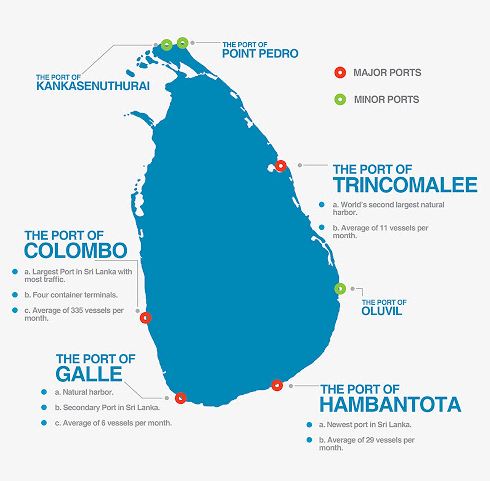
  • India, Japan back in another Sri Lanka port project

    Sri Lanka has confirmed that it will develop the West Container Terminal (WCT) at the Colombo Port along with India and Japan.

    Q.The threat of Chinese presence in South Asia can be tackled more effectively if India changes course in its dealings with its neighbours and becomes more sensitive to their concerns. Critically analyse.

     Why in news?

    • The decision comes a month after the Rajapaksa government ejected the two partners from a 2019 tripartite agreement to jointly develop the East Container Terminal (ECT), citing resistance to “foreign involvement”.
    • Neither India nor Japan has officially commented on the offer, or on the said private investment from the countries.

    An alternative to ECT

    • SL has offered India and Japan the WCT as an alternative, allowing higher stakes.
    • In the ECT project agreed upon earlier, the Sri Lanka Ports Authority (SLPA) was to hold a majority 51%, but in the WCT proposal, India and Japan will be accorded an 85% stake.
    • The nearby Colombo International Container Terminal (CICT), where China Merchants Port Holdings Company Limited holds 85%.
    • This makes it a strategically desirable spot for India, whose concerns over China’s presence in Sri Lanka are well known.

    Issues with a new project

    • The WCT is adjacent to the China-run CICT and just a couple of kilometres away from the China-backed Port City being built on reclaimed land.
    • The West Container Terminal, however, has to be built from scratch, requiring a much higher investment.
    • The return on investment has not been envisaged yet.

    Why is Colombo so generous this time?

    • Colombo’s alternative offer also comes at a time when Sri Lanka is seeking support at the ongoing UN Human Right Council session, where a resolution on the country’s rights record will soon be put to vote.