Mains Ready By December. Smash Mains & Smash PYQ Admissions Open

GS Paper: GS2-18.Bilateral, regional and global groupings and agreements involving India and/or affecting India’s interests.

  • SAI20 and India’s Presidency of G20

    SAI20

    Central Idea

    • Under India’s presidency, the G20 leaders will be focusing on collective progress, equity, and inclusive growth, with the summit theme of One Earth, One Family, One Future. India’s commitment to green development, circular economy, and lifestyle behavior changes aim to achieve the 2030 Sustainable Development Goals. The Comptroller & Auditor General of India (CAG) will chair SAI20, the Engagement Group for Supreme Audit Institutions (SAls) of G20 countries in Goa in June.

    Top Priority areas for SAI20 deliberations Under India’s presidency

    • The Comptroller & Auditor General of India (CAG) will chair SAI20 in Goa in June this year.
    • Two priority areas have been selected for SAI20 deliberation:
    1. Blue economy
    2. Responsible Artificial Intelligence

    What is SAI20?

    • SAI20 stands for Supreme Audit Institutions (SAIs) of G20 countries.
    • It is a forum where SAIs from G20 countries can engage with each other to share their experiences and expertise in auditing public policies and governance practices.
    • The group meets annually to discuss important issues related to public auditing and to develop joint initiatives to promote good governance and accountability in their respective countries.

    What is Blue Economy?

    • Blue Economy is defined by the World Bank as the Sustainable use of ocean resources for economic growth, improved livelihoods, and jobs while preserving the health of the ecosystem.
    • Gunter Pauli’s book, The Blue Economy: 10 years, 100 innovations, 100 million jobs” (2010) brought the Blue Economy concept into prominence.
    • The UN first introduced blue economy at a conference in 2012 and underlined sustainable management, based on the argument that marine ecosystems are more productive when they are healthy. In fact, the UN notes that the Blue Economy is exactly what is needed to implement SDG 14, Life Below Water.
    • The term ‘blue economy’ includes not only ocean-dependent economic development but also inclusive social development and environmental and ecological security.

    Key functions and significance of Supreme Audit Institutions (SAIs)

    • Independent audits: SAIs conduct independent audits of government finances and operations to ensure that public funds are being used in accordance with the law, and that government agencies are operating effectively and efficiently.
    • Promoting transparency and accountability: SAIs promotes transparency and accountability by making audit reports publicly available, and by providing information to the public about government spending and operations.
    • Improving governance: By identifying weaknesses and inefficiencies in government operations, SAIs can help to improve governance and promote more effective use of public resources.
    • Supporting the legislative branch: SAIs supports the legislative branch by providing information and analysis that can help lawmakers make informed decisions about government programs and policies.
    • Ensuring compliance with laws and regulations: SAIs ensure compliance with laws and regulations by reviewing government operations and financial statements to ensure that they comply with applicable laws and regulations.
    • Fostering international cooperation: Through international organizations such as the International Organization of Supreme Audit Institutions (INTOSAI), SAIs collaborates and share best practices with their counterparts in other countries to promote good governance and accountability globally.

    Facts for prelims

    What is Compendium of Asset Accounts of Natural Resources?

    • The Compendium of Asset Accounts of Natural Resources is a comprehensive report prepared by the Comptroller and Auditor General of India (CAG) in line with the United Nations system of Environmental and Economic Accounts.
    • It is the first-ever country-wide compendium of natural resource accounting methodologies and provides a guide for the Indian government to utilize natural resources optimally.
    • The report covers various aspects of natural resources such as forests, minerals, water, and land, and includes accounts of physical quantities, values, and transactions related to these resources.
    • The main objective of the compendium is to improve the management of natural resources and promote sustainable development.

    SAI20

    How CAG can lead the SAI20 engagement group?

    • Setting the agenda: The CAG can set the agenda for SAI20 deliberations, identifying priority areas for discussion and ensuring that they align with the broader goals of the G20 and the United Nations.
    • Providing technical expertise: The CAG can provide technical expertise in auditing and public finance management, which can help other SAIs in the group to develop their capacity and improve their performance.
    • Developing audit toolkits: The CAG can take the lead in developing audit toolkits, which can help SAIs in the group to assess development in coastal stretches, track marine water quality, and promote sustainable development.
    • Building consensus: The CAG can work towards building consensus among SAIs in the group, promoting constructive dialogue and agreement on how to improve auditing of performance in specific areas of ocean-based activities.
    • Strengthening accountability: The CAG can use SAI20 to promote transparency, accountability, and good governance in ocean-based activities, which can help ensure that economic growth benefits are shared fairly across generations.

    Conclusion

    • The toolkits being prepared by SAI20 under the leadership of the CAG of India will be presented at the SAI20 Engagement Group meet, which will provide a unique opportunity for constructive dialogue and agreement to improve auditing of performance in specific areas of ocean-based activities. This collaborative effort would not only build capacity for auditors across SAI20 member countries but also help regional auditing communities by providing a common and replicable auditing tool.

    Mains Question

    Q. The Comptroller & Auditor General of India (CAG) will chair SAI20 (Supreme Audit Institutions) of G20 countries this year. In this light discuss the role of SAI 20 and How CAG can lead the engagement group for sustainable economic growth?

    Get an IAS/IPS ranker as your personal mentor for UPSC 2024 | Schedule your FREE session and get the Prelims prep Toolkit!

     Also read:

    Blue Economy: India’s G20 Presidency Offers An Opportunity


  • Pacific Island Countries (PICs): India’s Development Diplomacy

    Pacific

    Central Idea

    • Indian Prime Minister Narendra Modi’s visit to Papua New Guinea (PNG) has strategic importance as it marks the Third Forum for India-Pacific Islands Cooperation (FIPIC), which India is co-hosting along with PNG in Port Moresby. India’s involvement with the region is crucial from a geostrategic perspective as it is viewed by the US as a means to counter China in the Indo-Pacific. In this context, India is gradually tuning itself towards the Pacific Island Countries (PICs) by building development partnerships on critical issues.

    Pacific

    Forum for India-Pacific Islands Cooperation (FIPIC)

    • The Forum for India-Pacific Islands Cooperation (FIPIC) is a multilateral grouping that aims to enhance India’s relations with the Pacific Islands region. It was launched in November 2014 during Indian Prime Minister Narendra Modi’s visit to Fiji.
    • The FIPIC includes 14 Pacific Island countries, namely Cook Islands, Fiji, Kiribati, Marshall Islands, Micronesia, Nauru, Niue, Palau, Papua New Guinea, Samoa, Solomon Islands, Tonga, Tuvalu, and Vanuatu.
    • The forum serves as a platform for India to engage with the Pacific Island countries on issues such as climate change, renewable energy, disaster management, health, and education, among others.
    • The forum also provides an opportunity for India to strengthen its strategic presence in the Indo-Pacific region and counter China’s growing influence in the region.

    Why should India focus on Pacific Island Countries (PICs)?

    • Strategic location: The PICs are strategically located in the South Pacific and inhabit almost one-sixth of the world’s population. These islands have occupied common spheres of influence and interest for major superpowers like the US, France, Japan, Australia, and the United Kingdom (UK).
    • Resource-rich region: The PICs are inherently resource-rich in natural minerals and hydrocarbons. They are known for massive biodiversity, diverse ocean life, and extensive mangroves.
    • Countering China: China’s foray into the region in the form of resource extraction, increasing naval presence in the South China Sea, and investments under the Belt and Road Initiative (BRI) has unnerved the neighbourhood. India’s engagement with the Pacific nations is viewed by the US as a means to counter China in the Indo-Pacific.
    • Diplomatic importance: India’s engagement with the PICs is significant for diplomatic reasons, as it can increase India’s influence in the Indo-Pacific region. India’s foreign policy considerations are progressively being structured around the notion of diplomacy for development. This India Way of foreign policy fits well for the larger Global South.
    • Development partnerships: India can build development partnerships with PICs on critical issues including climate resilience, digital health, renewable energy, and disaster risk reduction.
    • Economic opportunities: The PICs offer economic opportunities for India, especially in the areas of green transition and climate change, technology transfer, capacity building, encouraging trade and commerce, etc.

    Pacific

    Facts for prelims: PIC’s

    Region Countries Resources Strategic Importance Physical Location
    Melanesia Fiji, Papua New Guinea, Solomon Islands, Vanuatu Minerals, timber, fish, gold, copper, oil, gas Natural resources, biodiversity, proximity to shipping lanes 1°N to 14°S, 124°E to 168°E
    Micronesia Federated States of Micronesia, Kiribati, Marshall Islands, Nauru, Palau Fish, phosphate, coconut products Strategic military location, control of the Pacific Ocean, climate change impacts 1°N to 11°N, 130°E to 176°E
    Polynesia American Samoa, Cook Islands, French Polynesia, Niue, Samoa, Tonga, Tuvalu, Wallis and Futuna Fish, forestry, agriculture, tourism Tourism, cultural significance, strategic military location 14°S to 27°S, 123°W to 162°E

    What is Development Diplomacy?

    • Development diplomacy is a foreign policy approach that emphasizes cooperation and partnership on development issues with other countries as a means of achieving shared goals and promoting mutual interests.
    • The focus is on building relationships with other nations based on shared values and common objectives, rather than on traditional notions of power and influence.
    • Development diplomacy recognizes the interdependence of nations in an increasingly globalized world, and seeks to create win-win partnerships that benefit all parties involved.

    key initiatives taken by India under Development diplomacy in Papua New Guinea (PNG)

    • Line of Credit: India has offered a $100 million Line of Credit (LoC) to Papua New Guinea for infrastructure development.
    • Climate resilience: India has partnered with PNG for a project aimed at developing climate-resilient agriculture. Under this project, Indian experts are sharing their expertise on climate-resilient agriculture practices and technology transfer.
    • Healthcare: India has offered training for healthcare professionals in PNG, and has also provided medical equipment and supplies.
    • Education: India has offered scholarships to students from PNG to study in India, as well as providing vocational training for PNG youth.
    • Renewable energy: India has partnered with PNG to promote the use of renewable energy sources such as solar and wind power.
    • Capacity building: India has provided training for PNG government officials in areas such as public administration, governance, and disaster management.
    • Trade and commerce: India have sought to enhance trade and investment relations with PNG, including through the promotion of Indian businesses and the facilitation of PNG investment in India.

    Conclusion

    • India’s involvement with the Pacific Island Countries (PICs) is crucial from a geostrategic perspective, as it is viewed by the US as a means to counter China in the Indo-Pacific. India’s unique approach to development cooperation fits well for the larger Global South, and it can be a possible pathway for advancing Southern-driven partnerships in the PICs. With the G20 Presidency giving India leverage as an important economy in world politics, the FIPIC can be viewed as a suitable opportunity for New Delhi to realign itself in the emerging world order.

    Mains Question

    Q. What do you understand by mean Development diplomacy? Why India should increase its focus on pacific island countries?

    Get an IAS/IPS ranker as your personal mentor for UPSC 2024 | Schedule your FREE session and get the Prelims prep Toolkit!

    Also read:

    The Small Island Developing States (SIDS) in Indian Ocean region (IOR)


  • Ukraine War Impact on Global Politics and India’s Diplomatic Agenda

    Ukraine

    Central Idea

    • The war in Ukraine has had a ripple effect on global political and financial systems, leading to shortages of essential commodities and rising prices. The conflict is rooted in Putin’s revanchist claims that Ukraine is an inalienable part of Russia’s history, culture, and spiritual space. On the other hand, Putin accuses the US and Europe of violating their assurance to Gorbachev that NATO would not advance eastward. The crisis poses a dilemma for India, which must balance its partnerships with Russia and China in the BRICS and SCO formats while maintaining strategic autonomy.

    Two Essential Facets of the Conflict?

    • Putin’s Assertion of Russia’s Dominance: Vladimir Putin argues that Ukraine is not a sovereign nation and that it is an inalienable part of Russia’s history, culture, and spiritual space. He makes revanchist claims to camouflage Russia’s quest for dominance. Such claims are echoed in China’s Nine-dash line in the South China Sea, its occupation of India’s Aksai Chin, and blatant claims on Arunachal Pradesh.
    • Alleged Violation of NATO’s Assurance: Putin accuses the US and Europe of bad faith, citing the assurance given to a worried Gorbachev that NATO would advance not an inch eastward. This solemn undertaking was allegedly violated when NATO enlisted 10 former Warsaw Pact members in the next decade. With Finland as the latest entrant, NATO is now 31-strong, and Russia feels truly cornered.

    Impact of the war in Ukraine on global political and financial systems

    • Shortages of Essential Commodities: Ukraine is a key contributor of grain, edible oil, and fertilizers to the world’s supply chains, and Russia is a major exporter of natural gas and crude oil. The war has disrupted the production and transportation of these commodities, leading to shortages and rising prices.
    • Falling Stock Markets: The war in Ukraine has caused a decline in global stock markets as investors become increasingly nervous about the economic impact of the conflict.
    • Public Discontent and Political Upheaval: The shortages of essential commodities and rising prices have led to public discontent and even political upheaval in some countries. For example, in India, rising fuel prices have led to widespread protests and political unrest.
    • Realignment of Global Alliances: The war in Ukraine has led to a realignment of global alliances as countries seek alternate sources of food, energy, commodities, and arms. This has resulted in a polarisation of the global community and realignments in diplomatic relations.
    • Economic Sanctions: The international community has imposed economic sanctions on Russia in response to its actions in Ukraine, which have had a significant impact on the Russian economy.
    • Threat of Nuclear War: The conflict in Ukraine has raised concerns about the possibility of a nuclear war, particularly given Putin’s reckless nuclear sabre-rattling.

    What is the Dilemma for India?

    • India’s Engagement with Russia and China: India is engaged with Russia and China in various multilateral forums, including the BRICS format and the Shanghai Cooperation Organisation (SCO). At the same time, India is partnering with the US in the Quad and Malabar groupings. The conflict in Ukraine has created a complex situation for India as it seeks to maintain strategic autonomy while engaging with multiple partners.
    • Security Environment: India’s security environment is of paramount concern, given the recent Poonch ambush and persistent cross-border terrorism by the Pakistan army-ISI combine. In addition, there is stonewalling of Raksha Mantri Rajnath Singh’s demarche about the violation of existing agreements by his Chinese counterpart, Li Shangfu.
    • Lack of Defense Technology: India is a nuclear-weapon state and space power with the world’s fourth-largest military. However, the lackadaisical performance of its military-industrial complex has rendered it abjectly import-dependent for weaponry. India seeks to promote its atmanirbharta (self-reliance) policy, but technology has long gestation periods, and India needs to acquire defense technology from its partners.

    How Quad and Malabar Groupings can help India? 

    • Convergence of strategic interests: The Quad and Malabar groupings represent a convergence of strategic interests between India and the US, which can help India strengthen its security and diplomatic ties with the US, Japan, and Australia.
    • Military-diplomatic purpose: These forums serve a useful military-diplomatic purpose, allowing India to deepen its military cooperation with the US and other Quad members, particularly in the Indo-Pacific region.
    • Power-balancing: India needs to accord priority to power-balancing on its diplomatic agenda, and the Quad and Malabar Groupings can play a significant role in this regard. India can leverage these groupings to balance China’s growing influence in the region.
    • Technology acquisition: India is abjectly import-dependent for weaponry and needs to acquire advanced technologies to address its security concerns. The Quad and Malabar Groupings can help India access advanced military technologies from the US, Japan, and Australia, which can enhance India’s defense capabilities.

    Facts for prelims

    Initiative Objective Countries Involved Key Features
    Quad Strengthen security and promote economic growth in the Indo-Pacific region India, United States, Japan, Australia Regular high-level meetings, joint military exercises, cooperation on maritime security, infrastructure development, and technology transfer
    AUKUS Strengthen security in the Indo-Pacific region through advanced military technology sharing and cooperation United States, United Kingdom, Australia Joint development and sharing of advanced military technologies, including nuclear-powered submarines, and joint military exercises
    iCET Promote cooperation on critical and emerging technologies between India and the United States India, United States Cooperation on cutting-edge technologies such as AI, quantum computing, and 5G, with a focus on sharing knowledge, expertise, and best practices

     New US initiatives

    • AUKUS: AUKUS is a trilateral security pact between the US, the UK, and Australia, aimed at enhancing security cooperation and sharing advanced military technologies. While the focus of the pact is primarily on Australia, it can indirectly benefit India by strengthening the US security architecture in the Indo-Pacific region and deterring China’s aggressive behavior. The pact can also lead to the development of new technologies, such as advanced unmanned underwater vehicles, which can enhance India’s maritime security.
    • Initiative on Critical and Emerging Technologies (iCET): The iCET is aimed at boosting cooperation between India and the US in the field of critical and emerging technologies, such as artificial intelligence, quantum computing, and biotechnology. This initiative can help India access cutting-edge technologies and knowledge, which can enhance India’s technological capabilities and address its security concerns.

    Way ahead: Self-reliance in defence production and reduce dependence

    • Invest in R&D: India should invest heavily in research and development (R&D) to develop cutting-edge military technologies indigenously. This can help reduce India’s dependence on imports and enhance its military capabilities.
    • Promote Public-Private Partnership (PPP): India can promote PPPs to encourage private sector participation in defence production. This can help bring in much-needed investment, innovation, and expertise into the defence sector, thereby enhancing India’s defence capabilities.
    • Facilitate Technology Transfer: India can facilitate technology transfer from foreign defence manufacturers to domestic firms to enhance their technological capabilities. This can help Indian companies acquire critical technologies and expertise, which can be leveraged to develop advanced military systems indigenously.
    • Focus on Export: India should focus on promoting defence exports to enhance its defence manufacturing base and generate much-needed revenue. This can help reduce the cost of domestic production and make Indian defence products globally competitive.

    Conclusion

    • India needs to navigate the conflict in Ukraine deftly to maintain its strategic autonomy while balancing its partnerships with Russia and China. India must prioritize power-balancing and technology acquisition on its diplomatic agenda and focus on building self-reliance in defense production.

    Mains Question

    Q. The war in Ukraine has had a ripple effect on global political and financial systems. In this backdrop highlight the dilemma for India and discuss how Quad and Malabar Groupings along with US initiatives help India on Defence and strategic issues ?

    Get an IAS/IPS ranker as your personal mentor for UPSC 2024 | Schedule your FREE session and get the Prelims prep Toolkit!

    Also Read:

    India’s role in Russia-Ukraine war

  • ASEAN-India maritime exercise in South China Sea

    south china sea asean

    Central idea: The article highlights India’s increasing military cooperation with ASEAN countries, with a special emphasis on the upcoming ASEAN-India Maritime Exercise (AIME) in the South China Sea.

    ASEAN-India Maritime Exercise

    • The first ASEAN-India Maritime Exercise (AIME) is set to commence on May 2, 2023, with war games to be held in the South China Sea.
    • INS Satpura and INS Delhi will participate in the exercise.
    • The exercise is divided into two phases: ‘Harbour Phase’ and ‘Sea Phase.’
    • The exercise is aimed at fostering close cooperation and conducting seamless operations in the maritime domain between the Indian Navy and ASEAN navies.

    About ASEAN (Association of Southeast Asian Nations)

    Details
    Members Brunei Darussalam, Cambodia, Indonesia, Laos, Malaysia, Myanmar, Philippines, Singapore, Thailand, Vietnam
    Formation August 8, 1967
    Headquarters Jakarta, Indonesia
    Purpose To promote economic growth, social progress, and cultural development
    Economic integration ASEAN Free Trade Area (AFTA) and ASEAN Economic Community (AEC)
    Political cooperation ASEAN Regional Forum (ARF) and ASEAN Defense Ministers Meeting (ADMM)
    Cultural cooperation ASEAN Socio-Cultural Community (ASCC)
    Relationship with India Strategic partnership, trade, and investment


    Why such exercise?

    • Defying territorial claims: The South China Sea is a critical waterway that connects the Indian Ocean with the Pacific Ocean, and it is also a contested region where multiple countries have territorial claims.
    • Support freedom of navigation: Conducting exercises in this region allows India to demonstrate its commitment to maintaining freedom of navigation and upholding international maritime laws.
    • Indo-Pacific Strategy: India’s growing strategic ties with ASEAN are part of its broader Indo-Pacific strategy, which seeks to promote a rules-based order and ensure stability in the region.
    • Counterbalancing China: As China’s influence in the Indo-Pacific grows, India sees ASEAN as a key partner in balancing China’s assertiveness and promoting regional stability.

    India’s stakes in South China Sea

    The South China Sea plays a critical role in India’s security and well-being as-

    • Global common: The SCS is not China’s sea, but a global common.
    • Unimpeded navigation: It has been an important sea-lane of communication for centuries, and passage has been unimpeded. Indians have sailed these waters for well over 1,500 years with a continuous trading presence.
    • Global trade chokepoint: Nearly $200 billion of India’s trade passes through the South China Sea, and thousands of Indian citizens study, work and invest in ASEAN, China, Japan and the Republic of Korea.

    Key significance: India’s Responsiveness to ASEAN

    India needs to be responsive to ASEAN’s expectations.

    • Meeting ASEAN’s aspirations: While strategic partnerships and high-level engagements are important, ASEAN expects longer-lasting buy-ins by India in their future.
    • History of lesser importance given by India: ASEAN has taken the initiative time and again to involve India in Indo-Pacific affairs, even though India’s current level of trade or investment with ASEAN does not make a compelling argument.
    • Broader perception of India as key partner: ASEAN has deliberately taken a longer-term view, given the importance of regional arrangements for economic recovery and rejuvenation.


    Back2Basics:  South China Sea Dispute

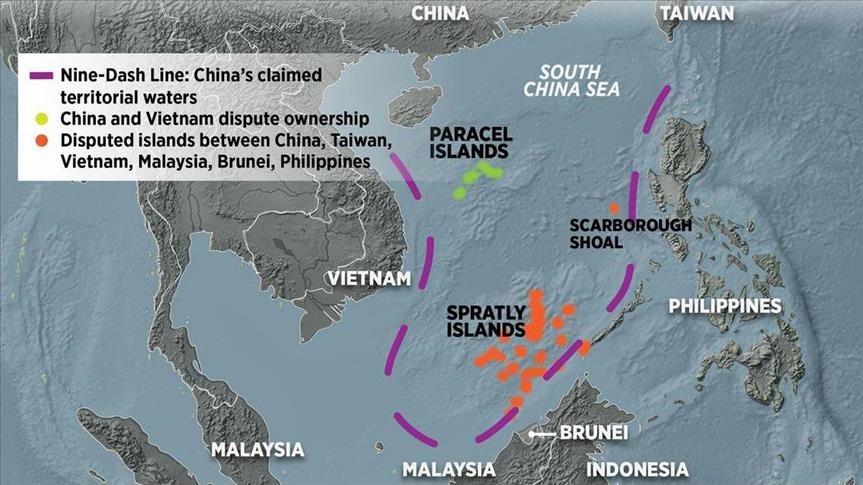
    • It is a dispute over territory and sovereignty over ocean areas, and the Paracels and the Spratlys – two island chains claimed in whole or in part by a number of countries.
    • China, Vietnam, the Philippines, Taiwan, Malaysia, and Brunei all have competing claims.
    • Alongside the fully-fledged islands, there are dozens of rocky outcrops, atolls, sandbanks, and reefs, such as the Scarborough Shoal.
    • China claims by far the largest portion of territory – an area defined by the “nine-dash line” which stretches hundreds of miles south and east from its most southerly province of Hainan.
    • Beijing says its right to the area goes back centuries to when the Paracel and Spratly island chains were regarded as integral parts of the Chinese nation, and in 1947 it issued a map detailing its claims.
    • It showed the two island groups falling entirely within its territory. Those claims are mirrored by Taiwan.


    Get an IAS/IPS ranker as your personal mentor for UPSC 2024 | Schedule your FREE session and get the Prelims prep Toolkit!

  • SCO and Its Broader Geopolitical Evolution

    SCO

    Central Idea

    • The visit of Chinese and Russian defence ministers to attend a ministerial meeting of the Shanghai Cooperation Organisation (SCO) in Delhi has drawn attention to the broader geopolitical evolution of the SCO. While the clamour for membership shows the attractiveness of the forum, its internal contradictions and inability to cope with intra-state and inter-state conflicts among member states are raising questions about its strategic coherence.

    All you need to know about SCO

    • Background: After the collapse of the Soviet Union in 1991, the then security and economic architecture in the Eurasian region dissolved and new structures had to come up. The original Shanghai Five were China, Kazakhstan, Kyrgyzstan, Russia and Tajikistan.
    • SCO formation: The SCO was formed in 2001, with Uzbekistan included. It expanded in 2017 to include India and Pakistan. Since its formation, the SCO has focused on regional non-traditional security, with counter-terrorism as a priority.
    • Partner countries: Eight Member States are China, Russia, Kazakhstan, Kyrgyzstan, Tajikistan, Uzbekistan, India, and Pakistan. While four observer states are Afghanistan, Belarus, Iran, and Mongolia and six dialogue partners include Armenia, Azerbaijan, Cambodia, Nepal, Sri Lanka, and Turkey.
    • Functionaries of SCO
    1. Executive Branch: The SCO has an executive branch, which is headed by the Secretary-General and is responsible for the day-to-day functioning of the organization.
    2. Council of Heads of State: The highest decision-making body of the SCO is the Council of Heads of State, which meets annually to discuss and decide on important issues.
    3. Council of Heads of Government: The Council of Heads of Government is the second most important decision-making body of the SCO, which meets annually to discuss and decide on economic and trade-related issues.
    4. Regional Anti-Terrorist Structure (RATS): The SCO has RATS, which is responsible for coordinating the efforts of member states in the fight against terrorism, separatism, and extremism.

    Facts for prelims

    SCO RATS:

    • Regional Anti-Terrorist Structure (RATS) is a permanent organ of the SCO which serves to promote cooperation of member states against the three evils of terrorism, separatism and extremism.
    • It is headquartered in Tashkent.
    • Its head is elected to three-year term.
    • Each member state of SCO sends permanent representative to RATS.

    The SCO paradox

    • Shadow over its strategic coherence: Even as the Eurasian forum looks attractive to a growing number of regional states, its internal contradictions are casting a shadow over its strategic coherence.
    • Russia-Ukraine war: Russia’s war in Ukraine is raising questions about Moscow’s capacity to sustain primacy in its backyard.
    • China’s dominance in Asia: China’s rise is increasing the prospects for Beijing’s emergence as the dominant force in inner Asia.

    SCO

    Membership Clamour and Attractiveness of the SCO

    • Comparison between the long lines for membership at the doors of the North Atlantic Treaty Organisation and the SCO:
    • Central European countries towards NATO: Many countries in Central Europe, including Ukraine, want to follow Finland and Sweden into NATO.
    • Several countries queuing up to join SCO: Several important regional states in India’s neighbourhood are queuing up to join the SCO, which now has eight members – China, India, Kazakhstan, Kyrgyzstan, Pakistan, Russia, Uzbekistan, and Tajikistan.
    • Iran set to join: Iran is set to join the SCO and Afghanistan, Belarus, and Mongolia are observers and would like to follow Tehran.
    • Impressive list of dialogue partners: Then there is the impressive list of current and incipient dialogue partners that includes Azerbaijan, Armenia, Egypt, Qatar, Turkey, Saudi Arabia, and the United Arab Emirates from the Middle East and Maldives, Nepal, and Sri Lanka from the Subcontinent.
    • SCO is inclusive: Unlike NATO the SCO is inclusive, and its attractiveness underlines the rise of non-Western security institutions.
    • Turkey wants to be part of SCO: Turkey, a long-standing member of NATO, wants to be part of SCO certainly highlights the value of being part of a forum led by Russia and China that today are at loggerheads with the West.

    Internal Conflicts and Counter-terrorism Preoccupation

    • Internal conflicts becoming high priority: Counter-terrorism has been the principal preoccupation of the SCO for all these years. The internal conflicts within and between the member states and associates are becoming a higher priority for the SCO.
    • For example: Afghanistan’s internal instabilities have been a major driver for the SCO. However, for all the talk of the SCO becoming the regional security arbiter, it was a direct deal between the US and the Taliban that reshaped the Afghan dynamic.
    • Russia’s Role and Ambitions in Central Asia: Russia’s muscle and Beijing’s money provide a sensible basis for their strategic division of labour in Central Asia to keep the Western powers out of the region. However, if Russia is a protector of the Central Asian regimes, it could also be a potential predator.
    • China’s Growing Regional Influence: China’s growing regional influence will come at Russia’s expense, as China becomes the senior partner in the bilateral relationship with Russia after Ukraine. China’s explicit support of the sovereignty of the Central Asian states is a straw in the wind. Shared borders, growing political salience, and rising regional security profiles promise to make China a force to reckon with in Central Asia in the not-too-distant future.

    Significance of SCO for India

    • Central Asia connection: SCO membership provides India with an opportunity to engage with Central Asian nations, Russia, and China, and work towards promoting regional stability, security, and economic cooperation.
    • Security cooperation: SCO focuses on combating terrorism, separatism, and extremism in the region, which is of particular concern to India.
    • Consensus over CBT: India has been a victim of cross-border terrorism for decades. India has been working closely with the RATS to share intelligence and coordinate counter-terrorism operations in the region.
    • Economic push: SCO has set up mechanisms for trade and economic cooperation, including the SCO Business Council, the SCO Interbank Consortium, and the SCO Development Bank.
    • Cultural cooperation: The organization aims to promote cultural exchanges among member states and has set up mechanisms for cooperation in fields such as education, science, and technology

    Issues with SCO (Indian context)

    • Pakistan’s presence: India has accused Pakistan of using SCO forums to spread propaganda and misinformation against India.
    • China’s dominance: India has also expressed concerns over China’s dominance in the organization and its attempts to use the platform to push its strategic interests in the region.
    • Limited economic benefits: Despite being a member of the organization for over a decade, India’s trade with other SCO members remains limited and has not been able to tap the full potential of the organization.
    • Limited counter-terrorism cooperation: While the primary objective of the organization is to combat terrorism, India has expressed concerns over the limited counter-terrorism cooperation among member states.
    • Limited influence: Despite being a major power in the region, India’s voice and concerns have not been adequately represented in the organization.

    India’s challenging role in the SCO

    • India’s engagement with the SCO all these decades was premised on Russian primacy in the region and Moscow’s support of India’s regional interests.
    • For India, a strong and independent Russia is critical for maintaining the inner Asian balance. However, Delhi is in no position to ensure Moscow’s strategic autonomy from Beijing; that depends on Russian strategic choices.
    • India’s burden in the SCO must now be to protect its own interests amidst a rapidly changing regional power distribution in China’s favour.

    Conclusion

    • India, which is chairing the Eurasian regional forum this year, has a range of bilateral problems to discuss with its fellow SCO members. However, its burden in SCO must now be to protect its own interests amidst a rapidly changing regional power distribution in China’s favour. The challenge is particularly demanding as India does not have direct geographic access to the landlocked region.

    Mains Question

    Q. The clamour for membership is a measure of a forum’s success the increasing clamour for the membership of the SCO is doing well. Discuss and highlight the internal challenges that the SCO is facing.

    Get an IAS/IPS ranker as your personal mentor for UPSC 2024 | Schedule your FREE session and get Prelims prep Toolkit!


  • Macron’s Statement On China and India’s Own Possibilities In Europe

    Macron

    Central idea

    • French President Emmanuel Macron’s recent declaration that France is an ally but not a vassal of the United States and his comments that Paris does not share Washington’s hostility towards China have generated significant reactions in the US and Europe. Beijing’s official media has praised Macron’s strategic autonomy approach towards China, and Russia hopes that France and other European countries will be less politically tied to the US.

    Macron’s comments on China and Taiwan and reactions

    • Outrage in the US and Europe: Macron’s comments that France does not share the US’s hostility towards China and does not see the Taiwan crisis as a threat to Europe have generated outrage in the US and Europe.
    • China praised: Beijing sees Macron’s model of strategic autonomy as a positive example for other nations to follow regarding China.
    • India criticized: India has criticized the remarks, noting that the principle and power are at stake in both Ukraine and Taiwan.

    What is mean by Vassalisation?

    • The term vassalisation refers to a state or country that is in a subordinate or dependent relationship with another, usually more powerful, state or country.
    • It suggests a lack of independence and autonomy in decision-making and an obligation to follow the policies and interests of the more powerful state.

    Important trends highlighted by the debate on the vassalisation of Europe and Russia

    1. Different perspectives on Taiwan and Ukraine
    • Macron’s claim on Taiwan not being a concern to Europe reinforces India’s External Affairs Minister S Jaishankar’s criticism of Europe’s mindset that their problems are the world’s problems.
    • The Ukraine conflict has debilitating consequences for the world, and a shooting war between the US and China over Taiwan could be more devastating and costly to the international system.
    • Macron’s contradictory approach to the Indo-Pacific is disappointing, and his wavering resolve on China may lead Asian countries to think less of French resolve.
    1. Macron does not represent all of Europe
    • President of the European Commission, Ursula von der Leyen, has a different take on China than Macron.
    • Central Europeans trust the US more than France or Germany to defend their security interests.
    • Europe is deeply divided on how to address contemporary security challenges, undermining Macron’s ambition to turn Europe into the world’s third superpower.
    • The only common belief in Europe today is the political faith in Beijing’s capacity to end Russia’s war in Ukraine.
    1. A weaker and divided Europe enhances the prospects for a bipolar world
    • Multipolarity has been an important objective of India’s foreign policy for over three decades.
    • The talk of multipolarity could become academic as the US and China pull way ahead of other powers, get deeper into confrontation, and shape the choices of the rest of the world.
    • The belief that Europe and Russia can act as elements of a multipolar world is becoming increasingly untenable.
    1. India’s possibilities in Europe and Russia
    • Delhi should not turn its back on Europe despite its current predicament with China.
    • Macron’s China push underlines India’s own possibilities in Europe.
    • Western Europe that follows the money in China could do the same in India, providing much strategic benefit to India in its partnerships with Brussels and individual European actors.
    • India is stepping up its engagement with Russia on the calculation that Moscow’s current dependence on Beijing is temporary.
    1. India needs to work more closely with the US and its Asian allies
    • The inability or unwillingness of both Russia and Western Europe to balance China means India needs to work much more closely with the US and its Asian allies to secure a more favourable balance of power in its Indo-Pacific neighbourhood.
    • India’s strategic value will only go up for the US amidst the European reluctance to stand up to China’s hegemonic ambitions.
    • Few countries in Asia face more urgent and daunting challenges from China than India, and few Asian capitals have more political will to stand up to Beijing than Delhi.
    • The reduced standing of Europe and Russia in great power relations is accompanied by Asia’s rise, with emerging strategic opportunities for Japan, India, and South Korea.

    Europe-China relations

    • Europe-China relations have been complex and multi-faceted over the years: On the one hand, China is Europe’s second-largest trading partner, and there is a lot of economic interdependence between the two. On the other hand, there are concerns about human rights violations, lack of market access for European companies in China, and China’s increasing assertiveness in the Asia-Pacific region.
    • Some important developments include
    • The EU-China Comprehensive Agreement on Investment (CAI): Negotiated in December 2020, the CAI is a landmark investment deal between the EU and China aimed at improving market access for European companies in China and increasing investment flows between the two regions. However, the agreement has been met with criticism from some EU member states and civil society groups, who argue that it does not do enough to address human rights abuses in China.
    • Increasing concern over Chinese human rights abuses: Europe has been increasingly critical of China’s human rights record, particularly in the wake of the crackdown on pro-democracy protesters in Hong Kong and the treatment of Uighur Muslims in Xinjiang. The EU has imposed sanctions on Chinese officials involved in human rights abuses, and there is growing support for a boycott of the 2022 Winter Olympics in Beijing.
    • Growing competition in the Indo-Pacific region: Europe is becoming more engaged in the Indo-Pacific region, which is seen as a key area of strategic competition between China and the US. Some EU member states, such as France and Germany, have developed their own Indo-Pacific strategies and are seeking to deepen security partnerships with countries in the region.
    • Belt and Road Initiative (BRI): China’s massive infrastructure project, the BRI, has raised concerns in Europe about China’s growing influence in the region. Some EU member states, such as Italy and Greece, have signed on to the initiative, while others have been more cautious.

    Facts for prelims

    Category

    Information

    Location East Asia
    Capital Taipei
    Population 23.58 million (2021)
    Official language Mandarin Chinese, Hokkien, Hakka, and indigenous languages
    Currency New Taiwan dollar
    Form of government Unitary semi-presidential constitutional republic
    Topography Mountainous with fertile plains in the west
    Climate Subtropical

    Conclusion

    • Macron’s comments on China have sparked debates about Europe and Russia’s relationship with China and the US. A weaker and divided Europe enhances the prospects for a bipolar world dominated by the US and China, which makes it important for India needs greater engagement with European geopolitics and to work closely with the US and its Asian allies to secure a more favorable balance of power in the Indo-Pacific region.

    Mains Question

    Q. What do you understand by mean vassalisation in terms of international politics? Discuss the latest trends that have emerged from the debate on the vassalisation of Europe derived from French president Macron’s recent comments on China.

  • Russia and China Aim To Build A Post-Western Order

    Central Idea

    • Russia and China aim to exploit divisions within the West to transform the global order and build a post-Western order. However, the Indian strategic community should not expect the fault lines within the West to be fatal, as history has shown that such dreams have not come to fruition.

    Post-Western Order

    • Building a post-Western order: Russia and China have talked of upending the world order before, with the history of international communism in the 20th century being about building a post-Western order.
    • America’s internal fissures and divisions between the US and Europe: While Moscow and Beijing are convinced that they can put the West on the defensive by pooling their strengths, the success of this strategy rests on the Moscow-Beijing axis successfully leveraging America’s internal fissures and divisions between the US and Europe.

    Dividing America from Europe

    • The Moscow and Beijing are hoping to divide America from Europe: Russia’s latest version of its foreign policy doctrine singles out the US as the main instigator, organizer, and executor of the aggressive anti-Russian policy of the collective West.
    • China’s diplomatic Europe strategy: China’s love for Europe’s strategic autonomy is equally passionate. However, it is unlikely that there will be a decisive movement on either issue, but both sides see the diplomatic dance as a valuable exercise.

    Sino-European Engagement

    • Europe’s pressure on Russia: Europe wants Xi to put pressure on Putin to end the war in Ukraine, and Beijing would like Europe to distance itself from the US on its China policy.
    • Europe not ready to busy China’s peace initiative: While Europe is not ready to buy China’s peace initiative on Ukraine, it has convinced itself that Xi is the only leader who can nudge Putin towards peace.

    India’s Perspective

    • The realists in India are aware of the many differences between the US and Europe, but they are also aware that Western strategic unity has endured since World War II.
    • The Russian and Chinese overreach has cemented broad Western unity rather than separating Europe from the US.

    Conclusion

    • While Russia and China aim to exploit divisions within the West to transform the global order, it is unlikely that they will succeed in building a post-Western order. The fault lines within the West are real, but they are by no means fatal.
  • Finland-NATO-Russia: Search For Ways To Lower The Tensions

    NATO

    Central Idea

    • Finland has become the 31st member of the North Atlantic Treaty Organization (NATO) and its decision to join the alliance should be viewed through the lens of conventional deterrence. The accession of Finland into NATO is a rational choice that may provide additional security guarantees and help to defend against possible aggression from Russia.

    Historical context of Finland-Russia relations

    • The relationship between Finland and Russia has been a combination of struggle and compromise, dating back nearly 200 years.
    • In 1809, the Russian Tsar Alexander I acquired Finland and made it an autonomous Grand Duchy of the Russian empire.
    • Between the two world wars, the Finns felt less threatened by Germany than by Russia.

    NATO

    Finland’s decision to join NATO

    • 31st NATO member: Finland has become the 31st member of NATO, triggering possible countermeasures from Russia.
    • Independent choice: The decision to join NATO is seen as an independent choice, triggered largely by the Russia-Ukraine conflict.
    • Security guarantee: Finland’s accession to NATO is a rational choice to receive additional security guarantees from the alliance. Article 5 of NATO’s founding treaty binds the members together, committing them to protect each other and setting a spirit of solidarity within the alliance.

    Preparations for defense against possible aggression

    • Defence against possible aggression: Even prior to its membership in NATO, Finland had been preparing to defend itself against possible aggression.
    • The Finnish system of conscription has generated sufficient resources for the army, navy, and air force to act effectively in a war situation.

    NATO

    Implications for India and the Arctic region

    • Real punch to the Western alliance in the Nordic region: Finland has maintained a small but capable armed force that is well-trained and resilient, and its inclusion in NATO adds real punch to the Western alliance in the Nordic region.
    • High north is commercial attraction: As the Arctic ice cap melts amidst global warming, the high north has become attractive commercially and contested geopolitically.
    • India is an observer of the Arctic Council: India is an observer of the Arctic Council that seeks to promote wide-ranging cooperation in the polar north.
    • China raising profile in the Arctic: The militarisation of the high north appears inevitable as Finland and Sweden turn from neutrals to Western allies and China raises its profile in the Arctic in partnership with Russia.
    • Global governance: This might make global governance of the Arctic region increasingly problematic

    Way ahead: The need for cautious behavior by NATO and Russia

    • Both NATO and Russia should exercise cautious behavior vis-à-vis each other to avoid further escalation of tensions.
    • Finland’s newly elected centre-right government should engage in bilateral dialogue with Russia, trying to understand each other’s security concerns.
    • There should be at least some NATO members who would be willing to rely more on diplomatic tools and lower the temperatures.

    NATO

    Conclusion

    • The decision of Finland to join NATO is seen as a rational choice, triggered largely by the Russia-Ukraine conflict. The accession of Finland into NATO should be viewed through the lens of conventional deterrence and could potentially persuade an adversary not to initiate a war. NATO and Russia should search for ways to lower the tensions and avoid implementing measures and imposing countermeasures.

    Mains Question

    Q. Finland has become the 31st member of NATO. In this light discuss the rationale behind this decision its implications.

  • India-U.S. relationship: Critical Next Six Months

    India-U.S.

    Central Idea

    • The India-U.S. relationship will be crucial in the next six months with engagements set to happen between the two countries on various forums like the G20, Quad, and I2U2.

    Divergence and Convergence

    • The appointment of Eric Garcetti as the U.S. Ambassador to India signals the potential for greater partnership, but there are also differences to be overcome.
    1. The U.S. may want India to change its stance on the Ukraine crisis.
    2. India may want a stronger position against China.
    • However, the two countries share strong areas of convergence such as
    1. The India-U.S. Initiative on Critical and Emerging Technology and
    2. The Indo-Pacific partnership aimed at promoting security, economic growth, and connectivity in the region.

    India-U.S.

    What is I2U2?

    • In July 2022, India, Israel, the United States (US), and the United Arab Emirates (UAE) in a hybrid summit announced the establishment of a new minilateral grouping called the I2U2.
    • The four countries envision their alliance as an ad-hoc, informal, issue-specific and geoeconomic initiative.

    Realignment of U.S. Supply Chains

    • Disrupted supply chains: In recent years, there has been growing interest in diversifying supply chains away from China due to geopolitical tensions, trade disputes, and concerns about over-reliance on a single country.
    • India is emerging as attractive destination: India’s growing consumer market makes it an attractive destination for U.S. businesses looking to expand their customer base.

    India-U.S.

    Ups and Downs in India-U.S. relationship

    • The India-U.S. relationship has had its ups and downs over time, with key moments such as the nuclear deal, liberalisation of markets, and the outsourcing of Indian techies for U.S. companies.
    • The U.S. has also played an important role in making India an IT superpower.
    • The two countries are also partners in combating climate change and aligned on the importance of space technology.

    Trust Deficit

    • In the past, there has been a trust deficit between India and the U.S., with Indians feeling that the U.S. has not always supported India and has instead supported Pakistan.
    • The U.S. has flagged issues related to terrorism, human rights, and democracy in India. However, the two countries can become stronger together by building on their strategic partnership.

    Conclusion

    • The next six months will be critical for India-U.S. ties, with both countries looking to enhance collaboration and partnership. While there are differences in opinions to be addressed, the two countries also share strong areas of convergence that can be leveraged to strengthen their strategic partnership.

    Mains Question

    Q. What is I2U2 initiative? Evaluate how does it fit into the broader context of the India- US relationship?

  • What do OPEC+ production cuts mean for India?

    opec

    OPEC+ countries announced a voluntary oil production cut of 1.16 million barrels per day, which could impact the Indian economy, which depends on oil imports for 85% of its energy needs.

    Recent trend in crude oil prices

    • Crude oil prices crashed in April 2020 due to the pandemic and recovered when economies opened up.
    • Subsequently, prices rocketed in early 2022, but then the global economy slowed and a recession in advanced markets looms large.
    • This has resulted in declining demand for crude oil from major economies, causing oil prices to start falling again.

    What is OPEC+?

    • OPEC+ is a group of oil-producing countries that cooperate to manage the global supply and prices of crude oil.
    • It is made up of the Organization of the Petroleum Exporting Countries (OPEC) and a group of non-OPEC countries, including Russia, Mexico, Kazakhstan, and others.
    • OPEC was founded in 1960 by five countries: Iran, Iraq, Kuwait, Saudi Arabia, and Venezuela.
    • The organization’s primary objective was to coordinate and unify petroleum policies among member countries to secure fair and stable prices for petroleum producers and a regular supply for consumers.

    Key functions of OPEC+

    • Oil Production Regulation: OPEC+ regulates oil production of its member countries to ensure that oil prices remain stable and there is no oversupply or undersupply of oil in the market.
    • Price Control: It aims to control the price of crude oil by regulating the supply of oil to the market.
    • Market Monitoring: OPEC+ closely monitors the global oil market to understand the demand and supply dynamics of oil.
    • Coordination: OPEC+ member countries work together to make decisions on oil production levels, pricing policies, and other matters that impact the global oil market.
    • Research and Development: OPEC+ invests in research and development to explore new technologies and methods that can help member countries to produce oil more efficiently and sustainably.

    Reason behind recent production cuts

    • OPEC+ countries aim to support market stability by reducing oil supplies.
    • The recent production cuts, totalling 3.7% of global demand, will raise crude oil prices per barrel and help cover up the losses producer countries faced after prices crashed.

    Impact on Indian economy

    • India is the third-largest oil consumer and imports 85% of its total crude oil requirement.
    • The cut could raise crude by $10/barrel, increasing import bill and worsening the current account deficit by around 0.4% of GDP.
    • This will impact foreign exchange reserves and result in the depreciation of the rupee, which in turn can increase imported inflation.

    Impact on common people

    • If the rise in crude oil import bill is passed on to the public, it may lead to cost-push inflation as every economic activity gets affected by oil price movement.
    • On the flip side, state-controlled oil marketing companies may be stopped from passing on the increased burden to consumers, further worsening the financial balance of the oil public sector units.

    Alternatives for India

    • India can turn to Russia for more supplies of cheap crude, but of late there has been a small decline in Russia’s share in India’s oil imports.
    • As a long-term strategy, the government should focus on alternative energy sources and building better roads.
    • The government should work on bringing petroleum products within the goods and services tax, and promote energy-efficient use of vehicles or an eco-driving culture.