💥Join UPSC 2027,2028 Mentorship (August Batch) + XFactor Notes & Microthemes PDF

GS Paper: GS3-03.Government Budgeting

  • What do Scientists make of the Budget?     

    Why in the News?

    Modi’s government launched advanced tech missions and boosted private space participation, achieving a moon landing, amid concerns over basic research neglect and stagnant research funding.

    Priority areas – productivity and resilience in agriculture, energy security, and manufacturing and services:

    • Productivity and Resilience in Agriculture

        • The Union Budget emphasizes transforming agricultural research to enhance productivity and climate resilience.
        • Initiatives such as “speed breeding platforms” have been established to accelerate the development of climate-resilient crop varieties, allowing multiple generations of crops to be grown in a single year.
    • Energy Security

        • The budget prioritizes energy security with a focus on research and development of small and modular nuclear reactors and advanced thermal power plants.
        • The proposed “Critical Minerals Mission” is expected to enhance research in critical minerals essential for clean energy technologies.
    • Manufacturing and Services

      • The budget highlights the importance of enhancing domestic manufacturing capabilities and attracting foreign investment through initiatives like the Production Linked Incentive (PLI) schemes.
      • Plans for “plug and play” industrial parks in 100 cities are expected to facilitate the uptake of indigenous technologies and boost manufacturing output.
      • The focus on commercializing technologies with private sector involvement aims to strengthen the manufacturing sector’s contribution to the economy.

    Concerns about the sidelining of basic research and stagnation in research funding 

    • Sidelining of Basic Research

        • Focus on Advanced Technology: The previous two terms of the Indian government emphasized advanced technology missions (e.g., supercomputing, quantum technologies), which raised concerns that basic research was being neglected.
        • Limited Funding for Basic Research: The establishment of the Anusandhan National Research Fund (ANRF) aims to prioritize basic research, but there are concerns that the emphasis on “prototype development” alongside basic research may indicate a shift towards translational research, potentially sidelining pure scientific inquiry.
        • Disparity in Funding Distribution: Currently, about 65% of research funding is allocated to premier institutions like IITs, while state-run universities receive only about 11% of the funds provided by the Department of Science and Technology (DST). This disparity hampers the growth of basic research across a broader range of institutions.
    • Stagnation in Research Funding

      • Actual Expenditure vs. Allocation: Concerns were raised that the actual expenditure on science and technology and higher education in 2023-2024 was much less than the initial allocation for that year.  
      • Demand for Increased Funding: The scientific community has long demanded higher government funding for basic research, as the private sector has shown limited interest in investing in this area.
      • Impact of Inflation: The nominal increases in budget allocations for research may not be sufficient to counteract inflation, leading to a real decrease in available funding for research activities.

    Way forward: 

    • Increase Research Funding: Need to boost the overall research funding as a percentage of GDP to ensure adequate resources for both basic and applied research. This includes adjusting allocations to counteract the effects of inflation.
    • Equitable Distribution: The government should ensure a more balanced distribution of funds across premier institutions and state-run universities to foster a broader base of scientific inquiry and innovation.
  • Union Govt. eases Procurement Rules for Scientific Research Goods

    Why in the News?

    • The Finance Ministry has announced new rules under the General Finance Rules (GFR) to give scientific Ministries more flexibility in importing and buying research equipment.
      • These changes address scientists’ concerns about strict rules have slowed down research.

    Changes introduced in GFR

    • The limit for buying goods without needing a tender has been raised from ₹25,000 to ₹1,00,000.
    • For goods priced between ₹25,000 and ₹250,000, a committee of three members must check the market for the best value and quality.
    • This limit has been raised from ₹1,00,000 to ₹10,00,000.

    Note: These changes only apply if the goods are NOT available on the Government e-Marketplace (GeM).

    What are General Finance Rules (GFR)?

    • The General Finance Rules (GFR) are a set of rules issued by the Government of India to regulate financial matters in public administration.
    • They provide a framework for financial management, ensuring accountability, transparency, and efficiency in the use of public funds.
    • The GFR were first issued in 1947, post-independence.
    • The rules have been revised multiple times, with significant updates in 1963, 2005, and the latest in 2017.
    • The GFR applies to all central government departments, ministries, and organizations funded by the government.

    Key Provisions:

    • General System of Financial Management: Guidelines on budgeting, accounting, and auditing.
    • Procurement of Goods and Services: Rules for procurement, emphasizing transparency and competition.
    • Contract Management: Procedures for awarding, managing, and terminating contracts.
    • Inventory Management: Guidelines for managing government inventories and assets.
    • Grants-in-Aid: Procedures for providing grants to institutions and individuals.

    Major Highlights:

    • Emphasis on e-procurement to enhance transparency and efficiency.
    • Use of the Government e-Marketplace (GeM) for procurement of common use goods and services.
    • Requirement for performance security in government contracts to ensure compliance and reduce risk.
    • Strengthening of internal controls and audit mechanisms to ensure compliance with rules and regulations.

    Back2Basics: Government e-Marketplace (GeM)  

    • The GeM is a one-stop National Public Procurement Portal to facilitate online procurement of common use Goods & Services required by various Government Departments / Organizations / PSUs.
    • It was launched in 2016 by the Ministry of Commerce and Industry.
    • It was developed by the Directorate General of Supplies and Disposals (under MCI) with technical support from the National E-Governance Division (MEITy).
  • Should State Governments borrow more? | Explained

    Why in the News? 

    Recently, the SC rejected Kerala’s plea for immediate relief in its case urging the Union government to ease borrowing constraints, allowing the state to secure extra funds in the ongoing fiscal year.

    State governments receive funds from three sources:

    • Own revenues (tax and non-tax)
    • Transfers from the Union government as shares of taxes and as grants 
    • Market borrowings

    Fiscal Demands for Extra Funds: 

    • Increased Expenditure: In 2020-21, the Kerala government sharply increased its spending to 18% of its GSDP, to provide economic relief in the wake of the COVID-19 pandemic, aided by the relaxation in borrowing norms then
    • Central Gov transfers to Kerala declined: As ratios of GSDP, the Union government’s transfers to Kerala declined to 2.8% in 2023-24, significantly lower than previous years, even as the State’s revenues remained at around 8.0%. 
    • This meant that, in 2023-24, the State government could meet its modest budget expenditure, equivalent to 14.2% of GSDP, only by raising the borrowing to 3.4% of the GSDP

    Socio-Economic for Extra Funds: 

    • Aging Population: Kerala, like many other states, faces the challenge of an aging population, which puts pressure on pension funds and healthcare systems, necessitating long-term financial planning and investment.
    • Pension Liabilities: The substantial outgo for pensions poses a financial burden on the state’s budget, requiring strategies for sustainable pension management to ensure fiscal stability.
    • Youth Outmigration: Kerala experiences significant outmigration of its youth, leading to a loss of productive workforce and potential tax revenues, highlighting the need for policies to retain skilled workers and stimulate economic growth

    About Net Borrowing Ceiling (NBC):

    • The net borrowing ceiling for states in India denotes the maximum threshold set on the funds that state governments can borrow within a fiscal year.
    • Significance: Ensuring fiscal discipline and preventing states from accumulating excessive debt, the net borrowing ceiling plays a pivotal role. 
    • Factors: The criteria for setting these limits are shaped by various factors such as inputs from the Finance Commission, the Fiscal Responsibility and Budget Management (FRBM) Act, and specific directives from the central government, notably the Ministry of Finance.


    Basis of the Net Borrowing Ceiling:

    • Fiscal Responsibility Legislation: Both the central and state governments in India adhere to the FRBM Act, which establishes fiscal deficit goals to uphold fiscal discipline. Under the FRBM, states are required to maintain a fiscal deficit limit of 3% of the Gross State Domestic Product (GSDP).
    • Central Government Guidelines: The central government, through the Department of Expenditure in the Ministry of Finance, sets the annual borrowing limits for each state based on a formula that considers the state’s GSDP, existing debt levels, fiscal discipline, and other relevant factors. These limits can be revised in response to special circumstances, such as natural disasters or significant economic downturns.
    • Finance Commission Recommendations: The Finance Commission, which is constituted every five years, recommends how the central taxes are to be divided between the centre and the states and suggests measures to maintain fiscal stability. It also provides recommendations regarding the borrowing limits of states.

    Conclusion: States need to put in place an effective forecasting and monitoring mechanism for cash inflows and outflows so that a need-based approach is followed for market borrowings and the interest cost of cash surpluses is minimized.


    Mains PYQ

    Q What were the reasons for the introduction of Fiscal Responsibility and Budget Management (FRBM) Act, 2013? Discuss critically its salient features and their effectiveness. (UPSC IAS/2013)

  • Kerala is one of most financially unhealthy States: Centre

    Introduction

    • The ongoing dispute between the Centre and the Kerala government regarding fiscal management has sparked debates on financial health, resource allocation, and federal governance.

    Financial Mismanagement in Kerala

    • Poor Fiscal Health: The Centre contends that Kerala’s fiscal condition is precarious, attributing it to inadequate management of public finances.
    • Financial Assistance: Despite substantial financial support provided by the Centre, including additional funds beyond the recommendations of the 15th Finance Commission, Kerala continues to face financial stress.
    • Mismanagement: Kerala’s alleged reckless borrowing, financing of unproductive expenditure, and poorly targeted subsidies exacerbate its financial woes, impacting both state and national economies.

    What data has to say?

    • Rising Liabilities: Kerala’s outstanding liabilities, as a percentage of its Gross State Domestic Product (GSDP), have consistently increased from 31% in 2018-19 to 39% in 2021-22, exceeding the national average.
    • Implications of High Liability Ratio: The Centre warns that the elevated outstanding liability ratio results in heightened interest payments, exacerbating fiscal deficits and potentially leading to a debt trap.
    • Increased Committed Expenditure: Kerala’s committed expenditure as a percentage of revenue receipts has risen from 74% in 2018-19 to 82.40% in 2021-22, surpassing that of any other state. This trend limits the state’s capacity for productive government spending, negatively impacting long-term growth.

    Kerala’s Defence

    • Federal Structure: Kerala asserts its rights under the federal system to regulate its finances independently, highlighting the Centre’s infringement on its fiscal autonomy.
    • Economic Damage: The state argues that the Centre’s actions, such as imposing arbitrary borrowing ceilings, threaten Kerala’s economic stability, jeopardizing its ability to meet developmental goals.

    Legal Response

    • Court Proceedings: The Attorney General’s submission to the Supreme Court forms part of the legal battle initiated by Kerala against the Centre’s alleged interference in state finances.
    • Protection of Federalism: Kerala seeks judicial intervention to safeguard the federal structure, emphasizing the state’s authority over budgetary management and borrowing decisions.
    • FRBM Rescue: While the FRBM Act of 2023 primarily applies to the central government, some states have enacted their own FRBM legislation to maintain fiscal discipline at the state level. Kerala doesn’t have its own version yet.

    Implications

    • National Ramifications: The outcome of this dispute holds significance beyond Kerala, impacting the broader framework of fiscal federalism and intergovernmental relations.
    • Developmental Concerns: The protracted legal battle could impede Kerala’s developmental agenda and exacerbate financial strains, affecting the welfare of its citizens.

    Conclusion

    • The Centre-State fiscal dispute underscores the complexities inherent in federal governance and fiscal management.
    • As legal proceedings unfold, the resolution of this conflict will shape the contours of intergovernmental relations and define the boundaries of fiscal autonomy within India’s federal structure.

    Back2Basics: Fiscal Reduction and Management Act (FRBM Act), 2003

    Description
    Objectives To ensure fiscal discipline, transparency, and accountability in government spending.
    Fiscal Deficit Targets Mandates the government to reduce its fiscal deficit to a specified target over a period of time.

    Fiscal deficit target aims to be below 4.5 per cent by 2025-26.

    Elimination of Revenue Deficit Requires the government to eliminate its revenue deficit, which is the excess of government’s total expenditure over its total revenue.
    Medium-term Fiscal Strategy Mandates the government to formulate and implement a medium-term fiscal strategy outlining plans for reducing fiscal deficit over three years.
    Annual Fiscal Reports Requires the government to present an annual fiscal responsibility statement to Parliament, detailing progress in achieving fiscal consolidation targets.
    Penalties for Non-compliance Imposes penalties on the government for non-compliance, including fines and disqualification of elected members from holding public office.
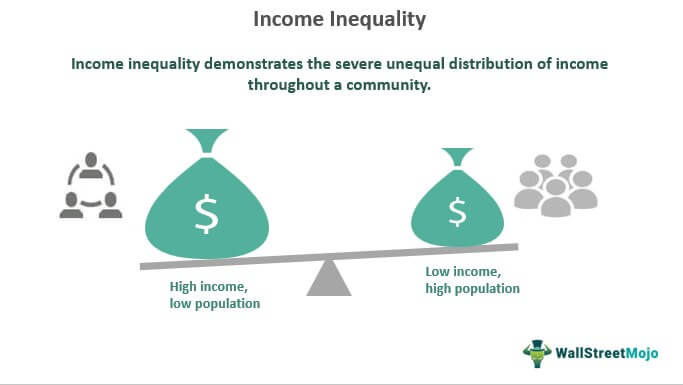
  • Wages of inequality: The income-growth gap

    Income Inequality - Definition, Explained, Causes, Examples

    Central Idea:

    The article analyzes the recent interim Union budget in India, focusing on its macroeconomic policy objectives and the challenges facing the Indian economy. It discusses the government’s efforts to reduce the debt-to-GDP ratio and stimulate GDP growth, particularly by prioritizing capital expenditure over revenue expenditure. However, it questions the effectiveness of these objectives in addressing India’s developmental challenges, especially regarding employment generation and structural transformation.

    Key Highlights:

    • The budget presents a fiscally conservative approach with minimal increases in total expenditure, emphasizing capital expenditure over revenue expenditure.
    • The government aims to reduce the debt-to-GDP ratio, primarily by limiting expenditure growth rates and increasing capital expenditure.
    • The article raises concerns about the adequacy of these objectives in addressing India’s developmental challenges, particularly the need for employment generation and structural transformation.
    • It highlights the stagnation in regular wages and the dominance of self-employment, indicating a worsening income distribution and weak improvements in welfare.

    Key Challenges:

    • Balancing fiscal consolidation with the need for increased government expenditure to address developmental challenges.
    • Promoting structural transformation to shift workers from self-employment to modern sectors.
    • Achieving inclusive growth that benefits all sections of society, especially marginalized groups.
    • Enhancing the effectiveness of government spending to stimulate economic growth and employment generation.

    Key Terms:

    • Debt-to-GDP ratio: The ratio of a country’s total debt to its gross domestic product, indicating its ability to repay debt.
    • Capital expenditure: Spending on acquiring or maintaining physical assets such as infrastructure, machinery, and buildings.
    • Revenue expenditure: Day-to-day spending on government operations and services, including salaries, pensions, and subsidies.
    • Primary deficit: The fiscal deficit excluding interest payments on government debt.
    • Structural transformation: The process of shifting resources, including labor, from traditional sectors like agriculture to modern sectors such as manufacturing and services.

    Key Phrases:

    • Fiscally conservative approach
    • Debt stability
    • Structural change
    • Employment generation
    • Inclusive growth

    Key Quotes:

    • “The budget reflects a fiscally conservative approach with minimal increases in total expenditure.”
    • “The government aims to reduce the debt-to-GDP ratio, primarily by limiting expenditure growth rates and increasing capital expenditure.”
    • “The dominance of self-employment indicates a worsening income distribution and weak improvements in welfare.”

    Key Examples and References:

    • Comparison of expenditure growth rates and GDP growth rates to illustrate the government’s strategy in reducing the debt-to-GDP ratio.
    • Analysis of employment data to highlight the challenges of structural transformation and income distribution.

    Key Facts and Data:

    • Total budgeted expenditure, with minimal increase over the previous year.
    • Debt-to-GDP ratio currently at a certain level, targeted to be reduced to another level.
    • Stagnation in regular wages and dominance of self-employment in the workforce.
    • GDP growth rates and expenditure growth rates used to analyze the effectiveness of fiscal policies.

    Critical Analysis:

    The article provides a critical assessment of the interim Union budget’s macroeconomic policy objectives, highlighting potential shortcomings in addressing India’s developmental challenges. It questions the effectiveness of targeting a specific debt-to-GDP ratio and emphasizes the need for broader strategies to promote inclusive growth and structural transformation.

    Way Forward:

    • Reevaluate fiscal policies to ensure a balance between debt reduction and addressing developmental challenges.
    • Prioritize investments in infrastructure and human capital to stimulate economic growth and employment generation.
    • Implement targeted interventions to support marginalized groups and promote equitable income distribution.
    • Enhance monitoring and evaluation mechanisms to assess the impact of government spending on welfare and economic development.
  • A rising tide lifts all boats

    BJP on X: "India emerges as the fastest growing economy of the world in IMF  report with growth rate of 7.4%. https://t.co/Sta44gkaZI" / X

    Central Idea:

    India has experienced a significant economic transformation, becoming the world’s fastest-growing economy. The Interim Budget reflects this progress, emphasizing preventive healthcare, innovation, and medical value travel. The private sector’s rising role is crucial for economic development and improving the overall quality of life.

    Key Highlights:

    • India’s rapid economic growth, outpacing the global average.
    • Successful space program and adept management of renewable and non-renewable energy.
    • Interim Budget aligns with the aspirations of a new India, emphasizing opportunities.
    • Focus on preventive healthcare, particularly the promotion of HPV vaccination.
    • Maternal and child health prioritized to enhance women’s participation in the workforce.
    • Commitment to innovation with a ₹1 lakh crore corpus for research and technology.
    • Medical value travel’s rising prominence, making India a global healthcare destination.
    • Private sector’s significant role in economic growth and shaping the future.

    Key Challenges:

    • Ensuring sustained economic growth amidst global uncertainties.
    • Scaling up preventive healthcare initiatives to cover various diseases.
    • Balancing budget allocations to address healthcare needs adequately.
    • Overcoming infrastructure challenges for medical value travel.
    • Ensuring inclusive growth and managing disparities in economic development.

    Key Terms:

    • HPV Vaccination: Human Papillomavirus vaccination to prevent cervical cancer.
    • Medical Value Travel: Tourism driven by healthcare services.
    • Innovation Revolution: Emphasizing technology and research for development.
    • Interim Budget: A temporary budget presented in the middle of a fiscal year.

    Key Phrases:

    • “Buoyancy of metrics and spirit.”
    • “Innovation as a key pillar of development.”
    • “Medical value travel transforming the landscape.”
    • “Private sector rising beyond expectations.”

    Key Quotes:

    • “No country can afford it if its citizens fall ill.”
    • “Innovation has the potential to create a significant impact at scale.”
    • “India will truly be limitless if we continue to work together.”

    Anecdotes:

    • Reference to Aragonda in Andhra Pradesh, a village where HPV vaccination is being promoted.
    • Mention of ‘Heal in India’ transforming the healthcare landscape.

    Key Statements:

    • “India’s space program has won the admiration of the world.”
    • “Preventive health is crucial for the overall well-being of the nation.”
    • “The private sector plays a meaningful role not just in the economy but in how we live our lives.”

    Key Examples and References:

    • India’s success in achieving a 70-year life expectancy with less than 2% budgetary allocation for health.
    • The commitment of ₹1 lakh crore for innovation and technology in the Interim Budget.

    Key Facts:

    • India’s economic growth rate surpassing the global average.
    • Increase in life expectancy from 53 to 70 years in the last four decades.

    Key Data:

    • ₹1 lakh crore corpus for research and technology in the Interim Budget.
    • India’s growth rate compared to the global average.

    Critical Analysis:

    • The article provides an optimistic view of India’s economic growth and achievements.
    • Emphasis on preventive healthcare and innovation aligns with global trends.
    • Challenges include addressing healthcare needs comprehensively and ensuring inclusive growth.

    Way Forward:

    • Sustain economic growth through continued emphasis on innovation and technology.
    • Strengthen preventive healthcare initiatives for comprehensive disease prevention.
    • Address infrastructure challenges for medical value travel to enhance India’s global healthcare appeal.
    • Ensure inclusive growth, managing economic disparities effectively.
  • States are spending. The economy is waiting

    Finance Commission - Issues related to devolution of resources - Civilsdaily

    Central Idea:

    State governments in India have navigated fiscal challenges caused by the Covid-19 pandemic, with a focus on fiscal consolidation. Despite borrowing flexibility granted by the Union government, states kept their fiscal deficits under control in 2021-22 and 2022-23. However, there has been a notable shift in spending priorities in 2023-24, with an emphasis on capital expenditure, reflecting positive economic growth prospects.

    Key Highlights:

    • States, accounting for over three-fifths of total government spending, traditionally focused on revenue expenditure but increased capital expenditure significantly in 2023-24.
    • The ratio of capital outlay to total expenditure reached an eight-year high at 14.1%, indicating a growth-enhancing strategy.
    • A 45.7% increase in capital outlay, fueled by timely disbursements from the Union government and buoyant state revenues, contributed to this shift.
    • The Union government’s proactive release of tax devolution and approval of capital assistance schemes played a crucial role.
    • Despite the healthy growth in state revenues, a 29.2% decline in grants from the Union government led to a reliance on market borrowings.
    • Record-high gross market borrowings during the first nine months of the year were primarily directed towards capital expenditure.

    Key Challenges:

    • A shortfall in grants from the Union government led to tepid overall revenue growth, necessitating increased market borrowings by the states.
    • Achieving the aggregate fiscal deficit target of 3.1% of GDP may be challenging due to the reliance on market borrowings and a potential slippage.

    Key Terms and Phrases:

    • Fiscal Deficit: The difference between government expenditure and revenue.
    • Capital Expenditure: Money spent on creating or acquiring assets with long-term benefits.
    • Revenue Expenditure: Regular spending on operational costs like salaries, pensions, and subsidies.
    • Tax Devolution: Allocation of tax revenues from the Union government to states.
    • Market Borrowings: Funds raised by states through the issuance of bonds in the financial market.

    Key Quotes and Statements:

    • “States’ capital expenditure is being fueled by an interplay of two forces…”
    • “The quality of their expenditure — ratio of capital outlay to total expenditure — stands at 14.1%, an eight-year high…”
    • “The Union government has been proactive in releasing the advance instalments of tax devolution…”
    • “Despite this healthy growth in states own revenues, their overall revenue receipts have grown at an average pace of 5.5%…”

    Key Examples and References:

    • The advance release of monthly tax devolution and timely disbursements of funds for the special scheme on capital assistance.
    • Approval of capital expenditure worth and released under the special assistance scheme till November 2023.
    • Record-high gross market borrowings during the first nine months of the year.

    Key Facts and Data:

    • Aggregate fiscal deficit target for states: 3.1% of GDP.
    • Ratio of capital outlay to total expenditure: 14.1%, an eight-year high.
    • Gross market borrowings by states during the first nine months of the year.

    Critical Analysis:

    • The shift towards capital expenditure indicates a positive economic outlook and potential for growth.
    • The reliance on market borrowings due to a decline in grants poses a fiscal challenge.
    • Achieving the fiscal deficit target might be challenging, with a potential slippage.

    Way Forward:

    • States should continue prioritizing capital expenditure for sustained economic growth.
    • Improving efficiency in tax administration and formalizing the economy can enhance revenue.
    • Collaboration between Union and state governments for stable fiscal management is crucial.
  • Rs 2,913 Cr from PSEs to PM CARES Fund

    pm cares

    Government-run listed firms have contributed at least Rs 2,913.6 crore between 2019-20 and 2021-22 to the controversial Prime Minister’s Citizen Assistance and Relief in Emergency Situations (PM CARES) Fund.

    About PM CARES Fund

    • The PM CARES Fund was created on 28 March 2020 following the COVID-19 pandemic in India.
    • The fund will be used for combat, containment and relief efforts against the coronavirus outbreak and similar pandemic like situations in the future.
    • The PM is the chairman of the trust. Members will include the defence, home and finance ministers.
    • The fund will also enable micro-donations. The minimum donation accepted is ₹10.

    Issues over PM-CARES Fund

    • No defined purpose: It is deliberately ignored while a new, controversial, unanswerable, and ‘non-accountable vehicle is created; its character is not spelt out till today.
    • Non-accountable: The government seems to consider statutory provisions for enquiry and information seeking to be embarrassing obstacles.
    • Centralization of donations: It centralises the collection of donations and its utility, which is not only against the federal character but also practically inconvenient. The issue is seeming, the trusteeship of the fund.

    Questions and gaps

    • Law/statute: The PM CARES Fund was neither created by the Constitution of India nor by any statute.
    • Authority: If that is the case, under what authority does it use the designation of the Prime Minister, designated symbols of the nation, the tricolour and the official (gov.in) website of the PMO, and grant tax concessions through an ordinance.
    • Collection and dispensation: The amount received by the Fund does not go to the Consolidated Fund of India. If it goes to the CFI, it could have been audited by the CAG.
    • Uncontrolled: The This Trust is neither intended to be or is in fact owned, controlled or substantially financed by any instrumentality of the any govt even being chaired by the PM.

    Issue over tax benefits

    • Income tax: An ordinance was promulgated to amend Income Tax Act, 1961 and declare that the donations to the PM CARES Fund “would qualify for 80G benefits for 100% exemption”.
    • CSR Funds: It will also qualify to be counted as Corporate Social Responsibility (CSR) expenditure under the Companies Act, 2013.
    • Foreign donations: It has also got exemption under the FCRA [Foreign Contribution Regulation Act] and a separate account for receiving foreign donations has been opened.

    What can be inferred from all these?

    • The Centre now considers it as another obstacle and has created a new trust with the Prime Minister and his Ministers only.
    • The manner in which the PM CARES Fund was set up — with its acronym created to publicise the point that the PM cares for people — shows a bypassing of the statutory obligations of a public authority.

    Query and response: Again ironical

    • After initial denials, the Government has conceded it to be a public charitable trust, but still maintains that it is not a ‘public authority’.
    • The point is that the PMO operates the Fund, but says it cannot supply any information about the PM CARES Fund because it is not a public authority.

    Severe interpretations: Is it an Office of Profit?

    • If the PM CARES Fund is unconnected with the Government, then the Fund could become an office of profit.
    • And that could disqualify him and the three Ministers from holding those constitutional offices.

    Conclusion

    • In order to uphold transparency, the PM CARES Fund should be declared as a Public Authority under the RTI Act, and all RTI queries answered truthfully.
    • The fund should be designated as a “public authority” under Section 2(h) of the RTI Act.


    Get an IAS/IPS ranker as your personal mentor for UPSC 2024 | Schedule your FREE session and get Prelims prep Toolkit!

  • Boosting India’s Tourism Sector

    Tourism Sector

    Central Idea

    • India’s travel and tourism sector is one of the fastest-emerging tourist destinations in the world, and it is poised to be the key axis of development in the coming years. Budget 2023, which marks the beginning of Amrit Kaal, the period of intense robust growth, has outlined the path to developing tourism in mission mode.

    Vision to develop 50 destinations

    • G20 provided Economic Boost: India’s presidency of the G20 and Prime Minister’s vision to develop 50 tourist destinations across the country have provided a significant boost to the tourism sector.
    • Global ranking: This initiative is expected to improve India’s global ranking on the World Economic Forum’s Travel & Tourism Development Index.
    • Employment opportunities: The development of these destinations will create more employment opportunities and contribute to the overall GDP growth of the country.

    The central government’s push on tourism

    • Various policies and initiatives: The central government is committed to supporting the travel and tourism sector by implementing various policies and initiatives.
    • Six themes for the development in Union budget: The Union budget has identified six themes for the development of the sector, including convergence, public-private participation, creativity, innovation, digitization, and development of destinations.

    Power of collaboration

    • Collaboration is essential: Collaboration between the government, private sector, and local communities is essential for the development and promotion of tourism in India. This collaborative approach stimulates creativity, enhances competitiveness, and achieves visionary results.
    • For example: The Prime Minister has cited examples of successful collaborations, such as Kashi, Kedarnath, the Statue of Unity, and Pavagadh, to demonstrate how a unified approach can boost tourism in a region.

    Role of Technology in Tourism

    • Interdependence: Technology and tourism are becoming increasingly interdependent, and a coordinated approach that adopts technology can boost the tourism sector in India.
    • Employing Augmented and virtual reality: Augmented Reality (AR) and Virtual Reality (VR) can provide travellers with virtual tours and simulations of famous landmarks and cultural experiences.
    • Artificial intelligence: Artificial Intelligence (AI)-powered chatbots and digital assistants can assist travellers in planning their trips and provide real-time assistance while travelling.

    “6P” approach to unlocking India’s tourism potential

    • 6P: Planning, Place, People, Policy, Process, and Promotion
    • Unlocking India’s tourism potential requires a comprehensive strategy that addresses the six key pillars 6Ps.
    • The government’s Budget Session addressed all these 6Ps effectively by covering destination planning and management, infrastructure development, sustainability and safety, development of human capital, policy and process interventions to align the Centre and states as well as promoting the narrative of Indian tourism.

    Tourism: A state subject

    • Tourism is constitutionally a state subject, and the central tourism department has been advocating for it to be moved to the Concurrent List to allow policy-making at both the central and state levels.
    • Granting tourism infrastructure status will provide further impetus to the growth of the sector.
    • The government is also considering the establishment of a National Tourism Board.

    Tourism Sector

    Conclusion

    • With the right policies and initiatives in place, it’s the ideal time for India to turbo-charge efforts to be among the top three travel and tourism economies globally.

    Mains Question

    Q. What are the six themes identified by the Union Budget for the development of India’s travel and tourism sector? How India can boost its economic growth through robust tourism sector? Discuss


    Are you an IAS Worthy Aspirant? Get a reality check with the All India Smash UPSC Scholarship Test

    Get upto 100% Scholarship | 900 Registration till now | Only 100 Slots Left


  • Budget For The Education Sector

    Budget

    Central Idea

    • The Union Budget 2023 has made nominal increases in the allocation for education, which will not suffice to improve the education sector’s current situation.

    Government Expenditure on Education

    • As per the Economic Survey 2023, the combined expenditure on education by the Centre and States (as a percentage of GDP), has remained stagnant at 2.9% during 2019-20 to 2022-23 (BE).
    • As a percentage of total government expenditure, it slid from 10.7% in 2019-20 to 9.5% in 2022-23 (BE), while the share of education in social services nosedived from 42.5% to 35.5% during the same period.

    Budgetary allocation for School sector

    • Allocation for School Education increases due to new scheme: The school sector has been allocated ₹68,804.85 crores, as against ₹63,449.37 crore last year, largely due to a fresh allocation of ₹4,000 crore for the PM ScHools for Rising India), or PM-SHRI alone.
    • Existing schools suffer due to allocation for new initiatives: This combined with the newly announced Eklavya model residential schools to be opened in every district of India actually brings down the provisions for already existing schools and their activities, leaving them high and dry to deal with rising prices and the pressure of increasing enrolment in government schools.
    • Majority of Indian students attend government schools: Government and government-aided schools are still where the deprived and have-nots go to. Out of about 15 lakh schools, 10 lakh schools are owned and managed by the government, employing about 97 lakh teachers and catering to over 26 crore students.

    Allocation for Higher Education

    • Allocation for higher education has increased: The allocation for higher education has increased from ₹40,828 crore to ₹44,094 crore, with autonomous bodies receiving an average increase of 13.60%. The central universities have benefitted the most with a 22.39% increase.
    • Reduction in Budgetary Support to Indian Institutes of Management: The budgetary support for Indian Institutes of Management has been drastically reduced with most of the allocation meant for loan repayment. The reduction in funding for IIM was expected due to their increased fees. The impact of this on equity in these institutions is uncertain.
    • No provision for HEFA and reduced allocations: There is no provision for Higher Education Funding Agency (HEFA) in this year’s Budget, which means no new loans for infrastructure development in centrally funded institutions. The allocation for world class universities has also been reduced. The allocation for Prime Minister’s Girls’ hostels has been reduced by half.

    Allocation for Research and Innovation Initiatives

    • Reduction in Startup India and Design Innovation Initiatives: The Startup India initiative for higher educational institutions has been reduced and also provisions for the national initiative for design innovation have been reduced.
    • Drastic Reduction in IMPRINT and SPARC Allocations: The allocations for IMPacting Research, INnovation and Technology (IMPRINT) and the Scheme for Promotion of Academic and Research Collaboration (SPARC) have also been drastically reduced.
    • No Allocation for IMPRESS: The Budget does not provide any allocation for Impactful Policy Research in Social Sciences (IMPRESS).
    • National Research Foundation awaits Cabinet Approval: The proposed National Research Foundation has been allotted ₹2,000 crore through the Department of Science and Technology, but this awaits approval from the Union cabinet.

    Conclusion

    • In today’s time, everyone wants to benefit and improve their lives. However, not investing enough in education could harm the growth and improvement of education. Unfortunately, the 2023 budget doesn’t offer anything new to make the sector ultimately effective. The education sector needs more investment to improve the quality of education and provide equal opportunities for all students.