Mains Ready By December. Smash Mains & Smash PYQ Admissions Open

GS Paper: GS1-02.Modern Indian History- Mid-18th century – Present (significant events, personalities, issues);

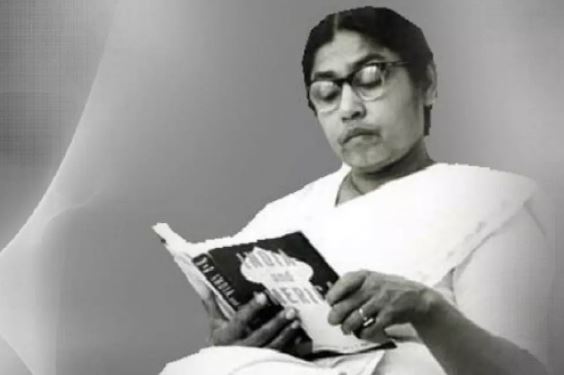
  • Sucheta Kripalani (1908-1974): India’s first woman Chief Minister

    Why in the News?

    June 25 is the birth anniversary of “Sucheta Kripalani”, India’s first woman Chief Minister.

    Who was Sucheta Kripalani?

    • Sucheta Kripalani was born on June 25, 1908, in Ambala, Punjab. Daughter of S. N. Majumdar, a government surgeon. She studied at Indraprastha College for Women and St. Stephen’s College, University of Delhi.
    • She married J. B. Kripalani, a former Congress president and Gandhian, in April 1936 against familial and Mahatma Gandhi’s wishes.

    Political Journey and Chief Ministership

    • Early Career: Joined BHU to teach Constitutional History in 1929, participated in Satyagraha, and was imprisoned in 1940.
    • Congress Role: Organized the foreign affairs wing of AICC and later founded the All India Mahila Congress.
      • She won by a margin of 99 votes over Kamalapati Tripathi and was sworn in as CM on October 2, 1963.

    Contributions and Achievements

    • Educational Reforms: Waived school fees for girls up to Class 10 from January 1965. Established Meerut University and Kanpur University.
    • Social Reforms: Increased reservation for SCs in government jobs to 24% in Group C and 45% in Group D until the 18% target was achieved.
    • Infrastructure Developments: Established a Sainik School in Ghorakhal, a new medical college in Meerut, and the UP Awas Vikas Parishad. She created the post of agriculture production commissioner.
    • Crime Control: Neutralized many dacoits in the Chambal Valley with the help of the Police Radio Unit.
    • Anti-Corruption Stance: Emphasized the need to tackle growing corruption in public services, supporting the Union government’s initiative to appoint a vigilance commission.
    • Multifaceted Contributions: Involved in relief activities for the 1934 Bihar earthquake, Noakhali riots, Tibetan refugee rehabilitation, and the Indo-Pak War of 1971.
      • Criticism and Response: Faced criticism for being influenced by English, despite being a staunch supporter of Hindi. Advocated for creating an atmosphere for Hindi in governance.

    Later Life and Legacy

    • Post-CM Career: Served as Lok Sabha MP until 1971.
    • Impact: Her tenure as CM and various social contributions left a lasting impact on Indian politics and society, especially in terms of women’s leadership and social reforms.

    PYQ:

    [2011] With reference to the Indian freedom struggle, Usha Mehta is well-known for:

    (a) Running the secret Congress Radio in the wake of the Quit India Movement

    (b) Participating in the Second Round Table Conference

    (c) Leading a contingent of the Indian National Army

    (d) Assisting in the formation of Interim Government under Pandit Jawaharlal Nehru

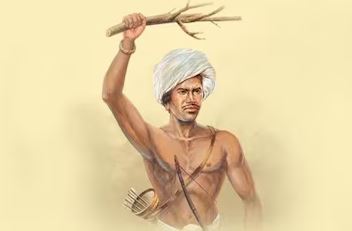
  • 124th Death Anniversary of Birsa Munda

    Why in the News?

    Jharkhand CM marked the 124th death anniversary of revolutionary tribal leader “Birsa Munda” by paying his tributes.

    Who was Birsa Munda (1875-1900)?

    • Birsa Munda was born on November 15, 1875, during a period of significant change for his community, the Mundas, residing in the Chotanagpur region of present-day Jharkhand.
    • Birsa Munda spent his early years travelling with his parents and received primary education under Jaipal Nag.
    • Inspired by the peaceful Sardari agitation against British rule, Birsa became a prominent leader advocating for tribal rights.

    Causes of the Rebellion

    • Impact of Colonial Policies: Colonial policies, including the Permanent Settlement Act (1793), disrupted traditional land ownership systems, leading to displacement and exploitation of indigenous communities.
    • Erosion of Khuntkattidar System: The Mundas’ traditional land rights system, known as khuntkatti, was eroded by jagirdars and thikadars, leading to land alienation.
    • Land Alienation and Exploitation: Non-tribal migration into tribal regions accelerated under British rule, resulting in exploitation through high-interest money lending and forced labour.
    • Missionary Activity: The spread of education through missionary activities led to increased awareness among tribals, deepening social cleavages but also inspiring movements for tribal reconstruction.

    Major Activities:

    1. New faith ‘Birsait’ against religious conversion

    • Having gained awareness of the British colonial ruler and the efforts of the missionaries to convert tribals to Christianity, Birsa started the faith of ‘Birsait’.
    • Soon members of the Munda and Oraon community started joining the Birsait sect and it turned into a challenge to British conversion activities.
    • The Mundas called him Dharati Aaba, the father of earth.

    2. The Birsa Movement: Ulgulan

    • The Munda Rebellion was a tribal rebellion led by Birsa Munda in the region south of Ranchi in 1899-1900.
    • It mainly concentrated in the Munda belt of Khunti, Tamar, Sarwada, and Bandgaon.
    • The revolt sought to establish Munda Raj and independence, known as Ulgulan or ‘Great Tumult’ by Munda tribals.
    • The rebellion ended with the suppression by British forces and the death of Birsa Munda.

    Significant Outcomes

    • Impact: Birsa Munda’s mobilization of tribal communities left a lasting legacy, prompting government reforms such as the repeal of the Begar system and the enactment of the Tenancy Act (1903).
    • His Death: The movement was violently suppressed and Birsa Munda died in jail on 9 June 1900.

    What is Permanent Settlement System?

    • The Permanent Settlement system introduced by Lord Cornwallis in 1793 was a land revenue system implemented in British India, particularly in Bengal, Bihar, and Odisha.
    • Under this system, the land revenue to be paid by the peasants (ryots) was fixed permanently without revision for an extended period (typically 10 years or more).
    • This fixed amount was based on the estimated productive capacity of the land.
    • It established the Zamindari system, where Zamindars (landlords) were recognized as the owners of land.
    • They were responsible for collecting revenue from the peasants and paying it to the British government.
    • In return, they were entitled to keep a portion of the collected revenue as their income, often ranging from 10% to 15%.

    PYQ:

    [2020] With reference to the history of India, “Ulgulan” or the Great Tumult is the description of which of the following events?

    (a) The Revolt of 1857

    (b) The Mappila Rebellion of 1921

    (c) The Indigo Revolt of 1859-60

    (d) Birsa Munda’s Revolt of 1899-1900

  • 131 years of Gandhiji’s Natal Satyagraha

    Why in the News?

    • On June 7, 1893, Mahatma Gandhi faced racial discrimination when he was forced off a first-class train compartment at “Pietermaritzburg railway station” in South Africa.
      • This event ignited the spirit of civil disobedience in him through his first non-violent protest in the “Natal Satyagraha”.

    History of ‘Satyagraha’

    • The terms originated in a competition in the news-sheet Indian Opinion in South Africa in 1906.
    • Mr. Maganlal Gandhi, grandson of an uncle of Mahatma Gandhi, came up with the word “Sadagraha” and won the prize.
    • Subsequently, to make it clearer, Gandhi changed it to Satyagraha.

    About the Pietermaritzburg Incident 

    • Gandhi’s forced removal from a first-class train compartment in 1893 served as a catalyst for his commitment to resisting racial discrimination.
    • This event inspired him to pursue nonviolent resistance, planting the seeds for his philosophy of Satyagraha.

    Its’ Aftermath

    • Formation of Natal Indian Congress and Advocacy
      • Establishment: Gandhi organized the Indian community and founded the Natal Indian Congress (NIC) in 1894 at Durban to advocate for their rights.
      • Campaigns: He initiated various campaigns, including petitions and boycotts, challenging discriminatory laws and policies in South Africa.
    • Natal Satyagraha
      • The passage of the Asiatic Registration Act in 1906 sparked the Natal Satyagraha, protesting against this discriminatory law.
      • Gandhi emerged as the leader of the movement, advocating for nonviolent resistance and civil disobedience.
      • Satyagraha emphasized confronting oppression with moral courage and integrity, without resorting to violence.

    Gandhiji’s South Africa Settlements:

    • Phoenix Settlement in Natal: Founded in 1904, the Phoenix Settlement was established by Gandhi as a communal living space and centre for social and political activism. It served as a hub for his Satyagraha campaigns against racial discrimination and injustice in South Africa.
    • Tolstoy Farm outside Johannesburg: Gandhi established Tolstoy Farm in 1910 as a self-sustaining community inspired by the teachings of Russian writer Leo Tolstoy. It served as a refuge for Indian immigrants and a base for organizing resistance against discriminatory laws.

    Characteristics and Impact of Natal Satyagraha

    • Mass Participation: The movement garnered widespread support from the Indian community, involving thousands in nonviolent protests.
      • He mobilized support for the welfare of Indians and established the Transvaal British Indian Association in Johannesburg in 1903.
    • Arrests and Imprisonment: Gandhi and many others faced arrests and imprisonment for their acts of civil disobedience. He faced imprisonment multiple times for his nonviolent protests, including the Volkrust Satyagraha in 1913.
    • Attracted International attention: The Satyagraha attracted international attention and led to negotiations, culminating in the Indian Relief Act in 1914.

    PYQ:

    [2019] With reference to the British colonial rule in India, consider the following statements: 

    1. Mahatma Gandhi was instrumental in the abolition of the system of ‘indentured labour’.
    2. In Lord Chelmsford’s ‘War Conference’, Mahatma Gandhi did not support the resolution on recruiting Indians for World War.
    3. Consequent upon the breaking of Salt Law by Indian people, the Indian National Congress was declared illegal by the colonial rulers.

    Which of the statements given above are correct?

    (a) 1 and 2 only

    (b) 1 and 3 only

    (c) 2 and 3 only

    (d) 1, 2 and 3

  • [pib] Rabindranath Tagore and his legacy

    Why in the news?

    The Conservation and Cultural Archives Division of Indira Gandhi National Centre for the Arts (IGNCA) hosted an exhibition and lecture celebrating Rabindranath Tagore’s birth anniversary in New Delhi.

    Tagore’s Journey to France

    • Tagore had visited the battlefields of the First World War, highlighting his deep humanity.
    • The narrative includes mentions of Alexandra David Neel, who recommended Tagore during his European tours, and Victoria Ocampo, who taught French to Tagore, enhancing his connection with French culture and intellectual society.

    About Rabindranath Tagore

    Details
    Birth and Early Life – Born on May 7, 1861, in Calcutta, India.
    Literary Career – Published his first poems at age 16 under the pen-name ‘Bhanusimha’.

    – Key works include “Gitanjali“, “Ghare-Baire“, “Gora“, and “Manasi“.

    Music and Art – Composed over 2,000 songs known as ‘Rabindra Sangeet’.

    – Our National Anthem was composed by him and it was first sung on 27 December 1911 at the Calcutta Session of INC.

    – Created more than 2,000 paintings, influenced by European expressionism.

    Education – Founded Visva-Bharati University in 1921, integrating Eastern and Western philosophies.
    Political Views – He is said to have given the title of ‘Mahatma’ to Mohandas

    – Renounced his ‘Knighthood’ (awarded to him in 1915 by the British King George V) in 1919 following the Jallianwala Bagh massacre.

    Cultural Influence – Wrote the National Anthems of India (“Jana Gana Mana”) and Bangladesh (“Amar Sonar Bangla”).

    – Inspired the national anthem of Sri Lanka through a student.

    Awards and Recognition – Awarded the Nobel Prize in Literature in 1913 for “Gitanjali“, the first non-European to win.

    – Awarded, and later renounced, a knighthood by British King George V in 1915.

    Philosophical Contributions – Advocated for the incorporation of the best aspects of Western culture with Indian culture to achieve anti-colonialism.
    Death – Passed away on August 7, 1941, in Calcutta.
    Legacy – Revered as ‘Gurudev’, ‘Kabiguru’, and ‘Biswakabi’. Highly influential in introducing Indian culture to the West and reshaping Bengali literature and music.
    Additional Contributions – Advocated for ‘Unity in Diversity’ and ‘National Integration’.

    – Spoke at the World Parliament of Religions, Chicago in 1929 and 1937.

    – Modernized Bengali prose and poetry, remembered for songs like ‘Ekla Chalo Re’ and his environmental efforts at Santiniketan.

    About Indira Gandhi National Centre for the Arts (IGNCA)

    • The IGNCA, New Delhi is a premier government-funded arts organisation in India.
    • It is an autonomous institute under the Union Ministry of Culture.
    • It was established on 19 November 1985 by Prime Minister Rajiv Gandhi.
    • IGNCA is envisioned as a centre for the study and experience of arts in the field of:
    1. Creative literature – written and oral;
    2. Visual arts inclusive of architecture;
    3. Sculpture, painting and graphics to general material culture, photography and film; and
    4. Performing arts of music, dance and theatre.

    PYQ:

    [2019] Examine the linkages between the nineteenth century’s Indian Renaissance and the emergence of national identity.

    [2021] Who among the following was associated as Secretary with Hindu Female School, later known as Bethune Female School?​

    (a) Annie Besant

    (b) Debendranath Tagore

    (c) Ishwar Chandra Vidyasagar

    (d) Sarojini Naidu

  • ‘Hicky’s Bengal Gazette’: India’s First Newspaper

    Why in the news?

    • World Press Freedom Day, observed annually on May 3, underscores the significance of journalism in society, tracing its roots back to pivotal moments in history.
    • Hicky’s Bengal Gazette, founded by James Augustus Hicky in 1780, marked the inception of Indian journalism, serving as a platform for social discourse and political critique.

    Who was James Augustus Hicky?

    • Born in Ireland in the 1730s, James Augustus Hicky ventured to India, then known as the “Jewel in the Crown of the British Empire“, in search of better opportunities.
    • Faced with initial setbacks, including debts that led to his imprisonment, Hicky demonstrated resilience by setting up a printing press within the jail premises.

    Establishment of ‘Hicky’s Bengal Gazette’:

    • ‘Hicky’s Bengal Gazette’ was the first newspaper ever published in India (indeed in Asia), with its inaugural edition released on January 29, 1780.
    • Hicky served as its founder-editor, aiming to cater primarily to the European community in Calcutta.
    • He initially focusing on local issues such as road repairs and maintenance.
    • The newspaper later delved into broader societal concerns, including government corruption and civic issues.
    • Despite its reputation for gossip and salacious content, the Gazette also published articles critical of the British East India Company and advocated for infrastructure development and sanitation improvements.
    • Hicky’s newspaper was printed once a week on Saturday, and retailed for Rs 1.
    • Its circulation was estimated to be around 400 copies per week, although possibly more.

    Challenges and Legal Battles:

    • The Gazette faced legal challenges, including multiple libel lawsuits filed by prominent figures such as Governor General Warren Hastings in 1780s and missionary Johann Zacharias Kiernander.
    • He described Hastings in an article as being Robert Clive’s “miserable successor”.
    • Hicky’s bold stance against powerful figures, including scathing critiques of Hastings’ expansion policies, led to his imprisonment and financial ruin due to legal fees and penalties.
    • The publication was ceased on 30 March 1782.

    Legacy and Impact:

    • Despite its eventual closure due to legal pressure and financial constraints, ‘Hicky’s Bengal Gazette’ left an indelible mark on Indian journalism.
    • Hicky’s pioneering efforts laid the groundwork for the development of a vibrant media landscape in India, inspiring subsequent generations of journalists and press pioneers.
    • The Gazette’s brief but impactful existence demonstrated the power of the press in advocating for societal change and holding the powerful to account.

    PYQ:

    [2020] The Vital-Vidhwansak, the first monthly journal to have the untouchable people as its target audience was published by:

    (a) Gopal Baba Walangkar

    (b) Jyotiba Phule

    (c) Mohandas Karamchand Gandhi

    (d) Bhimrao Ramji Ambedkar

  • Scripting a new tribal identity

    Why in the news? 

    President of India Droupadi Murmu was being presented a book, Contributions of Tribal Leaders in the Freedom Struggle, at a National Commission for Scheduled Tribes (NCST) event.

    Contributions of Tribal Leaders in the Freedom Struggle

    • Santhal Revolution: Led by Buddhu Bhagat, Joa Bhagat, and Madara Mahato, the Santhal Revolution was a significant tribal uprising against British colonial rule in 1855. The Kols were joined by other tribes like the Hos, Mundas, and Oraons in this struggle
    • Paika Rebellion: The Paika Rebellion in 1817 was a tribal uprising against the British in Odisha. The Paikas were a warrior class who were fighting for their rights and against the exploitation by the British
    • Kol Revolt: The Kol Revolt of 1831-32 was a tribal uprising against the British in Chhattisgarh. The Kols were fighting for their rights over the land and against the exploitation by the British
    • Birsa Munda: Birsa Munda was a tribal leader from Jharkhand who led the Millenarian Movement against the British in the late 19th century. He mobilized the tribal community against the British and forced them to introduce laws protecting the land rights of tribals
    • Rani Gaidinliu: Rani Gaidinliu was a tribal leader from Nagaland who led a revolt against the British in the early 20th century. She was a spiritual leader who fought for the rights of the Nagas and against the exploitation by the British
    • Laxman Naik: Laxman Naik was a tribal leader from Odisha who led a revolt against the British in the early 20th century. He was a farmer who fought for the rights of the farmers and against the exploitation by the British

    Impact of Tribal Revolts during Freedom Struggle: 

    • The tribal revolts during the freedom struggle contributed to the very beginning of the aggression for British Raj. They revolted not against the British but their policy for Indians which were imposed on them without even knowing their culture and its significance. Later this led to the revolt of 1857, which took attention of all over the country

    Conclusion: President Droupadi Murmu received the book “Contributions of Tribal Leaders in the Freedom Struggle” at an NCST event, highlighting significant uprisings like the Santhal, Paika, and Kol revolts, emphasizing tribal resistance against British exploitation, influencing broader Indian agitation.

    Mains PYQ 

    Q Several foreigners made India their homeland and participated in various movements. Analyze their role in the Indian struggle for freedom.(UPSC IAS/2013)

  • Mahad Satyagraha: A Landmark Event in the Dalit Movement

    Why in the news?

    The Mahad Satyagraha is hailed as the foundational event of the Dalit movement, marking the community’s collective rejection of the caste system and assertion of human rights.

    About Mahad Satyagraha

    • The Mahad Satyagraha, also known as Chavdar Tale (Lake) Satyagraha, was led by B. R. Ambedkar on 20 March 1927 in Mahad, Raigad District of Maharashtra.
    • Its aim was to assert the right of untouchables to use water from a public tank.
    1. Background:
    • Untouchables (Dalits) were segregated in Indian society and banned from using public water bodies and roads used by other Hindu castes.
    • In August 1923, the Bombay Legislative Council passed a resolution allowing depressed classes to use government-maintained places, but it faced opposition from savarna Hindus.
    • In January 1924, Mahad passed a resolution in its municipal council to enforce the act but failed to implement it due to protests.
    1. Satyagraha:
    • In 1927, Ambedkar launched a satyagraha to assert untouchables’ rights to use water in public places.
    • Mahad was chosen for the event due to its support from ‘caste Hindus’.
    • Surendranath Tipnis, president of the Mahad municipality, invited Ambedkar to hold a meeting there.
    • Ambedkar drank water from the tank, followed by thousands of untouchables.
    • He encouraged Dalit women to abandon customs of untouchability and wear saris like high-caste women, which they embraced.
    • A riot erupted over rumors of Ambedkar planning to enter a Hindu temple, and the tank was purified with cow-urine and cow-dung.
    • Ambedkar planned a second conference in Mahad in December 1927 but faced legal obstacles due to a case filed by caste Hindus.
    • On 25 December 1937, the Bombay High Court ruled that untouchables have the right to use water from the tank.
    1. Legacy:
    • On 19 March 1940, Ambedkar arranged a rally in Mahad to commemorate the Satyagraha as “Empowerment Day.”

    Back2Basics: Key Initiatives and Movements Led by Dr. B.R. Ambedkar

    Initiative Location Objective
    Temple Entry Movement (1920s-1930s) Various Locations Advocating for the right of Dalits to enter Hindu temples.
    Mahad Satyagraha (Chavdar Tale Satyagraha) Mahad, Maharashtra Asserting the rights of untouchables to use water from a public tank.
    Kalaram Mandir Movement (1930) Nashik, Maharashtra Demanding temple entry rights for Dalits at the Kalaram Mandir.
    Annihilation of Caste (1936) – Publication of “Annihilation of Caste,” advocating for the abolition of the caste system.
    Formation of Independent Dalit Political Party (Independent Labour Party) (1936) – Addressing the political concerns and aspirations of Dalits.
    Push for Separate Electorate by Dr. B.R. Ambedkar (1932) India Advocating for separate electorates for Dalits to ensure their political representation and empowerment.
    Legal Advocacy (1940s-1950s) – Drafting of the Hindu Code Bills, contribution to the framing of the Indian Constitution.
    Conversion to Buddhism (1956) Nagpur, Maharashtra Symbolizing a rejection of the caste system through mass conversion ceremony to Buddhism.


    PYQ:

    [2018] Which one of the following is a very significant aspect of the Champaran Satyagraha?

    (a) Active all-India participation of lawyers, students and women in the National Movement

    (b) Active involvement of Dalit and Tribal communities of India in the National Movement

    (c) Joining of peasant unrest to India’s National Movement

    (d) Drastic decrease in the cultivation of plantation crops and commercial crops

  • Anniversary of the Jallianwala Bagh Massacre

    Why in the news?

    On April 13, 1919, Brigadier-General Reginald Dyer ordered British troops to open fire on a peaceful gathering in Jallianwala Bagh, Amritsar, leaving a deep scar on India’s collective memory.

    Jallianwala Bagh Massacre

    1. Background: Protesting the contentious Rowlatt Act
    • The act officially known as the Anarchical and Revolutionary Crimes Act, 1919 was passed in 1919 by the Imperial Legislative Council.
    • It had authorized the British government to arrest anybody suspected of terrorist activities.
    • It also authorized the government to detain such people arrested for up to 2 years without trial.
    • It empowered the police to search a place without a warrant. It also placed severe restrictions on the freedom of the press.
    • The primary intention of colonial govt. was to repress the growing nationalist movement in the country.
    • The British were also afraid of a Ghadarite Revolution in Punjab and the rest of the country.
    1. The day
    • The massacre took place on 13 April 1919 when troops of the British Indian Army (Gurkha and Sikh infantry regiments) under the command of Col. Reginald Dyer fired rifles into a crowd of Indians.
    • The civilians had assembled for a peaceful protest to condemn the arrest and deportation of two national leaders, Satya Pal and Saifuddin Kitchlew.
    • Dyer without warning ordered his troops to fire at the unarmed crowd which included children as well.
    • The indiscriminate firing went on for about 10 minutes which resulted in the deaths of at least 1000 people and injured more than 1500 people.
    1. Aftermath
    • In protest against the massacre, Rabindranath Tagore gave up his knighthood.
    • Gandhiji relinquished his title ‘Kaiser-e-hind’ bestowed on him by the British for his services during the Boer War in South Africa.
    • Michael O’Dwyer, the then Lieutenant-Governor of Punjab, who had approved the actions of Dyer, was assassinated by Udham Singh in London in 1940 as revenge against the massacre.
    • The heroic treatment of Dyer’s heinous act again set a benchmark of colonial arrogance.

    Hunter Commission for Inquiry

    • In October 1919 the Secretary of State for India, Edwin Montagu, ordered the formation of a committee of inquiry into the events in Punjab.
    • Referred to as the Disorders Inquiry Committee, it was later more widely known as the Hunter Commission (Not to be confused with Hunter Education Commission).
    • The commission inquiry was concluded without any significant conclusion.
    • Still, there are long-standing demands in India that Britain should apologize for the massacre.

    PYQ:

    [2012] The Rowlatt Act aimed at:

    (a) Compulsory economic support to war efforts

    (b) Imprisonment without trial and summary procedures for trial

    (c) Suppression of the Khilafat Movement

    (d) Imposition of restrictions on freedom of the press

  • Insights from History: Coalition Governments in Colonial India

    Why in the news?

    • Prime Minister recently suggested a link between the Congress manifesto and the Muslim League (which is responsible for the Partition of India), prompting a political debate.
    • In rebuttal, critics reminded of a coalition governments formed by Hindu Mahasabha in Bengal, Sindh, and North-West Frontier Province (NWFP) in the 1940s with the Muslim League.

    Provincial Elections of 1937:

    [A] Indian National Congress

    • Congress performed admirably in the 1937 provincial elections, held under the mandate of the Government of India Act of 1935.
    • It won 711 of a total 1,585 provincial assembly seats, with absolute majorities in 5 of the 11 provinces (Madras, Bihar, Orissa, Central Provinces, and United Provinces) and a near-majority in Bombay (86 out of 175).
    • Congress ministries were formed in all of these provinces.
    • Sometime later, the Congress also formed governments in the North West Frontier Province (NWFP) and Assam.

    [B] Non-Congress Parties

    • Non-Congress governments were formed in the remaining 3 provinces — Sindh, Punjab, and Bengal.
    • In Sindh, a coalition led by the Sind United Party formed the government; in Punjab, Sikandar Hayat Khan’s Unionist Party won a majority.
    • And in Bengal, Fazlul Huq’s Krishak Praja Party (KPP) formed a coalition government with the Muslim League— even though the Congress was the single largest party with 54 seats.

    [C] Religion based Parties

    • Notably, the Muslim League, which claimed to be the sole representative of Indian Muslims, performed abysmally in the elections.
    • The League won just 106 out of the 482 seats allotted to Muslims under separate electorates, and it failed to win even a single seat in the NWFP.
    • The Hindu Mahasabha, which had entered electoral politics in the 1930s under V D Savarkar’s leadership, too fared miserable.

    Ideological Alignment and Political Alliances

    • Dr. B.R. Ambedkar noted ideological similarities between the Hindu Mahasabha and the Muslim League, both advocating for the two-nation theory.
    • This ideological convergence paved the way for short-lived political alliances, particularly during the turmoil following Congress’s resignation from provincial ministries in 1939.

    Reasons for such Alliance

    • Opposition to Quit India Movement:  When Mahatma Gandhi launched the Quit India Movement in 1942, the Muslim League and Hindu Mahasabha refrained from participating, opting to support the British war effort.
    • Support for British War Efforts: Savarkar, in a letter, instructed Mahasabha members to remain loyal to their positions and not join the movement, while Syama Prasad Mookerjee pledged support to suppress any internal disturbances.
    • Increased Push for Partition: Jinnah, meanwhile, intensified his campaign for Pakistan, capitalizing on the absence of Congress leaders and positioning himself as the sole spokesman for Muslims.

    Muslim League: 

    • The All India Muslim League was formed in 1906 in Dhaka, Bengal Presidency, British India.
    • It was established in response to the perceived marginalization and political underrepresentation of Muslims in the Indian National Congress.
    • The founding members of the Muslim League included prominent Muslim leaders such as Nawab Salimullah Khan of Dhaka, Nawab Viqar-ul-Mulk, Aga Khan III, and Muhammad Ali Jinnah, who later emerged as its most influential leader.
    • The primary objective of the Muslim League was to safeguard the political rights and interests of Muslims in India.
    • It advocated for separate electorates for Muslims, reservations in government jobs and legislative bodies, and other measures to protect Muslim identity and interests.

    Hindu Mahasabha:

    •  The Hindu Mahasabha was founded in 1915 in Amritsar, Punjab, by Madan Mohan Malaviya and others.
    • It aimed to unite Hindus under one political umbrella and promote Hindu nationalism.
    • Besides Madan Mohan Malaviya, prominent leaders included Lala Lajpat Rai, B. S. Moonje, and Vinayak Damodar Savarkar.
    • It promoted the idea of Akhand Bharat (Undivided India) and opposed the partition of India on religious lines.

     Implications of this Coalition

    • The period following Congress’s participation in the Quit India Movement saw the rise of the Muslim League’s influence, with League ministries established in several provinces by 1943.
    • Jinnah’s strategy to capitalize on Congress’s absence contributed to his claim as the sole representative of Indian Muslims, furthering the demand for Pakistan.

    PYQ:

    [2018] In the Federation established by The Government of India Act of 1935, Residuary Power were given to the:

    (a) Federal Legislature

    (b) Governor General

    (c) Provincial Legislature

    (d) Provincial Governors

  • 100 Years of Vaikom Satyagraha

    Why in the news?

    This year April 1st marks 100 years of the Vaikom Satyagraha, in Kottayam, Kerala.

    About Vaikom Satyagraha

    • Vaikom was the epicentre of the Vaikom Satyagraha, which began in 1924.
    • This movement aimed to challenge the ban imposed on marginalized communities from entering the vicinity of the Vaikom Mahadevar Temple in the princely state of Travancore.
    • It sparked similar temple entry movements across India, advocating for the rights of untouchables and backward castes.
    • It introduced nonviolent public protest as a method of resistance in Kerala.

    A Precursor to the Vaikom Satyagraha

    1. Social and Political Developments
    • Backdrop of Social Injustice: Travancore, characterized by feudal and caste-based governance, imposed stringent restrictions on lower castes, denying them entry to temples and public spaces.
    • Emergence of Social Consciousness: By the late 19th century, progressive reforms and missionary activities led to increased awareness and education among lower castes, particularly the Ezhavas.
    • Rise of Educated Elite: Educated individuals from diverse backgrounds, including lower castes, began to challenge social norms and demand equality in opportunities and rights.
    1. Beginning of Agitation
    • Advocacy for Change: Ezhava leader T K Madhavan spearheaded efforts to challenge temple entry restrictions, advocating for direct action to confront discriminatory practices.
    • Influence of Gandhi’s Ideals: Inspired by Gandhi’s principles of non-cooperation, Madhavan sought support from the Indian National Congress (INC) to mobilize a mass movement against untouchability.

    Actual Course of Events

    1. Agitation
    • Leaders such as T.K. Madhavan, K.P. Kesava Menon, and George Joseph spearheaded the agitation.
    • Despite facing resistance and arrests by the police, the Satyagrahis persisted in their protest for over a year, resulting in numerous arrests and jails.
    • Notable figures like Mahatma Gandhi, Chattampi Swamikal, and Sree Narayana Guru extended their support to the movement, which gained nationwide recognition.
    • The involvement of women and support from various regions, including Punjab, highlighted the widespread impact of the Satyagraha.
    1. Suspension:
    • Initially suspended in April 1924 at Gandhi’s suggestion, the movement resumed when attempts to resolve the issue with caste Hindu leaders failed.
    • The absence of leaders like T.K. Madhavan and K.P. Kesava Menon, who were arrested, posed challenges to the movement.
    • V. Ramaswamy Naicker (Periyar) lent support from Tamil Nadu before also being arrested.
    • The resolution for the right to temple entry faced resistance in the Assembly, thwarted by traditionalist support and government pressure.
    1. Aftermath
    • On October 1, 1924, a procession of Savarnas (forward castes) submitted a petition to the Regent Maharani Sethu Lakshmi Bai of Travancore, signed by around 25,000 individuals, urging for the temple’s open entry.
    • Gandhi’s meeting with the Regent Maharani and the procession led by Mannath Padmanabhan Nair underscored the growing support for the cause.
    • Eventually, on November 23, 1925, all temple gates were opened to Hindus except the eastern gate, marking a significant victory.
    • The Vaikom Satyagraha laid the groundwork for the temple entry proclamation of Kerala in 1936 and inspired similar movements’ nationwide, promoting social justice and equality.

    PYQ:

    Satya Shodhak Samaj organized (2016):

    (a) a movement for upliftment of tribals in Bihar’

    (b) a temple-entry movement in Gujarat

    (c) an anti-caste movement in Maharashtra

    (d) a peasant movement in Punjab


    Practice MCQ:

    The Vaikom Satyagraha of 1924 was essentially a:

    (a) Temple Entry Movement

    (b) Peasants’ Uprising

    (c) Salt Satyagraha

    (d) Swadeshi Movement