💥Join UPSC 2027,2028 Mentorship (July Batch) + XFactor Notes & Microthemes PDF

GS Paper: GS1-02.Modern Indian History- Mid-18th century – Present (significant events, personalities, issues);

  • Dr. M. Emperumal Naidu: A Gandhian Freedom Fighter

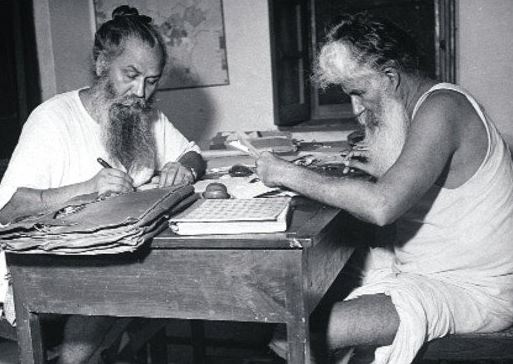
    Emperumal Naidu

    Central Idea: Naidu Hospital in Kottar (Nagercoil, TN), stands as a symbol of the forgotten heroes of the freedom movement, spearheaded by Dr. M. Emperumal Naidu, and their enduring impact on social justice

    Who was Dr. M. Emperumal Naidu (1880-1958)?

    • Introduction to Naidu Hospital: Naidu Hospital, located in Kottar is a significant hospital with historical ties to the freedom movement and the fight for social justice.
    • Founder: M. Emperumal Naidu, a freedom fighter and associate of Mahatma Gandhi, established the hospital.
    • Contribution to Vaikom Movement: Naidu actively participated in the Vaikom temple street entry movement, following the footsteps of Periyar E.V. Ramasamy and his wife Nagammal.
    • Enduring the Struggle: Naidu faced adversity during the movement, including being splattered with limestone powder and standing in waist-deep rainwater with Gandhidas Muthusamy.

    His Life and Achievements

    • Family and Education: Naidu’s ancestors hailed from Andhra Pradesh, and his father served as an artiste in the court of Travancore. Naidu studied at Scott Christian College in Nagercoil and later attended the Madras Medical College.
    • Involvement in Freedom Movement: Naidu became actively involved in the freedom movement while studying in England and declined a medical college offer to pursue a degree in Glasgow, aligning himself with the ideals of Gandhi.
    • Contributions to Healthcare: In 1914, Naidu established a hospital in Kottar, one of the first private hospitals providing modern medical treatment. He offered free treatment to Dalits and marked prescriptions with ‘HF’ (Harijan Free).
    • Leadership and Connections: Naidu played a crucial role in the Indian National Congress and hosted prominent leaders like Lala Lajpat Rai, C.F. Andrews, Sarojini Naidu, and Jawaharlal Nehru in Nagercoil.
    • Link to Gandhi: Naidu served as a vital link to Gandhi in Travancore and actively participated in various campaigns and Congress meetings alongside him.

    Major contribution: Temple Entry Movement

    • Vaikom Temple Street Movement: Naidu, along with his wife and other volunteers, actively participated in the Vaikom temple street movement, advocating for equal rights and facing arrests and restrictions.
    • Continued Activism: Naidu continued organizing protests and campaigns, leading a protest in Suchindram to open temple streets to all communities in the Kanniyakumari district.
    • Achievements: Naidu’s relentless efforts for temple entry and the welfare of Dalits led to the Travancore government issuing a proclamation in 1936, opening temple doors and streets to all communities.
  • Santiniketan in tentative list for UNESCO World Heritage list

    santiniketan

    Central Idea

    • The article announces that Santiniketan, the home of Nobel laureate Rabindranath Tagore in West Bengal, has been recommended for inclusion in UNESCO’s World Heritage List.

    About Santiniketan

    Santiniketan is a renowned cultural and heritage place located in Birbhum District, West Bengal, India. It holds historical significance and is known for its association with Nobel laureate Rabindranath Tagore. Here are key points about Santiniketan:

    • It was the home of Rabindranath Tagore, where he lived and composed many of his literary works, including songs, poems, and novels.
    • The Santiniketan campus is adorned with splendid sculptures, frescoes, murals, and paintings created by renowned artists such as Rabindranath Tagore, Nandalal Bose, Ramkinkar, Binodbehari Mukhopadhyay, and others.
    • The region of Birbhum District, where Santiniketan is located, is also famous for its fairs and festivals. Some notable ones are Poush Mela (December), Joydev Mela (January), Basanta Utsav (Holi) in March, and the famous mystic Baul Singers.
    • Special cultural events are held during Bengali New Year and Rabindra Janmotsav (birth anniversary of Rabindranath Tagore) in the Bengali month of Boisakh with great enthusiasm.
    • Santiniketan celebrates unique festivals like Briksharopan (festival of Planting Saplings) and Halakarshan (festival of Plowing the Fields) on the 22nd and 23rd days of Sravana (August), respectively.
    • Varshamangal, the festival of rains, is celebrated during August/September.
    • Poush Mela is an annual fair and festival held in Santiniketan, starting on the 7th day of the month of Poush. The fair officially lasts for three days, but vendors may stay until the end of the month. It is known for live performances of Bengali folk music, particularly by bauls (traditional wandering minstrels), and also features tribal dances like Santali.

    Recommendation by ICOMOS

    • The recommendation for Santiniketan’s inclusion was made by the International Council on Monuments and Sites (ICOMOS), which is the advisory body to the UNESCO World Heritage Centre.
    • ICOMOS is a France-based international cultural body dedicated to the conservation and enhancement of global architectural and landscape heritage.

    West Bengal’s Representation in World Heritage List

    • If selected, Santiniketan would be the second cultural symbol from West Bengal to be included in the UNESCO list.
    • In 2021, UNESCO included ‘Durga Puja in Kolkata’ in its list of Intangible Cultural Heritage of Humanity.

    Back2Basics: UNESCO World Heritage Sites

    Description
    UNESCO World Heritage Sites Landmarks or areas selected by UNESCO for their cultural, historical, scientific, or other significant value, legally protected by international treaties.
    Importance World Heritage Sites represent collective and preservative interests of humanity, signifying remarkable accomplishments and intellectual history.
    Selection Criteria Sites must be already-classified landmarks, unique and significant culturally or physically, such as ancient ruins, historical structures, cities, monuments, etc.
    Conservation World Heritage Sites require practical conservation to protect them from risks like trespassing, uncontrolled access, or administrative negligence.
    World Heritage Committee Selects and monitors World Heritage Sites, manages the World Heritage Fund, and provides financial assistance. Composed of 21 states parties elected for a four-year term.
    Membership India is not a member of the World Heritage Committee.

    Note: “States parties” refer to the countries that have ratified the World Heritage Convention and participate in the decision-making process.


    Get an IAS/IPS ranker as your personal mentor for UPSC 2024 | Schedule your FREE session and get the Prelims prep Toolkit!

  • Significance of Meerut: Birthplace of India’s First War of Independence

    meerut

    Central Idea

    • The article highlights the historical significance of Meerut, a city in western Uttar Pradesh.
    • Alamgirpur, the easternmost settlement of the Harappa civilization, is located in Meerut and has archaeological importance.
    • However, Meerut gained fame for its role in India’s First War of Independence on May 10, 1857, also known as the Indian Mutiny or Revolt.

    Meerut: Historical origins and name

    • Meerut has historical origins, possibly deriving its name from Mayarashtra, the capital of Mayasura, who was Ravana’s father-in-law.
    • The archaeological site of Vidura-ka-tila, located northeast of Meerut, is believed to be the remains of Hastinapur, the ancient capital of the Kauravas and Pandavas from the Mahabharata.
    • Meerut was ruled by the Scindias before being ceded to the British in 1803, which eventually paved the way for the British exit from India.

    The 1857 Rebellion

    • The rebellion in Meerut was sparked by the introduction of the Enfield rifle and the use of cartridges rumored to be greased with a mixture of cow and pig fat.
    • Sepoys (Indian soldiers) who refused to use the cartridges were punished and stripped of their uniforms.
    • This incident led to a rebellion among the sepoys and a call for the uprising against British rule.

    Outbreak of the Mutiny

    • On May 10, 1857, while the European residents of Meerut were attending church, the sound of musketry and columns of smoke signalled the revolt of the native troops.
    • The sepoys, having revolted, marched towards Delhi, considering it the power center and the capital of Mughal India.

    Meerut’s Significance

    • Meerut played a crucial role in the Indian Mutiny, serving as the starting point for the rebellion that spread across the country.
    • The mutiny in Meerut inspired and influenced the subsequent events of the uprising.
    • D. Savarkar later referred to the Mutiny as the First War of Independence.


    Get an IAS/IPS ranker as your personal mentor for UPSC 2024 | Schedule your FREE session and get the Prelims prep Toolkit!

  • Babasaheb Ambedkar’s Contribution Towards Women’s Rights

    Ambedkar

    Central Idea

    • Babasaheb Ambedkar’s contribution towards women’s rights is often overlooked, and he needs to be recognized as a champion of social justice, a visionary, and a philosopher. He advocated for women’s equal participation in both personal and professional spheres, was instrumental in drafting legislation to protect women’s rights, and played a key role in reducing working hours and improving working conditions.

    Ambedkar’s Advocacy for Women’s Rights

    • Equal participation of women: Ambedkar advocated for equal participation of women in both personal and professional spheres. He was the first man to raise his voice against the unequal treatment of women in factories and other workplaces.
    • No of legislations: Ambedkar drafted legislation such as the Mines Maternity Benefit Act, which demanded equal pay and equal rights for coal mine workers, ensuring that the question of maternity leave for women was brought up and they were protected under labor laws.
    • Improving working conditions: He was instrumental in reducing working hours and improving working conditions.
    • Reproductive rights of women: Ambedkar was a strong believer in the reproductive rights of women and urged them to make their own choices about conception.

    Ambedkar’s Contribution to Women’s Rights

    • Hindu Code Bill: Ambedkar’s most important contribution to the cause of women’s rights was the Hindu Code Bill, which revolutionized property and marriage practices and established laws of maintenance for women.
    • Four acts, resulting from the Bill, were passed:
    1. The Hindu Marriage Act, 1955, which gave women the right to divorce and maintenance;
    2. The Hindu Succession Act, 1956, which gave them the legal right to inherit property;
    3. The Hindu Adoption and Maintenance Act, 1956, which allowed women to legally adopt a child; and
    4. The Hindu Minority and Guardianship Act, 1956, which allowed women to be the natural guardian of their children.
    • Pro-women Acts: The influence of these reforms led to other pro-women Acts such as the Equal Remuneration Act of 1976 and the Dowry Prohibition Act of 1961, which brightened the dark roads of women’s struggles.

    Ambedkar’s Vision for Women’s Rights

    • Women’s right to education: Ambedkar believed that education was crucial for the country’s progress and regularly spoke up for women’s right to education, defying the Manusmriti and the Dharmashastra.
    • Targeted hierarchical social order: He targeted the hierarchical social order and condemned it for degrading women, and believed that endogamy was the root cause of caste consolidation.
    • Caste system and atrocities on women: His 1917 paper, titled ‘Castes in India: Their Mechanism, Genesis and Development’ outlines how atrocities on women are rooted in the caste system.
    • For instance: He denounced sati, child marriage, and the condemnation of widow remarriage, which were all meant to control women.
    • Vision of equality: Ambedkar’s vision of equality despite caste, gender, race, and ethnicity differences is a pioneering thought of social justice.

    Conclusion

    • Ambedkar’s contribution towards women’s rights is often overlooked, and he needs to be recognized as a champion of social justice, a visionary, and a philosopher. His work to empower all sections of marginalized communities needs to be acknowledged, and his vision of equality despite caste, gender, race, and ethnicity differences is a pioneering thought of social justice. Women’s rights and their liberation are crucial for building a progressive society, and Ambedkar’s values and vision continue to guide feminist principles in India.

    Mains Question

    Q. Ambedkar’s contribution towards women’s rights is often overlooked. In this backdrop discuss his advocacy, contribution to Women’s Rights.

  • In news: Mahad Satyagraha

    mahad

    Central idea

    • B.R. Ambedkar’s life was full of milestones, and he was the first Dalit to study at Elphinstone College in Bombay.
    • He was also the chair of the drafting committee of the Constitution of India and became the first law minister of independent India.
    • Moreover, he contributed significantly to the movement for Dalit emancipation, awakening Dalit consciousness and leading the community’s bid for political power.

    Context of the Mahad Satyagraha

    • The Mahad Satyagraha of 1927 was one of the earlier and most significant milestones in Ambedkar’s life.
    • The events leading up to it began in August 1923, when the Bombay Legislative Council passed a resolution to allow the Untouchable classes to use all public water sources.
    • Although the Bombay government adopted the resolution, the situation on the ground remained unchanged, with upper-caste Hindus still not allowing lower castes to access public water sources.

    What happened at the Satyagraha?

    • Ramchandra Babaji More, a Mahad-based Dalit political leader, approached Ambedkar to preside over a conference of the Untouchables in Konkan, and Ambedkar agreed.
    • Around 2,500 delegates, workers, and leaders of Depressed Classes attended the conference, including boys of fifteen to old men of seventy.
    • On the first day of the conference, progressive non-Dalit leaders addressed the attendees and promised to help them in their struggle.
    • Ambedkar stressed creating “a wave of awakening” among the lower caste people of Konkan.
    • After the day’s proceedings, Ambedkar and the other organizers and attendees marched to the nearby Chavadar tank the next morning, where people from untouchable communities were not allowed to draw water from.
    • They implemented the resolution by picking up water with their cupped hands and drank it.

    Key event: Burning of Manusmriti

    • Despite the court injunction prohibiting Babasaheb and other Dalits from going to the tank or taking water from it until further orders, the Satyagraha was held on a much larger scale on December 26, 1927.
    • Although most people wanted to go ahead, the Satyagraha was suspended on the advice of Ambedkar, and unlike the last time, no water was drawn from the Chavadar tank.
    • Ambedkar and his followers burnt the Manusmriti, a powerful rejection of the caste system, for the first time in symbolic action.

    Significance of the Satyagraha

    • The Mahad Satyagraha is considered to be the “foundational event” of the Dalit movement.
    • The community collectively displayed its resolve to reject the caste system and assert their human rights for the first time.
    • It became the blueprint for organizing future movements against the caste system and its practices.
    • It marked an important point in Ambedkar’s political journey, catapulting him to the leadership of the downtrodden and oppressed classes in the country.


    Try this PYQ:

    Which of the following parties were established by Dr. B. R. Ambedkar?

    1. The Peasants and Workers Party of India
    2. All India Scheduled Castes Federation
    3. The Independent Labour Party

    Select the correct answer using the codes given below:

    (a) 1 and 2 only

    (b) 1, 2 and 3

    (c) 1 and 3 only

    (d) 2 and 3 only


    [wpdiscuz-feedback id=”ax2086li4i” question=”Please leave a feedback on this” opened=”1″]Post your answers here.[/wpdiscuz-feedback]


  • Uthirameur Inscription: Ancient Tamil proof of Democratic Provisions

    uthirameur

    PM Modi referred to an over 1,100-year-old inscription found in Uthirameur, Tamil Nadu, which talks about rules for a local body, including provisions for disqualifying a member.

    What are Uthiramerur inscriptions?

    • Uthiramerur inscriptions are a set of ancient Tamil inscriptions found in Uthiramerur, a town in the Kanchipuram district of Tamil Nadu.
    • These inscriptions date back to the 10th century CE and were created during the reign of the Chola dynasty, which ruled over a large part of South India.
    • It was crafted under the rule of Parantaka Chola I (907 – 956 AD.)

    What does the inscription say?

    The temple inscriptions of Uthiramerur provide historical descriptions of rural self-governance.

    (1) Sabha and Ur

    • Uthiramerur had two village assemblies: Gram Sabha and Ur.
    • Sabha was exclusively a Brahmin assembly, while the Ur was made up of people belonging to all classes.
    • Sabha managed land sales, endowment fund for dredging a tank, and assigned duties to the Ur for managing deserted land.
    • Sabha assembled in the hall of the local temple and was summoned through beating of the drums.
    • The inscriptions contained references to variyars, the executive officers subordinate to the Sabha.

    (2) Administrative System

    • The executive powers were given to committees called Variyams during the Chola king Parantaka I’s reign (907–955).
    • Each variyam constituted 6 to 12 members, depending on the importance of its functions.
    • The first inscription (dated 919 CE) described the rules for electing committee members.
    • The second inscription (dated 921 CE) described some amendments to these rules to make them more practical.

    (3) Committees and Qualifications

    • The village had 30 kudumbus or wards, from which the members of various committees were selected annually.
    • The inscription lays down the qualifications for a nominee, including ownership of tax-paying land, residence on self-owned land, age between 35 and 70 years, knowledge of mantras and the Brahmanas, and not being associated with certain offenses or activities.
    • The candidates were selected via Kudavoloi (pot of palm leaf tickets) system.
    • The tenure of a committee member was 360 days.
    • Anyone found guilty of an offense was immediately removed from the office.

    (4) Punishments

    • The Uthiramerur inscriptions indicate that parading on a donkey was a punishment for offenses such as incest, adultery, theft, and forgery.

  • Teja Singh Sutantar: Remembering the revolutionary leader

    teja

    Punjab Chief Minister unveiled a statue of Teja Singh Sutantar, a former MP and revolutionary leader.

    Teja Singh Sutantar

    • Teja Singh was born as Samund Singh in 1901 in Aluna village of Gurdaspur district.
    • After completing his schooling, he joined Khalsa College in Amritsar.
    • Following the Jallianwala Bagh massacre in 1919, he joined the Akali Dal to participate in the movement to liberate gurdwaras from degenerate mahants.
    • However, in September 1921, he formed his own squad called the Sutantar Jatha, which successfully liberated a gurdwara in a village called Teja in Gurdaspur district from the mahants.
    • He later freed another gurdwara in Othian village from mahants.

    Early life and revolutionary activities

    • In early 1923, Teja Singh went to Kabul as a Sikh missionary and there he came into contact with a few leaders of the Ghadar Party, who were preparing for their second attempt to overthrow the British government.
    • They persuaded Teja Singh to undergo military training, so he joined the Turkish military academy in 1925 under the pseudonym Azad Beg.
    • He later moved to Berlin and then to Canada and the United States, where he addressed congregations of Indians, mainly Punjabi Sikh immigrants.

    Political Career

    • After visiting several countries, Teja Singh returned to India and became a prominent leader of the communist party (CPI).
    • He contributed revolutionary articles to the party journal, the Kirti, frequently writing about issues that plagued peasants.
    • In May 1937, he was elected unopposed to the Punjab Legislative Assembly as a nominee of the Indian National Congress while he was still in prison.
    • He continued to remain a member of the Punjab Legislative Assembly till 1945.
    • He was also the secretary of the Communist Party (Punjab) from 1944 to 1947.


  • The Legend of Guru Tegh Bahadur

    guru

    The Parkash Purab (birth anniversary) of Sri Guru Tegh Bahadur, the ninth guru of the Sikhs, was celebrated on April 11.

    Who was Guru Tegh Bahadur?

    • Guru Tegh Bahadur was born on April 1, 1621, in Amritsar, Punjab.
    • He was the ninth Guru of the Sikhs and the son of Guru Hargobind, the sixth Guru of the Sikhs, and Mata Nanaki.
    • His birth name was Tyag Mal, which means “master of renunciation.”
    • He spent his early years in Amritsar and was trained in religious studies, martial arts, and horse riding.
    • He was also trained in music and poetry, and he became a skilled poet and musician.

    His teachings and beliefs

    • Guru Tegh Bahadur’s teachings were based on the importance of meditation, self-discipline, and living a moral and ethical life.
    • He believed in the idea of one God and the unity of all religions.
    • His term as Guru ran from 1665 to 1675. One hundred and fifteen of his hymns are in Guru Granth Sahib.
    • He emphasized the importance of serving others and treating everyone with respect and dignity, regardless of their religion or social status.
    • He also believed in the principle of selfless service and encouraged his followers to help those in need.

    Significance in Indian History

    • Guru Tegh Bahadur played a crucial role in Sikh history by defending the religious freedom of Hindus against the Mughal Emperor Aurangzeb.
    • Aurangzeb was known for his intolerance towards non-Muslims and had imposed a tax on Hindu pilgrims visiting the holy city of Varanasi.
    • When a group of Kashmiri Pandits approached Guru Tegh Bahadur for help, he decided to defend their right to practice their religion freely.
    • He refused to convert to Islam despite facing torture and persecution, and was eventually executed by Aurangzeb in 1675.
    • His martyrdom is remembered as a significant event in Indian history, and he is considered a hero and a martyr by Sikhs around the world.

    His legacy

    • His legacy continues to inspire Sikhs and people of all religions and backgrounds.
    • His teachings and beliefs are an essential part of Sikhism today and are embodied in the Sikh scripture, the Guru Granth Sahib.
    • He is remembered as a saint, scholar, and warrior who sacrificed his life to defend the rights of others.
    • Many Gurudwaras (Sikh temples) around the world are dedicated to him, including the Gurudwara Sis Ganj Sahib in Delhi, where he was martyred.
    • His martyrdom is commemorated each year on the occasion of Guru Tegh Bahadur’s Martyrdom Day, which is observed on December 19.

    Try this PYQ:

    Q.Consider the following Bhakti Saints:

    1. Dadu Dayal
    2. Guru Nanak
    3. Tyagaraja

    Who among the above was/were preaching when the Lodi dynasty fell and Babur took over?

    (a) 1 and 3

    (b) 2 only

    (c) 2 and 3

    (d) 1 and 2


    [wpdiscuz-feedback id=”24618ltpkt” question=”Please leave a feedback on this” opened=”1″]Post your answers here.[/wpdiscuz-feedback]


  • In news: Formation story of Rajasthan

    rajasthan

    Rajasthan Day is celebrated on March 30, marking the day the state was created by unifying 22 princely states and chiefships. Rajasthan’s story of foundation is intriguing.

    Formation of Rajasthan

    • At the time of Independence, Rajasthan was almost wholly contained in the Rajputana Agency, a political office of the British Indian Empire.
    • The Rajputana Agency consisted of 22 princely states and estates.
    • Less than 22 months after Independence, all 22 had assimilated to form what would become India’s largest state.
    • However, modifications were made to the boundaries after the State Reorganisation Act (1956), giving Rajasthan its present shape.

    Challenges of Princely States

    (1) Rajputana Agency

    • The Rajputana Agency spanned roughly 330,330 sq. km, with an agent under the Governor-General in charge, residing at Mount Abu.
    • All the princely states and estates in the agency (22 in total) were ruled by Hindu rulers with the exception of Tonk (which had a Muslim ruler).

    (2) The Matsya Union

    • The States Ministry believed that four princely states – Alwar, Bharatpur, Dholpur, and Karauli – at the eastern edge of the erstwhile Rajputana Agency had “natural, racial and economic affinities” with each other.
    • Thus, the Matsya Union was inaugurated on March 18, 1948.

    (3) Rajasthan Union in South-East Rajputana

    • Ten princely states, with Udaipur (also known as Mewar) being the largest, wanted to form a union.
    • An idea to merge these into Madhya Bharat was also floated but did not go through.
    • Another idea to merge these states into the much larger Udaipur was proposed by the Maharana of Udaipur, Bhupal Singh Bahadur.
    • However, this was not agreeable to the other princely states. Hence, on March 25, 1948, the nine other states came together to form the Rajasthan Union.
    • Within three days after its formation, Udaipur decided to join this union.

    (4) Greater Rajasthan

    • The four largest princely states – Jaipur, Jodhpur, Bikaner, and Jaisalmer – still remained independent.
    • The alternative, backed by Patel, was to merge all four states into the newly formed Rajasthan Union.
    • Greater Rajasthan was officially inaugurated by Patel on March 30, 1949 – the date still celebrated as Rajasthan Day.

    Modifications by the State Reorganisation Commission

    • The State Reorganisation Commission (SRC) was formed in 1953 to recommend new state boundaries to the government, in response to demands for states based on linguistic lines.
    • The SRC’s recommendations, with some modifications, were implemented in the State Reorganisation Act of November 1, 1956.
    • For Rajasthan, this brought some minor changes, including the integration of Ajmer as a district within Rajasthan, given its linguistic, cultural, and geographical links to the state.
    • Abu Road Taluk, a taluk of the Sirohi district of southern Rajasthan, was also integrated into Rajasthan after being sliced and included in the Bombay State.
    • The enclave of Sunel in Rajasthan’s southeastern edge was received from Madhya Pradesh in exchange for the enclave of Sironj, due to administrative reasons.

    Conclusion

    • Overall, the state of Rajasthan was created through a complex process of merger and integration of various princely states and chiefships.
    • Today, Rajasthan is the largest state in India in terms of land area, covering 342,239 square kilometers, and is known for its rich cultural heritage, majestic forts and palaces, vibrant festivals, and diverse cuisine that attract visitors from all over the world.


  • Vaikom: A Symbol of Social Justice and Eradication of Caste Barriers

    Vaikom

    Central Idea

    • Vaikom is a town in Kerala, India, that became a symbol of social justice due to the temple entry movement launched in 1924, aiming to end the prohibition imposed on backward communities in using the roads around the Vaikom Mahadeva temple. The Kerala government has organized various cultural events to commemorate the movement and its significance in the state’s history. Tamil Nadu also observes the occasion, as announced by Chief Minister M.K. Stalin, recognizing the role of Tamil leaders like Periyar E.V. Ramasamy in the movement’s success.

    Vaikom

    All you need to know about Vaikom Satyagraha

    1. Objective:
    • The primary goal was to end the prohibition on backward communities from using the roads surrounding the Vaikom Mahadeva temple, which symbolized the caste-based discrimination prevalent in society.
    • The movement sought to create a more inclusive society where people from all castes could access public spaces and religious sites without discrimination.
    1. Leaders:
    • Kerala:K. Madhavan, K.P. Kesava Menon, and George Joseph were prominent leaders from Kerala who initiated and guided the movement.
    • Tamilnadu: Periyar E.V. Ramasamy, then president of the Tamil Nadu Congress, played a crucial role in sustaining the movement and leading it to success.
    • Mahatma Gandhi: Mahatma Gandhi advised the movement leaders and helped in negotiating between the government, protesters, and orthodox Hindus.
    1. Significance:
    • Social equality and justice: The Vaikom Satyagraha was a groundbreaking non-violent protest that fought for social equality and justice, challenging the caste system in India.
    • Temple entry: The movement’s success paved the way for the temple entry proclamation of Kerala in 1936, which granted lower caste individuals the right to enter temples.
    • Fight against caste barriers: The Vaikom Satyagraha remains a symbol of the fight against caste barriers in India and the struggle for social justice.
    1. Challenges and Hurdles:
    • The movement faced repressive action from the government and the administration, with many protesters and leaders arrested during the course of the protest.
    • Orthodox Hindu traditionalists organized counter rallies marked by violence, aiming to suppress the movement and maintain the status quo.
    1. Outcome and Legacy:
    • The movement spanned 603 days, witnessing many significant events.
    • The Travancore princely state government eventually granted access to three of the four streets around the Vaikom temple, signaling the end of the protest.
    • The Vaikom Satyagraha continues to inspire the fight for equality and justice in India, serving as a reminder of the importance of challenging caste-based discrimination.

    Vaikom

    Periyar’s Role and the Movement’s Progress

    • Periyar E.V. Ramasamy played a significant role in leading the protest, earning him the title Vaikom Veerar (Hero of Vaikom).
    • The movement was marked by day-to-day protests, arrests, inquiries, jail terms, and agitations.
    • People from various communities participated in the movement, including the Akalis from Punjab, who traveled to Vaikom to supply food to the protesters.

    Vaikom

    Facts for prelims: Vaikom Satyagraha

    Aspect Details
    Time Period March 30, 1924 – November 23, 1925
    Objective End caste-based discrimination; Allow backward communities access to roads around Vaikom Mahadeva temple
    Key Leaders T.K. Madhavan, K.P. Kesava Menon, George Joseph, Periyar E.V. Ramasamy, Mahatma Gandhi
    Significance Paved the way for temple entry proclamation of Kerala in 1936; Symbol of fight against caste barriers
    Challenges and Hurdles Repressive action from government and administration; Opposition from orthodox Hindu traditionalists
    Outcome and Legacy Access granted to three of the four streets around the Vaikom temple; Inspired continued fight for equality
    Commemoration Cultural events organized by the Kerala government; Observations in Tamil Nadu to recognize Tamil leaders’ role

     Conclusion

    • Vaikom is not just a name of a town but a symbol of social justice and the eradication of caste barriers. It is a significant part of the history of the social justice movement in India and continues to inspire the fight for equality and justice.