💥Join UPSC 2027,2028 Mentorship (July Batch) + XFactor Notes & Microthemes PDF

GS Paper: Indian Economy

  • RBI’s Proposed Framework to Administer Project Financing | Explained

    Why in the News?

    The RBI has issued draft regulations for a Harmonized Prudential Framework and revised DCCO criteria, to enhance the Regulatory Framework for long-term (infrastructure, non-infrastructure, and commercial real estate sectors) project financing.

    • RBI’s purpose behind this is to regulate and supervise payment and settlement systems in the country, ensuring safe, secure, and efficient mechanisms for financial transactions.

    What is the Date of Commencement of Commercial Operations (DCCO)?

    The DCCO is a critical milestone for project loans, indicating the start of revenue-generating activities for the project.

    Banks maintain the DCCO for project loans for several key reasons:

    • Asset classification: The DCCO is crucial for determining the asset classification of a project loan. If the project fails to commence commercial operations by the stipulated DCCO, the loan may be classified as a Non-performing asset (NPA).
    • Restructuring: The DCCO is used as a reference point for allowing the restructuring of project loans without treating it as an NPA. RBI guidelines permit banks to extend the DCCO by up to 1 year for commercial real estate projects and up to 2 years for infrastructure projects, without downgrading the asset classification, provided certain conditions are met.
    • Viability assessment: When extending the DCCO, banks must satisfy themselves about the viability of the project and the restructuring plan.
    • Provisioning: If a loan remains in the pre-commencement of the commercial operations phase for an extended period, banks may need to make higher provisions, considering the risk involved.
    • Monitoring and control: Maintaining a clear DCCO allows banks to monitor the project’s progress and take timely action if there are delays or cost overruns. This helps in managing the bank’s exposure and mitigating risks.

    Key Highlights of the Proposed New Framework:

    • Income Recognition and Asset Classification: The draft framework outlines guidelines for Income Recognition, Asset Classification, and Provisioning of Advances for Projects Under Implementation (IRACP-PUIMP).
      • It emphasizes the importance of monitoring stress in projects and initiating resolution plans proactively.
      • Increase in general provisioning at the construction stage from 0.4% to 5% on all existing and fresh exposures, phased over three years (2% for FY25, 3.5% for FY26, and 5% for FY27).
    • Restructuring Norms: The RBI has prescribed norms for restructuring exposure in projects due to changes in the DCCO.
      • Lenders are required to have a board-approved policy for resolving stress in projects, triggered by a credit event during the construction phase.
      • Provisioning can be reduced to 2.5% and 1% at the operational phase if certain conditions are met.
    • Consortium Arrangements: In projects financed under consortium arrangements, specific exposure limits have been set based on the aggregate exposure of lenders.
      • Individual lenders must maintain a Minimum Exposure Percentage to ensure a balanced risk-sharing mechanism.
    • Financial Closure and Repayment Structure: The framework mandates that financial closure must be achieved before the disbursement of funds.
      • It discourages moratoriums on repayments beyond the DCCO period and sets guidelines for the repayment tenor not exceeding 85% of the economic life of the project.
      • Projects must demonstrate a positive net operating cash flow to cover all repayment obligations and a reduction in total long-term debt by at least 20%.
    • Net Present Value (NPV) Requirement: A positive NPV is a prerequisite for any project financed by lenders. The RBI stresses the importance of reevaluating the project NPV annually to ensure financial viability and address credit impairment risks.
      • Guidelines for a standby credit facility to fund cost overruns due to delays, with incremental funding of 10% of the original project cost.

    ICRA Observations:

    ICRA set up in 1991 is an independent and professional investment Information and Credit Rating Agency. It observed the proposed new framework could have the following implications:

    • Profitability Impact: Higher provisioning requirements for projects under implementation could impact the profitability of Non-banking Financial Companies and Infrastructure Financing Companies. The impact will be spread over 3 years.
    • Funding Costs: Estimated increase in funding costs by 20-40 basis points as lenders build additional risk premiums.
      • Major banks like SBI, Union Bank of India, and Bank of Baroda do not foresee significant impacts, although the pricing of loans may need adjustments.

    Way Forward:

    • Enhanced Monitoring and Compliance: Implement robust monitoring mechanisms to ensure compliance with the new regulations. Regularly review and update the prudential framework to adapt to evolving market conditions.
    • Capacity Building: Train bank staff and stakeholders on the new regulatory requirements and best practices for project financing.

    Prelims PYQ: 

    Q The Reserve Bank of India regulates the commercial banks in matters of:  (UPSC CSE 2013)

    1. liquidity of assets
    2. branch expansion
    3. merger of banks
    4. winding-up of banks

    Select the correct answer using the codes given below.

    (a) 1 and 4 only

    (b) 2, 3 and 4 only

    (c) 1, 2 and 3 only

    (d) 1, 2, 3 and 4
  • RBI flags supervisory concerns over ARCs functioning

    Why in the News?

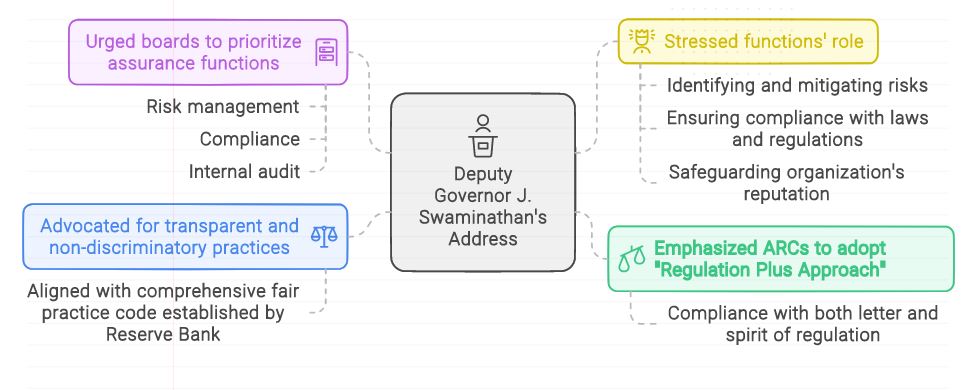
    • After the allegations of ‘unethical practices’ by ARCs, including aiding defaulting promoters, the RBI intervened, with the Deputy Governor urging integrity and ethical conduct in their operations.

    The new guidelines laid out by the RBI:

    • Enhanced Capital Requirements:
      • Minimum Capital Requirement Increase: ARCs are now mandated to maintain a minimum capital requirement of Rs 300 crore, a significant increase from the previous Rs 100 crore stipulation established on October 11, 2022.
      • Transition Period for Compliance: Existing ARCs are granted a transition period to reach the revised Net Owned Fund (NOF) threshold of Rs 300 crore by March 31, 2026.
      • Interim Requirement: However, by March 31, 2024, ARCs must possess a minimum capital of Rs 200 crore to comply with the new directives.
    • Supervisory Actions for Non-Compliance:
      • ARCs failing to meet the prescribed capital thresholds will face supervisory action, potentially including restrictions on undertaking additional business until compliance is achieved.
    • Expanded Role for Well-Capitalized ARCs:
      • Empowerment of Well-Capitalized ARCs: ARCs with a minimum NOF of Rs 1000 crore are empowered to act as resolution applicants in distressed asset scenarios.
      • Investment Opportunities: These ARCs are permitted to deploy funds in government securities, scheduled commercial bank deposits, and institutions like SIDBI and NABARD, subject to RBI specifications. Additionally, they can invest in short-term instruments such as money market mutual funds, certificates of deposit, and corporate bonds commercial papers.
      • Investment Cap: Investments in short-term instruments are capped at 10% of the NOF to mitigate risk exposure.

    About Asset Reconstruction Company (ARC):

    Description
    About ARC is a special financial institution that acquires debtors from banks at a mutually agreed value and attempts to recover the debts or associated securities.
    Regulation
    • ARCs are registered under the RBI.
    • Regulated under the SARFAESI Act, 2002 (Securitisation and Reconstruction of Financial Assets and Enforcement of Securities Interest Act).

    (Note: For reading more details on SARFAESI Act you can visit on our article named “RBI asks for SARFAESI Act Compliance” of Sept 2023)

    Objective ARCs take over a portion of the bank’s non-performing assets (NPAs) and engage in asset reconstruction or securitization, aiming to recover the debts.
    Functions
    • Asset Reconstruction: Acquisition of bank loans or other credit facilities for realization.
    • Securitization: Acquisition of financial assets by issuing security receipts.
    Foreign Investment 100% FDI allowed in ARCs under the automatic route.
    Limitiations
    • ARCs are prohibited from undertaking lending activities.
    • They can only engage in securitization and reconstruction activities.
    Working
    • Bank with NPA agrees to sell it to ARC at a mutually agreed value.
    • ARC transfers assets to trusts under SARFAESI Act.
    • Upfront payment made to bank, rest through Security Receipts.
    • Recovery proceeds shared between ARC and bank.
    Security Receipts Issued to Qualified Institutional Buyers (QIBs) for raising funds to acquire financial assets.
    Significance
    • Banks can clean up their balance sheets and focus on core banking activities.
    • Provides a mechanism for resolution of NPAs and debt recovery

    PYQ:

    [2018] With reference to the governance of public sector banking in India, consider the following statements:

    1. Capital infusion into public sector banks by the Government of India has steadily increased in the last decade.
    2. To put the public sector banks in order, the merger of associate banks with the parent State Bank of India has been affected.

    Which of the statements given above is/are correct?

    (a) 1 only

    (b) 2 only

    (c) Both 1 and 2

    (d) Neither 1 nor 2

  • Unemployment Vs Wages

    Why in the news?

    Recently, there have been contentious talks regarding Pakistan’s unemployment being lower than India’s.

    According to Keynes, lower wage rate will lead to lower income of workers and thus to lower demand of goods. Lower demand will lower output that in turn will lower employment.

    Issues related to Unemployment vs Wages

    • Questioning on Data Accuracy and Interpretation: There is skepticism about the accuracy of unemployment data, particularly regarding the CMIE Consumer Pyramids Household survey. This raises questions about the basis of claims regarding unemployment rates and the subsequent policy responses.
    • Labor Force Participation: Concerns are raised about the significant withdrawal of individuals from India’s labor force, indicating potential issues with labor force participation rather than solely unemployment rates.
    • Youth Unemployment: The high youth unemployment rate of 45% is highlighted as a significant concern, suggesting challenges in integrating young people into the workforce and addressing their employment needs.
    • Informal Employment: The prevalence of informal employment, such as subsistence agriculture and informal wage employment, is noted as a structural issue in the labor market, potentially impacting wages and job quality.
    • Wage Levels: Despite low reported unemployment rates, there are concerns about the adequacy of wages, particularly for the poor. This raises questions about the quality of employment and the extent of underemployment or disguised unemployment.
    • Policy misalignment: Certain policy proposals, such as increasing public sector employment or implementing fiscal job guarantees, are critiqued for potentially misdiagnosing the problem and offering unsustainable solutions that may not address underlying wage issues.

    Steps taken by the Government: 

    • Pradhan Mantri Rojgar Protsahan Yojana (PMRPY): This scheme incentivizes employers to generate employment by having the government pay the entire 12% employer’s contribution to the Employees’ Provident Fund and Employees’ Pension Scheme for new employees for the first three years of their employment
    • Pradhan Mantri Mudra Yojana (PMMY): This scheme provides collateral-free loans up to ₹10 lakh to micro and small businesses and individuals to help them set up or expand their enterprises, thereby promoting self-employment.
    • Aatmanirbhar Bharat Package: This economic stimulus package, announced in response to the COVID-19 pandemic, includes various long-term schemes and policies aimed at making India self-reliant and creating employment opportunities.
    • Garib Kalyan Rojgar Abhiyaan: This 125-day campaign was launched to boost employment and livelihood opportunities for migrant workers and others affected in 116 districts across 6 states.
    • PM GatiShakti: This is a multi-modal connectivity plan that aims to create infrastructure and generate employment opportunities in sectors like roads, railways, airports, ports, and logistics.

    Way forward: 

    • Addressing Labor Force Participation: Implement policies aimed at increasing labor force participation, particularly among youth and marginalized groups, by creating more formal employment opportunities.
    • Improving Informal Employment Conditions: Develop strategies to formalize the informal sector by providing incentives for informal employers to register their businesses, improve working conditions, and ensure compliance with labor laws.
    • Enhancing Wage Levels: Take steps to improve wage levels, particularly for low-skilled workers engaged in subsistence agriculture, marginal self-employment, and informal wage employment.

    Mains PYQ:

    Q Besides the welfare schemes, India needs deft management of inflation and unemployment to serve the poor and the underprivileged sections of the society. Discuss.

  • An Inheritance Tax will help reduce Inequality

    Why in the news? 

    A remark by Chairman of Indian Overseas Congress Sam Pitroda on implementing an inheritance tax as a tool of wealth redistribution has sparked massive debates.

    The Negative Impact of Inequality:

    • Growth affected: Inequality harms growth in the medium-to-long run by reducing firm productivity, lowering labor income, and diverting resources away from essential rights like education.
    • Inequal Opportunity: In unequal countries like India, where one is born greatly influences lifetime outcomes, with almost a third of consumption variation being explained by the place of residence (state, city, or village).
    • Concentration of Wealth: The richest 1% holding 40% of India’s wealth underscores the vast wealth disparities that exacerbate inequality.
    • Skewed Distribution of Gains: Research indicates that the gains from India’s growth over the last two decades have disproportionately benefited high-income urban residents, further exacerbating inequality.

    What is Inheritance Tax? 

    • An inheritance tax is a tax levied on the assets or wealth passed down from one generation to another upon the death of the owner.
    • Unlike a wealth tax, which is recurring and applied to all physical and financial assets an individual owns, an inheritance tax is a one-time tax specifically targeting intergenerational transfers of wealth.


    How an Inheritance Tax could help reduce Inequality?

    The Constitution mandates equality of status and opportunity, obliging the government to take steps to reduce disparities arising from accidents of birth.

    • Reduction of Wealth Concentration: By taxing large inheritances, an inheritance tax helps to redistribute wealth from the wealthiest individuals and families to the broader society.
    • Encouragement of Productive Investments: Inheritance taxes can encourage wealthy individuals to invest their wealth in productive activities rather than simply passing it down to heirs.
    • Incentive for Innovation: Critics may argue that inheritance taxes disincentivize innovation by reducing the incentive to accumulate wealth to pass on to future generations.
    • Funding for Public Expenditure: Revenue generated from inheritance taxes can be used to fund essential public services and social programs, such as education, healthcare, infrastructure, and poverty alleviation initiatives.
    • Historical Effectiveness: Historical examples, such as the estate duty in India between 1953 and 1985. It reduced the top 1% personal wealth share from 16% to 6% between 1966 and 1985.
    Another approach is the Land Value Tax (LVT): The Land Value Tax (LVT) is a tax system that levies charges on the unimproved value of land. Unlike traditional property taxes, which take into account both the value of the land and the value of any buildings or improvements on the land, the LVT focuses solely on the value of the land itself.


    Conclusion: Tackling wealth inequality requires a multifaceted approach that includes measures such as inheritance taxation, wealth taxation, and the Land Value Tax (LVT). These measures not only help to redistribute wealth and promote economic fairness but also contribute to fostering a more inclusive and prosperous society where opportunities are more evenly distributed.

    Mains PYQ:

    Q Comment on the important changes introduced in respect of the Long term Capital Gains Tax (LCGT) and Dividend Distribution Tax (DDT) in the Union Budget for 2018-2019.

  • CBDC pilot programmes for CPs, CDs likely: RBI

    Why in the news?

    RBI Governor Shaktikanta Das unveiled plans for a pilot program targeting the wholesale segment of Central Bank Digital Currency (CBDC) focusing on commercial papers (CPs) and certificates of deposits (CDs).

    What is Central Bank Digital Currency (CBDC)?

    • CBDC is a legal tender to be issued by the central bank in digital form; like rupee notes or coins, which are in physical form.
    • It was announced in the Union Budget 2022-23.
    • Subsequently, the Government amended Section 22 of the RBI Act, 1934 through the Finance Bill 2022. [Ref].
    • Working of CBDC:
      • Like fiat currency, it can also be exchanged between people. Simply, put it’s just like rupee (₹) notes but in digital form (e₹). 
      • However, unlike fiat currency that’s usually stored in banks and hence their liability, CBDC is a liability on the RBI’s balance sheet.
      • That’s why one does not necessarily need to have a bank account to own a digital rupee.


    About Commercial Papers (CPs) and Certificates of Deposits (CDs)

    Commercial Papers Certificates of Deposits
    Type of Instrument Unsecured promissory note Fixed-income financial instrument
    Issuer Large corporations, primary dealers, financial institutions Scheduled Commercial Banks, All-India Financial Institutions
    Maturity Period 1 to 364 days 3 months to 1 year (for SCBs), 1 to 3 years (for financial institutions)
    Minimum Investment Rs. 5 lakh or multiples thereof Rs. 1 lakh or multiples thereof
    Credit Rating Requirement Minimum credit rating required (e.g., A-2) from recognized rating agencies Typically issued by highly rated banks and financial institutions
    Collateral Unsecured Not applicable
    Purpose Short-term funding for corporations Short to mid-term investment for individuals and institutions
    Interest Rate Typically higher than bonds, fluctuates with market conditions Typically fixed, higher than savings accounts, fluctuates with market conditions
    Investment Eligibility Individuals, banking companies, corporate bodies (registered or incorporated in India), NRIs, FIIs, etc. Individuals, banking companies, other corporate bodies, NRIs, FIIs, etc.
    Issuing and Paying Agent (IPA) Only scheduled banks act as Issuing and Paying Agent Not applicable
    Trading Actively traded in Over-the-Counter (OTC) market, reported on Fixed Income Money Market and Derivatives Association of India (FIMMDA) reporting platform Not publicly traded
    Dematerialized Holding Can be held in dematerialized form through Securities and Exchange Board of India (SEBI)-approved depositories Can be issued in dematerialized form through SEBI-approved depositories


    With inputs from: https://www.indiainfoline.com

    PYQ:

    [2020] With reference to the Indian economy, consider the following statements:

    1. ‘Commercial Paper’ is a short-term unsecured promissory note.
    2. ‘Certificate of Deposit’ is a long-term instrument issued by the Reserve Bank of India to a corporation.
    3. ‘Call Money’ is a short-term finance used for interbank transaction.
    4. ‘Zero-Coupon Bonds’ are the interest-bearing short-term bonds issued by the Scheduled Commercial Banks to corporations.

    Which of the pairs above is/are correctly matched?

    (a) 1 and 2 only

    (b) 4 only

    (c) 1 and 3 only

    (d) 2, 3 and 4 only

  • [PREMIUM] Views on inflation: A matter of interest

    Why in the News? 

    AAZData released showed that Retail Inflation had edged marginally upward last month.

    What is Inflation?

    • Inflation, as per the definition provided by the International Monetary Fund, represents the pace at which prices rise within a specified timeframe, covering a comprehensive assessment of general price escalations or those about particular goods and services. To measure the inflation there are different types of inflation index.
    • An Inflation Index is a statistical measure used to track changes in the overall price level of goods and services in an economy over a specific period. It quantifies the rate of inflation by comparing the current prices of a selected basket of goods and services to their prices in a base period.

    In India, there are primarily two types of inflation indices used to measure price changes:

    • Consumer Price Index (CPI): The CPI measures changes in the prices paid by urban and rural consumers for a basket of goods and services. It provides insights into inflation experienced by households and is divided into various sub-indices based on categories such as food, fuel, clothing, housing, transportation, medical care, recreation, and education. The Government of India releases multiple CPI indices, including:
    1. CPI for Industrial Workers (CPI-IW)
    2. CPI for Agricultural Labourers (CPI-AL)
    3. CPI for Rural Labourers (CPI-RL)
    4. CPI for Urban Non-Manual Employees (CPI-UNME)
    5. CPI for Rural (CPI-R)
    6. CPI for Urban (CPI-U)
    • Wholesale Price Index (WPI): The WPI tracks changes in the prices of goods at the wholesale level. It includes the prices of commodities traded in bulk such as agricultural products, minerals, crude oil, manufactured products, and electricity. The Office of the Economic Adviser, under the Department for Promotion of Industry and Internal Trade (DPIIT), releases the WPI every month.

    What is Retail Inflation? 

    • Retail inflation, also known as Consumer Price Index (CPI) inflation, tracks the change in retail prices of goods and services that households purchase for their daily consumption. CPI is calculated for a fixed basket of goods and services that may or may not be altered by the government from time to time.
    • How it is Calculated?
      • A representative basket of goods and services is selected to represent the typical consumption patterns of households
      • The cost of the basket of goods and services is calculated for a base period.
      • The CPI is calculated by dividing the cost of the basket in the current period by the cost of the basket in the base period and multiplying by 100.
      • The inflation rate is calculated by comparing the CPI of the current period with the CPI of the base period.

    Key points as per AAZData released by the National Statistical Office:

    • Retail Inflation Data: The National Statistical Office reported that retail inflation in India increased marginally, rising to 5.69% in December from 5.55% in November, primarily driven by higher food inflation
    • Cause of inflation: RBI Governor Shaktikanta Das had anticipated the rise in inflation due to risks in food prices, cautioning about potential second-round effects
    • Food Inflation: The Consumer Food Price Index surged to 9.53% in December, up from 8.7% in November, with notable inflation in cereals, vegetables, pulses, sugar, and spices
    • Industrial Production: The index of industrial production slowed to 2.4% in November, partly due to the base effect, with a 6.4% increase in industrial output for the first eight months of the year (April-November)
    • Monetary Policy Committee (MPC) Actions: The MPC maintained the status quo on rates and stance in the last meeting, focusing on withdrawing accommodation to align inflation with the target of 4%
    • Future Monetary Policy: There are discussions within the MPC about the necessity of an interest rate cut to prevent excessive real interest rates, especially as inflation is projected to moderate in the coming quarters

    Way Forward

    • Monetary Policy Adjustment: The Reserve Bank of India (RBI) could consider implementing a cautious monetary policy stance, possibly by tightening monetary policy through measures such as raising the repo rate. This would help curb inflationary pressures by reducing liquidity in the economy and making borrowing more expensive.
    • Supply-Side Interventions: The government could focus on addressing supply-side constraints in the agricultural sector to mitigate food price inflation. This might involve measures such as improving infrastructure, increasing agricultural productivity, reducing post-harvest losses, and enhancing market efficiency through better distribution networks.
    • Fiscal Policy Support: The government could also provide fiscal support to sectors facing supply-side disruptions or demand constraints, which could help stabilize prices and support economic growth. Targeted fiscal measures, such as subsidies for essential commodities or infrastructure investments, could be considered to address specific challenges contributing to inflation.

    Mains PYQ 

    Q Besides the welfare schemes, India needs deft management of inflation and unemployment to serve the poor and the underprivileged sections of the society. Discuss. (UPSC IAS/2022)

    Q Do you agree with the view that steady GDP growth and low inflation have left the Indian economy in good shape? Give reasons in support of your arguments. (UPSC IAS/2019)

    Prelims PYQ 

    Consider the following statements:(UPSC IAS/2020)

    1) The weightage of food in Consumer Price Index (CPI) is higher than that in Wholesale Price Index (WPI).

    2) The WPI does not capture changes in the prices of services, which CPI does.

    3) Reserve Bank of India has now adopted WPI as its key measure of inflation and to decide on changing the key policy rates.

    Which of the statements give above is/are correct?

    a) 1 and 2 only

    b) 2 only

    c) 3 only

    d) 1, 2 and 3

  • SEBI board approves amendment to Mutual Funds rules

    Why in the news?

    • The Securities & Exchange Board of India (SEBI) has recently approved amendments to SEBI (Mutual Funds) Regulations, 1996, aimed at enhancing the regulatory framework for Asset Management Companies (AMCs).
      • These amendments mandate AMCs to establish institutional mechanisms to deter potential market abuse, including front-running, following recent instances observed by the market regulator.

    What are Mutual Funds?

    • A mutual fund is a pool of money managed by a professional Fund Manager.
    • It is a trust that collects money from a number of investors who share a common investment objective and invests the same in equities, bonds, money market instruments and/or other securities.
    • And the income / gains generated from this collective investment is distributed proportionately amongst the investors after deducting applicable expenses and levies, by calculating a scheme’s “Net Asset Value” or NAV.
    • SEBI regulates mutual funds through the SEBI (Mutual Funds) Regulations, 1996.

    Categories of Mutual Funds:

    1. An actively managed fund is a mutual fund scheme in which the fund manager “actively” manages the portfolio and continuously monitors the fund’s portfolio, deciding on which stocks to buy/sell/hold and when, using his/her professional judgement, backed by analytical research.
    2. A passively managed fund, by contrast, simply follows a market index, i.e., in a passive fund , the fund manager remains inactive or passive inasmuch as, he/she does not use his/her judgement or discretion to decide as to which stocks to buy/sell/hold , but simply replicates / tracks the scheme’s benchmark index in exactly the same proportion.

    Fund Structure

    • Mutual funds in India operate under a three-tier structure, comprising the
    1. Asset Management Company (AMC),
    2. Trustees, and
    3. Custodians.
    • The AMC manages the fund’s investments, the Trustees oversee the operations, and the Custodians safeguard the fund’s assets.

    Key highlights of the recent update:

    • Institutional Mechanism: AMCs are required to implement enhanced surveillance systems, internal controls, and escalation processes to identify and address specific types of misconduct, such as front-running, insider trading, and misuse of sensitive information.
    • Whistleblower Mechanism: To foster transparency, AMCs are mandated to have a whistleblower mechanism.
    • Recording of Communication: SEBI has exempted face-to-face interactions during market hours from the requirement of recording all communication by dealers and fund managers. This exemption will be effective upon the implementation of the institutional mechanism by AMCs.
    • Prudential Norms for Passive Schemes: SEBI has streamlined prudential norms for passive schemes, allowing equity passive schemes to invest up to the weightage of constituents in the underlying index, subject to a 35% cap on investment in sponsor group companies.

    PYQ:

    [2014] What does venture capital mean?

    (a) A short-term capital provided to industries

    (b) A long-term start-up capital provided to new entrepreneurs

    (c) Funds provided to industries at times of incurring losses

    (d) Funds provided for replacement and renovation of industries

  • The rising share of Personal Income Tax and Indirect Tax is a concern

    Why in the news?

    Recent data show that Personal Income Tax Collections have increased, while collections from Corporate Taxes have reduced.

    The present context of the rising share of Personal Income Tax and Indirect Tax:

    • Shift in Tax Composition: The data illustrates a significant shift in the composition of tax revenue, with personal income tax forming a larger share compared to corporate tax. This trend is accentuated by the sharp decline in corporate tax following the 2019 tax cuts.
    • Progressive vs. Regressive Taxation: Direct taxes, such as personal income tax, are considered progressive as they are based on income levels, whereas indirect taxes, like GST, are regressive, impacting all consumers uniformly regardless of their income.
      • The increasing share of indirect taxes implies a heavier burden on lower-income individuals.
    • Trend in Tax Composition: Chart 2 demonstrates a historical trend where indirect taxes had been decreasing since the 1980s, whereas direct taxes were on the rise. However, recent years have witnessed a reversal of this trend, with indirect taxes increasing and direct taxes declining.
    • International Comparison: Comparisons with BRICS economies indicate that India’s effective personal income tax rate is among the highest. This implies that Indian taxpayers may face relatively higher tax rates compared to individuals in other emerging economies.

    Concerns due to rising share of Personal Income Tax and Indirect Tax:

    • Impact on Middle and Lower Income Groups: The rising share of personal income tax and indirect taxes places a greater burden on poorer citizens and the middle class. This is particularly concerning as the majority of personal income tax filers fall within the ₹1 lakh-₹5 lakh annual income bracket, indicating that middle-income earners are disproportionately affected.
    • Comparison with BRICS Economies: Data comparisons with BRICS economies reveal that India’s effective personal income tax rate is among the highest. This suggests that individuals in India may be facing relatively higher tax rates compared to their counterparts in other emerging economies.
    • Concern for Equity and Economic Stability: The data underscores a growing concern regarding the equitable distribution of the tax burden. The heavier reliance on personal income tax and indirect taxes may exacerbate income inequality and strain the finances of middle and lower-income households.

    Way Forward:

    • Progressive Tax Reforms: Implementing progressive tax reforms can help alleviate the burden on middle and lower-income groups. This could involve revising tax brackets and rates to ensure that higher-income individuals contribute proportionally more to tax revenue.
    • Enhanced Direct Tax Compliance: Improving direct tax compliance measures, such as increasing tax enforcement efforts and reducing tax evasion loopholes, can help enhance revenue collection from high-income individuals and corporations.

    Mains PYQ 

    Q What is the meaning of the term ‘tax expenditure’? Taking housing sector as an example, discuss how it influences the budgetary policies of the government. (UPSC IAS/2013)

  • RBI’s New Guidelines for Asset Reconstruction Companies (ARCs)

    Why in the news?

    The RBI has introduced updated guidelines for Asset Reconstruction Companies (ARCs) through a master direction, effective from April 24, 2024.

    What is an Asset Reconstruction Company (ARC)?

    Description
    About ARC is a special financial institution that acquires debtors from banks at a mutually agreed value and attempts to recover the debts or associated securities.
    Regulation
    • ARCs are registered under the RBI.
    • Regulated under the SARFAESI Act, 2002 (Securitisation and Reconstruction of Financial Assets and Enforcement of Securities Interest Act).
    Objective ARCs take over a portion of the bank’s non-performing assets (NPAs) and engage in asset reconstruction or securitization, aiming to recover the debts.
    Functions
    • Asset Reconstruction: Acquisition of bank loans or other credit facilities for realization.
    • Securitization: Acquisition of financial assets by issuing security receipts.
    Foreign Investment 100% FDI allowed in ARCs under the automatic route.
    Limitiations
    • ARCs are prohibited from undertaking lending activities.
    • They can only engage in securitization and reconstruction activities.
    Working
    • Bank with NPA agrees to sell it to ARC at a mutually agreed value.
    • ARC transfers assets to trusts under SARFAESI Act.
    • Upfront payment made to bank, rest through Security Receipts.
    • Recovery proceeds shared between ARC and bank.
    Security Receipts Issued to Qualified Institutional Buyers (QIBs) for raising funds to acquire financial assets.
    Significance
    • Banks can clean up their balance sheets and focus on core banking activities.
    • Provides a mechanism for resolution of NPAs and debt recovery.

    What are the new guidelines laid out by the RBI?

    • Enhanced Capital Requirements:
        • Minimum Capital Requirement Increase: ARCs are now mandated to maintain a minimum capital requirement of Rs 300 crore, a significant increase from the previous Rs 100 crore stipulation established on October 11, 2022.
        • Transition Period for Compliance: Existing ARCs are granted a transition period to reach the revised Net Owned Fund (NOF) threshold of Rs 300 crore by March 31, 2026.
        • Interim Requirement: However, by March 31, 2024, ARCs must possess a minimum capital of Rs 200 crore to comply with the new directives.
    • Supervisory Actions for Non-Compliance:
        • ARCs failing to meet the prescribed capital thresholds will face supervisory action, potentially including restrictions on undertaking additional business until compliance is achieved.
    • Expanded Role for Well-Capitalized ARCs:
      • Empowerment of Well-Capitalized ARCs: ARCs with a minimum NOF of Rs 1000 crore are empowered to act as resolution applicants in distressed asset scenarios.
      • Investment Opportunities: These ARCs are permitted to deploy funds in government securities, scheduled commercial bank deposits, and institutions like SIDBI and NABARD, subject to RBI specifications. Additionally, they can invest in short-term instruments such as money market mutual funds, certificates of deposit, and corporate bonds commercial papers.
      • Investment Cap: Investments in short-term instruments are capped at 10% of the NOF to mitigate risk exposure.

    PYQ:

    [2018] With reference to the governance of public sector banking in India, consider the following statements:

    1. Capital infusion into public sector banks by the Government of India has steadily increased in the last decade.
    2. To put the public sector banks in order, the merger of associate banks with the parent State Bank of India has been affected.

    Which of the statements given above is/are correct?

    (a) 1 only

    (b) 2 only

    (c) Both 1 and 2

    (d) Neither 1 nor 2

  • Towards a Green Growth: On the RBI and a Green Taxonomy

    Why in the news?

    Extreme weather conditions may pose a risk to inflation, along with prolonged geopolitical tensions that could keep crude oil prices volatile, the Reserve Bank’s April Bulletin said on April 23.

    RBI’s Monetary Policy Report on the impact of climate shock and extreme weather events on food inflation:

    • Effects of Food Inflation: The report highlights the significance of extreme weather events and climate shocks in affecting not only food inflation but also the broader impact on the natural Rate of Interest and Financial Stability.
    • Broader Economic Impact: Climate shocks and extreme weather events are mentioned to have a broader impact on the economy’s financial stability, indicating that disruptions in food production and supply chains due to these events can lead to inflationary pressures beyond just the food sector.
    • Use of Economic Modeling: The report mentions the utilization of a New-Keynesian model incorporating a physical climate risk damage function to estimate the macroeconomic impact of climate change. This likely includes projections on how climate shocks affect food production and subsequently food inflation.
    • Warning on Long-Term Output Reduction: The report warns that without climate mitigation policies, the long-term economic output could be lower by around 9% by 2050. This suggests that climate shocks and extreme weather events could have lasting effects on food production and inflation.
    • Potential for Inflation Hysteresis: There’s a warning about the potential for inflation hysteresis to become entrenched, which could lead to a de-anchoring of inflation expectations. This implies that persistent disruptions caused by climate shocks could lead to sustained increases in food inflation.

    Way Forward:

    • Need Investment in Climate Resilience: Governments and businesses can invest in climate-resilient agriculture practices and infrastructure to mitigate the adverse effects of extreme weather events on food production.
    • Need Diversification of Food Sources: Diversifying food sources can help reduce reliance on regions prone to climate-related disruptions. This could involve promoting local food production, supporting small-scale farmers, and investing in alternative food production methods such as vertical farming or hydroponics.

    Mains PYQ 

    Q What policy instruments were deployed to contain the great economic depression?