💥Join UPSC 2027,2028 Mentorship (July Batch) + XFactor Notes & Microthemes PDF

GS Paper: Indian Economy

  • What is Project Nexus that RBI has signed up for?

    Why in the news? 

    The Reserve Bank of India (RBI) has become a part of Project Nexus, a global initiative aimed at facilitating instant cross-border retail payments by connecting domestic Fast Payments Systems (FPSs).

    What is Project Nexus?

    • Project Nexus is conceptualized by the Innovation Hub of the Bank for International Settlements (BIS).
    • It is the first BIS Innovation Hub project in the payments area moving towards live implementation.
    • Aim: To enhance cross-border payments by connecting multiple domestic instant payment systems (IPS) globally.
    • The Reserve Bank of India (RBI) has joined Project Nexus, aiming to interlink India’s Unified Payments Interface (UPI) with the Fast Payments Systems (FPSs) of Malaysia, the Philippines, Singapore, and Thailand.
    • The platform is designed to be extended to more countries in the future.

    About Fast Payments Systems (FPSs):

    Fast payment systems (FPSs) are real-time payment systems that enable the immediate transfer of funds between accounts. Some key points about FPSs:

    • FPSs allow for the fast, secure, and low-cost processing of retail transactions, ensuring funds are immediately available to the recipient.
    • FPSs are becoming increasingly popular globally, with over 100 jurisdictions now having access to fast payment systems. They foster competition among payment service providers and serve as a gateway to additional financial services.
    • The design of FPSs is important, as they have public good characteristics. Factors that contribute to greater adoption of FPSs include central bank involvement, inclusion of non-bank providers, more use cases, and more cross-border connections.
    • The Payment and Settlement Systems Act, of 2007 regulates and supervises payment systems in India. It designates the Reserve Bank of India has the authority for that purpose and all related matters.

    What are the benefits of the platform?

    • Standardization: Project Nexus standardizes the way IPS connect to each other, simplifying the process.
    • Single Connection: Payment system operators can connect to the Nexus platform once, allowing them to reach all other countries on the network without building custom connections for each.
    • Instant Payments: Enables cross-border payments from sender to recipient within 60 seconds in most cases.
    • Cost Efficiency: Provides near-zero cost for sending and receiving payments.
    • Growth Acceleration: Significantly accelerates the growth of instant cross-border payments by leveraging existing instant payment systems.

    Way forward: 

    • Expand Membership: Actively encourage more countries to join Project Nexus, thereby increasing the global reach and impact of the platform. (Indonesia is joining in the near future)
    • Enhance Technological Infrastructure: Invest in robust and scalable technological infrastructure to support seamless integration and interoperability among different FPSs.

    Mains PYQ:

    Q What is Cryptocurrency? How does it affect global society? Has it been affecting Indian society also? (UPSC IAS/2021)
  • Interest rates on small savings schemes like PPF, SCSS, and NSC are under review by Modi 3.0 government 

    Why in the news? 

    The central government of India is set to announce the interest rates for various small savings schemes, including the Public Provident Fund (PPF), Senior Citizen Savings Scheme (SCSS), National Savings Certificate (NSC), Sukanya Samriddhi Yojana (SSY), and Post Office Monthly Income Scheme (POMIS), for the July-September 2024 quarter by June 30, 2024.

    Current Interest Rates and Expected Changes

    1. Public Provident Fund (PPF)
    • Current Rate: 7.1%
    • Expected Rate: Despite the benchmark 10-year bond yield averaging 7.02% from March to May 2024, which would suggest a rate of 7.27% according to the formula, experts believe the government will likely maintain the status quo.
    • Reason: Factors such as controlled inflation, stable 10-year G-Sec yields, and historical precedence of the government not strictly following the recommended formula indicate a low probability of rate hikes.

    2. Senior Citizen Savings Scheme (SCSS)

    • Current Rate: 8.2%
    • Expected Rate: Unlikely to see significant changes.
    • Reason: With a spread of 100 basis points, the SCSS offers a substantial return, and experts predict the government will maintain existing rates to manage fiscal policies effectively.

    3. Sukanya Samriddhi Yojana (SSY)

    • Current Rate: 8.0%
    • Expected Rate: Expected to remain stable.
    • Reason: The SSY enjoys a spread of 75 basis points. Given the controlled inflation and fiscal policies, a rate hike is not anticipated.

    Factors Influencing Interest Rates

    • Benchmark Yields: The interest rates for small savings schemes are linked to the yields of 10-year government securities.
    • Market Conditions: Prevailing market yields and inflation rates play a crucial role in determining these rates.
    • Government Policy: The central government’s fiscal strategy and policies, such as those outlined in the Union Budget, impact decisions on interest rates.

    Impact of Stable Interest Rates on Small Savings Schemes

    • Investor Sentiment and Returns
      • PPF: Investors in PPF may feel disappointed due to the stagnation in interest rates despite a slight uptick in benchmark yields. However, PPF still offers tax-free returns under the Exempt-Exempt-Exempt (EEE) status, making it an attractive long-term investment.
      • SCSS and SSY: Stability in interest rates ensures a predictable income stream for senior citizens and parents of girl children, maintaining their trust in these schemes.
    • Government Fiscal Management: Maintaining the current interest rates helps the government manage its fiscal deficit more effectively. Higher rates would increase the interest burden on the government, especially for widely subscribed schemes like PPF.
    • Inflation Control: Stable interest rates reflect the government’s confidence in managing inflation. By not increasing rates, the government signals that it sees inflation as under control, thus aiming to keep borrowing costs stable for both the government and the public.
    • Market Stability: Consistent interest rates contribute to market stability. Predictable returns on small savings schemes help in the planning of household finances, ensuring steady savings and investments. This stability can also foster overall economic stability by maintaining consumer confidence.

    Conclusion: Investors in PPF, SCSS, and SSY should prepare for the possibility that interest rates will remain unchanged for the July-September 2024 quarter. While the formula indicates room for an increase in PPF rates, historical trends and expert opinions suggest that the government may maintain the current rates to balance fiscal control and market stability.

    Mains PYQ:

    Q Pradhan Mantri Jan-Dhan Yojana (PMJDY) is necessary for bringing the unbanked to the institutional fiancé fold. Do you agree with this for the financial inclusion of the poorer section of the Indian society? Give arguments to justify your opinion. (UPSC IAS/2016)

  • RBI releases the 29th Financial Stability Report, 2024

    Why in the News?

    The Reserve Bank of India has released the 29th issue of the Financial Stability Report (FSR).

    About Financial Stability Report:

    • The FSR is published biannually by the RBI.
    • It reflects the collective assessment of the Sub-Committee of the Financial Stability and Development Council (FSDC – headed by the Governor of RBI) on risks to financial stability and the resilience of the financial system.
    • The Report also discusses issues relating to the development and regulation of the financial sector.

    Key Highlights of the FSR

    [1] Global Economic Context

    • Heightened Global Risks: The global economy faces significant challenges, such as:
      • Geopolitical Tensions: Conflicts or political disagreements between countries that can affect global stability.
      • Elevated Public Debt: Many countries owe large amounts of money, which can be risky if they struggle to repay it.
      • Slow Progress in Disinflation: Prices of goods and services are not decreasing quickly, which can affect economic stability.
    • Resilience: Despite these challenges, the global financial system (how money moves around the world) remains strong and stable.

    [2] Indian Economy and Financial System

    • Robust and Resilient: India’s economy and financial system are strong and able to handle shocks or problems.
    • Banking Sector Support: Banks and financial institutions (like insurance companies) are in good health and are lending money to support economic activities.

    [3] Financial Metrics for Scheduled Commercial Banks (SCBs)

    • Capital Ratios:
      • Capital to Risk-Weighted Assets Ratio (CRAR): This is a measure of a bank’s financial strength. A CRAR of 16.8% means that for every 100 units of risk, the bank has 16.8 units of capital to cover potential losses.
      • Common Equity Tier 1 (CET1) Ratio: This is a stricter measure of a bank’s core capital. A CET1 ratio of 13.9% means the bank has a strong base of high-quality capital.
    • Asset Quality:
      • Gross Non-Performing Assets (GNPA) Ratio: This measures the percentage of a bank’s loans that are not being repaid. A GNPA ratio of 2.8% means that 2.8% of the total loans are in trouble.
      • Net Non-Performing Assets (NNPA) Ratio: This is similar to GNPA but considers the money the bank has already set aside to cover bad loans. An NNPA ratio of 0.6% means that 0.6% of the total loans, after accounting for provisions, are in trouble.

    [4] Macro Stress Tests for Credit Risk

    • Stress Scenarios and Projections:
      • Baseline Scenario: Under normal conditions, banks are expected to have a CRAR of 16.1% by March 2025.
      • Medium Stress Scenario: Under moderate stress, banks are expected to have a CRAR of 14.4% by March 2025.
      • Severe Stress Scenario: Under severe stress, banks are expected to have a CRAR of 13.0% by March 2025.
    • Interpretation: These tests show how banks might perform under different levels of economic stress. They are hypothetical scenarios to ensure banks are prepared for tough times.

    [5] Health of Non-Banking Financial Companies (NBFCs)

    • CRAR: NBFCs have a CRAR of 26.6%, indicating they are financially strong.
    • GNPA Ratio: NBFCs have a GNPA ratio of 4.0%, meaning 4% of their loans are not being repaid.
    • Return on Assets (RoA): NBFCs have a RoA of 3.3%, indicating they are making good profits from their assets.

    PYQ:

    [2016] With reference to ‘Financial Stability and Development Council’, consider the following statements:

    1. It is an organ of NITI Aayog.

    2. It is headed by the Union Finance Minister.

    3. It monitors macroprudential supervision of the economy.

    Which of the statements given above is/are correct?

    (a) 1 and 2 only

    (b) 3 only

    (c) 2 and 3 only

    (d) 1, 2 and 3

  • Prolonged exposure to coal mining causes respiratory, skin diseases in workers: study  

    Why in the News?

    A new study by the National Foundation of India (NFI) reveals that 75% of focus group participants have chronic respiratory and skin ailments due to prolonged exposure to coal mining pollutants.

    • The study report titled, “At the Crossroads: Marginalised Communities and the Just Transition Dilemma”, is a sequel to the 2021 study by NFI on the socio-economic impact of coal transitions in India.
    Key Highlights of the reports by the National Foundation for India:

      • The study covered two districts each from three central Indian states—Chhattisgarh, Jharkhand, and Odisha surveying 1209 households and conducting 20 Focused Group Discussions (FDGs).
    • Other key findings of the study are: 
      • Health Concerns: Prolonged exposure to coal mining pollutants has resulted in widespread respiratory and skin diseases among the local populations. At least 75% of participants in Focus Group Discussions (FGDs) reported issues such as chronic bronchitis, asthma, and various skin conditions.
      • Economic Impact/ Economic Dependency on Coal: The phasing down of coal is expected to result in significant job losses and economic downturns in coal-dependent regions. This will not only impact the coal miners and workers directly but also the broader local economy.
      • Caste-Based Inequities: Access to resources and opportunities is significantly skewed, with marginalized communities such as Scheduled Castes (SCs), Scheduled Tribes (STs), and Other Backward Classes (OBCs) being disproportionately affected.
    • The report identifies several challenges in achieving a just transition, including the need to upskill a largely under-educated workforce and the lack of alternative livelihoods. 
    • It underscores the importance of community-specific policies, robust institutional mechanisms, and coordinated efforts between government bodies.
    • The study offers a potential framework for safeguarding the interests of these communities through:
      • Alternative Livelihoods: Emphasizing the development of new economic opportunities beyond coal.
      • Ecological Restoration: Promoting environmental recovery to mitigate the health impacts of coal mining.
      • Inclusive Policies: Ensuring that the transition policies are inclusive and consider the needs of marginalized communities.


    Present Challenges of Medical Expenses and Shift from Coal:

    • Health Concerns: People living closer to coal mines face higher medical expenses due to increased incidence of lung and breathing-related diseases and skin infections.
    • Economic concerns: The global shift away from coal is expected to result in job losses and economic downturns in coal-dependent regions, affecting both coal miners and the broader local economy.
      • Economic disparities exist with varying income levels and irregular wage receipt patterns in coal-dependent districts.
      • Dhanbad and Koriya, solely reliant on coal production, reported lower incomes compared to diversified industrial districts.

    Way Forward:

    • Diversification of Local Economies: Develop alternative industries and economic activities in coal-dependent regions to reduce reliance on coal mining. Promote skill development programs to help coal workers transition to new employment opportunities in emerging sectors such as renewable energy, manufacturing, and services.
    • Investment in Health Infrastructure: Enhance healthcare facilities in coal mining regions to address the higher incidence of lung, and breathing-related diseases, and skin infections. Implement comprehensive health monitoring and support programs for communities living near coal mines.
    • Promotion of Renewable Energy: Accelerate the shift towards renewable energy sources, building on the recent trend of increased capacity addition in renewable energy. Invest in renewable energy infrastructure and create job opportunities in the renewable sector to offset job losses in coal mining.
    • Government and Policy Support: Implement policies and provide financial support for a ‘just transition’ to ensure that workers and communities dependent on coal mining are not left behind.
    • Community Engagement and Participation: Involve local communities in planning and decision-making processes related to the transition from coal.

    Mains question for practice : 

    Q Analyse the health and socioeconomic impacts of prolonged coal mining in India, as highlighted by the National Foundation for India’s survey. 10M

    Mains PYQ: 

    Q In spite of adverse environmental impact, coal mining is still inevitable for Development”. Discuss. (UPSC IAS/2017)

  • RBI’s New Guidelines for Asset Reconstruction Companies (ARCs)

    Why in the news?

    The RBI has introduced updated guidelines for Asset Reconstruction Companies (ARCs) through a master direction, effective from April 24, 2024.

    What is an Asset Reconstruction Company (ARC)?

    Description
    About ARC is a special financial institution that acquires debtors from banks at a mutually agreed value and attempts to recover the debts or associated securities.
    Regulation ARCs are registered under the RBI.

    Regulated under the SARFAESI Act, 2002 (Securitisation and Reconstruction of Financial Assets and Enforcement of Securities Interest Act).

    Objective ARCs take over a portion of the bank’s non-performing assets (NPAs) and engage in asset reconstruction or securitization, aiming to recover the debts.
    Functions Asset Reconstruction: Acquisition of bank loans or other credit facilities for realization. 

    Securitization: Acquisition of financial assets by issuing security receipts.

    Foreign Investment 100% FDI allowed in ARCs under the automatic route.
    Limitiations ARCs are prohibited from undertaking lending activities. 

    They can only engage in securitization and reconstruction activities.

    Working Bank with NPA agrees to sell it to ARC at a mutually agreed value. 

    ARC transfers assets to trusts under SARFAESI Act. 

    Upfront payment made to bank, rest through Security Receipts. 

    Recovery proceeds shared between ARC and bank.

    Security Receipts Issued to Qualified Institutional Buyers (QIBs) for raising funds to acquire financial assets.
    Significance Banks can clean up their balance sheets and focus on core banking activities. 

    Provides a mechanism for resolution of NPAs and debt recovery.


    What are the new guidelines laid out by the RBI?

    • Enhanced Capital Requirements:
        • Minimum Capital Requirement Increase: ARCs are now mandated to maintain a minimum capital requirement of Rs 300 crore, a significant increase from the previous Rs 100 crore stipulation established on October 11, 2022.
        • Transition Period for Compliance: Existing ARCs are granted a transition period to reach the revised Net Owned Fund (NOF) threshold of Rs 300 crore by March 31, 2026.
        • Interim Requirement: However, by March 31, 2024, ARCs must possess a minimum capital of Rs 200 crore to comply with the new directives.
    • Supervisory Actions for Non-Compliance:
        • ARCs failing to meet the prescribed capital thresholds will face supervisory action, potentially including restrictions on undertaking additional business until compliance is achieved.
    • Expanded Role for Well-Capitalized ARCs:
      • Empowerment of Well-Capitalized ARCs: ARCs with a minimum NOF of Rs 1000 crore are empowered to act as resolution applicants in distressed asset scenarios.
      • Investment Opportunities: These ARCs are permitted to deploy funds in government securities, scheduled commercial bank deposits, and institutions like SIDBI and NABARD, subject to RBI specifications. Additionally, they can invest in short-term instruments such as money market mutual funds, certificates of deposit, and corporate bonds commercial papers.
      • Investment Cap: Investments in short-term instruments are capped at 10% of the NOF to mitigate risk exposure.

    PYQ:

    [2018] With reference to the governance of public sector banking in India, consider the following statements:

    1. Capital infusion into public sector banks by the Government of India has steadily increased in the last decade.
    2. To put the public sector banks in order, the merger of associate banks with the parent State Bank of India has been affected.

    Which of the statements given above is/are correct?

    (a) 1 only 

    (b) 2 only 

    (c) Both 1 and 2 

    (d) Neither 1 nor 2


  • K-Shaped Economic Recovery fuels diverse Inflation Dynamics in India

    Why in the News?

    India is experiencing a K-shaped recovery, with uneven growth patterns. This recovery is causing divergent inflation trends, with food and rural prices rising faster than other goods and services, and urban inflation.

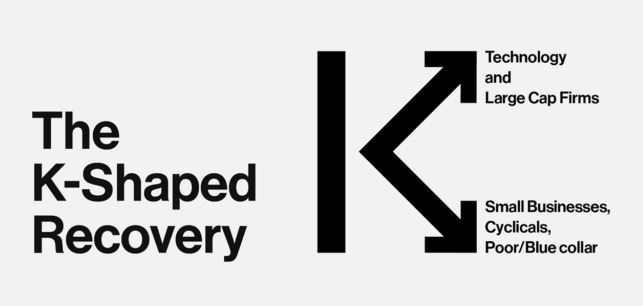
    What is K-Shaped Recovery?

    •  A K-shaped recovery is an economic scenario in which different sectors, industries, or groups within an economy recover from a recession at markedly different rates.
    • This results in a divergent economic recovery pattern, with some parts of the economy experiencing robust growth and others continuing to struggle or even decline.

    Features of K-Shaped Recovery

    • Divergent Recovery Rates: Certain sectors, such as technology and finance, may recover quickly and strongly. Other sectors, like hospitality and retail, may continue to struggle or recover much more slowly.
    • Income Inequality: High-income individuals and businesses may see significant improvements in their financial situations. Low-income individuals and small businesses may face prolonged financial hardships.
    • Sectoral Disparities: Industries that can adapt to remote work or have online business models (e.g., tech, e-commerce) thrive.

    Indian Context: Consumption Patterns Post-Pandemic

    • High-End Goods Demand: Post-pandemic recovery is driven by increased demand for higher-end goods and services.
    • Mass Consumption Items: Lower-income households’ consumption of mass-market items remains relatively subdued.

     Contrast Inflation Rate:

    • Rural vs. Urban Inflation: Rural inflation is outpacing urban inflation.
    • Food Prices vs. Other Goods: Food price inflation is higher compared to inflation in other goods and services.
    • Goods vs. Services Inflation: Goods inflation is higher than services inflation.
    • Input vs. Output Prices: Input prices are rising faster than output prices.

    Policy Implications

    • Sensitive Policymaking: Government policies need to be sensitive to the impact on different groups affected by supply-side shocks.
    • Careful Planning: Reforms should be carefully explained and planned to mitigate adverse impacts.

    PYQ:

    [2021] Do you agree that the Indian economy has recently experienced V-shaped recovery? Give reasons in support of your answer.

  • What is the GST Council, and what does it do?   

    Why in the news?

    The 53rd meeting of the Goods and Services Tax (GST) Council convened in Delhi, chaired by Nirmala Sitharaman, Union Minister for Finance and Corporate Affairs, on Saturday, June 22nd.

    What is the GST Council?

    • The GST Council is a constitutional body established under Article 279A of the amended Constitution of India.
    • It is a joint forum consisting of the Union Finance Minister (as Chairperson), the Union Minister of State for Finance, and representatives from each state and Union Territory (UT) with legislatures.
    • The Council is responsible for making recommendations on issues related to GST, including tax rates, exemptions, and model GST laws.

    Powers and Functions of the GST Council

    • Recommendations on GST Issues: The Council advises the Union and State Governments on matters related to the goods and services tax.
    • Tax Rates: It decides on the rates of GST applicable to goods and services, including any modifications or exemptions.
    • Dispute Resolution: It addresses disputes that may arise between the Union and States or among States regarding GST.
    • Administrative Changes: The Council can recommend administrative changes to improve the efficiency of GST implementation.
    • Review and Revision: Periodically review GST rates and provisions to align with economic realities and policy objectives.

    Evolution of the GST Council since its inception:

    • Formation and Initial Years: Established in 2016 after the passage of the 122nd Constitutional Amendment Act. The Council began functioning in 2017 when GST was implemented nationwide.
    • Operational Efficiency: Over the years, the Council has evolved to streamline decision-making processes, including real-time discussions and consensus-building among members.
    • Expansion of Scope: Initially focusing on setting basic tax rates and exemptions, the Council’s scope expanded to include amendments to GST laws and procedural changes.
    • Judicial Scrutiny: In 2022, the Supreme Court clarified that the Council’s recommendations are not binding but reflect collaborative efforts between the Union and States.
    • Adaptation to Challenges: Adapted to economic fluctuations, pandemic challenges (like the postponement of GST filing deadlines during COVID-19), and evolving sectoral needs.
    • Interstate Dynamics: The voting structure of the Council, with states collectively having a two-thirds voting share, underscores its federal and cooperative nature.

    Conclusion: The GST Council, pivotal since 2017, advises on GST matters, sets tax rates, resolves disputes, and evolves with economic shifts. Its federal structure ensures collaborative decision-making for efficient tax administration in India.

    Mains PYQ:

    Q Enumerate the indirect taxes which have been subsumed in the Goods and Services Tax (GST) in India. Also, comment on the revenue implications of the GST introduced in India since July 2017. (UPSC IAS/2019)

  • Proposed Amendments to Insolvency Resolution Process by IBBI

    1. Why in the News?
    • The Insolvency and Bankruptcy Board of India (IBBI) has proposed amendments to the Insolvency Resolution Process for Corporate Process regulations to enhance efficiency, reduce costs, and increase transparency.
      • This aims to align with the Companies (Registered Valuers and Valuation) Rules and streamline the Corporate Insolvency Resolution Process (CIRP).

    Do You Know?

    Since its enactment, the IBBI has achieved notable successes in resolving insolvency cases and recovering debts:

    • Debt Resolution: The IBC has successfully resolved Rs. 3.16 lakh crore of debt across 808 cases within seven years (as per CRISIL).
    • Higher Recovery Rates: Creditors have realized an average of 32% of admitted claims and 169% of the liquidation value through IBC proceedings, demonstrating higher recovery rates compared to previous mechanisms.
    • Behavioural Change: Companies have been proactively involved in the settlement of debts amounting to over Rs. 9 lakh crore before cases enter formal insolvency processes.

    Proposed amendments by IBBI

    • Simplified Valuation: Instead of separate reports for different types of assets, there will be one comprehensive valuation report covering the entire company. This helps in keeping valuation consistent and clear.
    • Single Valuer for Small Companies: For smaller companies with assets up to ₹1,000 crore and MSMEs, only one valuer will be appointed to determine the company’s value unless there’s a good reason for more than one.
    • Option for Two Valuers: If needed, the creditors’ committee can choose to have two valuers to deal with complex cases, but they have to explain why.
    • Faster Appointment of Representatives: Representatives appointed to represent creditors can start participating in meetings as soon as their application is submitted, to avoid delays.
    • Guarantees in Resolution Plans: If a resolution plan suggests releasing guarantees, it won’t stop creditors from going after guarantors or using the guarantees according to their agreements.

    About Insolvency and Bankruptcy Board of India (IBBI)

    Details
    Establishment Established on 1st October 2016 under the Insolvency and Bankruptcy Code (IBC), 2016.

    • Objective: To promote a creditor-driven insolvency resolution process and enhance India’s credit culture and business environment.
    Responsibility Responsible for implementing and enforcing the IBC,

    IBC consolidated laws related to insolvency resolution for individuals, partnership firms, and corporate entities.

    Functions
    • Regulates insolvency professionals and processes.
    • Oversees insolvency professional agencies, entities, and information utilities.
    • Enforces rules for corporate and individual insolvency resolution, liquidation, and bankruptcy.
    • Sets eligibility criteria and curriculum for insolvency professionals.
    • Collects and maintains records on insolvency cases and disseminates related information.
    Composition Total 10 members

    • Chairperson appointed by the Central Government.
    • Three members from central government officers (Ministries of Finance, Corporate Affairs, Law).
    • One member nominated by RBI (Reserve Bank of India).
    • Five other members nominated by the Central Government, including at least three full-time members.

    The term is 5 years or until age 65, with reappointment possible.

    Adjudicating Authorities under the IBC:

    Under the IBC, two primary adjudicating authorities handle insolvency cases based on the nature of the entity:

    • National Company Law Tribunal (NCLT): NCLT adjudicates insolvency cases involving corporate entities and other limited liability entities.
    • Debt Recovery Tribunal (DRT): DRT has jurisdiction over insolvency cases concerning individuals and partnership firms, excluding Limited Liability Partnerships (LLPs).

    Recent Amendments to the IBC:

    • Approval for segregated sale of assets or resolution plans.
    • Increase in the number of NCLT benches to 16 for faster adjudication.
    • Extension of timelines for filing claims to accommodate procedural complexities.
    • Sector-specific amendments tailored to address unique challenges in various industries.
    • Modifications in procedural forms such as Form G2 to enhance clarity and efficiency in insolvency proceedings.

    PYQ:

    [2017] Which of the following statements best describes the term ‘Scheme for Sustainable Structuring of Stressed Assets (S4A)’, recently seen in the news?

    (a) It is a procedure for considering the ecological costs of developmental schemes formulated by the Government.

    (b) It is a scheme of RBI for reworking the financial structure of big corporate entities facing genuine difficulties.

    (c) It is a disinvestment plan of the Government regarding Central Public Sector Undertakings.

    (d) It is an important provision in ‘The Insolvency and Bankruptcy Code’ recently implemented by the Government.

  • [12 June 2024] The Hindu Op-ed: India’s Looming Financial Crisis

    [12 June 2024] The Hindu Op-ed: India’s Looming Financial Crisis

    PYQ Relevance: 

    Q. The product diversification of financial institutions and insurance companies, resulting in overlapping of products and services strengthens the case for the merger of the two regulatory agencies, namely SEBI and IRDA. Justify. (UPSC IAS/2013)

    Q. Industrial growth rate has lagged behind in the overall growth of Gross-Domestic-Product (GDP) in the post-reform period” Give reasons. How far the recent changes in Industrial Policy are capable of increasing the industrial growth rate? (UPSC IAS/2017)

    Mentors’ comment: Rapid credit growth acts like a siren’s call, tempting economies with the allure of prosperity but ultimately steering them toward crises. Every financial boom is packaged as a tale of innovation and good fortune, yet each new narrative is merely a manufactured frenzy. This phenomenon, described by economist Robert Shiller as “irrational exuberance,” is a recurring theme in financial history. As economists Carmen Reinhart and Kenneth Rogoff detailed in their renowned account of financial folly, governments and market players tend to dismiss the lessons of past crises following credit booms, clinging to the belief that “this time is different.”

    Let’s learn.

    Why in the News?

    Rapid credit growth often promises prosperity but frequently leads to crises.These periods are seen as times of innovation and good fortune but often result in “irrational exuberance,” as economist Robert Shiller describes.

    A Lofty and Dangerous Narrative about the Indian economy 

    • Exaggerated Optimism About India’s Performance: Policymakers are excessively optimistic about India’s digital infrastructure as a catalyst for financial innovation and inclusion, promising growth and equality.
    • Enabling Poor Financial Practices: The narrative has facilitated a poorly regulated financial sector and led consumers to live beyond their means, generating a lending surge. Both international and domestic analysts have praised the surge, citing robust growth in bank lending and low levels of non-performing assets.
    • Misleading Applause: The IMF and National Council of Applied Economic Research have commended the increase in bank lending, particularly personal loans, interpreting it as a sign of bright prospects despite the struggles in industrial lending.
    • Ignored Fundamental Issues: The focus on credit growth detracts from addressing deep-rooted issues like job deficits and human capital deficits. The illusion of financial health is maintained as new loans pay off old ones, but this is unsustainable when lending slows.
    • Household Debt Boom: The rapid expansion of household lending, between 25% and 30% annually, is viewed as easy cash by lower- and middle-income households for various expenses, including lifestyle spending. This type of boom does not enhance productive capacity but increases domestic prices, making the country less competitive.
    • Economic Risks: Economists warn that higher household debt burdens lead to steeper crashes. Alongside the credit boom, factors like an overvalued stock market, weak corporate investment, anaemic consumer spending, an overvalued exchange rate, and dubious data reporting indicate a looming financial crisis.

    Challenges related to the financial sector:

    • Fragmented Financial Sector: The Indian financial services industry is large and chaotic, with about 30 major providers (scheduled commercial banks and major NBFCs) and thousands of smaller, often dubious, players including fly-by-night NBFCs and fintechs.
    • Rogue Behavior and Scams: Major financial institutions have a history of rogue behavior, and the search for easy profits since economic liberalization in 1991 has led to numerous scams. Post-COVID-19, many financial service providers shifted their focus to household lending, often exploiting stagnant incomes.
    • Unsecured Lending: A significant and growing share of household loans (approaching a quarter) is unsecured, meaning they are not backed by collateral. The rapid increase in credit card debt exemplifies this trend, with the number of credit cards soaring from 20 million in 2011 to nearly 100 million by January 2024.
    • High-Risk Borrowers: Aggressive marketing of credit cards and loans to low-creditworthy individuals has built stress within both the borrower base and the financial system. The Reserve Bank of India has noted that the explosive growth of credit cards has attracted riskier, below-prime borrowers.
    • Debt Addiction and Financial Strain: Many households, lured by rewards and “no-interest EMIs,” are falling into debt traps, taking on more debt to repay existing dues, exacerbating their financial strain. The high household debt-service-to-income ratio (12%) is among the highest globally, comparable to pre-2008 crisis levels in the US and Spain.

    Solution (Way Forward)

    • Surgically Downsize the Financial Services Industry: The financial services industry needs to be resized to better align lending capacity with productive borrowing needs. This would involve reducing the number of financial providers and ensuring that loans are directed towards projects that enhance productivity.
    • Weaken the Rupee: A weaker rupee could help expand exports, providing a buffer against the economic downturn. By making Indian goods cheaper abroad, a weaker rupee could stimulate demand for exports.
    • Preventing Rapid Credit Growth: Historical evidence indicates that rapid credit growth combined with an overvalued exchange rate is dangerous. Measures should be taken to moderate credit growth to sustainable levels.
    • Shift in Policy Perspective: There is a need to move away from the current belief that finance alone can spur growth. Instead, policies should focus on sustainable growth supported by finance, aligning with Joan Robinson’s dictum that finance must follow growth.
    • Addressing Overvalued Exchange Rate: Policymakers need to reconsider their commitment to maintaining a strong exchange rate. A more flexible exchange rate policy could better reflect economic fundamentals and support external competitiveness.
    • Focus on Employment and Human Capital: The acute job shortage and regression of the workforce back to agriculture highlight the need for policies that generate employment and improve human capital. Investments in education, skills development, and public goods are essential.
  • Why has RBI policy panel kept repo rate unchanged, hiked GDP growth projection?

    Why in the news?

    The RBI’s Monetary Policy Committee kept the repo rate at 6.5% for the eighth consecutive time, due to persistent high retail inflation from sticky food prices.

    Monetary Policy Committee (MPC) 

    • The Monetary Policy Committee (MPC) of India is responsible for setting the benchmark interest rate in the country.
    • The committee consists of six members: the Governor of the Reserve Bank of India (RBI), the Deputy Governor in charge of monetary policy, an Executive Director of the RBI, and three external members nominated by the government.
    • The MPC meets at least four times a year and publishes its decisions after each meeting. The committee’s primary objective is to maintain price stability while considering the goal of economic growth.

    Why did the RBI keep the Rates Unchanged?

    • Inflation Concerns: The Monetary Policy Committee (MPC) kept the repo rate unchanged at 6.5% due to persistent high inflation, with April 2024 retail inflation at 4.83%.
    • Caution on Food Inflation: The policy stance remains cautious due to the risk of rising food inflation from heatwave conditions, which may impact the final journey of disinflation.
    • Flexible Inflation Targeting: Under the regime, the RBI aims to keep inflation within the 2-6% range and achieve a 4% target on a durable basis.
    • Supply Side Disruptions: Persistent supply shocks in cereals, pulses, spices, and vegetables contributed to elevated food inflation, impacting overall inflation management.

    What happens to Lending Rates if the Repo Rate is left steady?

    Lending Rate:

    The lending rate, also known as the bank rate, is the rate at which commercial banks borrow money from the central bank without securities. It is typically higher than the repo rate and is used for longer-term lending. The lending rate is used to assess the long-term monetary goals of a bank and is often used to manage liquidity in the system

    Repo Rate 

    The repo rate, on the other hand, is the rate at which the central bank lends money to commercial banks against government securities as collateral. It is used for short-term lending and is typically lower than the lending rate

    • Relief for Borrowers: With the repo rate steady at 6.5%, external benchmark lending rates (EBLR) linked to the repo rate will not increase, keeping equated monthly installments (EMIs) on home and personal loans unchanged.
    • Potential MCLR Increase: Lenders might raise interest rates on loans linked to the marginal cost of fund-based lending rate (MCLR), as the full transmission of the 250 basis points hike in the repo rate from May 2022 to February 2023 has not yet occurred.

    Why Has MPC Hiked GDP Growth?

    • Improving Demand: The MPC raised the GDP growth forecast for FY25 to 7.2% from 7% due to strengthening rural and urban demand conditions buoyed by favourable monsoon forecasts.
    • Robust Economic Activity: Indicators such as healthy growth in the eight core industries, strong Purchasing Managers Index (PMI) in manufacturing and services, and overall resilient domestic economic activity support the upgraded growth projection.
    • Sectoral Strength: The manufacturing and services sectors continued to exhibit robust performance, with the PMI for services standing at 60.2 in May 2024, indicating strong expansion.

    Conclusion: The RBI’s cautious approach to keeping rates steady while boosting GDP growth projections aims to balance economic growth and inflation control, with a focus on addressing persistent food inflation.

    Mains PYQ:

    Do you agree with the view that steady GDP growth and low inflation have left the Indian economy in good shape? Give reasons in support of your arguments. (UPSC IAS/2019)