💥Join UPSC 2027,2028 Mentorship (July Batch) + XFactor Notes & Microthemes PDF

GS Paper: Indian Economy

  • GST on Online Gaming, Casinos, Racing

    A ministerial panel is likely to recommend a uniform 28 percent tax GST rate on Online Gaming, irrespective of whether it is a game of skill or chance.

    Online gaming sector in India

    • In the past few years, India’s nascent online gaming industry witnessed an unprecedented rise, catapulting it to the top five mobile gaming markets in the world.
    • Registering a growth rate of 38%, online gaming is the next sunrise industry.
    • Currently, there are more than 400 gaming companies in India, and it is home to 420 million online gamers, second only to China, according to an analysis by KPMG.

    Types of gaming

    • The types of online gaming include:
    1. E-sports (well-organized electronic sports which include professional players) ex. Chess
    2. Fantasy sports (choosing real-life sports players and winning points based on players’ performance) ex. MPL cricket
    3. Skill-based (mental skill) ex. Archery
    4. Gamble (based on random activity) ex. Playing Cards, Rummy

    Why is the gaming industry booming in India?

    1. Digital India boom in the gaming industry
    2. Narrowing of the digital divide
    3. IT boom

    Other factors promoting the boom

    1. Growing younger population
    2. Higher disposable income
    3. Inexpensive internet data
    4. Introduction of new gaming genres, and
    5. Increasing number of smartphone and tablet users

    Prospects of online gaming

    • State List Subject:  The state legislators are, vide Entry No. 34 of List II (State List) of the Seventh Schedule, given exclusive power to make laws relating to betting and gambling.
    • Distinction in laws: Most Indian states regulate gaming on the basis of a distinction in law between ‘games of skill’ and ‘games of chance’.
    • Classification on dominant element: As such, a ‘dominant element’ test is utilized to determine whether chance or skill is the dominating element in determining the result of the game.
    • Linked economic activity: Staking money or property on the outcome of a ‘game of chance’ is prohibited and subjects the guilty parties to criminal sanctions.
    • ‘Game of Skill’ debate: Placing any stakes on the outcome of a ‘game of skill’ is not illegal per se and may be permissible. It is important to note that the Supreme Court recognized that no game is purely a ‘game of skill’ and almost all games have an element of chance.

    Need for regulation

    • No comprehensive regulation:  India currently has no comprehensive legislation with regards to the legality of online gaming or boundaries that specify applicable tax rates within the betting and gambling industry.
    • Ambiguity of the sector: The gaming sector is nascent and is still evolving, and many states are bringing about legislation seeking to bring about some order in the online gaming sector.
    • State list subject: Online gaming in India is allowed in most parts of the country. However, different states have their own legislation with regards to whether online gaming is permitted.
    • Economic advantage: Well-regulated online gaming has its own advantages, such as economic growth and employment benefits.

    Issues with online gaming

    • Gaming addiction: Numerous people are developing an addiction to online gaming. This is destroying lives and devastating families.
    • Compulsive gaming: Gaming by children is affecting their performance in schools and impacting their social lives & relationships with family members. Ex. PUBG
    • Impact on psychological health: Online games like PUBG and the Blue Whale Challenge were banned after incidents of violence and suicide.
    • Threat to Data privacy: Inadvertent sharing of personal information can lead to cases of cheating, privacy violations, abuse, and bullying.
    • Betting and gambling: Online games based on the traditional ludo, arguably the most popular online game in India, have run into controversy, and allegations of betting and gambling.

    Why hasn’t a comprehensive law yet materialized?

    • Earlier, states like Tamil Nadu, Telangana, Andhra Pradesh, and Karnataka also passed laws banning online games.
    • However, they were quashed by state High Courts on grounds that an outright ban was unfair to games of skill:
    1. Violation of fundamental rights of trade and commerce, liberty and privacy, speech and expression;
    2. Law being manifestly arbitrary and irrational insofar as it did not distinguish between two different categories of games, i.e. games of skill and chance;
    3. Lack of legislative Competence of State legislatures to enact laws on online skill-based games.

    Way forward

    • Censoring: Minors should be allowed to proceed only with the consent of their parents — OTP verification on Aadhaar could resolve this.
    • Awareness: Gaming companies should proactively educate users about potential risks and how to identify likely situations of cheating and abuse.
    • Regulating mechanism: A Gaming Authority in the central government should be created.
    • Accountability of the gaming company: It could be made responsible for the online gaming industry, monitoring its operations, preventing societal issues, suitably classifying games of skill or chance, overseeing consumer protection, and combatting illegality and crime.
    • All-encompassing legislation: the Centre should formulate an overarching regulatory framework for online games of skill. India must move beyond skill-versus-chance debates to keep up with the global gaming industry.


    Click and get your FREE Copy of CURRENT AFFAIRS Micro Notes

    (Click) FREE1-to-1 on-call Mentorship by IAS-IPS officers | Discuss doubts, strategy, sources, and more

  • CDSL: India’s registered share depository

    Certain services at CDSL (Central Depositories Services India Ltd) were disrupted due to a suspected cyber-attack over the weekend.

    What is CDSL?

    • CDSL, or Central Depositories Services India Ltd, is a government-registered share depository, alongside its other state-owned counterpart National Securities Depository Ltd (NSDL).
    • It was founded in 1999.
    • It is a Market Infrastructure Institution or MII that is deemed as a crucial part of the capital market structure, providing services to all market participants, including exchanges, clearing corporations, depository participants, issuers and investors.
    • Share depositories hold shares in an electronic or dematerialised form and are an enabler for securities transactions, playing a somewhat similar role to what banks play in handling cash and fixed deposits.
    • While banks help customers keep their cash in electronic form, share depositories help consumers store shares in a dematerialised form.

    Functions of CDSL

    • CDSL facilitates holding and transacting in securities in the electronic form and facilitates settlement of trades done on stock exchanges.
    • These securities include equities, debentures, bonds, Exchange traded Funds (ETFs), units of mutual funds, units of Alternate Investment Funds (AIFs), Certificates of deposit (CDs), commercial papers (CPs), Government Securities (G-Secs), etc.


    Click and get your FREE Copy of CURRENT AFFAIRS Micro Notes

    (Click) FREE1-to-1 on-call Mentorship by IAS-IPS officers | Discuss doubts, strategy, sources, and more


  • India’s Soft Loans to neighbours up to $15 billion

    The volume of India’s soft loans to neighboring countries has increased from about $3 billion to almost $15 billion in the last eight years.

    What are Soft Loans?

    • A soft loan is a loan with no interest or a below-market rate of interest.
    • Also known as “soft financing” or “concessional funding,” soft loans have lenient terms such as-
    1. Namesake interest rate
    2. Extended grace periods in which only interest or service charges are due
    3. Interest holidays
    4. Long tenure up to 50 years
    • Soft loans are often made by multinational development banks such as the Asian Development Fund affiliates of the World Bank etc.

    Why are soft loans popular?

    • Diplomatic tool: Soft loans are often offered not only as a way to support developing nations but also to form economic and political ties with them.
    • Economic benefit: Nations exchange credit in return of some important resources.
    • Geopolitics: Soft loans have been an important diplomatic tool to sustain political influence in the neighborhood and beyond as well as counter the growing Chinese presence, especially in Africa.

    Pros and cons of Soft Loans

    • Pro: Breaks for Business– Soft loans offer favorable business opportunities.
    • Con: Shaky Returns– The length of time it may take to repay a soft loan could mean the lender is tied to the borrower for an extended number of years.

    Did India take any soft loan?

    • For instance, in 2015, Japan offered a soft loan to India to cover 80% of the cost for a $15 billion fund a bullet train project at a less than 1% interest rate.
    • This was done with the caveat that India would purchase 30% of the equipment for the project from Japanese companies.
    • By the time the countries signed a formal agreement, Japan’s commitment increased to 85% of the cost, in the form of soft loans, for a then-estimated $19 billion project cost.

    Using soft loans as a diplomatic tool

    • The amount of development assistance India has offered to other nations in 2019-20 was more than twice what it had extended in 2011-12.
    • However, such loans have usually gone to countries in Asia, Africa and Latin America that are lower down the economic strength ladder.
    • India has extended a total of $27.8 billion in lines of credit since 2002-03.

    Conclusion

    • Extending development assistance is nothing new for India and about half of the foreign ministry’s budget is made up of grants and loans to foreign governments, especially India’s neighbours.
    • For a country that for long had to rely on international loans to meet key development goals, India understands the diplomatic value of providing a helping hand.


    Click and get your FREE Copy of CURRENT AFFAIRS Micro Notes

    (Click) FREE1-to-1 on-call Mentorship by IAS-IPS officers | Discuss doubts, strategy, sources, and more

  • US removes India from its Currency Monitoring List

    The United States’ Department of Treasury has removed India from its Currency Monitoring List. India had been on the list for the last two years for alleged manipulation of Rupee.

    What is Currency Manipulation?

    • Currency manipulation refers to actions taken by governments to change the value of their currencies relative to other currencies in order to bring about some desirable objective.
    • It is a designation applied by the US Department of the Treasury, to countries that engage in what is called “unfair currency practices” that give them a trade advantage.
    • The typical claim – often doubtful – is that countries manipulate their currencies in order to make their exports effectively cheaper on the world market and in turn make imports more expensive.

    Why do countries manipulate their currencies?

    • In general, countries prefer their currency to be weak because it makes them more competitive on the international trade front.
    • A lower currency makes a country’s exports more attractive because they are cheaper on the international market.
    • For example, a weak Rupee makes Indian exports less expensive for offshore buyers.
    • Secondly, by boosting exports, a country can use a lower currency to shrink its trade deficit.
    • Finally, a weaker currency alleviates pressure on a country’s sovereign debt obligations.
    • After issuing offshore debt, a country will make payments, and as these payments are denominated in the offshore currency, a weak local currency effectively decreases these debt payments.

    US treasury’s criteria for currency monitoring

    To be labelled a manipulator by the U.S. Treasury:

    • Countries must at least have a $20 billion-plus bilateral trade surplus with the US
    • foreign currency intervention exceeding 2% of GDP and a global current account surplus exceeding 2% of GDP

    Which are the countries under this list?

    • China, Japan, Korea, Germany, Malaysia, Singapore, and Taiwan are the seven economies that are a part of the current Currency Monitoring List.
    • China’s failure to publish foreign exchange intervention and broader lack of transparency around key features of its exchange rate mechanism.


    Click and get your FREE Copy of CURRENT AFFAIRS Micro Notes

  • Current Account Deficit (CAD) likely to be lower at 3% this fiscal

    deficit

    The SBI has estimated a lower current account deficit at 3% for this fiscal as against the minimum consensus of 3.5%, citing rising software exports, remittances and a likely $5-billion jump in forex reserves via swap deals.

    What is Current Account Deficit (CAD)?

    deficit

    • A current account is a key component of balance of payments, which is the account of transactions or exchanges made between entities in a country and the rest of the world.
    • This includes a nation’s net trade in products and services, its net earnings on cross border investments including interest and dividends, and its net transfer payments such as remittances and foreign aid.
    • A CAD arises when the value of goods and services imported exceeds the value of exports, while the trade balance refers to the net balance of export and import of goods or merchandise trade.

    Components of Current Account

    Current Account Deficit (CAD) =  Trade Deficit + Net Income + Net Transfers

    (1) Trade Deficit

    • Trade Deficit = Imports – Exports
    • A Country is said to have a trade deficit when it imports more goods and services than it exports.
    • Trade deficit is an economic measure of a negative balance of trade in which a country’s imports exceeds its exports.
    • A trade deficit represents an outflow of domestic currency to foreign markets.

    (2) Net Income

    • Net Income = Income Earned by MNCs from their investments in India.
    • When foreign investment income exceeds the savings of the country’s residents, then the country has net income deficit.
    • This foreign investment can help a country’s economy grow. But if foreign investors worry they won’t get a return in a reasonable amount of time, they will cut off funding.
    • Net income is measured by the following things:
    1. Payments made to foreigners in the form of dividends of domestic stocks.
    2. Interest payments on bonds.
    3. Wages paid to foreigners working in the country.

    (3) Net Transfers

    • In Net Transfers, foreign residents send back money to their home countries. It also includes government grants to foreigners.
    • It Includes Remittances, Gifts, Donation etc

    How Current Account Transaction does takes place?

    • While understanding the Current Account Deficit in detail, it is important to understand what the current account transactions are.
    • Current account transactions are transactions that require foreign currency.
    • Following transactions with from which component these transactions belong to :
    1. Component 1 : Payments connection with Foreign trade – Import & Export
    2. Component 2 : Interest on loans to other countries and Net income from investments in other countries
    3. Component 3 : Remittances for living expenses of parents, spouse and children residing abroad, and Expenses in connection with Foreign travel, Education and Medical care of parents, spouse and children

    What has the SBI said?

    • The biggest impact on CAD is oil imports, which form as much as 30% of the country’s import bills.
    • Every $10 increase in crude prices impacts the CAD to the tune of 40 basis points while the same on fuel inflation is 50 bps and also results in 23 bps decline in growth.
    • Strong remittances and software exports had lowered CAD by 60 basis points (bps) in the June quarter.
    • Forex reserves, which have declined from $642 billion in September 2021 to about $531 billion last week, are expected to rise by $5 billion as swap transactions reverse.


    Click and get your FREE Copy of CURRENT AFFAIRS Micro Notes

  • Declining Consumer Demand and Reluctant Investors

    Consumer Demand

    Context

    • In September, Finance Minister Nirmala Sitharaman was anguished that industry was holding back from investing in manufacturing despite a significant cut in corporate tax rates in 2019.

    Analyzing the corporate Investment since the pandemic

    • Less investment is not the result of losses: The slowdown in corporate investment did not happen because companies were making losses.
    • More profit but less investments by corporates: In fact, private companies, boosted by considerable tax cuts, made windfall profits. A State Bank of India analysis shows that tax cuts contributed 19% to the top line of companies during the pandemic. But this did not result in increased investments.
    • Dividends to shareholders: Before the pandemic, instead of investing in themselves, companies chose to reward shareholders with higher dividends.
    • Investment in equity and debt instead of Infrastructure: During the pandemic, they did not use the profits for paying out dividends; they retained a big chunk of the profits. However, instead of investing in buildings, plants and machinery, they invested in equity shares and debt instruments.
    • Corporate cited the slowdown in demand as reason for less investment: So, both before and after the outbreak, they shied away from capital investments. The hesitancy to invest can be explained by a slowdown in the demand side of the economy.
    • Corporates didn’t invest in long term returns sectors: Consumer demand started to decline the year before the pandemic and worsened after the COVID19 outbreak. This forced companies to use the increased profits to decrease their debts, pay dividends and invest in financial instruments instead of increasing productivity by making capital investments.

    Consumer Demand

    What is The current consumer’s demand situation?

    • Average Consumer sentiment index: Private companies invest when they are able to estimate profits, and that comes from demand. The Centre for Monitoring Indian Economy’s (CMIE) consumer sentiment index is still below pre-pandemic levels but is far higher than what was seen 12-18 months ago.
    • Buoyant Aggregate demand: RBI’s Monetary policy report dated September 30 says, Data for Q2 (ended Sept) indicate that aggregate demand remained buoyant, supported by the ongoing recovery in private consumption and investment demand. It shows that seasonally adjusted capacity utilization rose to 74.3% in Q1 the highest in the last three years.
    • High household savings: Along with household savings intentions remaining high, might hold the key to the investment cycle kicking in.

    Consumer Demand

    Statistic on demand and investment

    • New investment projects: The new investment projects announced as a % of GDP, since FY18, the share has remained below the 5% mark, compared to over 9% between FY05 and FY22.
    • Collection of corporate tax decreased: Corporate tax and income tax collected in India as a % of GDP after the cut in 2019, the share of corporate tax declined dramatically, while the share of income tax gradually increased.
    • Double burden on tax payers: The shift in tax burden from the corporates to the people came at a time of job losses and reduced income levels. This pushed more people into poverty.
    • Corporate profit increased after tax cut: Profit after tax earned by non-financial private companies in ₹ trillion after the tax cut, the profits of these companies rose to ₹4-5 trillion in the last two financial years from ₹1-2 trillion in many of the previous periods.
    • Increase and decrease in dividend to shareholders: Dividends paid by non-financial private companies as a share of profits earned after tax, Payouts to shareholders surged in FY20, the year before the pandemic, but reduced in the following years.
    • Profit retention increased: Retained profits as a % of profit after tax surged to 63% in FY22 the highest in a decade (limited companies were analyzed in FY22, so data are provisional).
    • Profits are invested in equities: In FY21, the debt-to-equity ratio came down to 0.86 the lowest in at least three decades. In FY22 (provisional data), it came down further to 0.71.
    • Year on year decline in capital investment: Year on year change in the investments of non-financial private companies in fixed assets such as buildings, plants, machinery, transport and infrastructure have declined in recent years. But the year on year change in investments in financial instruments such as equity, debt and mutual funds have surged.

    Consumer Demand

    Conclusion

    • Corporates are holding their pockets in hope of demand rise in future. However, this affects the post-pandemic recovery of economy. IMF and RBI was right to revise their growth forecast this year. Unequal recovery of economy have certainly affected the income levels of middle class. Government has taken a lot of step on supply side (corporate side and banking reform) but no intervention in revival of demand.

    Mains Question

    QAnalyze the corporate investment pattern before and after the pandemic? What are the reasons for decline in corporate investment in fixed assets in economy since the pandemic?

    Click and Get your FREE copy of Current Affairs Micro notes


  • Price regulation of UPI

    UPI

    Context

    • The recent discussion paper by the RBI on charges in payment systems has triggered widespread public debate, especially on the zero-charge framework for UPI transactions.

    Know the basics- What is UPI?

    • UPI is an instant real-time payment system developed by National Payments Corporation of India (NPCI) facilitating inter-bank transactions.
    • The interface is regulated by the Reserve Bank of India and works by instantly transferring funds between two bank accounts on a mobile platform.

    Why RBI wants to intervene?

    • Two important reasons:
    1. Goals of financial inclusion: Viewing digital payments as a public good and
    2. Addressing market failures: Such as the presence of dominant firms or externalities that may arise due to the two-sided nature of this market.
    • For both objectives, regulators might want to cap or set to zero the MDR or merchant discount rate (paid by merchants to their payments service provider) or the interchange fee (paid by the acquiring bank to the issuing bank), or both.

    UPI

    What is the present scenario of Pricing UPI?

    • Subsidies on operational cost: In the case of UPI, the government subsidizes the operational costs of facilitating UPI transactions, which is reportedly inadequate. In January 2022, the Payments Council of India reported that the industry expected a loss of Rs 5,500 crore.
    • Subsidies are inadequate: Even with a public good motive, in the absence of evidence, one cannot assume this to be the best allocation of limited government resources. As per the Indian Digital Payments Report (second quarter of 2022), the average ticket size of P2M transactions (person to merchant) on UPI is Rs 820. RBI’s estimated cost of Rs 2 for processing a Rs 800 transaction, is 0.25 per cent of the transaction value, much lower than the MDR cap set at 0.9 per cent for debit cards and an MDR of 2 per cent being pro- posed for RuPay credit cards on UPI.
    • Presently MDR is Zero: A floor MDR of 0.25 per cent is, therefore, not unreasonable. Arguably, these are substitutable services competing for the same pool of merchants. Policymakers must also bear in mind behavioural challenges in moving from zero MDR to a positive MDR. Anchored at a zero MDR since January 2020, merchants, especially ones with thin margins, may hesitate to accept an increase in MDR, even if they benefit on net terms.

    How RBI can regulate price?

    • Understanding what to regulate: In order to understand how and what to regulate, we borrow from the rationale followed for other two-sided markets that exhibit cross-platform externalities. consumers benefit more if the size of the merchant network accepting a payment instrument (for example, debit cards) is larger and, at the same time, merchants benefit more if many consumers use debit cards.
    • Recovering the cost from merchants: Card networks like Visa and Mastercard compete for banks, usually not too many, to issue their cards. Since the acquiring bank must pay the interchange fee, they recover these costs from merchants.
    • Regulating the interchange fee: In most jurisdictions, the interchange fee is regulated to prevent banks from charging exploitative rates and the MDR is left to be commercially determined. This is also done for administrative ease, since banks are fewer, while monitoring bank-merchant contracts can be onerous.
    • Charging the MDR: In the UPI parallel, involving payment service providers of payers and payees, the remitter and beneficiary banks as well as NPCI, RBI could either regulate the inter change fee between payment service providers or the merchant discount rate charged by them.
    • Deciding between MDR and interchange fee: The market for merchant acquisition is usually more competitive and can be left unregulated, and if necessary, the interchange fee between the two payment service providers can be regulated. If both markets are sufficiently competitive, regulation could mean establishing a floor/ cap charge. The decision what to regulate is, therefore, crucial.
    • Example of telecom industry: A related example is available in the telecom industry where facilities provision is regulated through the interconnection fee, while retail prices for the relatively competitive telecom services segment are left to the market. For externalities of the two-sided market to be internalized, the choice of instrument must be carefully evaluated.
    • Determining the actual price: The next step is to determine the price level, which is a lot trickier. Drawing from economic theory, the optimal level would depend on whether the regulator cares only about consumer welfare (as op- posed to total welfare), and whether the issuing and acquiring banks make positive margins on each transaction.

    UPI

    How digital payment is charged around the world and India’s requirement?

    • Example of PIX of Brazil: Pix, a two-year-old interoperable digital payments system in Brazil, provides a good comparison of how price setting might be considered in the UPI context. Pix does not regulate MDR, payment service providers have the freedom to set MDR, though in practice most banks currently don’t charge an MDR, largely to onboard more merchants on their platforms.
    • MDR appears less attractive: The indicated cost is R$ 0.01 for each 10 transfers, or 16 paise in Indian rupees for every s10 transactions. This is substantially lower than the costs estimated for India and is also perhaps the reason why payment service providers are not immediately inclined to recover costs through MDR.
    • Not hampering the innovation and investment: In general, benefits of regulatory intervention should outweigh the costs of intervening. The costs of intervening not only include the administrative costs, but also potential costs arising from setting the wrong interchange fee or cap, as well as any costs arising from the impact of the intervention on future investment and innovation in the market.

    Do you know what is Merchant Discount Rate?

    • Merchant Discount Rate (alternatively referred to as the Transaction Discount Rate or TDR) is the sum total of all the charges and taxes that a digital payment entails.
    • Simply put, it is a charge to a merchant by a bank for accepting payment from their customers in credit and debit cards every time a card gets swiped in their stores.
    • Similarly, MDR also includes the processing charges that a payments aggregator has to pay to online or mobile wallets or indeed to banks for their service.

    Do you know what is Merchant Discount Rate? Merchant Discount Rate (alternatively referred to as the Transaction Discount Rate or TDR) is the sum total of all the charges and taxes that a digital payment entails. Simply put, it is a charge to a merchant by a bank for accepting payment from their customers in credit and debit cards every time a card gets swiped in their stores. Similarly, MDR also includes the processing charges that a payments aggregator has to pay to online or mobile wallets or indeed to banks for their service.

    Conclusion

    • Policymakers must collect more data on costs of transfer, user preferences, both merchants and consumers, as well as undertake a thorough analysis of substitutability and competition in the digital payments sector, to put our best foot forward in helping achieve the potential of UPI in India.

    Mains Question

    Q. Explain the reasons for success of UPI in India? Analyze the Role of UPI in financial inclusion in India?

    Click and Get your FREE copy of Current Affairs Micro notes

  • One must know India’s Economic Growth Story

    Economic

    Context

    • As the COVID-19 pandemic fades and hopes to rise for nations and societies to return to some kind of normalcy, there is effort all around to take stock of where we stand and what our prospects look like. A look back over the last few years at how India performed in terms of its economy.

    Present situation of India’s economic growth

    • Mixed growth story: One group of experts argues, India’s growth story is more mixed. In 2021-22, its GDP growth was 8.7%, which was among the highest in the world. This is good but, against this, we must offset the fact that much of this is the growth of climbing out of the pit into which we had fallen the previous year.
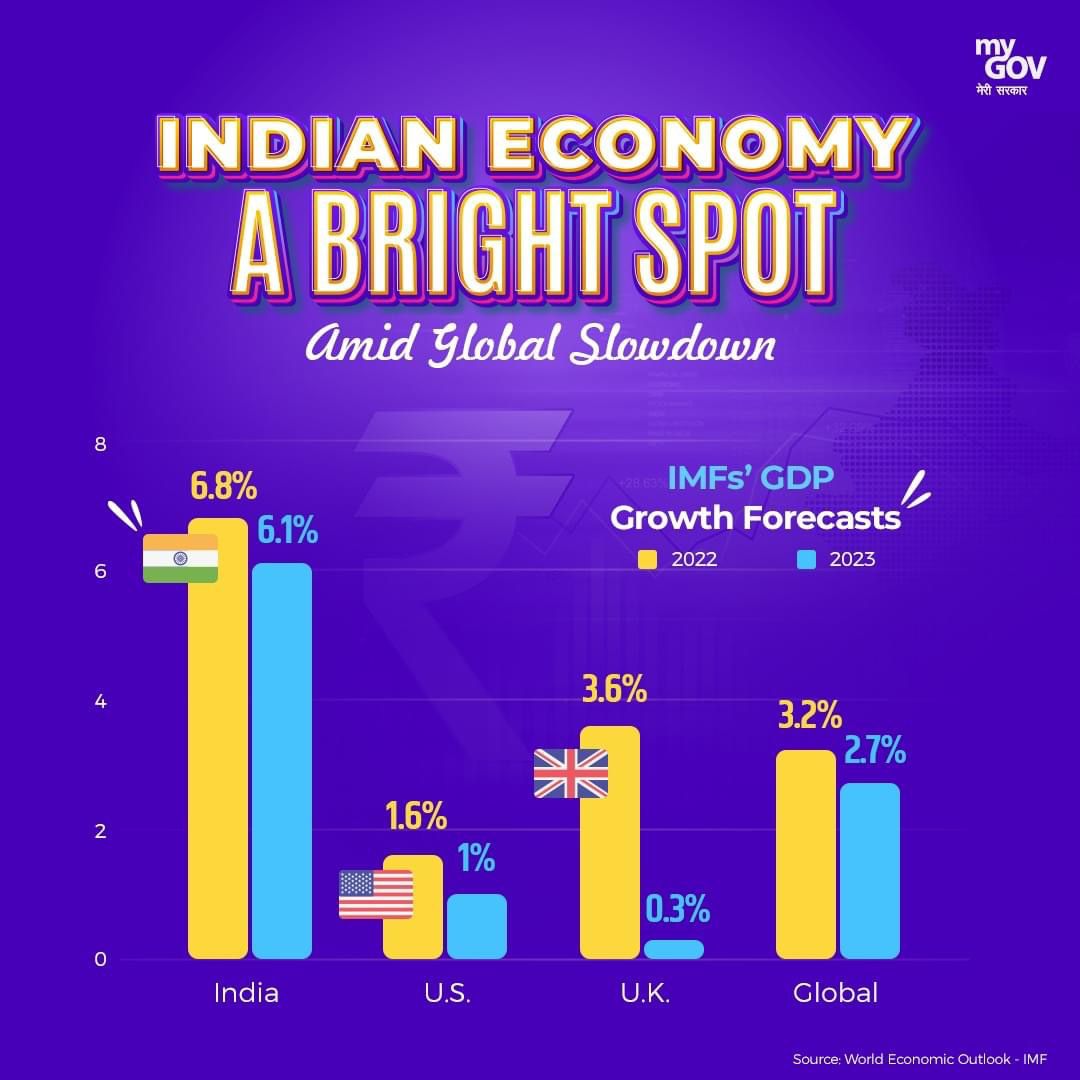
    • IMF reduced the growth forecast: In 2020-21, India’s growth was minus 6.6%, which placed the country in the bottom half of the global growth chart. For 2022-23, the International Monetary Fund has cut India’s growth forecast to 6.1%.

    Economic

    Structural assessment of India’s growth

    • Rising inequality and high unemployment: Most of India’s growth is occurring at the top end, with a few corporations raking in a disproportionate share of profits, and unemployment is so high, it is likely that large segments of the population are actually witnessing negative growth.
    • Slowdown in previous years: What makes India’s growth story worrying is that the slowdown began much before the COVID19 pandemic. It began in 2016, after which, for four consecutive years, the growth rate each year was lower than in the previous year. Growth in 2016-17 was 8.3%. After that it was, respectively, 6.9%, 6.6%, 4.8%, and minus 6.6%.
    • Status of unemployment: India’s unemployment rate is high. In October, it stood at 7.8%. However, what is really worrying is youth unemployment. According to International Labour Organization (ILO) data, collated and presented by the World Bank, India’s youth unemployment, that is, from among people aged 15 to 24 years who are looking for work, the percent that does not find any, stands at 28.3%.

     Know the basics-What is Unemployment?

    • Definition: Unemployment is a phenomenon that occurs when a person who is capable of working and is actively searching for the work is unable to find work.
    • Those who are excluded: People who are either unfit for work due to physical reason or do not want to work are excluded from the category of unemployed.
    • Unemployment rate: The most frequent measure of unemployment is unemployment rate. The unemployment rate is defined as a number of unemployed people divided by the number of people in the labour force.
    • Labour Force: Persons who are either working (or employed) or seeking or available for work (or unemployed) during the reference period together constitute the labour force.

    Economic

    Other perspectives on Indian economy

    • The latest GDP numbers suggest: For Q1 FY2022–23 suggest that economic growth is on a healthy track. Consumers, after a long lull, have started to step out confidently and spend private consumption spending went up 25.9% in Q1.
    • On the production side: the contact-intensive services sector also witnessed a strong rebound of 17.7%, thanks to improving consumer confidence.
    • Healthy agriculture sector: The only sector that consistently performed well throughout the pandemic, remained buoyant.
    • Industrial growth: Industrial growth boosted from accelerating growth in construction and electricity, gas, water supply and other utility services sectors.
    • Manufacturing is not doing well: A sector that has not yet taken off sustainably is manufacturing, which witnessed modest growth of 4.5% in Q1. Higher input costs, supply disruptions, and labor shortages due to reverse migration have weighed on the sector’s growth. According to the Reserve Bank of India’s (RBI’s) data on nonfinancial firms, surging raw material costs have stressed the profitability and margins of companies.

    What are the Challenges for the growth of economy?

    • High inflation: The biggest worry is that of high inflation (which has persisted for way too long) and all the challenges that come along with it. Inflationary environments increase the costs of doing business, impact profitability and margins, and reduce purchasing power. In short, inflation thwarts both supply and demand. Central banks’ monetary policy actions, in response to rising inflation, can impede credit growth and economic activity, thereby intensifying the probability of a recession in a few advanced nations.
    • Rising current account deficit: The other challenge is the rising current-account deficit and currency depreciation against the dollar. While a rebounding domestic economy is resulting in higher imports, moderating global demand is causing exports to slow. The US dollar’s unrelenting rise and global inflation are further causing India’s import bills to rise.
    • Declining forex: The RBI had to intervene to contain volatility and ensure an orderly movement of the rupee. The RBI’s intervention is leading to a drawdown in foreign exchange reserves. Consequently, the import cover from reserves has reduced to nine months from a high of 19 months at the start of 2021 (although, it remains above the benchmark of three months).

    Economic

    The economy’s growth drivers are improving

    • Exports: Exports, the first growth driver are slowing down and are likely to moderate along with the probable global economic slowdown.
    • Government spending: Government spending, the second driver, is already at an elevated level, thanks to the pandemic, and the government will likely focus on its prudence in utilizing limited resources. The good news is the share of capital expenses is going up even as the government is reducing revenue expenses. Multiplier effects of this spending will aid in growth in income, assets, and employment for years to come. Strong tax revenues may support further capital spending in the future.
    • Capital expenditure: According to experts, prospects for capex investments the third growth driver by companies are brighter. Sustained demand growth may be the most-awaited cue for a sustained push for investment.
    • Consumer demand: Consumer Demand, the fourth, and perhaps the most important, growth driver has improved significantly in recent quarters. However, spending has not grown sustainable despite improving consumer confidence. For instance, retail sales are growing but the pace is patchy, and auto registrations have remained muted. We expect that receding pandemic fears and the upcoming festive season could give a much-needed boost to the consumer sector.

    Conclusion

    • Indian economy should not be looked from isolation. It is very much integrated in global economy. Pandemic, Ukraine war, US- China trade war have given a successive shock to global and Indian economy. Despite that Indian has done well than rest of the world. Our focus should be on curbing inequality, not to allow people to descend into extreme poverty and employment generation.

    Mains Question

    Q. Analyse the present economic macro-indicators of Indian economy. What are the challenges for growth story of India in the context of global uncertainty?

    Click and Get your FREE copy of Current Affairs Micro notes


  • Why Private Investment is Lagging in India?

    Private

    Context

    • Last month, Finance Minister asked captains of industry what was holding them back from investing in manufacturing. She likened industry to Lord Hanuman from the Ramayana by stating that industry did not realize its own strength and that it should forge ahead with confidence. She said, “This is the time for India, we cannot miss the bus”.

    What is present situation of private investment?

    • Tax cut rate of domestic companies: In the hope of revitalizing private investment, the government had in September 2019 cut the tax rate for domestic companies from 30% to 22% if they stopped availing of any other tax SOP (standard operating procedure).
    • Weak private investment: Expert says that Indian private sector investment has been weak for almost a decade now. If we look at drivers of economic growth right now, there are amber lights flashing. The export story will be under threat because of the global slowdown, the government’s ability to support domestic demand would also be limited as the fiscal deficit comes down.
    • Impact of k-shaped recovery: Because of the K-shaped recovery, private consumption is only concentrated in some parts of the income pyramid.

    Private

    Analyzing the investment scenario

    • Investment to GDP ratio: As in the June edition of the Ministry of Finance’s Monthly Economic Review, the fixed investment to GDP ratio was 32% in 2021-22. However, there is need for caution in reading the most recent data, as they are subject to revision.
    • The National Accounts Statistics: It provides disaggregation of gross capital formation (GCF) by sectors, type of assets and modes of financing; over 90% of GCF consists of fixed investments.
    • No change in investment distribution: The investment distribution has hardly changed over the last decade, with the public sector’s share remaining 20%.
    • Fall in share of agriculture and industry: Between 2014-15 and 2019-20, the shares of agriculture and industry in fixed capital formation/GDP fell from 7.7% and 33.7% to 6.4% and 32.5%, respectively.
    • Rise in service sectors: Services’ share rose to 52.3% in 2019-20 compared to 49% in 2014-15.The rise in the services sector is almost entirely on transport and communications. The share of transport has doubled from 6.1% to 12.9% during the same period. Within transportation, it is mostly roads.
    • Decline in the share of investment: Its share in the investment ratio (column 2.1) fell from 19.2% in 2011-12 to 16.5% in 2019-20. This indicates that ‘Make in India’ failed to take off, import dependence went up, and India became deindustrialised. Import dependence on China is alarming for critical materials such as fertilizers, bulk drugs (active pharmaceutical ingredients or APIs) and capital goods. Instead of boosting investment and domestic technological capabilities, the ‘Make in India’ campaign frittered away time and resources to raise India’s rank in the World Bank’s Ease of Doing Business Index.
    • Decline in foreign capital in GFC: The contribution of foreign capital to financing GCF fell to 2.5% in 2019-20 from 3.8% in 2014-15 (or 11.1% in 2011-12). With declining investment share, industrial output growth rate fell from 13.1% in 2015-16 to a negative 2.4% in 2019-20, as per the National Accounts Statistics.

    Private

    What is Consumer’s demand situation?

    • Average Consumer sentiment index: Private companies invest when they are able to estimate profits, and that comes from demand. The Centre for Monitoring Indian Economy’s (CMIE) consumer sentiment index is still below pre-pandemic levels but is far higher than what was seen 12-18 months ago.
    • Buoyant Aggregate demand: RBI’s Monetary policy report dated September 30 says, Data for Q2 (ended Sept) indicate that aggregate demand remained buoyant, supported by the ongoing recovery in private consumption and investment demand. It shows that seasonally adjusted capacity utilization rose to 74.3% in Q1 the highest in the last three years.
    • High household savings: Along with household savings intentions remaining high, might hold the key to the investment cycle kicking in.

    Private

    Conclusion

    • Both public and private investment is necessary for sustainable growth trajectory of any economy. Global uncertainty, Ukraine war, oil prices have added to the skepticism of private investors. However, India’s macroeconomic performance is much better than those of developed and developing economies. Private investors must take these into account before holding back their investment.

    Mains Question

    Q. What role private investment plays in Indian economy? Analyse the post-pandemic private investment situation in India?

    UPSC 2023 countdown has begun! Get your personal guidance plan now! (Click here)

  • Oil and Dollar, Rising Prices and Impact on India

    dollar

    Context

    • The two major irritants for India this year have been oil and the dollar. The two are a heady cocktail that has distorted all economic forecasts creating volatility that has never been witnessed earlier. Their impact is being felt across bond and stock markets, affecting the entire system. As a result, the RBI and the government have had to work overtime to mitigate the adverse effects on the economy.

    dollar

    What is the current oil prices situation?

    • Unpredictable Prices: When the Ukraine war broke out, oil crossed the $120 mark (in April and again in June). It was expected that $150 was not far off. However, the range of $100-110 was restored and soon enough the price was back to the Nineties as all global commodity prices cooled off, even as the Ukraine war continued.
    • Rising requirement of Europe: With the winter months approaching and Europe dependent on natural gas for heating, which now appears to be in jeopardy due to Russia turning off the taps, oil has received a boost even though the continent is looking more at coal.
    • Reduction in production by OPEC: Add to this the fact that OPEC and its allies have decided to lower production by 2 million barrels a day and there is panic again. This shock is external over which neither the government nor RBI have any control.
    • Growing Import Bills: High oil prices mean many things. Crude has a share of 30-33 per cent in total imports and any hike in prices increases the import bill. With exports declining due to the slowdown in global growth and imports increasing due to oil, the trade deficit and current account deficit will widen further. The trade deficit for the first half is $150 billion and can touch $300 billion this year at this strike rate.
    • Possibility of Balance of Payment: This creates a problem for the current account deficit with components like software and remittances slowing down due to the recession in the west. Therefore, a balance of payments problem will surface. Ultimately it depends on how high oil will go. The RBI has assumed a $100/barrel. This looks reasonable at this point, but anything higher can create problems on the currency front.
    • Increasing Inflation: Inflation per se will be an issue when prices are left to the market like ATF or LPG. But in the case of petrol and diesel, it will be a conundrum for the government. If the status quo prevails on price transmission, then oil marketing companies will have to bear the losses. If the government allows the market to correct, inflation will increase as it will also feed into intermediary costs such as freight.
    • Higher input cost: User industries of oil like chemicals, plastics and fertilizers will face a problem again. Higher input costs will put pressure on profit margins and any pass through will be inflationary.
    • Windfall tax may increase: The government would probably once again revisit the windfall tax on crude (as has been recently done) to examine if there is any additional revenue to be garnered. Such an environment always tends to spook markets.
    • Rising bond yields: Bond yields move up every time oil prices rise while stock markets turn volatile normally in the downward direction.

    dollar

    How rising dollar prices affects India?

    • Rupee is weakening: There is the dollar conundrum which should be seen in conjunction with the oil. The dollar has been strengthening against all currencies. As the Fed tightens rates, which will carry on through 2023, the dollar will become stronger. Other countries are already in a weak economic zone and are tightening rates with a lag. The rupee is bearing the brunt of this development. There is no escape as the RBI intervention in any form can only temporarily support the decline in the rupee. In the last month or so, since the rupee crossed the 80 mark and gone past 83.
    • Negative sentiment of market: Another factor that will complicate matters is expectations. The recent news, for example, of global players deciding not to include Indian bonds in global indices might add to the negative sentiment in the market and exert pressure on the rupee.
    • Imported inflation: The rupee depreciation also leads to importing inflation. All goods imported will come in at a higher rupee cost which will in turn push the RBI to act further.
    • Less possibility of high export: The weak rupee may not quite help exports because the competitive advantage that normally comes along with such depreciation would be low given that other currencies are also declining.
    • Trade deficit will rise: Imports are unlikely to slow down as a growing economy requires inputs and raw materials. This will mean further pressure on the trade deficit. The government will gain at the margin as customs collections increase.
    • Volatile investors: The critical reaction will be that of investors. If foreign portfolio investors withdraw then there will be further pressure on the rupee while inflows would help to cushion the rupee.
    • Centre may lose on revenue: State governments will be better off as their VAT collections would increase automatically. However, the Centre may not gain as the excise duty is a fixed rate.

    Conclusion

    • One can never tell as almost all forecasters have been proved wrong this year. The theory that RBI can intervene and protect certain levels of currency has its limitations. These travails have to be responded to as they cannot be controlled.

    Mains Question

    Q. How rising dollar and oil prices affects the macroeconomic stability in India? What are the steps taken by RBI and GOI to manage the macroeconomic stability?

    UPSC 2023 countdown has begun! Get your personal guidance plan now! (Click here)