💥Join UPSC 2027,2028 Mentorship (July Batch) + XFactor Notes & Microthemes PDF

GS Paper: Population & Associated Issues

  • A story of displacement to one of empowerment

    Why in the news?

    Over 45% of Sri Lankan Tamils in Tamil Nadu’s rehabilitation camps were born in India, per a recent interim report by a State government panel.

    Causes of Tamilian Displacement

    • Ethnocentric Violence: The primary cause of displacement was the ethnocentric violence in Sri Lanka, particularly against the Tamil population. The violence led to significant loss of life and property, forcing Tamils to flee for their safety.
    • Proximity and Linguistic Commonality: Many Tamils chose India, particularly Tamil Nadu, due to its geographical proximity and the shared Tamil language, making it a more accessible and familiar refuge.

    Government Initiatives

    • Provision of Basic Amenities: Refugees receive free housing, electricity, water, and monthly food rations. Additionally, they get a monthly cash dole.
    • Educational Support: Access to government schools is provided, along with a monthly stipend of ₹1,000 for those pursuing higher education. One-time educational support includes ₹12,000 for arts and science students and ₹50,000 for engineering students.
    • Welfare Schemes: Refugees are eligible for various welfare schemes available to the people of Tamil Nadu, including the women’s rights scheme providing ₹1,000 per month.
    • New Housing: Recently, the Government of Tamil Nadu has constructed new homes for about 5,000 Sri Lankan Tamils.
    • Renaming Camps: In an effort to destigmatise, the refugee camps were renamed as Sri Lankan Tamil Rehabilitation Camps in a government order dated October 28, 2021.

    Bringing Back Dignity

    • Educational Achievements: The welfare schemes have led to 100% school enrollment and over 4,500 graduates from the camps.
    • Breaking Caste Barriers: As refugees, Sri Lankan Tamils are categorized under the Refugee category, which has helped in break free from caste barriers.
    • Government Recognition: The renaming of refugee camps to Sri Lankan Tamil Rehabilitation Camps is a step towards restoring the dignity of the displaced population.
    • Advocacy and Support: Continuous advocacy by organizations like OfERR, support from donors, and political parties have facilitated the patronage extended by the Government of Tamil Nadu and the Government of India.
    • Potential for Future Contribution: The transformation of refugees into resource persons capable of contributing to nation-building when they return to Sri Lanka.

    Current Challenges

    • Legal Limitations: Indian laws currently do not permit local integration by granting citizenship to Sri Lankan refugees.
    • Economic and Health Crises: The COVID-19 pandemic and the economic crisis in Sri Lanka have slowed down the process of refugees returning to their homeland.
    • Uncertain Future: Despite the improvements in their living conditions and dignity, Sri Lankan Tamils in India continue to live with uncertainty about their long-term future.

    Way forward:

    • Amend Legal Frameworks: Advocate for amendments in Indian laws to allow for local integration and citizenship for long-term refugees, providing them with a secure legal status and equal rights.
    • Strengthen Economic Opportunities: Develop targeted economic empowerment programs, including vocational training and employment initiatives, to enhance self-sufficiency and reduce dependency on state support, ensuring a sustainable livelihood for the refugees.

    Mains PYQ: 

    Q ‘India is an age-old friend of Sri Lanka.’ Discuss India’s role in the recent crisis in Sri Lanka in the light of the preceding statement. (UPSC IAS/2022)

  • Women often outlive men but in poorer health: what new Lancet study says

    Why in the news?

    Over 30 years, a study examining 20 diseases revealed minimal advancements in narrowing the disparity between genders as per “the Lancet Public Health Journal”.

    What does the New Lancet report say?

    • On Health Disparities: The study highlights that women tend to suffer more from lower back pain, depression, and headaches, while men have shorter life expectancies due to higher rates of road accidents, cardiovascular diseases, and, recently, COVID-19.
    • On Health Burden: Women spend more time in poor health, while men are more likely to die prematurely from severe conditions.
    • Overall Global Analysis: The analysis examines differences in the 20 leading causes of illness and death globally, considering all ages and regions.

    What Causes the Differences in Diseases Between Women and Men? (Observations)

    • Biological Factors:
        • Hormonal Differences: Hormonal fluctuations in women, such as during menstrual cycles, pregnancy, and menopause, can influence susceptibility to certain conditions like migraines, depression, and autoimmune diseases.
        • Genetic Variations: Variations in genes and genetic predispositions may contribute to differences in disease susceptibility and severity between sexes.
        • Anatomical Variances: Physiological differences, such as in skeletal structure and hormonal regulation, can affect the manifestation of certain diseases like lower back pain and reproductive disorders.
    • Societal and Gender Norms:
        • Healthcare-Seeking: Societal norms and gender roles may influence healthcare-seeking behaviors, with men often less likely to seek medical attention for mental health issues due to perceived notions of masculinity.
        • Occupational Hazards: Occupational differences between genders can lead to varying exposures to health risks, with certain professions associated with higher rates of injury or exposure to harmful substances.
        • Socioeconomic Factors: Disparities in socioeconomic status can impact disease prevalence and outcomes differently for women and men.
    • Healthcare System Bias:
        • Diagnostic Bias: Gender biases in healthcare may result in underdiagnosis or misdiagnosis of certain conditions in women, leading to delays in treatment and poorer health outcomes.
        • Treatment Disparities: Differences in treatment approaches and responses may exist between sexes, with women sometimes receiving less aggressive treatment for cardiovascular diseases or being undertreated for pain conditions.
        • Research Bias: Historically, medical research has often focused on male subjects, leading to a lack of understanding of how diseases manifest and progress differently in women.
    • No Improvement in Care for Women Over Time
      • Stable Gender Gap: Despite overall health improvements, the disparity between male and female health conditions remains stable.
      • Conditions Affecting Women: Conditions like lower back pain and depressive disorders have shown little to no decrease over time compared to male-dominated conditions.
      • Reproductive Focus: Global health systems have historically focused on women’s reproductive health, neglecting other significant health issues affecting women.

    What Needs to Be Done (Way Forward)

    • Better Data Collection: Governments should consistently collect and categorize health data by sex and gender to better understand and address health disparities.
    • Targeted Health Interventions: Specific health interventions should be developed and implemented based on detailed sex and gender data.
    • Increased Funding: More financial resources should be allocated to underfunded conditions that disproportionately affect women, such as mental health.
    • Addressing Healthcare Bias: Efforts should be made to eliminate biases in healthcare to ensure women receive appropriate and timely treatment for their conditions.

    Mains PYQ: 

    Q Can the vicious cycle of gender inequality, poverty and malnutrition be broken through microfinancing of women SHGs? Explain with examples. (UPSC IAS/2021)

  • Chin-Kuki-Zo Tribes: Backdrop of Ethnic Conflict in Manipur

    Why in the news?

    Manipur CM took it to social media where he alleged an “unnatural growth” in the population of the “Chin-Kuki-Zo” tribes in the state, posing a perceived threat to indigenous communities and national security.

    About Chin-Kuki-Zo Tribes

    Chin Tribe Kuki Tribe Zo Tribe
    Ethnic Composition Major ethnic group in Myanmar’s Chin State; known for distinct customs and language. Heterogeneous group in Northeast India; recognized for diverse subtribes. Diverse ethnic group in Northeast India, Myanmar, and parts of Bangladesh.
    Geographical Distribution Primarily in Myanmar’s Chin State; significant populations in Indian states like Mizoram. Mainly in Northeast India; also found in Chin State, Myanmar. Inhabits Northeast India, particularly Mizoram and Manipur; also in parts of Myanmar and Bangladesh.
    Language Chin language, part of Kuki-Chin subgroup of Tibeto-Burman family. Kuki-Chin languages; various dialects with distinct variations. Mizo-Kuki-Chin languages; different dialects within Tibeto-Burman family.
    Culture and Traditions Vibrant music, dance, festivals; celebrates Chin National Day. Rich oral traditions, folk music; celebrates festivals like Chavang Kut. Rich oral literature, vibrant festivals; celebrates Chapchar Kut and Mim Kut.
    Livelihood Historically practiced subsistence agriculture; now diversified livelihoods. Historically practiced shifting (Jhum) cultivation; now engaged in various occupations. Historically practiced shifting (Jhum) cultivation; now diverse livelihood patterns.
    Religion Predominantly Christianity with some traditional animistic beliefs. Predominantly Christianity with traditional animistic practices. Predominantly Christianity with remnants of traditional beliefs.
    Socio-Political Organization Advocates for cultural identity and rights; e.g., Chin National Front. Promotes Kuki identity; active organizations like Kuki National Organization. Promotes Zo identity; e.g., Zomi Council and Mizo Zirlai Pawl.

    Issues with their migration

    The Chin-Kuki-Zo tribes in Manipur are contributing to the conflict in the state due to various factors.

    • There have been longstanding demands from various tribal groups for greater recognition of their ethnic identity and autonomy within Manipur.
    • Land ownership and control are significant issues among the Chin-Kuki-Zo tribes in Manipur.
    [2016]  Consider the following pairs: (2016)

    Community sometimes  mentioned in the news In the affairs of
    1. Kurd Bangladesh
    2. Madhesi Nepal
    3. Rohingya Myanmar

    Which of the pairs given above is/are correctly matched?

    (a) 1 and 2
    (b) 2 only
    (c) 2 and 3
    (d) 3 only

  • Shompen PVTGs cast their vote for the First Time

    Why in the news?

    For the first time in Andaman and Nicobar Islands, 7 members of the Shompen tribe, a particularly vulnerable tribal groups (PVTGs) of Great Nicobar Islands exercised their voting rights for the lone Lok Sabha seat in the union territory.

    Other two primitive tribes like Onge and Great Andamanese (both PVTGs) too exercised their voting rights like in 2019 Lok Sabha election but seven Shompen did it for the first time out of 98 Shompen voters.

    About Shompen Tribe:

    • The Shompen tribe primarily inhabits the remote interior regions of Great Nicobar Island, the southernmost island in the Andaman and Nicobar archipelago.
    • Their estimated population was 229 as per the 2011 Census data.

    • Their cultural practices include traditional hunting, fishing, and gathering forest resources.
    • Pandanus (a tropical plant found in the islands), whose fruits resemble the woody pineapple, is the staple food of the Shompens.
    • What makes the Shompens distinct from the four other PVTGs of Andaman and Nicobar Islands — Jarawas, Great Andamanese, Onges and Sentinelese — is that they are the only tribe in the region with Mongoloid features. The other PVTGs have Negroid features.

    Society and Culture

    • The Shompen people have their own distinct culture and language, which belongs to the Austroasiatic language family. 
    • Marriage by capturing women from different groups and sub-groups is one of the customs of the Shompen society (as per the Anthropological Survey of India).
    • They practice a hunter-gatherer subsistence economy.

    Who are the Particularly Vulnerable Tribal Groups (PVTGs)?

    • These groups are among the most vulnerable section of our society as they are few in numbers, have not attained any significant level of social and economic development.
    • They generally inhabit remote localities having poor infrastructure and administrative support.
    • 75 such groups have been identified and categorized as Particularly Vulnerable Tribal Groups (PVTGs).

    Origin of the concept

    • The Dhebar Commission (1960-1961) stated that within Scheduled Tribes there existed an inequality in the rate of development.
    • During the fourth Five Year Plan (1969-74) a sub-category was created within Scheduled Tribes to identify groups that considered to be at a lower level of development.
    • This sub-category was named “Primitive tribal group”.
    • In 2006 the government of India proposed to rename as PVTGs.

    Features of PVTGs

    • The features of such a group include a:
    1. Pre-agricultural system of existence
    2. Practice of hunting and gathering
    3. Zero or negative population growth
    4. Extremely low level of literacy in comparison with other tribal groups
    • Groups that satisfied any one of the criterion were considered as PTG.


    PYQ:

    [2019] Consider the following statements about Particularly Vulnerable Tribal Groups (PVTGs) in India:

    1. PVTGs reside in 18 States and one Union Territory.
    2. A stagnant or declining population is one of the criteria for determining PVTG status.
    3. There are 95 PVTGs officially notified in the country so far.
    4. Irular and Konda Reddi tribes are included in the list of PVTGs.

    Which of the statements given above are correct?

    (a) 1, 2 and 3

    (b) 2, 3 and 4

    (c) 1, 2 and 4

    (d) 1, 3 and 4

  • Charting a path for the population committee

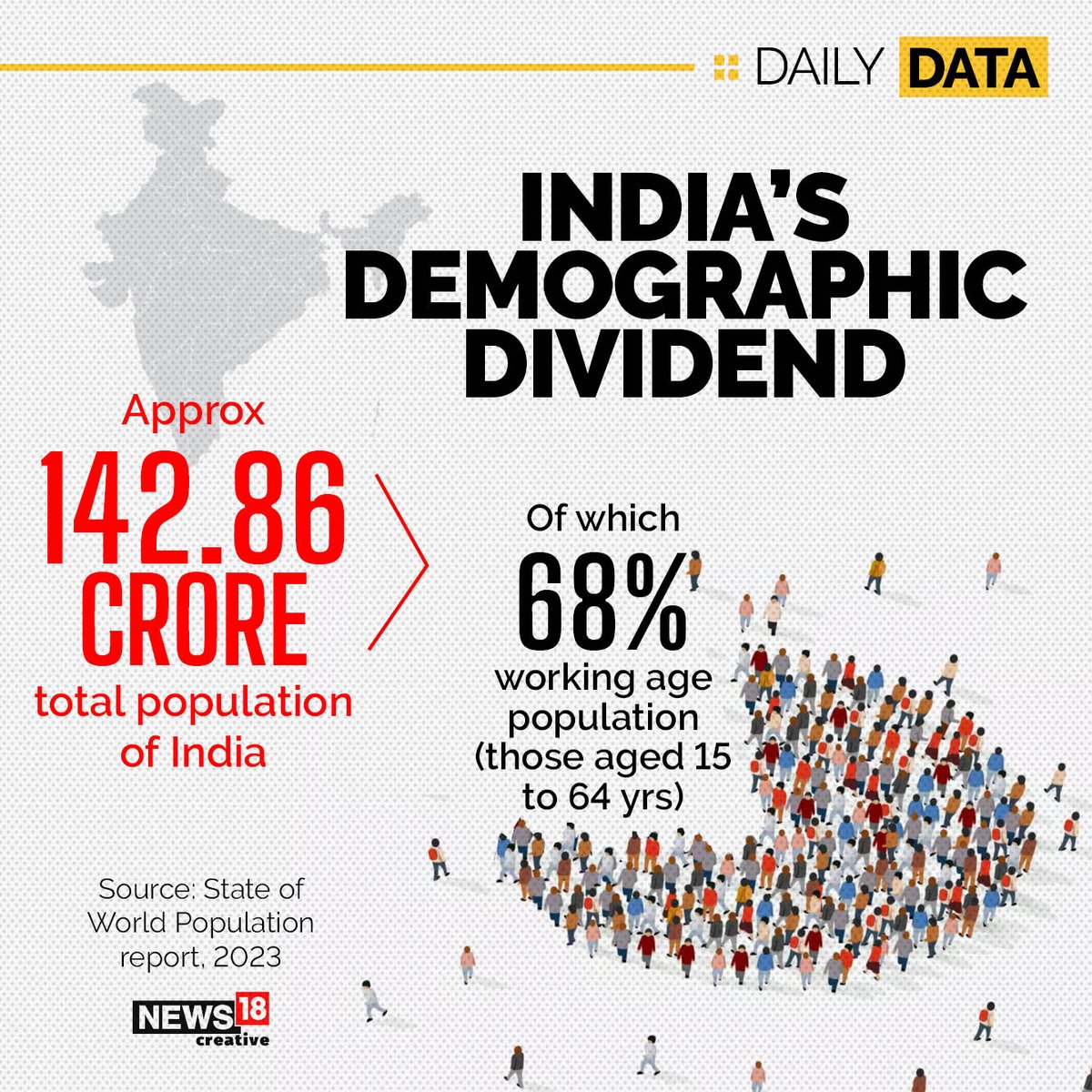
    News18 on X: "Take a look at India's demographic dividend #population #india #worldpopulation https://t.co/h2oZM74V1n" / X

    Central Idea:

    The article emphasizes the importance of addressing the challenges and harnessing the opportunities presented by India’s rapidly changing demographic landscape through strategic policies and investments in health, education, employment, and data infrastructure.

    Key Highlights:

    • Introduction of a high-powered committee to address challenges arising from rapid population growth.
    • Need for interdisciplinary approach involving experts from various fields.
    • Importance of data analysis and monitoring demographic trends.
    • Emphasis on collaboration with stakeholders for effective policy implementation.
    • Highlighting demographic shifts and their implications for economic growth.
    • Focus on maximizing the demographic dividend through investments in human capital.
    • Challenges in healthcare, education, and employment sectors.
    • Importance of evidence-based decision making and data infrastructure.
    • Collaboration with international organizations for best practices and funding opportunities.

    Key Challenges:

    • Limited public spending on healthcare and education.
    • Persistent challenges in nutritional deprivation and access to quality education.
    • Disruptions caused by the COVID-19 pandemic.
    • Lack of accurate and timely demographic data.
    • Need for modernization of data infrastructure and capacity building.
    • Ensuring reliability and accuracy of population data.
    • Bridging the gap between skill development initiatives and industry requirements.

    Key Terms and Phrases:

    • Demographic transition
    • Population committee
    • Interdisciplinary approach
    • Demographic dividend
    • Evidence-based policy
    • Data infrastructure
    • Human capital
    • Skill development
    • Stakeholder collaboration
    • Economic growth

    Case Studies and Best Practices:

    • The successful implementation of the National Rural Health Mission in improving primary healthcare in rural areas.
    • The Mid-Day Meal Scheme ensuring access to nutritious meals for school children, contributing to improved health and educational outcomes.
    • The Aadhaar initiative in India, which has streamlined government services and facilitated targeted interventions in various sectors, including healthcare and education.
    • The Pradhan Mantri Kaushal Vikas Yojana (PMKVY), a skill development initiative aimed at providing industry-relevant training to youth, enhancing their employability.
    • The ASER (Annual Status of Education Report) survey providing valuable insights into the quality of education in rural India and informing policy decisions for improvement.

    Key Quotes and Anecdotes:

    • “India’s demographic landscape presents both opportunities and challenges for the country’s socio-economic development.”
    • “Investments in health, education, and skill development are crucial to realizing India’s demographic dividend.”
    • “Collaboration with international organizations can provide access to global best practices and technical expertise.”

    Key Statements and Examples:

    • India’s population committee aims to formulate policies addressing challenges like family planning and socio-economic development.
    • The demographic dividend offers an opportunity for accelerated economic growth but requires investments in human capital.
    • Limited public spending on healthcare and education underscores the need for policy prioritization in these sectors.

    Key Facts and Data:

    • India’s population is projected to reach 1.46 billion by 2030.
    • Public spending on health has remained around 1% of GDP.
    • Nearly 47% of Indian youth may lack necessary education and skills for employment by 2030.
    • Over 250 million children were forced out of school due to the COVID-19 pandemic.

    Critical Analysis:

    • The article effectively highlights the interconnectedness of demographic factors with economic and social development.
    • It underscores the importance of evidence-based policymaking and the challenges in data availability and reliability.
    • The emphasis on collaboration with stakeholders and international organizations reflects a comprehensive approach to addressing demographic challenges.

    Way Forward:

    • Prioritize investments in health, education, and skill development.
    • Modernize data infrastructure and improve data collection methodologies.
    • Strengthen collaboration with stakeholders and international organizations.
    • Implement policies that promote transparency, accountability, and inclusivity.
    • Focus on bridging the gap between existing initiatives and industry requirements to enhance employment opportunities.
  • Population growth committee: Move beyond Emergency-era fears


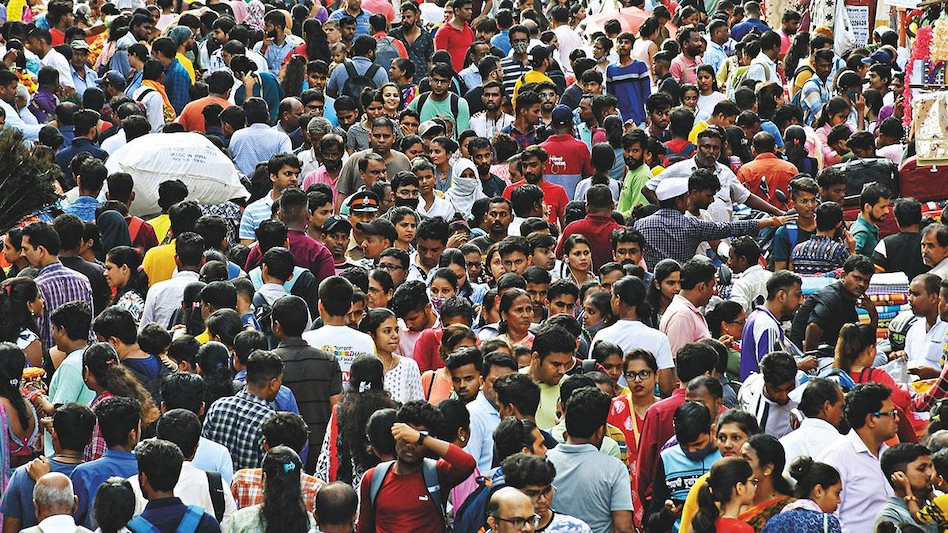
    India's population has overtaken China, but historic problems continue to  plague the nation - BusinessToday - Issue Date: May 28, 2023

    Central Idea:

    The article discusses India’s demographic transformation and the need for proactive policies to address opportunities and challenges arising from changing population dynamics.

    Key Highlights:

    • India’s population growth trends are being studied to align policies with the Viksit Bharat goal by 2047.
    • Fertility rates have decreased, and family planning is becoming more prevalent.
    • The workforce is changing, with an increase in middle-aged workers projected by 2047.
    • Dependency burdens vary between states, requiring tailored policy interventions.
    • There is an opportunity to enhance women’s workforce participation by providing better childcare support.
    • Lessons from China’s one-child policy caution against drastic measures.

    Key Challenges:

    • Varying demographic trends between states pose challenges for policy formulation.
    • Ensuring equitable workforce development and gender-inclusive policies.
    • Addressing the needs of the growing elderly population while maintaining economic sustainability.
    • Avoiding the negative consequences of drastic population control measures.

    Key Terms:

    • Demographic transformation
    • Fertility rates
    • Family planning
    • Workforce dynamics
    • Dependency burdens
    • Women’s workforce participation
    • One-child policy

    Key Phrases:

    • Changing population dynamics
    • Tailored policy interventions
    • Workforce inclusivity
    • Sustainable economic development
    • Lessons learned

    Key Quotes:

    • “Today, we are studying India’s population growth to align policies with the Viksit Bharat goal by 2047.”
    • “There’s an opportunity to enhance women’s workforce participation by providing better childcare support.”
    • “Lessons from China’s one-child policy caution against drastic measures.”

    Anecdotes/Case Studies:

    • The comparison with China’s one-child policy illustrates the importance of cautious policy measures in managing population dynamics.

    Key Statements:

    • “India’s population growth trends are being studied to align policies with the Viksit Bharat goal by 2047.”
    • “There’s an opportunity to enhance women’s workforce participation by providing better childcare support.”

    Key Examples and References:

    • Comparative data on workforce demographics and dependency burdens between states provide concrete examples of demographic variations.
    • The reference to China’s one-child policy serves as a cautionary example.

    Key Facts/Data:

    • India’s fertility rates have decreased significantly in recent years.
    • Dependency burdens vary significantly between states.
    • Women’s workforce participation rates could be improved with better childcare support.

    Critical Analysis:

    The article provides a balanced assessment of India’s demographic challenges and opportunities, cautioning against drastic measures while advocating for proactive policies.

    Way Forward:

    • Tailored policy interventions should address varying demographic trends between states.
    • Gender-inclusive policies and better childcare support can enhance women’s workforce participation.
    • Lessons from global best practices should inform India’s approach to demographic management.
    • Caution should be exercised to avoid the negative consequences of drastic population control measures.
  • Early nutrition impacts cognitive development

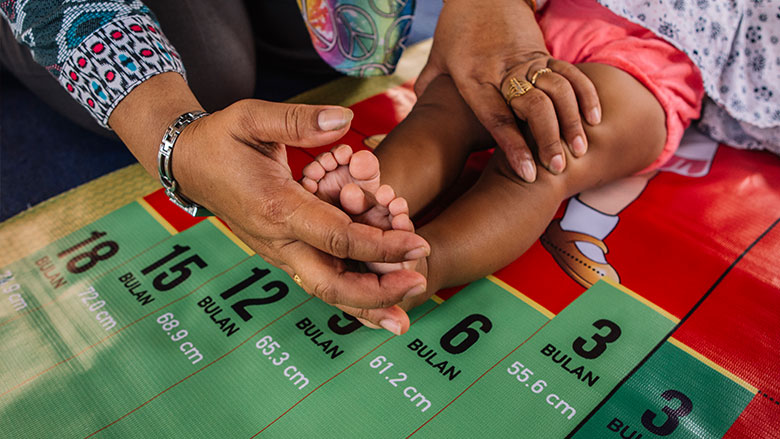
    Indonesia Accelerates Fight Against Childhood Stunting

    Central Idea:

    Early childhood stunting not only impacts a child’s height but also influences cognitive development, potentially leading to lower educational achievements. The article emphasizes the importance of understanding the underlying mechanisms of this impact, particularly in low- and middle-income countries like India. It discusses a recent study in Ethiopia and Peru, highlighting the negative correlation between stunting at age 5 and later cognitive skills, specifically executive functions. The findings underscore the critical role of early childhood nutrition in determining cognitive development and educational outcomes.

    Key Highlights:

    • Stunting at around age 5 is linked to lower executive functions, including working memory and inhibitory control, in later childhood.
    • Traditional cognitive-achievement tests may not fully capture inherent cognitive skills, and stunting’s impact may extend beyond cognitive deficits to include behavioral factors like delayed school enrollment.
    • The article highlights the need for a deeper understanding of the mechanisms through which stunting affects educational achievements, especially in the context of low- and middle-income countries.

    Key Challenges:

    • Existing research often focuses on specific cognitive-achievement test scores, making it challenging to fully understand the complex relationship between early human capital investments, such as nutrition, and cognitive development.
    • Achieving a comprehensive assessment of cognitive skills is complicated by the interplay of cognitive abilities, educational access, and other behavioral factors.
    • The article stresses the need to move beyond traditional cognitive-achievement tests and focus on a deeper understanding of the mechanisms linking early human capital investments to cognitive development.

    Key Terms and Phrases:

    • Early childhood stunting
    • Cognitive development
    • Executive functions
    • Behavioral factors
    • Household fixed effects
    • Poshan Abhiyaan
    • Integrated Child Development Services
    • Jal Jeevan Mission
    • Swachh Bharat Mission
    • Mother’s Absolute Affection Programme
    • Complementary feeding
    • Anganwadi worker

    Key Quotes:

    • “Stunting at approximately age 5 is negatively related to executive functions measured years later.”
    • “Empirical studies have shown that women’s height and educational attainment are strong predictors of child stunting in India.”
    • “Improvements in sanitation reduce the incidence of diarrhoea and stunting.”
    • “Promoting early breastfeeding, along with continued breastfeeding for two years, is essential for optimal child development.”

    Key Statements:

    • The study in Ethiopia and Peru establishes a negative correlation between stunting at age 5 and later cognitive skills, emphasizing the long-term impact of early childhood stunting.
    • The article stresses the need to move beyond traditional cognitive-achievement tests and focus on a deeper understanding of the mechanisms linking early human capital investments to cognitive development.

    Key Examples and References:

    • Sánchez et al.’s study in ‘World Development’ linking early under-nutrition to executive functions in Ethiopia and Peru.
    • The role of initiatives like Poshan Abhiyaan, Integrated Child Development Services, Jal Jeevan Mission, and Swachh Bharat Mission in addressing stunting in India.

    Key Facts and Data:

    • The study in Ethiopia and Peru provides evidence of the negative relationship between stunting at age 5 and executive functions.
    • Empirical studies highlight the predictive role of women’s height and educational attainment in child stunting in India.

    Critical Analysis:

    The article effectively highlights the limitations of traditional cognitive-achievement tests in assessing the impact of early human capital investments on cognitive development. It emphasizes the need for a more nuanced understanding of the complex factors contributing to lower educational achievements, particularly in low- and middle-income countries. The study’s focus on executive functions and the link between stunting and cognitive skills adds valuable insights to the existing literature.

    Way Forward:

    • Expand initiatives like the Mother’s Absolute Affection Programme to provide comprehensive lactation support and create breastfeeding-friendly environments.
    • Implement and scale up community-based complementary feeding programs to educate parents about the importance of a diverse diet for children.
    • Consider adding an extra Anganwadi worker to each center to enhance preschool instructional time, potentially improving developmental outcomes and creating employment opportunities.

    In summary, addressing child stunting in India requires a multifaceted approach, including comprehensive nutrition initiatives, sanitation improvements, and strategic investments in education and childcare services. The article underscores the need for evidence-based policies to enhance early childhood nutrition and cognitive development.

  • India’s Transition in Slum Definitions

    slum

    Central Idea

    • Research Citation: Nipesh Narayanan’s research, published in the Economic & Political Weekly on October 21, 2023, delves into the changing conceptualization of slums in Indian parliamentary debates from 1953 to 2014.
    • Policy on Slums: These shifting narratives have significantly influenced government policies and approaches towards slums.

    Evolution of Discourses on Slums

    • Parliamentary Debates Analysis: Narayanan analyzed 1,228 debates in the Rajya Sabha and various policy documents, including Five-Year Plans, to trace the evolution of discourses surrounding slums.
    • Dynamic Definitions: The study highlights the fluid nature of slum definitions and the tendency to overlook urban disparity as a causal factor in slum formation.

    Eras of Changing Perspectives

    1. 1950s-1960s: Initially, slums were seen as a by-product of partition and rapid urbanization. The focus was on eradication due to health concerns and spatial constraints, side-lining socio-economic factors like migration. The Slum Areas Act of 1956 marked a significant shift, allowing government intervention in slum areas.
    2. Early 1970s-Mid-1980s: The narrative shifted to viewing slums as necessary evils requiring development rather than eradication. Town planning emerged as a key tool, pushing slums to city peripheries and prioritizing basic amenities over demolition.
    3. Mid-1980s-Late 1990s: With the National Commission on Urbanisation’s report in 1985, cities and slums began to be seen as economic assets. This era saw a focus on housing policies and infrastructure development, with economic reasoning driving interventions.
    4. 2000s-2014: The 2001 Census provided comprehensive data on slums, leading to targeted schemes. Slums transitioned from social concerns to technical, economic objects. The focus was on upgradation strategies, legal rights, and property rights for slum dwellers.

    Slum Formation and Government Response

    • Causality and Complexity: The research identifies urban planning issues, population growth, land pressure, and housing affordability as key factors in slum formation.
    • Government Role: The Union government’s role shifted to funding State governments for urban improvement, with a focus on data-driven policies.

    Technocratic Solutions and Challenges

    • Technological Reliance: The increasing dependence on technological solutions for urban issues is evident in current government policies.
    • Critical Examination: The article warns against using slums merely as a tool for anti-poverty policies and emphasizes understanding slum formation beyond numerical data.

    Conclusion

    • Historical Insights: Narayanan’s analysis provides valuable insights into the historical shifts in government perceptions and actions towards slums.
    • Significance for Urban Studies: This research contributes significantly to the understanding of urban dynamics, socio-economic inequalities, and the complexities of slum life in India.
  • The world is getting older. Can India cope?


    Central idea

    India is becoming the most populous country soon, but it’s also aging rapidly. This brings challenges like fewer workers and a changed global role. To tackle this, we need plans for more kids, strategies for the elderly, and preparations for India’s new place in the world.

    Key Highlights:

    • India is set to become the most populous country by 2027, surpassing China.
    • The global trend is “greying,” with aging populations becoming more prevalent.
    • India’s elderly population is expected to double by 2050, constituting 20% of the total population.
    • Fertility rates are declining in both developed and developing countries, affecting the old age dependency ratio.
    • The world is witnessing a geopolitical shift, with India, Nigeria, China, and the US projected as dominant powers by 2100.

    Challenges and Concerns:

    • Aging populations mean fewer workers and taxpayers, impacting a country’s ability to generate wealth.
    • Declining fertility rates pose economic challenges, especially in developing countries like India.
    • The elderly population’s growth presents significant implications for health, economy, and society.
    • Developed countries had a higher per capita income when their populations aged, unlike developing countries like India.
    • A potential decline in India’s population by the turn of the century could impact its geopolitical standing.

    Analysis:

    • The article underscores the importance of understanding and addressing the challenges posed by aging populations and declining fertility rates.
    • It emphasizes the need for comprehensive strategies to handle the economic and societal impacts of these demographic shifts.
    • The geopolitical reorganization highlighted suggests a shift in power dynamics, with factors like immigration and reproductive rights playing crucial roles.

    Key Data and Facts:

    • India’s elderly population is expected to grow by 41% between 2021 and 2031.
    • The share of older persons in India will double to 20.8% by 2050, with 347 million elderly individuals.
    • Fertility rates in urban India are comparable to developed countries, with a rate of 1.6.
    • By 2100, China’s population is projected to decline significantly, impacting its geopolitical influence.
    • Japan and South Korea are the world’s fastest-aging countries, with South Korea holding the world’s lowest fertility rate.

    Way Forward:

    • Address declining fertility rates through policies that support work-life balance, childcare, and reproductive choice.
    • Develop strategies to manage the economic and healthcare challenges associated with an aging population.
    • Consider the geopolitical implications of demographic shifts and plan for a future where India plays a crucial role.
    • Emphasize the importance of immigration and reproductive rights for women in shaping the global power structure.
    • Encourage a holistic approach to demographics, taking into account societal, economic, and geopolitical factors.
  • India has ignored infertility for too long

    Central idea 

    The article discusses the overlooked issue of infertility in India’s population policies, emphasizing its social and cultural implications, particularly for women. It argues that addressing infertility as a public health concern is crucial for achieving a balanced approach to fertility control and reproductive autonomy.

    Key Highlights:

    • Infertility Stigma: Vimlesh faced societal pressure and anxiety due to her perceived infertility, particularly in producing a male child.
    • Reproductive Governance: Indian population policies historically focus on contraception, overlooking the prevalence of infertility and related reproductive rights.
    • Social Impact: Infertility in patriarchal societies like Rajasthan leads to women’s marginalization, impacting their value in households and access to resources.
    • Health-Seeking Behavior: Women seek healers for fertility, challenging epidemiological notions and emphasizing the social and economic dimensions of reproductive well-being.
    • Global Perspective: A World Health Organization report indicates that 1 in 6 people worldwide faces infertility issues, contributing to global demographic challenges.

    Challenges and Concerns:

    • Marginalization: Infertile women in India face marginalization, avoidance, and reduced access to resources, impacting their overall well-being.
    • Narrow Focus: Reproductive health policies predominantly focus on contraception, neglecting the broader issues of infertility and reproductive autonomy.
    • Lack of Data: The absence of significant quantitative data in the region compromises the reproductive health rights of women, especially in poorer communities.
    • Inaccessible Treatment: Expensive fertility treatments remain out of reach for many, denying poorer individuals their rights to become parents.

    Analysis:

    • Cultural Dimensions: The social and cultural meanings attached to infertility have profound consequences on women’s health, challenging narrow epidemiological perspectives.
    • Reorienting Policies: The need to shift the focus of population policies to address infertility, considering it as a crucial aspect of public health services.
    • Reproductive Autonomy: Balancing fertility control with reproductive autonomy is essential for a participatory, consensual, and rights-based approach.
    • Impact on Marginalized: Infertility exacerbates existing inequalities, especially in patriarchal societies, where decisions about women’s bodies are influenced by power dynamics.

    Key Data:

    • Total Fertility Rate (TFR): Current estimates indicate a TFR of 2.1 in rural areas and 1.6 in urban areas in India.
    • Worldwide Infertility: A recent WHO report reveals that 1 in 6 people globally experiences infertility issues.
    • National Population Policy: Historically focused on contraceptives as reproductive ‘choice,’ neglecting the prevalence of widespread infertility.

    Key Terms for value addition:

    • Reproductive Governance: Policies and practices influencing reproductive choices and outcomes.
    • Infertility Stigma: Societal discrimination and marginalization of individuals facing infertility.
    • Total Fertility Rate (TFR): The average number of children a woman is expected to have during her reproductive years.

    Way Forward:

    • Inclusive Policies: Population policies should address infertility as a critical aspect of public health, ensuring inclusivity and reproductive autonomy.
    • Data Collection: Conduct comprehensive studies combining qualitative and quantitative data to form a robust evidence base for effective policy decisions.
    • Accessible Healthcare: Ensure access to adequate and appropriate healthcare, addressing the fear of infertility and mitigating social consequences.
    • Education and Awareness: Promote awareness about infertility to destigmatize the condition and encourage a more supportive societal attitude.
    • Affordable Treatments: Work towards making fertility treatments more affordable and accessible, particularly for poorer communities.