💥Join UPSC 2027,2028 Mentorship (August Batch) + XFactor Notes & Microthemes PDF

GS Paper: Representation Of People’s Act

  • Exit Polls and their Regulation in India

    poll

    As voting for Gujarat elections ended, exit polls are out on the news channels.

    What are Exit Polls?

    • An exit poll asks voters which political party they are supporting after they have cast their votes in an election.
    • In this, it differs from an opinion poll, which is held before the elections.
    • An exit poll is supposed to give an indication of which way the winds are blowing in an election, along with the issues, personalities, and loyalties that have influenced voters.
    • Today, exit polls in India are conducted by a number of organisations, often in tie-ups with media organisations.
    • The surveys can be conducted face to face or online.

    Issues with exit polls

    • Accuracy: Some common parameters for a good, or accurate, opinion poll would be a sample size that is both large and diverse, and a clearly constructed questionnaire without an overt bias.
    • Politicization: Political parties often allege that these polls are motivated, or financed by a rival party.
    • Manipulation for popularity: Critics also say that the results gathered in exit polls can be influenced by the choice, wording and timing of the questions, and by the nature of the sample drawn.

    History of exit polls in India

    • In 1957, during the second Lok Sabha elections, the Indian Institute of Public Opinion had conducted such a poll.

    Rules governing exit polls in India

    • In India, results of exit polls for a particular election are not allowed to be published till the last vote has been cast.
    • The issue of when exit polls should be allowed to be published has gone to the Supreme Court thrice in various forms.
    • Currently, exit polls can’t be telecast from before voting begins till the last phase concludes.

    Need of such polls

    • Popular opinion: Polls are simply a measurement tool that tells us how a population thinks and feels about any given topic.
    • Specific viewpoint: Polls tell us what proportion of a population has a specific viewpoint.
    • Opportunity to express: Opinion polling gives people who do not usually have access to the media an opportunity to be heard.

    Issues with such polls (in context of elections)

    • Authenticity: Critics have often questioned their authenticity.
    • Manipulation of voters: This largely manipulates voting behavior.
    • Sensationalization by media: The media, on the other hand, invariably opposes the idea of a ban as seat forecasts attract primetime viewership.
    • Ridiculing the public mandate: The exit polls largely disrespect public opinions inciting confusion regarding the election mandate.

    Why does it persist in India?

    Ans. Exercise of Free Speech

    • The opposition to the ban in India is mainly on the ground that freedom of speech and expression is granted by the Constitution (Article 19).
    • What is conveniently forgotten is that this freedom is not absolute and allows for “reasonable restrictions” in the same article.

    Limited restrictions that we have in India

    • RP Act: The Indian Penal Code and Representation of the People Act, 1951 do contain certain restrictions against disinformation.
    • Restrictions on A19: While the Constitution allows for reasonable restrictions on freedom of expression, its mandate to the ECI for free and fair elections is absolute.
    • Supreme Court interpretations: The Supreme Court (SC), in a series of judgments, has emphasized this requirement.
    • Basic structure doctrine: It considers free and fair elections is the basic structure of the Constitution (PUCL vs Union of India, 2003; NOTA judgment, 2013).

    How does it impact the election process?

    • Prevalence of paid news in India: Having seen “paid news” in action, it apprehends that some opinion polls may be sponsored, motivated and biased.
    • Opacity: Almost all polls are non-transparent, providing little information on the methodology.
    • Propaganda: Subtle propaganda on casteist, religious and ethnic basis as well as by the use of sophisticated means like the alleged poll surveys create public distrust in poll process.
    • Disinformation: With such infirmities, many “polls” amount to misinformation that can result in “undue influence”, which is an “electoral offense” under IPC Section 171 (C). It is a “corrupt practice” under section 123 (2) of the RP Act.
    • Betting: The polling agencies manipulate the margin of error, victory margin for candidates, seat projections for a party or hide negative findings.

    Way forward

    • Independent regulator: Ideally a body like the British Polling Council would be a viable option. India could set up its own professional, self-regulated body on the same lines say Indian Polling Council.
    • Mandatory disclosure: All polling agencies must disclose for scrutiny the sponsor, besides sample size, methodology, time frame, quality of training of research staff, etc.


    Click and get your FREE Copy of CURRENT AFFAIRS Micro Notes

    (Click) FREE1-to-1 on-call Mentorship by IAS-IPS officers | Discuss doubts, strategy, sources, and more

  • Criminalization of Politics

    Politics

    Context

    • The increasing trend of criminalization of politics is dangerous and has steadily been eating into the vitals of our democratic polity along with growing corruption of a humongous nature.

    What is criminalization of politics?

    • Criminals becomes legislators: The criminals entering the politics and contesting elections and even getting elected to the Parliament and state legislature. Criminalization of politics is the focus of public debate when discussion on electoral reforms takes place.
    • Criminal nexus: It is result of nexus between politicians and criminals.

    Click and get your FREE Copy of CURRENT AFFAIRS Micro Notes

    What are the reasons for criminalization of politics

    • Political control of state machinery: Increasing trend of criminalization of politics is linked to political control of state machinery, corruption, vote-bank politics and above all, loopholes in the legal system.
    • Inaction from bureaucrats: We cannot expect probity and integrity from the bureaucracy if it is controlled in large measure, by criminals. Good governance gets seriously undermined when, for instance, criminals, gangsters or mafia dons, become the political bosses of bureaucrats and subvert the system to serve their interests.
    • Embracing the corruption: In such a scenario, the bureaucratic system ceases to resist corruption and often embraces it to carry out the diktats of criminal political bosses and also to suit its own ends.

    Politics

    What are the effects of criminalization of politics?

    • Hampering free and fair election: limited choice of voters to elect a candidate to parliament or state. It is against the spirit of free and fair election which is the bedrock of a democracy.
    • Unhealthy democratic practice: The major problem is that the law-breakers become law-makers, this affects the efficacy of the democratic process in delivering good governance. These unhealthy tendencies in the democratic system reflect a poor image of the nature of India’s state institutions and the quality of its elected representatives.
    • Circulation of black money: It also leads to increased circulation of black money during and after elections, which in turn increases corruption in society and affects the working of public servants.
    • Culture of violence: It introduces a culture of violence in society and sets a bad precedent for the youth to follow and reduces people’s faith in democracy as a system of governance.
    • Weakening the institutions: This is a pervasive malaise in our body politic, which is assuming cancerous proportions. As a result, the three main pillars of our democracy, namely, Parliament, judiciary and executive, get progressively weakened, and the fundamental concept of a democratic system gets subverted.

    What should be done?

    • Fast judicial process: Fast-tracking the judicial process will weed out the corrupt as well as criminal elements in the political system.
    • Political consensus is necessary: It is high time all political parties came together and developed a consensus on keeping criminals some of them with serious charges including kidnapping, rape, murder, grave corruption and crimes against women out of the system.
    • Warning by Vohra committee: The Vohra Committee set up by the Centre in 1993 sounded a note of warning saying that “some political leaders become the leaders of these gangs/armed senas and, over the years, get themselves elected to local bodies, state assemblies and the national Parliament.” This was nearly three decades ago.

    Politics

    Efforts by Supreme court and Executive

    • Disclosure of criminal records: In 2002, the Court ruled that every candidate contesting election has to declare his criminal and financial records along with educational qualifications. It must be said that mandatory declaration of assets and existing criminal charges in self-sworn affidavits to the EC, prior to elections, has brought in some degree of transparency.
    • Formation of special courts: As a follow-up to these directives, in 2017, the Union government started a scheme to establish 12 special courts for a year to fast track the trial of criminal cases against MPs and MLAs. The apex court has since then issued many directions, including asking the Centre to set up a monitoring committee to examine reasons for delay of investigation in these cases.
    • Tackling the pendency of cases: The number of pending cases continues to be a matter of grave concern, so much so that the Supreme Court had been informed, as per media reports of February 2022, that the number of pending criminal cases against sitting and former MLAs and MPs had risen to close to 5,000 towards the end of December 2021.

    Conclusion

    • There cannot be any leniency to criminals and the corrupt in public life, especially when it comes to a range of crimes which are serious and heinous in nature. Fast tracking trials and expediting the judicial process through a time-bound justice delivery system alone can cleanse our public life and rid it of this widespread disease.

    Mains Question

    Q. What is the criminalization of Politics? Enlist the reasons for criminalization of politics and solution to tackle the same.

    (Click) FREE1-to-1 on-call Mentorship by IAS-IPS officers | Discuss doubts, strategy, sources, and more


  • Enhancing the credibility of the Election Commission (ECI)

    Election Commission

    Context

    • A vital issue of national importance dominating the headlines for the last three days is the PIL in the Supreme Court regarding the autonomy and neutrality of the Election Commission of India (ECI).

    Election Commission

    Constitutional mandate for Election Commission of India (ECI).

    • The Constitution intended the Election Commission to be fiercely independent and vested it with enormous powers of superintendence, direction and control over all elections.
    • The apex court has repeatedly adjudged these powers to be absolute and unquestionable.
    • It has declared Article 324 to be the reservoir of all powers of the ECI and has repeatedly declared free and fair elections to be part of the basic structure of the Constitution.

    Click and get your FREE Copy of CURRENT AFFAIRS Micro Notes

    Back to basics: Appointment & Tenure of Commissioners

    • The President has the power to select Chief Election Commissioner and Election Commissioners.
    • They have tenure of six years, or up to the age of 65 years, whichever is earlier.
    • They have the same status and receive pay and perks as available to Judges of the Supreme Court of India.
    • The Chief Election Commissioner can be removed from office only through accusation by Parliament.
    • Election commissioner or a regional commissioner shall not be removed from office except on the recommendation of the Chief Election Commissioner.

    What are the issues regarding the appointment of the Election commissioners?

    • Flawed system of appointment of the Election Commissioners: They are appointed unilaterally by the government of the day.
    •  B. R. Ambedkar’s remark on tenure: Tenure B R Ambedkar’s statement to the Constituent Assembly “the tenure can’t be made a fixed and secure tenure if there is no provision in the Constitution to prevent a fool or a naive or a person who is likely to be under the thumb of the executive”
    • Uncertainty over the elevation: Uncertainty over the elevation of an Election Commissioner to the post of CEC, which makes them vulnerable to government pressure. They consider themselves on probation, always conscious of how their conduct is viewed by the government, which can exploit this fear. Since all three members have equal voting rights and all decisions in the commission are taken by the majority, the government can even control an independent-minded CEC through the majority voting power of the two Election Commissioners.

    Election Commission

    What are the demands for the appointment of EC’s?

    • Appointments through a broad-based consultation: There has been a demand for appointments through a broad-based consultation, including parliamentary scrutiny.
    • The Proposed mechanism: A collegium consisting of the Prime Minister, leader of the Opposition (LOP) and the Chief Justice of India (CJI).This system is already in operation for the appointment of the Central Vigilance Commissioner, Chief Information Commissioner and Director of the Central Bureau of Investigation.
    • The probable benefit of this mechanism: This will obviate the possibility of allegations against the incumbent of being partisan to the government. Opposition parties would not be able to raise a finger against the incumbent since the LOP would be a party to the selection.
    • Collegium system for appointing Election Commissioners: In its 255th Report, the Law Commission of India also recommended a collegium system for appointing Election Commissioners. Political stalwarts and many former CECs including BB Tandon, N Gopalaswami, TS Krishnamurthy supported the idea.
    • Extending protection to Election Commissioners: At present, only the CEC is protected from being removed (except through impeachment). One has to remember that the Constitution enabled protection for the CEC as it was initially a one-man Commission. Logically, this should have been extended to the other two Commissioners, who were added in 1993, as they collectively represent the ECI.

    Memory shot: Constitutional Provisions in short

    • 324: Functions of EC and its composition.
    • 325: One general electoral roll and equality among the citizens.
    • 326: Adult suffrage.
    • 327: Power to Parliament: To make provisions with respect to elections to federal and State Legislatures.
    • 328: Power to State Legislature: To make laws with respect to elections to such legislature.
    • 329: Bars interference by courts in electoral matters. Notwithstanding anything said in the constitution i.e., validity of any law relating to the delimitation of constituencies or the allotment of seats to such constituencies shall not be called in question in any court.

    Election Commission

    Added Information: Conditions for filing an Election Petition

    • No election to either House of Parliament or either House of the Legislature of a State shall be called in question except by an election petition.
    • Any elector or candidate can file an election petition on grounds of malpractice during the election.
    • In respect of elections to the Parliament and State Legislatures, they can only be filed before the High Court.
    • In respect of elections for the offices of President and Vice President, such petitions can only be filed before the Supreme Court.

    Conclusion

    • The recent questions raised about the ECI’s credibility are certainly worrisome. An ECI in office with the express consent of both the ruling and opposition parties is a great opportunity to convince the country and all the parties contesting the elections of its neutrality and impartiality.

    Mains Question

    Q. Election Commission of India, the most powerful in the world, is said to have the most flawed appointment system. What are the concerns and demands raised from time to time? Discuss

    (Click) FREE1-to-1 on-call Mentorship by IAS-IPS officers | Discuss doubts, strategy, sources, and more

  • Arun Goel appointed as Election Commissioner

    Former secretary of the Ministry of Heavy Industries Arun Goel has been appointed as the Election Commissioner.

    About Election Commission of India (ECI)

    • The ECI is a constitutional body was established by the Constitution of India to conduct and regulate elections in the country.
    • Article 324 of the Constitution provides that the power of superintendence, direction, and control of elections.
    • The body administers elections to the Lok Sabha, Rajya Sabha, State Legislative Assemblies, State Legislative Councils and the offices of the President and Vice President of the country.
    • Thus, the Election Commission is an all-India body in the sense that it is common to both the Central government and the state governments.
    • The Election Commission operates under the authority of Constitution per Article 324 and subsequently enacted Representation of the People Act.

    Composition of ECI

    • The ECI was established in 1950 and originally only had one Chief Election Commissioner.
    • Two additional Commissioners were appointed to the commission for the first time during the 1989 General Election, but they had a very short tenure, ending on 1 January 1990.
    • The Election Commissioners are assisted by Deputy Election Commissioners, who are generally IAS officers.
    • They are further assisted by Directors General, Principal Secretaries, and Secretaries and Under Secretaries.
    • At the state level, Election Commission is assisted by the Chief Electoral Officer of the State, who is an IAS officer of Principal Secretary rank.
    • At the district and constituency levels, the District Magistrates (in their capacity as District Election Officers), Electoral Registration Officers and Returning Officers perform election work.

    Tenure

    • The tenure of election commissioners is not prescribed by Indian Constitution.
    • However, the Election Commission conduct of service Act, 1991 prescribes the term of service.
    • Chief Election Commissioner or an Election Commissioner shall hold office for a term of six years, or up to the age of 65 years, whichever is earlier, from the date on which he/she assumes his/her office.

    Removal from office

    • The Chief Election Commissioner of India can be represented removed from their office in a manner similar to the removal of a judge of the Supreme Court of India.
    • It requires a resolution passed by the Parliament of India a two-thirds majority in both the Lok Sabha and the Rajya Sabha on the grounds of proved misbehaviour or incapacity.
    • Other Election Commissioners can be removed by the President of India on the recommendation of the Chief Election Commissioner.
    • A Chief Election Commissioner has never been impeached in India.

    Recent incidence of criticisms of ECI

    Ans. Partiality in Elections

    • Over the last couple of years, several actions and omissions of the commission have come in for criticism.
    • Nearly 66 former bureaucrats in a letter addressed to the President, expressed their concern over the working of the Election Commission.
    • They felt was suffering from a credibility crisis, citing various violations of the model code of conduct during the 2019 Lok Sabha Elections.

    Importance of ECI for India

    • Conduction of Election: The ECI has been successfully conducting national as well as state elections since 1952.
    • Electoral participation: In recent years, however, the Commission has started to play a more active role to ensure greater participation of people.
    • Discipline of political parties: It had gone to the extent of disciplining the political parties with a threat of derecognizing if the parties failed in maintaining inner-party democracy.
    • Upholds federalism: It upholds the values enshrined in the Constitution viz, equality,
      equity, impartiality, independence; and rule of law in superintendence, direction, and control over electoral governance.
    • Free and fair elections: It conducts elections with the highest standard of credibility, freeness, fairness, transparency, integrity, accountability, autonomy and professionalism.

    Issues with ECI

    • Flaws in the composition: The Constitution doesn’t prescribe qualifications for members of the EC. They are not debarred from future appointments after retiring or resigning.
    • No security of tenure: Election commissioners aren’t constitutionally protected with security of tenure.
    • Partisan role: The EC has come under the scanner like never before, with increasing incidents of breach of the Model Code of Conduct in the 2019 general elections.
    • Political favor: The opposition alleged that the ECI was favoring the ruling party by giving clean chit to the model code of conduct violations made by the PM.
    • Non-competence: Increased violence and electoral malpractices under influence of money have resulted in political criminalization, which ECI is unable to arrest.


    Click and get your FREE Copy of CURRENT AFFAIRS Micro Notes

    (Click) FREE1-to-1 on-call Mentorship by IAS-IPS officers | Discuss doubts, strategy, sources, and more

  • Regulating the election funding system

    election

    Context

    • Elections are to democracy what financial markets are to the economy. The absence of an omnibus law to regulate elections and political parties in India is a legislative gap waiting to be filled.

    Significance of political parties in democracy

    • A political party is an organized group of citizens who hold common views on governance and act as a political unit that seeks to obtain control of government with a view to further the agenda and policy they profess.
    •  Political parties maintain a continuous connection between the people and those who represent them either in government or in the opposition.
    • Political parties in India are extra-constitutional, but they are the breathing air of the political system.

    Current procedure of recognizing and regulating the political parties In India

    • Registration of political parties: The Representation of the People Act 1951 was amended in 1988 to add a new section IVA on “Registration of political parties” by which the Election Commission of India (ECI) exercises its mandate for superintendence, direction, and control of elections under Article 324 of the Constitution of India.
    • Recognition as national or state political party: Association of citizens can apply to the ECI to be registered by submitting its Memorandum of Association and swearing allegiance to the Constitution. It requires fulfilment of performance criteria, including a minimum share of the electoral votes cast in the last election and the number of seats won to become a recognized national or a state party.
    • A regulatory gap in Municipal political parties: Municipalities became the third level of government, three decades ago in 1992, through the 74thconstitutional amendment. But a parallel recognition for political parties operating only at the municipal level is yet to be conceptualized.

    Mechanism of Election funding

    • Encouraging private corporates and individual investment: Indian government does not directly fund election campaigns of parties or independents. However, it has made political parties exempt from income tax, to encourage private corporate and individual investment in building political parties.
    • Limit on election campaign expenditure: The ECI set upper-end limits (January 2022) for election campaign expenditure in parliamentary seats at INR9.5 million and INR4 million in state legislature seats.

    election

    Electoral bonds to end large cash payments in election finance.

    • Scheme of electoral bonds:
    • A publicly owned commercial bank, with the largest network of branches is the only designated vendor.
    • Bonds remain valid for 15 days within which they can be encased through the bank account of the selected political party.
    • The purchaser-donor enjoys tax credits on the purchased bonds as in any other donation to charities.
    • Association of democratic records: The idea was to facilitate large donors, preferring anonymity whilst donating funds for elections, with an alternative to cash payments.

    election

    What is the cause of concerns over the electoral bonds?

    • Anonymity of the electoral bonds: The anonymity afforded by the bonds is primarily versus citizens.
    • Bond vendor is a government owned bank: SBI is a government-owned bank, which can be persuaded by the government into sharing data informally regarding the bond purchases and encashments by political parties

    What can be done to ensure the security of the donor?

    • Bond Digitization: Bonds should be digitized and the privacy of the transfer should be protected through encryption.
    • Authorized access: Redemption is through banking the audit trail of the donor and the recipient would exist for authorized access.
    • Enhancing transparency with ECI: Transparency should be enhanced whilst protecting anonymity by authorizing ECI to collect and publish de-personalized information.
    • Personal data should be accessed with the specific orders only: Access for security and criminal investigation agencies to the personal data should come via a specific order of the ECI allowing such privileged access.

    What are the suggestions for better governance of the political parties?

    • Strict Supervision of political parties: Poor Intra-party governance is concentrated in the Registered Unrecognize Political Parties (RUPP). Most are in breach of their undertaking to fight an election within five years and remain active thereafter.
    • Strengthen the Regulatory compliance: The benefit of income tax exemption should only be available after registered parties demonstrate a five-year record of compliance with the regulations.
    • Enforce inner-party democracy and avoiding conflict of interest: Making party members occupying party positions, ineligible for holding executive positions in government. This is necessary to create a complete segregation of functions within the ruling party and the government
    • Empower ECI to regulate political parties: The misuse of the fiscal privileges afforded to political parties can be minimized through targeted regulatory tweaks, within the existing construct of private financing and the inner functioning of parties improved through targeted regulation.

    Conclusion

    • “Secrecy is a darkness where corruption gets nurtured”. Funding to the political parties need to be transparent. Transparent funding will pave the way for level playing field for all the political parties.

    Mains Question

    Q. What are the pitfalls of anonymous political funding through electoral bonds. Suggest solutions to ensure the transparent political funding.

    (Click) FREE1-to-1 on-call Mentorship by IAS-IPS officers | Discuss doubts, strategy, sources, and more

  • Mulling remote Voting facility for NRIs: Govt. tells SC

    The Union government has said that it was considering ways to facilitate non-resident Indians (NRI) to cast their votes remotely while ensuring the integrity of the electoral process.

    Who are the NRIs?

    • Overseas Indians, officially collectively known as Non-Resident Indians (NRIs) and Overseas Citizens of India (OCI).
    • NRIs are Indian citizens who are not residents of India and OCI are people of Indian birth or ancestry who live outside and also are not the citizens of Republic of India.

    Classification of Overseas Indians

    (A) Non-Resident Indian (NRI)

    • Strictly asserting non-resident refers only to the tax status of a person who, as per section 6 of the Income-tax Act of 1961, has not resided in India for a specified period for the purposes of the Act.
    • The rates of income tax are different for persons who are “resident in India” and for NRIs.

    (B) Person of Indian Origin (PIO)

    Person of Indian Origin (PIO) means a foreign citizen (except a national of Pakistan, Afghanistan, Bangladesh, China, Iran, Bhutan, Sri Lanka and/or Nepal), who:

    • at any time held an Indian passport OR
    • either of their parents/grandparents/great-grandparents were born and permanently resident in India as defined in GoI Act, 1935 and other territories that became part of India thereafter provided neither was at any time a citizen of any of the aforesaid countries OR
    • is a spouse of a citizen of India or a PIO.

    (C) Overseas Citizenship of India (OCI)

    • After multiple efforts by leaders across the Indian political spectrum, a pseudo-citizenship scheme was established, the “Overseas Citizenship of India”, commonly referred to as the OCI card.
    • The Constitution of India does not permit full dual citizenship.
    • The OCI card is effectively a long-term visa, with restrictions on voting rights and government jobs.

    Why need remote Voting facility?

    • There had been several petitions to allow NRIs to vote through postal ballots.
    • Many migrant labourers often find it beyond their limited means to fly in just to cast their vote.
    • Allowing NRIs to vote from abroad might emerge as a decisive force in the country’s electoral politics.


    Click and get your FREE copy of Current Affairs micro notes

  • Case of Citizenship to Stateless Indian origin Tamils

    CitizenshipContext

    • The Supreme Court of India has now posted the 232 petitions challenging the Citizenship (Amendment) Act (CAA) to be heard on December 6, 2022. However, there is another issue linked to the subject, i.e., the unresolved status of Indian origin Tamils who repatriated from Sri Lanka.

    Present status of Sri Lankan refugees in India

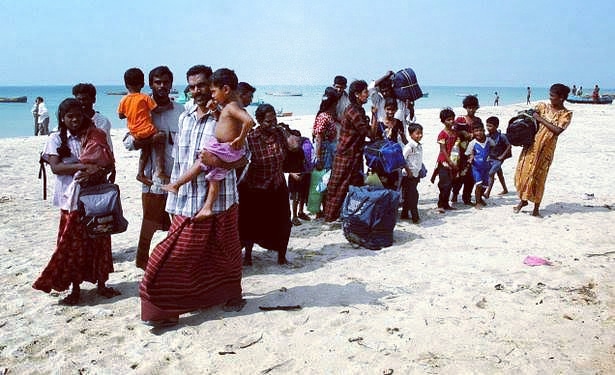
    • For over four decades, Indian origin Tamils have been classified as stateless persons, based on technicalities. Nations High Commission for Refugees, “Comprehensive Solutions Strategy for Sri Lankan Refugees”, there are around 29,500 Indian origin Tamils currently living in India.

    CitizenshipHistorical background of citizenship to Indian origin Tamils

    • As Indentured plantation workers: Indian origin Tamils were brought in as indentured labourers to work in plantations. They remained mostly legally undocumented and socially isolated from the native Sri Lankan Tamil and Sinhalese communities due to the policies of the British.
    • Denied citizenship led to stateless population: After 1947, Sri Lanka witnessed rising Sinhalese nationalism, leaving no room for their political and civil participation. They were denied citizenship rights and existed as a ‘stateless’ population, numbering close to 10 lakhs by 1960.
    • Bilateral pacts granted citizenship: As an ethnolinguistic minority without voting rights, this resulted in a double disadvantage till the two national governments addressed this issue. Subsequently, under the bilateral Sirimavo-Shastri Pact (1964) and the Sirimavo-Gandhi Pact (1974), six lakh people along with their natural increase would be granted Indian citizenship upon their repatriation.
    • Civil wars forcing to seek asylum in India: The Sri Lankan civil war resulted in a spike in Sri Lankan Tamils and Indian origin Tamils together seeking asylum in India. This resulted in a Union Ministry of Home Affairs directive to stop the grant of citizenship to those who arrived in India after July 1983.
    • Focus on Refugee welfare and rehabilitation: The focus of the Indian and Tamil Nadu governments shifted to refugee welfare and rehabilitation. The legal destiny of Indian origin Tamils has been largely intertwined with that of Sri Lankan Tamil refugees, and both cohorts have been relegated to ‘refugee’ status.
    • Classified as Illegal migrants as per the CAA 2003: Indian origin Tamils who arrived after 1983 came through unauthorized channels or without proper documentation and came to be classified as ‘illegal migrants’ as per the CAA 2003. This classification has resulted in their statelessness and blocking of potential legal pathways to citizenship.

    How to overcome the problem of statelessness?

    • While constitutional courts have not had an occasion to deal with the question of statelessness, there have been two recent judgments (Madurai Bench of the Madras High Court, Justice G.R. Swaminathan), taking these issues head on.
    • Judgment on P. Ulaganathan vs Government of India (2019): The status of citizenship of Indian origin Tamils at the Kottapattu and Mandapam camps came up for consideration. The court recognized the distinction between Indian origin Tamils and Sri Lankan Tamils and held that a continuous period of statelessness of Indian origin Tamils offends their fundamental right under Article 21 of the Constitution of India. The court further held that the Union Government has implied powers to grant relaxation in conferring citizenship and prescribed that a humanitarian approach, shorn of the rigors of law, should be adopted.
    • Abirami S. vs The Union of India 2022: Statelessness is something to be avoided. The court further held that the principles of the CAA, 2019, which relaxes the conditions for citizenship for Hindus from Afghanistan, Pakistan and Bangladesh, would also apply to Sri Lankan Tamil refugees. As such, these judgments have provided categorial judicial guidance to the Union of India on how to utilize an expanded and liberal interpretation of the CAA, 2019 to overcome statelessness.
    • Supreme Court (Committee for C.R. of C.A.P. and Ors. vs State of Arunachal Pradesh 2015): An undertaking made by the Government of India with respect to grant of citizenship inheres a right in the stateless or refugee population. As such, India has made repeated undertakings, through the 1964 and 1974 pacts, which have created a legitimate expectation among the Indian origin Tamils and would entitle them to be granted citizenship.
    • Obligatory International customary law: The situation of statelessness of Indian origin Tamils is ‘de jure’, created from the failure in implementing the 1964 and 1974 pacts. De jure statelessness is recognized in international customary law. Therefore, India has an obligation to remedy the situation.

    How other nations deals with statelessness situation?

    • United States: Remedying statelessness is not a novel process in law. While dealing with a similar situation, in 1994, the United States enacted the Immigration and the Nationality Technical Corrections Act to retroactively grant citizenship to all children born to an alien father and citizen mother.
    • Brazil: Through the Constitutional Amendment No. 54 of 2007 retroactively, Brazil granted citizenship to children under jus sanguinis, which was earlier stripped by an earlier amendment, i.e., Constitutional Amendment No. 3 of 1994.

    Citizenship

    What India can do?

    • Any corrective legislative action by the Government of India to eliminate statelessness should necessarily include retroactive citizenship for Indian origin Tamils.

    Conclusion

    • India has provided the one of largest refuge to people in the world including Tibetan, Sri Lankan, Pakistani, and Bangladeshi. Despite not being a signatory to UN refugee convention. any decision of granting citizenship has to be based on national interest rather than emotional connect.

    Mains Question

    Q. What are rules for granting the citizenship to foreigner in India? What are the hurdles in Tamil Sri Lankan getting their citizenship? How can Sri Lankan Tamil get citizenship by applying the rule of intelligible differentia under article 14?

    Click and Get your FREE copy of Current Affairs Micro notes

  • Election Commission can not breach Fundamental Rights

    Election

    Context

    • Preparations are going on in full swing for the upcoming Assembly elections in Gujarat. Election Commission had signed MoUs with over 1,000 corporate houses undertaking to monitor electoral participation of their workforce and publish on their websites and notice boards those who do not vote.

    Background

    • In June, the EC had asked central and state government departments, public sector units and corporate entities with over 500 employees to appoint nodal officers to identify employees who take leave on polling day but do not vote, The Indian Express reported.
    • The Chief Electoral Officer of Gujarat has said that the employees of state public sector units and government departments who don’t vote will also be tracked.
    • The report also mentioned that on a recent visit to Gujarat, the CEC himself had said that though the commission cannot enforce compulsory voting, it “wanted to identify workers in big industries who don’t vote despite availing the holiday”.

    All you need to know about Election Commission of India

    • The ECI is a constitutional authority whose responsibilities and powers are prescribed in the Constitution of India under Article 324.
    • In the performance of its functions, the Election Commission is insulated from executive interference.
    • It is the Commission that decides the election schedules for the conduct of elections, whether general elections or by-elections.
    • ECI decides on the location of polling stations, assignment of voters to the polling stations, location of counting centers, arrangements to be made in and around polling stations and counting centers and all allied matters.

    Importance of Election Commission of India

    • Conduction of Election: The ECI has been successfully conducting national as well as state elections since 1952.
    • Electoral participation: In recent years, however, the Commission has started to play a more active role to ensure greater participation of people.
    • Discipline of political parties: It had gone to the extent of disciplining the political parties with a threat of derecognizing if the parties failed in maintaining inner-party democracy.
    • Upholds federalism: It upholds the values enshrined in the Constitution viz, equality,
      equity, impartiality, independence; and rule of law in superintendence, direction, and control over electoral governance.
    • Free and fair elections: It conducts elections with the highest standard of credibility, freeness, fairness, transparency, integrity, accountability, autonomy and professionalism.

    What is the criticism over the EC’s move to track who do not vote?

    • Unethical and against the democracy: Any coercion particularly coercion of the kind being proposed by the EC in this case betrays an authoritarian approach that is not only antithetical to democracy but is directly violative of the Constitution and the laws of the land.
    • Against the freedom of Expression: Constitution provides a fundamental right of freedom of expression. (Article 19). It is individual’s choice to cast their Right to vote or not to vote.
    • Revealing Identity would be violative of Article 14: Protection of elector’s identity and affording secrecy is therefore integral to free and fair elections and an arbitrary distinction between a voter who casts and a voter who does not cast his vote is violative of Article 14. Thus, secrecy is to be maintained for both categories of persons.” the list of non-voters be put up on a company’s notice board or website? It will clearly be contempt of court.
    • Supreme Court’s judgement on NOTA and mandatory voting: The Supreme Court, in PUCL vs Union of India, 2013, (popularly known as the NOTA judgment) has held that abstention from voting and negative voting are protected as freedom of expression a fundamental right. Earlier, in April 2009, the Court had taken the same view while dismissing a plea that sought to make voting mandatory on grounds of governments not representing the majority because of low turnouts.
    • No of circumstances that one can’t vote on the day: In every election, there will be those who do not vote out of conviction or for ideological reasons. More importantly, there are millions of daily wage workers, and many homeless and ill.

    Election

    What are the legal and constitutional provisions for a citizen?

    • Section 79 D of RPA Act: Section 79 of the Representation of People Act, 1951 defines “electoral right” to mean the right of a person to vote or refrain from vote at an election”. The law completely enables, but does not force, citizens to vote. The same provision exists in the Indian Penal Code, vide Section 171A (b).
    • Section135B of the RPA Act: Section135B of the Representation of People Act, 1951, grants a paid holiday to every person employed in any business, trade, industrial undertaking or any other establishment.
    • A compulsory paid Holiday: Even a daily wage worker shall be paid for the day.The only exception is essential services Contravention of the law carries a fine for the employer which may extend to Rs 500, which was fixed over 25 years ago.

    Rulings of the supreme court on the matter of voting rights

    • Free and fair election is a basic structure: In PUCL vs Union of India, the Court said: “free and fair election is a basic structure of the Constitution and necessarily includes within its ambit the right of an elector to cast his vote without fear of reprisal, duress or coercion.

    Election

    What does the Election Commission say over this new development?

    • Clarification by Chief Electoral Officer of Gujarat: MoU’s are signed in the form of appeal for increasing registration and voter turnout, establish voter awareness forum in their organizations.
    • To track electoral participation: Election Commission said that it will help to track electoral participation of their workforce.
    • Less voting percentage: Out of seven least voting percentage districts during 2019 general elections, four were metropolitan cities. Voting percentage in urban areas is generally less, pulling down the overall voting percentage.
    • Purpose is to educate voters: CEC clarified MoU’s are only for voter education and facilitation and not for compelling them to vote.

    Election

    How to address the issue of less participation of voters?

    • Systematic voter education programme: The noble objective of enhanced voter participation can be best achieved through systematic voter education, amply demonstrated by the ECI in elections in all the states and Union territories since 2010 when a voter education division was set up. This soon evolved into its SVEEP programme. This has led to all elections ever since seeing the highest-ever turnouts.
    • Through Motivation and facilitation: The EC’s consistent efforts should be towards motivation and facilitation, rather than compulsion, are the best ways to address the issue.
    • The voter education programme: The voter education programme has sought to motivate the youth to participate in democracy by registering as voters, voting in every election and voting ethically that is, without inducement. It has involved schools and colleges to take the registration facility to the doorstep by introducing voter clubs, and youth icons and placing drop boxes in the public locations and online drop boxes.
    • Awareness in the corporate setup: Employers have been encouraged to create similar facilities in their offices. They are legally obliged to close their establishments on poll day, but this is seldom enforced.

    Conclusion

    • The noble objective of enhanced voter participation can be best achieved through systematic voter education, and awareness programs and not the cost of fundamental rights of the citizen which is enshrined the fundamental law of the land. Motivation and awareness could be the way for enhancing voter participation.

    Mains Question

    Q. What is the role of Election Commission of India? How do you see the compulsory voting in the light of the Constitution of India under the EC’s mandate of free and fair election? Discuss

    UPSC 2023 countdown has begun! Get your personal guidance plan now! (Click here)

  • Will electoral bonds reveal the source of funds, SC asks Centre

    The Supreme Court has asked the government whether the electoral bonds system reveals the source of money pumped in to fund political parties even as the Centre maintained that the scheme is “absolutely transparent”.

    What are Electoral Bonds?

    • Electoral bonds are banking instruments that can be purchased by any citizen or company to make donations to political parties, without the donor’s identity being disclosed.
    • It is like a promissory note that can be bought by any Indian citizen or company incorporated in India from select branches of State Bank of India.
    • The citizen or corporate can then donate the same to any eligible political party of his/her choice.
    • An individual or party will be allowed to purchase these bonds digitally or through cheque.

    About the scheme

    • A citizen of India or a body incorporated in India will be eligible to purchase the bond
    • Such bonds can be purchased for any value in multiples of ₹1,000, ₹10,000, ₹10 lakh, and ₹1 crore from any of the specified branches of the State Bank of India
    • The purchaser will be allowed to buy electoral bonds only on due fulfillment of all the extant KYC norms and by making payment from a bank account
    • The bonds will have a life of 15 days (15 days time has been prescribed for the bonds to ensure that they do not become a parallel currency).
    • Donors who contribute less than ₹20,000 to political parties through purchase of electoral bonds need not provide their identity details, such as Permanent Account Number (PAN).

    Objective of the scheme

    • Transparency in political funding: To ensure that the funds being collected by the political parties is accounted money or clean money.

    Who can redeem such bonds?

    • The Electoral Bonds shall be encashed by an eligible Political Party only through a Bank account with the Authorized Bank.
    • Only the Political Parties registered under Section 29A of the Representation of the People Act, 1951 (43 of 1951) and which secured not less than one per cent of the votes polled in the last General Election to the Lok Sabha or the State Legislative Assembly, shall be eligible to receive the Electoral Bonds.

    Restrictions that are done away

    • Earlier, no foreign company could donate to any political party under the Companies Act
    • A firm could donate a maximum of 7.5 per cent of its average three year net profit as political donations according to Section 182 of the Companies Act.
    • As per the same section of the Act, companies had to disclose details of their political donations in their annual statement of accounts.
    • The government moved an amendment in the Finance Bill to ensure that this proviso would not be applicable to companies in case of electoral bonds.
    • Thus, Indian, foreign and even shell companies can now donate to political parties without having to inform anyone of the contribution.

    Issues with the Scheme

    • Opaque funding: While the identity of the donor is captured, it is not revealed to the party or public. So transparency is not enhanced for the voter.
    • No IT break: Also income tax breaks may not be available for donations through electoral bonds. This pushes the donor to choose between remaining anonymous and saving on taxes.
    • No anonymity for donors: The privacy of the donor is compromised as the bank will know their identity.
    • Differential benefits: These bonds will help any party that is in power because the government can know who donated what money and to whom.
    • Unlimited donations: The electoral bonds scheme and amendments in the Finance Act of 2017 allows for “unlimited donations from individuals and foreign companies to political parties without any record of the sources of funding”.

    Way ahead

    • The worries over the electoral bond scheme, however, go beyond its patent unconstitutionality.
    • The concern about the possibility of misuse of funds is very pertinent.
    • The EC has been demanding that a law be passed to make political parties liable to get their accounts audited by an auditor from a panel suggested by the CAG or EC. This should get prominence.
    • Another feasible option is to establish a National Election Fund to which all donations could be directed.
    • This would take care of the imaginary fear of political reprisal of the donors.


    UPSC 2023 countdown has begun! Get your personal guidance plan now! (Click here)

  • What is Model Code of Conduct?

    The Election Commission of India announced the date for Himachal Pradesh Assembly elections 2022.  Hence the model code of conduct comes into picture.

    Model Code of Conduct

    • It is a set of guidelines issued by ECI to regulate political parties and candidates prior to elections.
    • The rules range from issues related to speeches, polling day, polling booths, portfolios, content of election manifestos, processions and general conduct, so that free and fair elections are conducted.

    When does it come into effect?

    • According to the PIB, a version of the MCC was first introduced in the state assembly elections in Kerala in 1960.
    • It was largely followed by all parties in the 1962 elections and continued to be followed in subsequent general elections.
    • In October 1979, the EC added a section to regulate the ‘party in power’ and prevent it from gaining an unfair advantage at the time of elections.
    • The MCC comes into force from the date the election schedule is announced until the date that results are out.

    Restrictions imposed under MCC

    The MCC contains eight provisions dealing with general conduct, meetings, processions, polling day, polling booths, observers, the party in power, and election manifestos.

    For Governments

    • As soon as the code kicks in, the party in power whether at the Centre or in the States should ensure that it does not use its official position for campaigning.
    • Hence, no policy, project or scheme can be announced that can influence the voting behaviour.
    • The code also states that the ministers must not combine official visits with election work or use official machinery for the same.
    • The ruling government cannot make any ad-hoc appointments in Government, Public Undertakings etc. which may influence the voters.
    • Political parties or candidates can be criticised based only on their work record and no caste and communal sentiments can be used to lure voters.

    For Political Parties

    • The party must also avoid advertising at the cost of the public exchequer or using official mass media for publicity on achievements to improve chances of victory in the elections.
    • The ruling party also cannot use government transport or machinery for campaigning.
    • It should also ensure that public places such as maidans etc., for holding election meetings, and facilities like the use of helipads are provided to the opposition parties on the same terms and conditions on which they are used by the party in power.

    Campaigning

    • Holding public meetings during the 48-hour period before the hour fixed for the closing of the poll is also prohibited.
    • The 48-hour period is known as “election silence”.
    • The idea is to allow a voter a campaign-free environment to reflect on events before casting her vote
    • The issue of advertisement at the cost of public exchequer in the newspapers and other media is also considered an offence.
    • Mosques, Churches, Temples or any other places of worship should not be used for election propaganda. Bribing, intimidating or impersonation of voters is also barred.

    Is it legally binding?

    • The fact is the MCC evolved as part of the ECI’s drive to ensure free and fair elections and was the result of a consensus among major political parties.
    • It has no statutory backing. Simply put, this means anybody breaching the MCC can’t be proceeded against under any clause of the Code..
    • The EC uses moral sanction or censure for its enforcement.

    What if violated?

    • The ECI can issue a notice to a politician or a party for alleged breach of the MCC either on its own or on the basis of a complaint by another party or individual.
    • Once a notice is issued, the person or party must reply in writing either accepting fault and tendering an unconditional apology or rebutting the allegation.
    • In the latter case, if the person or party is found guilty subsequently, he/it can attract a written censure from the ECI — something that many see as a mere slap on the wrist.
    • However, in extreme cases, like a candidate using money/liquor to influence votes or trying to divide voters in the name of religion or caste, the ECI can also order registration of a criminal case under IPC or IT Act.
    • In case of a hate speech, a complaint can be filed under the IPC and CrPC; there are laws against the misuse of a religious place for seeking votes, etc.

    Using powers under Art. 324

    • The Commission rarely resorts to punitive action to enforce MCC, there is one recent example when unabated violations forced EC’s hand.
    • During the 2014 Lok Sabha polls, the EC had banned a leader and now party president from campaigning in order to prevent them from further vitiating the poll atmosphere with their speeches.
    • The Commission resorted to its extraordinary powers under Article 324 of the Constitution to impose the ban.
    • It was only lifted once the leaders apologised and promised to operate within the Code.

    What if given Statutory Backing?

    • Both the ECI and several independent experts, believe that giving statutory backing to the MCC would only make the job of the Commission more difficult.
    • This is because every alleged offence will then have to go to an appropriate court, and right up to the Supreme Court.
    • Given the flaws of our legal system, election petitions filed decades ago are still pending before many High Courts — it is anybody’s guess what that situation might lead to.


    UPSC 2023 countdown has begun! Get your personal guidance plan now! (Click here)