💥Mains Ready By December. Smash Mains & Smash PYQ Admissions Open

GS Paper: GS1-07.Role of women and women’s organization, population and associated issues, poverty and developmental issues.

  • Women in the Economy: Rising Participation, Low Leadership  

    Why in the News?

    • Female participation in India’s workforce is rising, but representation in leadership roles remains low, raising concerns for inclusive growth.

    Key Trends

    Rising Female Labour Force Participation (LFPR)

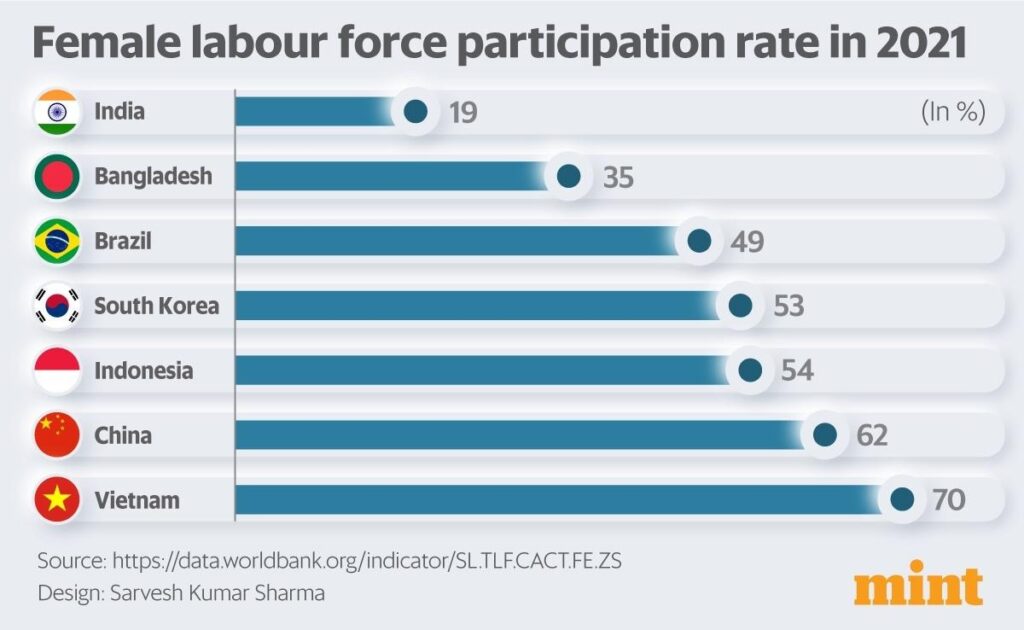
    • Female LFPR:
      • 2022: 33.9%
      • 2025: 40%
    • Still below:
      • Global average: 49%
      • Brazil: 53%
      • Vietnam: 69%

    Why Female Participation Matters

    • According to the World Bank: India needs ~8% growth to become developed by 2047
    • Low female participation: Major constraint to growth

    Economic Impact

    • Study (2018): Constituencies with women legislators: +1.8% higher economic performance

    Women in Leadership (Major Concern)

    1. Academia

    • IITs: Female faculty ~14%
    • IIMs: Range: 19% to 31%
    • Professors (India overall): ~29.5%

    2. Business & Corporate Sector

    • Female-owned establishments: ~27%
    • Women in leadership roles: Only 13 women per 100 men

    3. Corporate Boards

    • Many firms: Only 1–2 women directors
    • Women board chairpersons:
      • BSE 200: ~7%
      • NSE 500: ~5%
    • Indicates token representation

    Note: 

    • The BSE 200 is a stock market index on the Bombay Stock Exchange (BSE) in India, comprising 200 of the largest, most liquid, and highly traded companies across various sectors.
    • The Nifty 500 is a broad-based stock market index representing the top 500 companies listed on the National Stock Exchange of India (NSE) based on market capitalization and average daily turnover.
    [2024] Consider the following statements regarding ‘Nari Shakti Vandan Adhiniyam’ : 
    1. Provisions will come into effect from 18th Lok Sabha. 
    2. This will be in force for 15 years after becoming an Act. 
    3. There are provisions for the reservation of seats for Scheduled Castes Women within the quota reserved for the Scheduled Castes. 
    Which of the statements given above are correct? 
    [A] 1, 2 and 3 [B] 1 and 2 only [C] 2 and 3 only [D] 1 and 3 only
  • Women’s Economic Opportunity Laws Only Half Enforced Globally

    Why in the News

    The latest Women, Business and the Law report by the World Bank Group finds that laws ensuring women’s economic equality are only about half enforced globally, creating large gaps between legal rights and real world outcomes.

    Key Findings

    • Enforcement Gap

      • Average legal equality score on paper: 67 out of 100
      • Enforcement score: 53 out of 100
      • Implementation systems score: 47 out of 100
      • Even if laws were fully enforced, women would enjoy only about two thirds of men’s legal rights.
    • Limited Full Equality: Only 4 percent of women globally live in economies with near full legal equality.
    • Major Areas of Concern: The report evaluates 10 areas of women’s economic participation:
      • Safety from violence
      • Employment protections
      • Entrepreneurship
      • Access to credit
      • Asset ownership
      • Childcare
      • Retirement security
    • Safety: Only about one third of required safety laws exist, and enforcement fails around 80 percent of the time.
    [2017] Which of the following gives ‘Global Gender Gap Index’ ranking to the countries of the world? (a) World Economic Forum (b) UN Human Rights Council 

    (c) UN Women 

    (d) World Health Organization

  • National Commission for Women marks 34th Foundation Day

    Why in the News?

    The National Commission for Women marked its 34th Foundation Day on 30 January 2026 at Bharat Mandapam, highlighting the link between women’s health and empowerment.

    About National Commission for Women

    • Statutory body constituted under the National Commission for Women Act, 1990
    • Established in 1992
    • Mandate includes safeguarding women’s rights, policy review, legal interventions, and grievance redressal

    Theme of Foundation Day

    • Swasthya hi Sashaktikaran
    • Stresses that women’s health is foundational to empowerment, social equity, and national development
    [2023] Consider the following organizations/bodies in India: 1. The National Commission for Backward Classes 

    2. The National Human Rights Commission 

    3. The National Law Commission 

    4. The National Consumer Disputes Redressal Commission 

    How many of the above are constitutional bodies? 

    (a) Only one (b) Only two (c) Only three (d) All four

  • Are Women deciding Assembly Elections?

    Introduction

    Ahead of the 2025 Bihar elections, parties are intensifying women-focused welfare schemes involving cash transfers. Similar strategies in Madhya Pradesh, Tamil Nadu, Maharashtra, and West Bengal mark a national trend of targeting women voters through direct benefits.

    Also the gender gap in voter turnout has narrowed significantly, with female participation matching or surpassing male turnout in several states, prompting political recognition of women as a distinct electoral constituency.

    Women as a Political Category:

    1. Shift in Political Focus: Women have emerged as a distinct political category, prompting parties to design targeted welfare schemes like Ladli Behna Yojana, Urimai Thogai, and Lakshmir Bhandar aimed exclusively at female voters.
    2. Economic Empowerment through Welfare: Direct cash transfers have provided limited but visible economic agency, allowing women some control over finances within households traditionally dominated by men.
    3. Beneficiary Framing: The portrayal of women primarily as labharthis (beneficiaries) reinforces dependency on state-led welfare rather than promoting them as independent political actors.
    4. Symbolic Inclusion vs. Structural Change: Women’s growing electoral visibility has not necessarily translated into greater representation or leadership, keeping them largely outside decision-making hierarchies.

    How have Political Parties harnessed the Gender Gap in Voter Turnout?

    1. Rise in Female Turnout: Over the last two decades, the gender gap in voter participation has steadily narrowed, with female turnout surpassing male turnout in several states, notably in Bihar and Odisha.
    2. Targeted Welfare Mobilisation: Political parties have strategically used welfare schemes and direct benefit transfers to consolidate women as a reliable voter base, focusing on cash assistance, LPG subsidies, and maternal benefits.
    3. Micro-Targeting: Manifestos and election campaigns increasingly feature women-focused promises, indicating recognition of their collective electoral strength.
    4. Narrative of Care Politics: Political rhetoric frames women as symbols of social welfare and household well-being, enabling parties to blend economic populism with gender outreach.

    Significance of Women’s Voting Behaviour:

    1. Indicator of Political Maturity: The steady rise in women’s participation marks a structural shift in India’s democratic engagement, highlighting growing awareness of rights and entitlements.
    2. Independent Electoral Agency: Increasing evidence shows that women are voting independently of male family influence, prioritising welfare delivery, safety, education, and dignity.
    3. Policy Feedback Mechanism: Women’s responses to welfare schemes serve as a direct feedback loop influencing governance priorities and re-election strategies.
    4. Catalyst for Inclusive Politics: The evolving behaviour of women voters has encouraged parties to incorporate gender equity into mainstream political discourse, beyond token representation.

    Issues of Gendered Voter Turnout:

    1. Documentation Barriers: Women face systemic exclusion from electoral rolls due to inadequate documentation, name changes after marriage, and migration-related bureaucratic lapses.
    2. Procedural Exclusion: Administrative exercises like Special Intensive Revision (SIR) have disproportionately omitted women, reflecting institutional insensitivity to gendered realities.
    3. Intersectional Marginalisation: Women’s political inclusion remains fragmented by caste, class, and religion, preventing the emergence of a cohesive gender-based voting bloc.
    4. Symbolic Empowerment: While parties celebrate women as voters and beneficiaries, practical empowerment remains limited, with persistent underrepresentation in legislatures and party leaderships.

    Way Forward:

    1. Institutional Strengthening: Ensure gender-sensitive voter registration and simplify documentation norms to eliminate procedural exclusions.
    2. Beyond Welfare Politics: Transition from cash-based welfare populism to policies promoting education, employment, and political representation.
    3. Data-Driven Governance: Use disaggregated gender data to assess welfare effectiveness and refine electoral outreach grounded in socio-economic realities.
    4. Leadership and Representation: Expand women’s participation in party structures, local governance, and Parliament, ensuring parity in decision-making roles.
    5. Civic and Political Literacy: Invest in sustained grassroots voter education, enabling women to act as autonomous political citizens rather than electoral dependents.
  • The ‘domestic sphere’ in a new India

    Introduction

    Women in India continue to bear a disproportionate burden within the “domestic sphere,” both through unpaid household labour and through systemic silence around violence inside the home. Even as the government projects slogans like “nari shakti” and “women-led development,” the stark realities of dowry deaths, marital rape, unequal division of work, and undervaluation of women’s unpaid labour reveal deep contradictions. The recent Time Use Survey (TUS) 2024 and other official data bring to light these inequities, while political narratives attempt to glorify them as cultural strengths.

    Why in the News?

    The debate on the “domestic sphere” resurfaced after a controversial statement in August 2025 by RSS chief, who urged families to have at least three children for the “survival of civilisation.” This comment, reducing women to reproduction machines, stands in sharp contrast to the silence of ruling elites on domestic violence, dowry deaths (7,000 annually between 2017–2022), and marital rape. Simultaneously, the TUS 2024 exposed glaring gender disparities in unpaid work: women spend 7 hours daily in domestic services versus men’s 26 minutes. Despite this, the government’s framing celebrated men’s 15 minutes of caregiving as proof of “Indian family values.” This dissonance makes the issue urgent and deeply political.

    Women and Violence Within Homes

    1. Dowry deaths: An average of 7,000 women annually (2017–2022) have died in dowry-related violence, totalling 35,000 lives lost.
    2. Domestic violence: NFHS-5 revealed 30% women reported intimate partner violence, but only 14% lodged police complaints.
    3. Silence of leadership: While majoritarian rhetoric aggressively targets “love jihad,” it remains mute on intra-community domestic crimes, revealing selective morality.

    Historical and Contemporary Debates on Marriage and Gender Rights

    1. Ambedkar vs. orthodoxy: Ambedkar’s Hindu Code Bills sought divorce rights and caste-free marriages; opposed fiercely by conservative forces.
    2. Institution of marriage: Current opposition to criminalising marital rape reflects a continuity of Manusmriti-inspired ideals of sacramental marriage.
    3. Honour crimes: Cultural pressures still compel women to “adjust” in violent marriages, sustaining patriarchal structures.

    Time Use Survey 2024 – Striking Findings

    1. Employment gap: Only 25% of women (15–59 yrs) in employment-related work, compared to 75% men, with women working fewer hours.
    2. Unpaid domestic work: 93% of women spend 7 hours daily; 70% of men do none.
    3. Care work: 41% of women vs. 21% of men engage in unpaid caregiving; men average barely 16 minutes daily.
    4. Total working hours: Women overall work longer hours than men but get less leisure, sleep, and nutrition time.

    Government Narrative vs. Reality

    1. Official glorification: PIB (Feb 25, 2025) framed caregiving as reflecting the “Indian social fabric,” overlooking systemic gender exploitation.
    2. Policy translation: Anganwadi, mid-day meal, and ASHA workers, essentially extending domestic roles into the public sphere, are classified as “volunteers” with honorariums, not wages.
    3. Undervaluation: SBI 2023 study estimated ₹22.5 lakh crore annually (7% of GDP) as the value of women’s unpaid work, which subsidises male wages by reducing subsistence costs.

    Towards an Alternative Approach

    1. Violence-free homes: Stronger social and legal frameworks against domestic violence and marital rape.
    2. Equal right to work: Recognition of men and women as equal primary workers with equal wages.
    3. Public provisioning: State-backed universal childcare, elderly care, quality health and education.
    4. Cultural reform: Move from “adjustment” to shared responsibility in domestic work.
    5. Recognition for scheme workers: Anganwadi, ASHA, mid-day meal staff to receive minimum wages and benefits as government employees.

    Conclusion

    The “domestic sphere” is not a private matter but a deeply political one, shaping both India’s democracy and economy. Unless women’s unpaid work, safety within homes, and dignity are recognised, slogans of empowerment will remain hollow. True nari shakti lies not in numerical glorification of caregiving, but in building a society where women’s labour, both paid and unpaid, receives justice.

    PYQ Relevance

    [UPSC 2019] “Empowering women is the key to control population growth”. Discuss.

    Linkage: Empowerment of women through education, health access, and economic participation is directly correlated with declining fertility rates, as seen in states like Kerala and Tamil Nadu.

    When women exercise agency over reproductive choices, population growth transitions from being a demographic challenge to a managed outcome.

    Thus, population stabilisation in India is less about coercive policies and more about gender justice and empowerment-driven development.
  • India slips to 131st position in Global Gender Gap Index, 2025

    Why in the News?

    India has been ranked 131 out of 148 countries in the World Economic Forum’s (WEF) Global Gender Gap Report 2025, falling two places from last year’s rank of 129.

    India slips to 131st position in Global Gender Gap Index, 2025

    About the Global Gender Gap Index:

    • Overview: It is released annually by the World Economic Forum (WEF) and has been published since 2006.
    • Scope of Measurement: It evaluates gender parity across 4 key dimensions:
      1. Economic Participation and Opportunity,
      2. Educational Attainment,
      3. Health and Survival, and
      4. Political Empowerment.
    • Scoring Method: The index uses a 0–1 scale, where 1 represents full gender parity.
    • 2025 Edition Coverage: The 19th edition of the index covers 148 countries, making it a global benchmark for tracking gender gaps.

    Key Highlights of the 2025 Report:

    • India’s Performance: It is ranked 131 out of 148 countries, falling two spots from its 2024 rank of 129.
    • Overall Score: India’s overall gender parity score is 64.1%, placing it among the lowest-ranked in South Asia.
    • Economic Participation: India improved in this category, with the score rising to 40.7%, and estimated earned income parity increasing from 28.6% to 29.9%.
    • Labour Force Participation: India’s rate remains at 45.9%, its highest recorded level.
    • Educational Attainment: The country scored 97.1%, with gains in female literacy and tertiary education enrolment.
    • Health and Survival: This category showed marginal improvement due to a better sex ratio at birth and higher healthy life expectancy.
    • Political Empowerment: India declined in this area, with women in Parliament dropping from 14.7% to 13.8%, and women ministers decreasing from 6.5% to 5.6%.

    Global Trends and Significance:

    • Regional Rankings: The highest rank is held by Bangladesh in South Asia at 24, followed by Bhutan (119), Nepal (125), Sri Lanka (130), Maldives (138), and Pakistan (148).
    • Global Parity Score: The overall global gender gap has narrowed to 68.8%, marking the best progress since the COVID-19 pandemic.
    • Timeline for Equality: At the current pace, it will take 123 years to achieve full gender parity worldwide.
    • Top Performers: Top-rank is retained by Iceland for the 16th consecutive year, followed by Finland, Norway, the United Kingdom, and New Zealand.
    • Leadership Gap: Although women make up 41.2% of the global workforce, they occupy only 28.8% of leadership roles.

    Back2Basics: World Economic Forum (WEF)

    • The WEF is an international non-profit organization founded in 1971 by Klaus Schwab in Geneva, Switzerland.
    • It fosters public-private cooperation to tackle global issues through dialogue, partnerships, and research.
    • WEF is widely known for its annual Davos summit, which brings together world leaders from politics, business, and academia.
    • Major reports published include the Global Competitiveness Report, Global Risks Report, Global Social Mobility Report, Energy Transition Index, and Travel & Tourism Development Index.
    • These reports provide critical data and policy insights on issues like inequality, climate change, innovation, and economic recovery.
    • WEF is largely funded by its partner corporations, offering a platform to shape global agendas across sectors.


    [UPSC 2017] Which of the following gives ‘Global Gender Gap Index’ ranking to the countries of the world?

    Options: (a) World Economic Forum* (b) UN Human Rights Council (c) UN Women (d) World Health Organization


  • [10th June 2025] The Hindu Op-ed: Empowering women in agriculture for food security

    PYQ Relevance:

    [UPSC 2024] Distinguish between gender equality, gender equity and women’s empowerment. Why is it important to take gender concerns into account in programme design and implementation?

    Linkage: Women’s empowerment and the critical need to incorporate gender concerns into programme design and implementation. The article extensively discuss how empowering women in agriculture is fundamental to achieving food security. For instance, the United Nations General Assembly declared 2026 as the International Year of the Woman Farmer to recognize, support, and enhance the role of women in ensuring food security, fostering economic prosperity, and promoting sustainability.


    Mentor’s Comment:  The United Nations has declared 2026 as the International Year of the Woman Farmer to recognise the important but often overlooked role women play in growing food around the world. Over 100 countries supported this move, which highlights a major issue: while women produce up to 80% of food in developing countries, they are still left out when it comes to owning land. For example, in India, although 80% of working women are in farming, only 14% own land.

     Today’s editorial talks about the problems faced by women farmers, which is an important topic for GS Paper I (women-related issues), GS Paper II (social justice), and GS Paper III (agriculture).

    _

    Let’s learn!

    Why in the News?

    The International Year of the Woman Farmer in 2026 should focus on supporting strong, sustainable farming and ensuring equal rights and opportunities for women in agriculture.

    What challenges do women farmers face in land and credit access?

    • Low Land Ownership Limits Entitlements: Despite forming nearly 80% of the economically active female workforce in agriculture, only 14% of landowners in India are women, and just 8.3% according to NFHS data. Eg: A woman working her family’s farmland may still lack legal ownership, preventing her from claiming government subsidies or schemes like PM-KISAN.
    • Difficulty Accessing Credit: Without land titles, women are often denied collateral-based loans from banks and formal financial institutions. Eg: A woman farmer in rural Bihar cannot access a loan for irrigation equipment because she doesn’t hold a land deed, pushing her to rely on informal moneylenders.
    • Inadequate Access to Financial Technology and Information: Women have limited access to mobile phones and agricultural advisories, which are crucial for credit applications and crop planning. Eg: In Assam, women supported by the ENACT project lacked timely access to climate forecasts, making it harder to plan credit usage for flood-resistant crop seeds.

    Why is 2026 declared the International Year of the Woman Farmer?

    • To Recognise Women’s Vital Role in Agriculture: Women contribute to 60–80% of food production in developing countries and nearly 39% of the agricultural labour force in South Asia.  
    • To Raise Awareness About Structural Challenges: The declaration aims to highlight barriers women face such as limited land ownership, market access, and credit availability. Eg: Only 14% of agricultural landowners in India are women, restricting their ability to access loans and government schemes.
    • To Promote Gender Equality and Empowerment: It seeks to promote gender-transformative agricultural development by encouraging inclusive policies, technology access, and self-help group participation. Eg: The ENACT project in Assam supports women farmers by linking them with agri-experts and providing mobile-based advisories to adapt to climate change.

    What is the ENACT project?

    The ENACT project stands for Enhancing Climate Adaptation of Vulnerable Communities through Nature-based Solutions and Gender-Transformative Approaches. Supported by the World Food Programme (WFP), the Government of Assam, and funded by Norway, it empowers women farmers in Nagaon

    How does the ENACT project help women farmers adapt to climate change?

    • Access to Climate-Resilient Agricultural Information: ENACT provides weekly agricultural and climate advisories through mobile phones, enabling informed decision-making. Eg: Over 300 women farmers in 17 villages of Assam’s Nagaon district receive timely updates on weather and crop planning.
    • Promotion of Flood-Resistant Crop Varieties: The project introduces flood-tolerant rice varieties and promotes livelihood diversification to reduce climate-related risks. Eg: In Roha village, new rice varieties introduced by the project can survive underwater, helping farmers secure better yields during floods.
    • Strengthening Institutional and Technical Support: ENACT facilitates collaboration with local institutions, including agri-departments, universities, and meteorological agencies. Eg: Climate Adaptation Information Centres offer video conferencing tools for expert guidance and community meetings.

    What policies support women farmers in India?

    • Mahila Kisan Sashaktikaran Pariyojana (MKSP): Enhances skills, capacity building, and promotes sustainable agriculture among women farmers. Eg: MKSP supports self-help groups (SHGs) in improving agricultural practices and income generation.
    • Sub-Mission on Agricultural Mechanisation: Provides 50% to 80% subsidies on farm machinery and equipment to reduce drudgery and improve productivity. Eg: Women farmers receive subsidised tools for sowing, weeding, and harvesting, enabling more efficient farm operations.
    • National Food Security Mission (NFSM) – Women’s Component: Allocates 30% of the budget for women farmers in select States and Union Territories to improve food production. Eg: Women beneficiaries receive support in seed distribution, training, and input provision under NFSM.

    How does climate change impact women farmers?

    • Increased Domestic Burden and Agricultural Risk: Climate variability forces women to juggle household responsibilities with unpredictable farming conditions. Eg: In Assam, women like Nirmali Bora Hazarika report increased workload due to erratic weather and flood-prone crops.
    • Limited Access to Climate Information and Resources: Women have less access to weather updates, advisory services, and resilient crop technologies. Eg: Many women farmers lack mobile phones or connectivity to receive timely climate advisories.
    • Greater Vulnerability to Crop Loss and Livelihood Disruptions: Floods, droughts, and extreme weather events hit women-led farms harder due to lack of land rights and insurance. Eg: Without land ownership, women cannot claim compensation or loans to recover from climate-induced losses.

    Way forward: 

    • Enhance Land Rights and Legal Ownership: Governments must promote joint land titles, ensure inheritance rights, and simplify land registration processes for women. Eg: Initiatives like the Digital India Land Records Modernization Programme (DILRMP) can help ensure legal recognition of women’s land ownership.
    • Expand Financial and Technological Access: Strengthen women’s inclusion in formal credit systems, promote mobile-based agricultural advisories, and invest in climate-resilient infrastructure. Eg: Scaling up programs like ENACT can equip women with timely climate information, insurance, and input support.
  • [ 15th April 2025] The Hindu Op-ed: Feminism for polarised times

    PYQ Relevance:

    [UPSC 2019] The long-sustained image of India as a leader of the oppressed and marginalised Nations has disappeared on account of its new found role in the emerging global order”. Elaborate.

    Linkage:  India’s historical role as a voice for the “Global South” and how its current global positioning might be perceived differently. This article argues for the Global South to take a leading role, which resonates with India’s past image.


    Mentor’s Comment:   While current talks on delimitation focus on its effect on power-sharing between states and the Centre, another key change depends on it — the rollout of the Women’s Reservation Bill, 2023. The Bill brought gender equality to the forefront of politics. However, this widespread acceptance has, in some ways, made open and critical discussion more difficult. A compassionate, inclusive feminism recognizes both structural and interpersonal challenges women face. It avoids oversimplifying gender struggles, respects men’s societal pressures, and promotes solidarity. 

    Today’s editorial discusses issues related to feminism. This content will be useful for GS Paper I in the Mains exam.

    _

    Let’s learn!

    Why in the News?

    A more compassionate approach to feminism could be the right strategy right now, as it helps gain support rather than create resistance.

    Why is there a caution against applying a heavy structural lens to interpersonal relationships?

    • Complexity of Relationships: Interpersonal relationships are multifaceted and often not reducible to power dynamics or oppression. Eg: A husband may expect dinner but also contribute financially, which shows mutual care rather than domination.
    • Risk of Oversimplification: Applying the structural lens too heavily risks oversimplifying relationships, reducing them to battles for power. Eg: A disagreement over household chores might be seen as oppressive when it could be a negotiation of responsibilities.
    • Love and Care Are Often Present: Many relationships are underpinned by love, care, and mutual respect, which should not be ignored in the analysis. Eg: A father who supports his daughter’s education despite societal barriers demonstrates care beyond structural oppression.
    • Men’s Experiences and Contributions: Men also face societal pressures, including financial and emotional burdens, which can reshape family dynamics. Eg: A man who works long hours in difficult conditions to support his family might experience public humiliation, while his wife remains insulated from such public pressures.
    • Potential for Alienation: Focusing solely on structural analysis may alienate people, particularly those who feel embattled, like many men. Eg: Men who feel misunderstood in feminist discourse, especially those at the margins, may disengage from efforts for equality.

    How can feminist discourse become more inclusive and compassionate?

    • Acknowledge Multiple Forms of Suffering: Feminism should recognize the varied experiences of suffering and responsibility faced by both women and men, especially from marginalized communities. Eg: Recognizing that men, particularly in low-income families, endure public humiliation due to financial pressures, while women often carry unpaid domestic responsibilities.
    • Avoid Oversimplifying Complex Dynamics: Instead of reducing all issues to power struggles, feminist discourse should appreciate the complexity of human relationships, where love, care, and duty often coexist with structural inequality. Eg: A couple might have disagreements over housework, but these can be opportunities for negotiation rather than a sign of patriarchal oppression.
    • Promote Solidarity, Not Antagonism: Feminist discourse should focus on creating solidarity, especially by addressing the emotional and economic pressures that shape men’s lives, inviting them to participate in gender equity efforts. Eg: Instead of criticizing men for their limitations, feminist discourse can encourage mutual understanding and support for gender equality.
    • Recognize the Interconnection of Personal and Political: Feminism should find a balance between the structural and the interpersonal, understanding that both need attention without conflating them. Eg: In rural areas, a woman may face different challenges from a financially independent urban woman, and addressing these separately helps focus on their unique struggles.

    Which aspects of current feminist narratives risk alienating both men and women, especially from marginalised backgrounds?

    • Oversimplification of Gender Struggles: Current feminist narratives often reduce complex interpersonal relationships to mere power struggles, ignoring the nuanced and varied experiences of individuals. This can alienate those who may not fit neatly into these narratives, particularly men from marginalized backgrounds who feel misunderstood. Eg: Depicting all men as perpetrators of patriarchy can alienate men who are struggling with their own economic and social pressures, leading to defensiveness rather than solidarity.
    • Blurring of Inequities: By merging vastly different forms of inequality, such as the struggles of financially independent urban women with those of rural women fearing violence, feminist discourse risks obscuring the real, context-specific challenges faced by each group. This can alienate individuals who feel their unique struggles are being overlooked. Eg: An urban woman’s struggles with household responsibilities may be portrayed in the same light as a rural woman’s safety concerns, which can cause friction and hinder support for both groups.
    • Antagonistic Tone Towards Men: A feminist narrative that is too focused on antagonism between the sexes, without acknowledging the emotional and economic pressures men face, can alienate men and prevent productive dialogue. This risks creating an “us versus them” mentality, undermining the potential for cross-gender solidarity. Eg: Men in low-income families, facing public humiliation due to financial hardship, may feel blamed for perpetuating patriarchal structures, even when they are also victims of societal pressures. This makes it harder for them to support feminist goals.

    What has steps taken by Indian Government? 

    • Legislative Reforms for Women’s Safety and Empowerment: The government has enacted laws to improve women’s safety and protect their rights. Eg: The Protection of Women from Domestic Violence Act (2005) was enacted to provide legal protection to women facing violence within the home. Additionally, the Criminal Law (Amendment) Act (2013) expanded the definition of sexual offenses and introduced stricter punishments for crimes like rape and acid attacks, in response to the Nirbhaya case.
    • Schemes for Economic Empowerment: The government has introduced various schemes aimed at economically empowering women, especially in rural and marginalized communities. Eg: The Pradhan Mantri Ujjwala Yojana (2016) provides free LPG connections to women from below-poverty-line families, reducing their dependency on traditional cooking methods that often expose them to health hazards. Similarly, schemes like Beti Bachao Beti Padhao focus on improving education and access to opportunities for girls.
    • Reservation and Affirmative Action in Education and Employment: The government has implemented affirmative action measures to enhance women’s participation in education and employment. Eg: The Reservation for Women in Local Governance mandates one-third of seats in Panchayats (local governing bodies) be reserved for women, encouraging their participation in political processes and decision-making. Furthermore, policies like the Maternity Benefit Act (2017) aim to protect women’s rights in the workplace by providing paid maternity leave.

    Way forward: 

    • Promote Intersectional Feminism: The government and society should adopt an intersectional approach to feminism, addressing the unique challenges faced by women from diverse backgrounds, including rural, urban, and marginalized communities. Eg: Tailoring policies like Beti Bachao Beti Padhao to address region-specific challenges, such as safety concerns in rural areas and educational disparities in urban areas, can create more inclusive support for all women.
    • Engage Men in Gender Equality Efforts: Foster dialogue and understanding by engaging men in discussions around gender equality, recognizing their societal pressures, and encouraging shared responsibility in family and community roles. Eg: Programs like #HeForShe can be expanded to include more men, emphasizing their role in supporting gender equity at home and in the workplace, helping to bridge the gap between feminist discourse and broader societal change.
  • Gender gap in household chores persists in urban India

    Why in the News?

    More urban women have paid jobs but still handle most household work. Though more men now help, the gender gap remains wide. Northeastern states see higher male participation in domestic works.

    What are the trends in urban women’s participation in paid jobs and household work?

    • Increase in Paid Employment but Still Low: The share of urban women engaged in paid work rose from 15.5% in 2019 to 18% in 2024. Example: In Tamil Nadu and Telangana, about 25% of urban women participate in paid work, significantly higher than Bihar (9%) and Uttar Pradesh (10%).
    • Unpaid Household Work Burden Remains High: Despite employment growth, the share of women doing unpaid household work increased from 79.3% to 81%. Example: In Karnataka and Himachal Pradesh, over 80% of employed women also do unpaid domestic chores, highlighting the dual burden.
    • More Men Helping, but Gender Gap Persists: The share of urban men doing unpaid domestic work rose from 23% to 28.5%, but women’s share remains disproportionately high. Example: In Kerala and Northeastern states (Sikkim, Nagaland, Arunachal Pradesh), over 50% of urban men participate in household chores, while in most states, it remains between 20-40%.

    Why does the gender gap in household chores persist despite more men helping?

    • Deeply Rooted Social Norms and Gender Roles: Household work is still perceived as a woman’s responsibility, while men’s participation is seen as “helping” rather than sharing duties equally.
      Example: Even in urban households where women work full-time, they are expected to manage cooking, cleaning, and childcare, while men engage in minimal domestic tasks.
    • Unequal Time Distribution Between Paid and Unpaid Work: Women balance both employment and domestic responsibilities, whereas men often focus primarily on paid jobs. Example: In Karnataka and Himachal Pradesh, over 80% of employed women still do household chores, while men’s share remains significantly lower.
    • Limited Structural Support for Household Work: Lack of affordable childcare, elderly care services, and domestic help forces women to take on more unpaid work. Example: Countries like Sweden offer state-funded childcare and paternity leave, reducing the burden on women, whereas India lacks similar support systems.
    • Workplace Expectations and Rigid Work Hours: Men often work longer hours outside the home and face social stigma if they take time off for household chores. Example: In corporate India, men who seek flexible work hours for family responsibilities may face negative career perceptions, unlike in Nordic countries, where parental leave is encouraged for both genders.
    • State-Wise Cultural Differences in Gender Roles: Some states, particularly in Northeast India (Sikkim, Nagaland, Arunachal Pradesh), have higher male participation in household chores due to more egalitarian traditions. Example: In Kerala, 44% of men contribute to domestic work, but in states like Uttar Pradesh and Bihar, men’s participation remains under 30% due to traditional patriarchal norms.

    Which Indian states have the most urban men doing unpaid household work?

    • Northeastern States Lead in Male Participation: Sikkim, Arunachal Pradesh, and Nagaland have the highest share of urban men engaged in household chores, with over 50% participation. Example: In these states, matrilineal or more egalitarian traditions encourage men to take on domestic responsibilities, unlike in many other parts of India.
    • Kerala Tops Among Major States: Kerala has 44% of urban men involved in household work, the highest among major Indian states. Example: Kerala’s higher literacy rates, progressive gender norms, and a strong service sector contribute to greater male involvement in domestic chores compared to states like Uttar Pradesh and Bihar, where men’s participation remains below 30%.

    Why is female workforce participation higher in Tamil Nadu, Telangana, and Karnataka?

    • Strong Industrial and Service Sectors: These states have thriving industries like textiles, IT, and manufacturing, which offer more employment opportunities for women. Example: Tamil Nadu’s garment industry, Telangana’s pharmaceutical sector, and Karnataka’s IT and startup ecosystem employ a significant number of women.
    • Progressive Socio-Cultural Norms and Policies: Higher literacy rates, better education access, and state-driven welfare policies encourage female employment. Example: Tamil Nadu’s Cradle Baby Scheme and Telangana’s WE-Hub for women entrepreneurs promote women’s workforce participation.
    • Higher Urbanization and Better Infrastructure: Cities like Chennai, Hyderabad, and Bengaluru provide better public transport, safety measures, and childcare facilities, making it easier for women to work. Example: Karnataka’s free bus travel for women initiative improves women’s mobility, indirectly supporting their workforce participation.

    Way forward: 

    • Strengthening Gender-Inclusive Policies: Implement affordable childcare, flexible work hours, and workplace safety measures to support women’s workforce participation.
    • Encouraging Equal Domestic Responsibility: Promote shared household duties through awareness campaigns, parental leave policies, and incentives for men to engage in unpaid domestic work.

    Mains PYQ:

    Question: Distinguish between gender equality, gender equity and women’s empowerment. Why is it important to take gender concerns into account in programme design and implementation? [UPSC 2024]

    Linkage: The gap between men and women in household work shows that equality at home is still missing, making it harder for women to be truly empowered.

  • [7th March 2025] The Hindu Op-ed: Women in corporate leadership, the lived reality

    PYQ Relevance:

    Q) What are the continued challenges for Women in India against time and space? (UPSC CSE 2019)


    Mentor’s Comment: UPSC mains have always focused on the continued challenges for Women in India against time and space (2019) and middle-class working women in India (2019).

    Recently, the world celebrated International Women’s Day, with companies highlighting their efforts toward including more women in the workforce. However, the reality is different. The rollback of DEI programs in the U.S. threatens women’s participation in corporate America, where they make up 48% of the workforce, raising concerns about identity erasure.

    Today’s editorial talks about issues faced by women. This content is useful for writing answers in GS Paper 1 and GS Paper 2 of the UPSC Mains exam.

    _

    Let’s learn!

    Why in the News?

    International Women’s Day will be celebrated worldwide on March 8, 2025.

    What challenges do women face in entering and advancing in the corporate workforce?

    • Gender Bias and Stereotyping: Women often face assumptions that they are less competent or less committed due to gender-based stereotypes. Example: A 2023 McKinsey report found that women are 18% less likely to be promoted from entry-level to managerial roles compared to men, despite similar qualifications.
    • Glass Ceiling Effect: Systemic barriers prevent women from advancing to senior leadership and executive positions. Example: As of 2023, only 8% of CEOs in Fortune 500 companies were women, reflecting limited upward mobility for women in corporate hierarchies.
    • Work-Life Balance and Caregiving Responsibilities: Women are disproportionately responsible for family and household duties, making it harder to manage demanding corporate roles. Example: During the COVID-19 pandemic, 1 in 4 women considered downshifting or leaving their jobs due to increased caregiving burdens.
    • Unequal Pay and Compensation Disparities: Women consistently earn less than their male counterparts for performing similar work. Example: In India, the gender pay gap remains around 19%, with women earning significantly less than men for equivalent roles (Monster Salary Index Report, 2022).
    • Lack of Mentorship and Sponsorship: Women often lack access to influential mentors who can advocate for their promotion and career growth. Example: A Harvard Business Review study (2021) revealed that 64% of women reported not having a senior leader to sponsor their career advancement, limiting their growth opportunities.

    Why are legal mandates like the Companies Act, 2013, and SEBI regulations crucial for increasing women’s representation in corporate leadership?

    • Ensuring Minimum Representation: Legal mandates create a compulsory framework requiring companies to appoint women to leadership positions, ensuring basic gender diversity. Example: The Companies Act, 2013 mandates at least one woman director on the board of certain public companies, increasing female representation in leadership roles.
    • Driving Structural Change: Regulations push companies to institutionalize policies that promote gender diversity, fostering long-term cultural and organizational transformation. Example: SEBI’s 2015 directive for India’s top 1,000 listed companies to have at least one independent woman director has led to a threefold increase in women’s participation on NSE 500 boards (from 5% in 2011 to 18% in 2023).
    • Reducing Gender Bias: Legal mandates act as a corrective mechanism against gender-based discrimination by ensuring that women receive leadership opportunities based on merit. Example: Following SEBI’s mandate, companies actively seek to identify and groom qualified women for board positions, reducing biases in corporate hiring practices.
    • Enhancing Corporate Governance: Women in leadership roles bring diverse perspectives that strengthen decision-making, risk management, and accountability. Example: Research by Credit Suisse (2021) found that companies with at least one woman board member show better financial performance and stronger governance frameworks.
    • Setting Industry Benchmarks: Legal frameworks establish a baseline for gender inclusion, encouraging other companies and sectors to adopt similar diversity policies. Example: The Companies Act and SEBI regulations have inspired several Indian private firms to adopt voluntary policies promoting gender-balanced leadership, creating a ripple effect across industries.

    How does the presence of women in leadership roles benefit corporate governance?

    • Diverse Perspectives and Better Decision-Making: Women leaders bring varied experiences and viewpoints, leading to more comprehensive discussions and well-rounded decisions. Example: A Harvard Business Review (2021) study found that boards with at least 30% women make better strategic decisions and are more likely to consider stakeholder interests.
    • Enhanced Risk Management: Women leaders tend to adopt a more cautious and analytical approach, improving risk assessment and mitigation strategies. Example: A 2019 MSCI report showed that companies with three or more women on their boards experienced lower risk of governance-related controversies and better compliance practices.
    • Improved Corporate Transparency and Accountability: Women in leadership roles advocate for ethical practices, ensuring greater transparency and stronger corporate governance frameworks. Example: In Norway, where a 40% quota for women on corporate boards exists, studies have shown increased reporting standards and improved financial disclosures.
    • Stronger Stakeholder Engagement: Women leaders prioritize relationship-building and stakeholder communication, fostering trust and long-term value creation. Example: Indian companies with women independent directors are more likely to engage with diverse stakeholders and prioritize corporate social responsibility (CSR) initiatives (SEBI Report, 2023).
    • Higher Corporate Performance and Reputation: Companies with gender-diverse leadership are often recognized as more ethical, responsible, and attractive to investors. Example: A Credit Suisse (2021) analysis found that companies with at least one woman on their board had higher return on equity (ROE) and better market performance over a five-year period.

    What are the steps taken by the Indian government? 

    • Legislative Mandates for Board Diversity: The Companies Act, 2013 mandates that certain public companies must appoint at least one woman director on their boards.
    • SEBI Regulations for Independent Women Directors: In 2015, SEBI mandated India’s top 1,000 listed companies have at least one independent woman director to ensure greater gender diversity in decision-making roles.
    • Gender-Specific Schemes and Incentives: Programs like Women Entrepreneurship Platform (WEP) and MUDRA Yojana provide financial support and capacity-building to encourage women’s participation in corporate and entrepreneurial spaces.
    • Awareness and Capacity-Building Initiatives: The National Commission for Women (NCW) conducts training programs to prepare women for leadership roles and works to address workplace discrimination and harassment under the POSH Act, 2013.

    Way forward: 

    • Strengthening Policy Implementation and Accountability: Ensure strict enforcement of existing legal mandates (e.g., Companies Act, 2013 and SEBI regulations) with regular audits and penalties for non-compliance. Example: Introduce progressive targets for gender diversity, such as mandating at least 30% women in leadership roles by a specified timeline.
    • Promoting Inclusive Workplace Culture and Leadership Development: Implement gender-sensitive policies like flexible work arrangements, parental leave, and on-site childcare to support work-life balance. Example: Establish mentorship and sponsorship programs targeting women, ensuring equal access to leadership pipelines and executive training.