A tsunami is a series of large ocean waves generated by the sudden displacement of a massive volume of water, usually due to undersea earthquakes, volcanic eruptions, landslides, or meteorite impacts.
Tsunami Formation Process
Tectonic Plate Movement – Occurs mainly at subduction zones where one plate sinks beneath another.
Sudden Seafloor Displacement due to vertical uplift or subsidence of seabed
Energy Transfer to Water Column leading to upward push.
Wave Propagation in Deep Ocean – Waves travel at high speeds (up to 700-800 km/h) with low height.
Wave Shoaling Near Coast – As depth decreases, wavelength decreases and height increases
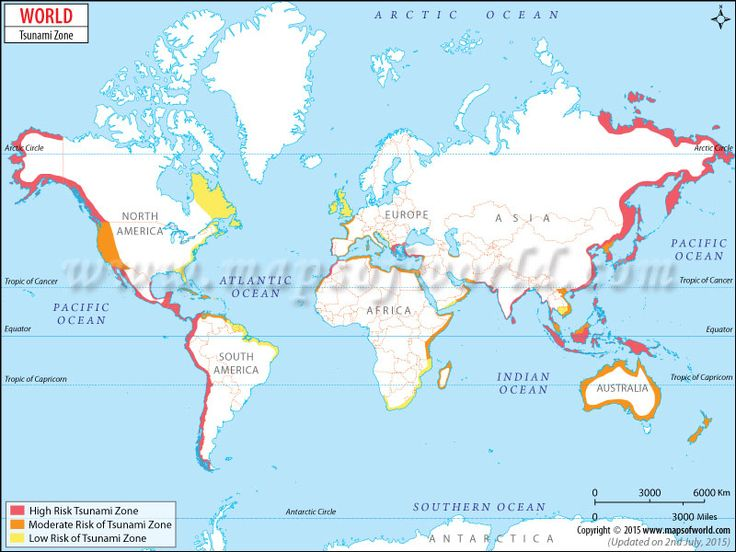
Consequences of Tsunamis
Social Consequences
Mass casualties – Over 2,30,000 deaths in 2004 Indian Ocean tsunami.
Large-scale displacement – Millions displaced in Indonesia and Sri Lanka (2004).
Health crises – Water-borne diseases in relief camps.
Psychological trauma – Long-term PTSD among survivors in Japan (2011).
Economic Consequences
Infrastructure destruction – Ports, roads, airports damaged. Eg- Severe infrastructure loss in Fukushima (2011).
Loss of livelihoods – Fisheries and tourism collapse.
High reconstruction costs – Japan’s 2011 losses estimated over $200 billion.
Environmental Consequences
Coastal ecosystem damage – Eg- Coral reef degradation in Andaman & Nicobar (2004).
Soil salinization – Agricultural lands turned infertile.
Secondary disasters. Eg- Fukushima nuclear accident (2011).
Groundwater Contamination- Saltwater and sewage penetrate freshwater aquifers
While they cannot be prevented, early warning systems, ecological buffers, and resilient coastal planning can significantly reduce their human and economic toll.