LWE refers to violent insurgency driven by Maoist or Naxalite ideologies, with an objective of overthrowing the government and establishing a communist society.
Determinants of Left-Wing Extremism in Eastern India
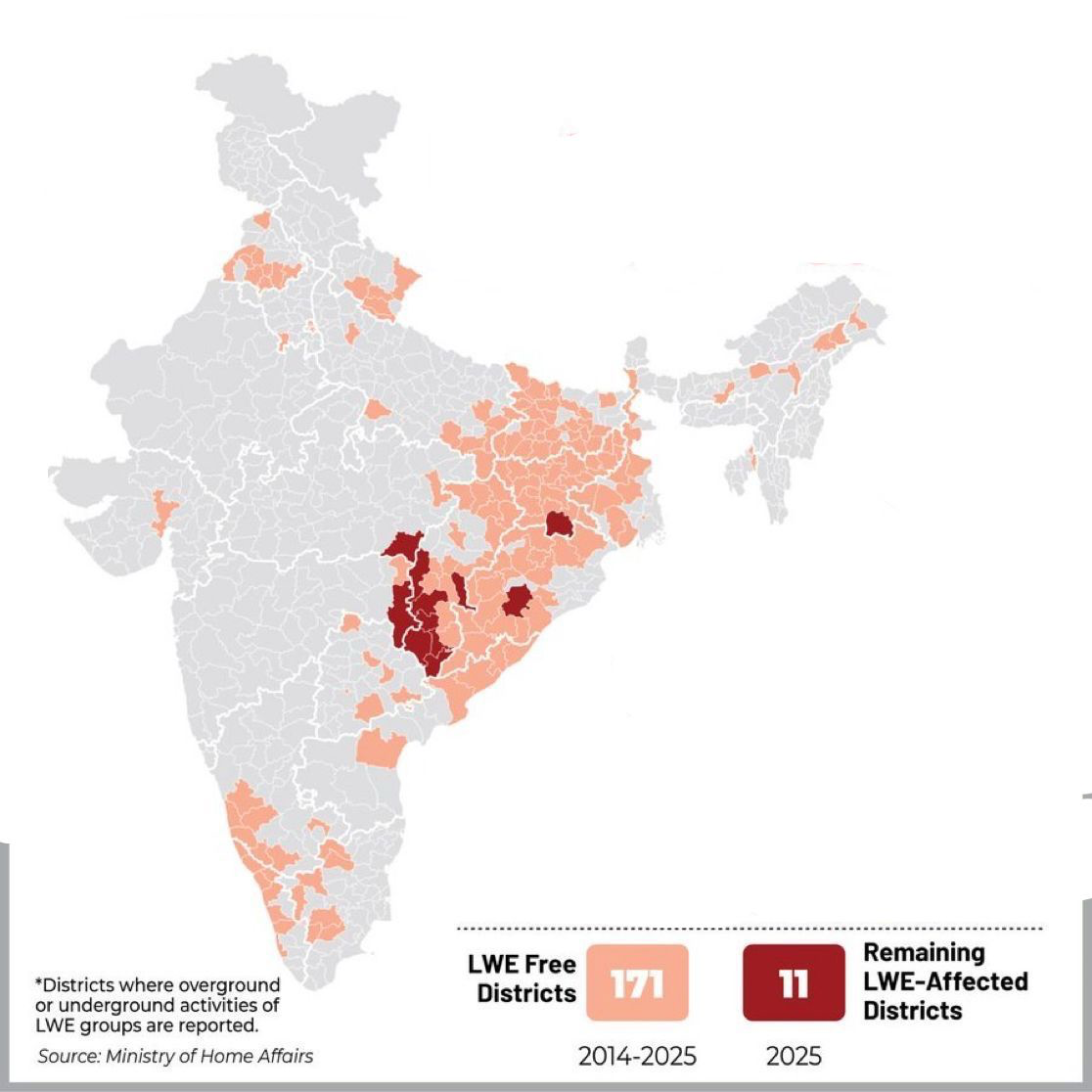
Maoist ideology of armed class struggle
Land Displacement due to Mining
Poor implementation of FRA, 2006, and PESA.
Historical Socio-Economic Deprivation
Unemployment & Lack of Livelihood Options
Governance Deficit
Geographical challenges
Impact on people
Over 14,000 lives were lost to Naxal violence in the last 20 years
Infrastructure Destruction– targeting road networks, railways, and telecom towers in the “Red Corridor”.
Extortion and “Levy”
Human Rights Violations – Eg- abduction and killing of local leaders
Low-growth trap increases inequality and poverty. Eg- The HDI for Malkangiri district (Odisha) – a LWE stronghold – is only 0.37, compared to the state’s average of 0.579.
Socio-economic impact – Eg- As per MHA report, 70% population of naxal affected areas lives under BPL.
Recruitment of Minors and Vulnerable Youth – Eg- Reports of child soldiers in southern Bastar.
Measures taken by government
Security Measures
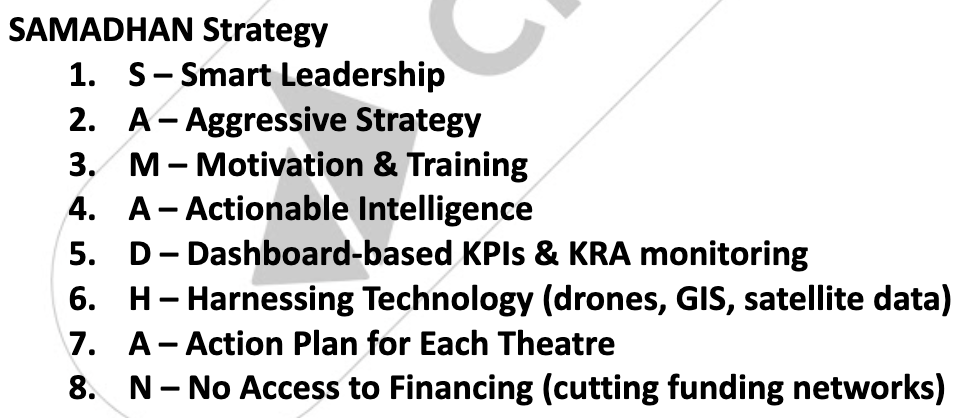
Specialised Forces- Eg- Greyhounds in Andhra Pradesh and the Bastariya Battalion in Chhattisgarh
Naxal’s Financial chocking
Security Related Expenditure and Special Infrastructure Scheme for strengthening State Special Forces and Special Intelligence Branches
Developmental measures
Building Critical Infrastructure in LWE Areas – Eg- Road Requirement Plan (RRP-I) constructing 14000 km of roads
Socio-economic development
Financial Inclusion- over 1,00 bank branches have been opened in LWE affected districts since April 2015.
Aspirational districts program
ROSHNI Scheme for skill development and employment-linked training for youth
Surrender and rehabilitation policy – attractive incentives and assured livelihood. Eg- stipend for professional training
Panchayat Extension To Scheduled Areas Act (PESA) and Forest Rights Act 2006 for strengthening tribal self-governance