Sea Surface Temperature (SST) rise refers to the increase in temperature of the upper layer of ocean water. It is a critical indicator of the Earth’s climate health
Causes of sea surface temperature rise
Greenhouse gas emissions – Eg- Atmospheric CO₂ crossed 425 ppm.
Global warming trend – Eg- Earth warmed ~1.44°C since pre-industrial levels. (IPCC)
Marine heatwaves – Persistent abnormal warming events.
Weakening ocean circulation reduces heat redistribution. Eg- Slowing Atlantic Meridional Overturning Circulation (AMOC).
El Niño events – Periodic warming of Pacific surface waters.
Declining polar ice cover – Reduced albedo effect increases absorption.
Ocean Stratification- As surface water warms, it becomes lighter and fails to mix with deeper, cooler water
Impact of SST rise on formation of tropical cyclones
Minimum SST of 26.5°C was required for a cyclone to form. Rising sea temperature has led to
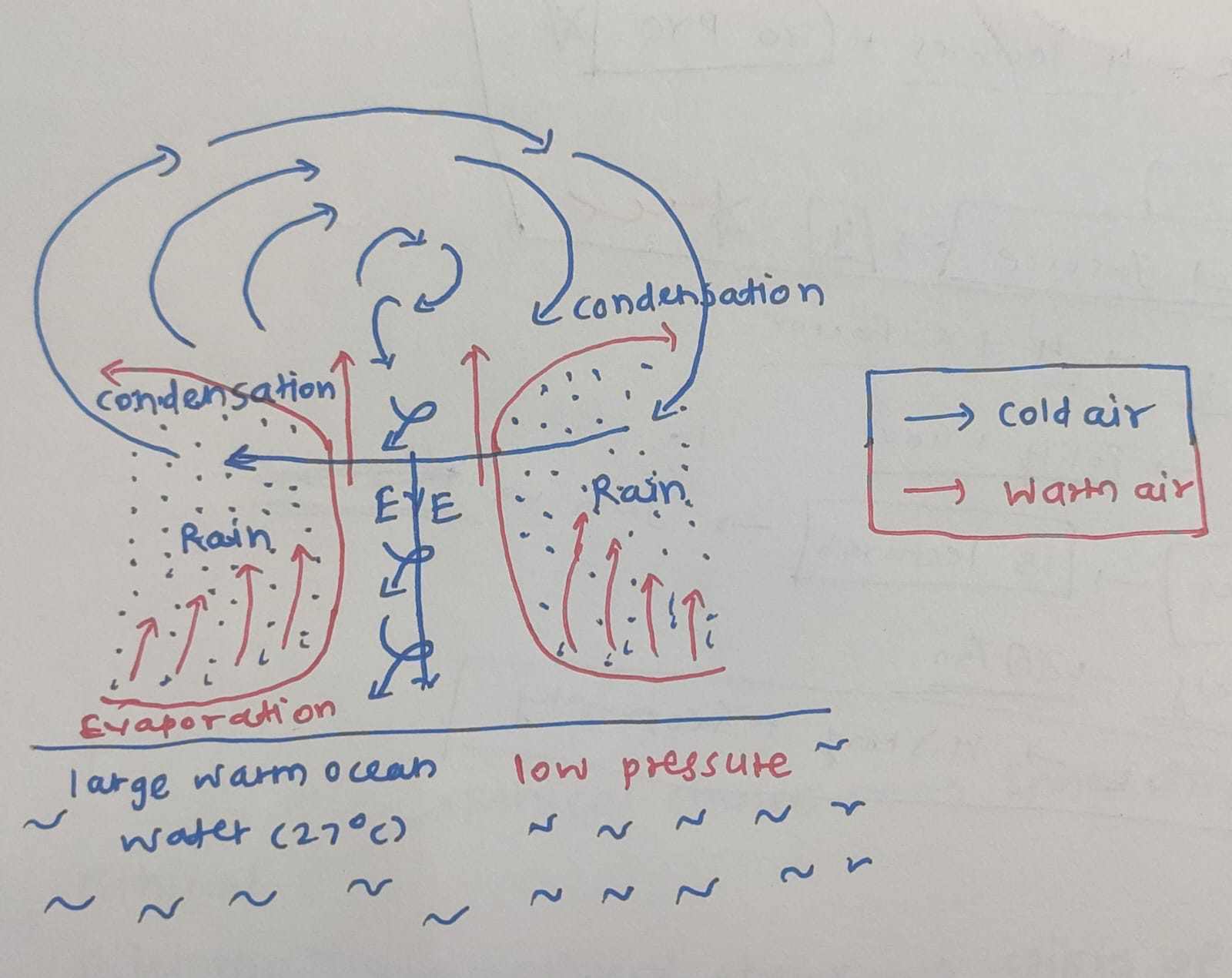
Cyclones in South Atlantic and higher latitudes of the Pacific
Arabian Sea witnessing more intense storms. Eg- Cyclone Nisarga (2020) near Maharashtra coast.
Enhanced evaporation – Warmer oceans increase moisture supply. Eg- Rapid moisture buildup before Cyclone Amphan (2020).
Rapid Intensification (RI)- High SSTs provide an explosive amount of latent heat. Eg- Hurricane Milton (2024) jumped from Category 1 to Category 5 in under 24 hours.
Greater Storm Size- Eg- Super Cyclone Amphan (2020) covered almost the entire Bay of Bengal during its peak.
For every 1°C of SST rise, the air holds 7% more water vapor. This leads to greater rainfall during cyclonic activity.
High SSTs allow storms to carry their moisture further inland before dissipating. Eg- Hurricane Harvey in Texas
Higher storm surge risk – Combined SST rise and sea-level rise amplify flooding. Eg- Cyclone Idai (2019) caused severe coastal inundation.
Shift in cyclone tracks and behavior due to altered SST gradients. Eg- Increasing westward shift of North Indian Ocean cyclones.
Addressing this challenge requires a multi-layered climate and disaster strategy–
Mitigate greenhouse gas emissions
Strengthen ocean monitoring systems
Improve cyclone early warning systems
Protect natural buffers. Eg- mangroves