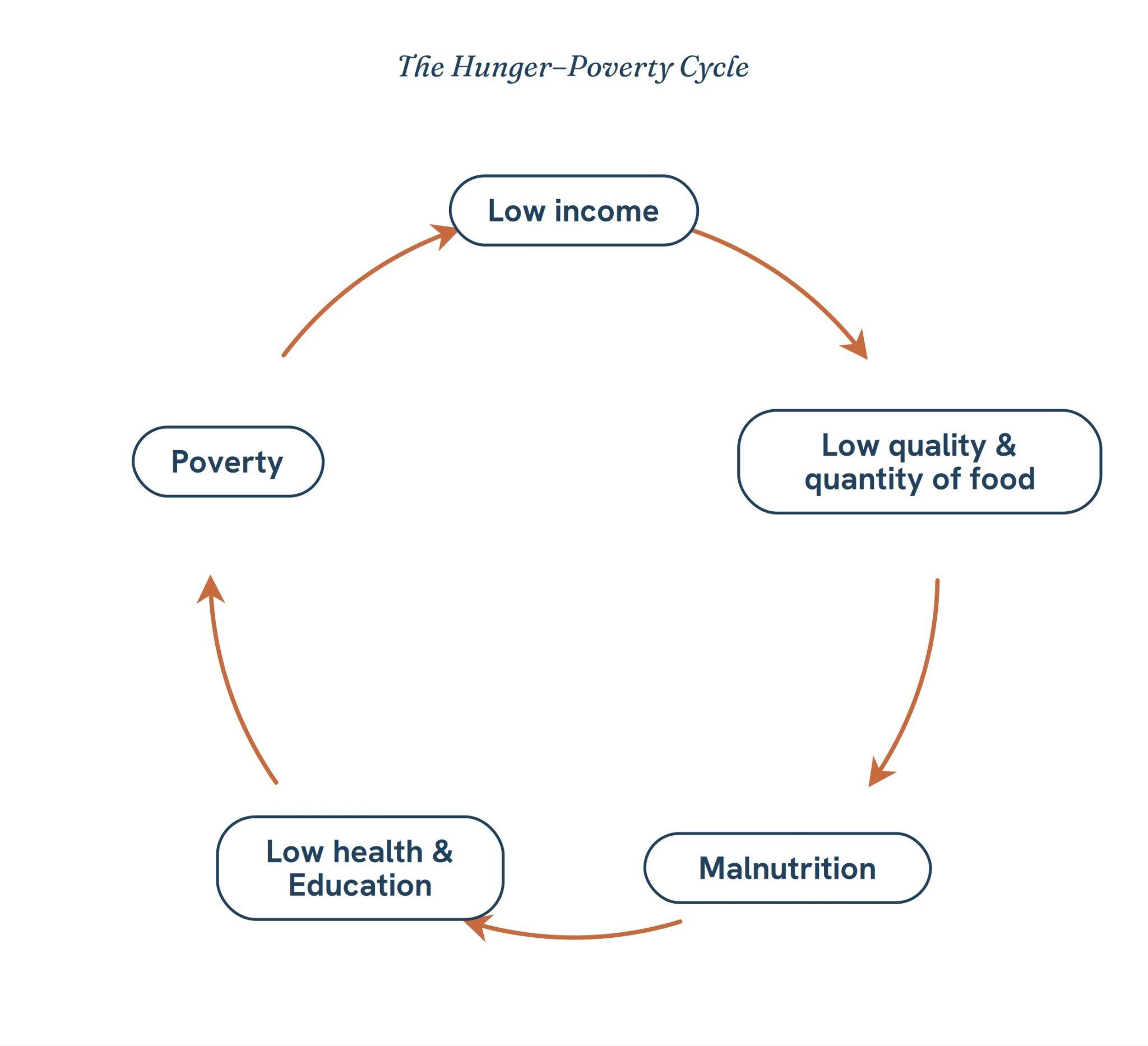
Impact of poverty and malnutrition on Human Capital Formation
World Bank (2024): India loses nearly 4% of GDP annually due to malnutrition-related productivity loss.
Chronic malnutrition causes stunting and wasting among children, leading to weaker immunity and frequent illness.
Impact on Cognitive Development – Poverty forces children into child labor or causes school dropouts. Malnourished children suffer from impaired brain development, lower IQ, and learning disabilities.
High disease burden (anaemia, diarrhoea, TB) reduces life expectancy and working life span. Malnutrition contributes to 45% of child deaths (UNICEF, 2024).
The International Labour Organization (ILO) notes that productivity losses due to undernutrition can reach up to 10% of lifetime earnings per individual.
Women’s malnutrition (57% anaemic, NFHS-5) leads to poor maternal health and undernourished children.
Expand NFSA and PMGKAY to include pulses, millets, and fortified foods, not just cereals.
Steps to break the cycle
Encourage local community kitchens and anganwadi-based feeding programs. Eg- TN Amma Canteens
Strengthen Pradhan Mantri Matru Vandana Yojana (PMMVY) to ensure 1000-day nutrition support (pregnancy to age 2)
Health and Sanitation Reforms
Expand Ayushman Bharat – Health and Wellness Centres to deliver preventive and curative services.
Water, Sanitation, and Hygiene (WASH): Accelerate Jal Jeevan Mission for clean drinking water.
Expand MGNREGA and link with climate-resilient livelihoods (water conservation, afforestation).
Women Empowerment by adopting best practices like Kerala’s Kudumbshree Model
Integrated Policy Framework: Ensure coordination across ministries. Gati Shakti Mission Model
Adopt data-driven local interventions under Aspirational Districts Programme to target high-burden regions.
Adopt Brazil’s Bolsa Família conditional cash transfer scheme
This can ensure whole of government and life-cycle approach to realise the vision of Viksit Bharat@2047