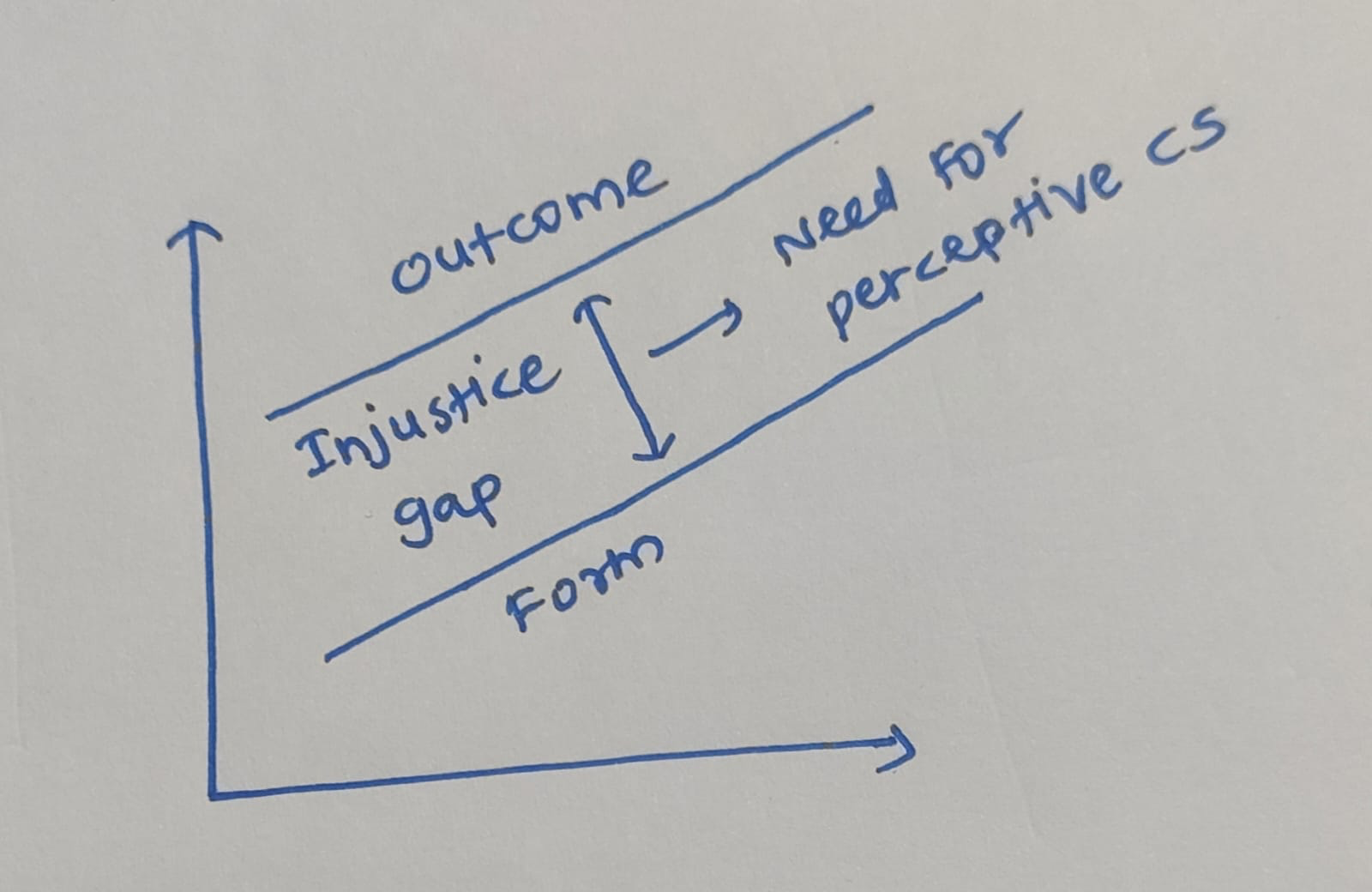
In public administration, there is tension between procedural formalism and substantive justice. When it becomes a slave to “Form,” it becomes an end in itself, at the cost of the citizen it was meant to serve.
Mindless Addiction to Form- Rendering Injustice
Institutionalization of Red Tapism- Eg- Munger-Ganga Bridge in Bihar was delayed by nearly 14 years due to inter-departmental disputes
Literalness breeds a “mechanical” mindset where officials lose empathy. Eg- denial of emergency care to critically ill patient without documentation
Inefficiency in crisis management- Eg- migrant labour sufferings during COVID.
Undermining Rights of the Vulnerable- Eg- PDS exclusion of poor due to biometric authentication failures (Jharkhand case)
Encourages moral abdication – Officials transfer moral responsibility to the rulebook (banality of evil). Eg- encroachment demolitions without rehabilitation plan.
Facilitates coercive corruption. Eg- ‘speed money’ for faster file clearance
Complexity of the “Form” leads to Process becoming Punishment. Eg- complexity in environmental clearances
“By-the-book” culture stifles innovation and creativity.
Resource Wastage- Eg- cost and time overruns in PPP projects due to delays in land procurement
Policy Paralysis- Fear of audit or the “3C” (CBI, CVC, CAG) leads to “Defensive Bureaucracy.”
The Perceptive Civil Servant- Carrying Out True Intent
Proactive Problem-Solving in emergencies- Eg- Dr. Rajendra Bharud (IAS) setting up an oxygen plant in tribal Nandurbar before the second COVID wave
Empowering through Informal Networks- Eg- Armstrong Pame (IAS) built a 100km road via crowdfunding.
Administrative Empathy for the Marginalized- Eg- In the “Project Sulaimani” model (Kozhikode), the “Substance” of dignity was prioritized.
Reforming through Discretion- Eg- Kiran Bedi (IPS) turned Tihar Jail into a reformatory.
Streamlining Processes for the Citizen- Perceptive officers redesign the “Form” itself. DM of Ganjam (Vijay Kulange) institutionalized “Doorstep Delivery” of pensions for the disabled
Innovative problem solving- Eg- Rahul Kumar (IAS) converted abandoned buildings into libraries using maintenance funds.
Defending the Rights of the Voiceless- Eg- S. Sankaran (IAS) provided instant subsistence relief to rescued bonded laborers.
Rules are meant to serve justice and when they fail to do so, conscience must guide discretion.