Caste can be defined as a localized, hereditary, and endogamous group characterized by a fixed rank in a ritual hierarchy (Varna).
Reasons behind fluidity of caste system
Sanskritization Mobility Process: Lower castes alter domestic customs and dietary rituals to mimic higher castes for upward mobility.
Decline of Ritual Hierarchy – Notions of purity and pollution have weakened. Eg- Inter-caste dining in urban areas is common
Occupational Mobility – Caste-occupation linkage has diluted. Eg- Dalits and OBCs in IT, civil services, academia.
Urbanisation and Migration promote anonymity and mixed social spaces. Eg- Cosmopolitan life in metros like Mumbai and Bengaluru.
Legal and Constitutional Framework has established equality before law irrespective of caste hierarchy. Eg- Article 14 and Article 17.
Rise of Individualism – Personal choice gaining prominence over ascriptive identity. Eg- Love marriages, nuclear families.
Growth of Class-Based Stratification in urban settings. Eg- rise of dalit and OBC Middle Class
Democratic Electoral Mobilization: Sub-castes merge into political interest blocks, completely altering traditional micro-level hierarchies. Eg: AJGAR alliance in northern India
Reasons behind static nature of caste identity
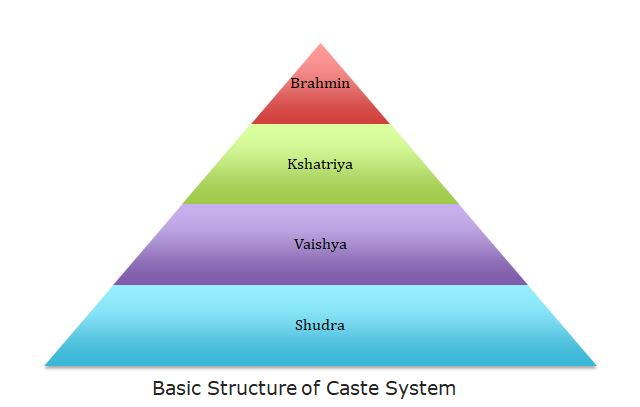
Caste remains a basis for welfare and representation. Eg- Reservations for SCs, STs, and OBCs.
Occupational hierarchies along caste lines. Eg- 96% manual scavengers are Dalits
Social Discrimination along caste lines persists. Eg- Hatras rape case or Rohith Vemula death.
Intersectionality – Caste intersects with gender, religion, and region. Eg- Dalit women facing multiple marginalities.
New associational forms. Eg- Maratha Kranti Morcha, Patidar Anamat Andolan.
Caste based economic groups. Eg- Dalit Indian Chamber of Commerce and Industry (DICCI) promoting “Dalit Capitalism”
Caste-Based Spatial Segregation (Ghettoization) in modern cities
Inter-generational Wealth Gap – The Oxfam Inequality Report (2024) highlights that the average wealth of a General Category family is nearly triple that of a Dalit family.
Understanding contemporary India therefore requires recognising caste not as a static relic, but as a dynamic and evolving social reality operating alongside class, gender, religion, and region.