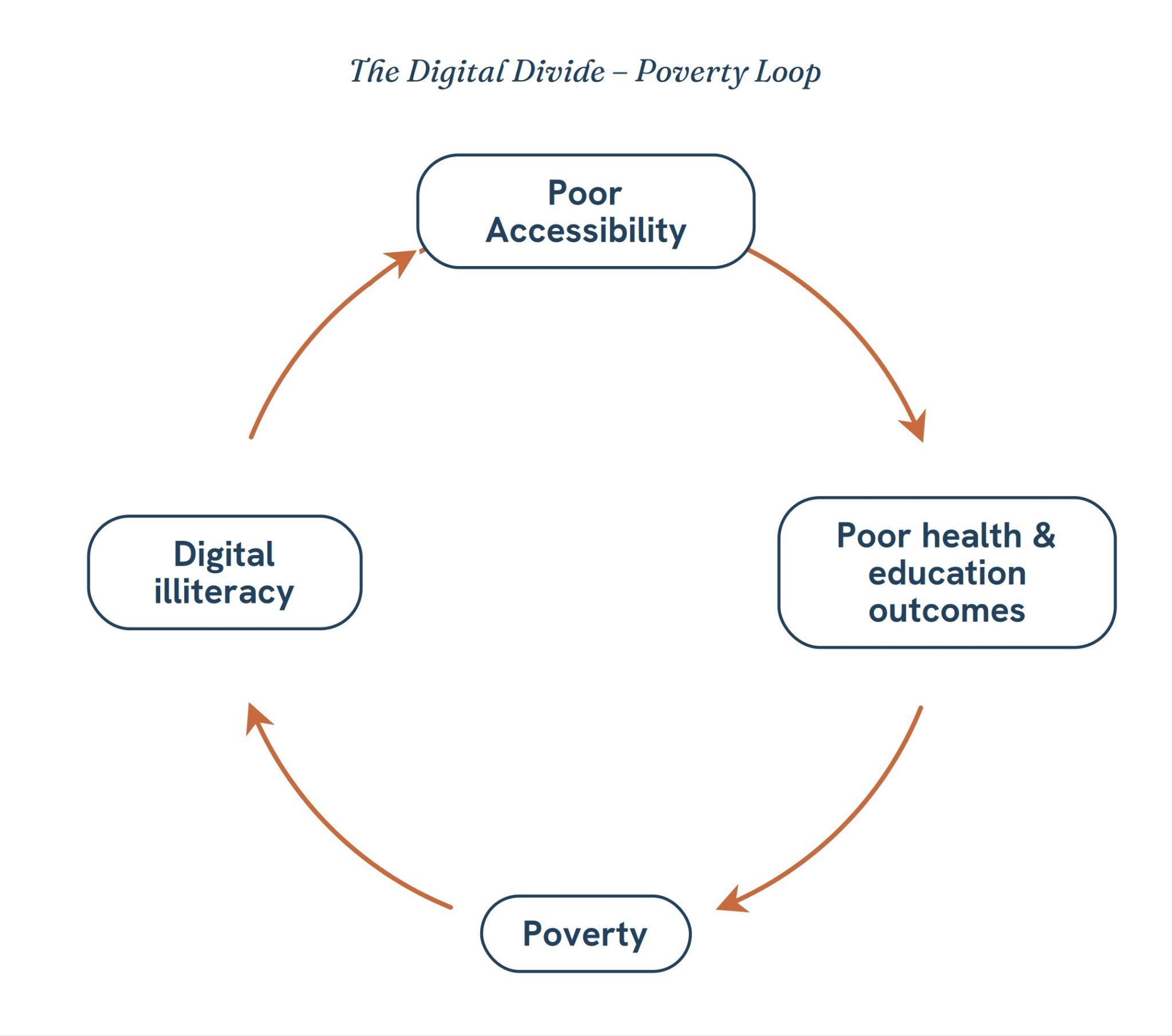
As per UNDP (2022), Digital access is now a core dimension of human development. However, digital illiteracy and poor ICT access have created a digital divide, restricting equitable growth.
Digital illiteracy and accessibility
Internet Access: Only 43% of rural households have internet access (NFHS-5, 2021).
Digital Literacy: Merely 10% of rural population is digitally literate (NSSO data, 2022).
Infrastructure Gaps: More than 35 thousand Gram Panchayats lack connectivity under BharatNet.
Device Ownership: Less than 15% of rural households have computers or tablets (NSSO).
Gender Divide: Only 33% of rural women have mobile internet access (GSMA Report, 2023).
Exclusion and inclusion errors in digital systems reduce trust in e-services. Eg- authentication errors in Aadhaar-linked DBT or ration delivery.
Weak Common Service Centre (CSC) Infrastructure: poor connectivity, limited equipment, and untrained staff
Lack of People-Centric Governance: Most government websites are only in English, not in vernacular languages, excluding non-English users.
Education and Skill Development
Limited online learning: Only 24% rural students could attend online classes during COVID-19 (ASER 2021).
Digital exclusion restricts access to e-learning platforms like SWAYAM, PMGDISHA, and DIKSHA.
Employment and Livelihoods
Rural youth miss digital job opportunities in gig economy and e-commerce.
Farmers lack access to digital market tools like e-NAM or Kisan Suvidha App.
Financial Inclusion
Inability to use UPI, digital banking, and DBT systems limits access to formal finance.
Rural MSMEs struggle with e-payments and online compliance (GST, MCA21).
Governance and Welfare Access – Eg- exclusion from Aadhaar-based DBT due to authentication errors and poor connectivity.
Health and Social Services – Lack of ICT prevents use of telemedicine platforms (eSanjeevani) and digital health records.
Gender and Social Inequality – Women, SC/ST, and elderly are most excluded due to low literacy and device ownership.
However, there are some Achievements
Expanding Digital Infrastructure
BharatNet: Over 2.14 lakh Gram Panchayats connected with optical fibre; 97.6% villages have mobile coverage.
5G rollout (2022-25): 4.7 lakh towers covering 99.6% districts.
Massive Digital Empowerment
PMGDISHA: Trained over 6.3 crore citizens in digital literacy.
Common Service Centres (5.3 lakh) serve as ICT hubs in 2.5 lakh Gram Panchayats.
Financial and Payment Revolution
UPI: Handles 85% of India’s digital payments, processing (June 2025). Enabled financial inclusion of 491 million individuals and 65 million merchants.
e-Governance and Inclusion
UMANG: 2,300+ services in 23 languages; 8.7 crore users.
DigiLocker: 56 crore users; promotes paperless governance.
Jan Soochna Portal (Rajasthan): Promotes proactive transparency.
Way Forward
Strengthen Digital Infrastructure: Accelerate BharatNet Phase-II to connect all Gram Panchayats
Enhance Digital Literacy: Expand PMGDISHA and integrate digital literacy in school curricula (e-Kidz, IT clubs).
Affordable Access: Subsidize data costs and promote public Wi-Fi hotspots (PM-WANI) in rural regions.
Promote Local Language Content: Use platforms like BHASHINI for vernacular digital inclusion.
Encourage PPP Models: Collaborate with private sector for last-mile connectivity and training. Eg- CSC-SPV.
Inclusive Design: Ensure gender-sensitive and community-based ICT training modules.
Bridging this digital divide is essential to achieve “Digital India for All” and realize the vision of inclusive growth under Viksit Bharat@2047.