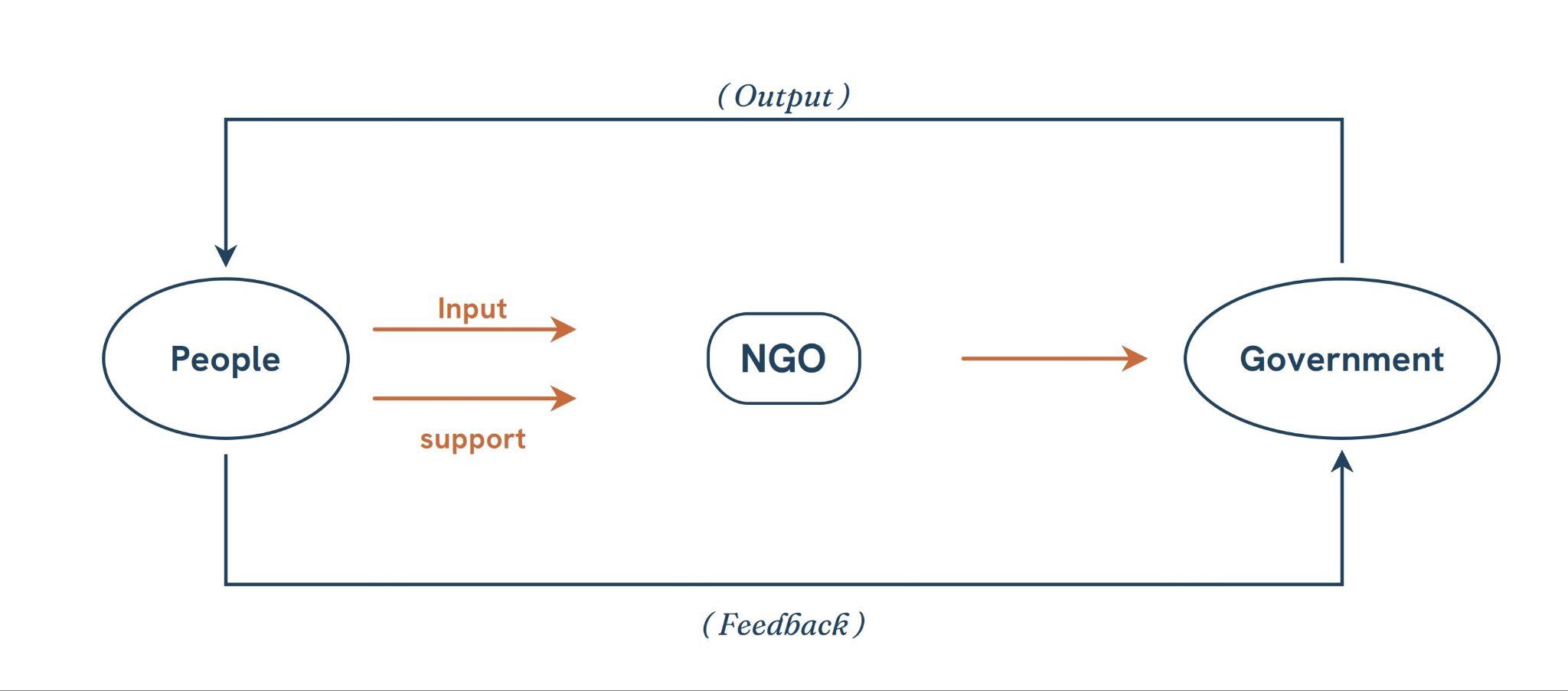
Role of Civil Society and NGOs in Public Service Delivery
Education – Run low-cost, community schools, teacher training, and literacy drives. Eg- Pratham’s Read India Campaign.
Health and Nutrition – Provide mobile health units, maternal care, and nutrition programs. Eg- Akshaya Patra mid-day meals.
Women Empowerment – Organize self-help groups and cooperatives to promote income generation. Eg- SEWA – women’s cooperatives in Gujarat.
Rural Development – Implement watershed management and livelihood programs. Eg- WOTR – soil and water conservation in drought-prone regions.
Governance & Accountability – Conduct awareness campaigns, social audits, and legal advocacy. Eg- MKSS pioneered Right to Information through Jan Sunwai model.
Environment and Sustainability – Promote community-based natural resource management and renewable energy use. Eg- TERI
Strengths of NGO-Civil Society Model
Community-Centric Programs
Flexible and Innovative low-cost models
Last-Mile Reach
Participatory Governance
Fills governance and capacity gaps in public service delivery
Challenges of this Alternative Model
Funding Constraints – Dependence on foreign/donor funding.
Fragmentation and Duplication – Poor coordination with government departments.
Accountability and Transparency Deficit – Eg- CBI report: <10% NGOs file audited financial statements.
Anti-Developmental Concerns – Eg- IB Report: NGO activism causing ~2% GDP loss.
Regulatory Restrictions – Stringent FCRA, CSR, compliance laws.
Elite and Urban Bias – Disconnect from grassroots realities.
Sustainability Issues – Short-term donor-driven projects.
Way Forward
Vijay Kumar Committee Recommendations – Promote ‘Light regulation’ of NGOs.
2nd ARC Recommendation – Establish an independent National Accreditation Council.
Government-NGO Collaboration Platforms – Eg- Kerala’s Kudumbashree model.
Diversified Funding – Reduce donor dependency.
Outcome-Based Monitoring – Introduce impact assessment frameworks (NITI Aayog).
NGOs are “integral cogs in the wheel of good governance”. A balanced partnership between genuine NGOs and the government is crucial for India’s inclusive and sustainable development.