Micro irrigation is a water-efficient irrigation technique that delivers water directly to plant roots using drip or sprinkler systems, reducing water wastage.
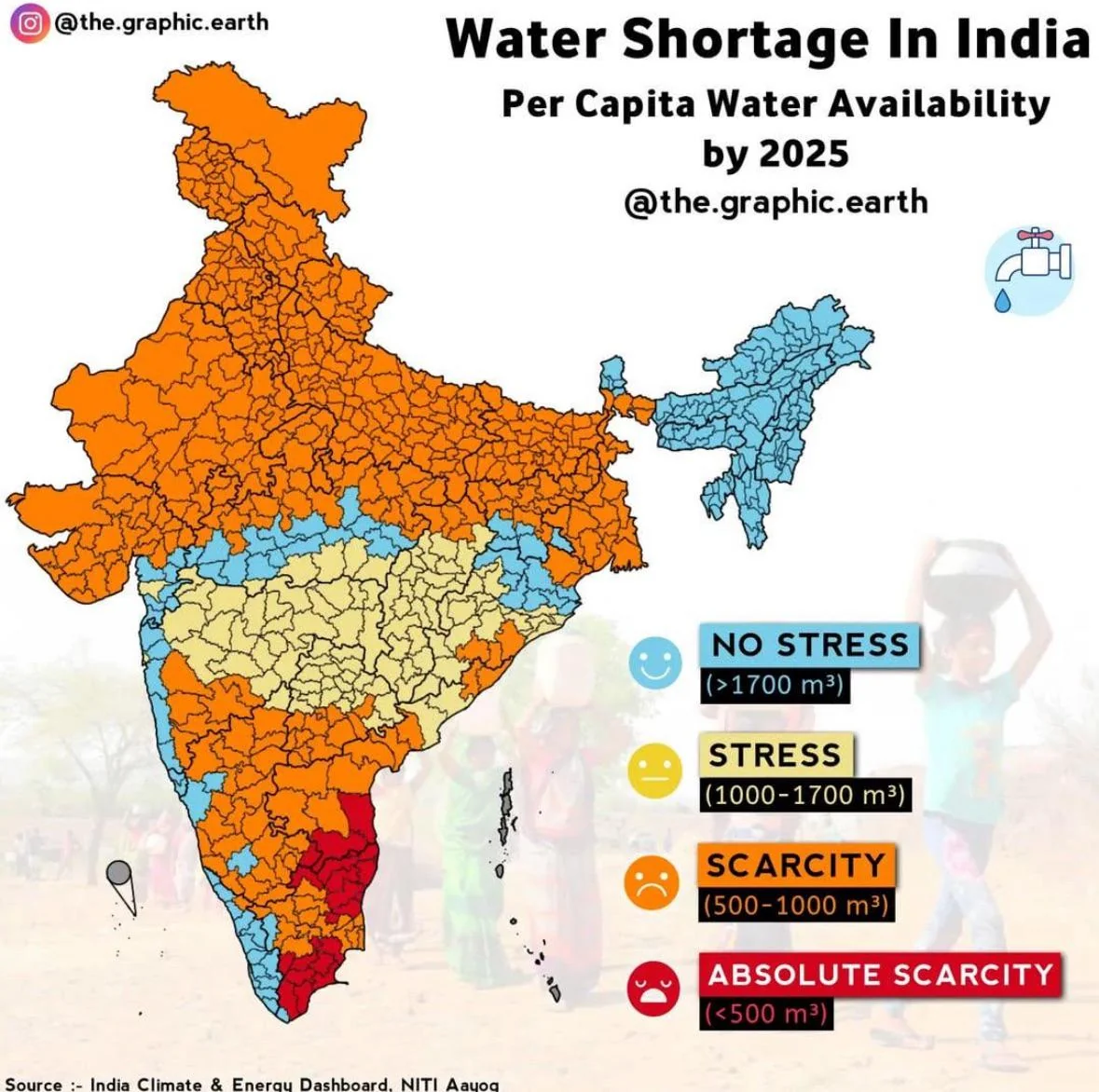
18% of the world’s population but only 4% of global freshwater resources.
~85% of India’s freshwater is used in agriculture (FAO).
Groundwater depletion:
1,006 blocks are over-exploited or critical (CGWB, 2023).
Punjab and Haryana – ~1 metre annual groundwater decline.
Per capita water availability fell from 1,820 m³ (2001)1,486 m³ (2025).
Role of Micro-Irrigation in Solving India’s Water Crisis
Significant Water Saving – saves around 30-50% water compared to flood irrigation.
Higher Water Use Efficiency (WUE)
Sprinkler Irrigation – 75%
Drip Irrigation – 90%
Higher Yields: Eg- increases yields by 45% for wheat, 20% for gram, and 40% for soybean.
Reduced Water Loss through evaporation, runoff, and deep percolation
Lower Fertilizer Use: Through fertigation, fertilizers are applied directly to the plant roots along with water
Reduced Groundwater Extraction – Eg- Drip in sugarcane in Maharashtra reduced water use by 22-25%.
Improves Climate Resilience – Provides controlled irrigation during dry spells.
Micro-irrigation can double irrigation coverage using existing water resources (NITI Aayog).
Limitations of micro-irrigation
Low Adoption – micro-irrigation covers only 7.6% of the net sown area
High Initial Cost – Eg- Drip irrigation costs .
Regular maintenance needs to avoid clogging, leakage, and damage is technically difficult for farmers.
Technical Knowledge Gap: lack of know-how to correctly install, operate, and maintain micro-irrigation systems.
Social and Cultural Barriers: Traditional farming practices and resistance to change.
Regional imbalance – Eastern and northern states lag.
Not Suitable for all crops– Eg-Flood irrigation is preferred for water-intensive crops like paddy
Government Initiatives
PMKSY – “Per Drop More Crop” – subsidies up to 55%.
Micro-Irrigation Fund under NABARD – 10000 Cr
Andhra Pradesh Micro-Irrigation Project (APMIP)
Micro-irrigation is critical for achieving equitable, efficient and sustainable irrigation management. (“Vision for Sujalam Bharat”)