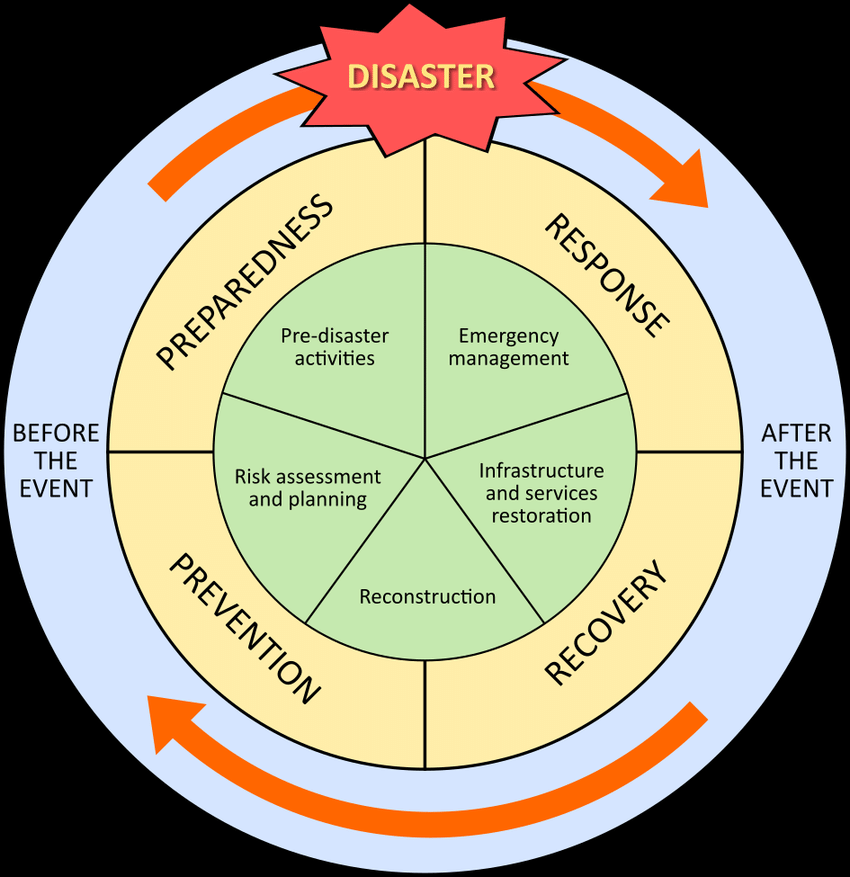
Earlier Approach (Reactive Model)
Relief and Response-Focused – limited emphasis on preparedness or mitigation.
Fragmented Institutional Setup – No single coordinating agency.
Weak Early Warning Systems – limited forecasting for cyclones, floods, and lightning. Eg – 1999 Odisha Super Cyclone caused 10000 deaths
Delayed Emergency Response Mechanisms before NDRF creation (2006). Eg- delay in 2001 Bhuj Earthquake response
Ad hoc Funding – minimal pre-disaster investment.
Poor Infrastructure Resilience – Buildings, dams, roads lacked disaster-resilient design.
Low Use of Technology – Eg- lack of glacial lake monitoring, real-time rainfall data, or landslide susceptibility mapping in Himalayas
Limited Community Preparedness – Citizens were passive recipients of relief; evacuation plans rudimentary. Eg- high fatalities after Uttarakhand Floods
Recent Measures Highlighting the Shift from Reactive to Proactive Approach
Legal & Institutional Strengthening – DM Act 2005, NDMA, NDRF, SDMAs, and DDMAs ensure permanent, structured disaster governance.
Strengthened Early Warning through IMD + ISRO + IITs. Eg- Zero human casualties during Cyclone Biparjoy (2023)
Integrated Alert System (SACHET) is operationalised in all 36 States and UTs to send disaster alerts through SMS. Over 6,899 crore SMS alerts in more than 19 Indian languages were sent.
Multi-Hazard Early Warning System (MHEWS) – integrates satellite, radar, and IoT data via the IMD’s Decision Support System (DSS). Improves accuracy by 20-40%. Apps used are
MAUSAM: General weather forecasts.
DAMINI: Lightning alerts.
MEGHDOOT: Agromet advisories for farmers.
Nature-Based Solutions – Mangrove restoration (MISHTI), wetland protection (Amrit Dharohar) to reduce cyclone/flood vulnerability.
Shift in disaster-financing architecture – from earlier response-only funds to separate mitigation funds at national and state level as per recommendations of 15th FC
Community-Based Disaster Management under Aapda Mitra/Aapda Sakhi.
City/state-specific Heat Action Plans (HAPs) for heatwave prediction + response + healthcare preparedness. Eg- Ahmedabad HAP cut mortality by 30-40% since 2013.
Cyclone Preparedness (Odisha Model) – Mass evacuations, cyclone shelters, and resilient infrastructure. Eg- Only 64 deaths in Cyclone Fani (2019).
GIS-Based Hazard Mapping– Eg- National Landslide Susceptibility Mapping (NLSM 2023) covers all Himalayan states.
Global Efforts
Signatory to Sendai Framework for disaster risk reduction
Launched coalition of disaster disaster resilient infrastructure
Way Forward
Strengthening disaster health management through coordination between NDMA and the Health Ministry
Transparency in Fund Allocation – formula-based, impact-driven NDRF allocation
Decentralized Disaster Governance
Autonomy in fund utilization for SDMA and DDMA.
Integrating disaster risk reduction (DRR) into development plans
Climate-Resilient Infrastructure –
strict enforcement of the National Building Code (NBC), 2016
disaster-resilient retrofitting of old buildings, bridges, and dams in seismic zones.
Enhance coordination between IMD, ISRO, NDMA, and NDRF through a unified National Emergency Coordination Hub (NECH).
Strengthening Financial Resilience via parametric insurance models
Adopting global best practices
Singapore -Whole-of-Government (WOG) Approach
Netherlands -“Room for the River” Programme
United States -FEMA’s Incident Command System (ICS)
The Sendai Framework’s proactive approach, focused on risk mitigation, resilient recovery, and inclusive governance, is essential for making Bharat a ‘weather-ready and climate-smart’ nation.