While the events at Meerut provided the immediate spark, the 1857 Revolt was the historical result of a century-old tradition of resistance.
1857 revolt as a culmination of past rebellions
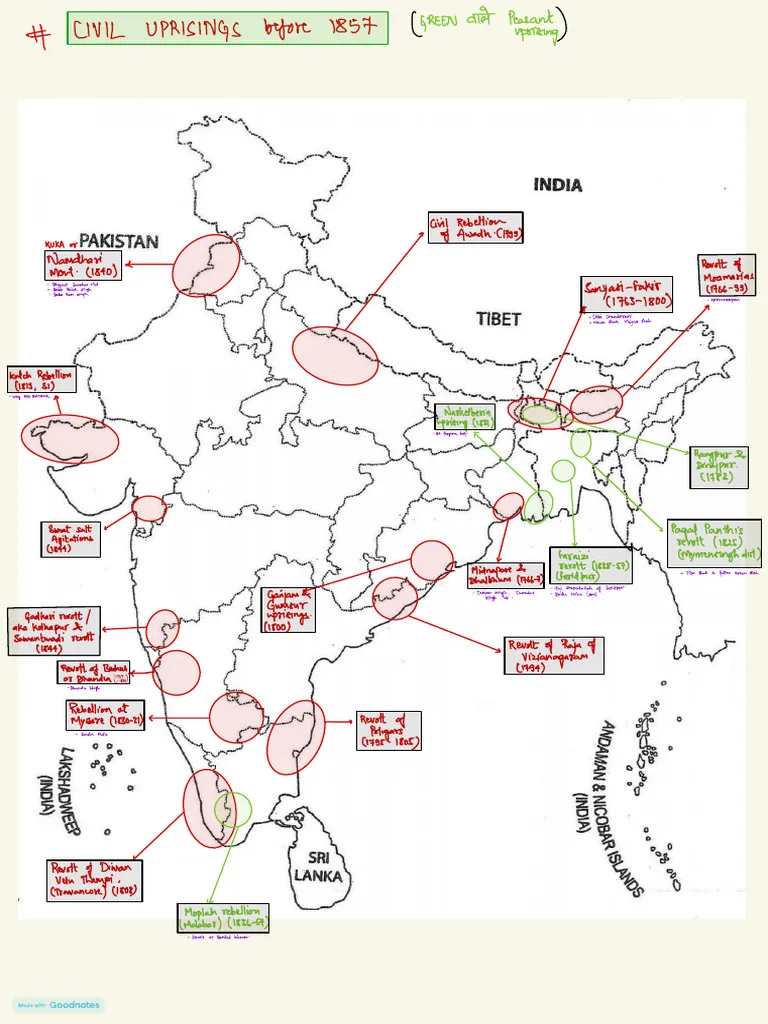
Poligars’ Revolt (1799-1805) in South India against the Company’s demand for high tribute.
Paika Rebellion (1817)- landed militia of Odisha rose under Bakshi Jagabandhu against the British land revenue policies and the loss of their rent-free lands.
Kittur Chennamma’s Revolt (1824) against the British refusal to recognize an adopted heir.
Ramosi Uprising (1822-1829) led by Chittur Singh in Maharashtra as a reaction to the annexation of the Maratha territories.
Tribal Uprisings
Chuar Uprising (1766-1772) in Bengal against the enhanced land revenue demands of the Company.
Kol Mutiny (1831) in Chhotanagpur against the transfer of their lands to outsiders and moneylenders
Santhal Rebellion (1855-1856) under sidhu and kanhu just one year before 1857.
Khasis’ Revolt (1833) under Tirut Singh in the Meghalaya hills against the British attempt to build a road through their ancestral lands using forced labor.
Peasant Movements
Sanyasi-Fakir Rebellion (1763-1800) in Bengal as a reaction to restrictive pilgrim taxes and the devastating famine of 1770.
Faraizi Movement (1838-1857) in East Bengal against the excesses of indigo planters and landlords
Paglapanthis Revolt (1825-1835)- Led by Tipu Shah in Bengal, targeting Zamindars.
Mappila revolt in Kerala against zamindars
Sepoy Mutinies
Vellore Mutiny (1806) against a new dress code that forbade religious marks and required the use of leather cockades.
Barrackpore Mutiny (1824)- Sepoys refused to cross the “Black Water” (ocean) to Burma.
Afghan War Mutinies (1839-1842) due to the hardships of the campaign and the psychological strain of fighting outside India.
Mutiny of 1844 (Bengal Army) against the withdrawal of Bhatta (foreign service allowance) after the annexation of Sindh.
These movements culminated in the first large-scale, multi-class challenge to British colonial rule in India in 1857.