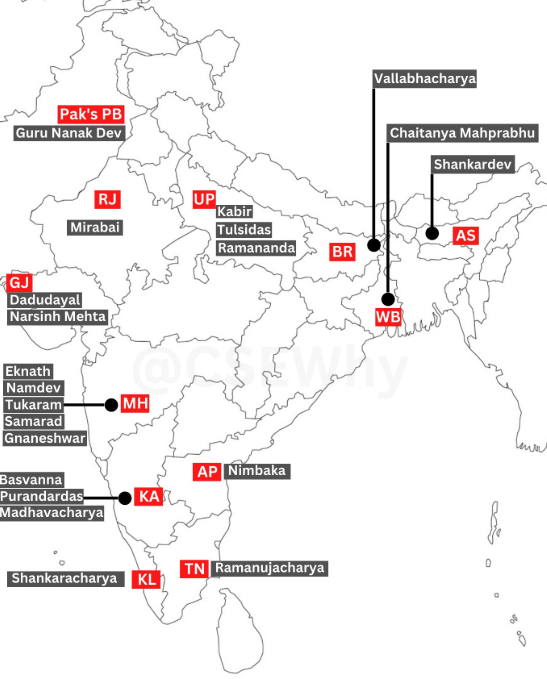
While the Bhakti movement originated in South India in the 7th century, the advent of Sri Chaitanya Mahaprabhu (1486-1534) marked its “Golden Phase”, especially in Eastern India.
Key Pillars of the Bhakti Tradition
Emotional surrender (prem bhakti) as the path to salvation
Nama-smarana and kirtana as primary devotional practices
Equality of all devotees, irrespective of caste or gender
Direct relationship between devotee and God, without priestly mediation
Use of vernacular languages to reach the masses
Saguna and Nirguna traditions accommodating diverse spiritual paths
Ethical living and moral conduct as integral to devotion
Inclusiveness and social harmony
Integration of spirituality with everyday life
Re-orientation of the bhakti movement under sri chaitanya mahaprabhu
Popularisation of Nama-sankirtana
Chaitanya emphasised collective chanting of the divine name as the highest form of devotion. Eg- “Hare Rama Hare Krishna” chant.
Bhakti shifted from individual contemplation to mass congregational worship.
He elevated Radha-Krishna worship as the supreme spiritual ideal. Radha-bhava symbolised the deepest emotional bond between devotee and God.
Chaitanya was a Saguna bhakti proponent, worshipping a personal God with attributes.Encouraged kirtans, singing, dancing, and ecstatic devotion as legitimate spiritual paths.
He propounded Achintya Bheda-Abheda, emphasising the inconceivable unity and difference between God and the soul.
Simplification of Religious Practice – Salvation was made accessible through bhagavan-nama alone, without rituals or priestly mediation.
Social Inclusiveness and Anti-Caste Orientation
Chaitanya condemned caste discrimination in spiritual life.
Devotion, not birth, became the criterion for salvation. Eg- Association with Haridas Thakur, a Muslim-born devotee.
Open participation of lower castes and women in Bhakti practices.
Emphasis on personal emotional experience, not blind ritualism. It encouraged an intimate, personal relationship with God.
Institutionalisation through Sankirtana Mandalis – devotees sang, danced, and worshipped collectively.
Chaitanya travelled widely across Bengal, Odisha, and South India. He established ashrams and devotional centres, ensuring pan-regional diffusion of Bhakti.